At ASMUI, Okinawa’s creation myth meets a field of ancient limestone towers. This sacred site in Yanbaru National Park is tied to the Ryukyuan story of Amamikyu, the creator god said to have first descended here. The rocks are the star, but the stories give the walk its sense of place.
I like two things in particular: the 26-stop audio guide lets you explore at your own pace, and the route offers a rare look at northern Okinawa beyond beaches and resort towns. The Churaumi Observation Deck also gives you a view toward the island’s northern sea.
The main consideration is scale and weather. The walk takes about 1.5 hours, and shade covers much of it, but the subtropical humidity can still leave you sweating. If you expect a vast mountain trek or dramatic scenery at every turn, ASMUI may feel more modest than imagined.
- Key points to know before you go
- A sacred starting point in northern Okinawa
- The karst formations are the main event
- Follow the 26 audio stops at your own pace
- The named spots give the walk a purpose
- A short walk that can still feel hot
- Why this is a different kind of Okinawa outing
- Is the admission price good value?
- Who will enjoy ASMUI most
- Practical details for planning your visit
- Should you book ASMUI Spiritual Hikes?
- FAQ
- How long does the ASMUI walk take?
- What are the opening hours?
- What does the ticket include?
- What languages are available for the audio guide?
- Should I download the audio guide before arriving?
- What should I wear and bring?
- What is the child ticket age range?
- How long is the voucher valid?
- Can I change or cancel my booking?
- The Best Of Okinawa!
- More Hiking & Trekking Tours in Okinawa
- More Tours in Okinawa
- More Tour Reviews in Okinawa
- Not for you? Here's more nearby things to do in Okinawa we have reviewed
Key points to know before you go

- A sacred place in Ryukyuan tradition: ASMUI is associated with the creation god Amamikyu and the origin story of the Ryukyu world.
- Ancient karst formations: The rocks formed over roughly 250 million years, making this an unusual geological setting.
- 26 self-guided story stops: Download the audio guide before entering, since the signal inside the park is weak.
- A short, shaded walk: Plan for about 1.5 hours, but bring water and expect heat even under tree cover.
- A flexible ticket: Admission starts at $6.29, and the voucher is valid for 365 days from confirmation.
- A quieter side of Okinawa: ASMUI offers a nature-focused outing in the island’s north, far from the usual beach-and-shopping itinerary.

👉 See our pick of the 5 Best Tours In Okinawa
A sacred starting point in northern Okinawa
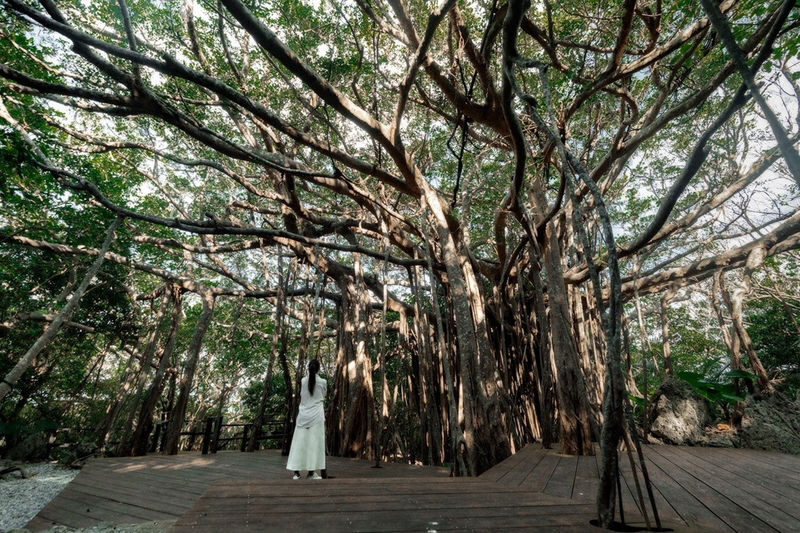
ASMUI, also known by its former name Daisekirinzan, sits within Yanbaru National Park in Kunigami, the northern part of Okinawa Island. The name Asumui means four-linked rocky mountains in the Ryukyuan language. In local mythology, this is where Amamikyu, also called Amamikiyo, first descended and began creating the Ryukyu world.
That story changes how you read the place. The rocks are not simply odd shapes to photograph; they are part of a site with deep spiritual meaning in Okinawan culture. Since 2015, the area known as Amamikunumu, or Amamikyu no Mori, has held Japan’s designation as a National Place of Scenic Beauty.
You do not need to share the religious beliefs to appreciate the visit. I find that learning the local story adds a human layer to a walk among rocks and forest, and it gives you a reason to pause at the marked sites rather than hurry through them.
You can also read our reviews of more hiking tours in Okinawa

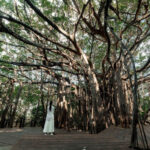
The karst formations are the main event
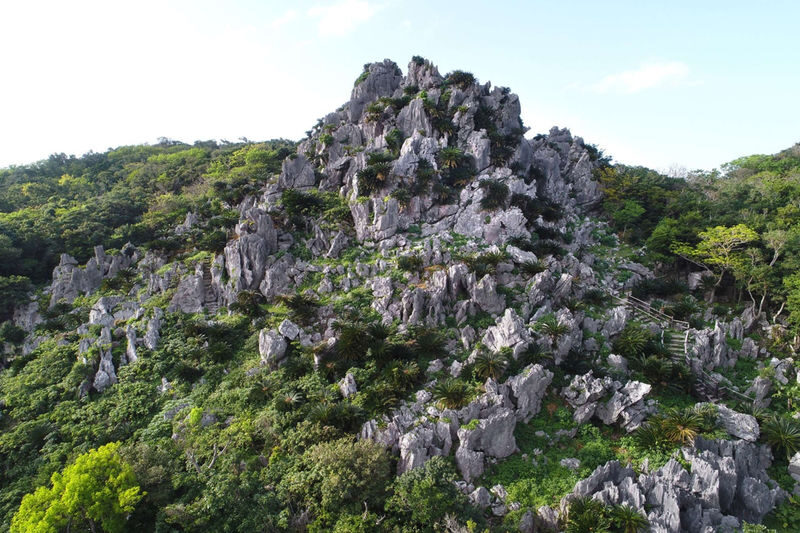
ASMUI’s terrain is described as the world’s northernmost tropical karst topography. Karst forms as water gradually wears away soluble rock, creating unusual shapes and features over a very long period. Here, the limestone formations are estimated to have developed over about 250 million years.
Expect an array of towering rocks and unusual stone forms rather than one single landmark. Their shapes are the draw, and the walking route brings you past different formations while the audio guide connects selected locations with stories and meaning.
Keep your expectations grounded. A visitor’s account describes the site as smaller and less beautiful than expected, which is useful to bear in mind if you have seen grander karst scenery elsewhere. ASMUI’s appeal is not sheer size. Its value lies in the combination of old rock, subtropical forest, mythology, and a sense of sacred geography.
Follow the 26 audio stops at your own pace
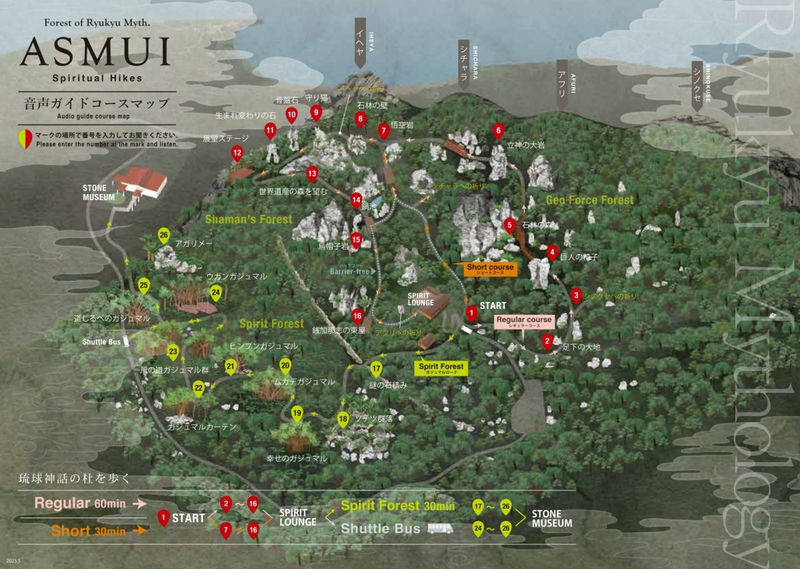
The self-guided audio tour covers 26 mythical spots. You can pause, listen, and move on when you are ready, rather than keeping pace with a group or guide. The audio is available in English, Chinese, and Korean.
The stops include Goku Rock and the Stone of Life’s Reincarnation, along with the Churaumi Observation Deck. These names hint at the interpretive approach: the walk links individual rock formations and viewpoints to spiritual ideas and local stories. The audio helps you understand why a place matters, not just what it looks like.
There is no guide’s name to note because this is a self-guided experience. Bring your own phone and download the audio guide app before you enter. Mobile internet is weak in the park, so relying on a fresh download at the trailhead could leave you listening to the forest without the stories.
The audio route also makes ASMUI a good choice if you prefer to set your own pace. You can spend longer at a spot that interests you or keep the visit short. Just remember that self-guided means you should arrive prepared: the app, your phone battery, and a little curiosity are part of the experience.
The named spots give the walk a purpose
Goku Rock is one of the prominent named locations on the route. The available details do not specify exactly what the audio says about it, so I would approach it as a stop where the guide’s interpretation matters as much as the stone’s appearance. The same goes for the Stone of Life’s Reincarnation, whose name points toward the spiritual themes woven through the site.
The Churaumi Observation Deck offers a change of focus. After looking closely at rocks and forest, you can look outward toward Okinawa’s northern sea. It is a distant view, not a promise of a sweeping panorama, but that contrast between enclosed woodland and open water helps break up the walk.
There are 26 stops in all, but you do not need to treat them as a checklist. The best approach is to listen where a story catches your attention and give yourself permission to keep moving when it does not. This is a quiet, reflective outing, not a race to collect every audio marker.
A short walk that can still feel hot
A visit takes roughly 1.5 hours, based on one reported outing. That is a useful planning figure, not a strict schedule: your pace and time spent listening will affect the total. The route has shade for almost the entire walk, but shade does not cancel out Okinawa’s summer heat or humidity.
Wear comfortable athletic shoes. The walk is outdoors on a natural site, so sturdy footwear is a better choice than sandals or dress shoes. In summer, bring drinking water and sunscreen even if much of the route is shaded. The shade is welcome, but you can still sweat your way through the visit.
Try to arrive with enough time to enjoy the audio stops without watching the clock. The park is open every day from 9:30 a.m. to 5:30 p.m., with last entry at 4 p.m. If you arrive near the cutoff, you may have less time than you want for the 26 stops.


Why this is a different kind of Okinawa outing
Many Okinawa itineraries focus on beaches, shopping, and the island’s southern attractions. ASMUI gives you a reason to travel north into Yanbaru and spend time in a forested setting shaped by both geology and belief. It is a change of pace, especially if your trip has been built around the coast.
That difference is the point, though it also sets the right expectations. This is not a large theme park, a guided cultural performance, or a long wilderness hike. It is a self-paced nature walk where the setting and its stories do most of the work.
I would pair it with other northern Okinawa plans if you are already heading to Kunigami. The ticket itself is inexpensive, but the value improves when the outing fits naturally into your day rather than requiring a long detour just for a short walk. The supplied details do not include transport arrangements, so plan your route to the meeting address independently.
Is the admission price good value?
Admission starts at $6.29, a modest price for access to the site and its 26-stop audio experience. The ticket includes attraction admission; it does not list transport or a live guide. For a traveler interested in Okinawan mythology, unusual rock formations, or Yanbaru’s natural setting, that is a fair entry cost.
The value depends on what you want from the day. If you enjoy self-guided walks and are happy to take your time with an audio app, the ticket gives you a low-cost way to see a distinctive part of northern Okinawa. If you mainly want a grand scenic spectacle or a long guided excursion, the short visit and relatively modest scale may not justify making it the sole reason for a trip north.
The voucher is valid for 365 days from the booking confirmation date and expires at 11:59 p.m. on its final day. Changes are free before redemption, and cancellation is free before you redeem it. Those terms are useful if your Okinawa plans are still taking shape.
Who will enjoy ASMUI most
I would recommend ASMUI to anyone curious about Ryukyuan stories, subtropical nature, or the way a place can be sacred as well as scenic. It also suits independent visitors who like to walk at their own pace and do not mind using a phone for the interpretation.
Families can choose adult or child tickets: adult admission applies from age 15, while children’s tickets cover ages 6 to 14. Children may find the unusual rock forms engaging, though the experience is a walking visit rather than a hands-on attraction. Bring water and comfortable shoes for the whole family.
You may want to skip it if you have little interest in mythology or nature walks, or if heat makes outdoor activity unpleasant. The site is not especially long, but one short outing can still feel demanding in humid weather. A shaded route is helpful, not a guarantee of cool air.
Practical details for planning your visit
The address is 1241 Ginama, Kunigami, Kunigami District, Okinawa 905-1422, Japan, within Yanbaru National Park. The activity information also gives the address as 1241 Aza-Genka, Kunigami Village, so check the location details on your voucher before setting out.
The park is open year-round, Monday through Sunday, from 9:30 a.m. to 5:30 p.m. Last entry is 4 p.m. The mobile voucher is presented for admission, and booking can be confirmed instantly, including same-day booking.
Download the audio guide app before entering the park. Its languages are English, Chinese, and Korean. The weak internet signal inside makes advance preparation more than a minor convenience.
Should you book ASMUI Spiritual Hikes?
Book ASMUI if you want a compact, self-guided outing that connects Okinawa’s northern nature with Ryukyuan spiritual tradition. The ancient karst, 26 audio stops, and low starting price make it a worthwhile change from a beach-centered itinerary, especially if you are already exploring Kunigami.
Go with realistic expectations: allow about 1.5 hours, prepare for heat, and do not expect a huge park or a guided tour. If those terms suit you, ASMUI offers an unusual and thoughtful way to see a side of Okinawa that many short visits miss.
FAQ
How long does the ASMUI walk take?
Allow about 1.5 hours. Your pace and how long you spend at the audio stops can affect the total.
What are the opening hours?
ASMUI is open every day, year-round, from 9:30 a.m. to 5:30 p.m. Last entry is at 4 p.m.
What does the ticket include?
The ticket includes admission to the attraction.
What languages are available for the audio guide?
The digital audio guide is available in English, Chinese, and Korean.
Should I download the audio guide before arriving?
Yes. Internet service is weak inside the park, so download the app and audio guide before you enter.
What should I wear and bring?
Wear comfortable athletic shoes. In summer, bring sunscreen and drinking water.
What is the child ticket age range?
Child tickets are for ages 6 to 14. Visitors aged 15 and above pay the adult rate.
How long is the voucher valid?
The voucher is valid for 365 days from the booking confirmation date and expires at 11:59 p.m. on the final day.
Can I change or cancel my booking?
Changes are free before you redeem the voucher. Cancellation is also free before redemption.