Ryukyu Mura’s best moments come with a beat: Eisa drumming, traditional songs and dance bring the village’s old Okinawan houses to life. You can also see how brown sugar was traditionally made, with an ox involved in the process.
I like the mix of live cultural performances and time to wander at your own pace, plus the chance to try Okinawan food or join a hands-on activity. The catch is scale: the grounds are compact, so the visit may feel brief if you expect a large theme park or a full day of attractions.
- What to know before you go
- A small village with a big cultural focus
- Start with the performance schedule
- Wander the old houses and village paths
- Brown sugar, crafts and local flavors
- How long to stay, and when to arrive
- Tickets, transport and the practical details
- Who will get the most from Ryukyu Mura?
- FAQ
- How much does a Ryukyu Mura ticket cost?
- How long should I allow for a visit?
- What are Ryukyu Mura’s opening hours?
- How do I use a Klook voucher?
- Is Churaumi Aquarium included in the ticket?
- Can children enter for free?
- Can I re-enter after leaving the village?
- How can I get to Ryukyu Mura by bus?
- Can I cancel my ticket for a refund?
- The Best Of Okinawa!
- More Tickets in Okinawa
- More Tours in Okinawa
- More Tour Reviews in Okinawa
- Not for you? Here's more nearby things to do in Okinawa we have reviewed
What to know before you go
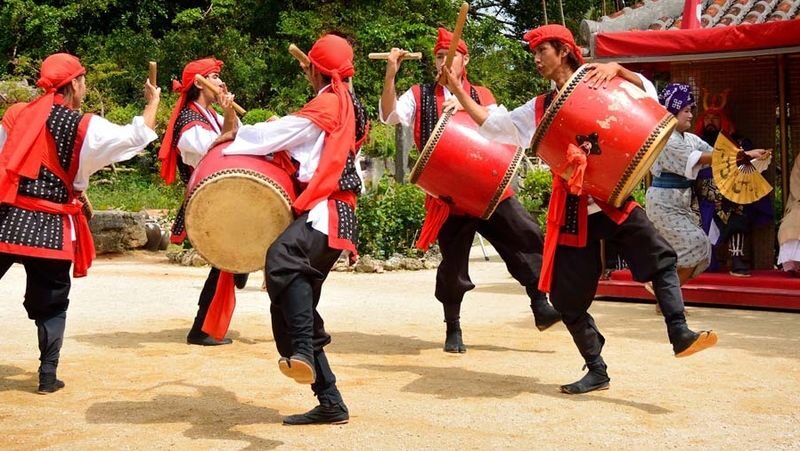
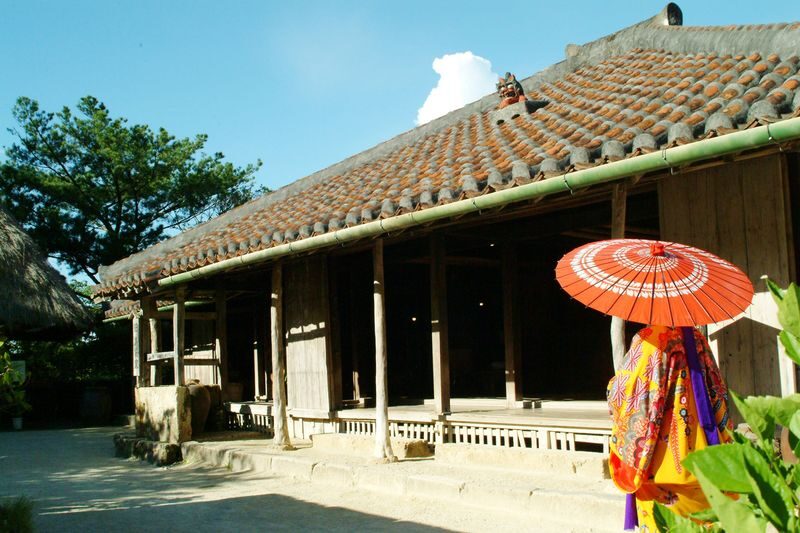
- Plan around the shows: Eisa drumming, traditional dance and music are among the main reasons to visit. Check the day’s schedule so you do not arrive just after a performance.
- Expect a small folk village: The houses and paths are manageable to explore, with many visitors spending about an hour to two and a half hours.
- Allow time for the brown-sugar scene: A traditional sugar-making demonstration with an ox is one of the more distinctive sights.
- Choose activities carefully: Craft workshops, costume experiences and other activities may be available, but they can depend on the package and operating hours.
- Use your QR voucher at the counter: You exchange it for a physical ticket before entering. This is straightforward, but it is not the same as walking past every queue.
- Come prepared for the weather: You will spend time outdoors. An umbrella and mosquito repellent can be useful, and the restaurant air conditioning may feel very cold.

👉 See our pick of the 5 Best Tours In Okinawa
A small village with a big cultural focus
Ryukyu Mura is a folk village and theme park in Onna, on Okinawa’s main island. Its aim is to introduce the culture of the former Ryukyu Kingdom through traditional buildings, performances, crafts and food.
This is not a sprawling attraction with rides or a full day’s worth of exhibits. Think of it as a compact cultural stop: walk the paths, look inside the old houses, catch a performance and decide whether to add a workshop or meal. If you are curious about Okinawan traditions, that mix can make for a satisfying visit. If you want nonstop activities, the grounds may feel quiet.
The houses are a central part of the setting. They give you a sense of older village life, and some have been moved from their original locations. You can enter selected buildings, but be ready to remove your shoes. The traditional architecture and the shaded paths make the site pleasant for a slow wander, though the short walking route means you will see the main area fairly quickly.
You can also read our reviews of more tours and experiences in Okinawa


Start with the performance schedule
The most useful planning move is to check the performance times before setting off. Eisa drumming, traditional dances and songs are key attractions, and some performances repeat during the day. The exact schedule can change, so confirm it on the official website before your visit.
The drumming show is a particular draw. It is lively and theatrical, and gives the village a sense of occasion that a walk through the buildings alone might not. Arrive a little early if you want a good seat, especially for the main Eisa performance. One visitor described a full theater even when the wider grounds felt quiet.
You may also see traditional dance, singing and ceremonial performances. They offer a lively introduction to local traditions, even if you do not understand Japanese. Some explanatory text is available in English, and translations can help you follow the setting and meaning. If you want a fuller explanation, a Japanese-language tour or guide may be more useful, but no guide is included with basic admission.
A performance can be the difference between a quick visit and a memorable one. If you arrive late in the day, you may have time to see the houses but miss the shows. The last entry is 4:00 pm, while the village closes at 5:00 pm, so arriving near closing leaves little room to explore.
Wander the old houses and village paths
Once you have a show time in mind, take an unhurried walk through the village. The paths and buildings are close together, which is handy if you are visiting with children or older relatives. You do not need a strenuous hike or a complicated route plan.
Look inside the traditional houses where entry is allowed. Their value is in the details of the buildings and the chance to picture daily life in an earlier Okinawa. They are not all in their original locations, so approach them as a collection of historic structures gathered into a cultural park rather than a village preserved exactly as it once stood.
The compact size is both a strength and a limitation. You can see the main sights without spending half a day on your feet, and the pace suits a relaxed stop between other Okinawa plans. But if you are making a long journey solely to see the grounds, the short route may not justify the trip on its own. Combine the visit with other stops in the central part of the island if that fits your plans.
Brown sugar, crafts and local flavors
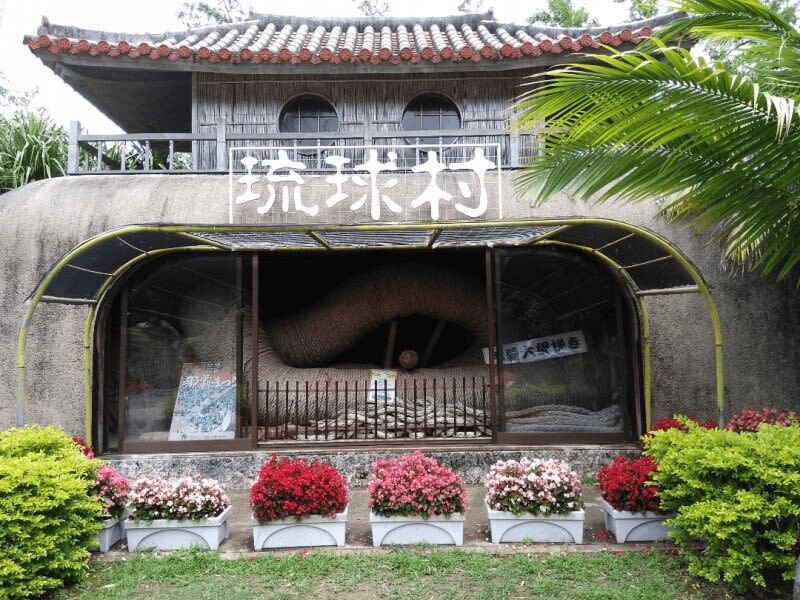
One of the more memorable scenes is the traditional brown-sugar-making demonstration, which uses an ox. It is an unusual glimpse of the work behind a familiar local product, and adds a practical, everyday detail to a visit otherwise centered on buildings and performances.
The animal is also worth viewing thoughtfully. A visitor has raised concern about the ox being tethered tightly, so if animal welfare is important to you, take a moment to assess the setup rather than assuming the demonstration is automatically a feel-good attraction.
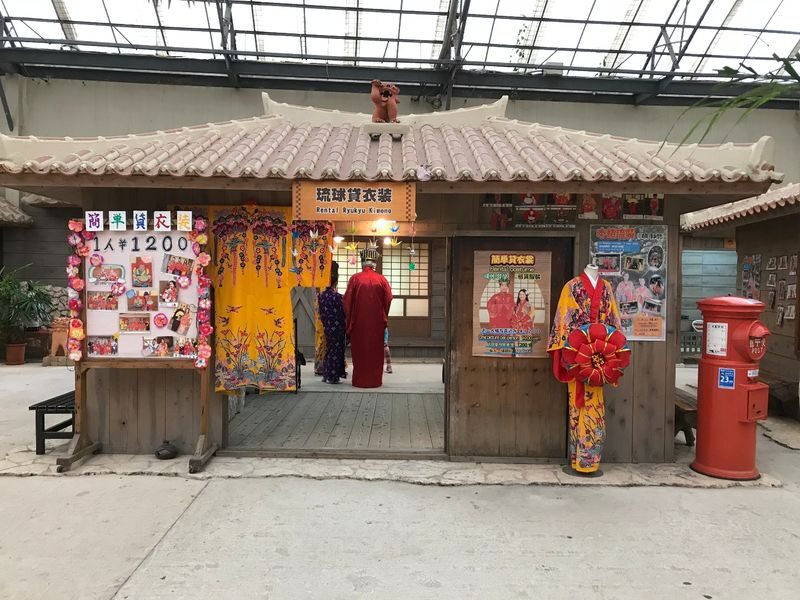
Depending on the package and what is operating that day, you may find craft activities, a Ryukyu costume experience or a chance to try a musical instrument such as the sanshin, an Okinawan lute. These can add real value if you prefer doing something to simply looking around. They are not all part of the basic admission ticket, so check what your chosen package includes and when the activity counters close. Some services near the exit may finish before the park itself closes.
Food is another way to connect with local culture. The village has a restaurant and places to try Okinawan dishes, along with treats such as ice cream. Food and personal purchases are not included in the entry price. The restaurant’s second-floor air conditioning can be strong, so bring a light layer if you tend to get cold indoors.
There are also opportunities to shop for local products and souvenirs. A complimentary taste of Ryukyu health tea has been offered, though offerings may vary. If you are hoping to use a voucher for an activity or make a purchase before closing, do not leave it until the final minutes.
How long to stay, and when to arrive
The stated visit duration is one to three hours. A quick walk through the grounds may take a little over an hour, while watching two performances, looking inside the houses and stopping for food can stretch the visit to around two and a half hours or more.
For a fuller experience, arrive early enough to catch a performance and then explore at a relaxed pace. The village opens at 9:30 am and last admission is 4:00 pm, with closing at 5:00 pm. Some visitors have found it useful to arrive before opening, browse the shops outside and use the restroom before entering, but check current opening details before you travel.
Weather matters. Much of the experience is outdoors, so rain can make the paths less pleasant and limit the time you want to linger. An umbrella and mosquito repellent are sensible additions, especially if you plan to take your time. On a hot day, build in an indoor break, but remember that the restaurant can be heavily air-conditioned.
The site can feel peaceful between shows, then lively when the theater fills. That rhythm is part of the appeal: you are not being pushed through a packed attraction, but you do need to plan around the performances if you want to see the village at its best.


Tickets, transport and the practical details
Admission starts at $9.49 through Klook. The online price may be less than buying at the entrance, but the exact amount can vary by date and package. For a modest admission fee, the value is strongest if you catch at least one performance and spend time with the houses or activities. If you only walk the short route and leave, the price may feel less worthwhile.
The basic ticket includes admission to the attractions. Other personal expenses and tips are not included. Package options include a standard Ryukyu Mura ticket, admission with selected experiences, and an entry ticket bundled with a Hanagasa-design shopping bag. Read the package details closely: the Churaumi Aquarium is a separate attraction, not part of the standard Ryukyu Mura ticket described here.
After purchase, present your QR voucher at the counter and exchange it for a physical ticket. The process is generally quick, but allow time for the exchange. The ticket information describes skip-the-line access, yet the redemption instructions still call for a counter exchange, so do not assume you can bypass every queue.
The voucher is valid for three days from the participation date and expires at 6:00 pm on the final day. Re-entry is not allowed after you leave the venue. Check the date selected when booking, and read the terms for your exact ticket before paying.
Ryukyu Mura is at 1130 Yamada, Onna, Kunigami District, Okinawa. By bus, take an Okinawa bus or Ryukyu bus from Naha City toward Nago and get off at Ryukyu Mura Station. Public transport is not the most convenient option, so check the current route and timetable before setting out. A large parking lot is available for those arriving by car.
Children aged 0 to 5 enter free. A youth fare requires a student ID. Free cancellation is available if you cancel at least 24 hours before the activity date, using destination local time.
Who will get the most from Ryukyu Mura?
I would put this on the itinerary if you want a manageable introduction to Okinawan culture, especially if you are interested in traditional music, dance, architecture or crafts. The performances give the visit its strongest focus, and the village’s small scale makes it a practical outing for families and older relatives.
It also works well as a stop in a day spent exploring central Okinawa. You can spend an hour or two here without committing your whole day, or linger longer if you add a meal and activities. The staff are often described as welcoming, and the QR exchange makes entry simple once you reach the counter.
I would not make a long detour for the buildings alone if you have little interest in folk culture. The grounds are compact, and the shows are the main reason to give the visit time. Check the performance schedule, arrive with room to explore, and decide in advance whether a workshop or food stop matters to you.
If you want a taste of Ryukyuan traditions rather than a big amusement park, book a ticket and plan around the show. If you are looking for a full day of attractions, choose another major stop for the rest of your day.
Ryukyu Mura Village Ticket
“I thought it could only be used on the specified date, but fortunately, there was a 3-day grace period, so I was able to visit during my trip. It r…”
FAQ
How much does a Ryukyu Mura ticket cost?
Tickets start at $9.49. The price depends on the date and package, so check the amount shown for your selection before booking.
How long should I allow for a visit?
Plan for one to three hours. A walk through the grounds can take a little over an hour, while performances, food and activities can extend your visit.
What are Ryukyu Mura’s opening hours?
The stated hours are 9:30 am to 5:00 pm, with last admission at 4:00 pm. Check the official website before your visit in case hours change.
How do I use a Klook voucher?
Present your voucher at the counter and exchange it for a physical ticket. The QR code makes the process straightforward, but you should allow time for the exchange.
Is Churaumi Aquarium included in the ticket?
No, the standard Ryukyu Mura ticket covers admission to Ryukyu Mura. Churaumi Aquarium is a separate attraction.
Can children enter for free?
Children aged 0 to 5 enter free. A youth fare requires presentation of a student ID.
Can I re-enter after leaving the village?
No. Re-entry is not allowed once you leave the venue.
How can I get to Ryukyu Mura by bus?
Take an Okinawa bus or Ryukyu bus from Naha City toward Nago and get off at Ryukyu Mura Station. Check the current route and timetable before travelling.
Can I cancel my ticket for a refund?
You can receive a full refund if you cancel at least 24 hours before the activity date, using destination local time.