Arequipa’s old center makes most sense on foot, and this small-group walk connects its grand Cathedral with quieter cloisters, historic tambos and cobbled lanes. It ends at a lookout facing the volcanoes that ring the city, so you get both a close look at its streets and a wider sense of its setting.
I like two things in particular: the group is capped at six, which leaves room to ask questions, and guides such as Joss bring together architecture, local traditions and practical tips for the rest of your stay. The route also seeks out corners you might miss on your own.
One consideration: the tour is listed as two hours, while the walking portion is described as about an hour and a half. The pace and detail can vary, so if you want commentary on every street and façade, keep questions coming.
- Five historic stops: The route includes the Cathedral, colonial cloisters and old tambos.
- A small group: No more than six participants, with English- and Spanish-speaking guides.
- Local stories: Expect legends, traditions and details about Arequipa’s architecture and culture.
- A volcano-view finish: The lookout offers views of Misti, Chachani and Pichu Pichu.
- Useful city advice: Guides share recommendations for restaurants, bars and things to do in Peru.
- Flexible booking: The tour costs $15 per person, with free cancellation up to 24 hours ahead.
- A walk that links Arequipa’s landmarks to everyday life
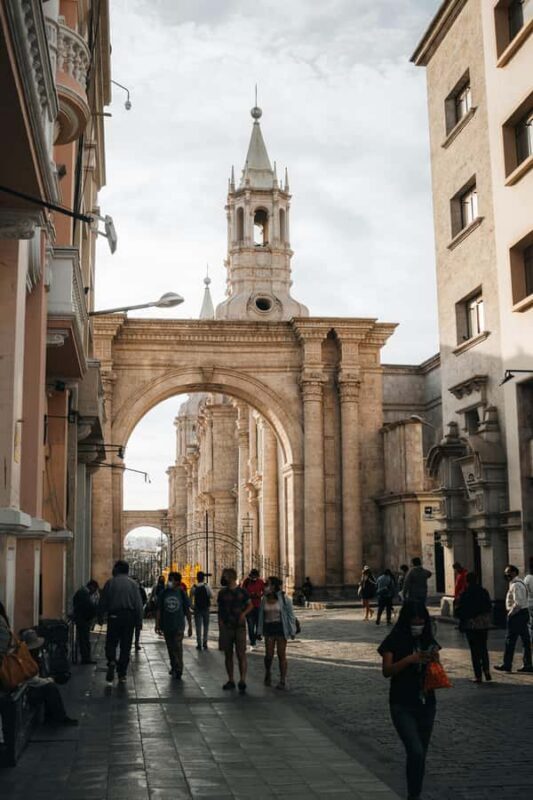
- The Cathedral gives the route its grand opening
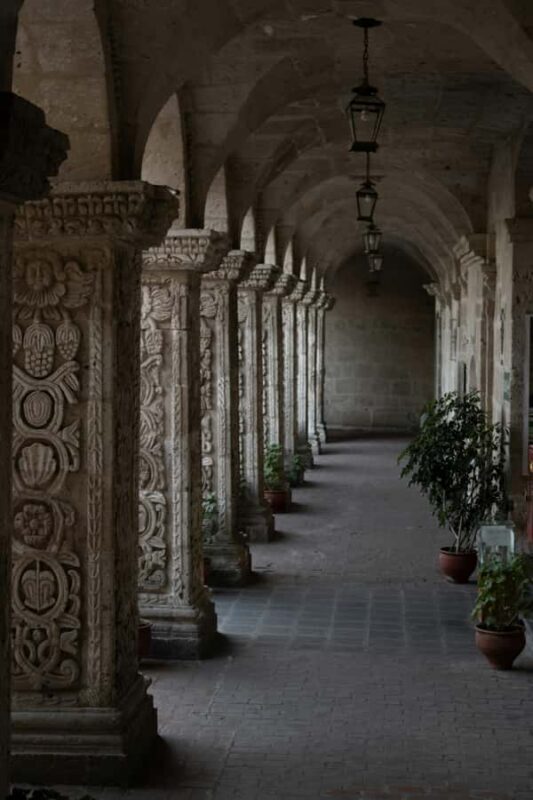
- Cloisters offer a quieter look at colonial architecture
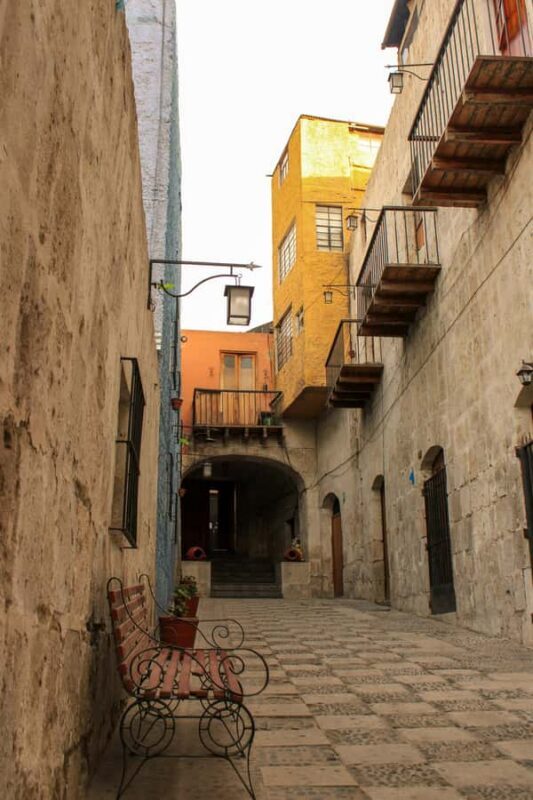
- Tambos connect the old center with daily needs
- Cobblestone streets bring the stories between stops
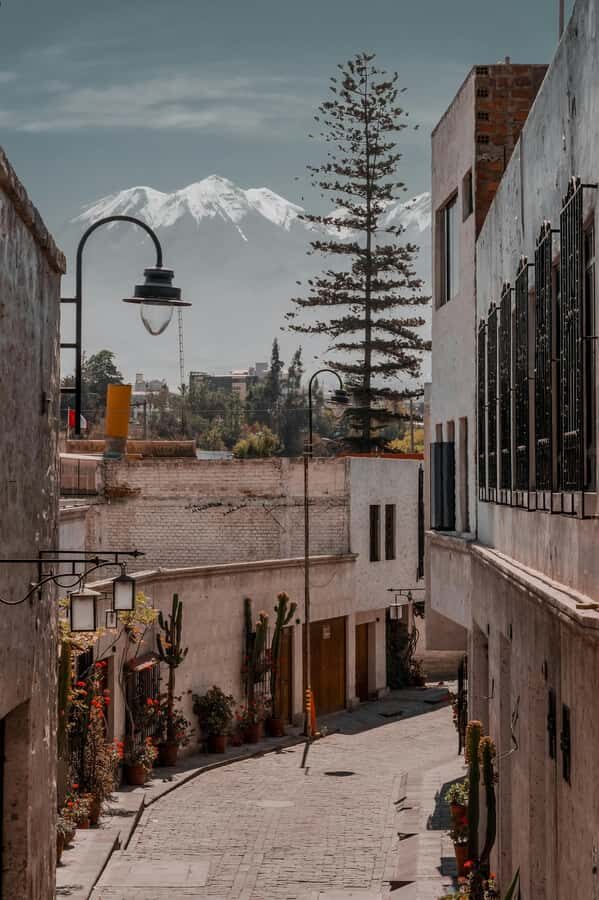
- The viewpoint rewards you with a wider view
- Six people keeps the experience personal
- buys more than a checklist of sights
- Who will get the most from this walk
- Should you book the Arequipa historic-center walk?
- FAQ
- How long is the tour?
- What is the price?
- Where is the meeting point?
- Which languages are available?
- How many people can join?
- What sites are included?
- Can I cancel for a refund?
- The Best Of Arequipa!
- More Walking Tours in Arequipa
- More Tours in Arequipa
- More Tour Reviews in Arequipa
- Not for you? Here's more nearby things to do in Arequipa we have reviewed
A walk that links Arequipa’s landmarks to everyday life
 1 / 5
 2 / 5
 3 / 5
 4 / 5
 5 / 5
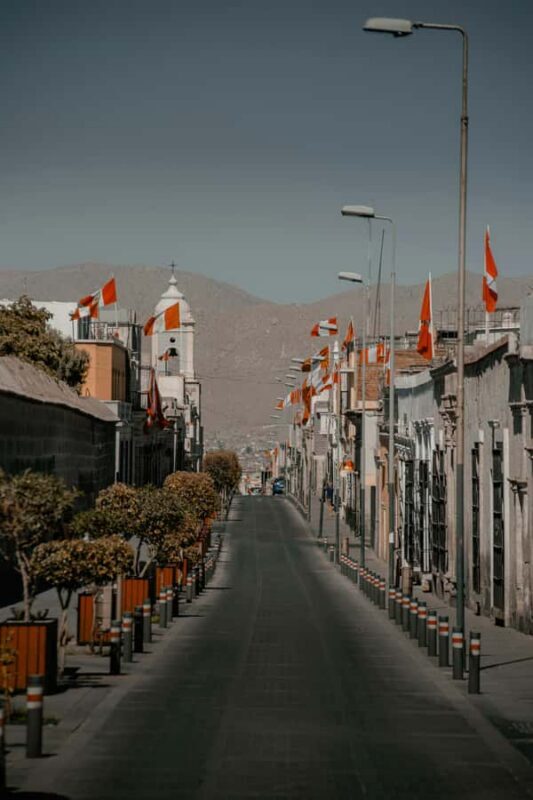
Arequipa’s historic center is more than a set of impressive stone façades. Its Cathedral and colonial buildings tell one part of the city’s story; the tambos, narrow streets and local traditions help bring that story closer to daily life. This tour puts those pieces together in a compact walk.
You’ll meet at Campo Redondo in San Lázaro, at coordinates -16.3934138, -71.5336117. From there, the route moves through the historic center on foot. There is no transport included or needed for the stated itinerary, which is focused on buildings, lanes and a final viewpoint.
The tour is described as two hours, with the walk itself also described as about an hour and a half. That difference is worth keeping in mind when planning your day. It leaves a little room for explanations and stops, but don’t assume you’ll spend the full two hours standing inside buildings.
👉 See our pick of the 6 Best Shopping Tours In Arequipa
The Cathedral gives the route its grand opening
The walk begins with Arequipa’s Cathedral, one of the city’s best-known landmarks. It is a strong place to start: the scale and presence of the building introduce the historic center before the route turns to smaller spaces and details.
The guide’s role matters here. A landmark can be impressive on sight alone, but local context helps you understand how it fits into the city’s history and identity. Guides on this tour have been described as explaining architecture alongside Arequipa’s geography and cultural influences, which makes the Cathedral more than a photo stop.
The available details say the tour visits the Cathedral, but don’t specify whether the visit includes an interior tour or how much time is spent inside. If seeing particular rooms or exhibits is important to you, ask the guide when you meet. You can also ask about a separate guided Cathedral visit: Joss has recommended one to participants, though it is not stated as part of this walk.
You can also read our reviews of more walking tours in Arequipa

Cloisters offer a quieter look at colonial architecture
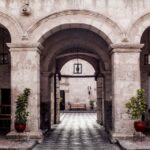
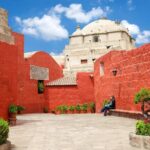
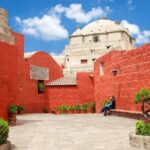
After the Cathedral, the route continues to colonial cloisters. These enclosed spaces offer a change of pace from the larger public landmark. You can look closely at the architecture while hearing about the history of the buildings and the people who used them.
This is one of the useful contrasts in the itinerary. The Cathedral shows Arequipa at its most monumental; the cloisters bring you into more contained spaces where the design and atmosphere are easier to take in at close range. The route promises a chance to admire the architecture and learn its background, rather than simply passing by.
The information does not name the cloisters or specify how many you’ll visit. Treat this as a guided introduction, not a promise to tour every colonial courtyard in the center. If a particular building catches your eye, ask about it. The group limit of six should make that sort of conversation easier than it would be on a large coach tour.
Tambos connect the old center with daily needs
A distinctive stop on the walk is the tambos, historic lodgings that have long played a part in life in Arequipa. The tour includes visits to these old spaces, which add a more everyday layer to a route otherwise centered on landmark buildings.
The value is in seeing how the city’s history extends beyond formal civic and religious architecture. The Cathedral and cloisters are easy to identify as important sites; the tambos prompt a different question: how did people stay, work and move through the city over time? Your guide can help connect the places you see with the broader story of Arequipa.
The tour description refers to tambos in the plural but does not name each one or promise a particular interior. This is another good point to ask about as you go. A guide can give context that a quick look at an old building cannot, but the exact depth of explanation depends on the stop and the conversation.
Cobblestone streets bring the stories between stops
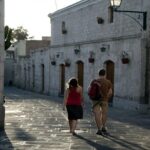
Some of the tour’s best moments may come between the headline sights. As you walk along the cobbled streets, the guide shares traditions, legends and curious facts passed down locally. That kind of storytelling can help the center feel less like a row of monuments and more like a place with a living identity.
Guides including Joss have been praised for making connections between architecture, geography and cultural influences, and for pointing out places they personally like. Past routes have also included less familiar corners and, in one case, San Camilo market. The market is not guaranteed as part of every tour, so think of it as a possible route variation rather than a fixed stop.
There is a small but fair caveat: a walking tour has stretches when you’re moving from one site to the next. If you want a steady stream of commentary about every street and building, you may need to prompt your guide. Some people will welcome a little breathing room; others may prefer more narration. The small group makes it easier to say which details interest you.
The viewpoint rewards you with a wider view
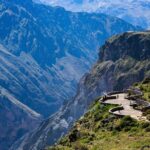
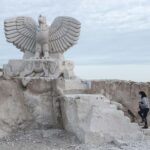
The route ends at a lookout, where the focus shifts from historic streets to Arequipa’s dramatic setting. From here, you can see the surrounding volcanoes, including Misti, Chachani and Pichu Pichu. After spending much of the walk close to buildings and lanes, this is a good moment to take in the scale of the city.
The view is a practical bonus as well as a scenic finish. It helps orient you: the center is part of a much larger place, framed by volcanic peaks. Some past walks have ended at a terrace or rooftop, and participants have enjoyed the sunset and a pisco sour there. The tour information guarantees a viewpoint, but it does not promise a rooftop, a drink or a particular sunset time. Those details can depend on the route and timing.
Morning and afternoon departures are available, subject to the schedule on your date. If the panorama is a priority, check the available start times and ask whether the viewpoint is likely to have clear views during that slot. The tour does not promise a specific weather or visibility condition.
You can also read our reviews of more city tours in Arequipa




Six people keeps the experience personal
The maximum group size is six, a useful limit for a walk built around conversation. You can hear explanations more easily, and there is room to ask about a building, a local custom or a restaurant recommendation without holding up a crowd.
The experience can become private if other participants cancel or if you are the only people booked. Several people have had a private walk with guides such as Joss or Joseph, but you should not count on that; the stated group limit is six, not a private-tour guarantee.
The guides are listed as speaking English and Spanish. Names used by people on the tour include Joss, Joseph and Jose. Joseph has been described as born and raised in Arequipa, and participants have valued the local perspective, warmth and willingness to answer questions. The exact guide may vary, so check who is leading your departure if that detail matters to you.
$15 buys more than a checklist of sights
At $15 per person, this is a modestly priced way to get oriented in the historic center. The fee covers a guided walk through five historical sites, stories and local context, recommendations for the city, and tips for travel in Peru. The group cap also gives the experience a more personal feel than a large-group tour.
The best value comes if you use the guide as a resource, not just as a narrator. Ask where to eat, what to see next and which places are worth returning to. Joss has shared restaurant and bar suggestions, and some participants have received recommendations and help after the walk. That kind of follow-up is not a formal promise, but it shows why taking notes or asking for useful locations during the tour can pay off.
Not everyone will judge the price the same way. If you want a detailed lecture on every street or building, this may feel light in places. One person felt there was too much walking without enough commentary. If you’re comfortable asking questions and mainly want a compact overview, the combination of five sites, local stories and a viewpoint makes the fee easier to justify.
The booking terms are flexible: you can reserve without paying immediately and cancel up to 24 hours before the tour for a full refund. Check the schedule for morning or afternoon start times. The tour’s stated duration is two hours, so leave a little space around it rather than planning another activity to begin at the exact finish time.
Who will get the most from this walk
I’d book this early in a stay in Arequipa. It offers a first look at the center, introduces the city’s architecture and cultural influences, and gives you recommendations to use for the rest of your visit. Several participants have found it a helpful introduction, especially because the guides can suggest places to eat and things to do next.
It is a good fit if you like walking, want historical context without committing half a day, and enjoy asking questions. It also suits people who value a local guide’s personal picks alongside the major sights. The small group and English or Spanish options make it easier to follow the discussion and join in.
Think twice if you prefer a highly scripted, building-by-building account with no gaps in narration. The pace includes walking between stops, and the level of detail may vary. Also, if your main goal is a full interior visit to the Cathedral or a guaranteed market stop, confirm those details before booking. The listed route offers an introduction, not a promise to cover every attraction in the center.
Should you book the Arequipa historic-center walk?
Book it if you want a friendly, practical introduction to Arequipa in about two hours. The Cathedral, cloisters, tambos and cobbled lanes give the walk variety, while the viewpoint adds a memorable finish with the volcanoes in view. Guides such as Joss have earned praise for clear explanations, local insight and useful recommendations.
The strongest reason to go is the mix: significant historic sites, lesser-known corners and advice you can use after the walk. The main trade-off is that the route may not provide detailed commentary every moment. At $15, with a maximum of six people and flexible cancellation, it is a sensible choice for curious walkers who want to get their bearings before exploring on their own.
Arequipa: Walk through the Historic Center of the City
FAQ
How long is the tour?
The tour is listed as two hours. The walking portion is also described as approximately one and a half hours, so allow the full two hours in your plans.
What is the price?
The price is $15 per person.
Where is the meeting point?
Meet at Campo Redondo in San Lázaro. The coordinates provided are -16.3934138, -71.5336117.
Which languages are available?
Guides speak English and Spanish.
How many people can join?
The group is limited to six participants.
What sites are included?
The tour includes five historical sites. The stated route includes the Cathedral, colonial cloisters and tambos, along with cobblestone streets and a final viewpoint.
Can I cancel for a refund?
Yes. You can cancel up to 24 hours in advance for a full refund.
You can check availability for your dates here: