The museum’s glass floor gives you an immediate glimpse of ancient remains beneath your feet, then the galleries lead from everyday Athenian life to the Parthenon’s sculptural stories. I like that you can follow the audio guide at your own pace, and that your ticket is valid any time during opening hours on your selected date.
I also like the clear route from votive offerings and household customs to the Caryatids and the Parthenon frieze. One thing to weigh: this is a self-guided visit, not a live tour, and the audio depends on a compatible, charged phone and your own headphones.
- Key points to know before you go
- A museum visit that connects the Acropolis to daily life
- Start with the glass floor and the ancient remains
- Follow ancient Athenians through daily life
- Trace democracy, myth, and the changing art of Greece
- Give the top floor time for the Parthenon
- Meet the Caryatids and other classical works
- Plan around the ticket, hours, and phone requirements
- Getting to Dionysiou Areopagitou 15
- Who should book this audio-guided visit?
- Should you book it?
- FAQ
- How long should I allow for the Acropolis Museum?
- Is a live tour guide included?
- When can I use the ticket?
- What languages are available for the audio guide?
- What should I bring for the audio tour?
- Can I buy a reduced-price ticket with this package?
- Is the museum accessible by wheelchair and stroller?
- Can I take photos inside?
- Can I leave and come back in?
- How do I get to the museum by metro?
- The Best Of Athens!
- More Tickets in Athens
- More Tours in Athens
- More Tour Reviews in Athens
- Not for you? Here's more nearby things to do in Athens we have reviewed
Key points to know before you go


- Look down first: The entrance floor reveals archaeological remains beneath the modern building.
- Follow the ancient city through its objects: Galleries cover daily life, wedding customs, early medicine, religion, democracy, and Greek art.
- Save time for the top floor: It presents the Parthenon’s sculptural decoration and stories, including the Panathenaic Procession and the Centaur battle.
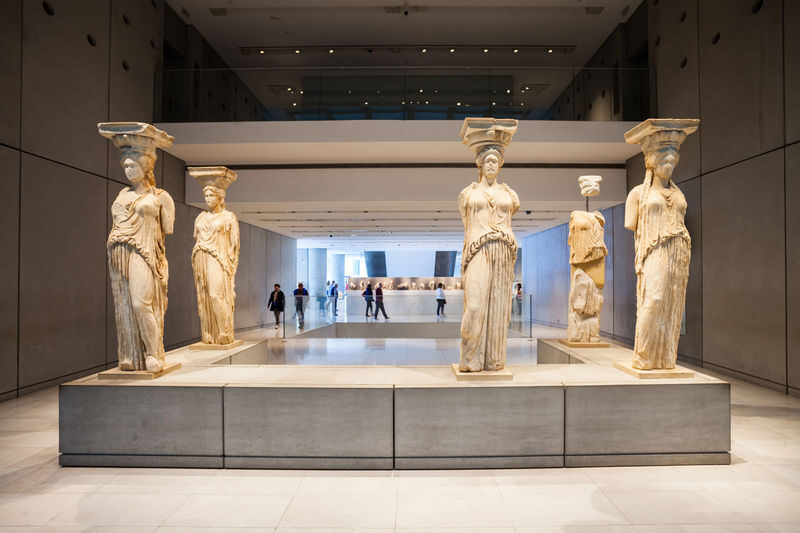
- The Caryatids are a highlight: These sculpted maidens have stood for more than 2,500 years.
- Bring your own setup: Download the audio guide, charge your phone, and bring headphones.
- Check the calendar and hours: The ticket is tied to your selected date, and opening times change by season and day.

👉 See our pick of the 9 Best Snorkeling Experiences In Athens
A museum visit that connects the Acropolis to daily life
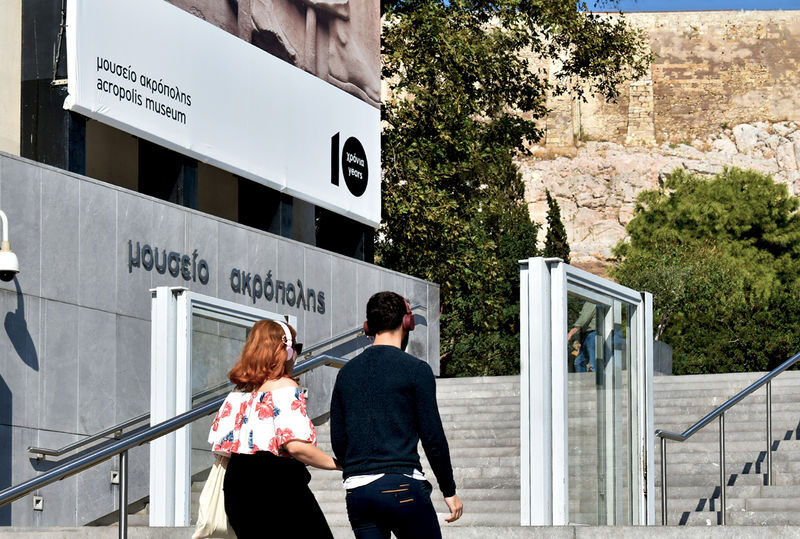
The Acropolis Museum sits at Dionysiou Areopagitou 15, close to the Acropolis metro station. Its striking modern design is part of the experience, but the real pleasure is the way it helps you make sense of the objects found on and around the Acropolis Hill.
The visit is not only about famous sculpture. You’ll also see objects linked to ordinary life, religious offerings, and the development of Athenian art and civic life. That broader view matters: the Acropolis was not just a set of grand buildings. It belonged to a city of people, customs, beliefs, and public rituals.
You have two to three hours to explore, according to the expected visit length. That is enough time to see the main galleries without racing, though the museum’s many stories could easily keep you longer if you listen to every audio stop and pause for details.
This ticket pairs admission with a downloadable audio guide for your phone. There is no tour leader or fixed group route. You can pause, skip ahead, or revisit the audio, which is useful if you want to linger over a sculpture or move more quickly through a section.
You can also read our reviews of more tours and experiences in Athens



Start with the glass floor and the ancient remains
The museum’s glass floor offers an unusual beginning. Before you focus on individual objects, you can look down at remains beneath the building and see that the modern museum is set among traces of earlier life.
It’s a good reminder that Athens is not a city where the ancient past is neatly contained in one monument. The layers below the museum form part of the setting for everything you’ll see upstairs. Take a moment here rather than treating the entrance as a space to hurry through.
Your e-ticket is intended to make entry easier, and the ticket is valid at any time during opening hours on your selected date. Online booking can save you from having to buy a standard ticket at the counter. One visitor described buying online in advance as quick and convenient, a useful point if you prefer to arrive with admission sorted.
Do not mistake pre-booked entry for a reason to arrive with oversized bags. The museum has X-ray baggage screening at the entrance, so travelling light is the practical choice. Re-entry is not allowed after you leave, so plan your visit as one continuous stop.
Follow ancient Athenians through daily life
The galleries move beyond monumental art to show aspects of life in ancient Athens. The audio tour covers subjects such as wedding customs and early medicine, giving you a way to connect objects with habits and rituals rather than seeing them as isolated displays.
I like this part of the visit because it offers a change of scale. A sculpture can command attention, but everyday objects and customs help you picture the people who lived in the city. The stories also give the museum visit a useful rhythm: big ideas such as democracy and artistic change sit beside the details of domestic life.
The audio guide is available in English, Spanish, German, French, Italian, and Greek. You download it to a phone, so bring headphones and make sure your device is charged. The guide can be used repeatedly and at any time, which gives you flexibility to revisit sections during the visit.
There is no named guide or live commentary included. If you enjoy asking questions as you go, this format will feel less personal than a guided walk. If you prefer to control your pace and choose what interests you, that independence is a real advantage.
Trace democracy, myth, and the changing art of Greece
As you continue through the galleries, the audio guide connects the Acropolis to Athens’ journey toward democracy and to changes in Greek art. Myths, gods, and heroes help explain the subjects that appear in the sculptures and offerings.
The value here is in the context. Without it, a museum can become a parade of beautiful objects with unfamiliar names. The narration gives you a thread to follow, linking what you see to religious beliefs and public life. You can listen closely or treat the audio as a companion for the objects that catch your eye.
The visit is self-paced, so there is no need to listen to every stop in order. If you have limited time, focus on the sections that interest you most, then make sure to leave room for the upper floor. The Parthenon gallery is a central part of the experience, and it deserves more than a quick pass.
Photography and filming for personal use are permitted in most areas, but not in the Archaic Acropolis Hall. Flash photography is prohibited throughout the museum. Keep those rules in mind before you lift your phone, and check signs in the galleries for any additional instructions.
Give the top floor time for the Parthenon
The top floor is where the visit turns to the Parthenon’s sculptural decoration. Here you can see the frieze and follow stories that include the Panathenaic Procession, Athena’s birth, and the battle between Centaurs and Lapiths.
These scenes help put the sculpture in its civic and mythic setting. The Panathenaic Procession, in particular, connects the building to a public ritual in Athens. The audio guide can help you read the stories rather than simply admire the carving as a pattern of figures.
This is a good place to slow down. The museum’s main highlights are not all single objects with one obvious viewing point; the meaning often comes from how scenes fit together. If you’re interested in classical art, give yourself time to listen, look, and then look again.
The top-floor focus also makes the visit more rewarding after you have seen the earlier galleries. You arrive with a better sense of the city’s daily and religious life, so the monumental sculpture feels connected to the people and rituals that came before it.
You can also read our reviews of more museum experiences in Athens


Meet the Caryatids and other classical works
The Caryatids are among the museum’s best-known works: sculpted maidens associated with the Acropolis and described here as having stood for more than 2,500 years. Their presence gives the visit a memorable finish, particularly after the narrative sweep of the Parthenon gallery.
The classical-era works are not simply a final photo stop. They bring the museum’s themes together: artistic skill, sacred architecture, and the lasting public identity of ancient Athens. The audio guide can add context, but even a brief pause to take in the figures is worthwhile.
The museum holds votive offerings from the Acropolis Hill as well. These objects offer a different kind of encounter from the major sculptures. They point to acts of devotion and the many ways people related to the sacred site.
If you’re visiting with children, there is no age limit for this ticket, and the museum is stroller-accessible. The self-guided format lets families pause as needed, though the two-to-three-hour visit can feel long for younger children. Keep the route flexible and use the phone audio selectively.
Plan around the ticket, hours, and phone requirements
The price starts at $41.89 for admission and the digital audio guide. Whether that is good value depends on what you want from a museum visit. You are paying for entry plus narration you can use at your own pace, not a private guide or a small-group tour. If you would otherwise buy admission and use an audio guide, the combined setup may suit you; if you qualify for a reduced-price ticket, check the museum’s ticket counter instead.
Reduced-price tickets must be obtained at the counter, where lines are usually long, especially from May through September. Compare the standard ticket price with any discount you qualify for before booking. This ticket is a regular admission ticket for any age, not a reduced-fare option.
After booking, look for a separate email from the local operator with the e-ticket and audio-app download instructions. The guide requires Android 5.0 or later or a compatible iOS device. It does not work with Windows phones, iPhone 5 or 5C and older, iPod Touch fifth generation and older, iPad fourth generation and older, or the first-generation iPad Mini.
Opening hours change with the season. From November 1 through March 31, the museum is open Monday through Thursday from 9 a.m. to 5 p.m., Friday from 9 a.m. to 10 p.m., and Saturday and Sunday from 9 a.m. to 8 p.m. From April 1 through October 31, it is open Monday from 9 a.m. to 5 p.m. and Tuesday, Wednesday, Thursday, Saturday, and Sunday from 9 a.m. to 8 p.m.
Last admission is 30 minutes before closing. The museum is closed on January 1, Orthodox Easter Sunday, May 1, and December 25 and 26. Hours and closures can change, so check current information before setting out. Your voucher is valid only on the date selected, and the booking cannot be cancelled or refunded.
Getting to Dionysiou Areopagitou 15
The museum is at Dionysiou Areopagitou 15, Athens 117 42. The simplest route listed is the metro: take the Red Line, M2, to Acropolis station, then walk about two minutes.
Bus routes 24, 40, 57, 126, 134, 135, 136, and 137 stop at Makrigianni or Akropoli, followed by a two-to-three-minute walk. If driving via Syngrou Avenue, nearby parking is available, though the details of parking costs and spaces are not specified.
The museum is wheelchair-accessible, and strollers are permitted. For specific accessibility arrangements, check the museum’s official information before your visit. Service animals with valid identification are allowed; other pets are not.
Who should book this audio-guided visit?
This option suits independent museum-goers who want to explore without joining a group or keeping to a guide’s schedule. It is especially useful if you like to choose your own pace, want narration in one of the six listed languages, and are comfortable using your phone as your guide.
It also works for visitors with a limited Athens itinerary who want a clear, self-contained museum visit of roughly two to three hours. The location is easy to reach by metro, and the ticket lets you enter during opening hours on your chosen date rather than at a stated entry time.
Think twice if you prefer live conversation, need a reduced-price ticket, or do not have a compatible smartphone and headphones. Also consider the nonrefundable, date-specific ticket carefully before purchase. The booking’s convenience is most useful when you are sure of your plans.
Should you book it?
Book this ticket if you want a flexible visit with admission and a phone audio guide, and you’re ready to manage the download before arrival. Its strongest points are the freedom to set your own pace and the route from daily Athenian life to the Parthenon sculptures and Caryatids.
Choose another format if you want a live guide, qualify for a reduced ticket, or would rather not rely on your phone. For an independent visit to one of Athens’ most important museums, this is a practical way to see the highlights while still making time for the smaller details.
Acropolis Museum ticket with audio tour in Athens
“Skip the lines and buy your tickets online in advance – it's quick, easy, and convenient!”
FAQ
How long should I allow for the Acropolis Museum?
Plan for about two to three hours. You can adjust the pace by listening to selected audio stops or spending longer in the galleries that interest you.
Is a live tour guide included?
No. The package includes museum admission and a digital audio guide for your phone, not a live tour guide.
When can I use the ticket?
The ticket is valid during opening hours on the selected visit date. It is valid only for that date and any stated time restriction.
What languages are available for the audio guide?
The digital audio guide is available in English, Spanish, German, French, Italian, and Greek.
What should I bring for the audio tour?
Bring a charged compatible smartphone and headphones. The audio guide is downloaded to your phone.
Can I buy a reduced-price ticket with this package?
No reduced-price ticket is described in this package. If you qualify for a reduced fare, you must go to the museum ticket counter, where lines are often long, especially from May through September.
Is the museum accessible by wheelchair and stroller?
Yes. The museum is listed as wheelchair-accessible and stroller-accessible. Check the museum’s official information for specific accessibility details.
Can I take photos inside?
Amateur photography and filming are permitted in most areas, except the Archaic Acropolis Hall. Flash photography is prohibited inside the museum.
Can I leave and come back in?
No. Re-entry is not allowed after you leave the venue.
How do I get to the museum by metro?
Take the Red Line, M2, to Acropolis station. From there, it is about a two-minute walk to Dionysiou Areopagitou 15.