Stockholm’s Old Town is more than a postcard of pretty lanes. On this 2.5-hour walk, its squares and landmarks become a way to follow Sweden from medieval trading town to modern capital. I like the mix of big turning points, including the Stockholm Bloodbath and Gustav Vasa, with smaller cultural connections such as fika, lagom and the Viking roots of Bluetooth. I also like that the route puts the Royal Palace, Parliament and House of Nobility in the same historical frame.
One thing to weigh: this is an exterior-focused walk, not a ticketed tour of palace rooms, churches or museums. You’ll spend most of the 2.5 hours on your feet, so wear comfortable shoes and book it for the stories and street-level context, not indoor access.
- What makes this walk worth your time
- Start at Birger Jarls Torg and set the scene
- Riddarhuset and Parliament: power made visible
- The Royal Palace and Storkyrkan
- Stortorget, the Bloodbath and the Nobel Prize Museum
- Narrow lanes, old stones and Viking connections
- What the 2.5-hour format feels like
- Is a good price for the experience?
- Who should book this walk?
- Should you book it?
- FAQ
- How long is the tour?
- Where does the tour start?
- What languages are available?
- Does the tour include entry to the Royal Palace or museums?
- What is included in the price?
- Is the tour suitable for wheelchair users?
- What should I bring?
- The Best Of Stockholm!
- More Walking Tours in Stockholm
- More Tours in Stockholm
- More Tour Reviews in Stockholm
- Not for you? Here's more nearby things to do in Stockholm we have reviewed
What makes this walk worth your time
 1 / 5
 2 / 5
 3 / 5
 4 / 5
 5 / 5
- Follow Sweden’s story across 800 years: Connect medieval Stockholm with the country’s modern identity.
- Put key landmarks in context: See the Royal Palace, Parliament House and House of Nobility while hearing about the people and decisions associated with them.
- Get past the headline version of the Bloodbath: The guide explores one of Stockholm’s most dramatic episodes as part of the city’s wider story.
- Find Viking history in an everyday technology: Learn how a Viking king inspired the name Bluetooth.
- Ask questions in your language: Live tours are offered in English, Spanish, French, Italian and German.
- Leave with useful local ideas: Restaurant, café and attraction recommendations are included, and questions are welcome throughout.

👉 See our pick of the 25 Best Guided Tours In Stockholm
Start at Birger Jarls Torg and set the scene
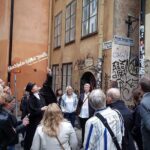
The tour begins at Birger Jarls Torg, on Riddarholmen, then leads into Gamla Stan’s streets and landmark-filled squares. It’s a useful starting point for a walk built around how Stockholm grew from a medieval settlement into Sweden’s capital, rather than a quick checklist of photo stops.
Your guide introduces the people and events that shaped the city, including its founder and Gustav Vasa, often described as the father of modern Sweden. The storytelling matters here: you’ll hear not only names and dates, but how political change, royal power, trade and ordinary life fit together.
Guides named in the tour’s visitor feedback include Maite, Maiten, Alexander, Daniela, Pedro, Alberto and Philip. The guide you meet will depend on your date and language, but the qualities most often praised are clear explanations, lively anecdotes, patience with questions and practical recommendations. One useful example: Alexander was appreciated for connecting Swedish history with present-day culture and society, while several people valued Maite’s blend of historical detail and humor.
You can also read our reviews of more walking tours in Stockholm


Riddarhuset and Parliament: power made visible
The first listed landmark is Riddarhuset, the House of Nobility. The building gives the guide a natural way to explain the influence of Sweden’s noble families and how that power shaped the country. You’ll stop for a look and a guided explanation, but the experience is about the exterior and its place in the story, not an interior visit.
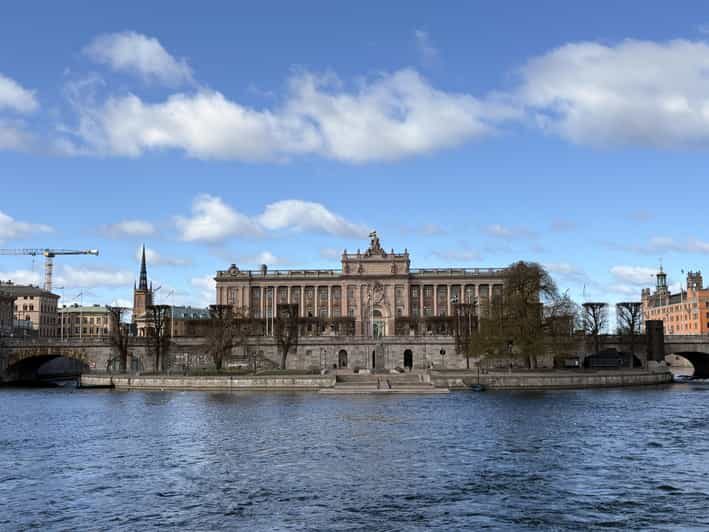
From there, the walk passes Parliament House. This is where the tour’s shift from historic monarchy and aristocracy toward modern government becomes tangible. You’re seeing the outside, not entering for a parliamentary tour, but the stop helps make sense of how Sweden’s political story continued beyond its medieval and royal chapters.
The route also includes Skeppsbron, with a walk and a photo stop. Its position among the Old Town’s waterfront streets gives the guide another setting for stories about Stockholm’s growth and the people who built the city. The value is less about ticking off a single monument and more about seeing how the different parts of the old center connect.
The Royal Palace and Storkyrkan
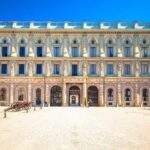
The Royal Palace is a major landmark on the route, and the guide discusses it from outside. You’ll hear about kings, royal intrigue and the role of the monarchy in Swedish history, with the palace acting as a visual anchor for those stories. If you want to see rooms or collections inside, plan a separate visit and budget for an entry ticket.
Nearby, the walk passes Storkyrkan, Stockholm’s cathedral. It’s another chance to connect religious life and royal history with the city’s public spaces. The guide-led stop is an exterior pass-by, so think of it as a story-rich introduction rather than a church visit.
A statue of Gustav III is also included. Its presence gives the guide a chance to bring another Swedish king into the conversation and explain how individuals at the top of society shaped the country. As with the other stops, you’re not being taken inside an attraction; you’re using the setting to understand the history around it.
Stortorget, the Bloodbath and the Nobel Prize Museum
Stortorget is one of the Old Town’s central story stops. The tour highlights the Stockholm Bloodbath, a violent episode that left a lasting mark on Sweden’s history. This is the sort of subject that benefits from a guide: the event is dramatic, but the wider context helps explain why it mattered and how it connects to the political changes that followed.
The Nobel Prize Museum is another stop for a photo and guided explanation. Its presence brings the walk into a more modern chapter, giving the guide a chance to link Stockholm’s past with Sweden’s later cultural and intellectual life. You won’t go inside as part of this tour, and museum entry is not included, so treat this as an introduction if you’re considering a separate visit.
The advertised themes also reach beyond the formal landmarks. You may hear about fika, the Swedish custom of taking a coffee break, and lagom, an idea often associated with balance and moderation. These everyday subjects are a welcome change of pace from kings and political conflict. They help the city feel like a place people live in now, not just a setting for old events.
Narrow lanes, old stones and Viking connections
The walk passes Tyska Brinken, Mårten Trotzigs Gränd and Kornhamnstorg. In these narrower streets and squares, the tour turns to the texture of Old Town life: trade, medieval legends, local traditions and the stories attached to familiar corners. Mårten Trotzigs Gränd is a particularly memorable name to look for on the route, though the value here is the guide’s explanation, not simply walking through a narrow lane.
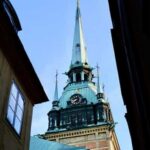
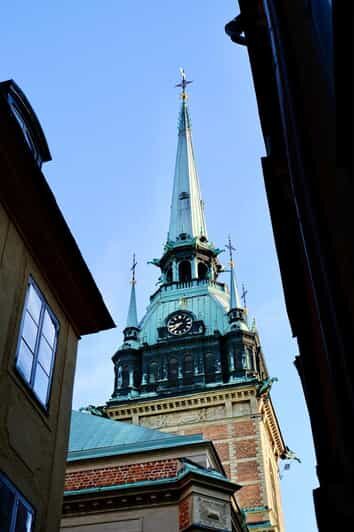
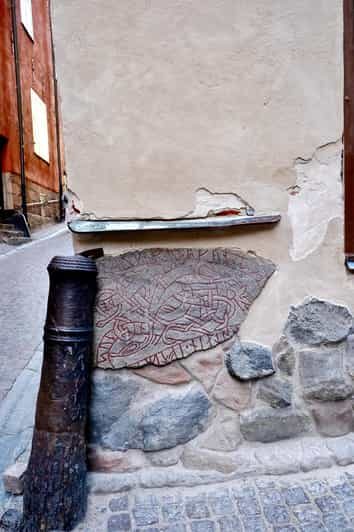
A rune stone is among the landmarks highlighted in the tour description, alongside St. Gertrud’s Church. The detailed stop sequence can vary, so don’t expect every named place to receive the same amount of time. The broader point is to connect Viking heritage with the later medieval city, then carry that thread forward to the present.
One of the most accessible modern connections is Bluetooth. The tour explains how the technology’s name has Viking roots, a neat reminder that Sweden’s past can turn up in the most ordinary parts of daily life. It’s the kind of detail that sticks because it gives you a fresh way to talk about history after the walk is over.



What the 2.5-hour format feels like
At two and a half hours, this is long enough to cover a substantial stretch of Old Town history without taking up a whole day. Several people who took the tour found the time passed quickly, helped by the guides’ anecdotes and willingness to answer questions. That said, it is still a walking tour, not a seated lecture with occasional strolls.
The pace is shaped by stops for explanation, walking between landmarks and photo opportunities. One person wished the guide had made more use of benches or places to sit during explanations. If standing for long stretches is difficult for you, keep that in mind when deciding. The activity is not suitable for wheelchair users, and comfortable shoes are recommended.
You can ask questions throughout, including about topics beyond the immediate stop. That flexibility is useful if you want to understand how Swedish society today relates to its older history, or if a particular landmark catches your attention. The balance between prepared stories and conversation appears to be one of the tour’s strengths, though the exact focus depends on your guide.
Is $16 a good price for the experience?
At $16 per person, the tour is an affordable way to add context to an Old Town visit. You’re paying for a local guide, a structured route and stories that connect landmarks to Swedish history and culture. For a first visit, that can be better value than walking the same streets with no idea why the buildings matter.
The price does not include food, drinks, museum or church entry, hotel pickup or drop-off, or personal expenses. That keeps the tour focused: you’re paying for the guided walk, not a package of admissions or transport. If you want to explore the Royal Palace or Nobel Prize Museum inside, set aside extra time and money.
The value is strongest if you enjoy history explained in plain language and like to ask questions. It may be less appealing if you mainly want architectural detail, prefer to explore at your own pace or want indoor access. One person specifically wished for more architecture and less historical narrative, so consider what kind of city tour you’re after.
Who should book this walk?
I’d recommend it to first-time visitors who want a clear introduction to Gamla Stan and Sweden’s story, especially if you like learning through memorable anecdotes. It also suits returning visitors who have seen the main sights but want a better sense of how the city’s people, politics and customs fit together.
The language choice is a practical plus: live guides are available in English, Spanish, French, Italian and German. The tour also includes suggestions for restaurants, cafés and other attractions, which makes it handy near the start of a stay when you’re still deciding what to do next.
If you want a detailed architectural tour, long indoor visits or a route designed for wheelchair access, this is not the right fit based on the details available. For most people who enjoy walking and want more than attractive photographs, it offers a useful, reasonably priced introduction.
Should you book it?
Book this tour if you want Gamla Stan to make sense as more than a collection of old buildings. The combination of royal landmarks, political history, Viking references and everyday Swedish customs gives you plenty to carry into the rest of your visit, and the guides’ local recommendations add practical value.
Skip it if you’d rather explore alone, need a seated format or are looking for entry to museums and churches. If you do book, wear comfortable shoes, bring questions and consider taking the walk early in your stay so you can use the restaurant and sightseeing tips afterward.
Stockholm: Walking tour from Medieval Town to Modern Capital
FAQ
How long is the tour?
The walking tour lasts 2.5 hours.
Where does the tour start?
It starts at Birger Jarls Torg, 111 28 Stockholm, Sweden.
What languages are available?
Live tours are offered in English, Spanish, French, Italian and German.
Does the tour include entry to the Royal Palace or museums?
No. The route includes exterior stops and guided explanations. Entry tickets to museums, churches and other attractions are not included.
What is included in the price?
The price includes a local Wolf Tours guide, historical storytelling, local insights and recommendations for restaurants, cafés and attractions. Questions are welcome throughout the tour.
Is the tour suitable for wheelchair users?
No. The tour is listed as not suitable for wheelchair users.
What should I bring?
Comfortable shoes are recommended for the 2.5-hour walk.
You can check availability for your dates here: