Pedra da Gávea rises more than 800 meters above Rio, and reaching its summit is no casual stroll. This is a serious, roughly six-hour mountain hike with steep sections and a rope-assisted climb. I like that you tackle it with a trail-prepared guide and climbing gear included, and I like that photos and videos are part of the outing.
The reward is a sweeping view over Rio from one of its most striking coastal peaks. Guides including Eduardo, often called Edu, and Ronald are praised for careful rope handling and for helping people feel secure. The trade-off is real: heat, humidity, steep ground, and exposure make this a poor fit if you are not regularly active or comfortable with heights.
- At a glance
- What makes Pedra da Gávea a different kind of Rio outing
- Meeting at Point da Meire
- Six hours on the mountain
- The summit, the view, and the photos
- Guides, safety, and the rope section
- What to bring, and what to leave behind
- Is good value?
- Who should book this hike?
- Should you book it?
- FAQ
- How long does the hike take?
- What climbing equipment is included?
- Where does the hike start?
- What languages do the guides speak?
- Are food, drinks, transport, and a backpack included?
- Who should not take this hike?
- The Best Of Rio De Janeiro!
- More Hiking & Trekking Tours in Rio De Janeiro
- More Tours in Rio De Janeiro
- More Tour Reviews in Rio De Janeiro
- Not for you? Here's more nearby things to do in Rio De Janeiro we have reviewed
At a glance
 1 / 10
 2 / 10
 3 / 10
 4 / 10
 5 / 10
 6 / 10
 7 / 10
 8 / 10
 9 / 10
 10 / 10
- A proper mountain challenge: The route takes about six hours of hiking, with the full activity listed at 390 minutes.
- Ropes and climbing kit are included: Expect a steep section where you use ropes, harnesses, carabiners, and belay equipment.
- A small group setting: The group is limited to 10 participants, with guides speaking English, Spanish, and Portuguese.
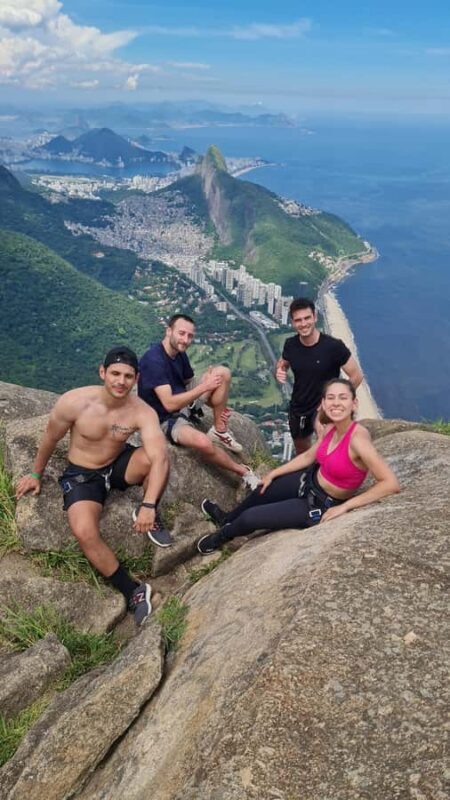
- Summit photos come with the outing: Your guide takes photos and videos, so you can focus on the climb and still bring home images.
- Start and finish at Point da Meire: Meet at the coffee shop, where you can get snacks and drinks before setting out.
- Fitness matters more than bravado: The hike is not recommended for people with a low fitness level or certain medical concerns.
👉 See our pick of the 25 Best Guided Tours in Rio De Janeiro
What makes Pedra da Gávea a different kind of Rio outing
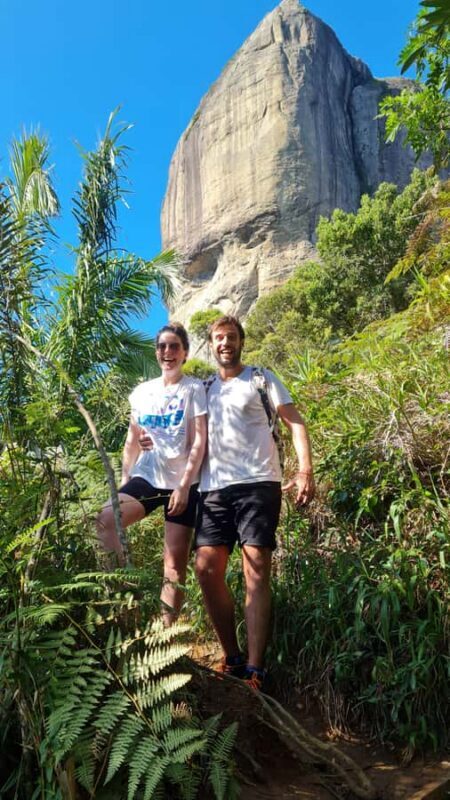
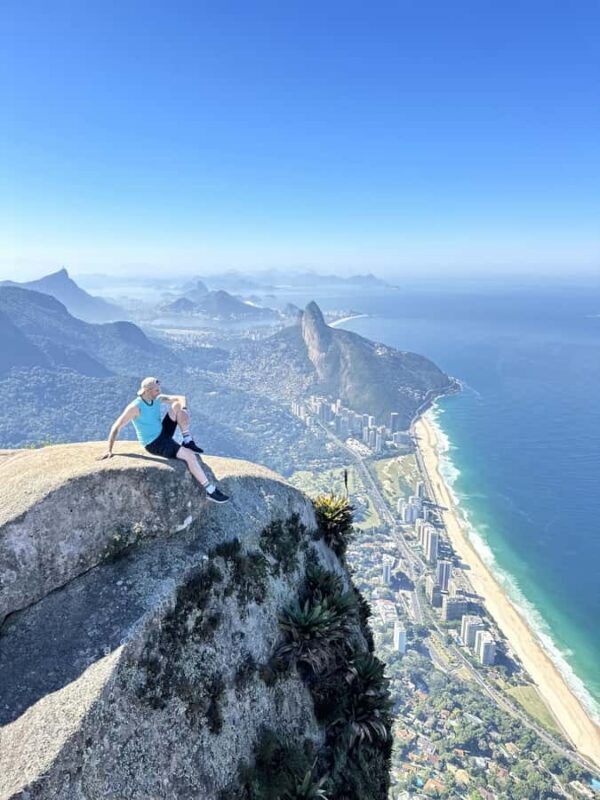
Rio is known for its beaches and viewpoints reached by road or cable car. Pedra da Gávea asks you to earn the view on foot, climbing through a long forest trail and tackling a steep rope section near the summit. The mountain is a famous adventure spot and is described as the world’s largest seaside monolith.
That scale gives the day a different feel from a short scenic walk. You spend hours moving uphill, using your legs and hands, then turn around and descend the same mountain. At the top, the city and coastline spread below you, making the effort feel tangible rather than abstract.
The route is challenging, but this is not presented as an unguided trek. You go with a guide prepared for the trail, and the climbing equipment is included. That matters on the rope section, where clear instructions and a calm pace can help make a daunting obstacle manageable.
You can also read our reviews of more hiking tours in Rio De Janeiro



Meeting at Point da Meire
The meeting point is Point da Meire, a coffee shop with snacks and drinks. It is a useful place to arrive ready to start, but food, drinks, and a backpack are not included in the tour price. Bring what you need for several hours outdoors rather than counting on refreshments along the trail.
The activity begins and ends at the same spot. Transfer is not included, so you will need to arrange your own way to and from the meeting point. Check the confirmed starting time when you book, since the available times can vary.
A small group capped at 10 can make a demanding route easier to manage than a large crowd. It also means you should be ready to move at the group’s pace, especially at the rope section, where people take turns climbing or descending. The listed cap is a useful guide to the planned group size, though guide staffing can vary.
Six hours on the mountain
The hike is described as about three hours up and three hours down, while the full activity lasts 390 minutes, or six and a half hours. Treat the extra half hour as a practical allowance for stops and the pace of a group rather than a promise that every outing follows an exact clock.
The first part is a sustained walk uphill. You will need steady energy and comfortable shoes, not just enthusiasm for a summit photo. The trail’s physical demand builds over time, and the heat and humidity can make the same climb feel harder. One useful piece of advice is to bring plenty of water. A past participant specifically recommended at least 1.5 liters, though your needs depend on conditions and your own pace.
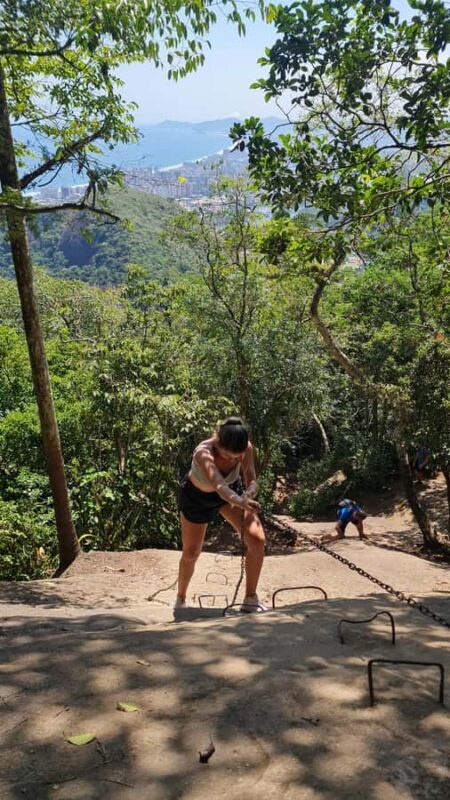
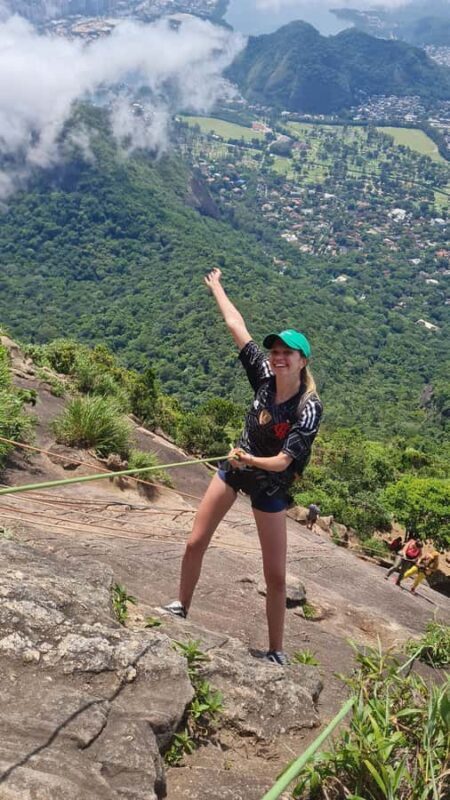
Near the steep climbing section, the outing changes character. You use the supplied rope and climbing equipment to get up the rock, with the guide managing the process. The descent also includes a steep rope-assisted section, which can be just as demanding as the ascent. One account describes a roughly 70-degree slope on the way down, a reminder that this is not simply a long walk with one exciting scramble.
Allow time for the whole group to work through these sections. People may need to climb or descend one at a time, so there can be waiting. That pause is part of the safety process, not wasted time, and it is a good moment to catch your breath and listen for the guide’s next instruction.
The summit, the view, and the photos
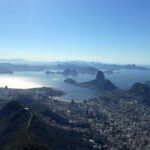
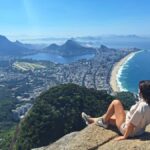
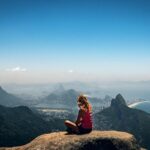
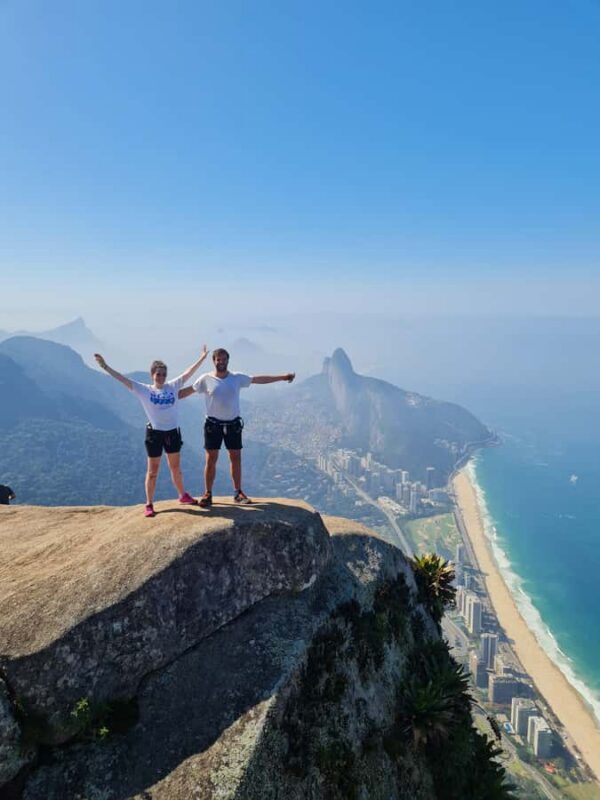
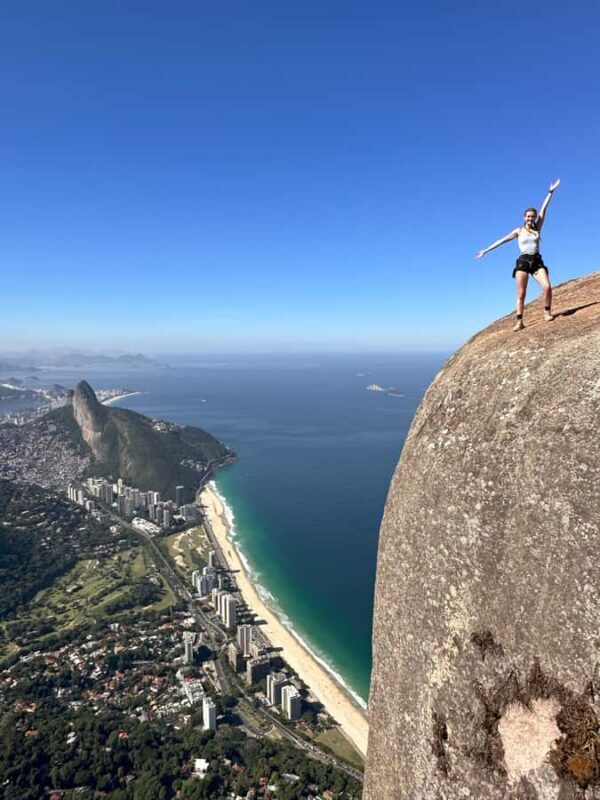
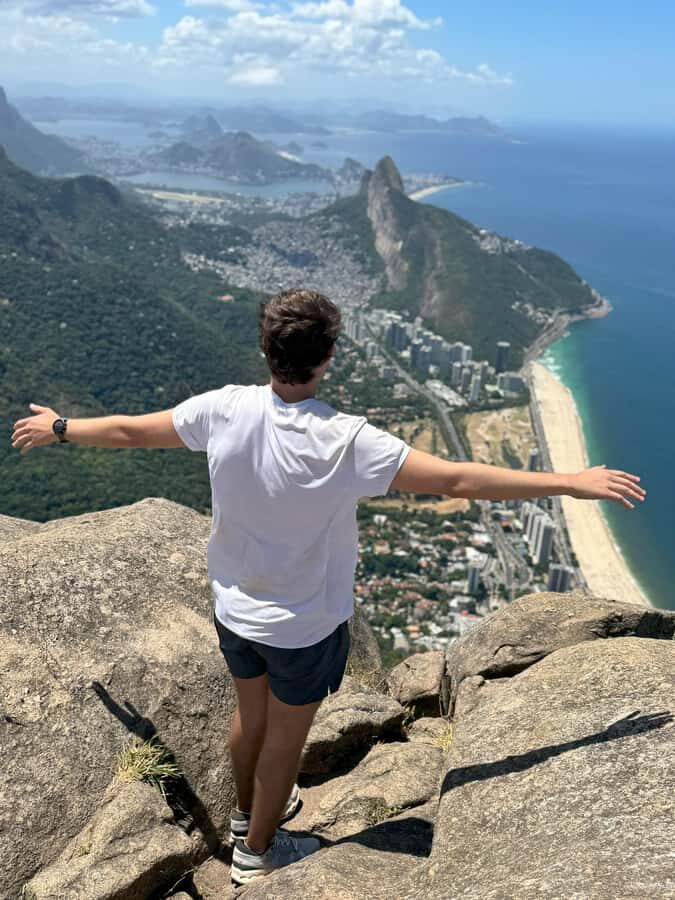
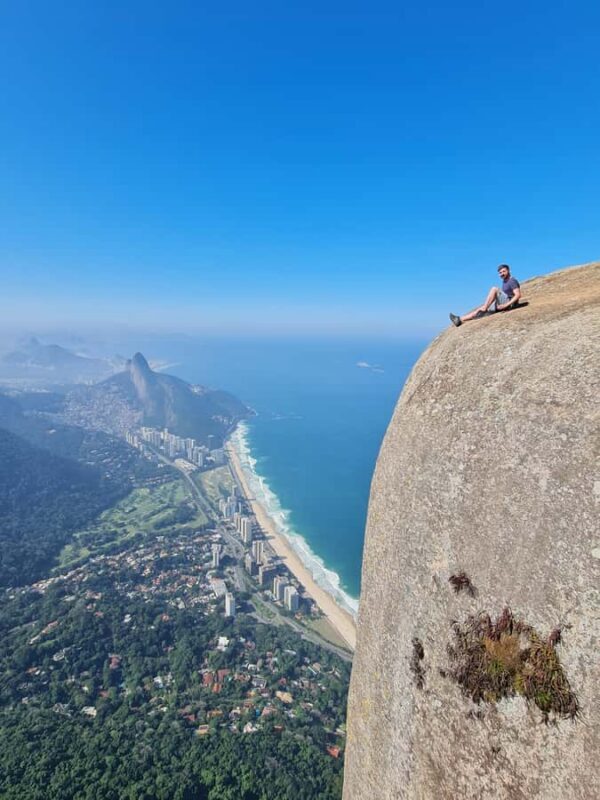
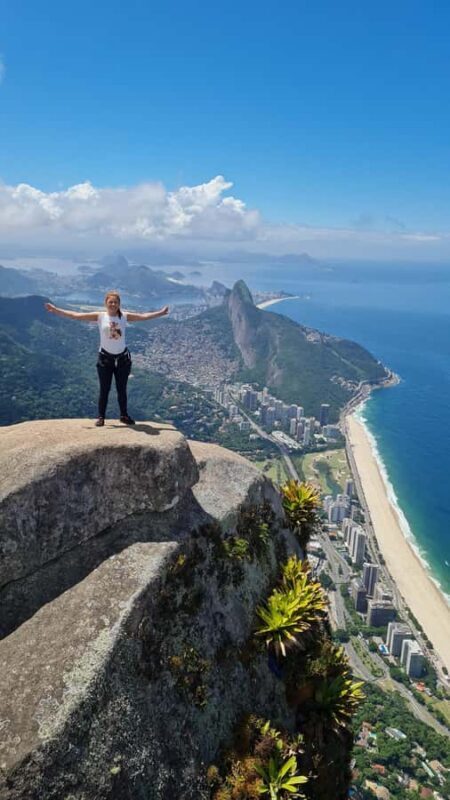
The summit is the payoff: a high vantage point over Rio and the coast. Clear weather can make the view spectacular, but mountain weather is not something a guide can promise. Fog has sometimes covered the summit before clearing later, while rain and clouds have also reduced visibility. If the view matters most to you, keep your expectations flexible and avoid treating a forecast as a guarantee.
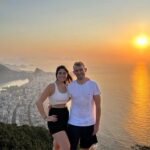
The guide takes photos and videos during the experience. That is more valuable than it might sound on a technical hike: when you are concentrating on your footing and the rope, taking your own pictures can be awkward. Some guides have also used a drone, but that should not be assumed for every departure.
The photos are a welcome extra, not the reason to book. The physical achievement and the summit view are the main event. If you are uncomfortable with heights, remember that reaching the best photo spots does not remove the exposure or the demanding climb. Tell your guide how you feel and follow their directions rather than pressing on for a picture.
You may also spot wildlife. People have reported seeing a monkey, a sloth, and a coati on the route, but sightings are incidental, not part of a guaranteed wildlife stop. Keep your food packed away and do not feed animals.
More Great Tours NearbyGuides, safety, and the rope section
The guide is central to this outing. Eduardo, commonly called Edu, is frequently singled out for taking care of the group, explaining the route, and helping with photos. Ronald, Bulha, Lucas, Fernando, and Dudu are also named among the guides. The guide on your departure may differ, so book for the guided mountain experience rather than a promise of a particular person.
The supplied climbing kit includes a rope, harness, carabiner, and belay equipment. Those items do not make the hike easy or remove all risk. They are tools used with the guide’s instructions, and you still need to be able to hike for hours, handle uneven terrain, and take part in the rope-assisted sections.
The strongest reason to choose a guided trip is that the technical parts require more than finding the trail. A prepared guide can organize the group and help each person through the ascent and descent. Several accounts describe guides as attentive and reassuring, including for people who felt nervous about heights. Still, reassurance is not a substitute for being comfortable enough to participate safely.
The trip has a strong overall rating, but weather and timing can affect the day. One person reported a late start followed by rain and cloud at the top, while other outings had clear views or fog that later lifted. A guide can manage the route, not the sky. Go for the climb and the chance of a great view, not a guaranteed postcard.




What to bring, and what to leave behind
Wear closed hiking shoes or sturdy sports shoes with a secure fit. The guidance calls for comfortable, light outdoor clothing, and practical items include a sun hat, sunglasses, and sunscreen. Shorts are listed as an option, but choose clothes that let you move freely and suit the conditions.
Pack water, food, and snacks for the outing. A backpack is not provided, so bring your own way to carry them. A charged smartphone is useful, though the guide also takes photos and videos. Do not rely on the summit to be a place to recharge or buy supplies.
Leave pets, weapons, sharp objects, alcohol, drugs, fireworks, explosives, and speakers at home. Making a fire and feeding animals are also not allowed. The restrictions are sensible on a strenuous trail where safety, wildlife, and the group’s pace all matter.
Is $41 good value?
At $41 per person, the price covers a guided outing, climbing equipment, and photos and videos. The activity lasts about six and a half hours, so this is not priced like a quick viewpoint stop. You are paying for a full day outdoors, a guide to manage the technical section, and the gear needed for the rope-assisted climb.
The included equipment is a meaningful part of the value. You do not have to arrange a harness and rope independently, and a guide can focus on moving the group through the challenging parts. The photos are another useful extra, especially if you would rather keep your hands free on the trail.
The price does not cover food, drinks, a backpack, or transportation. Factor those into your plans. If you already have suitable shoes and a pack, the out-of-pocket extras may be modest; if not, you will need to prepare before the hike. The value is best for someone who wants a guided, technical mountain day, not someone seeking a cheap way to reach a view.
There is free cancellation up to 24 hours before the activity, and you can reserve without paying immediately. These options help if your Rio plans are still taking shape, but they do not change the hike’s physical demands or guarantee good weather.
Who should book this hike?
This is a good match if you hike regularly, have solid general fitness, and want a challenge that goes beyond a standard city walk. It also suits people who are curious about climbing but want a guide and supplied safety equipment for the rope section. You do not need to be a specialist climber based on the experience described, but you do need to be willing and able to follow instructions on steep ground.
Think twice if you have trouble with heights, steep descents, or long periods of exertion. The hike is not recommended for people with low fitness, mobility impairments, vertigo, heart or respiratory problems, back problems, epilepsy, recent surgery, a cold, or other pre-existing medical conditions that could affect you on the trail. It is also unsuitable for children under 10, pregnant women, people over 80, and anyone over 130 kilograms.
Knee strain deserves consideration, too. The downhill route can be hard on your legs, and the rope section does not remove the need to descend. If you are coming off another demanding outing or have not been active lately, a day of rest and an honest fitness check are wiser than hoping the scenery will carry you through.
Should you book it?
Book Pedra da Gávea if you want a demanding, guided climb and are prepared for six hours of effort, steep rope work, heat, and uncertain weather. The summit views, included equipment, and guide-led photo help make it a compelling use of a day in Rio.
Skip it if you are looking for an easy viewpoint, dislike heights, or have a condition that makes strenuous hiking unsafe. For the right person, this is one of Rio’s most rewarding ways to spend a day. Pack water and snacks, wear proper shoes, and go for the mountain, not just the photo.
Pedra da Gávea Rio de Janeiro Summit Hike
FAQ
How long does the hike take?
The hike is described as about six hours, with roughly three hours up and three hours down. The full activity duration is 390 minutes, or six and a half hours.
What climbing equipment is included?
The tour includes a rope, harness, carabiner, and belay equipment, along with a guide prepared for the trail.
Where does the hike start?
It starts and ends at Point da Meire, at the coffee shop, where snacks and drinks are available.
What languages do the guides speak?
The live guide languages are English, Spanish, and Portuguese.
Are food, drinks, transport, and a backpack included?
No. Food, drinks, transportation, and a backpack are not included. Bring your own water, food, snacks, and pack.
Who should not take this hike?
It is not recommended for people with low fitness or conditions that may affect them while hiking. It is also listed as unsuitable for children under 10, pregnant women, people with mobility impairments or vertigo, and people with several medical conditions, among other restrictions.
You can check availability for your dates here: