The surprise here is below street level: this 50-minute tour pairs the famous Trevi Fountain with underground aqueduct remains, old Roman streets, and forgotten chambers. I like two things in particular: you get a guided explanation of the fountain’s history and myths, and you can approach the basin’s edge rather than only viewing it from behind the usual crowd barriers.
The main drawback is the setting above ground. The fountain can be packed, especially around midday, so the guide may need to steer the group through a crush of people. The underground section is also not suitable for wheelchair users.
- Key points to know
- What the 50-minute visit actually offers
- Starting at the Trevi Fountain
- Going below ground to see the aqueduct
- The guide and headsets are part of the value
- Crowds, timing, and what to bring
- Is a fair price?
- Who should book this tour?
- Should you book it?
- FAQ
- How long is the Trevi Fountain and aqueduct tour?
- What language is the tour in?
- Is the Trevi Fountain included in the visit?
- What can I see underground?
- Are headsets provided?
- Is transportation to the meeting point included?
- Is the tour suitable for wheelchair users?
- What should I bring?
- The Best Of Rome!
- More Tours in Rome
- More Tour Reviews in Rome
- Not for you? Here's more nearby things to do in Rome we have reviewed
Key points to know
 1 / 8
 2 / 8
 3 / 8
 4 / 8
 5 / 8
 6 / 8
 7 / 8
 8 / 8
- The tour combines two very different sights: the ornate Trevi Fountain above ground and Roman aqueduct remains below it.
- You get closer to the fountain: access includes the closest area of its perimeter, where you can take photos and toss a coin.
- Guides make the short visit count: Dina, Diana, Fina, and Dani are among the guides named by people who enjoyed clear explanations and lively storytelling.
- Headsets are included: useful when the fountain is noisy and the group is moving through crowds.
- Timing matters: a 1pm visit on a Friday felt very crowded; an early morning start may make the fountain easier to enjoy.
- At $32 per person, value depends on your interests: the added aqueduct visit and guided context are the draw, since the fountain itself is visible without a ticket.

👉 See our pick of the 25 Best Guided Tours In Rome
What the 50-minute visit actually offers
This is a compact tour, not a long archaeological visit. It gives you a closer look at the fountain, some context from a live English-speaking guide, and a short trip underground to see the aqueduct remains. If you have limited time in Rome, that combination is useful: you get a familiar landmark and a less obvious piece of the city in one booking.
The Trevi Fountain is a public sight, and you can see it without joining a tour. The extra value here is access to the closest part of its perimeter, along with a guide who explains what you are looking at. You are paying for a more focused visit, not simply for a view of a fountain.
The format also suits visitors who like a clear thread through a busy stop. Rather than arriving, taking a photo, and moving on, you hear about the monument’s history and myths before heading below street level. The guide’s explanations give the two parts of the visit a connection: the grand fountain above and the water infrastructure beneath.
You can also read our reviews of more tours and experiences in Rome.



Starting at the Trevi Fountain
The tour begins with the fountain’s exterior, where the scale and sculptural detail can be hard to take in when you are surrounded by people. Your guide introduces the landmark and shares stories and myths tied to it. The fountain is the star, but the explanation helps you look beyond the familiar photo angle and understand why it matters as more than a backdrop.
Access to the closest area of the fountain’s perimeter is one of the practical advantages. Several people appreciated being able to approach the basin, take pictures, and toss a coin. That is a different experience from viewing it at a distance behind rails, though it does not mean you will have the place to yourself. The square remains a popular stop, and even a guided group has to work around the crowd.
The guide’s role matters here. Visitors praised guides including Dina, Diana, Fina, and Dani for clear English, useful explanations, and a friendly manner. Names and availability can vary by departure, so do not book on the assumption that you will have one particular guide. What you can expect is a live English-language tour, with headsets to help you hear.
Going below ground to see the aqueduct
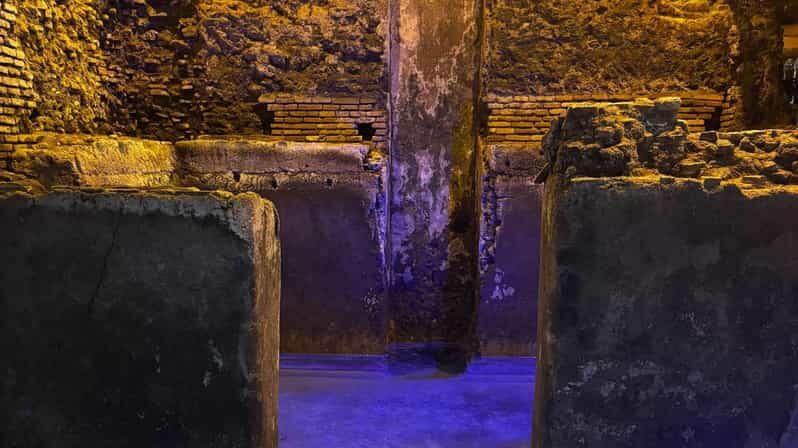
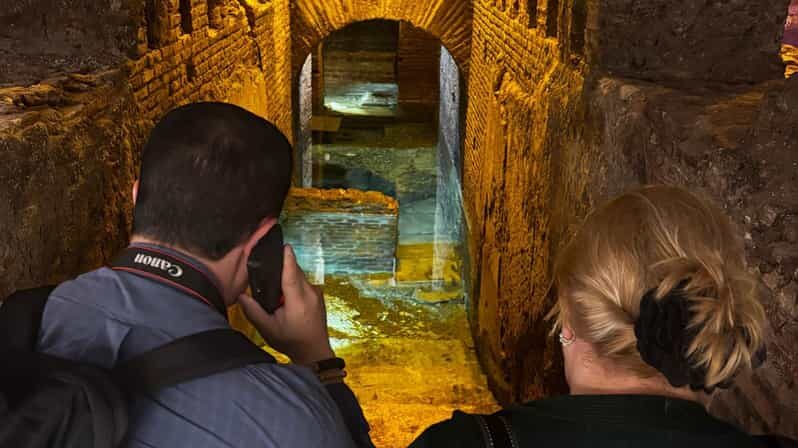
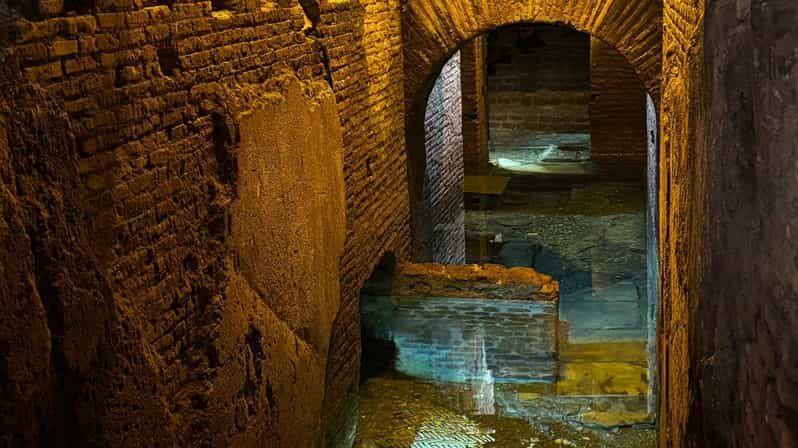
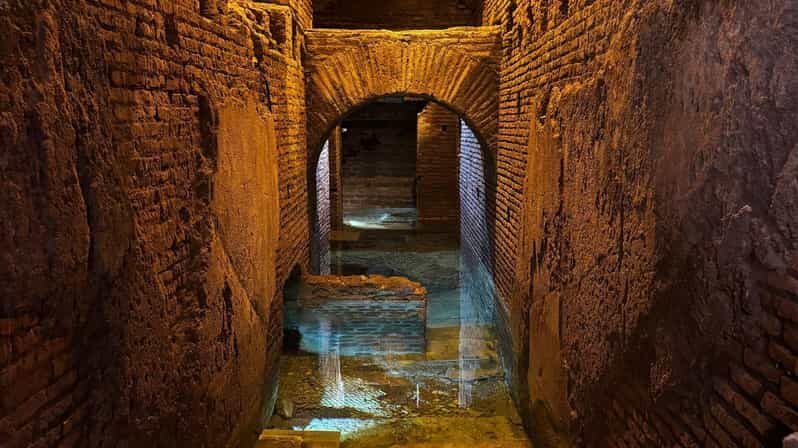
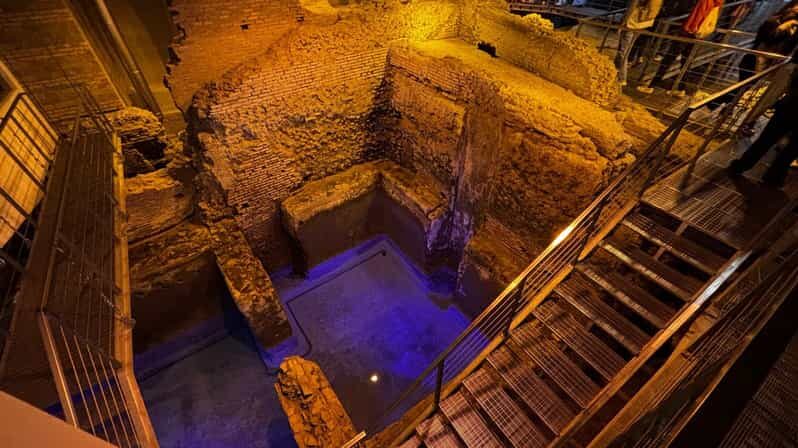
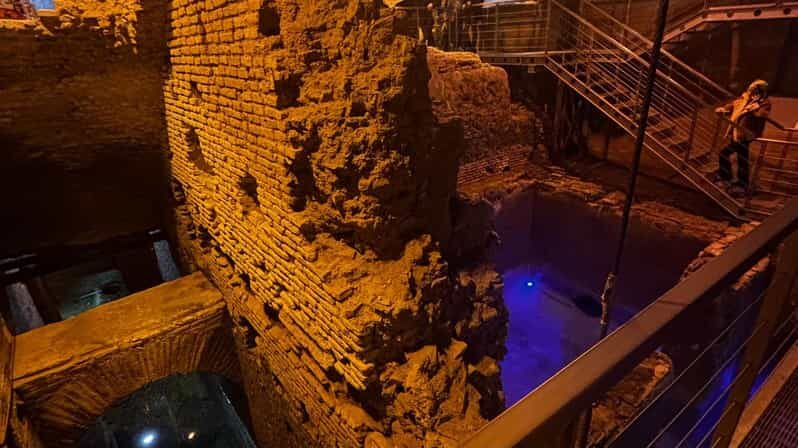
The underground portion is the tour’s less predictable pleasure. Beneath the famous fountain, you visit subterranean aqueduct remains described as part of an ancient Roman district. The route includes remnants of old Roman streets and chambers, giving you a look at a layer of Rome that is easy to miss while hurrying between its major monuments.
The appeal is not just that you are underground. The aqueduct gives the guide a chance to explain how Rome’s water system relates to the city and its fountains. The water is still running in the underground structures, according to one visitor’s account, a detail that can make the remains feel less like a static display and more like part of a working system.
Expect a short visit, rather than a full underground archaeological tour. The supplied details do not give the exact length of time spent below ground or a room-by-room route. Still, the contrast is clear: one minute you are near a grand public monument, and the next you are looking at older stonework and traces of the city beneath it.
That contrast is a strong reason to choose this experience. If you have already seen the fountain from the square, the aqueduct adds a new angle. If this is your first visit, the guide helps connect the landmark with the practical Roman engineering behind it. The underground setting may also offer a break from the heat outside, though conditions are not specified.
The guide and headsets are part of the value
A short tour can feel thin if the guide only points out what is obvious. Here, the guide is central to the experience. People especially valued clear speech, humour, answers to questions, and the ability to keep the group together in heavy crowds. Dina was praised for her structure and wit, Diana for giving a well-paced amount of information, and Fina for her command of the subject. These are useful signs of what makes the format work, but the guide on your departure may be someone else.
Headsets are included, which is a welcome practical detail at a crowded landmark. They help you follow the commentary without needing to stand shoulder to shoulder with the guide at every moment. You will still need to pay attention as the group moves, particularly around the fountain, but you are less dependent on catching every word over the surrounding noise.
The best explanations appear to balance detail with an accessible pace. You do not need specialist knowledge of Roman engineering to follow the stories, and visitors valued guides who made the material clear and engaging. That matters on a 50-minute tour: a well-shaped explanation can make a short visit feel substantial without turning it into a lecture.
More Great Tours NearbyCrowds, timing, and what to bring
The fountain’s popularity is the most important practical factor. One Friday visit around 1pm was described as very crowded, while other accounts also describe guides navigating dense groups of people. If your schedule allows, an early morning departure is a sensible choice for a calmer look and easier photos. It cannot guarantee an empty square, but it may help you avoid the busiest period.
Wear comfortable shoes. The tour involves walking around the fountain and through the underground area, and the activity specifically recommends them. Bring a camera if you want pictures of the monument or the aqueduct remains. Headsets are provided, so you do not need to bring your own audio equipment.
The tour is not suitable for wheelchair users. If accessibility is important for anyone in your party, consider this limitation before booking. Transportation to the meeting point is not included, and neither are food or drinks, so plan to arrive independently and eat before or after the 50-minute visit.



Is $32 a fair price?
At $32 per person, the price is easiest to justify if you want more than a quick look at the fountain. The public view costs nothing, so the value comes from the guided commentary, the closer perimeter access, the underground aqueduct visit, and the convenience of having those pieces combined into one short outing.
The skip-the-line benefit may also matter on a busy day. The activity advertises access that avoids the ticket line, and some people found this especially useful for getting close to the fountain quickly. It is a practical advantage, not a promise that the area itself will be quiet. Expect to share the landmark with other people.
For a visitor curious about Roman water systems, or someone who prefers a guide to explain what they are seeing, $32 buys a worthwhile layer of context. If you only want a photograph of the fountain and have no interest in its history or the underground remains, you may be happier visiting on your own. The tour’s value lies in the combination, not in exclusive ownership of the view.
Who should book this tour?
I would put this tour high on the list for first-time visitors who want a guided introduction to the Trevi Fountain without spending half a day on it. The short duration makes it easy to fit between other Rome sights, while the underground section gives the visit a distinct point of interest beyond the fountain’s familiar façade.
It is also a good match if you enjoy Roman engineering and want to hear how the city’s water infrastructure connects to its fountains. The aqueduct remains are the part most likely to surprise you, especially if you assumed the visit would be only a quick stop at the basin.
You may want to skip it if you are content to admire the fountain from the public square, prefer exploring at your own pace, or need a wheelchair-accessible route. And if crowds bother you, look for an early start rather than a midday slot. The tour can bring you closer and add meaning, but it cannot make a famous central landmark feel secluded.
Should you book it?
Book this tour if you want a short, guided visit that joins the Trevi Fountain with Roman aqueduct remains beneath it. The guide, headsets, and closer access make the $32 price reasonable for anyone who wants context as well as photos. Choose an early time if possible, and keep expectations realistic: the underground visit is brief, and the square above can be very busy.
Trevi Fountain + Underground Aqueducts Tour
FAQ
How long is the Trevi Fountain and aqueduct tour?
The tour lasts 50 minutes.
What language is the tour in?
The live guide speaks English.
Is the Trevi Fountain included in the visit?
Yes. The guided visit covers the fountain’s exterior and provides access to the closest area of its perimeter.
What can I see underground?
The visit includes subterranean aqueduct remains, an ancient Roman district, and remnants of old Roman streets and chambers.
Are headsets provided?
Yes. Headsets are included.
Is transportation to the meeting point included?
No. Transportation to the meeting point is not included.
Is the tour suitable for wheelchair users?
No. The activity is listed as unsuitable for wheelchair users.
What should I bring?
Wear comfortable shoes and bring a camera if you want to take photos.
You can check availability for your dates here: