The gayageum is Korea’s traditional 12-string instrument, and this 50-minute lesson gives you a chance to make its clear, expressive notes yourself. At K-Harmony in Itaewon, you’ll hear a short introduction to its history and scales, then work toward a simple melody such as Arirang.
I like two things here: you get hands-on time with your own instrument, not just a demonstration, and the lesson is built for beginners, with patient instruction and no musical experience required. Hyoju has taught in English, which can make the musical details easier to follow.
One consideration: 50 minutes goes quickly, and the price is a little high for a short class. It is best seen as a focused cultural activity, not an in-depth music course.
- Key points before you book
- A first meeting with the gayageum
- From history and scales to your first notes
- What the 50 minutes can and cannot do
- The Itaewon setting and practical details
- Is the price worth it?
- Who will enjoy this lesson most
- Should you book the gayageum lesson?
- FAQ
- How long is the gayageum lesson?
- Where does the activity take place?
- Do I need musical experience?
- What will I learn during the session?
- Is the lesson suitable for children?
- Is the activity available in English?
- What days and hours is K-Harmony open?
- Are pets allowed?
- What is the cancellation policy?
- The Best Of Seoul!
- More Workshops & Classes in Seoul
- More Tours in Seoul
- More Tour Reviews in Seoul
- Not for you? Here's more nearby things to do in Seoul we have reviewed
Key points before you book
 1 / 2
 2 / 2
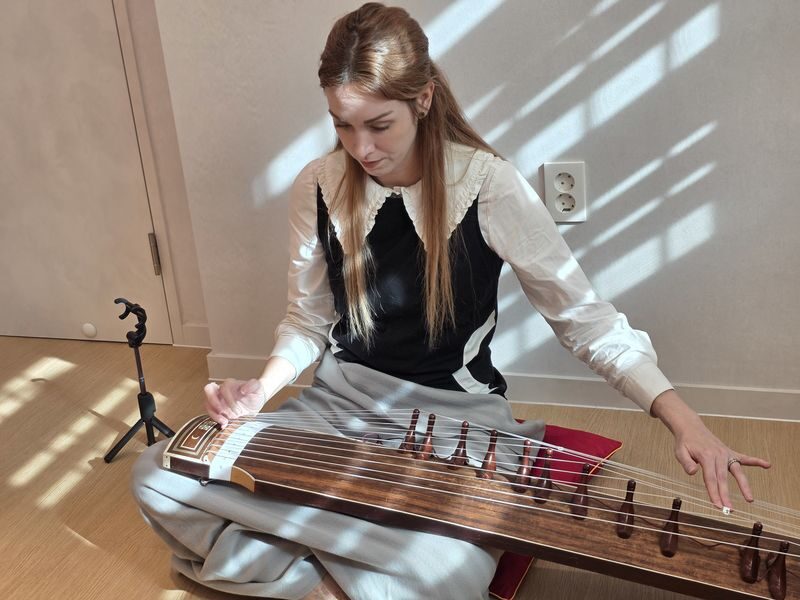
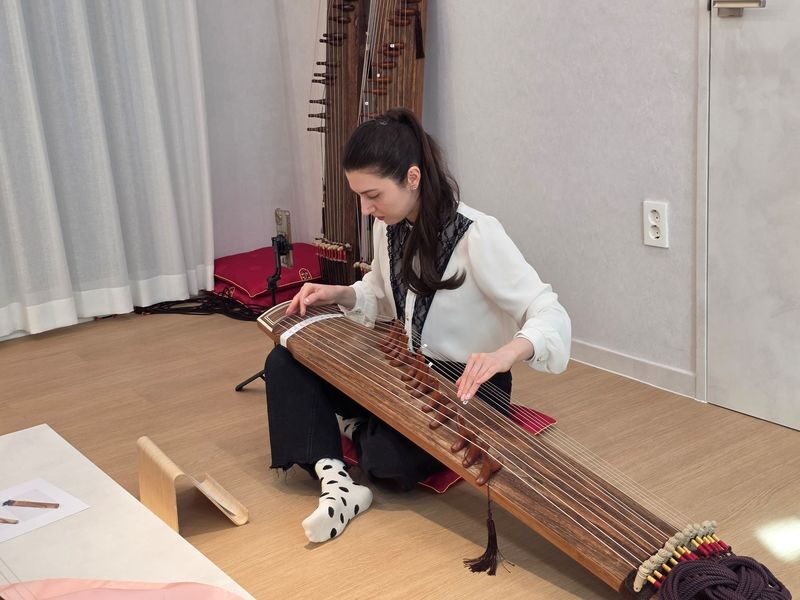
- A 12-string instrument at your fingertips: You’ll sit with your own gayageum and practice plucking strings to produce different sounds.
- A short lesson with a clear goal: The session moves from an introduction to basic technique and a simple melody.
- Arirang may be part of the practice: One participant learned the familiar Korean song during the lesson, though your exact selection may vary.
- No music background needed: The class is designed for beginners and participants aged 10 and older.
- A patient, English-speaking teacher: Hyoju has led sessions in English, while one lesson also used a mix of English and Korean.
- An Itaewon address: K-Harmony is at 28, Itaewon-ro 23-gil, in Yongsan-gu.

👉 See our pick of the 25 Best Guided Tours In Seoul
A first meeting with the gayageum
This lesson is a small, direct way to meet a Korean musical tradition. Rather than watching a performance from a seat, you learn how the gayageum responds to your hands. Even a few notes can help you understand why its sound is associated with Korean traditional music.
The gayageum has 12 strings. You do not need to know how to read music or bring prior training. The class starts with a brief account of the instrument’s history and its place in traditional music, then shifts to practical instruction. That balance matters: a little context gives the sounds meaning, while the hands-on portion keeps the session from becoming a lecture.
The format is deliberately compact. In 50 minutes, you can expect an introduction, basic plucking practice, and a short melody. This is enough to try a new instrument and leave with a sense of how it works. It is not enough time to master technique, and it should not be mistaken for a full music course.
You can also read our reviews of more tours and experiences in Seoul



From history and scales to your first notes
The opening portion introduces the gayageum and its musical role. One participant described learning about its history and scales, so expect some explanation of how the instrument is organized as well as how to play it. The level of detail may depend on the pace of your lesson and your questions.
Then you sit with your own gayageum. The teacher shows you simple ways to pluck the strings and make expressive sounds. That first contact is the point of the activity: you move from hearing an unfamiliar instrument to noticing how small changes in touch affect the note.
The lesson is step by step, which is useful if you are new to music. You can concentrate on the sound and the motion of your fingers rather than trying to keep up with a complicated score. The goal is to practice a short, easy melody, not to perform a polished piece.
Arirang has been used as a practice song in at least one lesson. It is a good fit for a first encounter because it connects the physical act of playing with a melody familiar in Korean culture. The exact song or teaching sequence is not guaranteed, so think of Arirang as a possibility rather than a promise.
What the 50 minutes can and cannot do
A short session works well for a busy Seoul itinerary. It gives you a cultural activity with a clear beginning and end, and it does not ask you to commit several hours or arrive with special skills. If you want to try something more active than a museum visit, the chance to make music is a welcome change of pace.
The limit is the clock. You will learn the basics and get a taste of a melody, but the class is not likely to provide extended practice or a detailed study of Korean music. If your main aim is to become proficient, you will need further lessons. If you want a memorable introduction and a story to take home, the short format makes sense.
The teacher’s approach can make a big difference in such a brief class. Hyoju is described as patient and able to speak English well. Another lesson used both English and Korean, which can add a useful local touch while still helping you follow the instructions. If you have a particular language preference, it is sensible to ask about it when you reserve.
One student was able to record a video of a practice song on a smartphone. That can be a fun keepsake, especially if you would like to remember the melody or share the experience later. Do not assume recording is included or always permitted; ask the teacher before you take out your phone.
The Itaewon setting and practical details
The lesson takes place at K-Harmony, at 28, Itaewon-ro 23-gil, Yongsan-gu, Seoul. The space has been described as clean and neat, a practical plus when you are spending the session close to an instrument. The address puts the activity in Itaewon, but the supplied details do not specify nearby transit stops or travel times, so check your route before setting out.
Opening hours are listed Tuesday through Sunday, from 09:00 to 22:00. The class itself lasts 50 minutes; opening hours do not mean you can simply arrive at any time. Your voucher is valid for the specified date and time where applicable, so plan around the booking you make.
Participants must be at least 10 years old, and pets are not allowed. The activity is beginner-friendly, but the age limit still matters if you are booking for a family. If you have questions about your reservation, confirmation is expected within 48 hours. Contact customer support if the email does not arrive.
Is the price worth it?
The supplied prices are not consistent: one shows a starting price of US$66.35, while the 50-minute package is listed from US$60.35. Treat those figures as a guide and check the final amount and currency at checkout before you commit.
At either price, this is not a bargain-bin activity for the amount of time involved. The value comes from individual hands-on practice, a teacher’s attention, and a chance to make music on a traditional instrument rather than simply see one. If you are curious about Korean culture and want an activity you can take part in, that can justify the cost.
The value is weaker if you expect a long class, advanced instruction, or a full performance. You are paying for a focused introduction and a personal attempt at playing, not an extensive course. The class is likely to suit you best if the novelty and cultural context matter as much as the amount of instruction.
Cancellation terms are strict close to the activity date: a full refund is available if you cancel at least 48 hours ahead, using destination local time. A cancellation within 48 hours, arriving 15 minutes or more late, or an expired or redeemed voucher can mean no refund. If the operator cancels because of an unforeseen event or extreme weather, you can reschedule or request a full refund.






Who will enjoy this lesson most
I would choose this for a first-time visitor who wants an activity that involves doing something, not only observing. It is also a good fit for music-curious people who are willing to try a new instrument without worrying about their skill level. The age minimum makes it an option for children 10 and older, provided they are interested in taking part.
It can suit solo visitors, couples, or friends, but the group size is not specified. Do not assume you will have a private lesson or that the class is limited to a particular number of people. If the amount of individual attention matters to you, ask K-Harmony about the session format before booking.
If you already play an instrument, you may enjoy comparing the gayageum’s sound and technique with what you know. Still, the lesson is pitched at beginners, so an experienced musician should book for cultural interest rather than technical challenge. If you are hoping for a more advanced workshop, this may feel too introductory.
Should you book the gayageum lesson?
Book it if you want a short, hands-on introduction to Korean traditional music and like the idea of learning a simple melody on a 12-string instrument. The combination of patient teaching, beginner-friendly steps, and a possible Arirang practice song makes the 50 minutes more personal than a standard cultural demonstration.
Skip it if you need a long class, advanced musical instruction, or the lowest-cost activity on your Seoul itinerary. Check the final price, confirm the booking time, and arrive promptly. If those terms suit you, this is a distinctive way to spend an hour in Itaewon and leave having made a little music yourself.
Unique Korean Cultural Experience in Seoul: Quick Gayageum Lesson
“As a beginner at playing the gayageum, I wasn't familiar with the practice song 'Arirang.' My teacher patiently and thoroughly taught me about the…”
FAQ
How long is the gayageum lesson?
The Quick Gayageum experience lasts 50 minutes.
Where does the activity take place?
It meets at K-Harmony, 28, Itaewon-ro 23-gil, Yongsan-gu, Seoul, Republic of Korea.
Do I need musical experience?
No. The lesson is beginner-friendly, and no musical background is required.
What will I learn during the session?
You’ll hear a brief introduction to the gayageum’s history and role in Korean traditional music, then practice basic plucking techniques and a short melody.
Is the lesson suitable for children?
Participants must be at least 10 years old.
Is the activity available in English?
Hyoju has been described as speaking English well, and a lesson has also used a mix of English and Korean. The supplied details do not guarantee the language for every session.
What days and hours is K-Harmony open?
Opening hours are Tuesday through Sunday, from 09:00 to 22:00.
Are pets allowed?
No. Pets are prohibited.
What is the cancellation policy?
You can receive a full refund if you cancel at least 48 hours before the activity date, based on destination local time. Refunds are not available for participants who arrive 15 minutes or more late.