Vienna’s past plays out in a series of short, theatrical scenes beneath the Michaelerkloster, with a 5D cinema, virtual reality, and figures that move. I like the way the route moves from Roman Vindobona to wartime Vienna, and I like that ten audio-guide languages make the story easier to follow.
The main trade-off is that this is a compact, fast-moving show, not a quiet museum visit. The sequence can feel jumpy, and the attraction has two levels with about 50 steps, so it is not suitable for wheelchair users.
- Key points before you book
- A short show in the Michaelerkloster vaults
- From Roman Vindobona to the Habsburgs
- Paintings, composers, and a Viennese waltz
- Air raid shelter and occupied Vienna
- The Fiaker ride back to the present
- Is the ticket worth about .75?
- Getting there and choosing your time
- Children, languages, and access
- Should you book Time Travel Vienna?
- FAQ
- How long does Time Travel Vienna take?
- What are the opening hours?
- What languages are available?
- Can young children visit?
- Is the attraction wheelchair-accessible?
- How do I get to the venue?
- The Best Of Vienna!
- More Tickets in Vienna
- More Tours in Vienna
- More Tour Reviews in Vienna
- Not for you? Here's more nearby things to do in Vienna we have reviewed
Key points before you book
- Nine stations in about 50 minutes: A brisk run through Vienna’s past, with scenes on the Romans, Habsburgs, music, war, and more.
- The 5D ride sets the tone: Moving seats and cinema effects make this more theatrical than a traditional history display.
- A useful family option: Children aged 0 to 4 enter free, and children aged 0 to 9 may skip the plague pit and bunker.
- Language support is broad: The German-speaking guide is accompanied by audio guides in 10 languages, including English and Chinese.
- Plan for stairs: The two-level attraction has around 50 steps and is not wheelchair-accessible.
- Book around the clock, not just the show: Tours begin every 20 minutes, but you need to arrive at least 15 minutes before your chosen start.
👉 See our pick of the 11 Best Shopping Tours In Vienna
A short show in the Michaelerkloster vaults
Time Travel Vienna is an indoor history attraction at Habsburgergasse 10A, in the vaults of the roughly 400-year-old Michaelerkloster. Instead of walking through rows of objects and reading labels, you move from one staged scene to another, using film, sound, animatronics, and virtual reality to sketch out around 2,000 years of Vienna’s story.
That format is the point. You get a quick introduction to the city’s past without needing to already know the names, dates, and dynasties. It can work well early in a Vienna visit, when a little context may make later sights such as Habsburg buildings or music venues more meaningful.
The experience lasts about 50 minutes and includes all nine stations. The attraction runs daily from 10:00 to 20:00, with last admission at 19:00. Tours start every 20 minutes, so the schedule offers flexibility, but this is still a timed group experience rather than a place to wander at your own pace.
You can also read our reviews of more tours and experiences in Vienna

From Roman Vindobona to the Habsburgs
The journey opens with the Roman camp of Vindobona, the settlement that formed part of early Vienna. The time-ride 5D cinema uses moving seats and sensory effects to carry you into the past. It gives the tour an energetic start, though anyone who prefers a calm, conventional introduction may find it more show than lesson.
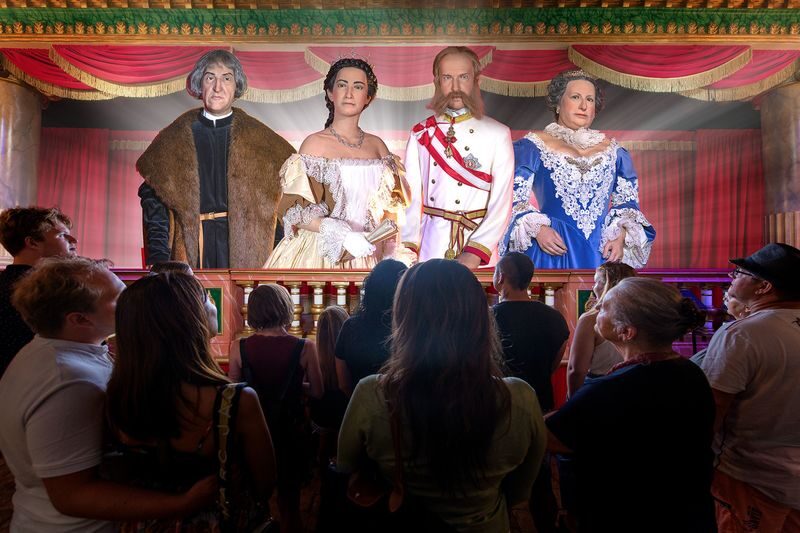
Next comes the Habsburgs show, which follows the dynasty that shaped much of Vienna’s political and architectural story. Animatronic figures help turn historical names into a more visual encounter. Moving wax figures are among the attraction’s memorable details, but keep in mind that the scenes are designed for quick impact. You should not expect the depth of a specialist museum or a long lecture on imperial politics.
The plague-pit station shifts the mood. It brings one of the harder chapters of city life into the tour, and the staged presentation may be unsettling for some children. Children aged 0 to 9 can skip this station, a helpful option if you are visiting with a young child or simply prefer to avoid that scene.
Paintings, composers, and a Viennese waltz
The painting station turns attention to art in Vienna. It offers a change of pace after the more dramatic history scenes, although the attraction’s overall style remains theatrical rather than gallery-like. If you want to study individual works closely, a dedicated museum visit will suit you better.
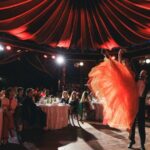
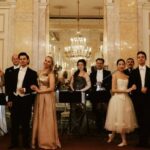
Music then takes centre stage with Mozart and Strauss. Vienna’s musical identity is easy to reduce to famous names, but this section connects the composers with the city’s cultural past in a compact, accessible way. A virtual-reality music ride gives you a turn with the Viennese waltz, adding movement to the soundtrack.
The VR element is a good example of the attraction’s approach: the aim is to make a subject feel immediate, not to provide a long technical explanation. If you enjoy trying different formats, this variety keeps the hour moving. If you dislike headsets or motion effects, you may find this station less appealing. The available information notes that toddlers can sit separately from an accompanying adult to avoid the 5D cinema’s motion effects.
Air raid shelter and occupied Vienna
The tone turns serious again at the air raid shelter. You enter a bunker setting that recalls the fear and disruption of wartime Vienna. It is one of the stations that gives the attraction more weight than a simple collection of entertainment effects, but it may be intense for younger children. Children aged 0 to 9 can skip the bunker station as well as the plague pit.
The next section covers occupied Vienna from 1945 to 1955. It brings the tour into the difficult postwar years and the period leading to Austria’s regained independence. Leopold Figl’s declaration that Austria was free marks the emotional point of this part of the experience.
The story is delivered quickly, and that can be a mixed blessing. You get a broad outline of the period within a short visit, but the timeline may feel uneven as the tour jumps between centuries and formats. I’d treat this as an engaging primer, then use a museum, book, or guided city walk if you want more detail on a particular era.
The Fiaker ride back to the present
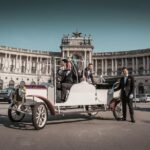
The final station is the Magical Fiaker Ride, a theatrical carriage journey that brings you back to the present. It provides a lighter finish after the wartime sections and ties the attraction’s time-travel idea together.
The carriage finale is not a real ride through Vienna’s streets. It is part of the indoor show, so book it for a playful closing scene rather than transport or sightseeing. The contrast between the historical scenes and the return to modern Vienna is a neat way to wrap up a fast tour.

Is the ticket worth about $30.75?
At a starting price of $30.75, the ticket buys a roughly 50-minute, nine-station indoor attraction. Its value depends on what you want. If you like film effects, interactive displays, and a quick overview of Vienna’s past, the variety can make the price reasonable, particularly on a rainy day or when you want an activity that does not require a full museum visit.
The price is harder to justify if you prefer original objects, detailed interpretation, or time to linger. You move through a programmed sequence, and the story sometimes moves quickly. Think of the ticket as an entertaining orientation, not a substitute for a full day of history or art.
Admission covers all nine stations. Transport, food, drinks, and personal expenses are not included. The ticket is valid only on the date you select, and free cancellation is available if you cancel at least 24 hours before the activity, using local time.
Getting there and choosing your time
The address is Habsburgergasse 10A, 1010 Vienna. Bus 2A stops at Habsburgergasse. For the metro, use Stephansplatz on U1 or Herrengasse on U3. If you drive, Wipark Garage Freyung is listed as a nearby parking option, with discounted exit tickets and a rate of EUR 3.90 per hour.
Arrive at least 15 minutes before your tour begins and show your mobile voucher. Since tours start every 20 minutes, check the selected time on your ticket rather than assuming you can join any departure. The voucher is tied to the selected date and, where applicable, time.
For photos, there is a clear limit: photography and filming are allowed only at the Fotopoint Sisi & Franz. Commercial or scientific recording and online distribution of images are prohibited without permission. Pets are not allowed inside.
Children, languages, and access
The attraction can suit a mixed-age family because the scenes change often and the audio guides cover a wide range of languages. German commentary is provided by a live guide, while international visitors can use simultaneous audio translation in Chinese, English, Russian, Portuguese, Japanese, French, Italian, Polish, Czech, or Hungarian.
Children aged 0 to 4 enter free and share a seat with an accompanying adult in the 5D cinema. Hearing-protection headphones are available for infants if the cinema is too loud. Children aged 5 to 14 must be with a paying adult, while visitors aged 15 and older pay the adult rate. A student rate is available from age 15 with a valid student ID, and a senior rate applies from age 60.
The moving figures and changing scenes may help younger visitors stay engaged, but the plague pit and bunker could be too much for some. You can skip both with children aged 0 to 9. The attraction has two levels and about 50 steps, so it is not wheelchair-accessible; factor that in before booking if stairs are a concern.
Should you book Time Travel Vienna?
Book it if you want a lively, compact introduction to Vienna’s past, enjoy technology-led attractions, or need an indoor activity that fits into an hour. The language choices, varied stations, and options to skip two darker scenes make it practical for families and international visitors.
Skip it if you want a quiet museum, detailed historical study, or a fully accessible route. The story moves at the pace of a show, and its jumps through time can feel a little untidy. For a first orientation, though, it can give you a useful starting point before you explore Vienna’s streets and museums on your own.
The Magical Journey Through Vienna Ticket by Time Travel
“nice experience at the museum sharing history of Austria. very easy to use the klook purchased tickets. highly recommended activitt.”
FAQ
How long does Time Travel Vienna take?
The tour through all nine stations takes about 50 minutes. Tours start every 20 minutes.
What are the opening hours?
Time Travel Vienna is open Monday through Sunday from 10:00 to 20:00. Last admission is at 19:00.
What languages are available?
A German-speaking guide leads the experience. Audio guides for simultaneous translation are available in Chinese, English, Russian, Portuguese, Japanese, French, Italian, Polish, Czech, and Hungarian.
Can young children visit?
Yes. Children aged 0 to 4 enter free and share a seat with an adult in the 5D cinema. Children aged 5 to 14 must be accompanied by a paying adult. Children aged 0 to 9 may skip the plague pit and bunker stations.
Is the attraction wheelchair-accessible?
No. The attraction has two levels and approximately 50 steps.
How do I get to the venue?
The address is Habsburgergasse 10A, 1010 Vienna. Take bus 2A to Habsburgergasse, or metro U1 to Stephansplatz or U3 to Herrengasse.