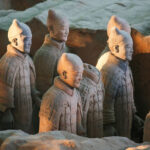
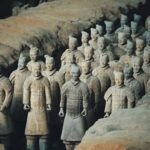
The cleverest trick in Jiu Jiu Da Qin is that the audience moves with the story. Your seat shifts between sets as the production moves from a Terracotta Warrior site to a palace, a reed lake, and a battlefield. It is a grand theatrical take on the Qin era, not a quiet museum visit.
I like two things especially: the moving auditorium, which makes the changing scenes part of the show, and its human-scale story. The central character, Heifu, is an ordinary man caught up in the building and unification of the Qin state. Dance, spoken drama, acrobatics, music, and large-scale stage effects bring his story to life.
The main trade-off is practical: the theater sits outside central Xi’an, and the spoken drama is in Mandarin. English audio may be available, but you should check before the performance. Tickets are date-specific and nonrefundable, so make sure the timing and terms suit your plans before booking.
At a glance
- Your seats move between scenes: The audience platform travels forward as the show changes settings, helping the production feel more like a passage through time than a fixed-stage play.
- Six scenes cover Qin-era life and conflict: Expect a sequence that includes the Terracotta Warrior site, construction work, the Qin king’s palace, a rainy rooftop, a reed lake, and a battlefield.
- Heifu gives the history a human focus: The story follows a former prisoner of war whose work and choices connect him to the rise of the Qin state.
- Plan for an 80-minute performance: There are two listed showtimes, 4:30 pm and 7:45 pm, with different ticket-exchange windows.
- The venue takes extra travel time: It is about a 500-meter walk from Afangong South metro station, or roughly 15 minutes on foot, according to the directions provided.
- Check language and seating details before you go: Dialogue and subtitles are in Chinese, and seats are assigned. People in the same booking may not be seated together.
- At a glance
- A moving auditorium makes the Qin story physical
- Heifu brings Qin history down to one life
- Six changing scenes, from building site to battlefield
- Mandarin matters, but the visuals travel
- Ticket value depends on your seat and your schedule
- Getting to the theater and collecting your ticket
- Rules worth knowing before you arrive
- Should you book Jiu Jiu Da Qin?
- FAQ
- How long is Jiu Jiu Da Qin?
- What are the listed showtimes?
- Where is the theater?
- How do I get there by metro?
- What ID do I need to collect my ticket?
- Is the show suitable for children?
- Is the performance in English?
- Can I cancel or change my ticket?
- More Tickets in Xi'an
- More Tours in Xi'an
- More Tour Reviews in Xi'an
- Not for you? Here's more nearby things to do in Xi'an we have reviewed
A moving auditorium makes the Qin story physical
 1 / 8
 2 / 8
 3 / 8
 4 / 8
 5 / 8
 6 / 8
 7 / 8
 8 / 8
The core idea of Jiu Jiu Da Qin is simple and effective: instead of watching one set from a fixed seat, you travel with the audience platform as the scenes change. The seat movement is part of the performance, not just a technical flourish. One account describes the platforms moving about 220 meters over the show, giving you a sense of the production’s scale.
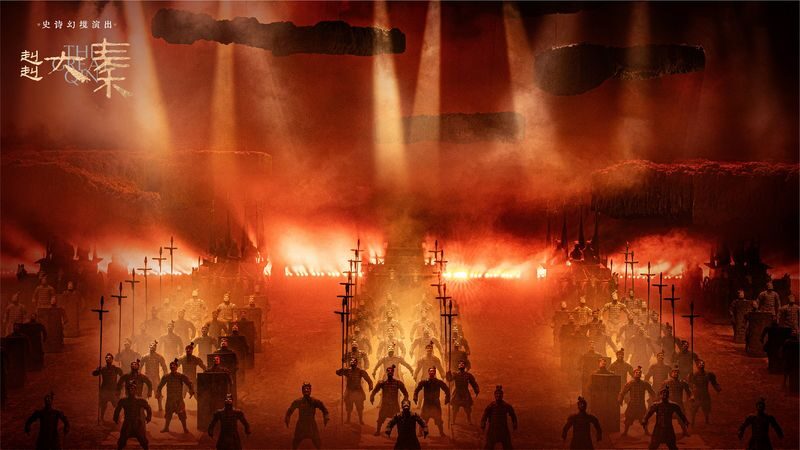
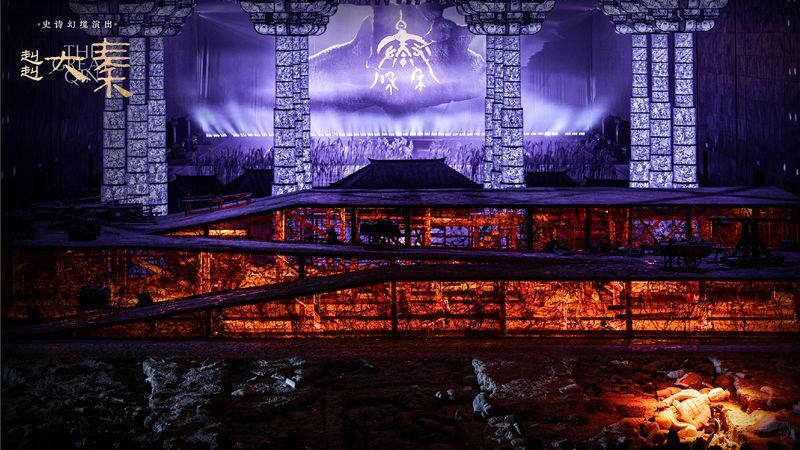
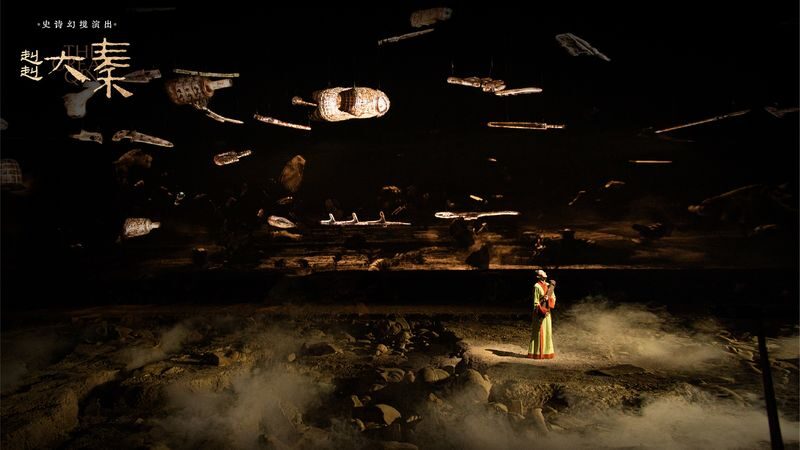
That movement helps connect the scenes. You are not simply looking at a palace after looking at a building site; the shift of the audience changes the rhythm and point of view. The result is a little like being carried through a series of theatrical tableaux. The effects are designed for spectacle, with Terracotta Warriors appearing from below, weapons flying overhead, and large projections and lighting helping each new scene take shape.
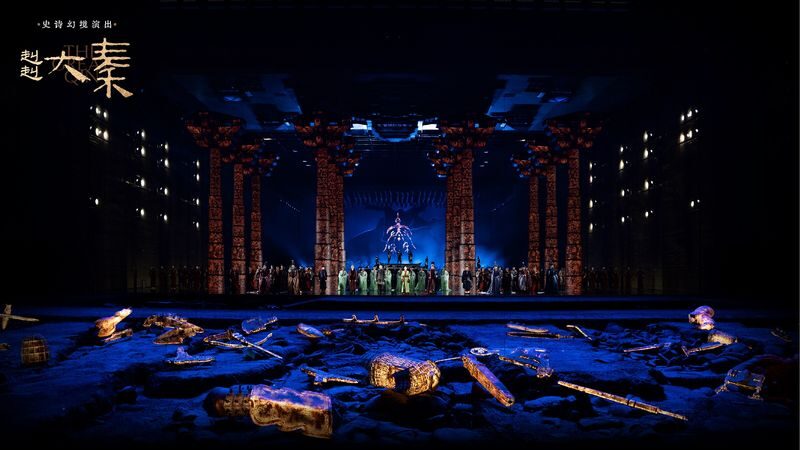
The theater is promoted for its record-setting stage, and the show leans into that scale. It is not an intimate chamber drama. It is a large production built to make the audience feel the size of Qin ambitions, from monumental construction to military conflict. If you like clever stage machinery and bold visual scenes, that is the main reason to go.
The moving seats also have a practical side: you must use your assigned place and wear the seat belt during the show. If you have mobility concerns, or if you are prone to discomfort with moving seating, take the stated restrictions seriously and ask the venue before booking. The show advises against attendance for people with heart disease, high blood pressure, epilepsy, mobility impairments, intoxication, and pregnancy.
You can also read our reviews of more tours and experiences in Xi'an
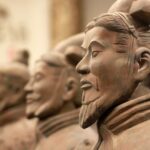


Heifu brings Qin history down to one life
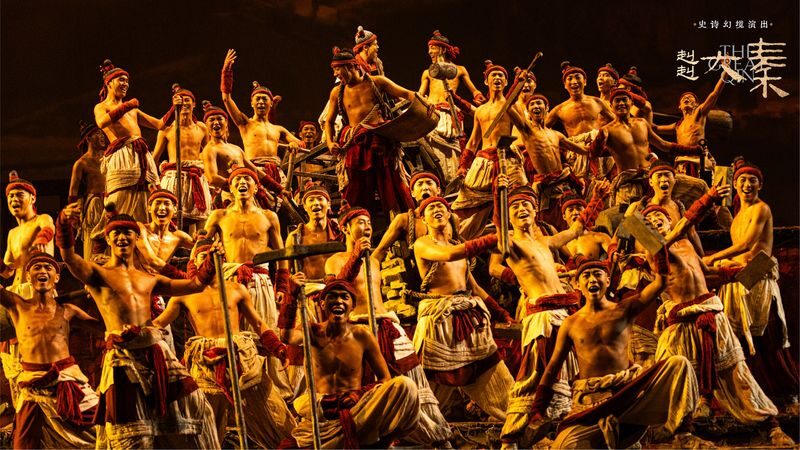
The story follows Heifu, a prisoner of war who avoids death because he is skilled at making tiles. Under Qin law, he can earn merit and citizenship through his work. Later, while involved in building the capital, he earns a noble title after saving the emperor from an assassin.
That is a useful frame for a production about unification. Rather than presenting only rulers and battles, the play follows a common person whose life is changed by the state’s laws, construction projects, and military ambitions. Heifu’s path ends with him falling in the cause of unification and becoming one of the Terracotta Warriors, alongside countless unnamed Qin soldiers.
The show is not a history lecture, and you should not expect a detailed account of every political turn. It uses dance drama, spoken drama, and acrobatics to make its points through movement and image. Its themes include the endurance of the old Qin people, reform, sacrifice, and the idea of uniting the states. Knowing that broad outline before you arrive will help you follow the emotional arc, even if you do not understand every line.
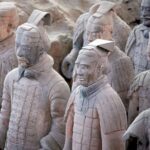
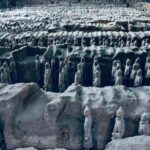
A visit to the Terracotta Army can make the play’s final transformation more meaningful. The figures in the archaeological site are not just famous objects after you have seen a performance that imagines the ordinary lives behind them. The show can work either before or after the museum visit: see it first for an evocative introduction to Qin themes, or afterward to give the figures a more personal story.
Six changing scenes, from building site to battlefield
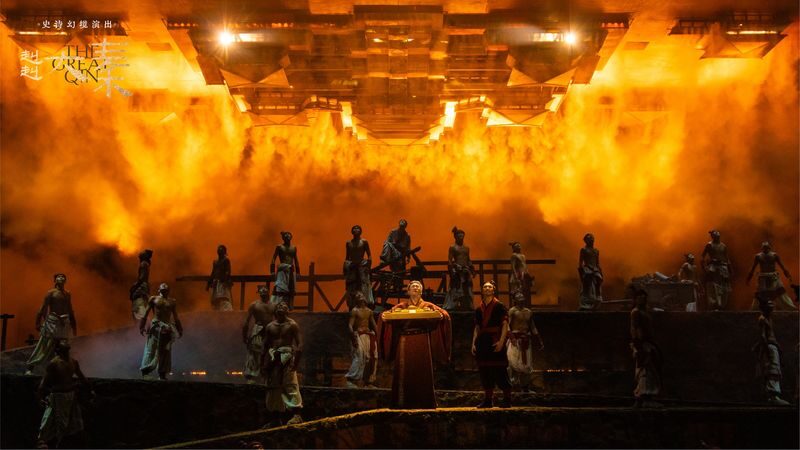
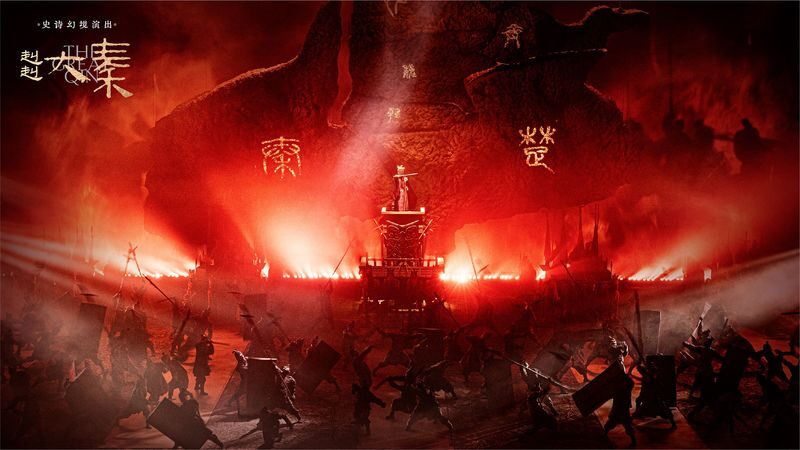
The performance lasts 80 minutes and is arranged in six acts. Its scenes shift through a Terracotta Warrior site, a construction site, the Qin king’s palace, a rainy rooftop, a reed lake, and a battlefield. This range lets the show move between labor, court life, private encounters, and war without pausing for conventional scene changes.
The construction sequences connect directly to Heifu’s trade and the way labor could shape a person’s prospects under Qin rule. Palace scenes turn the focus toward power and political danger. The assassin episode is one of the production’s more action-heavy passages, with live performers and elaborate staging rather than film edits. The reed lake and rooftop scenes offer a different pace, using dance and atmosphere to give the story room to breathe.
Acrobatics and dance carry much of the meaning. The actors use physical performance to convey strength, tension, and beauty, while music, lighting, scenery, and projection build the scale around them. If Mandarin is not familiar to you, these visual elements help, but they do not replace the spoken story entirely. The plot may be harder to follow if you rely only on the stage action.
The ending returns the story to the Terracotta Warriors and the anonymous soldiers who became part of the Qin legacy. It is an emotional image rather than a museum label. The show asks you to see the figures as people with lives and choices, even as it treats their sacrifice in epic terms.
Mandarin matters, but the visuals travel
The performance is in Mandarin, and Chinese subtitles have been noted. That is an important point if you do not read Chinese: do not assume there will be English text on the screens. English audio is available according to one account, but arrangements and availability should be confirmed directly before the show. Ask staff when you collect your ticket, and do it early enough to sort out any equipment before the performance begins.
Even without the language, you can follow the broad visual story. The sets, costumes, choreography, and repeated movement between scenes make the action legible. Several scenes are built around clear physical stakes, including construction, an attempted assassination, and battle. Still, a spoken drama has dialogue for a reason. You will get more from it if you can understand Mandarin or have confirmed access to an English aid.
The production’s visual strength is also its best counterweight to the language barrier. The stage effects, music, acrobatics, and moving seats provide plenty to watch, even when a line or plot point passes you by. If you are deciding between this and another Xi’an stage show, choose this one when you are drawn to Qin history, big-scale stagecraft, and the Terracotta Army connection.
Ticket value depends on your seat and your schedule
Tickets start at $61.65, with the price depending on the option available when you book. That is not a bargain-basement evening activity, but it buys a full 80-minute production with a large moving stage, a substantial cast, and a purpose-built theatrical experience. If you enjoy ambitious live shows, the price can make sense as one of Xi’an’s major cultural outings.
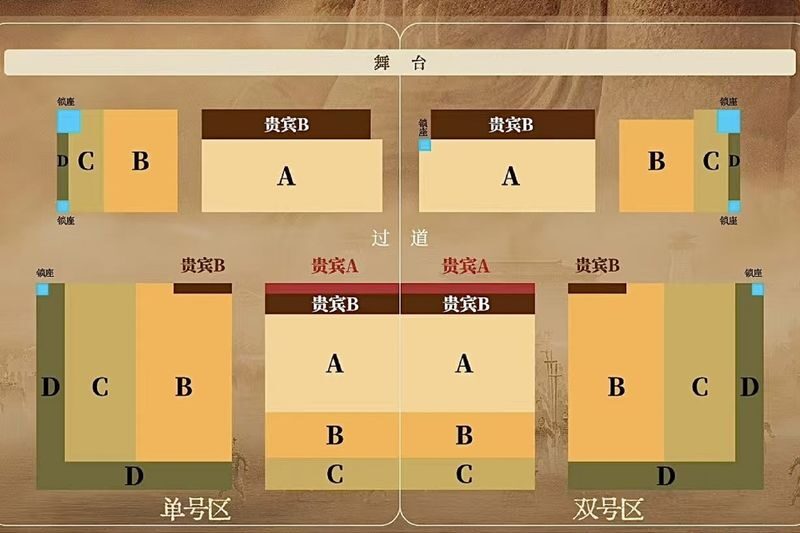
Some audience members felt VIP seats were worth the extra cost, and others specifically wished they had chosen a higher category. That is a reasonable consideration for a production whose effects and choreography fill a wide stage. But seat categories, sightlines, and exact placement matter. Ask what the category includes rather than assuming every VIP seat is close to the center or has the same view.
Seats are assigned when tickets are collected, and you may not be able to select them yourself. People on one order may not receive consecutive seats. If sitting together is important, contact the ticket provider or venue ahead of time and treat a shared booking as no guarantee of side-by-side places. The stage itself is large, but side seating can affect how easily you see screens and translations.
The ticket is valid only for the selected date and time. The stated terms do not allow cancellations or refunds, and changes require canceling the original booking and making a new one. Check the chosen showtime carefully before paying, especially if your Xi’an plans include a day trip or a visit to the Terracotta Army.


Getting to the theater and collecting your ticket
The venue address is the northeast corner of Tiantai Road and Fengdong Avenue, in Weiyang District, Xi’an. The directions provided say to take Metro Line 5 to Afangong South Station, use Exit D, then walk about 500 meters. That walk is described as roughly 15 minutes. You can also navigate to Jiu Jiu Da Qin Theater East Gate if driving.
Allow extra time for the journey and ticket collection. The theater is not in the city center, and inaccurate map directions have caused confusion. Check the destination pin and the theater’s east gate before you set out, rather than relying on a vague map location. A taxi is another option if you prefer a direct ride, but travel time will depend on where you start and traffic.
Bring the same valid ID document used for the purchase to collect your ticket and enter. For the 4:30 pm performance, ticket exchange is listed from 11:00 am to 4:15 pm. For the 7:45 pm show, exchange runs from 6:00 pm to 7:30 pm. Aim to arrive well before the cut-off: entry is not permitted 15 minutes after the performance begins.
The venue is open daily from 11:00 am to 9:30 pm, but that does not mean you can enter the performance at any time. Your ticket is tied to the selected date and, where applicable, showtime. Once you leave the venue, re-entry is not allowed.
Rules worth knowing before you arrive
Children under five are not admitted. Children over five need their own ticket, at the same price as adults, and everyone needs a separate seat. That makes the show a better fit for families with older children who can sit through an 80-minute performance and are comfortable with dramatic action and moving seating.
Large luggage, strollers, food, colored beverages, fire sources, and recording equipment are not permitted inside. Smoking is prohibited. Free storage is available for small items, but do not count on bringing bulky bags into the theater. Photography and video recording are not allowed during the show, so plan to watch rather than document it.
There are six acts, but the audience stays in assigned seats and must use the seat belt during the performance. If you have a health or mobility concern listed in the venue guidance, contact the operator before purchasing rather than hoping to sort it out at the door.
Should you book Jiu Jiu Da Qin?
I would put Jiu Jiu Da Qin high on the list if you want an evening show that is closely tied to Xi’an’s Qin-era story, and if moving scenery and large theatrical effects appeal to you. Its best combination is the traveling audience platform, the story of Heifu, and the link to the Terracotta Army. Those elements make it more than a string of pretty sets.
I would think twice if you are not comfortable with Mandarin, need a flexible or refundable booking, or have a health or mobility condition covered by the venue’s restrictions. It is also a poor choice for a rushed evening: the theater’s location, assigned ticket collection, and strict late-entry rule call for some planning.
For a smooth visit, pair it with the Terracotta Army on the same day only if your schedule leaves enough time for the journey and ticket exchange. Otherwise, give the show its own evening. Book once you have confirmed your date, language support, and seat category. If those details work for you, the production offers a memorable way to picture the lives behind Qin’s famous warriors.
Xi’an – THE GREAT QIN Ticket
“It is worth visiting these heritage sites. you gets more feel if you also watch the Jiujiu Daqing performance. Tour guide Iris is good but much tim…”
FAQ
How long is Jiu Jiu Da Qin?
The performance lasts 80 minutes.
What are the listed showtimes?
The listed performances are at 4:30 pm and 7:45 pm. Ticket exchange times differ by show: 11:00 am to 4:15 pm for the 4:30 pm show, and 6:00 pm to 7:30 pm for the 7:45 pm show.
Where is the theater?
It is at the northeast corner of Tiantai Road and Fengdong Avenue, Weiyang District, Xi’an. The destination is also given as Jiu Jiu Da Qin Theater East Gate.
How do I get there by metro?
Take Metro Line 5 to Afangong South Station, leave through Exit D, and walk about 500 meters. The walk is listed as roughly 15 minutes.
What ID do I need to collect my ticket?
Bring the valid ID document used when purchasing the ticket. It is required to collect the ticket and enter.
Is the show suitable for children?
Children under five are not admitted. Children over five require their own ticket and seat, at the same price as adults.
Is the performance in English?
The dialogue is in Mandarin, and Chinese subtitles have been noted. English audio may be available, but confirm this with the venue before the show.
Can I cancel or change my ticket?
The stated ticket terms do not allow cancellations or refunds. Changes require canceling the original booking and making a new one, so check your date and showtime before purchasing.