Naples has another city below its streets: a world of quarried rock, water storage and passages built for kings, then used by ordinary people seeking shelter. This tour traces those changing roles, ending in the 19th-century Bourbon Tunnel, a passage planned as a royal escape route.
I like the way the route connects three distinct chapters of Naples underground: stone extraction, water supply and wartime refuge. I also like that an English-speaking guide leads the walk, making the engineering and history easier to follow than they would be on your own.
The main drawback is physical, not historical. Expect considerable walking, stairs and about 100 steps just to reach the entrance. The route is not suitable for wheelchairs or strollers, and it may not be a good fit if stairs are difficult for you.
- Key points to know before you go
- A royal route beneath Naples
- Starting at Palazzo Serra di Cassano
- Through the old tuff quarries
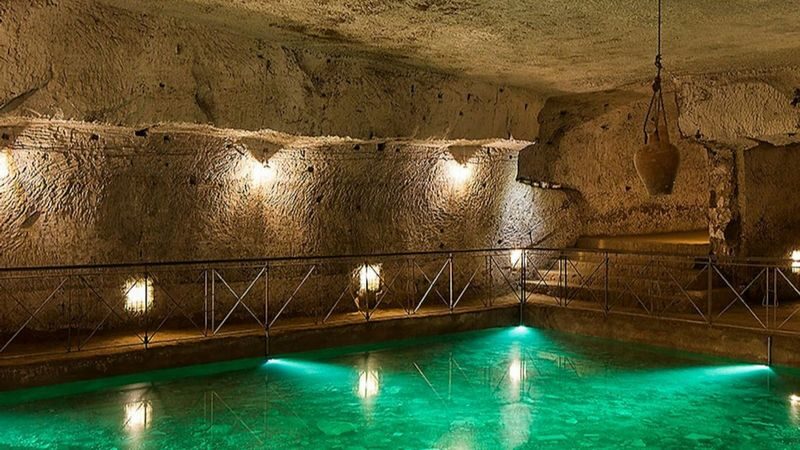
- The water tank that became a shelter
- Inside the Bourbon Tunnel
- Is the ticket worth the price?
- Practical details for a smoother visit
- Should you book the Bourbon Tunnel Tour?
- FAQ
- How long does the Bourbon Tunnel tour take?
- Where is the meeting point?
- Where does the tour finish?
- Is the tour available in English?
- How many stairs are involved?
- Can children join the tour?
- The Best Of Naples!
- More Tours in Naples
- More Tour Reviews in Naples
- Not for you? Here's more nearby things to do in Naples we have reviewed
Key points to know before you go
 1 / 2
 2 / 2
- The Bourbon Tunnel was built for royal escape: The passage was intended to link the Royal Palace with the city’s military barracks.
- The route includes more than one tunnel: You also pass through old tuff quarries and a restored water tank.
- The water tank became a wartime shelter: During World War II, civilians sought protection there during bombing.
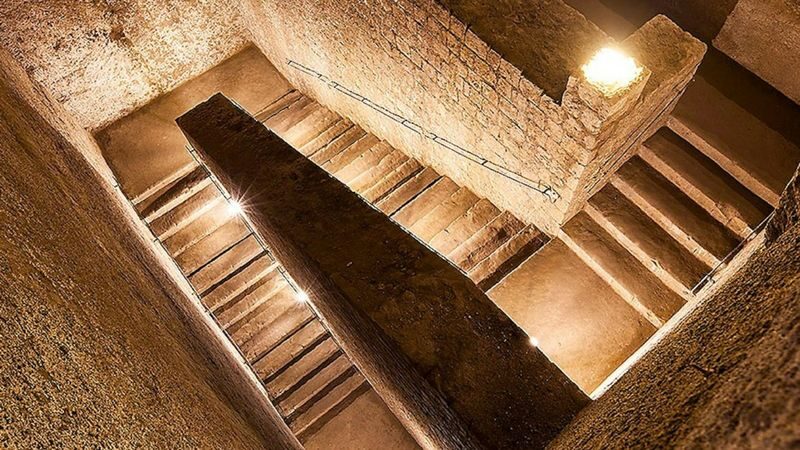
- The descent is demanding: Plan for about 100 steps to enter, plus more walking and stairs along the route.
- Tours are offered in English or Italian: The join-in options list departures at 11:00 and 16:00.
- The visit takes roughly 75 minutes by the listed schedule: Your return time depends on your chosen departure and the day’s arrangements.

👉 See our pick of the 18 Best Shopping Tours In Naples
A royal route beneath Naples
The Bourbon Tunnel is a useful reminder that Naples has never been only the city you see above ground. Beneath its streets, people quarried stone, stored water, planned military routes and made shelter when war reached the city. This tour lets you see several of those uses in one visit.
The tunnel itself was planned in the 19th century as a connection between the Royal Palace and Naples’ military barracks. Its purpose was strategic: it offered the Bourbon rulers a route out of the palace in case of danger. You are not simply walking through an old passage. You are following an ambitious project shaped by the fears and priorities of a royal court.
That does not mean the whole route is a polished royal corridor. The experience begins at the basement of Palazzo Serra di Cassano, then moves through underground spaces with different origins and functions. The changes in stonework and setting are part of the appeal. Rather than treating the tunnel as one grand showpiece, you get a sense of how Naples’ underground developed in layers.
An English-speaking guide is included, and the tour is also offered in Italian. A guide can help connect what you see to the city’s history, especially where the spaces themselves do not explain their purpose at a glance. One English-language outing featured a helpful, theatrical female guide, though no guide name is provided and you cannot book a particular person.
You can also read our reviews of more tours and experiences in Naples.

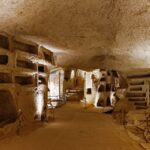
Starting at Palazzo Serra di Cassano
The meeting point is at Via Monte di Dio, 14, at the basement of Palazzo Serra di Cassano. Arrive at least 10 minutes before your selected departure. The available times are 11:00 and 16:00, but you need to attend the time chosen when booking. Late arrivals and no-shows are not refundable.
The first stop is a small museum displaying objects from World War II. It provides an introduction to the tunnel’s wartime role before you head farther underground. This is a compact start, not a large museum visit, so think of it as context for the spaces ahead rather than a separate attraction requiring a long visit.
The wartime artifacts matter because the tunnels were not only a royal or military project. During the bombings, underground rooms offered civilians shelter from danger above. That shift in use, from elite escape plan to refuge for ordinary Neapolitans, gives the route a human scale.
If you are visiting Naples for its palaces and churches, this opening changes your angle on the city. You are beginning below a historic building, in a place where the city’s past is presented through objects and underground spaces rather than grand facades. It is a good reason to take the guide’s explanations seriously: the route’s meaning is in the sequence as much as in any single chamber.
Through the old tuff quarries
From the museum, the route continues into caves dating to the 16th century. These spaces were used to extract tuff, a volcanic stone that helped supply material for Naples’ buildings. The quarries offer a practical explanation for the city’s architecture: some of the stone shaping its streets and buildings came from below the city itself.
The caves also make clear that Naples’ underground is not one purpose-built attraction. Some parts began as working spaces, cut into the ground for a useful resource. Later generations adapted underground areas for other needs. That mix of human labor and changing use gives the visit more depth than a walk through a single historic corridor.
There is a trade-off. The attraction is the scale and age of the spaces, not elaborate displays at every turn. If you prefer museums with labels and objects at each stop, you may find parts of the route spare. If you like seeing the physical evidence of how a city was built, the rougher chambers can be the more memorable part.
Wear comfortable shoes and keep your attention on the path. The tour involves a considerable amount of walking and stairs, and the route is underground. The supplied details do not give a step-by-step account of every surface or chamber, so do not assume it will feel like a smooth, level museum floor.
The water tank that became a shelter
One of the route’s strongest stops is a restored 17th-century water tank. Its original purpose was to store water. During World War II, it served as a bomb shelter, giving the space a second life under very different conditions.
That change is central to the tour’s appeal. A water tank is an engineering solution; a shelter is a response to danger. Seeing the same underground structure associated with both makes Naples’ history feel less like a list of dates and more like a record of people adapting the spaces available to them.
The tank is described as beautifully restored, but it is still part of a subterranean route, not a modern exhibit hall. You are there to understand the structure and its uses. The guide’s role is particularly valuable at a stop like this, where the room alone cannot tell you how it fit into daily life or wartime survival.
For families, the subject may prompt questions about the bombings and civilian life. Children aged 0 to 10 enter free, but children aged 0 to 13 must be accompanied by a paying adult. The physical demands still apply to everyone in the group, so free admission does not make the route an easy outing for a small child.
Inside the Bourbon Tunnel
The final portion takes you through the Bourbon Tunnel, the passage associated with the royal escape plan. It was intended to connect the Royal Palace with the military barracks, joining royal security and military strategy beneath the city. The route lets you look at the passage not as an isolated feat of construction, but as part of Naples’ defensive thinking.
The tunnel’s appeal lies in its layered identity. It began as a passage planned for monarchy and military use, while the broader underground network also became a shelter during wartime. The same hidden world served very different people at different moments. That is the story to keep in mind as you walk through it.
The tour finishes at Via Domenico Morelli, 61. The stated return times are 12:15 for the 11:00 departure and 17:15 for the 16:00 departure, subject to the option selected and the duration of the itinerary. That makes the visit roughly 75 minutes on the listed schedule, a manageable block of time if you are planning the rest of your day around it.
The printed opening hours for the Bourbon Tunnel are Friday to Sunday, 09:30 to 13:00 and 14:30 to 17:00. Hours and closure dates can change, so check current availability before you set your plans. The listed 16:00 tour and 17:15 return also make it sensible to confirm the timing for your chosen date.




Is the ticket worth the price?
The stated starting price is about US$19.35, while the English and Italian join-in options are also shown from US$16.80. Prices can vary by package, so check the final amount and language before you pay. The ticket includes admission to the Bourbon Tunnel and an English-speaking guide for the English option. Personal expenses and gratuities are not included.
For that price, the main value is access to a route that would be hard to make sense of independently. You see several kinds of underground space, and a guide can explain why they exist and how their uses changed. The experience is especially worthwhile if you are interested in city infrastructure, military history or the everyday consequences of war, rather than only royal interiors.
The value is less clear if you are looking for a long, object-filled museum visit or a leisurely walk with few stairs. The tour is relatively short, and its appeal depends on your interest in the spaces and their history. It is not a general-purpose Naples sightseeing trip: it is a focused underground visit with a physical cost.
The provider lists a full refund for cancellations made at least 24 hours before the activity date in local time, while another cancellation detail gives a one-hour cutoff. Because those terms conflict, check the cancellation conditions shown at checkout or contact customer support before relying on a deadline.
Practical details for a smoother visit
Use the mobile voucher for entry and arrive 10 minutes early at Via Monte di Dio, 14. The meeting and return points differ, so note both addresses rather than assuming you will finish where you started. The return point is Via Domenico Morelli, 61.
Choose the language and departure time carefully. English and Italian join-in tours are available, with the listed departures at 11:00 and 16:00. The schedule may change with traffic and weather, and the voucher is valid only for the date and time specified.
The route is not stroller- or wheelchair-accessible. There are about 100 steps down to the entrance, with further walking and stairs involved. If you have mobility concerns, ask the operator for current details before booking rather than judging the difficulty from the tour’s short duration.
The tour suits curious adults, older children who can manage the steps, and anyone who wants a different view of Naples beyond its street-level landmarks. It may be less suitable for very young children who tire easily, people uncomfortable in underground spaces, or anyone who needs step-free access.
Should you book the Bourbon Tunnel Tour?
Book this if you want to see how Naples’ underground spaces shifted from quarries and water storage to royal planning and wartime shelter. The combination is the tour’s strength, and the guide helps turn a walk through old chambers into a coherent story.
Skip it if the stairs are a problem, or if you want a relaxed, highly accessible museum visit. For most other visitors with a reasonable level of fitness and a taste for history below street level, this is a compact, unusual way to understand the city from a fresh angle.
The Bourbon Tunnel Tour
“our guide was amazing! she was so helpful and theatrical! made the adventure fun. definitely do it again but the Indiana tour instead of the standard.”
FAQ
How long does the Bourbon Tunnel tour take?
The listed schedule runs about 75 minutes, from 11:00 to 12:15 or from 16:00 to 17:15. The available return time depends on the departure you select.
Where is the meeting point?
Meet at Via Monte di Dio, 14, at the basement of Palazzo Serra di Cassano. Arrive 10 minutes before your booked departure.
Where does the tour finish?
The stated return point is Via Domenico Morelli, 61. It is different from the meeting address.
Is the tour available in English?
Yes. Join-in tours are offered in English and Italian. The English option includes an English-speaking guide.
How many stairs are involved?
Access to the entrance requires descending about 100 steps. The tour also involves considerable walking and stairs.
Can children join the tour?
Children aged 0 to 10 enter free. Children aged 0 to 13 must be accompanied by a paying adult, and those aged 14 or older pay the adult rate.