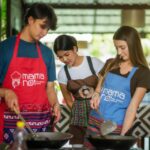
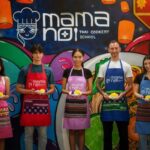
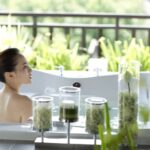
Thai Akha Kitchen makes a meal out of learning: you prepare a spread of Thai and Akha dishes, then sit down to eat what you’ve made. Choose the evening class for cooking, or the morning option to add a local market visit and a look at Northern Thai ingredients.
I like the combination of hands-on cooking and Akha food traditions, which gives the class more purpose than simply following recipes. I also like that you choose dishes from several categories, including curry, soup, stir-fry, appetizers, and dessert.
One thing to plan for: the class runs for hours and the food adds up. You may eat as you cook, and portions can be generous, so arrive hungry and leave room for the final dishes.
- What makes this Chiang Mai cooking class worth considering
- Ten dishes, one very full table
- Akha flavors add a cultural layer
- The morning market visit gives ingredients a backstory
- The evening class fills an afternoon and dinner
- What the price includes, and what it is worth
- How to arrive hungry and get the most from it
- Who will enjoy this class most
- Should you book Thai Akha Kitchen?
- FAQ
- How long is the evening cooking class?
- Does the evening class include a market visit?
- How many dishes will I make?
- What dishes are on the sample menu?
- Can the class accommodate dietary needs?
- Is hotel pickup included?
- What is included in the cooking class?
- Can I cancel or change my booking?
- The Best Of Chiang Mai!
- More Shopping Tours in Chiang Mai
- More Tours in Chiang Mai
- More Tour Reviews in Chiang Mai
- Not for you? Here's more nearby things to do in Chiang Mai we have reviewed
What makes this Chiang Mai cooking class worth considering
 1 / 9
 2 / 9
 3 / 9
 4 / 9
 5 / 9
 6 / 9
 7 / 9
 8 / 9
 9 / 9
- The morning class includes a local market visit, where you can see ingredients up close and sample local foods before cooking.
- The menu spans Thai and Akha cooking, including Akha salad, Akha soup, and Sapi Thong tomato dipping sauce.
- You prepare a wide range of dishes, with a sample menu of ten items across appetizers, desserts, soups, stir-fries, and curry.
- The evening class takes about four and a half hours, including hotel pickup, cooking, dinner, and drop-off.
- The class is designed for active participation, though instructors may demonstrate some dishes while you work on others.
- Dietary needs can be accommodated, including vegetarian diets, allergies, and gluten intolerance, if you share them in advance.
👉 See our pick of the 25 Best Shopping Tours In Chiang Mai
Ten dishes, one very full table
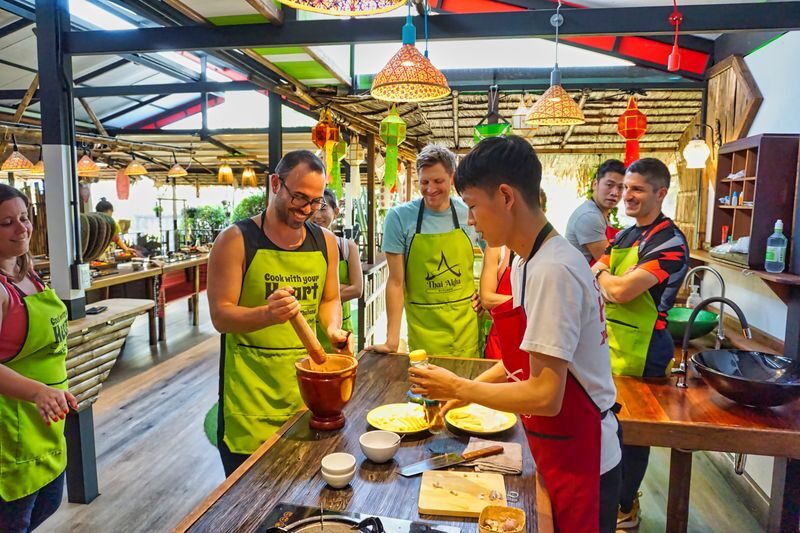
Thai Akha Kitchen is a cooking class built around variety. The sample menu includes two appetizers, two desserts, three Akha dishes, a stir-fry, a soup, and a curry. That broad mix helps you see how a Thai meal can move between textures and flavors, rather than treating a single curry as the whole story.
You may make papaya salad and spring rolls, then choose a dessert such as mango with sticky rice or pumpkin in coconut milk. The Akha dishes include Sapi Thong, a tomato dipping sauce, along with Akha salad and soup. For your main choices, the menu offers stir-fries such as Pad Thai or chicken with hot basil, soups such as hot and sour prawn soup or chicken in coconut milk, and curries including green, red, Panang, and Massaman.
The precise number of dishes you personally cook may vary. Some participants describe preparing four or five dishes themselves while the teacher demonstrates or prepares others. That is worth knowing if you expect to cook every item from scratch, but the format still gives you a close look at a wide range of recipes and plenty to eat.
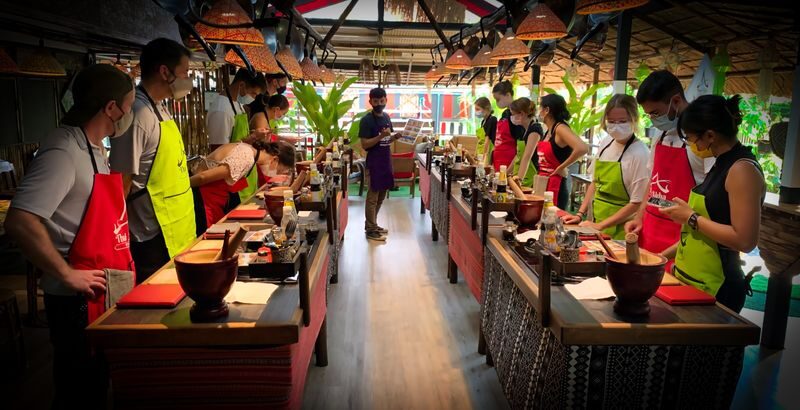
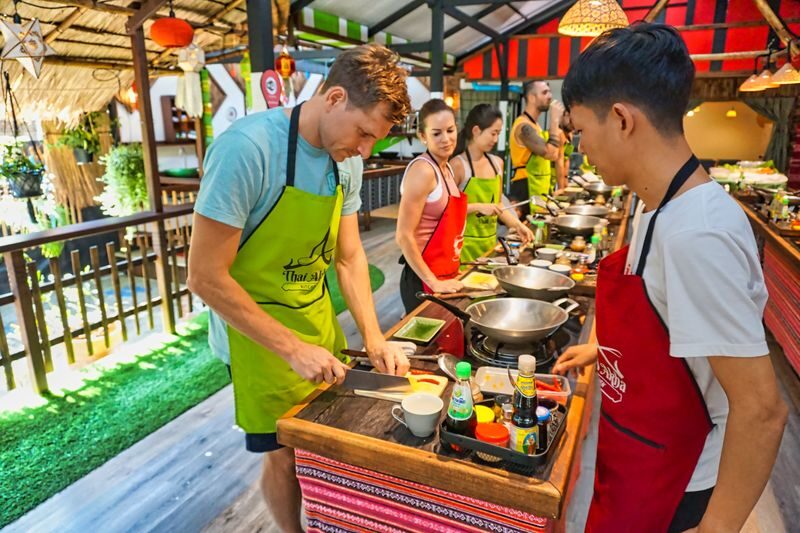
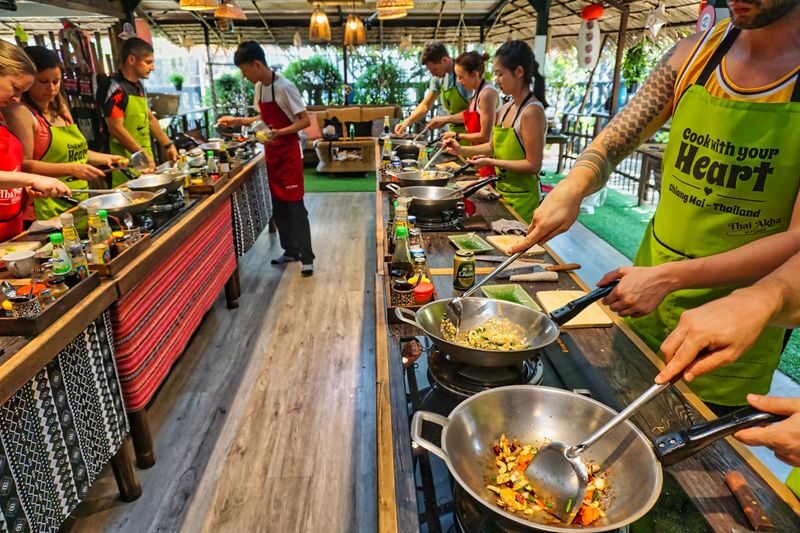
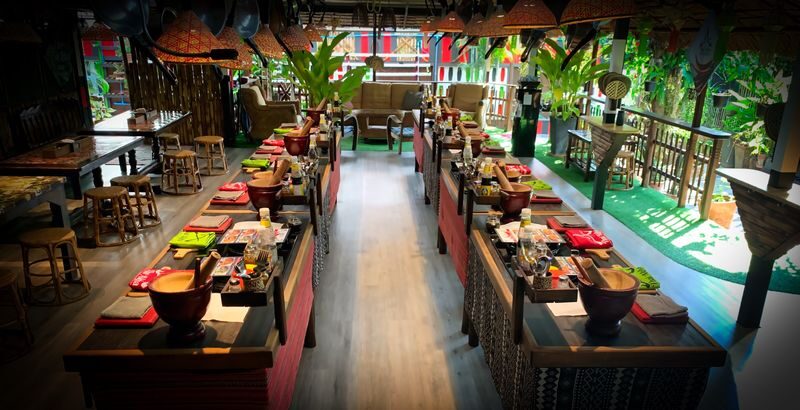
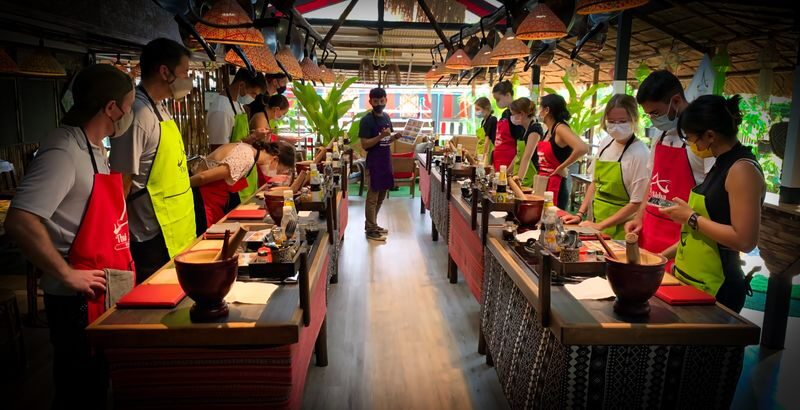
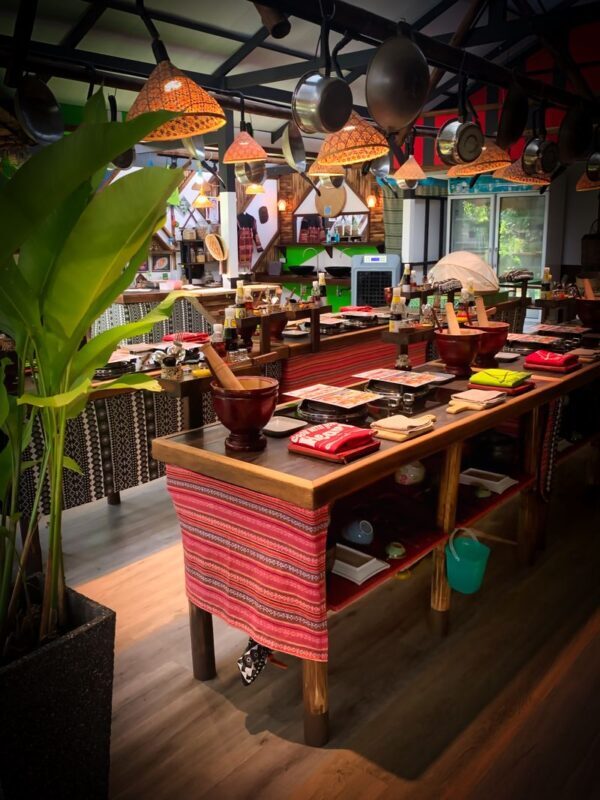
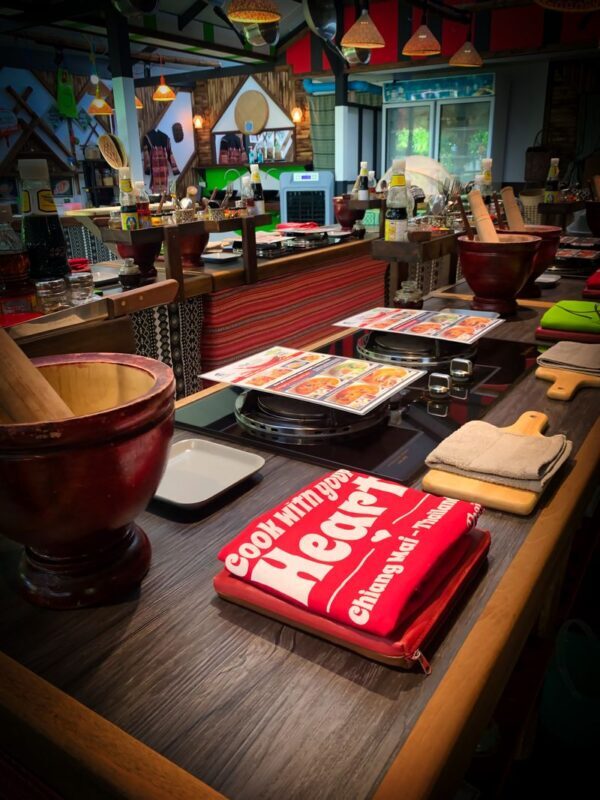
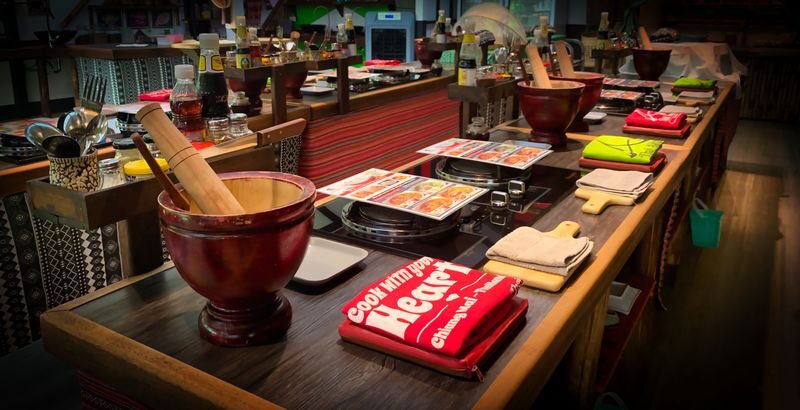
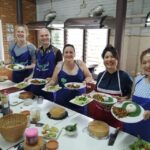
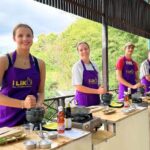
The kitchen serves as both classroom and dining room. You cook at your station, taste as you go, and eat the finished dishes during the session. In practice, this makes the class part cooking lesson, part dinner, so you can plan your evening around it rather than booking a large meal afterward.
You can also read our reviews of more shopping tours in Chiang Mai

Akha flavors add a cultural layer
The class introduces the Akha people and their food traditions alongside familiar Thai dishes. The Akha are an ethnic community whose members became Thai citizens in the 1900s, and the cooking gives you a practical way to encounter that culture through ingredients and recipes.
That context matters. A class focused only on Pad Thai and curry can teach useful techniques, but the Akha dishes widen the picture of Northern Thai food. Sapi Thong, Akha salad, and Akha soup offer a different set of flavors and food customs to take home in your memory, and in the cookbook provided with the class.
Instructors including Moe and Sandy have guided classes, and accounts of the teaching describe clear demonstrations, patient help, and a lively manner. Names can vary by session, of course. The useful point is that the format is built around active instruction, not just watching a chef work from the front of a room.
English is used to explain the dishes, and the instructions are described as easy to follow. You do not need to arrive with cooking expertise. The class suits beginners who want a structured introduction, as well as food-minded cooks who would like to learn recipes they can try again at home.
The morning market visit gives ingredients a backstory
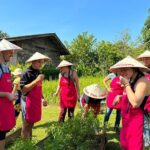
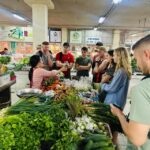
The morning cooking option pairs the class with a visit to a local market. There, you can see the produce and other ingredients before they appear at your cooking station, and learn about local foods and traditional snacks. Sampling ingredients and market foods is part of the appeal, so this is more than a quick stop to buy supplies.
A market visit can make unfamiliar ingredients easier to understand. You get a sense of what is sold and used locally, then return to the kitchen to work with ingredients in a meal. That connection between shopping and cooking is a useful contrast to a class where everything arrives pre-measured and explained only at the stove.
The market is also the best choice if you want the broader food-and-culture outing. It adds context to the cooking and gives you a glimpse of everyday food shopping in Chiang Mai. The trade-off is a fuller program, and the morning package costs more than the evening class based on the listed package prices.
If you book the evening class, do not expect a market visit. It is a cooking session, not a shortened version of the morning package. A separate Local Market Tour is also offered; that option focuses on market food and street-food tastings rather than the cooking class.
The evening class fills an afternoon and dinner
The evening schedule runs from 16:30 to 21:00, or four and a half hours. It includes hotel pickup, the cooking session, dinner, and hotel drop-off. That length may sound substantial, but the class combines several jobs: instruction, preparation, cooking, eating, and transport.
Pickup is available within a defined free service area. If your accommodation is outside it, you can meet at one of the listed pickup points, including Central Airport Plaza, Central Festival, and McDonald’s on Kotchasarn Road in front of Imm Hotel Thaphae. Confirm your pickup details when booking, especially if your hotel address is hard to locate.
The evening session works well for anyone who wants a food-focused activity without adding a market visit to the day. It also makes a practical dinner plan: you eat the dishes as the class progresses, and the amount can be enough to replace a restaurant meal. Some food may be too much to finish, so ask about taking leftovers if needed.
The morning class also includes cooking and a meal, but the precise start and finish times are not stated here. Check the selected date and package details before you plan other activities around it.
What the price includes, and what it is worth
The displayed prices vary by package. The package information gives starting prices of US$45.59 for the morning class with market tour, US$32.79 for the evening class, and US$32.79 for the local market tour. The overall experience is also shown from $36.05, so treat the price as dependent on the option and booking details you select.
The cooking class includes all ingredients and a cookbook. That matters for value: you are paying for instruction, a multi-dish meal, ingredients, and, for some bookings, hotel transport. Compared with paying separately for dinner and a cooking lesson, the evening class can be a useful all-in-one plan, especially if you enjoy learning by doing.
The morning option costs more, but the extra spend gets you a market visit and tastings. If you mainly want to learn recipes and eat your own cooking, the evening package may be the better fit. If you want to connect the meal to local ingredients and food shopping, the morning version offers more context.
The class accepts participants aged 15 and up. Special dietary requirements can be accommodated, including vegetarian diets, allergies, and gluten intolerance. Let the kitchen know what you need before the class so the staff can plan around it.
You can also read our reviews of more tours and experiences in Chiang Mai

How to arrive hungry and get the most from it
Do not eat a large meal beforehand. The class covers a lot of dishes, and you are likely to taste food throughout the cooking process before sitting down to eat. The small tastes can add up, especially when the final meal includes soup, curry, stir-fry, appetizers, and dessert.
You can choose how spicy to make your food, which is helpful if you have a low heat tolerance or want a stronger kick. Ask for guidance rather than assuming every dish will arrive mild or fiery. The class is a good place to find your own comfort zone, and to learn how seasoning changes the dish.
Pay attention to the demonstrations as well as your own cooking station. The instructor may prepare some dishes while you watch, and those demonstrations can show the sequence and technique more clearly than trying to do everything at once. The class’s value is not only in what you cook yourself, but in seeing how several dishes fit together.
Bring a healthy appetite, but not an expectation that you will finish every plate. If you are coming after a hot day of sightseeing, take the pace into account and keep yourself comfortable. The session is long enough that you will want energy for both the cooking and the meal.
Who will enjoy this class most
This is a strong choice if you want more than a meal and like the idea of bringing recipes home. The cookbook gives you something to refer to afterward, while the range of dishes lets you compare techniques across salads, soups, stir-fries, curries, and desserts.
It also suits curious eaters who want an introduction to Northern Thai and Akha food. You do not need to be an experienced cook, and the guided format makes the work accessible. The market add-on is especially useful if ingredients and everyday food culture interest you as much as the finished meal.
The class may be less appealing if you want a short activity, a quiet private lesson, or a light dinner. The evening session takes four and a half hours, and the group setting means you will share the experience with other participants. A few cooking tasks may be demonstrated rather than completed individually, so do not expect ten separate, fully solo recipes.
Should you book Thai Akha Kitchen?
Book it if you want an engaging cooking lesson that doubles as dinner, and if you are curious about Akha food as well as familiar Thai dishes. I would choose the morning class if the market and ingredient tastings are a priority; choose the evening option if cooking and a substantial meal are enough.
Go hungry, check the pickup area, and tell the kitchen about dietary needs before you arrive. If you want a quick meal or prefer not to spend several hours cooking and eating, pick another activity. For a food-focused half-day or evening in Chiang Mai, this class offers a useful blend of practical recipes, local food context, and a very generous table.
Thai Akha Kitchen Cooking Class & Local Market Tour
“I experienced a fully booked day, learned how to make many dishes, and the instructor was very enthusiastic and patient. It was wonderful.”
FAQ
How long is the evening cooking class?
The evening class runs from 16:30 to 21:00, a total of four hours and thirty minutes. The schedule includes hotel pickup, cooking, dinner, and hotel drop-off.
Does the evening class include a market visit?
No. The market visit is part of the Morning Cooking Class + Market Tour package. The evening option is a cooking class.
How many dishes will I make?
The sample menu covers ten dishes across appetizers, desserts, Akha dishes, a stir-fry, a soup, and a curry. How many you prepare yourself may vary, as the instructor may demonstrate some dishes.
What dishes are on the sample menu?
Options include papaya salad, spring rolls, mango with sticky rice, pumpkin in coconut milk, Sapi Thong, Akha salad, Akha soup, several stir-fries, soups, and curries. You choose from the listed options for some categories.
Can the class accommodate dietary needs?
Yes. Special requirements such as allergies, gluten intolerance, vegetarian diets, and other dietary needs can be accommodated.
Is hotel pickup included?
Free pickup is available for locations within the service area. If your accommodation is outside it, you can go to one of the listed pickup points instead.
What is included in the cooking class?
All ingredients and a cookbook are included. Transport outside the free pickup area is not included.
Can I cancel or change my booking?
You can receive a full refund if you cancel at least 48 hours before the activity date, using destination local time. Changes are allowed until 48 hours before the activity, with exceptions for certain bookings, so check the conditions attached to your voucher.