Beneath the Appian Way, the Catacombs of St. Callixtus offer a close look at early Christian burial rooms, carved symbols and the underground history of Rome. I like that a guide leads you through a place you cannot visit on your own, and that the tour focuses on a site tied to early Christians, martyrs and popes.
I also like the compact format: the guided portion takes about 40 minutes, so it can fit into a day of sightseeing without taking over the schedule. The main drawback is the location outside central Rome. You need to arrange your own transport, and the tour is not wheelchair-accessible.
- A guided-only site: You must visit with a guide, and admission is included with this tour.
- A short underground visit: The guided walk lasts about 40 minutes, within an experience listed as roughly one hour.
- Early Christian history: The catacombs were used as burial chambers from the 3rd century and are associated with early Christians, martyrs and popes.
- A large burial ground: The site is described as the resting place of half a million Christians.
- Three language options: Tours are offered in English, Italian and French.
- Plan for the Appian Way: The meeting point is Via Appia Antica 110/126. Transport is not included.
- The Appian Way sets the scene
- Inside the Catacombs of St. Callixtus
- What the 40-minute tour feels like
- The guide makes the history legible
- Is the price good value?
- Opening hours, access and practical details
- Should you book the Catacombs of St. Callixtus tour?
- FAQ
- How long does the Catacombs of St. Callixtus tour take?
- Where is the meeting point?
- Is transport included?
- Can I visit the catacombs without a guide?
- What languages are available?
- Is the tour wheelchair-accessible?
- Can I take photos inside?
- The Best Of Rome!
- More Tours in Rome
- More Tour Reviews in Rome
- Not for you? Here's more nearby things to do in Rome we have reviewed
The Appian Way sets the scene
 1 / 6
 2 / 6
 3 / 6
 4 / 6
 5 / 6
 6 / 6
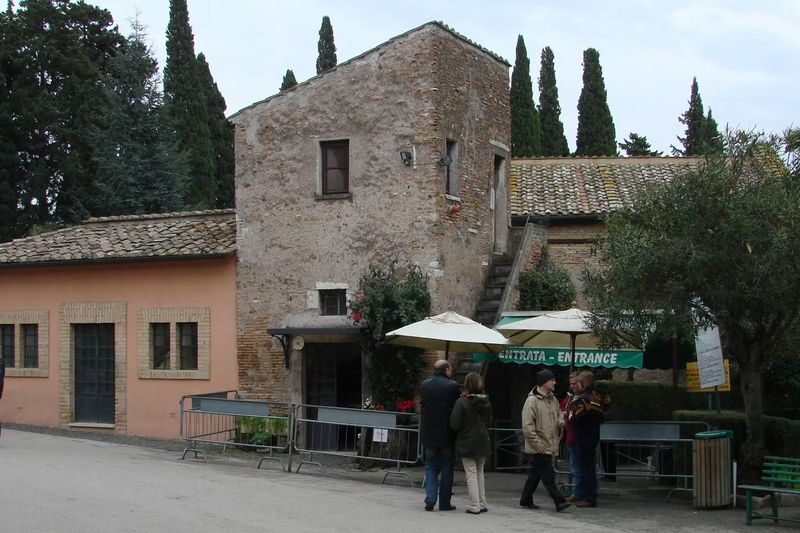
The Catacombs of St. Callixtus sit at Via Appia Antica 110/126, away from Rome’s central cluster of monuments. That distance is part of the appeal: the visit gives you a reason to see a different part of the city and spend time with a side of Roman history that does not look like a forum or palace. But it does mean you should plan the trip there and back rather than treat the catacombs as a quick walk from the Colosseum.
The tour’s meeting and return point is the catacombs themselves. Available departure times are 09:30, 10:00, 14:00 and 16:00, with return times listed as 10:30, 11:00, 15:00 and 17:00. The options depend on the time you book and the itinerary, so check your confirmation and arrive at least 10 minutes early.
Public transport is one way to reach the site. From Termini, take Metro A toward Anagnina to San Giovanni, then bus 218 toward Ardeatina and get off at Fosse Ardeatine. Another route is Metro B toward Laurentina to Colosseo or Circo Massimo, followed by bus 118 toward Appia/Villa Dei Quintili; get off at Catacombe di San Callisto on Via Appia. The precise bus route and stop matter here: the site is not in the middle of the main tourist area, so leave time for the connection.

👉 See our pick of the 25 Best Guided Tours In Rome
Inside the Catacombs of St. Callixtus
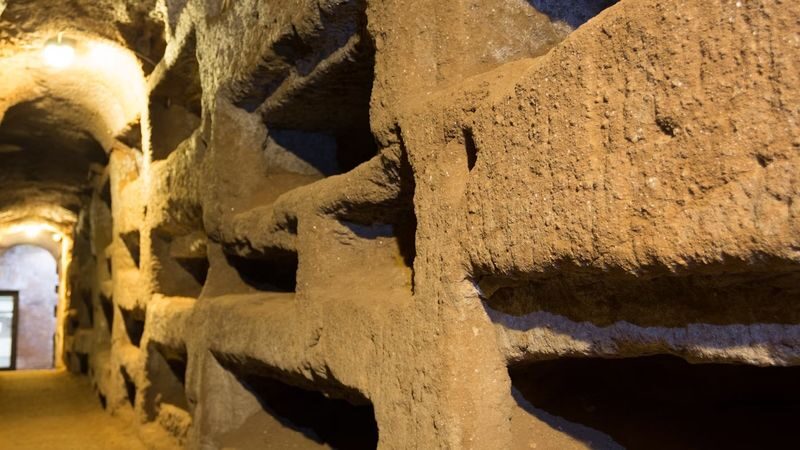
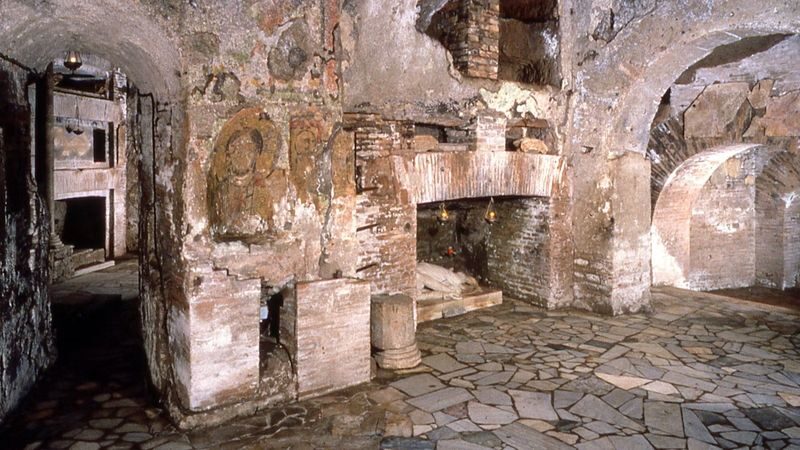
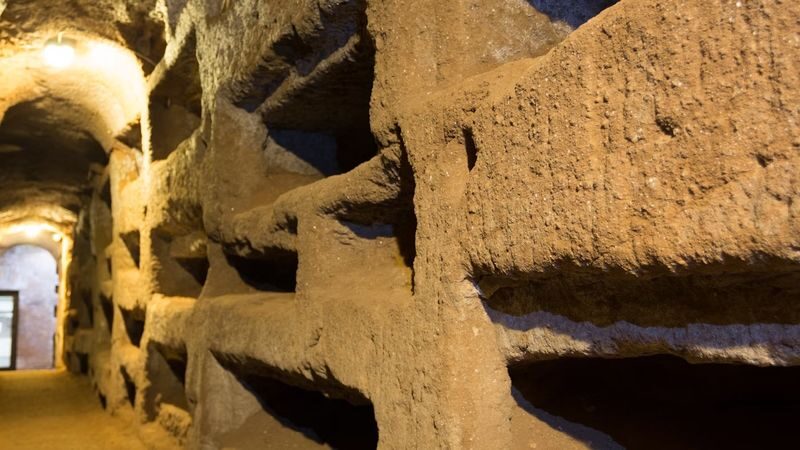
The catacombs date to the 3rd century and served as a burial place for early Christians. The scale is striking: the underground network is associated with the remains of half a million Christians. You should not expect to see a single grand tomb that tells the whole story. The experience is a guided walk through burial chambers and crypts, with the setting itself doing much of the work.
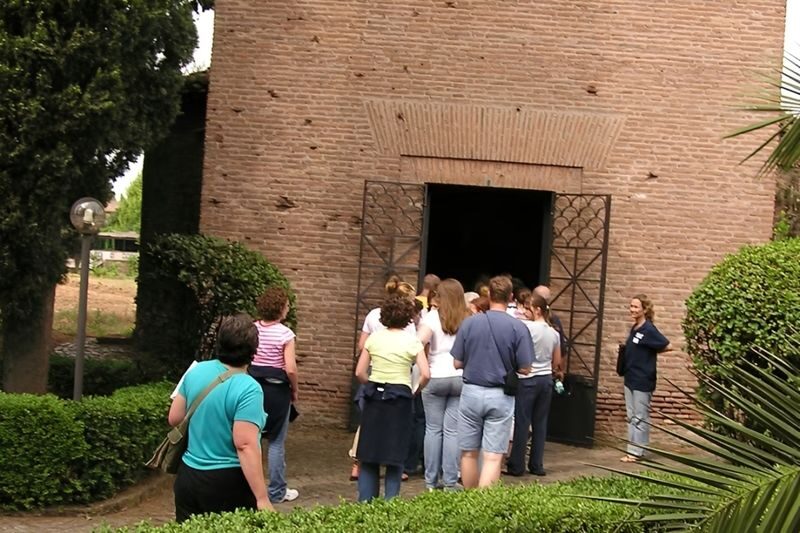
A guide is essential, not an optional extra. The catacombs can only be visited with a guide, and the tour includes both admission and a 40-minute guided visit. That structure helps make sense of a place where stone chambers and repeated passages could otherwise blur together. Your guide can explain what you are looking at and point out the symbols cut into the stone.
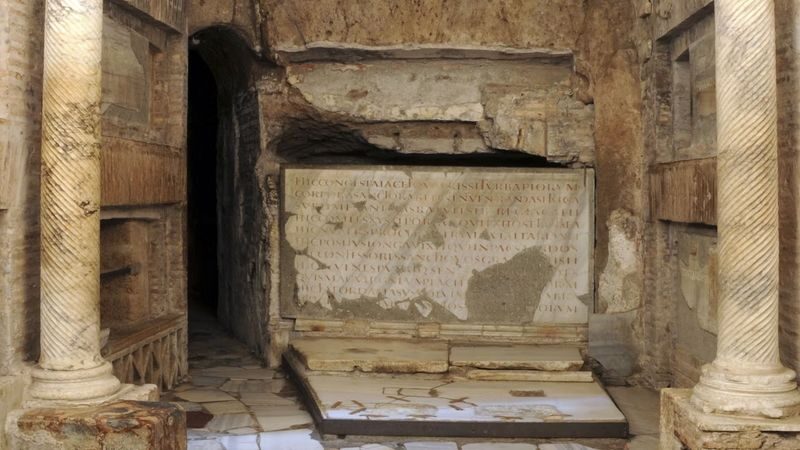
Those symbols are one of the visit’s most intriguing details. The tour introduces their meaning and places them in the context of early Christianity. For a short visit, this is a useful balance: you get the atmosphere of an underground burial site, but also some help reading what is in front of you.
The site’s religious significance is central. These chambers are connected with early Christian martyrs and popes, and that history gives the visit a weight that is different from exploring an ancient civic ruin. If you are religious, you may find the experience especially reflective. If you are not, the catacombs still offer a vivid look at burial practices and the history of a community whose life and faith unfolded under Roman rule.
You can also read our reviews of more tours and experiences in Rome.



What the 40-minute tour feels like
The guided exploration is brief, but the subject is substantial. In about 40 minutes, you move through underground burial chambers and crypts while learning about the site’s history and symbols. The short format is a practical fit if your Rome schedule is full, though it is not a leisurely, open-ended visit where you can wander at your own pace.
The route takes place below ground, where temperatures differ from those above. Wear clothes suited to cooler underground conditions and shoes that can handle uneven surfaces. Those are small preparations, but they help you focus on the place rather than your feet or the temperature.
The atmosphere may feel eerie, as you would expect in ancient burial chambers. That mood is part of what makes the visit memorable, but it is not a haunted attraction or a show. The focus is on history, faith and the remains of a burial site, with the guide explaining the meaning of the chambers and carved signs.
Photography and videography are strictly prohibited inside. That rule means you will need to leave the camera in your pocket and pay attention as you go. For many people, that is a fair trade: the visit is short, and the details are best understood through the guide’s explanation rather than a hurried attempt to photograph them.
The guide makes the history legible
The guide is the heart of this experience. The catacombs are not a self-guided attraction, and the value of the tour rests in the explanations that connect the spaces to early Christian life. If your English tour is led by Patrick Sweeney, his storytelling has been praised for linking the site’s centuries-old history to questions that still feel relevant. Guide assignments can vary, so do not book on the assumption that you will have a particular person.
That connection between past and present can make the visit more than a walk through old chambers. One recent English-language visitor described the experience as inspiring and informative, with the guide bringing the place to life. Another visitor found the tour merely okay, which is a useful reminder: if you prefer long, detailed history sessions, 40 minutes may feel brief.
The tour is offered in English, Italian and French. Choose the language you can follow most comfortably, because the explanations are a large part of what you are paying for. An audio guide is not included, and the visit is guided rather than designed for independent exploration.
Is the price good value?
The stated price starts at $19.35, though package prices may vary. For that amount, you get admission and a guided tour, not transport, food or an audio guide. The price is easiest to justify if you want an expert-led introduction to a historic site that you cannot enter alone.
The visit is short, so value depends on what you want from the day. If you are keen to see the catacombs and understand their religious and historical context, a 40-minute tour is an efficient way to do it. If you expect an extended underground visit or a full half-day excursion, this is not that. You will need to add your own travel time to the site, and transport costs are separate.
The surrounding Appian Way area is described as quieter and less crowded than Rome’s main tourist spots. That may suit you if a break from the central crowds sounds welcome, especially if you have time to explore nearby on your own. The tour itself does not include that extra exploration, so leave room in your schedule if you want to make more of the outing.
Advance booking can make the visit easier to plan, particularly because you select a departure time and the voucher is valid only for the date and time specified. The trade-off is a strict schedule: late arrivals and no-shows are not refunded, and the booking cannot be cancelled for a refund.
Opening hours, access and practical details
The catacombs are open Thursday through Tuesday, from 09:00 to 12:00 and 14:00 to 17:00. They are closed on Wednesdays, New Year’s Day, Easter and Christmas. Guided tours begin every 30 minutes and take about 40 minutes; the final morning tour begins at 12:00, and the final afternoon tour begins at 17:00. The ticket office closes at 16:50, so do not confuse that closing time with the final tour start.
Show your mobile voucher at the catacombs’ ticket office, where staff will direct you to your guide. Children aged 0 to 6 enter free, while children aged 7 to 16 need a paying adult with them. Visitors aged 17 and older pay the adult rate. Disabled visitors and one caregiver, as well as students of Christian archaeology, have free entry with valid proof, but the site has specific limitations for disabled visitors and is not wheelchair-accessible.
Cigarettes and e-cigarettes are prohibited. Since photography and video are also forbidden inside, plan to experience the chambers without recording them. These rules are easy to manage, but they are worth knowing before you set off.


Should you book the Catacombs of St. Callixtus tour?
Book this tour if you are interested in early Christian history, want a guide to explain the symbols and burial chambers, or are looking for a quieter stop beyond central Rome. The included admission and required guide make the price reasonable for a focused visit, and the 40-minute underground walk is manageable if you are fitting several sights into one day.
Think twice if you need wheelchair access, want to explore independently, or do not have time to make the trip out to Via Appia Antica. Also be realistic about the length: this is a concise guided visit, not an all-day archaeological outing. For the right visitor, though, it offers an unusually direct look at the city’s religious past, beneath the roads and monuments most people come to see.
Saint Callixtus Catacomb Tour
“Our guide Patrick Sweeney was amazing and really made the centuries old place come to life with his stories and relevance/meaning to our lives toda…”
FAQ
How long does the Catacombs of St. Callixtus tour take?
The guided tour takes about 40 minutes. The overall experience is listed as roughly one hour, with the exact schedule depending on your selected departure.
Where is the meeting point?
Meet at the Catacombs of St. Callixtus, Via Appia Antica 110/126, 00179 Rome. Arrive at least 10 minutes before your selected departure time.
Is transport included?
No. Transport to and from the catacombs is not included. Public transport directions are available from Termini using Metro A and bus 218, or Metro B and bus 118.
Can I visit the catacombs without a guide?
No. The Catacombs of St. Callixtus can only be visited with a guide. This tour includes admission and a 40-minute guided visit.
What languages are available?
Tours are offered in English, Italian and French. The package described here is the English tour.
Is the tour wheelchair-accessible?
No. The activity is not wheelchair-accessible, and the site has specific limitations for disabled visitors.
Can I take photos inside?
No. Photography and videography are strictly prohibited inside the attraction.