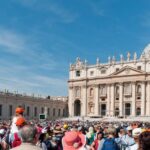
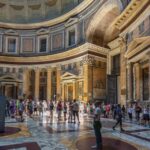
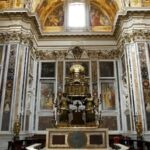
The big draw is getting two of Rome’s heavyweight sights in one day: the Vatican in the morning, then the Colosseum and ancient center in the afternoon. You’ll see the Sistine Chapel, enter the Colosseum Arena Floor, and walk the Forum and Palatine Hill with a guide.
I like the early Vatican start and the chance to hear the story behind rooms and works you could easily pass without context, including Raphael’s Rooms. I also like that the Colosseum ticket includes the Arena Floor, a rare-feeling vantage point at the heart of the amphitheater.
The trade-off is a packed day with no transport or meals included. You must get yourself from the Vatican meeting point to the afternoon meeting point, and a morning delay can eat into lunch.
- Vatican highlights with a guide: The morning covers the Vatican Museums, Raphael’s Rooms, the Sistine Chapel, and St. Peter’s Basilica.
- A quiet, self-guided Sistine Chapel visit: Your guide explains the chapel before you enter. Silence is mandatory inside.
- Colosseum Arena Floor access: The afternoon ticket includes Levels 1 and 2 as well as the Arena Floor.
- Ancient Rome on foot: A guided walk through the Roman Forum leads on to Palatine Hill, where the tour ends.
- Language-specific group tours: The listed options are Chinese and Japanese. The package details provided are for the Chinese tour.
- A full-day plan with a gap to manage: Allow time to reach the second meeting point and find lunch during the roughly 90-minute break.
- A full day that links Vatican art with ancient Rome
- The Vatican Museums: more than a fast walk through galleries
- The Sistine Chapel: a short stop with firm rules
- St. Peter’s Basilica: a useful shortcut and a major finale
- Lunch and the transfer: the part you need to plan
- The Colosseum Arena Floor: the afternoon’s main event
- The Roman Forum: where the city’s public life took place
- Palatine Hill: a fitting end, with room to stay longer
- What the price buys, and who gets good value
- Practical details before you book
- Should you book this Rome day tour?
- FAQ
- Where does the tour start?
- Where does the tour end?
- Which languages are available?
- Is lunch included?
- Is transport between the Vatican and Colosseum included?
- Which admissions are included?
- What should I bring?
- Can children and infants join the tour?
- The Best Of Rome!
- More Tours in Rome
- More Tour Reviews in Rome
- Not for you? Here's more nearby things to do in Rome we have reviewed
A full day that links Vatican art with ancient Rome
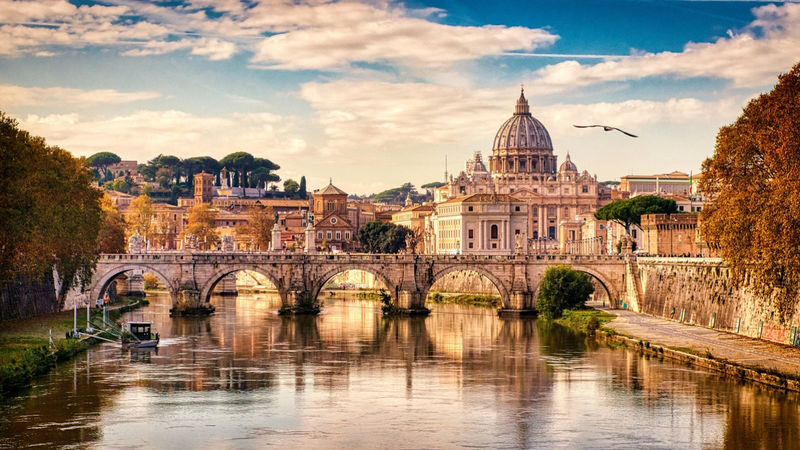
This tour is built for you if Rome is a short stop and you want guided time at its most famous sights without arranging separate tickets for each. The order is sensible: art and church in the morning, then the Colosseum and archaeological sites after lunch.
The day begins at 8:00 a.m. at Giuly’s Café, Via Santamaura 3. The scheduled return is around 4:30 p.m. on Palatine Hill, though the day’s timing can change with traffic and weather. The listed schedule adds up to a long day on foot, so bring comfortable shoes, water, and a little patience.
The group tour is offered in Chinese or Japanese. Its value depends in part on the guide: detailed explanations can make crowded galleries and ancient ruins much easier to follow. Guides named Yang Yingying and Lura have been praised for their historical storytelling, including attention to Raphael’s Rooms and the long sweep from ancient Rome through the empire’s later years. Guide assignments can vary, so don’t book expecting a particular person.
👉 See our pick of the 25 Best Guided Tours In Rome
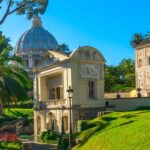
The Vatican Museums: more than a fast walk through galleries
You spend about two hours in the Vatican Museums with a guide. That is enough time to see selected highlights, not every room in this vast collection. Raphael’s Rooms are specifically included, and they reward a closer look: the paintings make more sense when someone points out what to notice and how the rooms fit into the museum visit.
Michelangelo and Raphael are among the artists whose work gives the Vatican its pull. Caravaggio is also named among the artists you may encounter in the collections. The tour’s guided format helps you focus on particular works instead of trying to absorb every gallery at once.
There is a practical limit to that advantage. The museums are busy, and a group visit moves at the guide’s pace. If you like lingering for a long time in front of one painting or choosing your own route, you may prefer a separate visit with more freedom. Here, the benefit is structure and explanation, not an unhurried survey of the entire collection.
The tour advertises early access and aims to avoid the biggest crowds. That can make the first part of the day more comfortable, though it does not mean you will have the galleries to yourself. Bring your valid ID, and keep your belongings manageable: luggage storage is not provided.
You can also read our reviews of more tours and experiences in Rome.
The Sistine Chapel: a short stop with firm rules
The Sistine Chapel visit lasts about 15 minutes and is self-guided. Before you enter, your guide explains the site and its significance; inside, silence is mandatory. That short, quiet interval is a marked change from the commentary and movement of the museum galleries.
The ceiling is the obvious focus, but the chapel is best approached with a little context. Listen to the guide’s explanation beforehand, then take your time looking once inside. You should not expect a long talk in the chapel itself, and the rules mean this is not the place for a running discussion or questions.
For many people, this is the emotional high point of the Vatican morning. It is also brief, so set your expectations accordingly. The tour gives you a guided introduction and time to look, not an extended private visit.
St. Peter’s Basilica: a useful shortcut and a major finale
After the chapel, the group uses a special corridor to reach St. Peter’s Basilica, avoiding the long lines at St. Peter’s Square. The corridor is reserved for groups led by accredited guides, which is one of the day’s most practical advantages. It saves you from retracing your steps and waiting in the public queue.
You spend about 45 minutes in the basilica on a guided visit. That is enough to see the main interior and hear the guide explain what you are looking at, though not enough to explore every corner at leisure. If the basilica is a particular passion, you may want to return independently on another day, subject to access and opening arrangements.
The Vatican morning is tightly linked: museums, chapel, then basilica. That keeps the visit efficient, but it also means the group needs to keep moving. If you want a slower pace, the two-site schedule may feel demanding.
Lunch and the transfer: the part you need to plan
The gap between the Vatican and Colosseum tours is about 90 minutes. Lunch is not included, and neither is transport. You need to arrange both your meal and your trip to Largo Corrado Ricci 30, near the Colosseum, where the afternoon group meets at Bar Illy.
This is the day’s most important logistical detail. Do not assume that the guide will take you from one site to the other. Check the confirmed afternoon meeting time and plan the route before the morning tour begins. One participant experienced confusion over the listed time and had to contact the emergency number by WhatsApp; the support team responded promptly, but it is far less stressful to verify the time in advance.
The break may feel generous on paper, but it can shrink if the Vatican visit runs late. A morning delay has caused some people to rush, take a taxi, and miss a proper lunch. I’d keep the meal simple and have a backup plan for getting to the afternoon meeting point. The tour does not provide a vehicle between sites.
The Colosseum Arena Floor: the afternoon’s main event
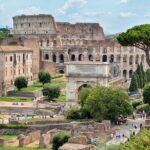
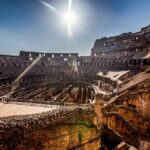
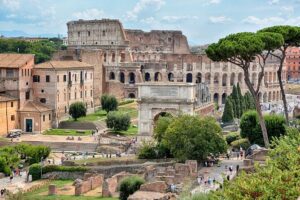
At the Colosseum, the guided visit lasts about 90 minutes and includes Level 1, Level 2, and the Arena Floor. The Arena Floor is the special access here. It puts you inside the amphitheater rather than leaving you to view the central space only from above.
The setting helps make the Colosseum’s scale legible. From the arena area, you can picture the space where gladiators fought, while the upper levels give you another angle on the structure. A guide can connect the stone remains to stories of Roman life and the building’s place in the city.
The experience is not a private or crowd-free visit. You are sharing the site with other groups, and the tour follows a set route and schedule. Still, the included arena access adds more value than a basic exterior stop, especially if this is your first time inside.
The guide’s historical explanation is a recurring strength of the day. Yang Yingying has been praised for answering questions and giving context across the Vatican and Colosseum; Lura has also been noted for explaining the background at each stop. You may have another guide, but the tour’s strongest case is the combination of access and interpretation.


The Roman Forum: where the city’s public life took place
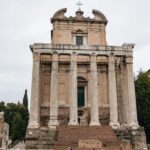
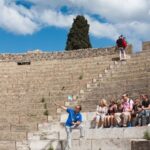
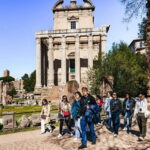
From the Colosseum, the group visits the Roman Forum for about an hour. This was the center of commercial, political, and institutional life in ancient Rome. Today it is a field of ruins, and without context it can be hard to tell which remains mattered most or how the area worked as a whole.
That is where a guided walk earns its keep. Rather than seeing only scattered columns and foundations, you get a framework for understanding the Forum as the heart of an empire’s public life. The guide’s account can connect the site to the figures and events discussed earlier, including Julius Caesar and Constantine.
An hour gives you a useful introduction, not a complete archaeological tour. If you like to stop often, read every sign, or photograph each corner, you may find the pace brisk. The tour’s approach is to show you the main story and keep moving toward Palatine Hill.
Palatine Hill: a fitting end, with room to stay longer
The final guided stop is Palatine Hill, where Rome was founded and where Roman emperors lived. The walk up the slopes takes about 30 minutes as part of the guided visit. It gives the day a clear ending, shifting from the Forum’s public life to the hill’s connection with Rome’s beginnings and rulers.
The tour ends on Palatine Hill at about 4:30 p.m. You can continue exploring the site at your own pace until closing time, which is a welcome bit of flexibility after a closely scheduled day. If you still have energy, stay longer rather than treating the end of the guided portion as the end of your visit.
The finish is useful to know when planning the rest of your evening. You do not return to Giuly’s Café; the tour ends at the site. No return transport is included, so make your own onward plans.
What the price buys, and who gets good value
The experience is listed from $257.15, while the Chinese- and Japanese-language package options are shown from US$223.59. Prices can vary by package and booking details, so confirm the total for your chosen date and language before paying.
The price covers admission to the Vatican Museums and Sistine Chapel, St. Peter’s Basilica, the Colosseum including its Arena Floor, the Roman Forum, and Palatine Hill. You are also paying for guided visits across both halves of the day. Buying access and arranging guides separately can take time, and the special Vatican corridor and Colosseum arena access are useful parts of the package.
But this is not an all-in day. Meals, beverages, and transport are excluded, and you must manage the transfer between the Vatican and Colosseum. The value is strongest if you want a guide, the included sites, and a tightly organized plan. If you prefer to move slowly or want a long lunch, two separate half-day visits may suit you better.
The experience has a 4.8 out of 5 rating from six tour-specific ratings, a small sample. The provider, Touring Pandas, has 731 total reviews and an 87 percent good-review rate. Those figures offer some reassurance, but they cannot guarantee the pace or guide you will get on your date.
Practical details before you book
Choose the Chinese or Japanese join-in tour, and arrive at Giuly’s Café at least 10 minutes before the 8:00 a.m. departure. The guide carries a sign with the Touring Pandas logo. Late arrivals and no-shows are not refundable, so set your own reminder and verify the afternoon meeting time as well.
Bring sunscreen, sunglasses, a hat or cap, a water bottle, and valid ID. Luggage storage is not provided, so do not arrive with bags you cannot carry. Infants and children must be included in the passenger count.
Cancellation fees are strict because of the Vatican Museums tickets: 25 percent up to 15 days before the tour, 50 percent between 14 and 8 days before, and 100 percent 7 days or less before. Contact Klook customer service about refund questions.
Should you book this Rome day tour?
Book it if you want a guide to link the Vatican’s art with the Colosseum, Forum, and Palatine Hill in one long day, and if Arena Floor access matters to you. The combination of Vatican highlights, a special route to St. Peter’s, and guided entry to several ancient sites makes for a strong first overview of Rome.
Skip it, or split the sights across two days, if you want long museum stops, a relaxed lunch, or a day without managing your own transfer. The tour is packed, and the gap between locations is the weak point. If you can handle an early start, steady walking, and a self-managed lunch break, it offers a practical way to see the city’s major landmarks with useful historical context.
Vatican and Colosseum day tour from Rome
“I am so glad I joined the Chinese guided tours of the Vatican and the Colosseum. And, of all the luck, we were fortunate enough to have Ms. Yang Yi…”
FAQ
Where does the tour start?
It starts at Giuly’s Café, Via Santamaura 3, Rome. Arrive 10 minutes before the 8:00 a.m. departure.
Where does the tour end?
The guided tour ends on Palatine Hill, around 4:30 p.m. You can continue exploring the site at your own pace until closing time.
Which languages are available?
The listed join-in options are Chinese and Japanese. The package details provided are for the Chinese tour.
Is lunch included?
No. You have about 90 minutes between the morning and afternoon tours to get lunch, and meals and drinks are not included.
Is transport between the Vatican and Colosseum included?
No. You must arrange your own transport to the afternoon meeting point at Largo Corrado Ricci 30, near Bar Illy.
Which admissions are included?
Admission is included for the Vatican Museums and Sistine Chapel, St. Peter’s Basilica, the Colosseum including the Arena Floor, the Roman Forum, and Palatine Hill.
What should I bring?
Bring sunscreen, sunglasses, a cap or hat, a water bottle, and valid ID. Luggage storage is not provided.
Can children and infants join the tour?
Infants and children must be included in the passenger headcount.