A trip to Da Sy Village puts you at the forge, not behind a display case. With a local blacksmith guiding each step, you’ll help turn metal into a working knife, using hammers, heat, water, and a sharpening process that makes the finished blade your own.
I like that you learn the craft in a family-run workshop with a long connection to blacksmithing, and that the knife is a useful keepsake rather than a shelf ornament. Guides such as Nick and Cherry have also helped visitors understand the work and the village’s traditions.
One practical catch: the workshop is outside central Hanoi, so allow for the four-hour round trip and class, and wear proper shoes. You’ll also need to pack your knife in checked luggage for the flight home.
- Key points before you book
- From Hanoi’s Old Quarter to a village forge
- At the home-based workshop
- Making a knife, not just watching one
- The value of the four-hour outing
- Getting the practical details right
- Who will enjoy this class most
- Should you book the Da Sy knife-making class?
- FAQ
- How long does the knife-making class last?
- Where does the workshop take place?
- Is the class suitable for beginners?
- What is included in the price?
- What should I wear?
- Can children join the class?
- How should I bring the knife home?
- The Best Of Hanoi!
- More Private Tours in Hanoi
- More Tours in Hanoi
- More Tour Reviews in Hanoi
- Not for you? Here's more nearby things to do in Hanoi we have reviewed
Key points before you book
 1 / 5
 2 / 5
 3 / 5
 4 / 5
 5 / 5
- Make a knife from start to finish: Take part in shaping, heating, tempering, and sharpening a simple blade.
- Work in Da Sy Village: The class takes place in a blacksmith’s home workshop in a village with generations of forging tradition.
- Get hands-on guidance: The blacksmith supervises the work, while an English-speaking guide helps explain the process.
- Take home a practical souvenir: You can customize the knife for your cooking needs, and each finished piece will carry the marks of its maker.
- Plan for a half-day outing: The experience lasts about four hours and includes hotel transfers from Hanoi’s Old Quarter.
- Dress for a forge: Comfortable clothes and closed shoes are sensible; flip-flops are not recommended.

👉 See our pick of the 25 Best Shopping Tours In Hanoi
From Hanoi’s Old Quarter to a village forge
The class begins with a hotel pick-up in Hanoi’s Old Quarter, with the exact time confirmed after booking. Available departure times are 08:30, 10:00, 13:00, and 14:00, though return options depend on which departure you choose. Be in your hotel lobby ten minutes early, and enter your hotel name and address when you book.
From the Old Quarter, you travel to Da Sy, in Kien Hung, Ha Dong. That journey is part of the appeal: the class takes you beyond central Hanoi to a place where forging is a local trade, not a craft staged for a city audience. The village’s blacksmithing story reaches back several hundred years. Local accounts trace the profession to two blacksmith ancestors, Nguyen Thuat and Nguyen Thuan, who taught forging techniques to residents.
Da Sy also adapted its work to changing times. During the Vietnam War, the village supported the Vietnamese military. After peace returned, local smiths turned back to practical goods, including ploughs and rakes. That history gives the workshop context: metalwork here has served everyday needs, not just the making of blades.
Traffic and weather can change the schedule, so keep the rest of your day flexible. The outing is listed as four hours, though one participant said the full process took about three hours. Your actual timing may depend on the work and transfers.
You can also read our reviews of more private tours in Hanoi



At the home-based workshop
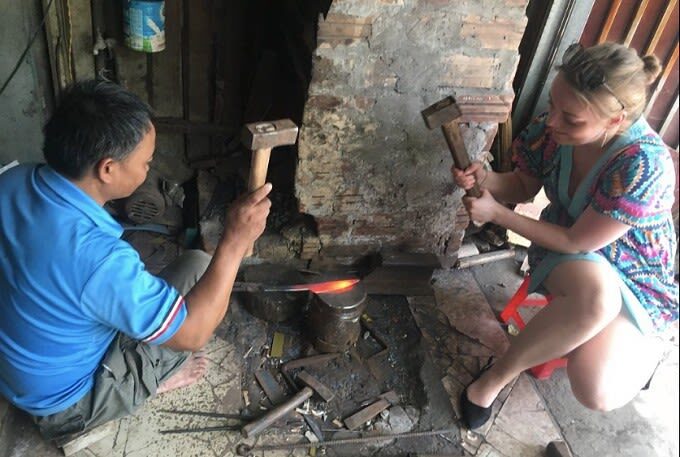
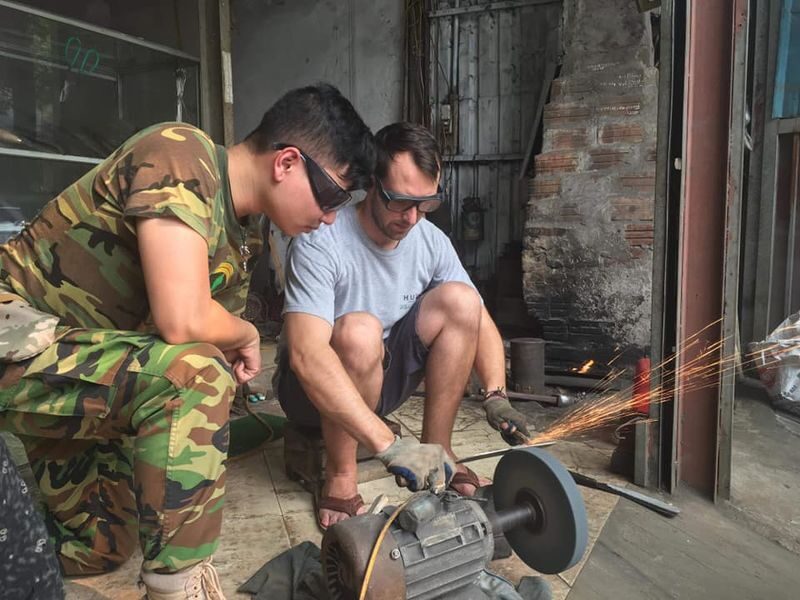
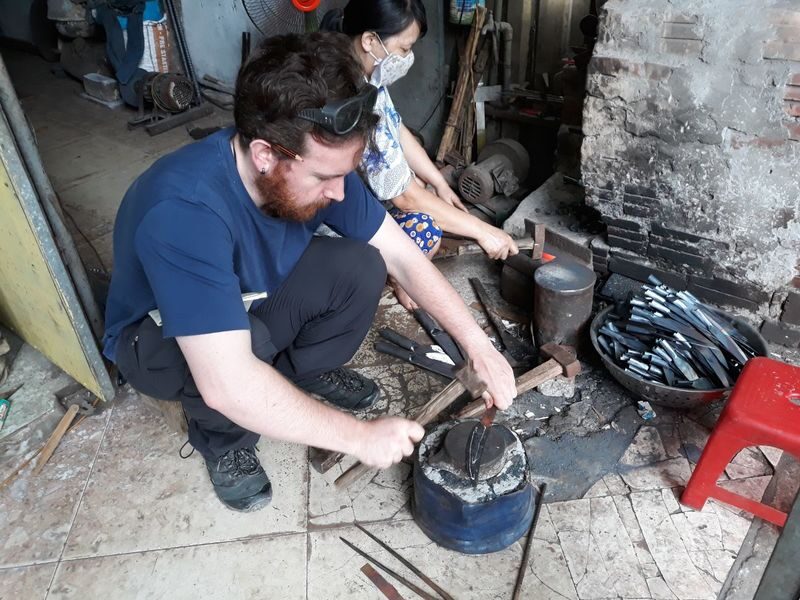
The class takes place at the blacksmith’s home workshop. That makes the setting feel personal and close to the work. You are not simply watching a demonstration from a distance: the aim is to make a simple knife yourself, with the instructor guiding and supervising you through the stages.
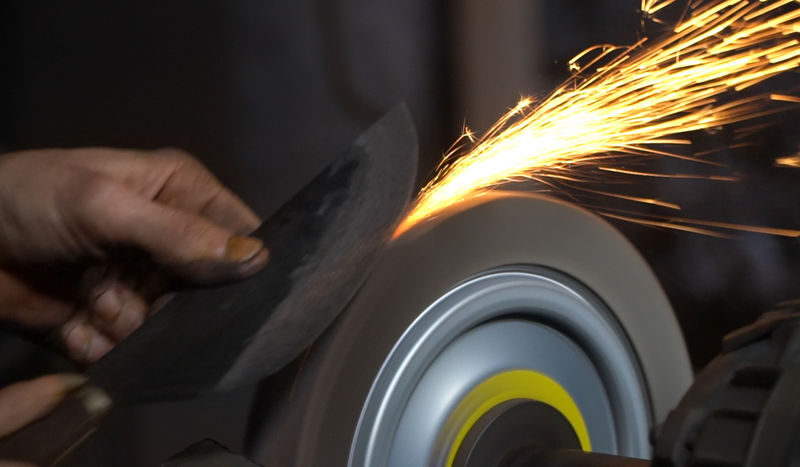
Expect a working environment built around heat, metal, and physical effort. The process includes preparing a rough shape, keeping the fire going, hammering red-hot iron into form, tempering the metal in water to strengthen it, and sharpening the blade. Each stage calls for a different kind of care. The hammering gives the metal its shape; tempering and sharpening help turn that shape into a usable tool.
This is beginner-friendly, but that does not mean the work is effortless. A blacksmith’s craft takes skill, and the point is to learn by doing, not to produce a factory-perfect blade on the first try. The instructor can help correct mistakes, as one visitor found when the blacksmith fixed errors with ease. Still, small irregularities may remain. I would count those as part of the keepsake’s character, not a reason to worry that you did the class wrong.
Guides have included Nick, Nik, Cherry, and Nhi. Names and staff may vary, so do not assume you will have a particular guide. The guide’s role matters: visitors have valued clear English explanations, help following the stages, and practical tips about Hanoi. The blacksmith’s patient supervision is just as important, especially when you are working with hot metal and unfamiliar tools.
One especially notable detail from a recent class is that the blacksmith was described as the only female blacksmith recognized by the government. That detail may not apply to every session or instructor, but it points to the living people behind the craft and the work of keeping traditional skills in use.
Making a knife, not just watching one
The most rewarding part is the change from raw material to finished object. You begin with metal and, under guidance, help shape it into a blade. You then work through the tempering and sharpening stages. The sequence makes the finished knife feel earned: you have seen how much heat, force, and judgment it takes to make a simple tool.
The class is private, which makes the hands-on format a good fit for couples, families, or a small group who want more direct attention. The information provided does not specify a maximum group size, so check before booking if you have a larger party. Participants must be at least 10 years old, and the activity is not wheelchair- or stroller-accessible.
If you cook at home, consider what sort of knife would be most useful to you. One participant brought home knives customized for their cooking needs, while another couple made kitchen knives they expected to use often. Ask the blacksmith what can be shaped during your session rather than assuming a particular blade style or handle option is included.
You do not need prior experience. The class is described as suitable for beginners, and the instructor works with you through the process. It helps to arrive rested and to eat breakfast or lunch beforehand, as suggested in the practical guidance. Forging is physical work, and the class does not include meals or drinks.
The value of the four-hour outing
Prices are shown from about US$63.19 for the private class, while another quoted starting price is US$69.49. Prices can vary, so check the total at booking. The fee includes a guide who speaks English and Vietnamese, round-trip transfers from an Old Quarter hotel, the instructor, tools and materials, and the finished knife.
That is a fair amount of value for a half-day activity, particularly because the transport is included and the main product is something you make yourself. You are paying for instruction and access to a working craft setting, as well as for the souvenir. Compared with a quick demonstration or a generic craft workshop, the chance to take part in every stage makes the experience feel more substantial.
Still, it is not the right choice for every budget or schedule. You will spend a good part of the morning or afternoon away from central Hanoi, and the experience is focused on one craft. If you prefer museums, food stops, or a full day of sightseeing, this may not be the best use of your time. The price also excludes meals, drinks, tips, and personal expenses. A surcharge may apply if your pick-up is outside the Old Quarter.
The knife itself adds a useful but important travel wrinkle. A participant noted that knives cannot be posted out of Vietnam and must go in checked luggage. Plan accordingly: do not expect to carry it in your cabin bag, and make sure you have checked baggage available. If you are unsure about your airline’s rules, confirm them before the class.
Getting the practical details right
Wear comfortable clothes that you do not mind being near a working forge. Shoes, sneakers, or sturdy sandals are recommended; flip-flops are not. Because the activity uses heat and tools, follow the blacksmith’s instructions closely and keep children within the instructor’s supervision.
Hotel pick-up and drop-off are available for hotels in the Old Quarter. If your accommodation is elsewhere in Hanoi, ask about the possible surcharge before confirming. The return time is tied to the departure slot and may change with traffic or weather, so avoid booking another activity too close to the expected end of the class.
The voucher is presented on your mobile device and is valid only for the date and time booked. Changes are allowed until 24 hours before the activity, subject to the stated booking exceptions. Cancellation at least 24 hours before the activity date qualifies for a full refund. If severe weather or another unforeseen event leads the operator to cancel, you can reschedule or request a full refund.
You can also read our reviews of more tours and experiences in Hanoi






Who will enjoy this class most
I would choose this outing if you like learning a practical skill, meeting local makers, or bringing home a souvenir with a clear story behind it. It suits cooks who will use the knife, craft-minded visitors who enjoy working with their hands, and families with participants aged 10 or older who can follow safety guidance.
It is less suited to anyone looking for a quiet, polished studio session or a fast stop between city sights. A forge is a work setting, and the finished knife may show the small marks of your effort. That is part of the pleasure, but it is worth knowing before you book.
The strongest reason to go is the combination of direct instruction and local setting. You learn the stages of an old trade from the people who practice it, then leave with an object you helped make. If that sounds more meaningful than buying another mass-produced souvenir, this is a worthwhile way to spend half a day outside Hanoi’s center.
Should you book the Da Sy knife-making class?
Book it if you want a hands-on craft experience, value personal instruction, and have checked luggage for the knife. The home workshop, village setting, and chance to shape a useful blade give the outing a clear purpose beyond sightseeing.
Skip it if you are short on time, uncomfortable around a forge, or unable to transport a knife in checked baggage. For everyone else, this is a memorable and practical half-day that connects a finished souvenir to the work and skill behind it.
Knife Making Private Class in Ha Noi
“⭐⭐⭐⭐⭐ Such a wonderful experience! The family was absolutely lovely and welcoming, and the private knife making class was genuinely hands on and fa…”
FAQ
How long does the knife-making class last?
The experience is scheduled for four hours, including the outing to Da Sy Village. The time spent making a knife may be shorter, and traffic or weather can affect the schedule.
Where does the workshop take place?
The class takes place at a blacksmith’s home-based workshop in Da Sy Village, in Kien Hung, Ha Dong, Hanoi.
Is the class suitable for beginners?
Yes. The activity is described as beginner-friendly, and the blacksmith guides and supervises you through the process.
What is included in the price?
The package includes an English- and Vietnamese-speaking guide, round-trip transfers from an Old Quarter hotel, the instructor, workshop equipment and materials, and the knife you make.
What should I wear?
Wear comfortable clothes and shoes, sneakers, or sturdy sandals. Flip-flops are not recommended. It is also suggested that you eat breakfast or lunch before the tour.
Can children join the class?
Participants must be at least 10 years old. The activity is not wheelchair- or stroller-accessible.
How should I bring the knife home?
A participant noted that knives cannot be posted out of Vietnam and must be transported in checked luggage. Plan to check the knife rather than carry it in your cabin baggage.