Castel Sant’Angelo is a Roman landmark with an unusually layered past: it began as Emperor Hadrian’s tomb, became a fortress, and later housed papal rooms. You can follow that story up through seven floors, then finish on the terrace with a sweeping view toward St. Peter’s Basilica.
I like two things in particular: the change of pace from Rome’s churches and ruins, and the way the castle itself leads you through its history, from a spiral ramp and cells to frescoed rooms and old weapons. The terrace view is a strong reason to climb to the top.
One point deserves care: this ticket may require an exchange for a physical admission ticket, and the handoff has not always been straightforward. Check your specific instructions before setting out, and leave extra time so a ticket pickup hiccup does not eat into your visit.
- What to Know Before You Go
- A Mausoleum That Became a Fortress
- Cross Ponte Sant’Angelo Before You Enter
- The Ticket Handoff: Give Yourself a Buffer
- Follow the Ramp Through Seven Floors
- Renaissance Rooms and Papal Decoration
- Save Your Best Time for the Terrace
- Is the Ticket Worth About .95?
- Practical Details for a Smoother Visit
- Should You Book Castel Sant’Angelo?
- FAQ
- How long should I allow for Castel Sant’Angelo?
- What is included with this ticket?
- Do I need to exchange my voucher for a physical ticket?
- What are the museum’s opening hours?
- Is the castle wheelchair-accessible or stroller-accessible?
- Do children need tickets and identification?
- The Best Of Rome!
- More Tickets in Rome
- More Tours in Rome
- More Tour Reviews in Rome
- Not for you? Here's more nearby things to do in Rome we have reviewed
What to Know Before You Go
 1 / 5
 2 / 5
 3 / 5
 4 / 5
 5 / 5
- The fortress tells several stories: Hadrian’s mausoleum later became a military stronghold and papal residence.
- The terrace is a highlight: Look toward the Vatican and St. Peter’s Basilica, then take time to enjoy the city panorama.
- The route climbs through seven floors: Expect a spiral ramp, historic cells, weapons, and upper rooms decorated with Renaissance frescoes.
- Ticket collection needs attention: Some ticket holders have received a direct QR code, while others were told to exchange a voucher with staff near the entrance.
- Plan for one to three hours: A quick walk-through is possible, but the displays and climb reward a slower visit.
- No live guide or audio guide is included: The ticket includes an Ancient Rome multimedia video, but you should not count on guided commentary.

👉 See our pick of the 25 Best Guided Tours In Rome
A Mausoleum That Became a Fortress
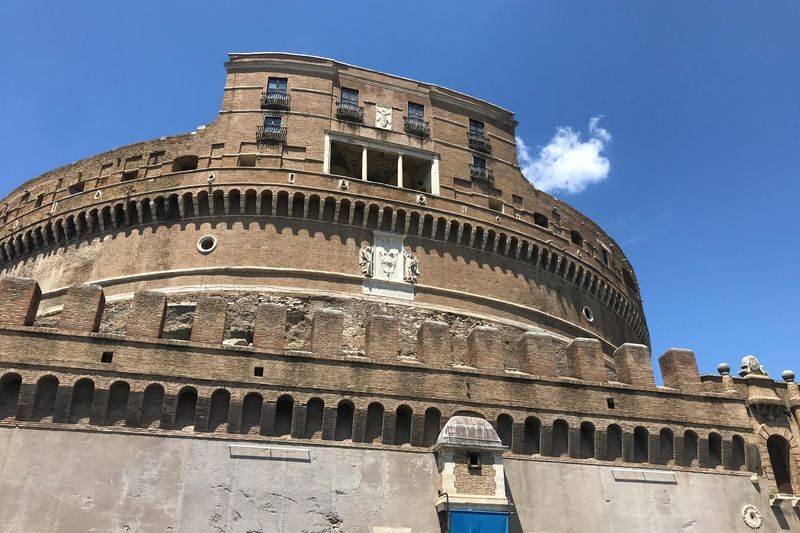
Castel Sant’Angelo sits on the right bank of the Tiber, a short walk from Vatican City. Its round, imposing form is hard to miss, and the bridge in front, Ponte Sant’Angelo, is lined with angel sculptures. Even before you enter, the setting makes the castle feel tied to the river and the city around it.
The story begins with Hadrian, who built the structure as a mausoleum for himself and his family. In later centuries it took on a military role and was incorporated into Rome’s defensive walls. Its later life as a papal residence added another layer, turning a burial monument into a stronghold and a place of power.
I like that the building’s history is not confined to signs and display cases. You move through spaces shaped by different uses, with a ramp, fortified walls, cells, weapons, and decorated rooms all part of the visit. That physical change of mood helps make the castle memorable, even if you arrive without much background on Roman or papal history.
You can also read our reviews of more tours and experiences in Rome



Cross Ponte Sant’Angelo Before You Enter
The approach is part of the experience. Ponte Sant’Angelo, also called the Bridge of Angels, gives you a close look at the sculptures and a good view of the castle’s distinctive circular structure. It is worth slowing down for a few minutes before heading inside, especially if you want photos of the fortress from across the river.
The bridge and castle also help orient you. The site is close to Vatican City, and the terrace later offers a direct sightline toward St. Peter’s Basilica. If you are visiting the Vatican on the same day, Castel Sant’Angelo can fit naturally into a day in this part of Rome, though you should allow enough time for the castle rather than treating it as a quick doorway stop.
Access is at Lungotevere Castello, 50. Bus routes 23, 115, 271, and 280 serve the Paola stop, about a five-minute walk away. Lepanto metro station on Line A is about a 17-minute walk; Roma San Pietro station is about 22 minutes on foot. If you drive, the nearest listed car park is Parking Piazza Cavour, a six-minute walk away.
The Ticket Handoff: Give Yourself a Buffer
The ticket process is the main practical uncertainty. The activity information says to exchange your mobile voucher for a physical ticket, with staff assistance at the redemption point. It directs you to look for staff wearing a red jacket and holding an orange umbrella in front of the entrance. The staff may need to close the umbrella if police instruct them to, or if the wind makes it unsafe.
But the actual delivery and entry process can vary. Some people have used a QR code or received tickets by email or WhatsApp, while others have spent time searching for the staff member or waiting for a ticket. Do not assume that the booking voucher itself will scan at the gate, and do not assume you will need an exchange without checking the latest message for your order.
Arrive 15 minutes before your scheduled time, as instructed, and keep your phone accessible. Bring the valid ID or passport used for the booking, since each participant’s name must match the name on their identification. If you have an internet-only eSIM and cannot make phone calls, save the relevant messages and voucher details before leaving your accommodation.
The advertised skip-the-line access may save time, but all visitors must still pass security, and that wait cannot be avoided. A ticket collection delay can also undermine the convenience of booking ahead. If a smooth, direct entry process matters more to you than advance booking, compare the ticket arrangements before paying.
Follow the Ramp Through Seven Floors
Inside, the route unfolds through seven levels. The spiral ramp is one of the defining features, leading toward the chamber of ashes and the cells where historical figures were held. These spaces give the fortress a more severe character than the art-filled papal rooms above.
The ramp also makes the visit a physical climb. Comfortable shoes are recommended, and the site is not wheelchair-accessible or stroller-accessible. If mobility or stairs are a concern, consider that before booking rather than relying on a quick visit to avoid the more demanding parts of the route.
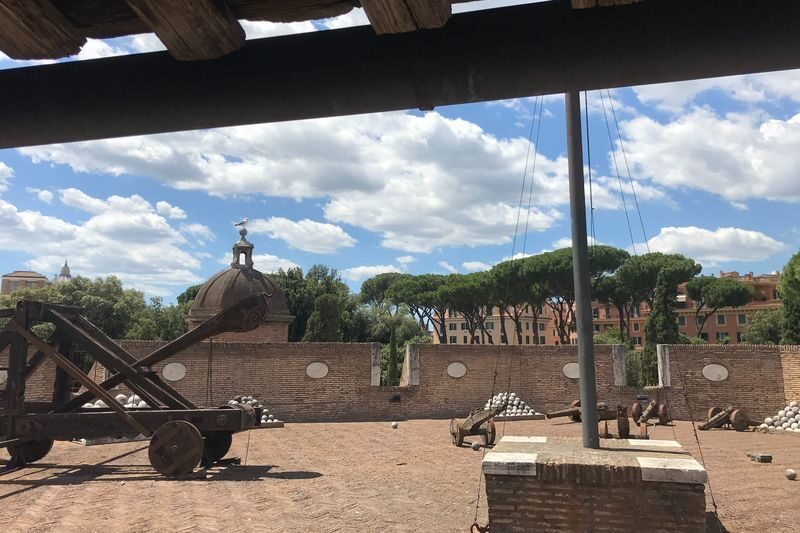
The castle’s military role comes into focus through its collection of ancient weapons and armor, as well as guns displayed within the fortified walls. These objects help explain why the building mattered beyond its original purpose as a tomb. If you enjoy seeing how a place changed to meet practical needs, this part of the visit adds useful context.
There is no included live guide or audio guide with this entrance ticket. The included Ancient Rome multimedia video offers some context, but it is not a substitute for a guide who can answer questions or connect details as you move. If you like to understand each room in depth, look into an audio-guide option or prepare a little background in advance.
Renaissance Rooms and Papal Decoration
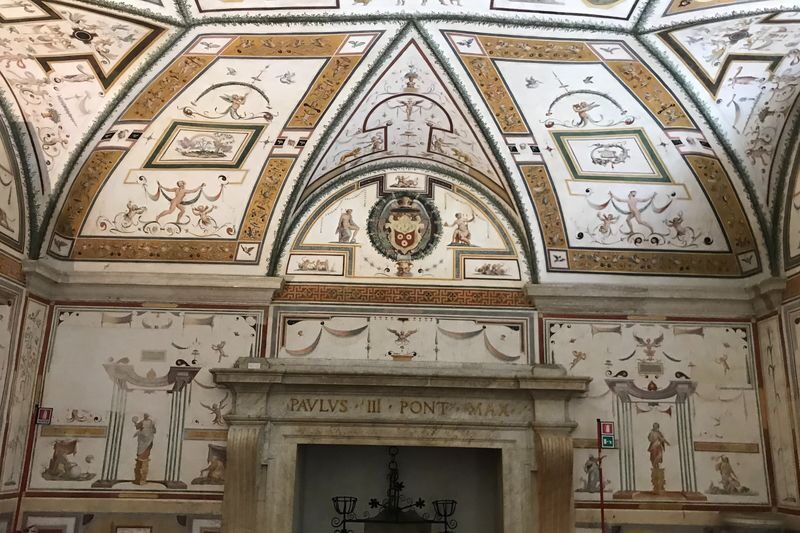
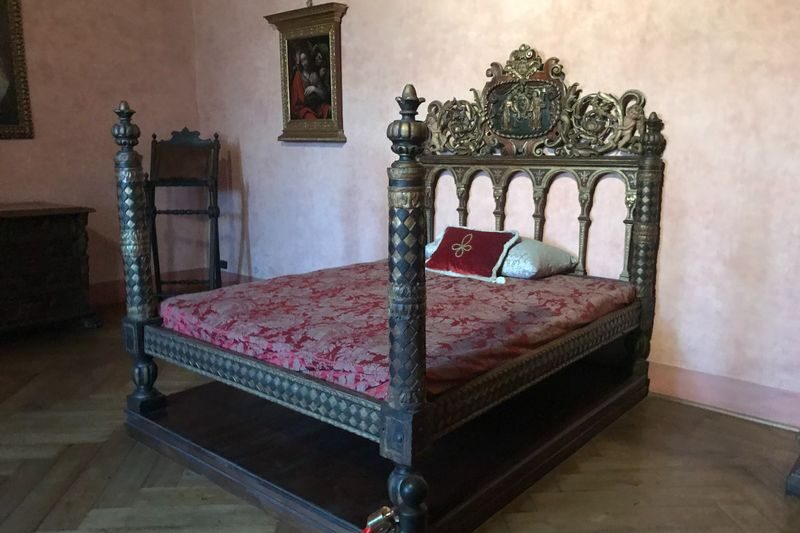
Higher up, the castle shifts from military spaces to the papal residence. The rooms are decorated with well-preserved Renaissance frescoes, and the contrast with the cells and weapons below is part of what makes the route interesting. You are not simply looking at a fortress from one period; you are seeing a building adapted and furnished for very different roles.
Take time here if paintings and architecture are a priority. The rooms offer a quieter counterpoint to the exposed passages and defensive structure, and they show how the upper castle served as a residence as well as a refuge. The ticket also includes access to temporary exhibitions when available, though the subject and presentation will depend on what is showing during your visit.
A careful visit can take around two hours, while a faster walk-through may fit into the shorter end of the stated one-to-three-hour range. If you stop to study the displays, take photos, and enjoy the terrace, allow closer to three hours. Opening hours are Tuesday through Sunday, 9:00 a.m. to 7:30 p.m., with last admission one hour before closing. The museum is closed Mondays, and hours or closure dates can change, so check before you go.
You can also read our reviews of more museum experiences in Rome






Save Your Best Time for the Terrace
The terrace is the natural finish to the climb. From here, you can look over Rome and toward St. Peter’s Basilica, with the river and the city’s rooftops adding to the view. The elevated outlook is repeatedly singled out as a highlight, and it gives you a clear sense of how close the castle is to the Vatican.
This is not a place to rush through just to tick off a viewpoint. Pause, take in the panorama, and make a few photos before heading down. Some visitors also note a café upstairs, so you may find a chance to sit with a drink while looking out over the city. Treat that as a possible extra rather than the main reason to visit.
The terrace does involve the climb, and hot weather can make it more taxing. Go early if you can, particularly in warm months, and bring a sensible pace. The high point is worth reaching, but you will enjoy it more if you are not racing the closing time or trying to squeeze the whole visit into a few minutes.
Is the Ticket Worth About $41.95?
At a starting price of $41.95, this is not a casual low-cost add-on. Its value depends on what you want from the visit and how much time you have. You are paying for admission to a major historic site, a route through multiple phases of its history, access to the displays and temporary exhibitions, and a memorable rooftop view.
I see the strongest value for visitors who enjoy architecture, military history, Renaissance interiors, or panoramic city views. If you are already near the Vatican and have two or three hours to spare, the castle makes a satisfying visit on its own terms. The mix of tomb, fortress, residence, and museum gives you more variety than a simple climb to a viewpoint.
The value is less clear if your Rome schedule is already tight. One visitor’s practical advice was to focus on the Colosseum and Vatican if there is not enough time for everything. That is a fair call: Castel Sant’Angelo is worth seeing, but it need not outrank Rome’s major priorities for every first-time visitor.
Also consider what the ticket does not include. There is no hotel pickup, live guide, headsets, or audio guide, and personal expenses are extra. The included multimedia video adds some context, but the ticket is best understood as admission rather than a guided tour. Since collection arrangements can cause confusion, factor that inconvenience into the value calculation.
Practical Details for a Smoother Visit
Book for a date you can keep. The voucher is valid only on the selected date, and the activity does not allow cancellations or refunds. Infants and children must be included in the passenger count; children aged five and under enter free, and children aged zero to six need valid ID to qualify. Every participant must bring valid identification.
Security screening is mandatory. Weapons and sharp objects are prohibited, as are dangerous materials and items that may disturb other visitors. Outside food and drinks are not allowed, and re-entry is not permitted once you leave the venue. Photography is allowed, but flash is prohibited inside, and commercial photography, commercial video, and live broadcasting are not permitted.
This is a walking visit with a climb, so comfortable shoes matter. The site is not suitable for strollers or wheelchair users, according to the activity details. If you plan to visit on a hot day, set aside time to take breaks and avoid arriving at the last minute.
Should You Book Castel Sant’Angelo?
I would book this ticket if you want a closer look at Rome’s layered history and are keen on the terrace view. The route from Hadrian’s tomb through military rooms and papal chambers is distinctive, and the final outlook toward St. Peter’s Basilica is a worthwhile payoff. Allow at least two hours if you want to see more than the rooftop.
I would pause before booking if you are short on time, need step-free access, or do not want to manage a possible ticket exchange. Confirm whether your voucher is a direct-entry code or needs to be changed for a physical ticket, and save the instructions before you go. With that one practical detail sorted, the castle can be a rewarding change of pace from Rome’s better-known monuments.
The National Museum of Castel Sant’Angelo Ticket in Rome
“Inside Castel Sant'Angelo, there are exhibitions on the history of the castle and Pompeii, while the observation deck offers a commanding view, inc…”
FAQ
How long should I allow for Castel Sant’Angelo?
The visit is listed as lasting one to three hours. Allow more time if you want to explore the exhibits, climb to the terrace, and enjoy the view.
What is included with this ticket?
Admission to Castel Sant’Angelo, staff assistance at the redemption point, and an Ancient Rome multimedia video are included. A live guide, audio guide, headsets, transport, and personal expenses are not included.
Do I need to exchange my voucher for a physical ticket?
The instructions say to exchange your mobile voucher for a physical ticket, but ticket delivery and entry arrangements may vary. Check the latest instructions for your booking and do not assume the voucher itself will scan at the entrance.
What are the museum’s opening hours?
Castel Sant’Angelo is listed as open Tuesday through Sunday from 9:00 a.m. to 7:30 p.m. Last admission is one hour before closing, and the museum is closed on Mondays. Hours and closure dates may change.
Is the castle wheelchair-accessible or stroller-accessible?
No. The activity information says the site is not wheelchair-accessible or stroller-accessible.
Do children need tickets and identification?
Children aged five and under enter free, but infants and children must still be included in the passenger count. Children aged zero to six need valid ID to qualify for free admission, and each participant must bring valid identification.