Murano’s glassmaking story is more than a display of delicate objects. Inside Palazzo Giustinian, you can trace a thousand years of craft, from Roman glass fragments to celebrated Murano pieces and modern works that reinterpret old techniques.
I like two things in particular: the collection spans centuries, so you can see how styles and methods changed, and the museum sits on Murano itself, where the craft took shape. The introductory film and optional audio guide can also give the objects useful context.
One consideration: this is a self-guided museum visit, not a glassblowing demonstration or a guided tour. The ticket is date-specific and nonrefundable, so check your plans and the current opening hours before booking.
- Roman glass begins the story: See artifacts dating from the 1st to 3rd centuries.
- Murano’s craft spans centuries: The collection includes works from the 15th through 20th centuries.
- Palazzo Giustinian is part of the setting: The museum occupies a historic Gothic-style palace on Murano.
- Modern glass sits alongside traditional work: Contemporary displays show how makers revisit older techniques.
- An audio guide is optional: It costs €4 on site and is not included with admission.
- The vaporetto stop is close: Museo Murano is served by water bus lines 4.1 and 4.2.
- A thousand years of glass, in one Murano palace
- Start with the film, then follow the glass through time
- What to expect from the glass displays
- Is the €4 audio guide worth it?
- Getting to the museum on Murano
- Ticket value, age rules, and practical details
- Seasonal hours and how to time your visit
- Who will get the most from this visit?
- Should you book Murano Glass Museum admission?
- FAQ
- How long should I allow for the Murano Glass Museum?
- What are the museum’s opening hours?
- Where is the Murano Glass Museum?
- Which vaporetto stop is closest?
- Is an audio guide included?
- Does admission include special exhibitions?
- What ages qualify for free or reduced admission?
- Is the museum wheelchair-accessible?
- Can I cancel or use my voucher on another date?
- The Best Of Venice!
- More Museum Experiences in Venice
- More Tours in Venice
- More Tour Reviews in Venice
- Not for you? Here's more nearby things to do in Venice we have reviewed
A thousand years of glass, in one Murano palace
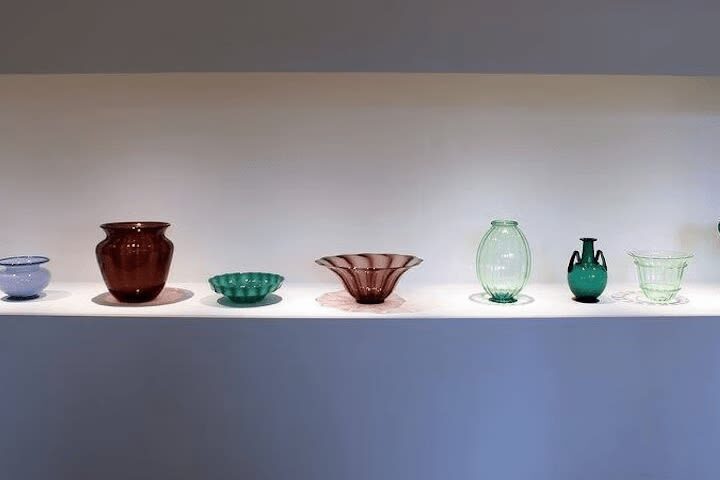
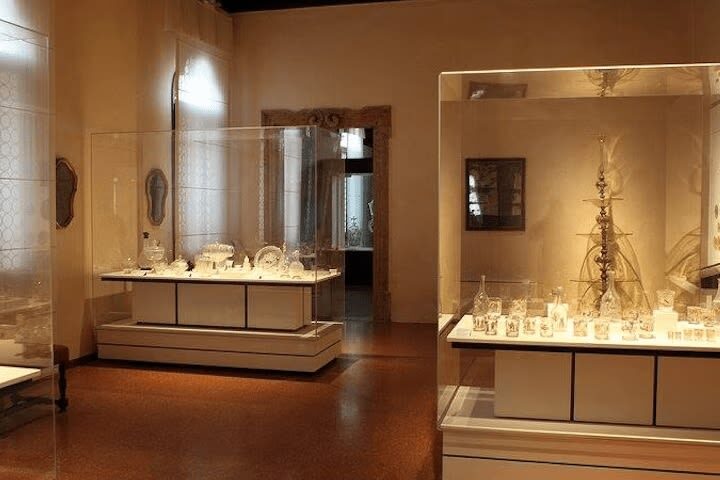
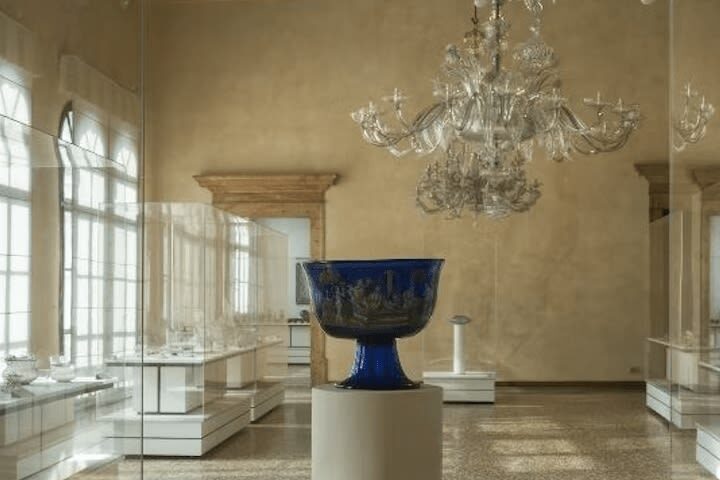
Murano Glass Museum gives you a focused look at the craft that made this small island famous. Rather than treating glass as a string of pretty souvenirs, the museum places it in a long timeline: Roman objects, centuries of Venetian production, celebrated Murano work, and contemporary pieces.
That range matters. A glass vase can be beautiful on its own, but seeing objects from different periods together helps you notice how forms, decoration, and technique changed. You get a better sense of glassmaking as a working tradition, not just a historic label attached to shop windows.
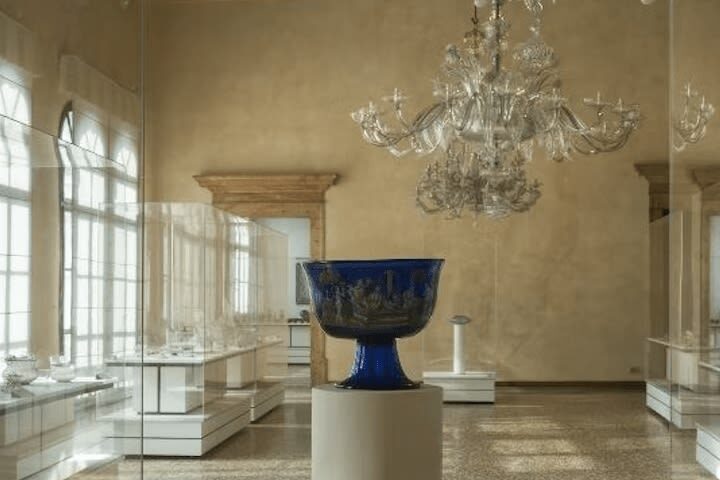
The museum is housed in Palazzo Giustinian, a historic Gothic-style palace at Fondamenta Marco Giustinian, 8. The building gives the visit a sense of place before you even begin looking closely at the cases. You are not in a modern gallery on the edge of town; you are on Murano, surrounded by the island’s long association with glass.
Plan on about one to two hours. That is enough time for a steady visit, especially if you use the film or audio guide, but the pace is yours to set. If you want to read every label and study the pieces, allow the longer end of that range.

👉 See our pick of the 25 Best Guided Tours In Venice
Start with the film, then follow the glass through time
The visit begins with an introductory film about how local artisans make glass art. It offers a helpful frame before you move through the collection, particularly if you have not seen the basic steps of glassmaking explained before. Treat it as an orientation, not a substitute for seeing the objects in person.
From there, the museum’s collection lets you follow glass across a long stretch of time. Roman artifacts from the 1st to 3rd centuries provide an early point of comparison. They remind you that glassmaking did not begin with the modern Murano workshops, even though the island became closely identified with the craft.
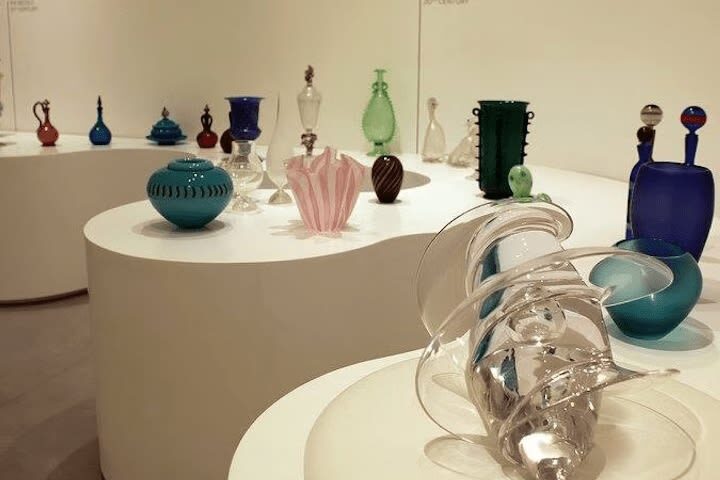
The collection also includes glass from the 15th through the 20th centuries, including works regarded as Murano masterpieces. Look beyond the overall shape of each object. Notice how color, surface, and ornament change from one period to another, and how makers use the material in different ways.
The museum also presents contemporary glass. These displays are useful because they connect historic methods with present-day design. You can see how old techniques continue to inform new work, rather than being preserved only as museum practice.
The full sequence turns a visit into more than a quick look at attractive glass. You move from early objects to later Murano production and then to modern interpretations. That progression is the museum’s main strength, especially if you want context for what you see in Murano’s shops and workshops.
You can also read our reviews of more museum experiences in Venice


What to expect from the glass displays
This is a museum visit, so expect to look closely rather than handle the objects or join a hands-on activity. The admission package covers entry to the Murano Glass Museum only. It does not include access to special exhibitions or an audio guide.
The objects reward patience. Glass can be easy to glance at and move past, especially when a case holds several pieces. Give yourself time to compare details: the finish, the play of light, and the shift between decorative and more restrained styles. The historical span is broad, so you can choose to focus on a particular era or take the collection as a whole.
Contemporary glass is especially worth making time for. It helps answer a natural question: what happens to a traditional craft when artists keep working with it? The modern displays show how established glassmaking processes can be reinterpreted, giving the museum a present-day connection rather than leaving the story in the past.
Descriptions of the museum experience include glaziers shaping molten glass, but the admission information does not give a schedule or guarantee that a live demonstration will be running during your visit. I would not plan the day around seeing a glassblower at work. Think of the museum first as a collection, with live activity only if it is available at the time.
Is the €4 audio guide worth it?
The audio guide costs €4 and is available on site. It is not part of the admission ticket, so budget for it separately if you want more explanation as you go. A self-guided visit can be perfectly satisfying, but the audio option is useful if you prefer someone to lead you through the objects and their context.
The audio guide has been described as helpful and informative, which makes it a sensible add-on for visitors who want more than a visual visit. If you are traveling with children or have limited time, you may prefer to move at your own pace without extra listening. If glassmaking is a particular interest, the small added cost may help you get more from the collection.
There is no named tour guide included with this admission. You enter with your mobile voucher and explore independently. That freedom is a plus if you want to spend longer with a favorite piece, though anyone who wants a live, personalized explanation should know that this ticket is not a guided tour.
Getting to the museum on Murano
The museum’s address is Fondamenta Marco Giustinian, 8, 30141 Venezia VE. The closest vaporetto stop is Museo Murano, served by lines 4.1 and 4.2. That makes the water bus the practical route identified for reaching the museum.
Murano is an island near Venice, so allow time for the water journey as part of your outing. The museum can fit into a larger Murano visit, but admission covers only the museum. It does not include transport, other island attractions, or personal expenses.
A useful plan is to check the vaporetto service and the museum’s latest hours before setting out, then leave enough time to reach the entrance and explore without rushing. The museum closes its doors according to seasonal hours, and closing procedures begin 20 minutes before the official closing time. Arriving at the last minute is a poor bargain, even if the ticket itself is already paid for.
Ticket value, age rules, and practical details
Admission starts at $16.80. Whether that is good value depends on how much you want to understand Murano glass beyond what you might see in shop displays. The museum offers a concentrated historical collection and contemporary examples in a notable palace, which makes the ticket worthwhile for visitors interested in art, craft, or Venetian history.
The value is less compelling if you only want to watch glass being made. This ticket is for museum admission, and a live demonstration is not guaranteed by the information available. If seeing production in action is your main aim, make sure you arrange that separately rather than assuming the museum ticket includes it.
Children aged 0 to 5 enter free, and reduced tickets are available for children aged 6 to 14 and seniors aged 65 or older. Children aged 15 and up pay the adult rate. Free tickets are also available on site for residents of the Comune di Venezia, disabled visitors, and their carers.
The museum is wheelchair-accessible. A dedicated room is available inside for breastfeeding, changing, and relaxing, a useful facility if you are visiting with a baby or need a quiet pause.
The voucher is valid only on the date selected, and you present it on your mobile device for direct entry. There are no cancellations or refunds, so treat the purchase as a firm plan rather than a flexible placeholder. Opening hours can change, and closure dates may apply, so confirm the latest details before you go.


Seasonal hours and how to time your visit
From November through March, the museum is open daily from 10:00 to 17:00, with last admission at 16:00. From April through October, it is open daily from 10:00 to 18:00, with last admission at 17:00.
Those last-entry times are worth taking seriously. The museum begins closing procedures 20 minutes before its official closing time, so arriving just before the posted last admission leaves little room for a relaxed visit. For a one-to-two-hour experience, arrive with enough margin to see the displays at your own pace.
Hours and closure dates may change. Check the current schedule before you travel to Murano, especially if the museum is the main reason for making the island trip. The ticket is tied to your chosen date, which makes checking first more important than it might be for a walk-in museum.
Who will get the most from this visit?
I would put this museum high on the list for anyone curious about decorative arts, glassmaking, or the history of Murano. The range from Roman artifacts to contemporary glass makes it especially worthwhile if you enjoy seeing how a material and a craft evolve over time.
It also suits visitors who want a quieter, more focused activity on Murano. You can set your own pace, and the museum fits into a broader island outing without requiring a full day. Families can make use of the free entry for young children and the on-site changing and breastfeeding room, though the objects are best appreciated by children who can slow down and look carefully.
It may not be the right choice if you want an activity built around a live workshop, a personal guide, or a hands-on demonstration. The museum’s value is in its collection and historical setting. Go for the craft story and the objects, not for an event that may not be taking place.
Should you book Murano Glass Museum admission?
Book if you want a clear, compact introduction to Murano’s glass tradition and appreciate seeing work from several periods in one place. The Roman pieces, Murano masterpieces, and contemporary displays give the visit a useful arc, while Palazzo Giustinian anchors the collection in the island’s past.
Skip it if your only goal is to watch glass being blown, or if you need a ticket with flexible cancellation. The admission is date-specific and nonrefundable, and the audio guide costs extra. For the right visitor, though, one to two hours here can add welcome substance to a Murano visit and help you recognize more than just the shine of the glass.
Murano Glass Museum Admission in Venice
“Fantastic museum thank you! The self audio is very helpful and informative. The museum should be better advertised so that more people can enjoy it.”
FAQ
How long should I allow for the Murano Glass Museum?
Plan on one to two hours. Your pace and whether you use the audio guide will affect how long you spend inside.
What are the museum’s opening hours?
From November through March, it is open daily from 10:00 to 17:00. From April through October, it is open daily from 10:00 to 18:00. Last admission is one hour before closing.
Where is the Murano Glass Museum?
It is at Fondamenta Marco Giustinian, 8, 30141 Venezia VE, Italy.
Which vaporetto stop is closest?
The closest stop is Museo Murano, served by vaporetto lines 4.1 and 4.2.
Is an audio guide included?
No. An audio guide is available at the museum for €4.
Does admission include special exhibitions?
No. Special exhibitions are not included in this admission.
What ages qualify for free or reduced admission?
Children aged 0 to 5 enter free. Reduced tickets are available for children aged 6 to 14 and seniors aged 65 or older. Visitors aged 15 and up pay the adult rate.
Is the museum wheelchair-accessible?
Yes, the activity is wheelchair-accessible. A room for breastfeeding, changing, and relaxing is also available inside.
Can I cancel or use my voucher on another date?
No cancellations or refunds are available. The voucher is valid only on the date selected, so check your plans and the current opening information before booking.