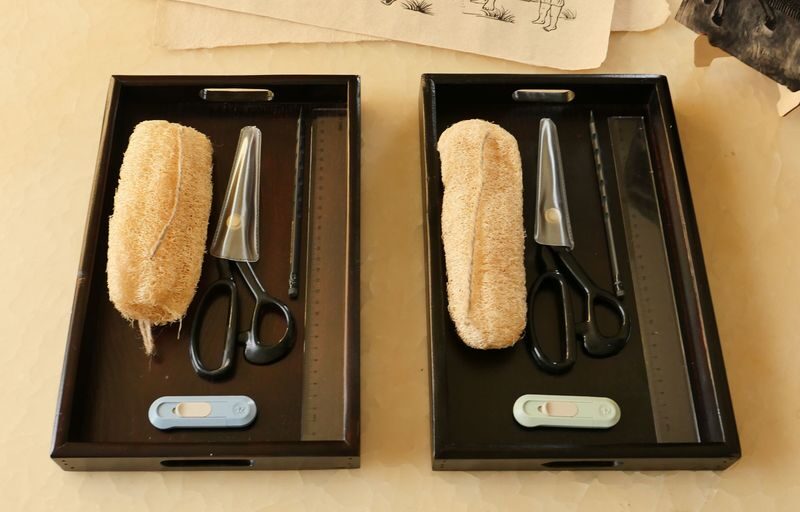
A dried loofah, a carved woodblock, and a sheet of handmade paper: this is the unusual toolkit behind Hanoi’s folk-art printing workshop. You’ll learn a face-up printing method, then color a Hàng Trống or Kim Hoàng design to make a souvenir with a connection to Vietnamese craft.
I like two things in particular: the chance to work with handmade dó paper from Dong Cao Village in distinctive red or scallopshell-flecked yellow, and the use of woodblocks sourced from Thành Liêu Village, known for its long carving tradition. The Leica photo session and take-home oil pastels also add practical value beyond the class itself.
One consideration: the workshop’s duration and group size aren’t specified, so you can’t easily plan the rest of your day around a precise finish time. The Standard package includes the painting class and kit, while an artisan frame is described as a Premium Tier extra, so check what your chosen package covers before booking.
- Key points to know before you book
- A hands-on way into Hanoi folk art
- Choosing paper and a design
- Printing with the face-up woodblock
- Coloring your print and saving the moment
- What you take home, and what costs extra
- Who will enjoy this workshop most
- Practical details before you go
- Should you book it?
- FAQ
- Where does the workshop take place?
- Do I need art experience?
- What will I make?
- Is a wooden frame included?
- When will I receive the workshop photos?
- What happens if I arrive late?
- The Best Of Hanoi!
- More Historical Tours in Hanoi
- More Tours in Hanoi
- More Tour Reviews in Hanoi
- Not for you? Here's more nearby things to do in Hanoi we have reviewed
Key points to know before you book
 1 / 9
 2 / 9
 3 / 9
 4 / 9
 5 / 9
 6 / 9
 7 / 9
 8 / 9
 9 / 9
- Print with a dried loofah: You’ll use this natural tool to transfer ink from a face-up woodblock onto paper.
- Choose a folk-art design: The workshop offers Hàng Trống and Kim Hoàng designs, two traditions with stories the guide explains.
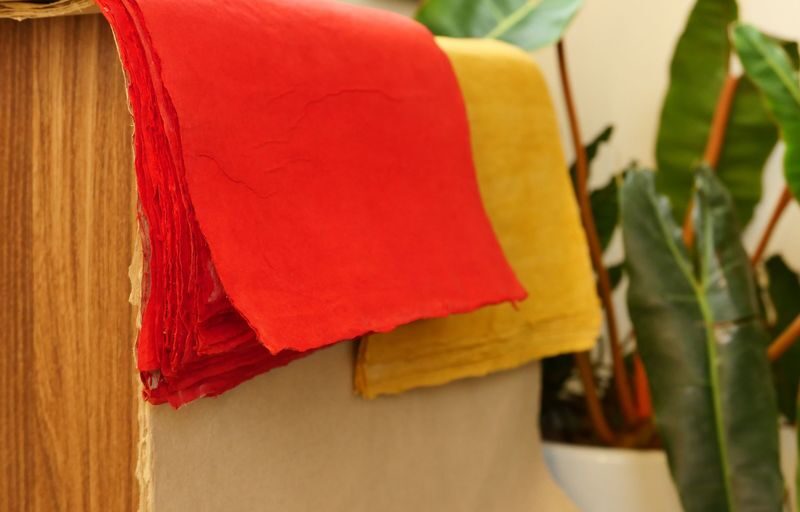
- Work on handmade dó paper: Options include hand-dyed Scarlet Red and shimmering Chrysanthemum Yellow Scallopshell paper.
- Use carved village woodblocks: The blocks come from Thành Liêu, a village with a 600-year carving tradition.
- Take home more than the finished print: The class includes an oil pastel kit tested for dó paper and high-resolution Leica photos by email within 24 hours.
- Check the frame option: A travel-ready artisan wooden frame is described as part of the Premium Tier, not the Standard package.

👉 See our pick of the 25 Best Shopping Tours In Hanoi
A hands-on way into Hanoi folk art
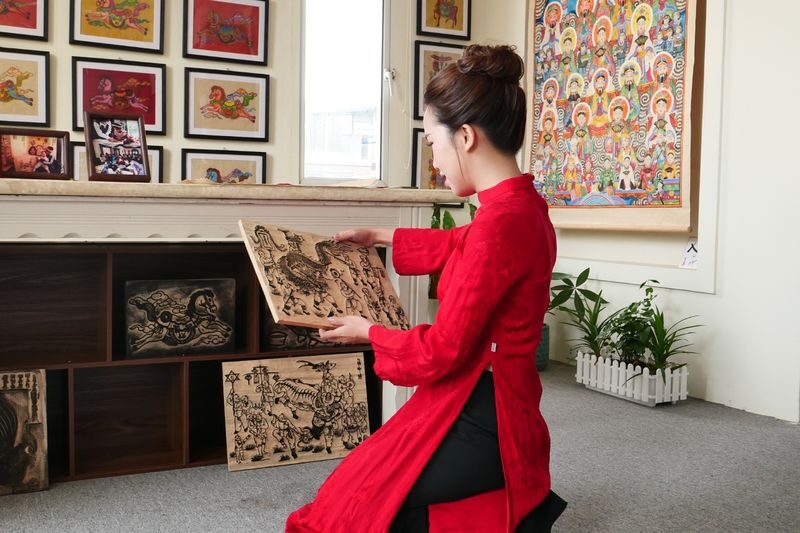
This is a craft class, not a sightseeing tour. You meet at Me Choi Workshop, at 47 Trung Kinh Street in Yen Hoa Ward, and spend the session making one folk painting. The appeal is the process: you learn how a traditional print is made rather than simply buying a finished image in a shop.
The workshop is presented as a 200-year folk-art experience, while its woodblocks come from Thành Liêu Village, whose wood-carving tradition is described as 600 years old. Those are related but distinct details. The age of the village’s craft tradition does not mean each block used in class is itself 600 years old.
You can expect instruction in English or Vietnamese, with English-speaking staff and a professional guide listed among the inclusions. Artist Ms Nhung has guided participants through the detailed printing and coloring process, and is noted for adding stories as she teaches. If she is leading your session, the cultural context may be as memorable as the finished picture.
You can also read our reviews of more historical tours in Hanoi

Choosing paper and a design
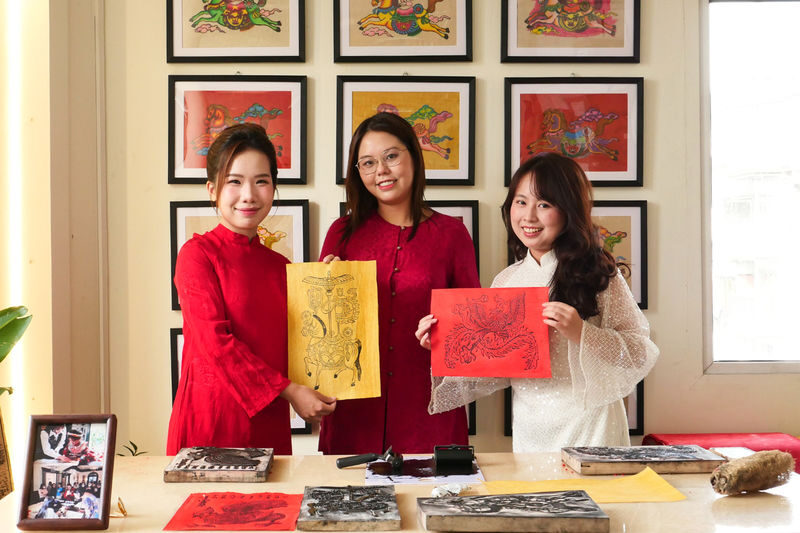
The first step is choosing a design and a sheet of paper. You’ll work with Hàng Trống or Kim Hoàng imagery, then hear about the folklore connected to your chosen design. The class uses handmade dó paper from Dong Cao Village, including signature Scarlet Red and Chrysanthemum Yellow Scallopshell options.
Paper choice matters here. Dó is handmade, not a generic sheet selected only to hold paint. Its surface and color become part of the finished artwork, and the yellow paper’s shimmering scallopshell detail offers a different effect from the red. If you’re deciding between them, ask the guide how the paper will work with your design and colors before you start printing.
This step gives the activity some cultural context without requiring prior art knowledge. The workshop is described as beginner-friendly, and the staff guide you through each stage. Still, you’ll get more from the explanation if you take time to listen rather than treat the paper choice as a quick formality.
Printing with the face-up woodblock
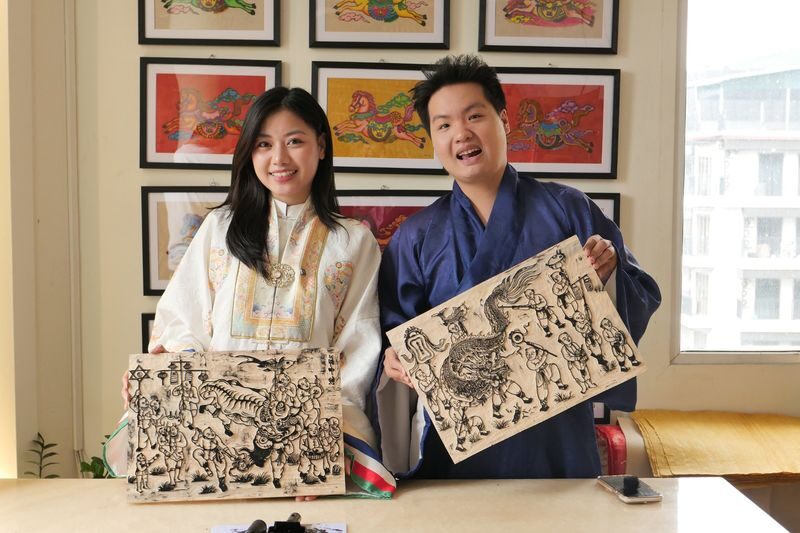
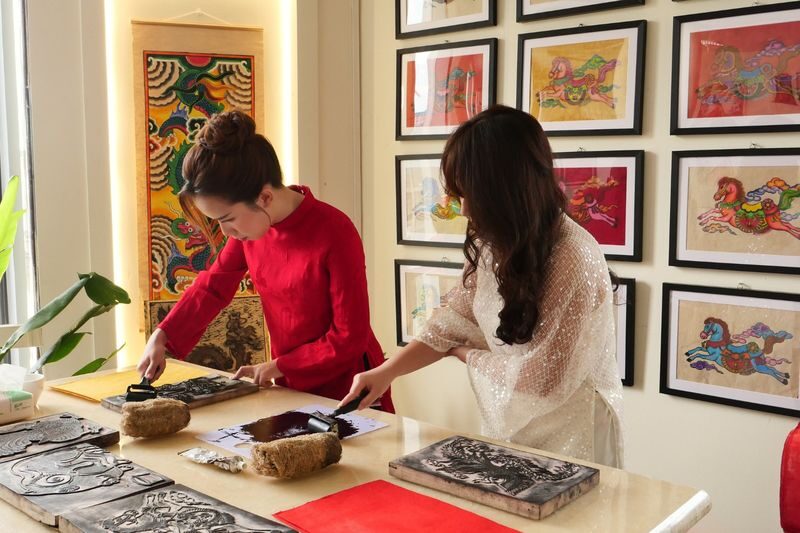
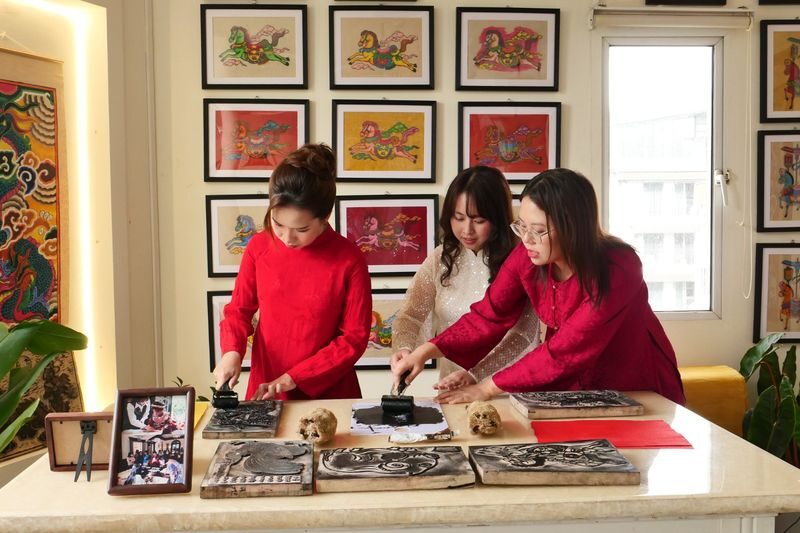
The central technique is unusual: you print with the woodblock face-up, using a natural dried loofah to transfer the ink. The method calls for attention and a steady hand. The aim is a clear outline, ready for coloring, rather than a rushed stamp-and-go souvenir.
The blocks are sourced from Thành Liêu Village, a historic center for wood carving. That detail helps explain why this isn’t just a basic painting class. The carved design provides the outline, but you still have to manage the transfer carefully; each step asks you to pay attention to the materials and pressure.
If this is your first time making art with ink rolling, pressing, and brushing, expect a learning curve. One participant found that every stage required close attention, and described the artist’s guidance as careful. That is useful to know if you’re hoping for a polished result without effort: the workshop gives you instruction, but your hands still do the work.
Coloring your print and saving the moment
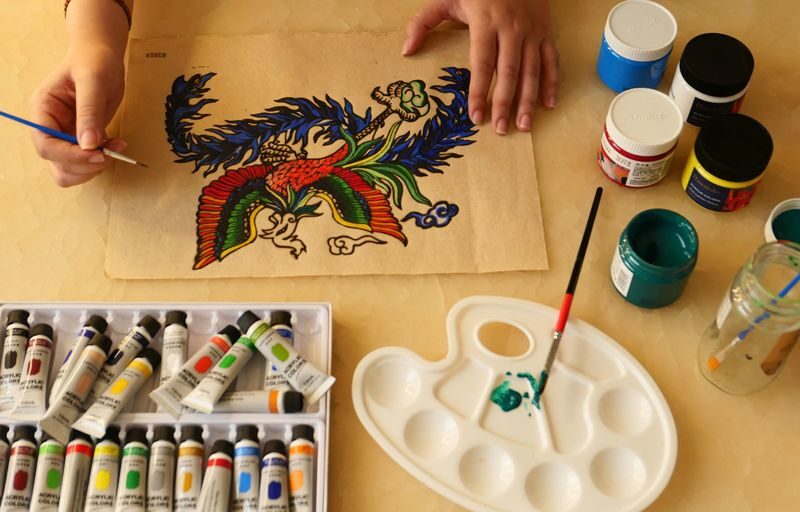
Once the outline is printed, you color the picture with high-grade acrylic paints. This is where the work becomes distinctly yours. You’re not simply filling in a preset image; the final character of the piece depends on the colors and care you bring to it.
A professional photo session is included, with images taken on a Leica camera and sent to your email within 24 hours. That’s a thoughtful extra if you’d like a record of the making process as well as the artwork. It doesn’t replace the souvenir, but it means you can keep a high-resolution image without needing to take photos while your hands are busy.
The class also includes a take-home creator’s kit with oil pastels tested for dó paper. This gives you a way to continue experimenting after the workshop, using a material suited to the paper rather than guessing what might work. The finished painting and kit are included in the Standard package details.
What you take home, and what costs extra
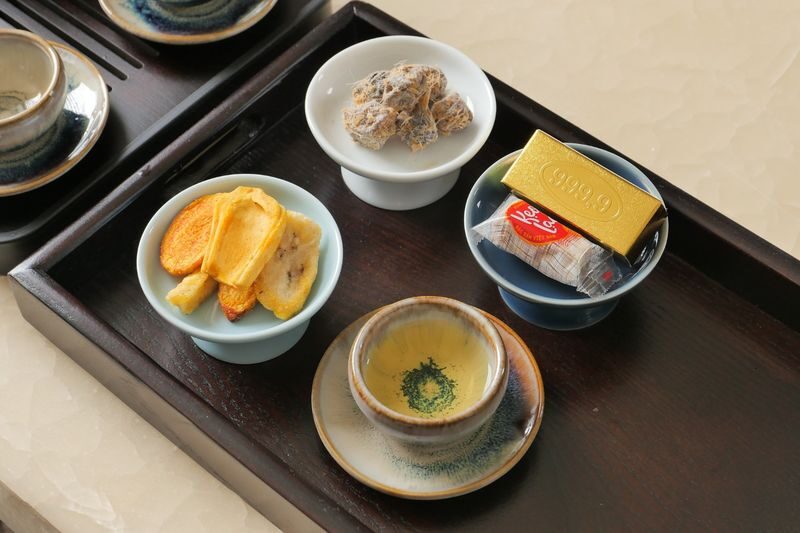
The main value is the combination of instruction, materials, and a finished piece. The listed inclusions cover one hand-printed Hàng Trống or Kim Hoàng painting on Dong Cao dó paper, necessary materials, an English-guided class, a welcome gift, the oil pastel kit, and the digital Leica photos.
The artisan wooden frame is the important package distinction. It is described as available with the Premium Tier, while the package details provided for the Standard option specify a folk painting class with paint kit. If you want the work framed for travel or display, confirm the tier and its current price when booking. Don’t assume the frame comes with every ticket.
Rates are shown from US$21.69 for the experience, while the Standard package is also listed from US$19.75. These are different starting prices in the supplied package information, so treat them as indicative rather than a guaranteed final total. Check the price for your date and chosen option, especially if you want the frame.
At these entry prices, the workshop can be good value if you want a guided craft activity and an object you make yourself. It is less compelling if your only goal is to buy a low-cost souvenir or if you would rather spend your time visiting Hanoi’s landmarks. The value lies in learning the print process and having the materials and guidance provided.
You can also read our reviews of more tours and experiences in Hanoi



Who will enjoy this workshop most
This suits you if you like making things, want an activity that adds a cultural angle to a Hanoi visit, or need a change of pace from museums and city walks. You don’t need painting experience, and the step-by-step instruction makes it accessible for beginners. It can also work for families, though children aged two to six must be accompanied by a paying adult.
The class may be less suited to anyone expecting a quick, hands-off demonstration. The printing and coloring both require attention, and the finished piece takes effort. That care is part of the point, but it’s worth choosing this over a more passive activity only if you want to take part.
The activity is at a fixed address, 47 P. Trung Kính, not a city-center sightseeing route. Plan your transport to the workshop separately. The session’s duration and group size are not stated, so leave some flexibility in your schedule rather than setting a tight appointment immediately afterward.
Practical details before you go
Arrive at the meeting point 10 minutes before your scheduled start and have your mobile voucher ready. The voucher is valid only for the date and time specified. Late arrivals of 30 minutes or more are not eligible for a refund, and latecomers or no-shows may not be refunded, so give yourself time to find the address.
Outside food and drinks are not allowed. If your preferred time is full, staff may recommend an alternative slot. Changes are allowed up to 24 hours before the activity, with exceptions for certain bookings, including Klook Pass reservations and bookings made with some cultural passes. For a cancellation, a full refund is available when you cancel at least 24 hours before the activity date, based on local time.
Should you book it?
Book this if you want a small, hands-on encounter with Vietnamese folk art and like the idea of taking home something you made yourself. The face-up woodblock method, handmade paper, careful instruction, and oil pastel kit make it more than a standard paint-and-sip class. The Leica photos are a useful extra, too.
Skip it if your schedule is too tight to accommodate an activity with no stated duration, or if you’re looking for a guided tour of Hanoi’s main sights. Before paying, compare the Standard and Premium options and confirm whether the wooden frame is included. If those details suit your plans, this workshop offers a practical way to spend time with a local craft and leave with a personal souvenir.
200-Year Folk Art Workshop: Craft Your Heritage Souvenir in Hanoi
“This workshop was so fun and informative. This craft is beautiful and requires so much effort to get the final product. I learned so much and would…”
FAQ
Where does the workshop take place?
It takes place at Me Choi Workshop, 47 Trung Kinh Street, Yen Hoa Ward, Hanoi.
Do I need art experience?
No. The activity is described as beginner-friendly, and the class includes guided instruction and the necessary materials.
What will I make?
You’ll hand-print and color one Hàng Trống or Kim Hoàng folk-art design on handmade Dong Cao dó paper.
Is a wooden frame included?
A frame is described as part of the Premium Tier. The Standard package details include the painting class and paint kit, so check the selected package before booking.
When will I receive the workshop photos?
High-resolution digital photos from the Leica session are sent to your email within 24 hours.
What happens if I arrive late?
You should arrive 10 minutes before the scheduled time. Latecomers and no-shows may not receive a refund, and no refund is available for participants who arrive 30 minutes or more late.