Pad Thai, a fragrant curry and mango sticky rice make a fine lunch, but the best part here is learning where Thai flavors begin. At Grandma’s Home Cooking School, you start with a local market and an organic garden, then cook at your own station with an instructor guiding each step.
I like the market-to-kitchen route, which gives you a better sense of the herbs and seasonings behind the dishes, and the chance to cook several recipes rather than watch a demonstration. The garden visit, fresh ingredients and shared meal add a welcome local touch to what could otherwise be a straightforward cooking lesson.
One point to weigh: the school can host many people, and some sessions feel busy. The market stop may be crowded, and the pace can be brisk, so this is a better fit if you enjoy an organized group activity than if you want a quiet, slow lesson.
- At a glance
- From Chiang Mai to the market
- A garden with herbs, vegetables and chickens
- Cooking three savory dishes, then eating them
- Half-day, full-day and Northern Thai choices
- What the price buys you
- Who will enjoy this class most
- Should you book Grandma’s Home Cooking School?
- FAQ
- How long is the morning half-day class?
- Is hotel pick-up included?
- Which dishes will I cook?
- Is dessert included?
- Are vegetarian or gluten-free meals available?
- What languages are available?
- Can children join the cooking class?
- Are the market and garden included?
- Can I cancel my booking?
At a glance
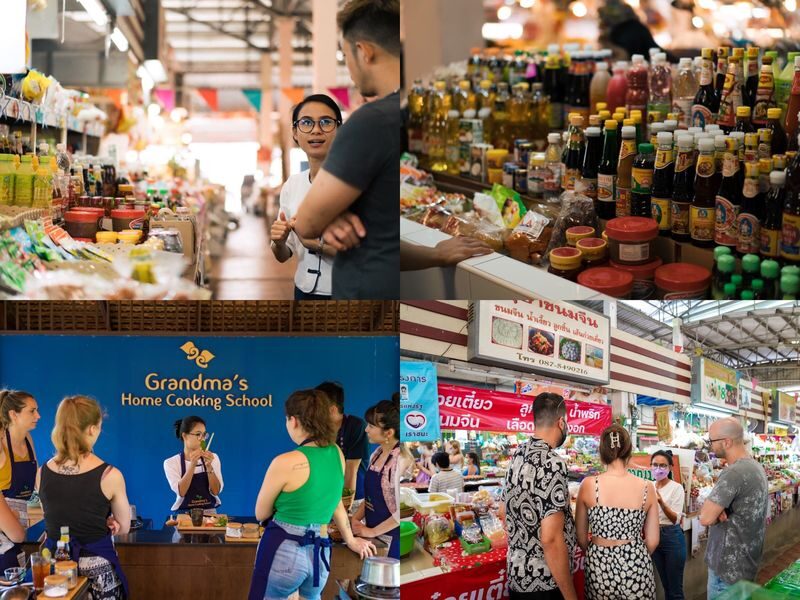
- Shop for ingredients at Charoen Charoen fresh market, where instructors introduce common Thai seasonings and produce.
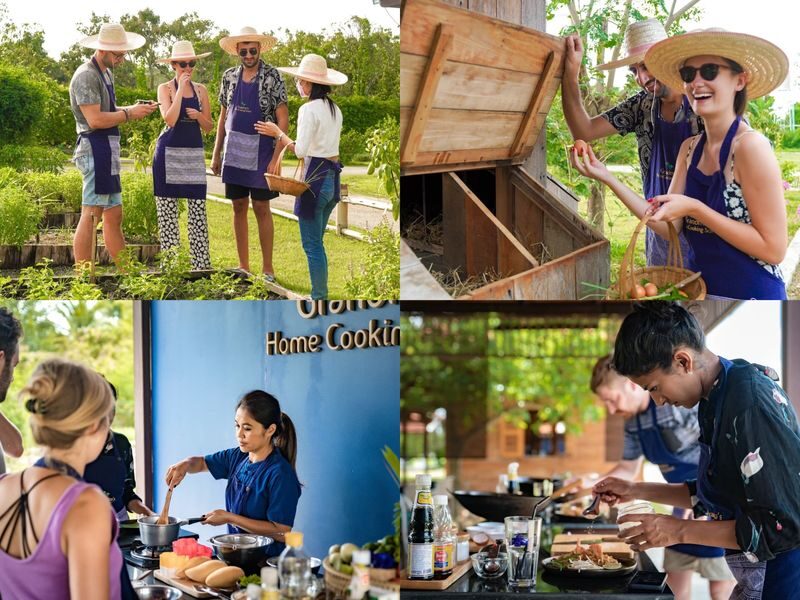
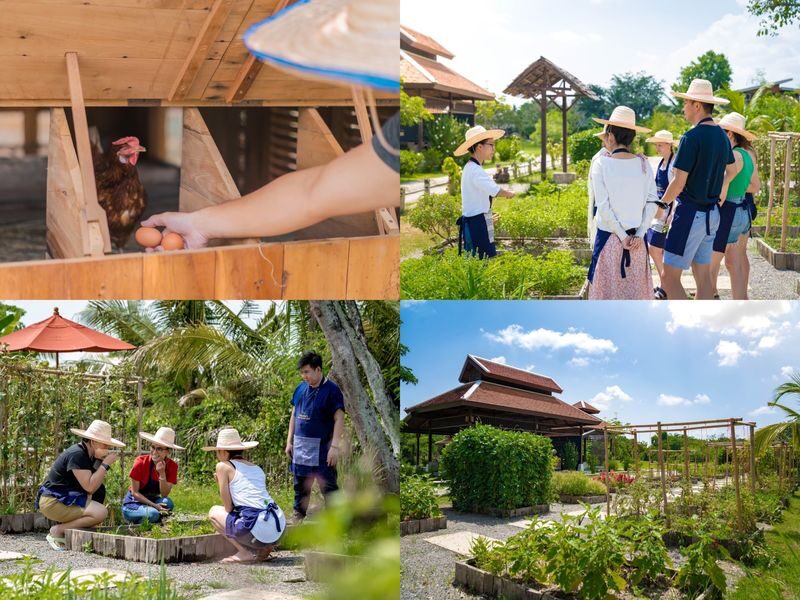
- Walk through the school’s organic garden to learn about herbs and vegetables, with opportunities to collect eggs and fresh ingredients.
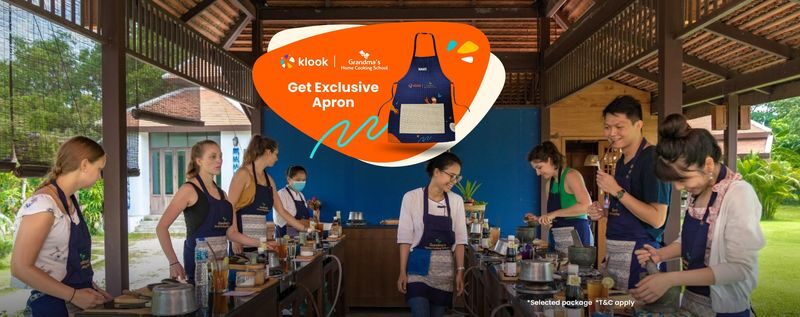
- Cook at an individual station, usually preparing a soup, a stir-fry and a curry, with mango sticky rice served for dessert.
- Choose a half-day or full-day class, with morning, afternoon and evening sessions among the available options.
- Arrange a hotel transfer if it suits your plans: free shared pick-up and drop-off are offered within 10 km of downtown Chiang Mai on eligible packages.
- Ask about dietary needs before class: vegetarian, gluten-free and other special-diet requests can be accommodated.
From Chiang Mai to the market
Grandma’s Home Cooking School is in Saraphi District, outside central Chiang Mai. For the morning half-day class, hotel pick-ups run from about 8:30 to 9:00. The ride is shared, so your van may arrive early or late within the pick-up window. Be ready in the hotel lobby 10 minutes ahead, and check your email the day before for the confirmed time.
The first stop is Charoen Charoen fresh market, scheduled for around 9:15 on the morning program. Your instructor introduces ingredients and seasonings used in the recipes. This is useful context: Thai cooking depends on balancing ingredients such as herbs, aromatics and sauces, and seeing them before they are chopped and cooked helps you recognize them later.
Set your expectations sensibly. The market can be crowded, and with a group moving through it, explanations may be difficult to hear. Treat this as a quick orientation to local ingredients, not a long market study. If the market portion matters most to you, stay near the instructor and ask questions while the group is gathered.
A garden with herbs, vegetables and chickens
At about 10:00, you reach the school. Drinks and welcome snacks are served, then the class starts with rice and sticky rice. The school’s grounds are spacious, with multiple areas for cooking and a garden that gives the session a distinctly rural feel.
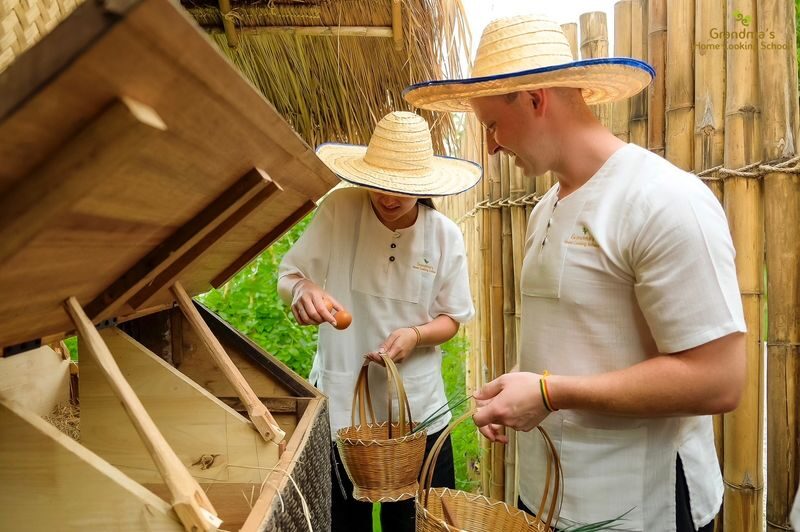
A guided walk introduces Thai herbs and vegetables and explains how they are used. You may also collect chicken eggs and some fresh ingredients. The school has chickens and peacocks, and the grounds are a popular spot for photos. The garden stop is more about learning what grows and how it is used than a full farm-work session; don’t count on gathering every ingredient you will cook.
The garden offers a helpful pause between the market and the stove. It connects the names of ingredients to actual plants, which is especially useful if you are new to Thai food. Do keep in mind that several classes may be operating at once. The grounds can feel lively, particularly during busy periods.
Cooking three savory dishes, then eating them
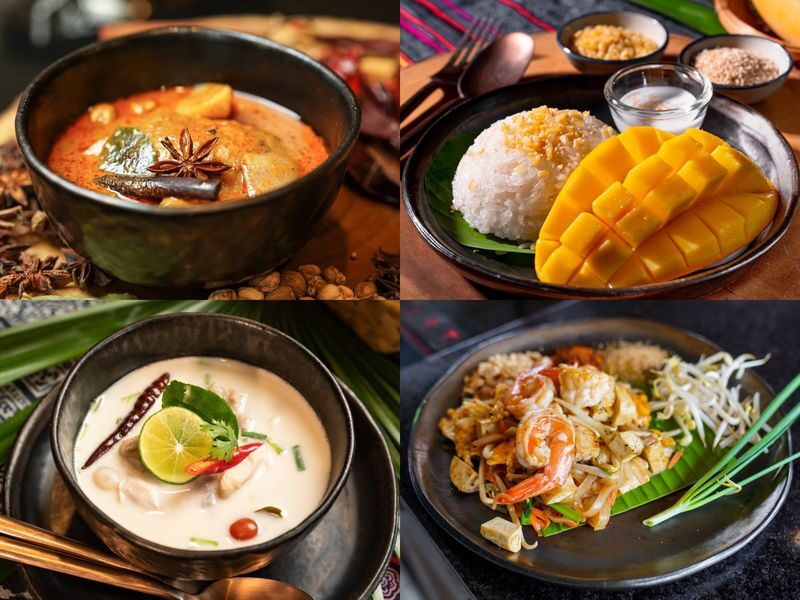
The morning class moves into cooking at roughly 10:20, beginning with rice and sticky rice before the soup and stir-fry session. The typical menu includes three savory dishes: a soup, a stir-fry and a curry. Options can include hot and sour soup or coconut soup; Pad Thai; and green, red, Khao Soi or Panaeng curry. The exact choices are made just before class and can change with the season and ingredient supply.
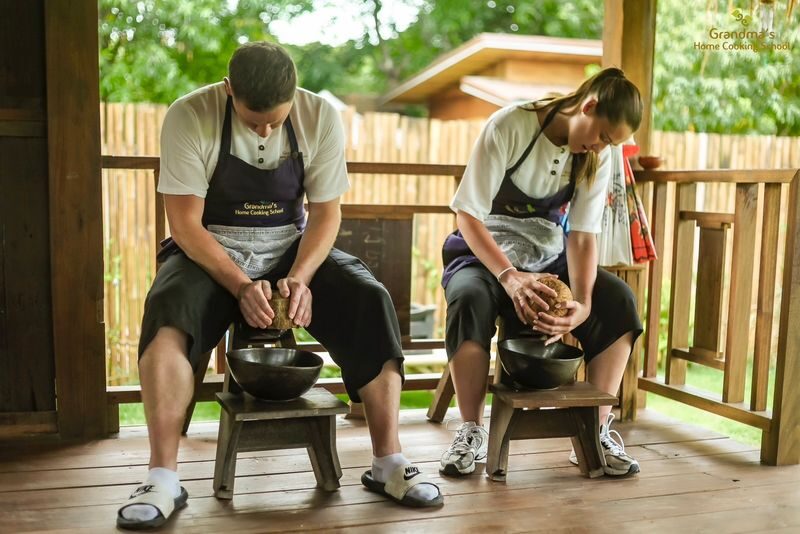
You work at an individual station and follow an English- or Mandarin-speaking instructor. This is hands-on, but it is designed for beginners and for an enjoyable meal, not advanced kitchen training. Ingredients may be prepared in advance, and the class focuses on putting the dishes together rather than teaching every knife skill or every stage of preparation. If you want a detailed technical course, ask about the class format before booking.
The teaching style is one of the experience’s strengths. Instructors such as Nene, Pia, Mac, Best and Lovin have led sessions, though your teacher depends on the day and language group. The class is step-by-step, and instructors check on participants as they cook. You do not need to arrive as a confident cook; the format is approachable for first-timers.
A class may cook a dish, taste it, then move on to the next recipe. That keeps the food fresh and the schedule moving, but it can also make the experience feel fast. Some parts, such as rice preparation or dessert, may be demonstrated rather than made from scratch by each participant. If your main goal is to learn every technique in depth, a full-day session may suit you better than a short class.
Mango sticky rice is served as dessert, along with Thai milk tea or Thai lemon tea. The dessert and drinks are included, but do not assume the class will teach you every step of making them. One practical tip: eat a light breakfast before a morning class. With several dishes to taste, lunch is substantial.
Half-day, full-day and Northern Thai choices
A half-day class is the practical pick if you want a taste of Thai cooking without giving up most of the day. The morning program starts with the market and finishes with a return to the city around 2:00 to 2:30 p.m. Afternoon and evening classes are also offered, though the order and timing of activities can shift with weather and traffic.
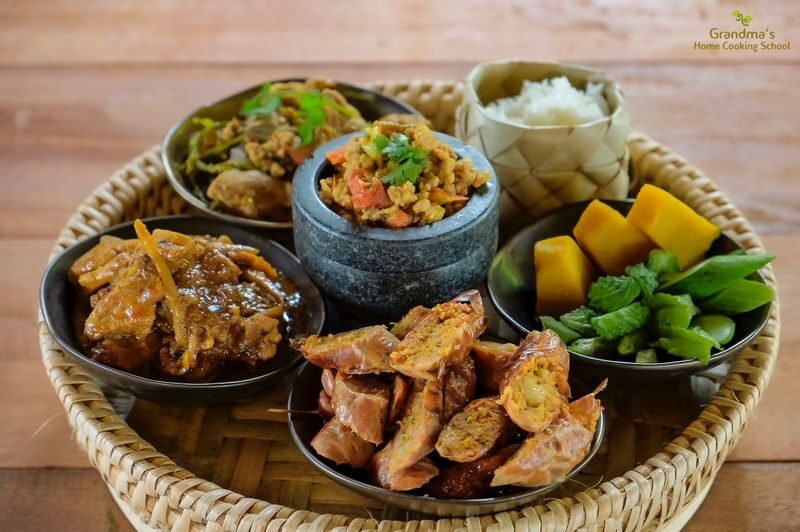
The full-day options give you more time with the cooking and can include a Northern Thai local menu. This is the one to consider if you are especially interested in regional dishes such as Khao Soi or want a longer food-focused activity. The precise menu still depends on the package and availability, so check what is included for your selected date.
Some packages mention lighting a charcoal grill as part of the Lanna option, and the school highlights Thai coconut pancakes as another hands-on skill. These extras are package-dependent, so confirm they are included before booking rather than assuming they are part of every half-day class.
English and Mandarin sessions are available. Joining the language you understand best makes a real difference when the instructor is explaining ingredients and cooking steps. Group sizes and atmosphere vary. A class may be small and conversational, or a busy session may have several groups using the grounds at once.
What the price buys you
Prices start at US$31.85, but that is not the price for every version of the class. The lowest listed options are Mandarin half-day sessions without a customized apron. English half-day classes without an apron start at about US$35.39, while an English morning class with round-trip transfers and a customized apron starts at US$50.25. Full-day choices generally cost more, and private sessions are priced much higher.
Compare the package details, not just the headline figure. You may be choosing among language, time of day, transfer, apron, full-day menu and private or shared instruction. The price can represent good value when it includes the market visit, garden tour, ingredients, cooking station, meal, dessert, drink and hotel transport. If you do not need a transfer or customized apron, a lower-cost option may make more sense.
The transfer is convenient, especially if you are staying within the 10 km service radius. It is shared, however, and timing can vary. Be at the lobby early, keep the operator’s contact details handy, and confirm the van and return arrangements with staff before leaving the school. A small number of transfer problems can turn an otherwise pleasant day into a stressful one, so clear communication is worthwhile.
The voucher is valid only for the booked date and time, and the stated policy does not allow cancellations or refunds. Children aged 0 to 15 cannot join the cooking class, though they may attend as visitors. Children must be supervised by an adult around open flames and cooking equipment.
Who will enjoy this class most
This is a good choice if you want a friendly introduction to Thai cooking, enjoy learning by doing and like the idea of eating what you make. It also suits couples, friends and families with older children who can join the class. The garden and photo-friendly grounds add interest for anyone who wants more than a kitchen lesson.
Solo participants can join, but the social feel depends on the group. You may meet cooking companions, though the session is not designed as a guaranteed way to make new friends. If your priority is a calm, intimate lesson, consider a private package and check its cost. If you value thorough instruction above all else, look closely at how much time the chosen class allows for each recipe.
For dietary needs, contact the operator in advance. Vegetarian, gluten-free and other requests can be accommodated, but it is sensible to confirm the details before your class.
Should you book Grandma’s Home Cooking School?
Book it if you want a well-rounded half-day built around Thai food: a market introduction, an organic garden walk, hands-on cooking and a generous meal. The strongest reasons to go are the instructor-led cooking, the chance to learn about local ingredients and the pleasure of eating several dishes you have prepared yourself.
Choose a different format if you want a slow, highly technical cooking course or dislike busy group settings. For most first-time cooks, the half-day class offers a satisfying balance of food, culture and practical fun. Pick your language carefully, compare transfer and apron options, and leave room for lunch.
Thai Cooking Classes by Grandma’s Home Cooking School
“First, let me say a big thanks to the Klook staff. For some strange reasons, I did not receive the vehicle number and meeting time confirmation. Fe…”
FAQ
How long is the morning half-day class?
The morning program begins with hotel pick-ups between about 8:30 and 9:00. The scheduled return from the school is around 1:45, with arrival back in the city around 2:00 to 2:30.
Is hotel pick-up included?
Round-trip hotel transfers are included with selected packages. Free shared pick-up and drop-off are available within 10 km of downtown Chiang Mai. Packages without transfers are also offered.
Which dishes will I cook?
The usual format includes a soup, a stir-fry and a curry. Choices can include hot and sour or coconut soup, Pad Thai, and green, red, Khao Soi or Panaeng curry. The menu is selected before class and may change with the season and ingredient availability.
Is dessert included?
Yes. Mango sticky rice is included, along with Thai milk tea or Thai lemon tea. The cooking portion is focused on the savory dishes, so check the selected package if you want to confirm exactly what dessert preparation is demonstrated.
Are vegetarian or gluten-free meals available?
The activity can accommodate vegetarian, gluten-free and other special dietary requirements. Contact the operator in advance to confirm your needs.
What languages are available?
Classes are offered in English and Mandarin. Choose the language you understand best so you can follow ingredient explanations and cooking instructions.
Can children join the cooking class?
Participants aged 0 to 15 are not allowed to join the cooking class, but may attend as visitors. Children must be accompanied and supervised by an adult around cooking equipment and open flames.
Are the market and garden included?
The class includes a visit to Charoen Charoen fresh market and a guided tour of the school’s organic garden. The market stop introduces ingredients and seasonings, while the garden tour covers herbs and vegetables.
Can I cancel my booking?
The stated policy does not allow cancellations or refunds. The voucher is valid only for the date and time specified when you book.