The interesting twist is that this Hong Kong workshop brings traditional Chinese enamel decoration within reach without a kiln. You’ll learn about Dian Lan and Shao Lan, sketch color ideas, then practice filling a metal design with colored sand to make accessories you can take home.
I like two things in particular: the class is capped at six, so there’s room for hands-on help, and you can choose between two hair clips or pins, or a larger claw clip. Instructor Michelle has led sessions and is noted for patient, detailed guidance, though your teacher may vary.
One consideration: this is a simplified craft class, not a full traditional enameling course. The colored sand does not require high-temperature firing, so book it for an approachable introduction and a finished keepsake, not a lesson in every step of historic metalwork.
- Small group, solo-friendly: You can book on your own, and each class has no more than six participants.
- A craft with Chinese roots: The session introduces Dian Lan and Shao Lan, with context on design and traditional decorative techniques.
- Color before the craft: You’ll explore color theory and make color sketches before practicing the filling technique.
- No kiln required: Colored sand makes this a simplified, accessible version of enamel-style decoration.
- A handmade takeaway: Choose two hair clips or pins, or one large claw clip, depending on the package.
- English or Cantonese: The class lasts about 1.5 to 2 hours and is open to participants aged 10 and older.
- A Traditional Craft, Made Hands-On
- From Design Principles to Your Own Color Plan
- Practicing Dian Lan with Colored Sand
- Choosing the Accessory You’ll Take Home
- PMQ, a Convenient Place to Make Something
- What the Price Buys You
- Who Should Book This Workshop
- Should You Book It?
- FAQ
- How long is the workshop?
- Where does the workshop meet?
- What is the minimum age?
- Can I attend by myself?
- How many people are in each class?
- Is the workshop taught in English?
- What will I make?
- Does the class use traditional high-temperature firing?
- What is the cancellation policy?
- The Best Of Hong Kong!
- More Workshops & Classes in Hong Kong
- More Tours in Hong Kong
- More Tour Reviews in Hong Kong
- Not for you? Here's more nearby things to do in Hong Kong we have reviewed
A Traditional Craft, Made Hands-On
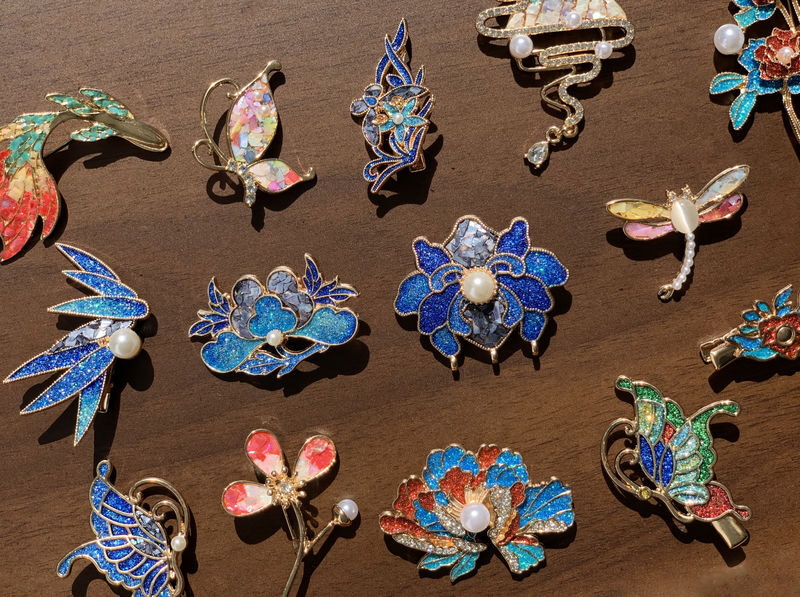
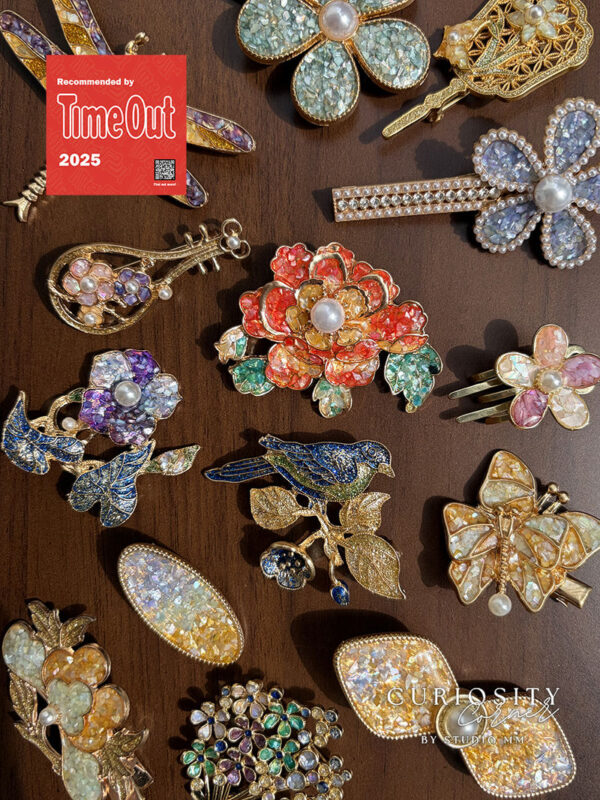
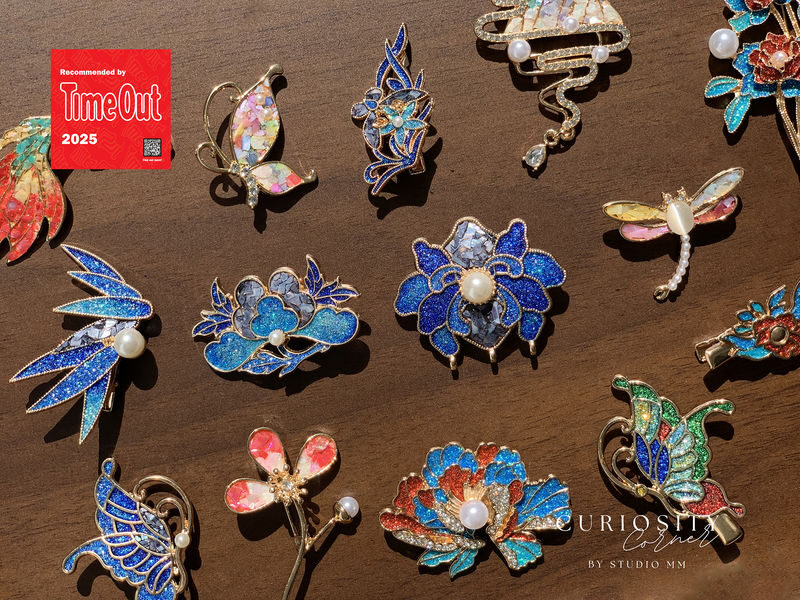
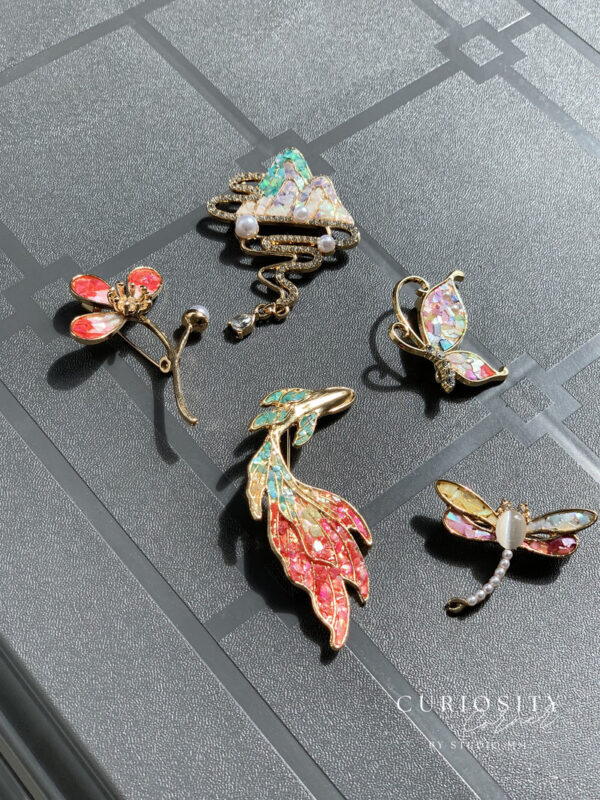
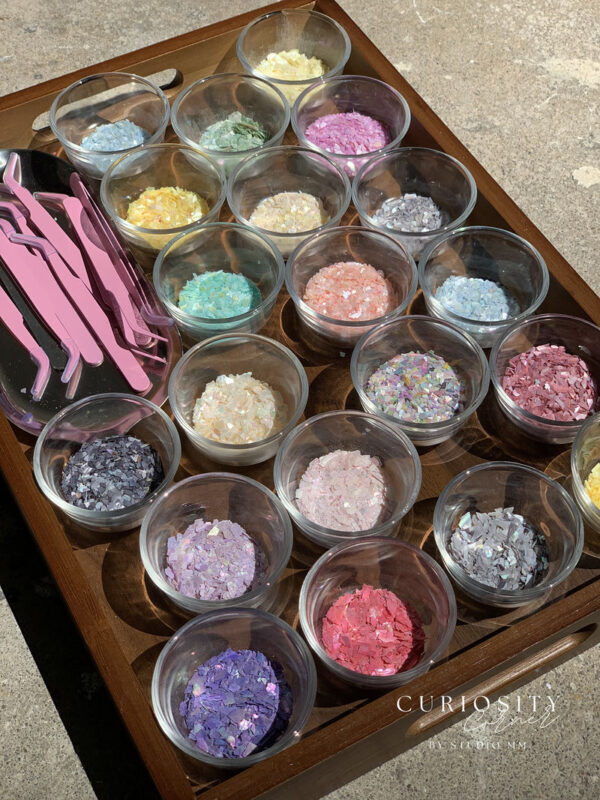
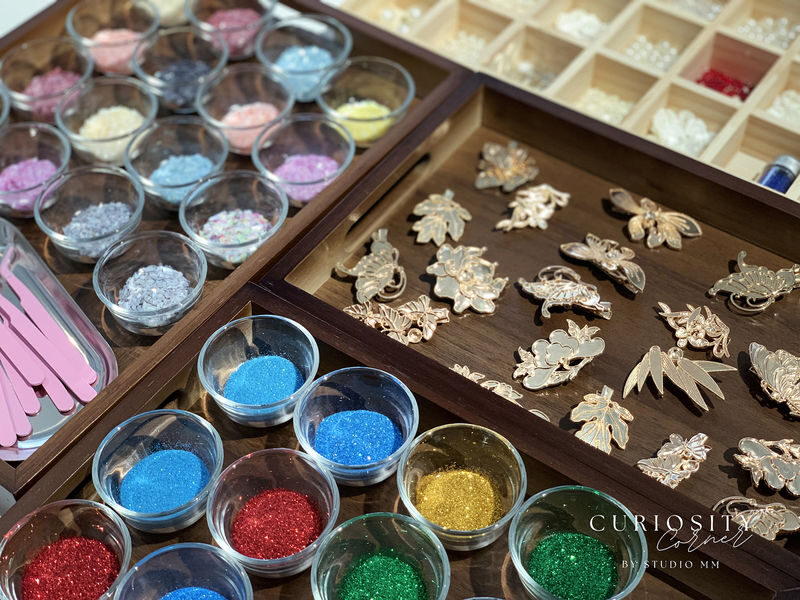
Cloisonné is known for colorful patterns set into metal, and this class gives you a practical introduction rather than asking you to admire the finished work from behind glass. You’ll hear about the design principles of Dian Lan and Shao Lan enameling, then try a version of the process yourself.
The workshop also introduces the wider family of Chinese decorative arts that includes champlevé enamel and mother-of-pearl inlay. The latter uses shell, including pearl or abalone, to make iridescent patterns. The class’s stated focus is a simplified, easy-to-follow project, so treat the background as an introduction, not a full survey of these techniques.
The central adaptation matters. Traditional enamelwork can involve metalworking and high-temperature firing; here, colored sand is used so you can make a decorative piece without firing. That makes the process less demanding and more suitable for a short class, though the finished object is not the same as a traditionally fired cloisonné piece.
I’d book this for the pleasure of learning a little context and making something with your own hands. If your main goal is technical training in metalwork or a historically exact enameling method, this format is likely too brief and deliberately simplified.

👉 See our pick of the Best Historical Tours In Hong Kong
From Design Principles to Your Own Color Plan
The class begins with an introduction to the history and design principles behind Dian Lan and Shao Lan. This context helps you see that the patterns are not just a matter of filling empty spaces with bright color. The workshop is designed to show how color and layout contribute to the look of a finished decorative object.
You’ll then explore color theory and make color sketches. This is a useful step, especially if you tend to choose colors on impulse and only realize later that they don’t work together. A sketch gives you a chance to think about the palette before moving on to the accessory itself.
The information provided doesn’t specify a fixed design menu or say whether you can bring your own pattern. If you have a particular color combination in mind, ask the operator before class rather than assuming you can customize every detail. The workshop’s clear promise is practice with color and design, not unlimited choice.
You can also read our reviews of more tours and experiences in Hong Kong


Practicing Dian Lan with Colored Sand
Once you’ve worked through the design and color ideas, you’ll practice the Dian Lan filling technique. The project uses colored sand rather than materials that need high-temperature firing, keeping the activity manageable within a session of around 90 to 120 minutes.
That shorter process is a strength if you want to try a traditional art form without signing up for a long course. It also sets a fair expectation: you’re learning a simplified method and completing an accessory, rather than producing a piece through every stage of conventional enamelwork.
The maximum class size of six is particularly useful here. Filling a detailed design takes care, and having a small group makes individual guidance more plausible than in a crowded demonstration. Michelle has led the workshop and is described as patient and detailed in helping participants complete their work. The instructor on your date may be someone else, but the class format is built around hands-on practice.
Go in prepared to take your time. The activity is intended to be accessible, but careful placement and color choices still matter. One participant’s comment about how much skill the craft takes is a good reminder that even a simplified version can make you appreciate the patience behind traditional workmanship.
Choosing the Accessory You’ll Take Home
The listed package options include two hair clips or pins, and a choice described as two hair clips or brooches or one large claw clip. The exact choice depends on the package you book, so check the option details before paying rather than assuming every participant can switch freely between designs.
Taking home a finished accessory gives the class a clear endpoint. You leave with something more personal than a souvenir bought in a shop, and the process of making it can give you a better sense of the time and care involved in decorative craft.
Keep expectations practical. These are alloy accessories made through a simplified colored-sand process. The appeal is the design you make and the craft experience, not precious materials or the durability and finish of high-end jewelry.
If you’re choosing between the two-piece option and the larger claw clip, think about what you’ll use. Two smaller pieces offer more than one finished item; the large clip is a single, more substantial accessory. The available information doesn’t give dimensions or specify the exact designs, so ask if size or style is important to you.
PMQ, a Convenient Place to Make Something
The workshop meets at S510, Block A, PMQ, at 35 Aberdeen Street in Hong Kong. That address is worth saving before you set out, since the meeting point is a specific studio space within the complex rather than a general city landmark.
The class itself takes about 1.5 to 2 hours. That’s a modest time commitment to fit around other plans, but don’t book it so tightly that a small delay would make you miss the start. Late arrivals and no-shows are not eligible for refunds or amendments under the stated terms.
The workshop is taught in English or Cantonese. If language matters to your understanding of the craft instructions, confirm the teaching language for your chosen session before booking.
Admission and live commentary appear among the included items, but the core of this activity is the craft class at PMQ. The most useful things to plan around are the meeting address, your chosen package, the language, and the time you’ll need to finish your project.
What the Price Buys You
The supplied prices don’t match exactly: the overall experience is shown from US$59.59, while the package options are shown from US$54.19. Treat those as starting figures, and check the price displayed for your chosen date and package before booking.
For the cost, you’re paying for a guided introduction, practice with color and filling, and an accessory to take home. The small maximum class size adds value if you want instruction rather than a quick demonstration. A patient teacher can make a real difference when you’re working through a hands-on technique for the first time.
The value depends on what you want. If you’re curious about Chinese decorative arts and would enjoy making a personal keepsake, the short format and finished piece make the price easier to justify. If you want a long technical course, traditional kiln-fired work, or fine jewelry materials, this is not the right comparison.
The activity currently has three five-star ratings, with positive comments focused on the instructor’s patience, detailed help, and the fun of making the pieces. That is encouraging, but it’s still a very small pool of feedback. I’d treat the strong ratings as a helpful signal, not a guarantee that every class will feel exactly the same.


Who Should Book This Workshop
This is a good fit for curious makers, craft-minded visitors, and families with children aged 10 or older who want an activity that’s more hands-on than a standard sightseeing stop. The age rule is clear: participants must be at least 10.
Solo participants are welcome, which makes the workshop easy to consider even if you don’t have a companion who shares your interest in crafts. The small class cap also suits anyone who prefers a quieter setting where asking for help feels straightforward.
It’s less suited to someone seeking a rigorous technical course or a historically exact cloisonné process. The activity introduces traditional forms, but uses colored sand that does not require high-temperature firing. That distinction is important: you’ll learn and make, but you won’t complete every traditional production step.
Should You Book It?
Book this workshop if you want a short, approachable introduction to Chinese enamel-inspired decoration, a chance to work with color, and a handmade accessory to take home. The small group, English or Cantonese instruction, and patient, detailed teaching associated with instructor Michelle all point to a class where you can get practical help.
Skip it if your priority is traditional kiln-fired enamelwork, advanced metalworking, or a long course that builds technical skill over several sessions. For a compact creative break at PMQ, though, this is a thoughtful choice, especially if you’d rather leave Hong Kong with something you made than another item you bought.
Cloisonné Enamel Jewelry Workshop
“it's an excellent experience! Teacher is nice. we enjoy it very much!”
FAQ
How long is the workshop?
The class lasts approximately 1.5 to 2 hours.
Where does the workshop meet?
It meets at S510, Block A, PMQ, 35 Aberdeen Street, Hong Kong.
What is the minimum age?
Participants must be aged 10 or older.
Can I attend by myself?
Yes. Single participants are welcome.
How many people are in each class?
The maximum class size is six participants.
Is the workshop taught in English?
The workshop can be taught in English or Cantonese. Confirm the language for your session if you have a preference.
What will I make?
Depending on the package, you can make two hair clips or pins, or choose an option for two hair clips or brooches, or one large claw clip.
Does the class use traditional high-temperature firing?
No. The simplified process uses colored sand that does not require high-temperature firing.
What is the cancellation policy?
A full refund is available if you cancel at least 24 hours before the activity date, using destination local time. Late arrivals and no-shows are not eligible for refunds or amendments.