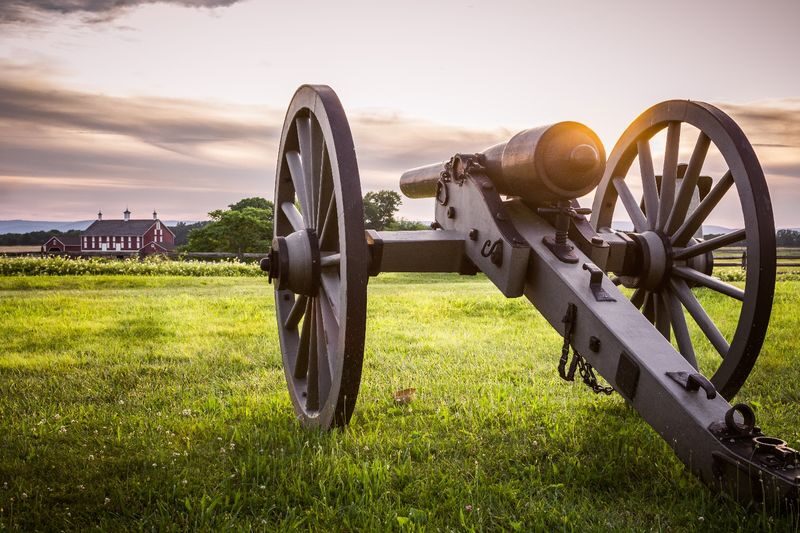
Gettysburg’s battle unfolded over three days, across fields, ridges, farms, and hills that you can still visit in your own car. This self-guided tour links those places with audio about the Union and Confederate strategies, giving you a way to follow the battle’s changing fortunes rather than treating the park as a string of monuments.
I like two things in particular: the route connects key battlefield positions, including Little Round Top and the ground associated with Pickett’s Charge, and you can stop, pause, or take a walk without holding up a group. One caution: the audio depends on GPS, and one customer reported a clip playing before reaching its stop.
- Gettysburg at a glance
- A battlefield best understood from the road
- Day one: Oak Ridge and the first losses
- Day two: ridges, rocky ground, and farms
- Later stops: memorials, springs, and a night attack
- The app, the audio, and the practical details
- Who will get the most from this drive
- Should you book it?
- FAQ
- How long does the tour take?
- Where does the tour start and finish?
- Is a live guide included?
- Does the tour price include everyone in the car?
- Does the tour work without internet?
- Are admission and parking included?
- What should I bring?
- The Best Of Gettysburg!
- More Guided Tours in Gettysburg
- More Tours in Gettysburg
- More Tour Reviews in Gettysburg
- Not for you? Here's more nearby things to do in Gettysburg we have reviewed
Gettysburg at a glance

- A three-day story by car: Follow the battle’s changing course through stops on the battlefield road.
- Big moments, specific ground: The route includes Oak Ridge, Little Round Top, Devil’s Den, and the Gettysburg Address Memorial.
- Your own schedule: Pause for photos, walks, or a break, and resume when you are ready.
- One purchase for the car: The tour is priced per vehicle, not per person.
- Download before you go: Audio and route guidance work offline after you download the tour.
- Audio timing can vary: GPS-triggered stories may not always begin exactly where you expect.

👉 See our pick of the 7 Best Historical Tours In Gettysburg
A battlefield best understood from the road
This is a private, self-guided tour for people who want the freedom to explore Gettysburg without joining a bus or keeping pace with a live guide. The app supplies an English-language narration, a route map, planning tools, and GPS-triggered audio. You bring the car and phone, and decide how long to linger at each stop.
The suggested schedule runs from 9 a.m. to 1 p.m., but the tour can be started at another time and paused along the way. That flexibility matters at Gettysburg. A five-minute stop may be enough to read a marker, while a place such as Little Round Top or Devil’s Den may tempt you to park and walk around longer.
The guide tells the battle through the ground itself: where troops assembled, where Union forces held on, and how commanders tried to outmaneuver each other. You will not have a live guide to answer questions, and this is not an entrance ticket. The app provides the commentary, but you set the pace and make the choices.
You can also read our reviews of more guided tours in Gettysburg


Day one: Oak Ridge and the first losses
The route begins on Culp Street in Gettysburg, with the listed return point at Gettysburg National Military Park, 125 Taneytown Road. The app can guide you from the suggested start or let you join elsewhere along its route. Its four-hour schedule is a guide, not a promise: traffic, weather, and the time you spend out of the car can change the timing.
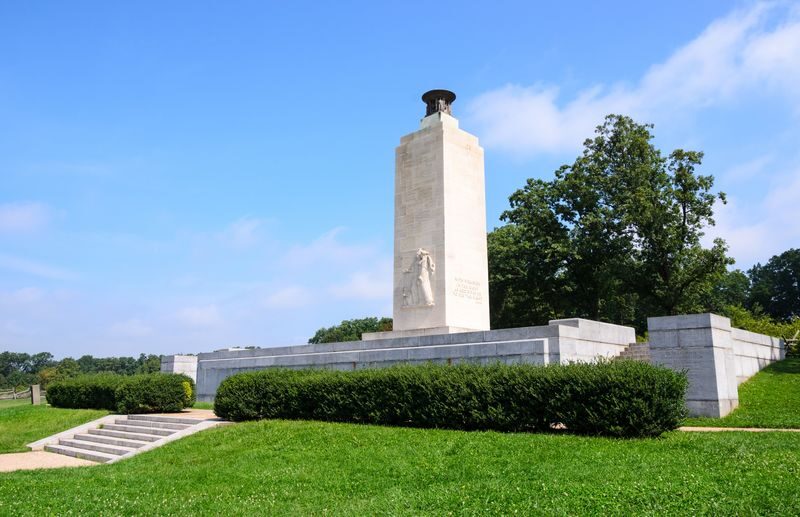
Early on, you pass the Eternal Light Peace Memorial, a marker of national reunification. It gives the drive a useful frame: Gettysburg is a battlefield, but also a place shaped by the country’s later effort to come back together. Treat it as an orientation stop, not a long visit.
At Oak Ridge Observation Tower, the narration takes you back to the first day of battle. This is a strong early stop because the tour begins to explain how the fighting developed, rather than dropping you straight into the best-known final charge. The stop is self-guided, so you can decide whether to climb or simply listen and continue.
Nearby, the 11th Pennsylvania Volunteer Infantry Regiment Monument carries a small detail worth watching for: a dog sculpted on the other side of the base. That is Battlefield Sallie, the regiment’s mascot. It is the sort of human touch that helps put individual lives beside the large troop movements and strategy.
The route continues past Seminary Ridge Museum and Education Center as the first day’s story turns toward Union losses and lost ground. The museum is named as a landmark along the drive, but admission is not included. If you want to go inside, check its hours and arrange any entry separately; the audio tour itself does not cover that cost.
Day two: ridges, rocky ground, and farms
As the route moves toward the second day, it passes the North Carolina Memorial and Virginia Monument. These memorials offer a reminder that the battlefield’s monuments represent soldiers from many states, not only the town where the fighting took place. The listing names the North Carolina Vietnam Veterans Memorial as a stop, so follow the app’s map and narration for the precise location it intends.
The Longstreet Observation Tower offers a view over ground associated with the second day’s fighting. Its value is visual: the narration can explain a commander’s plans, but a vantage point helps you see the terrain those plans had to account for. If the tower is closed or you choose not to climb, the tour remains usable from the car.
At Warfield Ridge, Confederate troops assembled before attacking a strategic Union outpost. The stop helps connect the route’s broad geography with the battle’s tactical choices. Rather than just hearing that a fight happened, you can pause and consider why this position mattered to the armies.
Little Round Top is one of the best-known stops on the route. Union soldiers held the hill against Confederate troops, preserving control of an important position. Give yourself room for a proper pause here if you can. The app’s suggested five minutes may be enough to hear the narration, but it leaves little time to look around or walk.
At Devil’s Den, Confederate sharpshooters used the volcanic rocks as cover to fire on Union soldiers. The unusual rock formations make the location especially easy to picture as a battlefield position. You can listen from the car, but getting out gives you a closer sense of how the terrain shaped the fighting. Use care around the rocks and stick to permitted paths.
The stops at the Abraham Trostle Farm and George Weikert Farm shift attention from troop positions to the families caught in the battle’s path. The Trostle family fled so abruptly that dinner remained on the table. The Weikerts also left their home, then returned to a grimmer scene. These accounts add a domestic scale to a drive otherwise dominated by regiments, hills, and military plans.
Later stops: memorials, springs, and a night attack
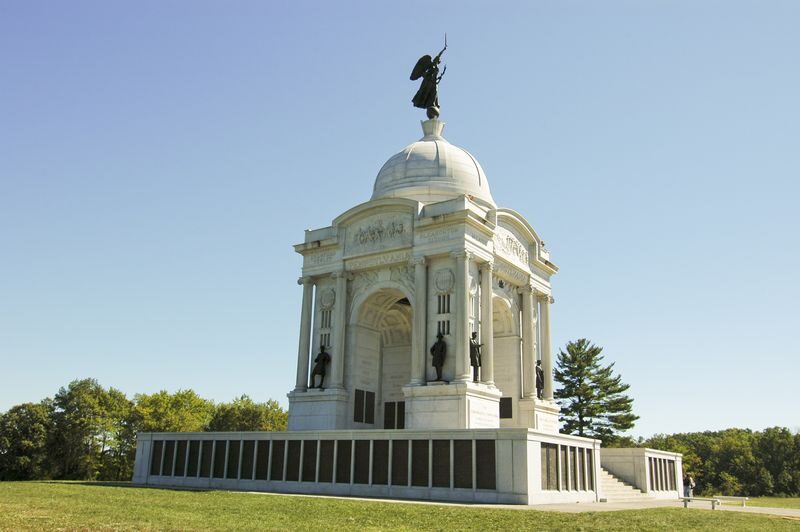
The route identifies the State Museum of Pennsylvania, but its accompanying description points to the Pennsylvania Memorial. That monument honors nearly 35,000 Pennsylvania soldiers who fought at Gettysburg. It is a large-scale tribute, and a useful reminder of how many people from one state were involved. Do not assume that museum admission is included: attraction entry and other fees are separate.
At Spangler’s Spring, the drive heads into the Gettysburg woods. The spring provides a change of setting after the open ridges and rocky ground. The story then moves toward the fighting around Culp’s Hill, where the Confederate failure to capture the position led to a nighttime raid.
East Cemetery Hill brings that night attack into focus. The tour’s account explains why the fighting did not stop simply because darkness had fallen. This part of the route is a good example of why the self-guided format can work well: you can pause the narration, look at the terrain, and take time to follow the sequence before driving on.
The final named stop is the Lincoln’s Gettysburg Address Memorial, also associated with the site of Abraham Lincoln’s famous address. The speech followed a battle of enormous consequence, and the route uses the location to connect the battlefield’s immediate cost with its place in the country’s memory. It makes a thoughtful endpoint before the drive concludes at Gettysburg National Military Park.
The app, the audio, and the practical details
Download the Action Tour Guide app and the tour before your visit, using Wi-Fi or a strong cellular connection. Once downloaded, the route and audio work offline, which is useful in areas where your phone may have a weak signal. The app supports iPhones with iOS 15 or later, Android phones with version 9 or later, and GPS-enabled tablets with cellular capability.
The narration is designed to play automatically as you reach stops. You can hear it through the car’s Apple CarPlay or Android Auto display, or connect your phone to the car stereo using Bluetooth. The app’s map remains on your phone. Bring a charged phone and a power bank, and make sure the tour is downloaded and unlocked before you set off.
There is a practical caveat about the GPS-triggered audio. One customer reported that an extra audio segment played before reaching the relevant stop. This is not enough information to judge how often the issue occurs, but it is a reason to keep the map open and listen for location cues. If a clip starts early, pull over safely before checking the app or trying to replay anything.
You receive lifetime access, so the tour does not expire and can be used again on future trips. The tour password can be entered on the number of devices covered by the booking. Support is available by chat, email, or phone if you have trouble setting it up.
The stated starting price is $15.65, while the package option is shown at $16.99. Prices can vary, so check the amount at checkout. Since one purchase covers everyone in your car, the value improves when you share the cost with family or friends. It is also important to budget separately for fuel, parking, food, attraction admissions, and transportation: none of those is included.
The tour is not wheelchair-accessible. Children aged one to five are listed as free, but the experience is still a car-based audio tour rather than a staffed activity designed around children. Dress for the day’s weather, since several stops are outdoors.
You can also read our reviews of more tours and experiences in Gettysburg


Who will get the most from this drive
This tour suits independent visitors who want structure without a fixed group schedule. It is a good fit if you have a car, want context for the major sites, and like being able to stop for a walk or photo when a place catches your attention. It can also help first-time visitors connect separate parts of the battlefield into one account of the three-day fight.
It is less suitable if you want a live guide, help navigating the history in person, or a vehicle-free tour. You will need a compatible phone and some comfort using an app. If you prefer to spend a long time at each monument, plan for more than the suggested four hours rather than rushing to keep to the sample schedule.
Should you book it?
Book this tour if you want a flexible, private way to follow Gettysburg’s battle story from the road, and you are willing to handle the app and route yourself. Its strongest value is the combination of major battlefield stops, GPS narration, and one vehicle price. Download everything ahead of time, allow extra time for Little Round Top and Devil’s Den, and keep the map handy in case an audio cue starts early.
Choose another format if you want a human guide, included admission, or a tour with no phone setup. For an independent driver who values freedom and context, this is a practical way to make the battlefield’s geography easier to understand.
Gettysburg Battlefield Self-Guided Driving Audio Tour
FAQ
How long does the tour take?
The suggested schedule is 9 a.m. to 1 p.m., or about four hours. Traffic, weather, and the time you spend at stops can change the actual duration.
Where does the tour start and finish?
The suggested departure point is Culp Street in Gettysburg. The listed return point is 125 Taneytown Road at Gettysburg National Military Park.
Is a live guide included?
No. This is a self-guided audio tour in the Action Tour Guide app. No guide will meet you.
Does the tour price include everyone in the car?
One purchase covers everyone in your vehicle, rather than charging per person. The listed starting price is $15.65, while the package option is shown at $16.99, so confirm the price when booking.
Does the tour work without internet?
Yes, after you download the tour. Download it in advance over Wi-Fi or a strong cellular connection; the route and audio then work offline.
Are admission and parking included?
No. Attraction admission, entrance tickets, parking, transportation, meals, and personal expenses are separate. Admission to the Gettysburg Heritage Center is specifically excluded.
What should I bring?
Bring a valid ID, a charged smartphone with the app and tour downloaded, and a power bank. Dress for the weather.


