Vietnamese coffee can be sweet, salty, creamy, or strong enough to make you rethink ordering a second cup. At this Hanoi workshop, you make and taste six styles yourself, including familiar favorites such as egg and coconut coffee, alongside less expected drinks like salt coffee and a coffee mocktail. I like that the class connects each cup to Vietnam’s coffee trade and local traditions, rather than treating the recipes as party tricks. You leave with methods and a recipe book to try at home.
I also like the small-group, hands-on format. You do more than watch a barista work: you handle the equipment, follow the steps, and compare the aromas and flavors. One caution: six tastings can mean a lot of caffeine and sugar, so eat beforehand, especially if coffee hits you hard.
What to know before you book
- Six brews, not just egg coffee: The standard class covers brown, salt, pour-over, peanut, coconut, and coffee mocktail. Egg coffee is a central theme, but the exact menu may change with ingredients and season.
- Local stories with your tasting: Your guide introduces Vietnam’s coffee trade, regional styles, and the traditions behind the drinks.
- A practical class for coffee-curious beginners: You use traditional equipment, including a phin filter, and receive recipes to take home.
- A small-group setting: The format allows for personal instruction and questions. Guides named by participants include Lin, Phil, Vy, and Giang.
- Allow roughly three hours: The session is often described as lasting close to that, though timings can change with conditions and the chosen departure.
- Plan your arrival carefully: Meet at the marked intersection on Hoang Hoa Tham Street, or arrange pickup if your hotel is in Hanoi’s Old Quarter.

👉 See our pick of the 25 Best Shopping Tours In Hanoi
- What to know before you book
- Six Hanoi coffees, made by your own hands
- What happens at Local Beans Roastery
- The cups that give the class its character
- A class that works for beginners and solo visitors
- Is the price good value?
- Getting there, timing, and small practical details
- Should you book this Hanoi coffee workshop?
- FAQ
- How many coffees will I make and taste?
- Is egg coffee included?
- Where does the workshop take place?
- What departure times can I choose?
- Is hotel pickup available?
- What languages are used in the workshop?
- What is the minimum age?
- Can I cancel or change my booking?
- The Best Of Hanoi!
- More Coffee Experiences in Hanoi
- More Tours in Hanoi
- More Tour Reviews in Hanoi
- Not for you? Here's more nearby things to do in Hanoi we have reviewed
Six Hanoi coffees, made by your own hands
 1 / 7
 2 / 7
 3 / 7
 4 / 7
 5 / 7
 6 / 7
 7 / 7
Hanoi’s coffee scene is not one drink served one way. This class gives you a quick, practical introduction to its range, from strong, straightforward brews to cups that behave more like dessert. You learn the basic techniques, then taste how ingredients and preparation can change the result.
The session is led by a local from Son La, a northern province associated with coffee growing. Guides such as Lin, Phil, Vy, and Giang have been singled out for clear explanations, patience, and an easy way with a group. The teaching style matters here: several recipes are simple to follow, but the stories about beans, regional habits, and the country’s coffee trade help explain why the drinks took their present forms.
Vietnam is the world’s second-largest coffee exporter, and the workshop gives you a human-scale way to understand that fact. Instead of hearing only a statistic, you connect the country’s coffee production to everyday café habits and the drinks people make from local beans. The class also touches on highland-grown Arabica and ethnic farming traditions, alongside newer coffee styles.
You should expect a mix of explanation and action, not a lecture. The guide introduces a topic or method, then you smell, brew, taste, and ask questions. That rhythm keeps the class moving and gives solo participants a natural way to join in with others.
You can also read our reviews of more tours and experiences in Hanoi



What happens at Local Beans Roastery
The experience begins with departure from your selected meeting point or hotel pickup, if you choose a transfer option and stay in the Old Quarter. The workshop itself takes place at Local Beans Roastery in Ba Dinh District, at No. 75/173 Hoang Hoa Tham Street. If you are meeting the group, the practical landmark is the intersection near Alley 75, Lane 173, where you should look for a large yellow Bia Hoi Mau Dich sign.
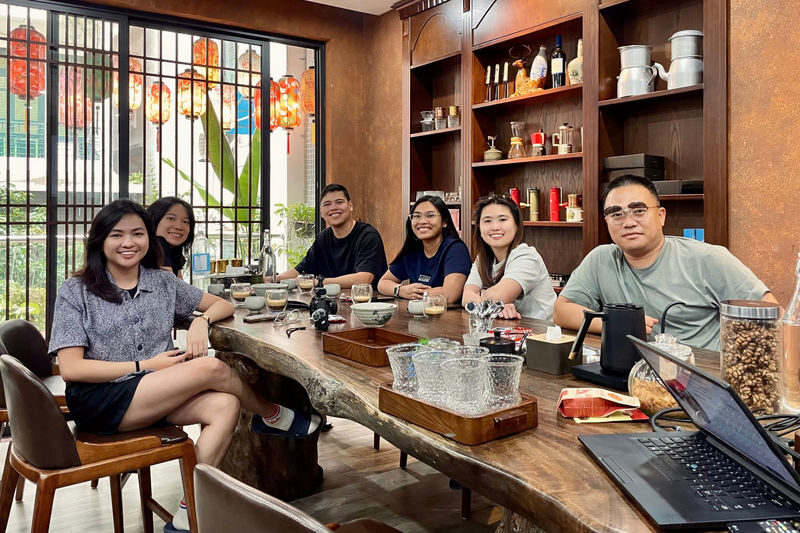
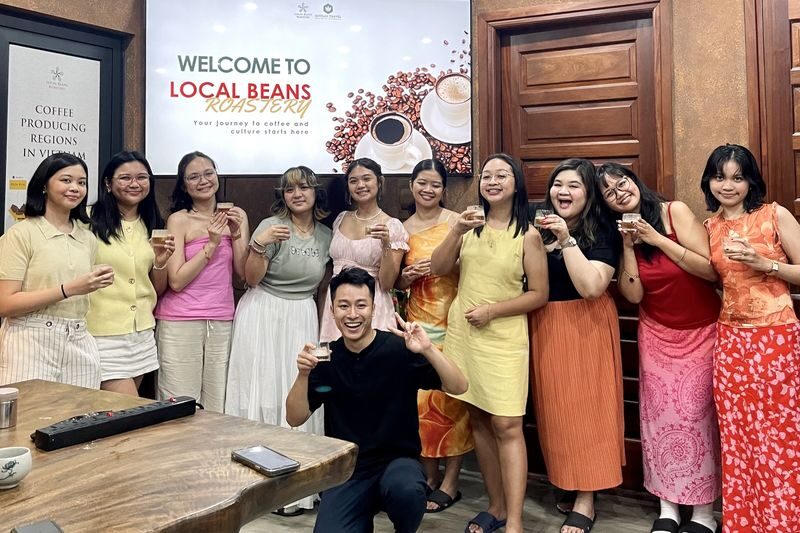
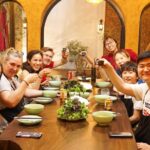
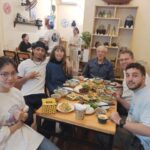
Once at the roastery, you receive a warm welcome and refreshments before the coffee session begins. The space is described as cozy and set up for the class, with equipment provided. It is also photogenic, which may suit you if you like documenting a hands-on activity. Still, make space for the actual work: measuring, brewing, smelling, and tasting are more useful than trying to photograph every cup.
The guide starts with coffee history and regional styles. Expect context on how Vietnam developed into a major coffee exporter and how local brewing traditions became part of daily life. The point is not to memorize every date or production figure. It is to understand why coffee in Vietnam can be a social ritual, a quick street-side drink, or a sweet specialty served with a spoon.
From there, the group works through six drinks. The listed join-in menu includes brown coffee, salt coffee, pour-over, peanut coffee, coconut coffee, and a coffee mocktail. Egg coffee is a signature focus in the workshop’s description, but the menu may shift according to season and ingredient availability. If one particular drink is your main reason for booking, ask the operator to reconfirm the menu the day before.
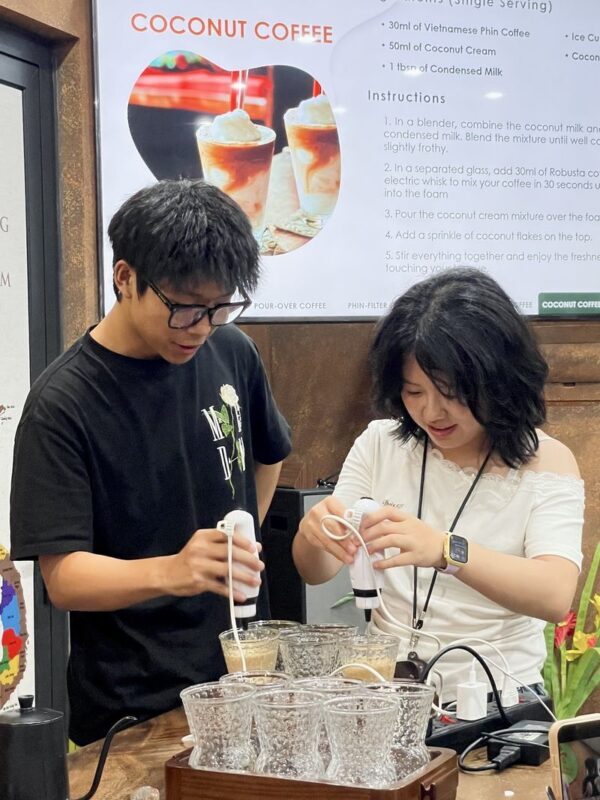
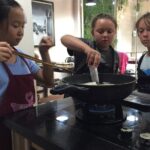
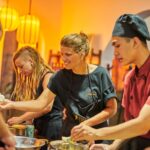
You will use traditional methods such as the phin filter, a small metal drip brewer associated with Vietnamese coffee. The equipment is supplied, and the guide walks you through the process so you can make your own cup rather than simply watch a demonstration. Some parts are done individually, while other tasks can be shared across the group. That balance suits beginners: you get a turn at the tools without having to manage every step alone.
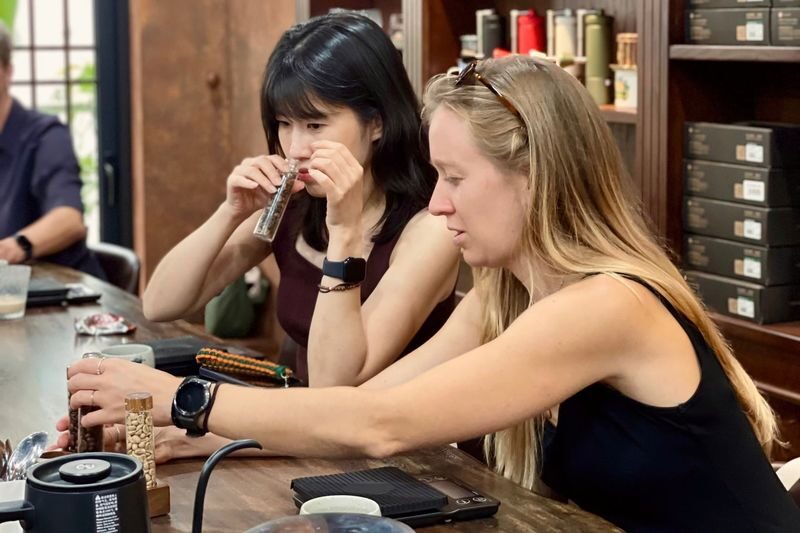
The tasting is part of the lesson. You compare aromas and flavors as you go, and the guide explains what makes each drink different. One may lean toward strong coffee, another toward creamy sweetness or a savory edge. A coffee mocktail adds a more modern note to the traditional styles. This variety is useful if you are unsure what to order in Hanoi cafés later. You leave with a clearer sense of what you like and the vocabulary to ask for it.
The cups that give the class its character
Egg coffee is the drink many people already know by name. Its appeal lies in the contrast between coffee and a rich, whipped topping, which gives it a dessert-like character. It is a good example of how Vietnamese coffee culture adapts familiar ingredients into something with its own identity. You may learn to prepare it during the session, although the operator can adjust the menu.
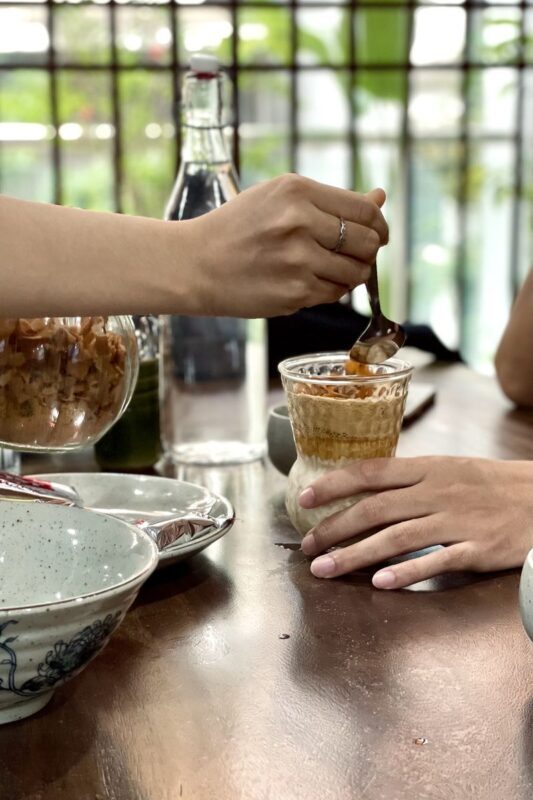
Salt coffee is a more surprising stop. Salt can sharpen sweetness and soften bitterness, so the name does not mean you are simply drinking a cup of brine. It is an effective reminder that coffee flavors are built from contrasts, not just roast and strength. If you usually take coffee black, this is one to taste with an open mind.
Coconut coffee brings a creamy, aromatic profile, while peanut coffee offers another ingredient-led variation. Brown coffee provides a more familiar local style, and pour-over gives you a chance to focus on the brewing process itself. The mocktail rounds out the tasting with a less conventional preparation. With six styles in one sitting, the point is comparison, not finding one universal favorite.
The menu may change with the season and ingredient supply, so treat the named drinks as a guide rather than a guaranteed fixed flight. That flexibility is reasonable for a practical workshop, but it is worth knowing if you are booking specifically for one recipe.
A class that works for beginners and solo visitors
You do not need to arrive as a coffee expert. The brewing methods are taught step by step, and the class is designed for participation rather than prior skill. If you already know your way around beans and brewing, the cultural background and unusual flavor combinations still give you something to explore.
The small-group format is a real advantage. You can ask questions without having to call across a large room, and instructors have been described as patient and attentive. Lin, Phil, Vy, and Giang are among the guides named by participants. Their warmth and clear teaching come up repeatedly, which is important when a class depends on both practical instruction and storytelling.
Solo visitors should feel comfortable booking. The group format gives you company without requiring you to arrive with a partner, and the tasks create easy conversation. Families may also find it workable: children must be at least six, and those aged 11 or older pay the adult rate. The class is not exclusively for adults, though remember that the tasting includes coffee and may involve considerable caffeine.
The experience is available in English and Vietnamese. The workshop also includes a recipe book, access to digital Vietnamese coffee books and a reading list, and a personalized certificate on request. Those extras are most useful if you want to recreate a drink later or continue learning after the class. They are not a substitute for the hands-on session, but they make the knowledge easier to carry home.
Is the price good value?
The advertised starting price is from $23.35, while the join-in workshop option is also shown from $30.30. The final amount can vary by package and booking details, so check the price for your date and chosen option before paying. Other listed choices include a private workshop and a five-coffee vegan package, each with its own starting price.
For a class that teaches six drinks, includes coffee equipment and tastings, and provides cultural context and recipes, the join-in option can be good value if you want more than a café stop. You are paying for instruction and a structured tasting, not simply six cups. It is especially worthwhile if you plan to visit several cafés and want to understand the differences between local styles.
A private class costs more, but may suit you if you want a session focused on your own group. The vegan package is another option if you prefer plant-based drinks. Confirm the menu and package details in advance, since the standard menu may vary and the names of the options alone do not guarantee that every drink will match your preferences.
There is a holiday surcharge on Vietnam’s National Day period, August 31 to September 2, and on January 1, 2027. The stated fee is $11 per person for vegan or transfer options, and $9 per person for the no-transfer option, payable onsite. Include that extra cost in your comparison if you are booking for those dates.
You can also read our reviews of more tours and experiences in Hanoi

Getting there, timing, and small practical details
You can select a departure at 09:00, 10:00, 14:00, or 15:00. Return times are listed as 14:00 or 19:00, but the available return depends on your departure and the session duration. Plan around a substantial part of the day rather than squeezing the class between two tightly timed activities. The session is often described as close to three hours, and traffic or weather can affect the schedule.
Hotel pickup and drop-off are available for hotels in Hanoi’s Old Quarter, as a shared transfer. The operator reconfirms pickup details in advance, and shared transport can arrive early or late. Be ready in your hotel lobby ten minutes before the selected time. If your lodging is outside the pickup area, go to the meeting point yourself.
For the meeting-point option, stand at the intersection by the yellow Bia Hoi Mau Dich sign, not simply somewhere along the lane. Arrive ten minutes before your scheduled start. The venue is in Ba Dinh District, and the pickup or meeting arrangement is worth checking carefully because the roastery’s lane address can be less straightforward than a main-street storefront.
The operator contacts you between 16:00 and 20:00 on the day before the class to reconfirm pickup time, location, and menu information. Present your mobile voucher. Children and infants must be included in the passenger headcount, and child seats are not available. Changes are allowed until 24 hours before the activity, subject to the stated booking restrictions; cancellations made at least 24 hours before the activity are eligible for a full refund.
Bring an appetite, but not an empty stomach. You will taste several drinks, and a full run of coffee can add up quickly. If you are sensitive to caffeine or prefer less sugar, let the instructor know so you can pace yourself and make informed choices.
Should you book this Hanoi coffee workshop?
I would put this class high on the list if you enjoy coffee, local food traditions, or activities that give you something practical to take home. The strongest reasons to book are the six-drink comparison, the chance to brew with your own hands, and the guides’ approachable teaching style. It gives you a useful introduction to Vietnamese coffee without demanding specialist knowledge.
It may be a less appealing choice if you dislike caffeine, want a quick activity, or care most about trying one specific recipe on a fixed menu. The session takes time, the selection can change, and six tastings may feel like too much if you have already had several coffees that day. Check the departure, transfer, package, and menu details before confirming. If those fit your plans, this is a rewarding way to spend a Hanoi morning or afternoon.
Hanoi Coffee Workshop: Taste Salt, Coconut and Egg Coffee
“Such a good workshop. And you'll leave slightly tipsy and incredibly caffeinated (if you show up with an empty stomach like me!). Lin was absolutel…”
FAQ
How many coffees will I make and taste?
The join-in workshop includes a hands-on session for six iconic Vietnamese brews. The listed drinks are brown coffee, salt coffee, pour-over, peanut coffee, coconut coffee, and a coffee mocktail. The menu can change with the season and ingredient availability.
Is egg coffee included?
Egg coffee is a featured drink in the workshop description, but it is not on the standard six-drink list shown for the join-in package. The menu may change, so ask the operator to confirm whether egg coffee will be served on your date.
Where does the workshop take place?
The class takes place at Local Beans Roastery, No. 75/173 Hoang Hoa Tham Street, Ngoc Ha Ward, Ba Dinh District, Hanoi. The meeting-point directions identify an intersection near the lane with a large yellow Bia Hoi Mau Dich sign.
What departure times can I choose?
The listed departure times are 09:00, 10:00, 14:00, and 15:00. Return times are listed as 14:00 or 19:00, depending on the departure time and session duration.
Is hotel pickup available?
Pickup and drop-off are available for hotels in Hanoi’s Old Quarter. The transfer is shared, and the operator reconfirms the pickup time in advance. If your hotel is outside the pickup area, use the meeting point.
What languages are used in the workshop?
The workshop has an English- or Vietnamese-speaking guide.
What is the minimum age?
Participants must be at least six years old. Children aged 11 and older are charged the adult rate, and infants and children must be included in the passenger headcount.
Can I cancel or change my booking?
A full refund is available if you cancel at least 24 hours before the activity date, using destination local time. Changes are allowed until 24 hours before the activity, subject to the stated restrictions for certain booking types.