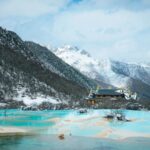
Bipenggou packs a striking range of mountain scenery into a visit that does not require you to hike the whole way. A scenic bus carries you 30 kilometers from the Visitor Center to Shanghaizi, where the core area opens onto alpine lakes, forest, meadows, streams, and views of snow peaks and glaciers.
I like two things about this setup: the scenery changes as you move through the valley, and the included bus makes a remote mountain area manageable for a half-day visit. The ticket is also available in packages with electric-cart rides, which can save effort if you would rather spend your time looking around than walking between sections.
The main consideration is the high-altitude, changeable weather. It can be 5 to 8 degrees Celsius cooler near the summit than at the foot of the mountain, and winter ice can affect routes. Plan for layers, a slow pace, and a full four to five hours.
- What to know before you go
- The first ride carries you deep into the valley
- Shanghaizi is the decision point
- Yanziyan and the park’s changing scenery
- A four-to-five-hour visit needs an early start
- Getting there from Chengdu
- What the price covers, and what it does not
- Dress for mountain weather, not the city forecast
- Who should book Bipenggou?
- FAQ
- How long should I allow for a visit?
- What does the basic ticket include?
- How far is Shanghaizi from the Visitor Center?
- How far is Yanziyan from Shanghaizi?
- Are electric carts included?
- What are the park opening hours?
- What identification should I bring?
- How can I travel from Chengdu to Bipenggou?
- When should I book for autumn foliage season?
- More Tours in Ngawa
- More Tour Reviews in Ngawa
- Not for you? Here's more nearby things to do in Ngawa we have reviewed
What to know before you go
 1 / 9
 2 / 9
 3 / 9
 4 / 9
 5 / 9
 6 / 9
 7 / 9
 8 / 9
 9 / 9
- A long scenic bus ride is included: The round-trip shuttle runs between the Visitor Center and Shanghaizi, a distance of 30 kilometers.
- The core area extends beyond Shanghaizi: Yanziyan is another 10 kilometers along. You can hike or pay extra for scenic electric carts, depending on your package.
- Autumn is a busy season: Bipenggou is known for fall foliage, and October and November are peak months. Book ahead and avoid weekends or holidays if you can.
- Your ticket is date-specific: Exchange it at the Visitor Center ticket office with your original passport or permit.
- Conditions call for sensible preparation: Bring a warm layer, water, snacks, sun and rain protection, and shoes with good grip in winter.
- Stay on marked routes: Unopened areas are off limits, and the park prohibits unauthorized hiking, climbing, and crossing into protected areas.
The first ride carries you deep into the valley
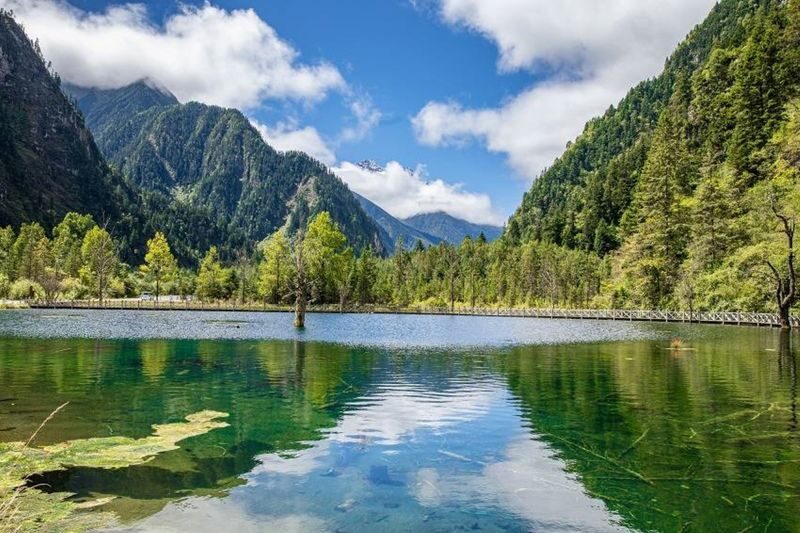
Bipenggou sits in Suoluo Gully in Li County, within the Ngawa Tibetan and Qiang Autonomous Prefecture of Sichuan. The park is known for its natural scenery and autumn color, but it is not just a fall destination. Depending on the season, you may see forests, alpine lakes, wetland meadows, snow-capped mountains, glaciers, streams, waterfalls, and red leaves.
Your visit begins at the Visitor Center near the park entrance. After exchanging your ticket, you board the scenic shuttle for the 30-kilometer ride to Shanghaizi Service Center. That distance matters: this is a sizable mountain area, and the shuttle lets you reach the inner sections without having to walk the entire approach.
The bus route has good road conditions, but do not assume you can hop off wherever a view catches your eye. The shuttle may not stop at points that are not designated stops. If you want to get off and explore, check with park staff about where that is allowed before setting out.
This first ride is part of the experience, not simply a transfer. You move from the entrance toward the park’s central scenery, with the valley’s forests, water, and mountain forms providing the changing view. The ride also makes the outing accessible to people who are not keen hikers, though the high elevation and time outdoors still call for a steady pace.
You can also read our reviews of more tours and experiences in Ngawa.


Shanghaizi is the decision point
At Shanghaizi, the route reaches the service point that marks the beginning of the 10-kilometer core scenic area toward Yanziyan. Here you can decide how active you want the rest of the visit to be. The basic package covers the park ticket and round-trip scenic bus, while walking is the no-extra-cost way to explore beyond the service center.
If you would rather save your legs, an all-inclusive package adds two round-trip scenic electric-cart rides. There is also a Bipenggou and Ganbao Tibetan Village day-tour option, but that is a different product from the ticket-and-bus package reviewed here. Check the exact package name when booking: the included services are not the same.
The practical tradeoff is simple. Hiking gives you more control over your pace and how long you stop, but it takes energy and time. Electric carts can make the core area easier to cover, though they cost extra and follow the park’s operating arrangements. The information provided does not specify walking times between points, so avoid packing the day too tightly.
Yanziyan and the park’s changing scenery
Yanziyan is the core area’s named scenic point, 10 kilometers from Shanghaizi. The park’s appeal lies in its variety: you may encounter alpine lakes, wetland meadows, forest, streams, waterfalls, unusual mountain peaks, and, depending on conditions, snow and glaciers. Autumn brings the foliage for which Bipenggou is especially well known.
I would treat this as a scenic outing rather than a point-to-point trek with a single grand payoff. The variety is the point. Water, trees, open meadows, and high mountain views create different scenes along the route, so allow time to pause rather than using every minute to cover distance.
The park is not a place for unplanned exploration beyond its marked visitor areas. Unopened sections fall within a protected reserve, and unauthorized mountaineering, crossing, rock climbing, and hiking are prohibited. Follow the posted routes and staff instructions; the rules are there for both ecological protection and safety in steep, high-altitude terrain.
A four-to-five-hour visit needs an early start
Allow four to five hours for the outing, and aim to arrive between 8:00 and 10:00 in the morning. The park’s latest ticket check-in time is 3:00 p.m., but arriving late leaves less time for the shuttle ride and the core area. Earlier arrival gives you more room to move at an unhurried pace.
Opening hours vary by season. In spring and summer, the park is listed as open from 8:00 a.m. to 5:30 p.m. In autumn and winter, it is open from 8:30 a.m. to 5:00 p.m. The latest entry time is 3:00 p.m. in both schedules. Hours may change, so confirm them for your date.
October and November are the busiest months because of the foliage. For those dates, book several days ahead and try to avoid weekends and public holidays. The advice is especially useful if you are making a long trip to the park: the entrance is a fixed point in your day, and the ticket is valid only for the date selected.
Getting there from Chengdu
If you are driving from Chengdu, the suggested route uses the Chengguan Expressway, S9 Duwen Expressway, G4217 Rongchang Expressway, Putou Toll Station, and National Highway 317 before reaching Bipenggou. The stated drive time is about two hours. Road and weather conditions can change, so allow extra time rather than treating that estimate as a promise.
The public-bus option begins at Chengdu Chadianzi Bus Station, with buses to Li County Bus Center. Departures are rolling and leave when full; the journey is about three hours one way. From Li County, a further bus to Bipenggou takes about 20 minutes, also with rolling departures that leave when full. That final detail makes timing less predictable than a fixed timetable, so leave slack in your schedule.
The entrance address is No. 88, Zhuangfang Village, Putou Township, Li County. Once there, go to the Visitor Center ticket office to exchange your ticket and board the scenic bus. Bring your original passport or permit, and make sure the name and identification number used for booking match your document.
Online booking can be convenient, but keep your confirmation and identification ready at the entrance. A ticket that will not scan can cost you time and may require help at the counter, so do not plan to arrive at the last minute.

What the price covers, and what it does not
Prices start at $25.55, though the amount depends on the selected package and date. The basic ticket-and-bus option covers park entry and round-trip transport between the Visitor Center and Shanghaizi. That is useful value if you are comfortable walking in the core area and want to keep the cost down.
The all-inclusive option adds two round-trip electric-cart rides. That extra cost may make sense if you want to reduce walking, have limited time, or prefer a less strenuous visit. Dining, shopping, special experience programs, and personal expenses are not included. Food choices on the mountain are limited, so bring water and a small amount of snacks rather than relying on a full meal being available.
There is a small but useful distinction between admission and the shuttle: the scenic bus is included with the entrance ticket. Electric carts are a separate add-on unless you choose the package that includes them. Read the package name carefully before paying so you know which transport is covered.
Cancellation terms are conditional. Cancellations more than 24 hours ahead are free; cancellations within 24 hours incur a 30 percent fee. Same-day cancellations and expired, unused tickets incur a full fee, and tickets are non-refundable once you have entered the park.
Dress for mountain weather, not the city forecast
Even in summer, bring a light jacket. Temperatures near the summit are usually 5 to 8 degrees Celsius lower than at the foot of the mountain, and weather can shift quickly. In winter, take warm, windproof clothing and shoes with good grip, as icy and snowy sections can be slippery.
Bring drinking water, a small snack, a charged phone, and a power bank. Mobile signal may be unstable in the mountains. If you bring a camera or telescope, protect it from cold and winter fog, and carry sun and rain protection whatever the season.
The park sits at high altitude. Walk slowly, take breaks as needed, and choose activities that suit your physical condition. If you feel unwell, contact park staff. These are straightforward precautions, but they matter more here than on a lowland city walk.
There are also firm rules aimed at protecting the area. Smoking and open fires are prohibited, as are pets and flammable or explosive materials. Keep away from wild animals, do not pick plants or fungi, and carry out your rubbish. The park asks visitors not to bring instant noodles or self-heating rice, to reduce their impact on the soil, water, animals, and plants.
Drone use is restricted. Flights are prohibited near crowded areas and facilities, must remain below 120 meters, and must stay within the operator’s line of sight. Night flights are not allowed. Check current park rules before bringing a drone, and do not fly if staff direct you to stop.
Who should book Bipenggou?
This is a good fit if you want mountain scenery without committing to a full day of strenuous hiking. The long shuttle ride takes you into the park, and you can choose to walk or pay extra for electric carts in the core area. It also suits photographers and foliage seekers, especially in autumn, provided they are willing to plan around the seasonal crowds.
It is less suitable if you want an informal backcountry trek. Unopened areas are strictly off limits, winter conditions can make paths slippery, and the park expects visitors to stay on designated routes. It is also worth thinking twice if you have little time: even a visit listed at four to five hours has a long internal bus ride and a trip to Li County or Chengdu on top.
I would book if the mix of lakes, forests, mountain views, and seasonal color is what you want, and if you can start early. Choose the basic ticket if walking suits you; pay for the cart package if the reduced walking is worth the extra expense. For autumn, reserve several days ahead. For winter, put warmth and traction first. The scenery is the reason to go, but good timing and sensible preparation are what make the day work.
Bipenggou
“Price: Extremely good! Service: Good Ease of booking via Klook: Good Facilities: Good Activity: Good”
FAQ
How long should I allow for a visit?
Plan on about four to five hours for the scenic area. Arriving between 8:00 and 10:00 a.m. gives you more time to explore.
What does the basic ticket include?
The basic package includes park admission and a round-trip scenic bus between the Visitor Center and Shanghaizi Service Center.
How far is Shanghaizi from the Visitor Center?
The scenic bus route between the Visitor Center and Shanghaizi is 30 kilometers.
How far is Yanziyan from Shanghaizi?
The core scenic area from Shanghaizi Service Center to Yanziyan is 10 kilometers.
Are electric carts included?
Not in the basic ticket-and-bus package. An all-inclusive package adds two round-trip scenic electric-cart rides.
What are the park opening hours?
Spring and summer hours are 8:00 a.m. to 5:30 p.m. Autumn and winter hours are 8:30 a.m. to 5:00 p.m. The latest ticket check-in time is 3:00 p.m.
What identification should I bring?
Bring the original passport or permit to exchange your ticket at the Visitor Center ticket office. The booking name and ID number should match your identification document.
How can I travel from Chengdu to Bipenggou?
You can drive via the Chengguan, Duwen, and Rongchang expressways, then continue from Putou Toll Station along National Highway 317. The stated drive is about two hours. By bus, travel from Chengdu Chadianzi Bus Station to Li County, then take a bus to the scenic area.
When should I book for autumn foliage season?
October and November are peak foliage months. Booking several days ahead and avoiding weekends and holidays is recommended.