Brussels’ Art and History Museum gathers objects from across the world under one roof, from Egyptian sarcophagi and Greek vases to a large Easter Island statue. It is a place for big historical leaps, not a single, tightly focused exhibition.
I like the chance to compare ancient civilizations in one visit and the freedom to spend extra time with the Roman collection, a particular highlight. I also like that the ticket is modestly priced, from $12.35. The trade-off is scale: this is a vast museum, and two to three hours is enough for selected rooms, not every corner. The restaurant may also be closed, so plan a food stop separately.
- Key points before you go
- A museum built for a grand historical sweep
- Start with a plan, not a race
- From Egyptian sarcophagi to Greek vases
- Make room for the Roman rooms
- Look for the Apamea mosaic and Easter Island statue
- What the ticket includes, and what it does not
- Getting to Parc du Cinquantenaire
- Families, students, and other practical details
- Who should book this museum ticket?
- FAQ
- How long should I plan for a visit?
- What are the museum’s opening hours?
- Where is the Art and History Museum?
- How can I get to the museum by public transport?
- Do children need a ticket?
- Is the museum wheelchair-accessible?
- The Best Of Brussels!
- More Tickets in Brussels
- More Tours in Brussels
- More Tour Reviews in Brussels
- Not for you? Here's more nearby things to do in Brussels we have reviewed
Key points before you go
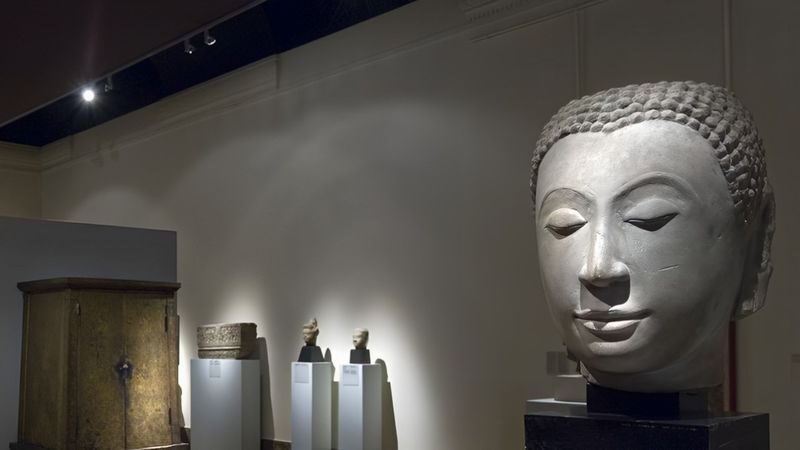
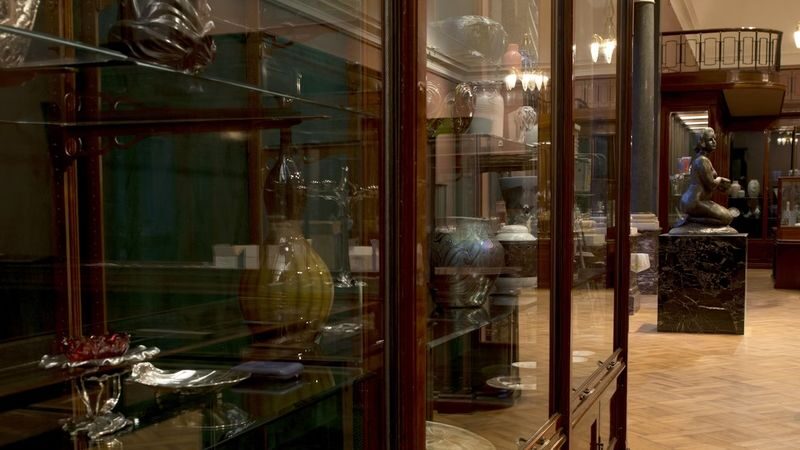
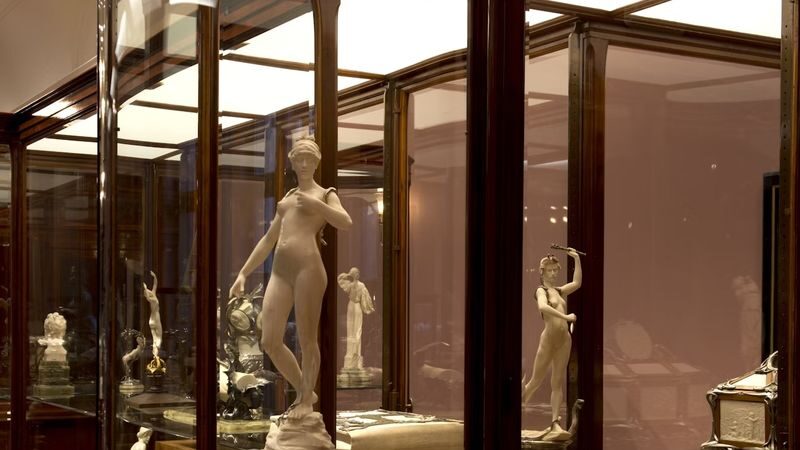
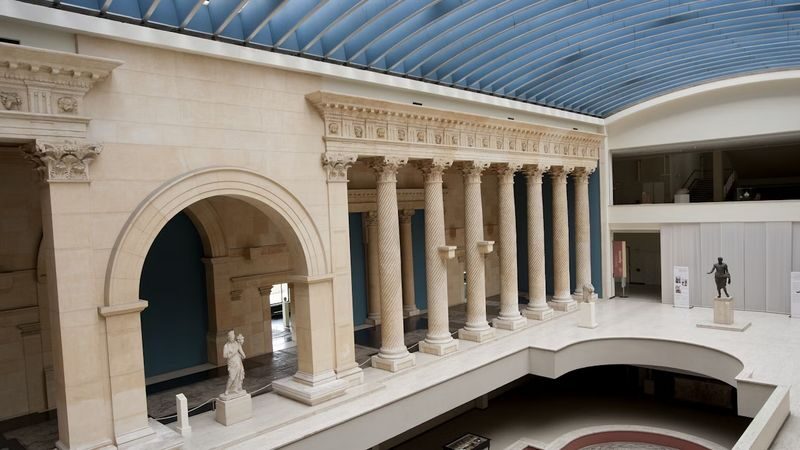
- The collection spans continents and eras: More than 600,000 objects cover ancient civilizations and include prehistoric artifacts, Egyptian pieces, Greek vases, and pre-Columbian art.
- The Roman section has plenty to catch your eye: Look for the model of ancient Rome and allow time to explore beyond a quick pass-through.
- A mosaic from Apamea adds a memorable stop: This large floor mosaic offers a different kind of encounter from the statues and display cases.
- The Easter Island statue is a striking change of scale: It gives the museum a memorable focal point among its many smaller artifacts.
- Plan for a short, selective visit: Two to three hours lets you focus on a handful of sections, but the huge collection could easily outlast your schedule.
- Admission is straightforward, but the ticket is date-specific: After passing the cashier, go to the information desk to scan your ticket.

👉 See our pick of the 6 Best Shopping Tours In Brussels
A museum built for a grand historical sweep
The Art and History Museum sits at Parc du Cinquantenaire, in a building created to mark Belgium’s 50th anniversary of independence. King Leopold II commissioned its construction, and the result is a large institution with an equally large ambition: to bring objects from many cultures and periods together.
That scale shapes the visit. This is not a small museum with one clear story and a quick route from entrance to exit. It is a maze of historical discoveries, where Egyptian burial objects, Greek pottery, pre-Columbian art, Roman displays, and pieces from much farther afield all have a place.
The collection is described as holding more than 600,000 objects. You do not need to see them all to get a worthwhile visit, and trying to do so in a few hours would turn the museum into a checklist. Pick a few areas that interest you, then leave room to stop when an object catches your attention.
You can also read our reviews of more tours and experiences in Brussels
Start with a plan, not a race
A visit typically takes two to three hours. Treat that as a useful window for highlights, rather than a promise that you will cover the whole museum. If you have a particular interest in ancient Rome, Egypt, or pre-Columbian art, make that your anchor and build the rest of your route around it.
At the entrance, pass the cashier and continue to the information desk to scan your ticket. That is a practical detail worth knowing before you arrive, especially if you are used to heading straight into galleries after showing a voucher at the door.
The museum’s size can be part of its appeal. You can move between cultures and materials without committing to a guided tour or a fixed sequence. But it also means that a little prioritizing pays off. If you wander without a sense of what you want to see, the sheer number of rooms and objects may blur together.
From Egyptian sarcophagi to Greek vases
Egyptian sarcophagi make a natural starting point for anyone drawn to ancient burial customs and funerary art. Their scale and purpose set them apart from smaller objects, while their presence gives you a tangible way to think about how ancient societies treated death and memory.
Greek vases offer a different kind of close looking. Their shapes and painted surfaces invite you to pause over craft and decoration, rather than simply moving from one monumental object to another. Together, the Egyptian and Greek displays provide two distinct ways into the ancient world: one centered on burial, the other on the objects people made and used.
The museum also includes artifacts from prehistoric times. That broad span is useful if you like seeing history as a long sequence, but it can be hard to absorb every period in one visit. I would choose a few displays that interest you and give them time, rather than trying to cover every civilization at the same pace.
Make room for the Roman rooms
The Roman section is a good choice if you want an especially vivid sense of ancient urban life. A model of ancient Rome gives you a broad view of the city, turning a name you may know from books into something you can examine at a larger scale.
Give the model more than a passing glance. It can help you picture how the parts of a city relate to one another, an experience that a row of individual artifacts cannot offer in quite the same way. The Roman material is also a good anchor for a visit with mixed interests: it gives you a recognizable subject while you explore the museum’s wider range.
The museum’s scale means you may have to choose between spending longer here and seeing another section in depth. If Rome is your main interest, let it take the time it deserves. If you are visiting with someone who has different priorities, agree on a few shared highlights before you split your attention across the galleries.
Look for the Apamea mosaic and Easter Island statue
The mosaic floor from Apamea is one of the collection’s notable large-scale works. A mosaic asks you to look differently from the way you might look at a vase or a small artifact: step back to take in its overall design, then move closer to notice the surface and details.
The massive statue from Easter Island provides another change of pace. In a museum filled with objects from many places and eras, a large sculpture can become a natural meeting point and a welcome break from display cases. It is one of the objects that helps make the visit feel like more than a sequence of ancient Mediterranean rooms.
Pre-Columbian art adds another major cultural perspective. Together, these highlights show why the museum is best approached as a collection of distinct encounters. You might spend a short time in one area and linger in another; the point is to follow your curiosity rather than force a single storyline onto everything.
You can also read our reviews of more historical tours in Brussels


What the ticket includes, and what it does not
The general ticket covers admission to the Art and History Museum. It does not include personal expenses, tips, or gratuities. There is no guide included in this admission, so you should expect to explore the collection on your own.
At a starting price of $12.35, the ticket is a reasonable way to spend a few hours with a very broad collection. The value depends on how much time you have and what you enjoy. If you like ancient objects, large sculptures, and the chance to move between world cultures, the range should give you several worthwhile stops. If you prefer a small museum with a tightly defined theme, the size may feel like more than you need.
The single visitor rating available for this ticket is 5 out of 5, but that comes from just one review, so it is too small a sample to treat as a firm measure. Its specific praise for the Roman displays and a quiet visit is still useful as a clue about what may appeal. The same account noted that the restaurant was not open. Do not count on it as your only food plan; check ahead or arrange a meal elsewhere.
Getting to Parc du Cinquantenaire
The museum’s address is Parc du Cinquantenaire 10, 1000 Bruxelles. You can reach the area by bus, train, or metro. Bus lines 22, 27, and 80 stop at Galliërs, while line 61 goes to Merode. For train or metro connections, use Merode or Schuman, both listed as about a five-minute walk away.
Parking is available in front of the main entrance and at the park entrance. The museum is wheelchair-accessible, which makes it a practical option for visitors who need step-free access, though it is wise to check current arrangements directly if you have specific access needs.
Opening hours are Tuesday to Friday, 9:30 a.m. to 5 p.m., and Saturday and Sunday, 10 a.m. to 5 p.m. The museum is closed on Mondays and on January 1, May 1, November 1, November 11, and December 25. Hours and closure dates can change, so check the latest schedule before setting out.
Families, students, and other practical details
Children aged 0 to 18 enter free, but they must be accompanied by a paying adult and still need to be included in the passenger headcount when booking. Anyone aged 19 or older pays the adult rate. That makes the museum a potentially good family stop if your children are interested in objects, statues, and big historical contrasts, though the size of the collection means you may want to keep your route selective.
Students need a valid student ID. Free admission is also listed for visitors with a disability who have an EU disability card, with one accompanying person, and for ICOM card holders. If one of these conditions applies to you, check the requirements before arrival so you know which documentation to bring.
The ticket is valid only on the selected date and time, if a time applies. Booking is available for the same day, and confirmation is instant, though the voucher is not issued immediately. Free cancellation is available within 24 hours for bookings made more than two days in advance. Same-day and next-day bookings cannot be cancelled, and issuing the voucher in advance makes the booking non-refundable.
Who should book this museum ticket?
This ticket suits anyone who enjoys ancient civilizations and wants to see more than one region or period in a single visit. It is especially appealing if you are drawn to Roman history, Egyptian artifacts, large-scale sculpture, or the variety of a museum with objects from around the world.
It can also work well for families, given free admission for children through age 18, and for visitors looking for a flexible indoor activity in Brussels. Just account for the museum’s size: a short visit calls for choices, and a longer stay calls for enough energy to keep exploring.
I would book if the collection itself sounds like the main attraction and you are happy to set your own pace. If your schedule is tight, choose a few priorities in advance and treat the rest as a bonus. Check the opening hours and plan your food stop before you go, particularly if you are counting on the museum restaurant.
Art and History Museum ticket in Brussels
“great museum! so many cool pieces. loved the roman parts! it was really quit when we visited. too bad the restaurant was not open.”
FAQ
How long should I plan for a visit?
Plan for about two to three hours. The museum is large, so that is enough time for selected sections rather than the entire collection.
What are the museum’s opening hours?
It is open Tuesday to Friday from 9:30 a.m. to 5 p.m., and Saturday and Sunday from 10 a.m. to 5 p.m. It is closed on Mondays. Hours may change, so check before visiting.
Where is the Art and History Museum?
It is at Parc du Cinquantenaire 10, 1000 Bruxelles, Belgium.
How can I get to the museum by public transport?
Buses 22, 27, and 80 stop at Galliërs, and bus 61 stops at Merode. Merode and Schuman are the listed train and metro stops, about a five-minute walk away.
Do children need a ticket?
Children aged 0 to 18 enter free, but they must be accompanied by a paying adult and included in the passenger headcount. Visitors aged 19 and older pay the adult rate.
Is the museum wheelchair-accessible?
Yes. The activity is wheelchair-accessible.