Trajan’s Market is a striking place to see how ancient Rome worked as a city, not just as a collection of temples and ruins. Its stacked rooms and passageways climb the slope of the Quirinal Hill, giving you a close look at a commercial complex built into the terrain. I like the way the site puts ordinary trade at the center of the story, and I like that the museum adds objects and context to the stones around you.
The main consideration is that this is a self-guided visit, not a walking tour with a live guide. You’ll need to manage your own pace and use the available displays or audio app to make the remains more legible. Check your selected ticket carefully, too: packages differ in whether they include the museum, the audio app, and the 25-minute video.
- A Roman commercial complex: Explore connected rooms and former shop spaces set across several levels.
- A museum with context: The Fori Imperiali Museum includes ancient sculptures and amphorae.
- More than bare ruins: Displays and an optional multimedia video help explain life and change in ancient Rome.
- A self-guided format: Use the multilingual city app for map-based sightseeing and audio commentary, or explore at your own pace.
- A short, useful stop: Set aside about two to three hours, including time for ticket exchange and the video if your package includes it.
- What the ticket covers
- Start at the Touristation office
- Follow the rooms through Trajan’s Market
- Pause in the courtyard and look upward
- Use the museum to make sense of the stones
- Decide whether the audio app and video are useful
- Plan two to three hours, not a whole day
- Weigh the price against the extras
- Who will get the most from this visit
- Should you book Trajan’s Market?
- FAQ
- How long does the visit take?
- Where is the meeting point?
- Do I need to exchange my voucher?
- Is a live tour guide included?
- Does every ticket include the Fori Imperiali Museum?
- Is the Ancient Rome video included?
- What are the opening hours?
- What is the minimum age?
- Can disabled visitors receive free admission?
- What items are not allowed?
- The Best Of Rome!
- More Museum Experiences in Rome
- More Tours in Rome
- More Tour Reviews in Rome
- Not for you? Here's more nearby things to do in Rome we have reviewed
What the ticket covers
 1 / 6
 2 / 6
 3 / 6
 4 / 6
 5 / 6
 6 / 6
The experience is based at Trajan’s Market and the Fori Imperiali Museum, in the center of Rome. The main package details include admission to both, plus a downloadable city app with a map and self-guided audio commentary in multiple languages. It also includes a 25-minute multimedia video about Ancient Rome, assistance at the meeting point, and hosted entry if requested.
There is also a lower-priced option described as admission to Trajan’s Market plus the 25-minute video. That option does not list museum admission or the audio app, so don’t assume every package includes the same extras. Before booking, compare the inclusions shown for your chosen ticket with the price and decide which additions you’ll actually use.
The stated starting price is US$39.45, while the ticket-and-video package is listed from US$35.85. These are package-specific starting prices, not a promise that every date or ticket type costs the same. The best value depends on whether you want the museum and audio app, or simply access to the market and the video.

👉 See our pick of the 25 Best Guided Tours In Rome
Start at the Touristation office
Your meeting point is Touristation Aracoeli, at Piazza d’Aracoeli, 16. This is where you present your voucher and exchange it for the official physical ticket. Look for the small fountain and orange flags outside the office, and arrive on time: late arrivals and no-shows are not refundable.
That extra stop matters when planning your day. The ticket exchange is not the same as walking straight to the entrance with a voucher, so leave a little breathing room rather than scheduling another attraction tightly before or after. Assistance is available at the meeting point, and hosted entry can be requested, but the experience does not include a live guide.
You can also read our reviews of more museum experiences in Rome



Follow the rooms through Trajan’s Market
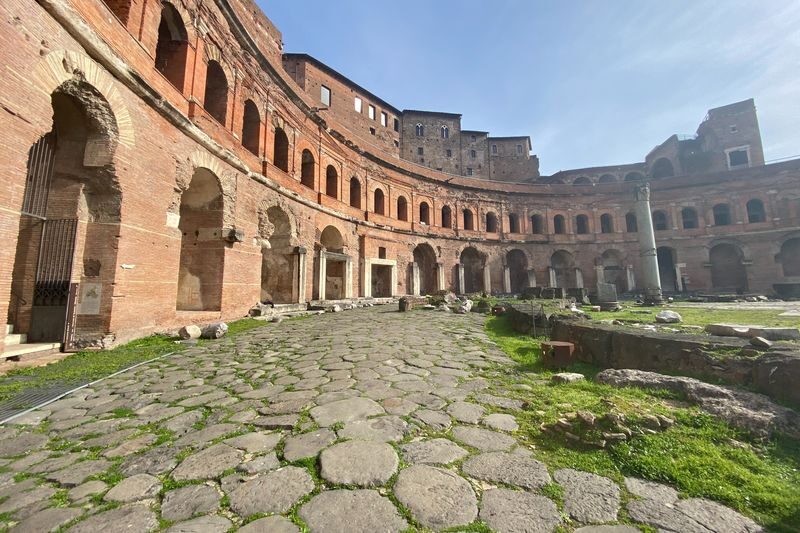
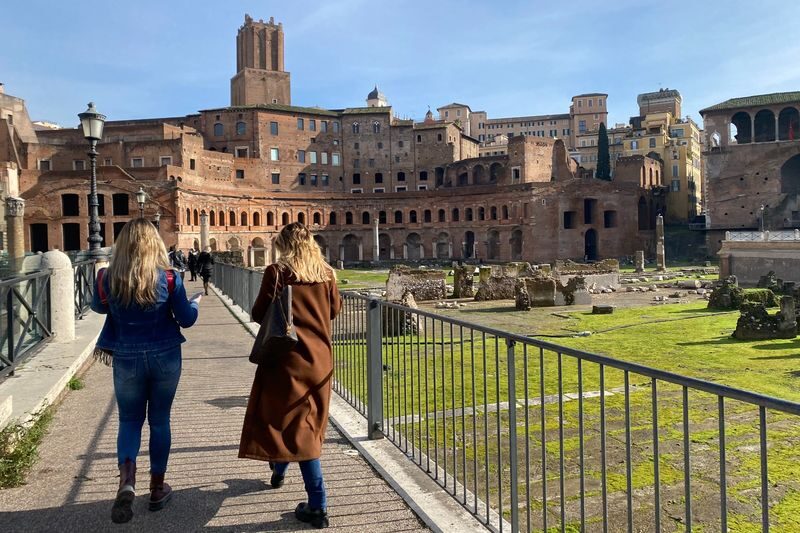
The market is a multi-level complex built into the slope of the Quirinal Hill. Its scale is one of the first things to notice: rather than a single open plaza, you move through connected spaces, with corridors and former shop rooms giving the site a more intimate feel than Rome’s grandest monuments.
The remains of the tabernae, or small storefronts, help you picture the practical side of the ancient city. These were places for selling and trading goods, and the layout makes the idea of a commercial center easy to grasp. You won’t see the original shop displays in operation, of course, but the surviving spaces offer a clear sense of how people might have moved between rooms and stalls.
The site’s stepped arrangement is also a useful lesson in Roman building. The complex follows the hill instead of flattening it, creating a series of levels that reward a slow look around. Expect uneven ancient surfaces and changes in elevation as you explore. The provided information does not specify step-free routes or a detailed accessibility plan, so if that is important for your visit, check with the ticket provider before booking.
Pause in the courtyard and look upward
A central courtyard is one of the site’s defining spaces. It offers a break from the narrower passages and a chance to take in the height of the surrounding walls. Statues and fountains are described as features of the space, though the setting is now archaeological rather than a functioning social center.
It is easy to imagine this open area serving as a place to meet or pause amid commercial activity. That change in use is part of the appeal: you are seeing both the remains of a working complex and the later life of the city layered around it. Give yourself time here rather than rushing straight through to the next room.
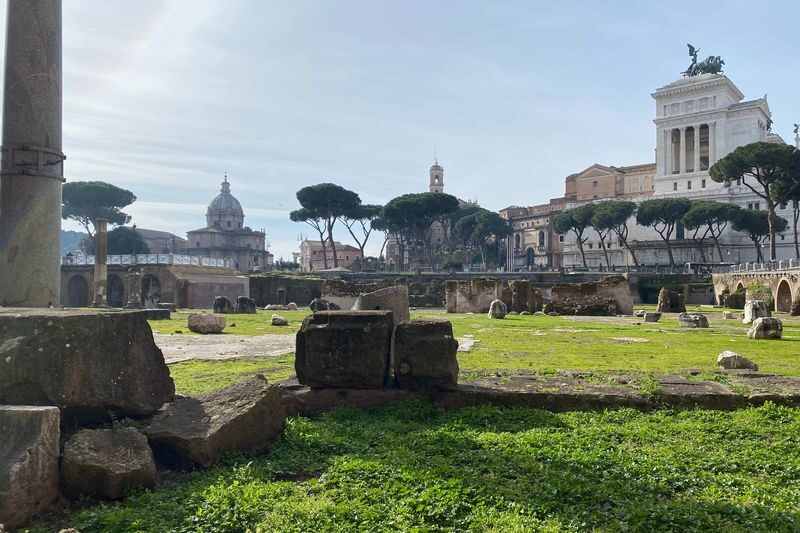
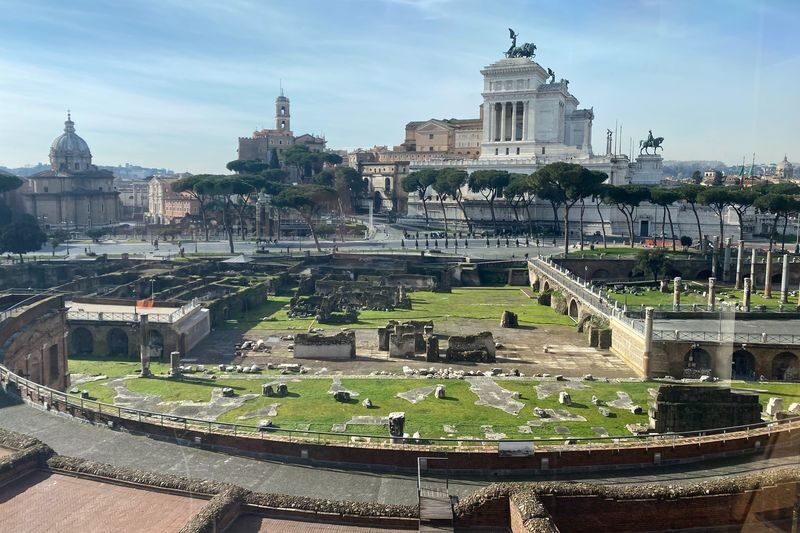
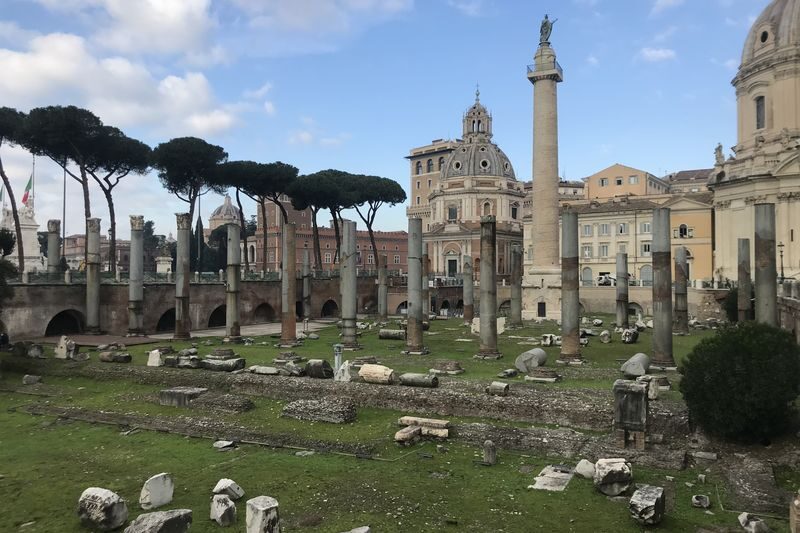
The upper levels add another dimension to the visit. The remains include spaces thought to have served administrative purposes, and possibly a library. The identification is not certain, so treat those functions as informed possibilities rather than settled facts. From higher points, you can take in views toward the Roman Forum and notice how the ancient city’s remains sit within modern Rome.
Use the museum to make sense of the stones
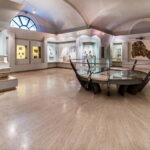
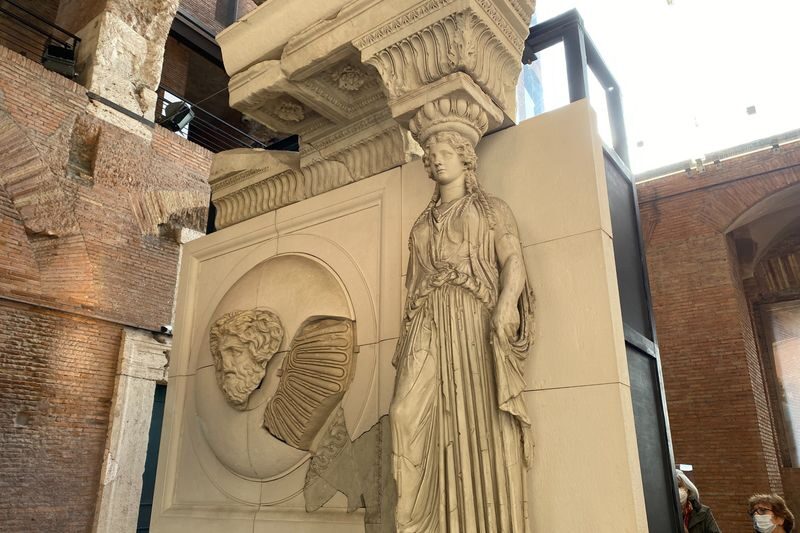
The Fori Imperiali Museum is the part of this visit that helps fill in details you can’t get from walls alone. Its displays include ancient sculptures and amphorae, objects that bring human scale and material culture into a site otherwise defined by architecture.
The museum also broadens the story beyond shopping. The experience is framed around how Rome changed from the Imperial Age onward, and the exhibits and displays help connect the market’s physical remains with daily life, trade, and the city’s development. If you enjoy archaeology but find open-air ruins hard to interpret, this indoor component is a worthwhile reason to choose a package that includes it.
Keep in mind that the lower-priced ticket option specifically lists admission to Trajan’s Market, not the museum. If seeing the objects and museum displays is important to you, select a package that clearly includes the Fori Imperiali Museum. Don’t rely on the general experience title alone to settle that question.
Decide whether the audio app and video are useful
The downloadable city app is a self-guided sightseeing tool with a map and audio commentary in multiple languages, including stories from local experts. It can help you connect points of interest and give you more to follow than a sequence of stone rooms. Since it is an app rather than a live guide, you’ll need to bring a charged phone and be comfortable following information on your own.
The 25-minute multimedia video about Ancient Rome is a compact way to get background before or during your visit. It is especially useful if you want some context but don’t plan to read every display. The supplied details do not say exactly where the video is shown, so check your voucher or ask at the office about how to use it.
Neither feature replaces a personal guide who can adapt explanations to your questions. But for an independent visit, the combination of a map, audio commentary, museum displays, and video gives you several ways to make the site meaningful. You can use what interests you and skip what doesn’t.





Plan two to three hours, not a whole day
The suggested visit lasts two to three hours. That is a sensible window for exchanging your voucher, exploring the market’s rooms and levels, visiting the museum if included, and allowing for the video. If you like to read displays closely or pause for photographs, keep the longer end of that range free.
Opening hours are listed as daily from 9:30 a.m. to 3 p.m. Since the voucher is valid only for the date and time specified, plan around the selected slot and the site’s limited afternoon hours. This is not an attraction to leave until late in the day.
The site can work well as a measured stop after lunch. One account of a visit describes it as a good place for a post-meal stroll, which makes sense: it is a contained archaeological area where you can walk at your own pace rather than commit to a full-day excursion. September was described as comfortable, neither too hot nor too cold, but conditions vary from year to year.
Weigh the price against the extras
At a starting price of US$39.45, this is not simply a bare entry ticket if you choose the package that includes the museum, app, and video. You are paying for access to a substantial archaeological site and interpretation tools that can make it easier to understand. That is most worthwhile if you plan to use the museum and audio content rather than treat the visit as a quick walk-through.
The US$35.85 ticket-and-video option may suit you if your priority is the market itself and a short introduction to Ancient Rome. But the package details specify market admission, not museum access or the app. Check the exact inclusions before comparing prices, because the cheaper option may not cover the parts you most want to see.
Transport, meals, drinks, and personal expenses are not included. There is no live tour guide, either. If you want a guide to answer questions in person or prefer a fully planned group itinerary, this is probably not the right format. If you value independence and want time to explore at your own speed, the self-guided setup can be a sensible trade.
Who will get the most from this visit
I’d recommend this experience to anyone curious about how Romans lived and worked beyond the famous temples and arenas. The former shops, courtyard, upper rooms, and museum objects all help shift the focus from imperial spectacle to the practical rhythms of a city.
It also suits people who like to combine outdoor archaeology with indoor displays. The market’s rooms give you the physical setting, while the museum and audio materials can add context. Families can bring children aged six and older, but the material and uneven ancient spaces may suit children best if they enjoy history and can keep a steady pace. Children need valid ID, and those aged 18 and over pay the adult rate.
The site may be less satisfying if you expect a guided narrative throughout or need transport included. You’ll also want to confirm the exact ticket package if museum access is essential. For a self-directed stop with a useful mix of architecture, artifacts, and city views, it makes a strong addition to a Rome itinerary.
Should you book Trajan’s Market?
Book this if you want to understand ancient Rome through a place built for commerce, and you’re happy to explore without a live guide. The market’s layered design, former shop spaces, central courtyard, and upper-level views make it more varied than a quick look at ruins from the street.
Choose the package with museum admission and the app if you want a fuller visit. Pick the market-and-video option only if its narrower inclusions match your plans. Either way, arrive on time at Touristation Aracoeli, allow two to three hours, and treat this as a thoughtful archaeological stop rather than a rushed photo break.
Trajan Markets and Fori Imperiali Museum entrance
“Experience: A great place for a post-meal stroll. There are many historical sites within the attraction to explore and enjoy. September is a comfor…”
FAQ
How long does the visit take?
Plan for about two to three hours. That allows time to explore the site and, if included in your package, use the 25-minute video.
Where is the meeting point?
Meet at Touristation Aracoeli, Piazza d’Aracoeli, 16, 00186 Roma. Look for the small fountain and orange flags outside the office.
Do I need to exchange my voucher?
Yes. Present your voucher at the Touristation office and exchange it for the official physical ticket.
Is a live tour guide included?
No. The experience does not include a live guide. Some packages include a downloadable multilingual city app with a map and self-guided audio commentary.
Does every ticket include the Fori Imperiali Museum?
No. Package details vary. The main package includes admission to Trajan’s Market and the Fori Imperiali Museum, while the ticket-and-video option lists admission to Trajan’s Market only.
Is the Ancient Rome video included?
A 25-minute multimedia video is included in the package details provided. Check the inclusions for your selected ticket, since package options differ.
What are the opening hours?
Trajan’s Market is listed as open Monday through Sunday from 9:30 a.m. to 3 p.m.
What is the minimum age?
Participants must be at least six years old. Children aged 18 and over are charged the adult rate, and children should bring valid ID.
Can disabled visitors receive free admission?
Free admission is available to disabled visitors with certified disability greater than 74 percent. If the visitor is not self-sufficient, free admission also extends to a companion.
What items are not allowed?
Bottles, glass containers, alcoholic beverages, aerosols, large luggage or bags, and pets are prohibited.