Onioshidashi Park is a broad field of solidified lava, about 5.5 kilometres north of Mt. Asama’s summit. The rocks came from the volcano’s massive 1783 eruption, and many rise higher than a person. I like that the setting makes geology visible at walking speed, with strange shapes and uneven stone underfoot instead of a display case.
I also like the choice of routes: an alpine plant observation course and the Okunoin approach offer different ways to explore, while the scenery changes with the season. One practical drawback is getting there without a car: bus departures can be widely spaced, and a taxi round trip may be costly. Check transport before you commit to a visit.
- Walk through a real lava field: See formations left by Mt. Asama’s 1783 eruption across a site of about 6.8 square kilometres.
- Pick a route to suit your interests: The park has an alpine plant observation course and an approach to Okunoin.
- Look for seasonal changes: Alpine flowers, autumn leaves and snow give the park a different character through the year.
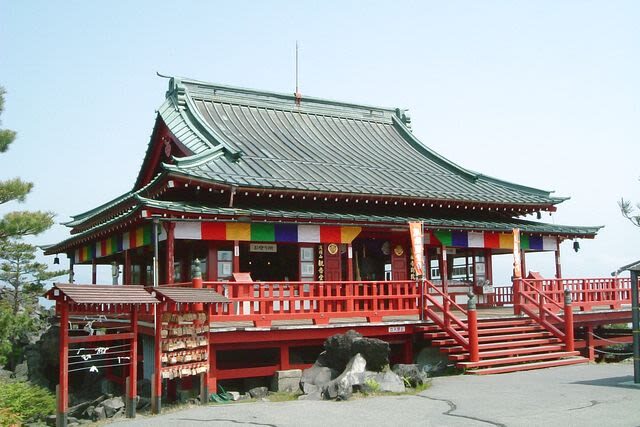
- Visit Asama Kannon-do Hall: The hall is a place to remember the spirits connected with this volcanic site.
- Check the sky before you go: Clear conditions can reveal the Northern Alps, the Tanigawa mountain range and Mt. Nikko Nantai.
- Plan your ride home: Bus service may be infrequent, so driving or arranging a taxi can make the outing easier.
- Why this lava field feels different
- Choosing between the alpine course and Okunoin
- What the seasons change
- Views beyond the rocks
- How much time and value to expect
- Getting to the park without a transport headache
- Getting your ticket accepted at the entrance
- Who should make this stop
- Should you book Onioshidashi Park?
- FAQ
- How much does admission to Onioshidashi Park cost?
- What are the park’s opening hours?
- How long is the ticket voucher valid?
- Can I cancel or get a refund?
- How do I use the mobile voucher?
- Do I need internet access to show the voucher?
- Are young children charged for admission?
- How can I reach the park by public transport?
- What can I see at the park?
Why this lava field feels different
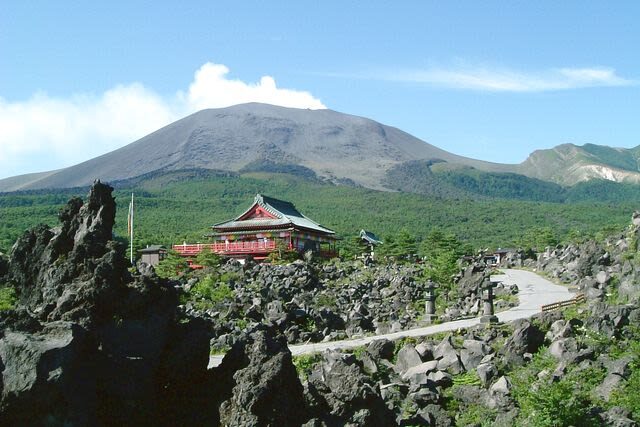
Onioshidashi Park is not a garden with volcanic rocks added for effect. It is a large, rugged area shaped by lava from Mt. Asama’s 1783 eruption. At about 6.8 square kilometres, the site gives you room to see how the eruption left a broad field of hardened rock rather than a single dramatic outcrop.
The rocks are the main event. Some are taller than a person, with irregular forms that can make the central plateau feel more like a natural maze than a conventional park. Take your time looking at their shapes and how they sit together. The experience is less about rushing toward a viewpoint and more about noticing the scale and texture around you.
That setting also makes the park a useful stop for anyone curious about volcanoes. You do not need specialist knowledge to appreciate the basic story: a powerful eruption sent lava across the area, and the cooled stone remains underfoot. The ticket covers admission only, so you can follow the paths at your own pace rather than fitting your visit to a guide’s timetable.
Choosing between the alpine course and Okunoin
The park has several routes, including an alpine plant observation course and the Okunoin approach. The names give you a good starting point when deciding how to spend your time: one route focuses on plants, while the other leads toward a religious and memorial feature.
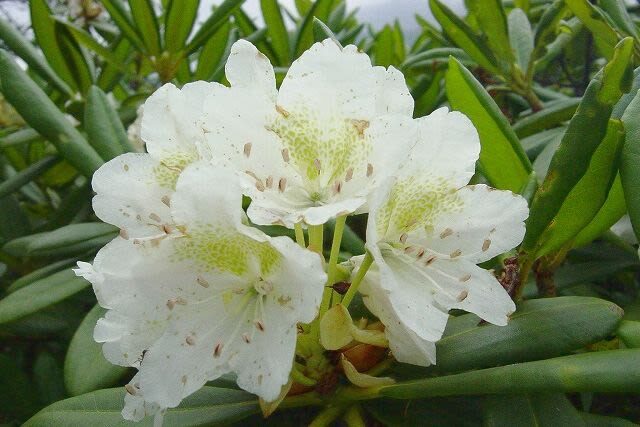
On the plant course, keep an eye out for seasonal flowers. The exact display depends on when you visit, so it is best to think of this as an added reason to look closely, not a promise of blooms on every trip. The wider appeal is the contrast between delicate plants and the hard, dark lava around them.
The Okunoin approach offers a different focus. It leads through the volcanic setting toward a place associated with remembrance. Asama Kannon-do Hall is one of the park’s notable features, and it gives the walk a quieter, reflective element alongside the unusual geology.
You can explore the central plateau as well, where large, oddly shaped rocks create some of the park’s strongest visual moments. The supplied information does not give route lengths or walking times, so avoid planning a tight schedule around a particular loop. Instead, check the park’s current map and allow enough time to stop, look and choose your next path.
What the seasons change
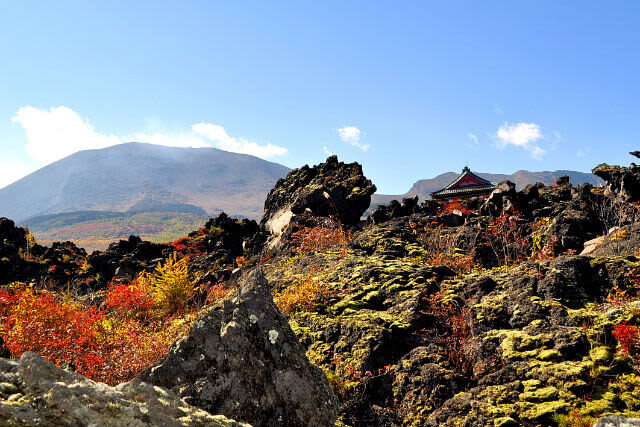
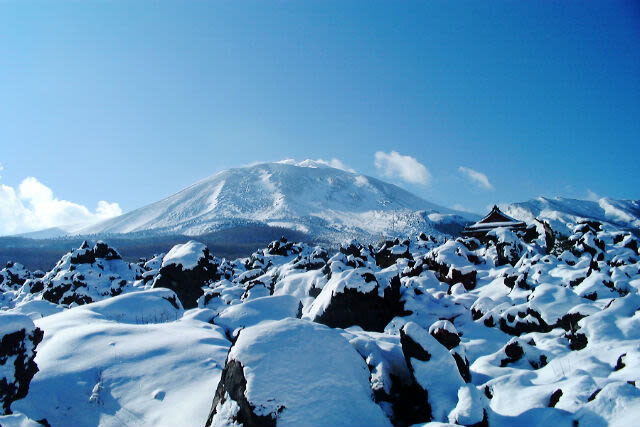
The park’s character shifts with the calendar. Alpine flowers are one seasonal draw, autumn brings foliage, and winter can cover the area with snow. That range makes a return visit feel different, but it also means conditions and what you can see depend on the date.
In warmer months, the plant course may be especially appealing if flowers are part of your reason for coming. Autumn offers a contrast between changing leaves and the stark lava rock. Snow creates a different look again, though the supplied details do not specify winter trail conditions, so check current information before setting out in cold weather.
The season also affects opening hours. The usual schedule is 8:00 a.m. to 5:00 p.m., with last admission at 4:30 p.m., but hours may vary. Confirm the official schedule before travelling, especially if you are visiting outside the main season or arriving late in the day.
Views beyond the rocks
On a clear day, the park can open up views toward the Northern Alps, the Tanigawa mountain range and Mt. Nikko Nantai. These distant peaks add a second reason to look up from the lava formations. You may get a striking combination of near-field rock and far-off mountains, but visibility depends on the weather.
That uncertainty is worth keeping in mind when setting expectations. A cloudy day does not erase the central attraction, since the lava field is right there around you. But if the wide mountain panorama is a priority, aim for a day with clear conditions and leave room in your plans to enjoy the view if it appears.
How much time and value to expect
Admission starts at $3.79, making this a modestly priced stop if you are already in the area or can reach it without an expensive transfer. The ticket includes entry to Onioshidashi Park. Personal expenses and transport are not included, so the total cost depends greatly on how you get there.
The value comes from access to a large outdoor site with several routes, unusual volcanic formations and seasonal interest. It is not a packaged excursion with a guide, meal or transport. You are paying for entry and setting your own pace, which suits visitors who prefer independent exploring.
The low ticket price can be misleading if you need a taxi to reach the park. One visitor found the buses too far apart and paid about S$100 for a taxi round trip. That is a useful warning: the admission fee may be small, but transport can become the biggest expense. Compare the bus schedule with your plans, and consider sharing a taxi or driving if that is practical for your group.
The ticket voucher is valid for 180 days from booking confirmation, which gives you some flexibility in choosing a visit date. It cannot be cancelled or refunded, however, so do not buy until you are reasonably sure you can use it. Children aged 0 to 5 enter free, while children aged 13 and older pay the adult rate.
Getting to the park without a transport headache
Onioshidashi Park is at 1053 Kanbara, Tsumagoi, Agatsuma District, Gunma. By public transport, the stated options include a bus of about 40 minutes from Karuizawa Station, around 30 minutes from Naka-Karuizawa Station and about 25 minutes from Manza-Kazawaguchi Station.
Those journey estimates do not tell you how often buses run, and that gap matters. Check departure times in both directions before leaving. If the return bus is hours away, you may have to shorten your visit or pay for a taxi. One useful timing tip is to arrive around 10 a.m. to get ahead of tour buses, though transport schedules should come first.
Driving gives you more control over the day. The park is about 30 kilometres from Usui-Karuizawa interchange via Naka-Karuizawa and the Onioshidashi Highway, a drive of roughly 45 minutes in normal conditions. From Komoro interchange, the route is about 35 kilometres and takes roughly 50 minutes under normal conditions. These are estimates, so allow extra time if road or weather conditions are poor.
Getting your ticket accepted at the entrance
This is a simple admission product, but the voucher procedure calls for care. Open the Klook app or website, go to Account, then Bookings, and select View Voucher. You need to show the voucher on a smartphone or another device with internet access.
The important detail is to let the park staff handle the electronic voucher at entry. If you operate it yourself by mistake, it may be invalidated, and you may not be able to enter. Do not tap through the voucher in a hurry while standing at the gate.
Internet access is also required to display the voucher, and access may not be available where there is no Wi-Fi. Load the page before you arrive, and keep your phone charged. It is a small preparation that can save an avoidable delay.
Who should make this stop
This park is a strong fit if you enjoy unusual natural features, short independent walks, plants or mountain scenery. It can also suit families with children old enough to appreciate the rocks and trails, with free admission for children aged 0 to 5. Keep in mind that the ground is a volcanic field, not a smooth indoor attraction, and plan footwear and pacing accordingly.
It is less convenient if you depend on public transport and have little flexibility. The bus ride itself is manageable, but widely spaced departures can dictate your day. If you are travelling around Gunma by car, the park is easier to fit into a wider route.
The site rewards curiosity more than a checklist mindset. Look closely at the rock forms, choose the route that matches your interest, and allow time for the weather to shape the view. You do not need to understand every detail of the eruption to find the place compelling.
Should you book Onioshidashi Park?
Book the admission ticket if you want to walk through a striking volcanic site and can confirm a sensible way to get there. At a starting price of $3.79, entry is good value, especially for visitors already travelling by car or staying nearby. The rock field, seasonal plant life and occasional mountain views give the visit more range than a quick photo stop.
Hold off until you have checked transport if you are relying on buses. A costly taxi can outweigh the ticket price, and the voucher cannot be refunded. If the schedule works and you enjoy nature shaped by powerful forces, this is a distinctive Gunma outing. If you need frequent transit or a guided, highly structured visit, it may be less convenient.
Oni oshi dashi Park Admission Ticket in Gunma
“very unique landscape and enough signs in English to navigate around. Try come early in the morning around 10am before the tour buses.”
FAQ
How much does admission to Onioshidashi Park cost?
The ticket price starts at $3.79. The ticket includes admission to the park, while personal expenses are not included.
What are the park’s opening hours?
The usual hours are Monday through Sunday, 8:00 a.m. to 5:00 p.m. Last admission is at 4:30 p.m. Hours may vary by season, so check the official website before visiting.
How long is the ticket voucher valid?
The voucher is valid for 180 days from the booking confirmation date. It expires at 11:59 p.m. on the final day.
Can I cancel or get a refund?
No. The ticket cannot be cancelled, and refunds are not available.
How do I use the mobile voucher?
Open your booking in the Klook app or website and show the voucher to park staff on a smartphone or other device. Staff must operate the electronic voucher at entry, so do not activate it yourself.
Do I need internet access to show the voucher?
Yes. The voucher URL must be displayed on a device with internet access. It may not load in places without Wi-Fi, so open it before you arrive.
Are young children charged for admission?
Children aged 0 to 5 enter free. Children aged 13 and older pay the same rate as adults.
How can I reach the park by public transport?
Buses take about 40 minutes from Karuizawa Station, 30 minutes from Naka-Karuizawa Station and 25 minutes from Manza-Kazawaguchi Station. Check schedules in both directions, since departures may be widely spaced.
What can I see at the park?
You can walk among lava formations from Mt. Asama’s 1783 eruption, follow routes including the alpine plant observation course and Okunoin approach, and visit Asama Kannon-do Hall. Seasonal flowers, autumn leaves and snow vary by time of year, and clear weather can reveal several mountain ranges.