Mount Fuji is the star, but this two-day trip gives you several ways to meet it: from the water’s edge, above Lake Kawaguchiko, by bicycle and from the steps of Arakurayama Sengen Park. I like the mix of active and quiet stops, and the matcha session adds a welcome pause between the viewpoints.
I also like that the route includes both Fuji Five Lakes and the spring-fed ponds at Oshino Hakkai, rather than relying on one photo stop. The main caution is the overnight stay: the hot spring hotel and its meals have drawn sharply mixed reports, so book for the route, not for a guaranteed luxury onsen experience.
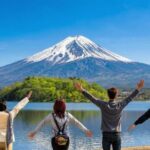
- Fuji from several angles: See the mountain from Kawaguchiko, Yamanakako, Oshino Hakkai and Arakurayama Sengen Park.
- A proper matcha stop: Learn to prepare matcha with an instructor, then take time to enjoy the lakeside setting.
- Cycling with a weather backup: Ride by Lake Yamanaka, or take a swan-shaped excursion boat if heavy rain makes cycling unsuitable.
- A seasonal first stop: The Maple Corridor is an autumn feature. Outside its season, the route goes to Oishi Park.
- An overnight trade-off: Breakfast, dinner and a hot spring stay are included, but the hotel standard is not consistent.
- A fixed shared-car schedule: You cover a lot without arranging transport, but each stop has a set time.
- Two days built around Mount Fuji
- Day one: autumn leaves, matcha and the ropeway
- The hotel: the biggest question mark
- Day two: cycling beside Lake Yamanaka
- Fuji’s famous frames and the climb at Arakurayama
- Guides, timing and what to pack
- Is this two-day Fuji tour a good fit?
- FAQ
- Where does the tour depart from?
- How long is the tour?
- What is included in the price?
- Is cycling guaranteed on the second day?
- What happens outside maple season?
- Is a Mount Fuji view from the hotel room guaranteed?
- Can children join the tour?
- The Best Of Fujiyoshida!
- More Cycling Tours in Fujiyoshida
- More Tours in Fujiyoshida
- More Tour Reviews in Fujiyoshida
- Not for you? Here's more nearby things to do in Fujiyoshida we have reviewed
Two days built around Mount Fuji
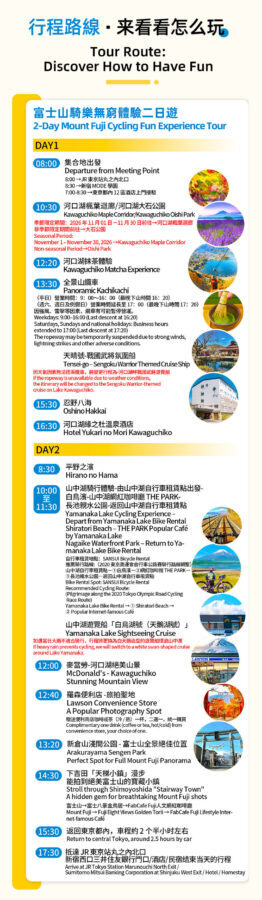
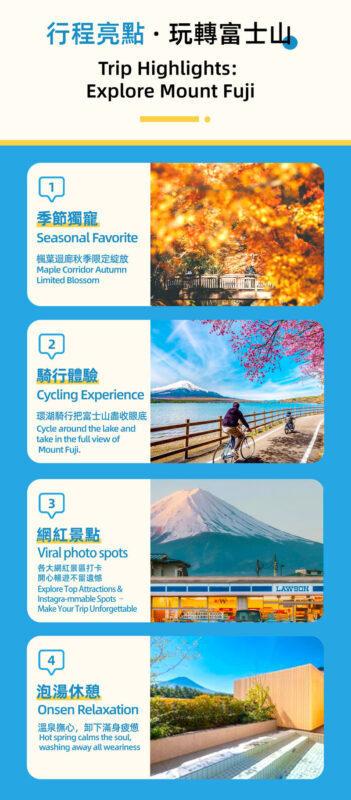
This is a convenient way to link the Fuji area’s far-flung sights without planning your own train connections, local buses or rental car. You leave Tokyo by vehicle, visit lakes and viewpoints, sleep near Mount Fuji, then return to Tokyo on the second day. The package starts at $271.95 for the pickup and drop-off location option, with hotel pickup and drop-off listed from $289.29.
That price covers more than transport. The matcha activity, Kachi-Kachi Ropeway, one-hour Yamanakako bicycle rental, guide, tolls, parking, one night’s accommodation, breakfast and dinner are included. Lunch, drinks beyond the specified convenience-store tea or coffee, and personal purchases are extra.
The tour’s best value is the range. You get the classic Fuji views, but also a tea-making activity and time on a bicycle. The compromise is a brisk, shared itinerary. You cannot linger at a viewpoint if the group needs to move on, and traffic or weather can shift the schedule.

👉 See our pick of the 3 Best Tours In Fujiyoshida
Day one: autumn leaves, matcha and the ropeway
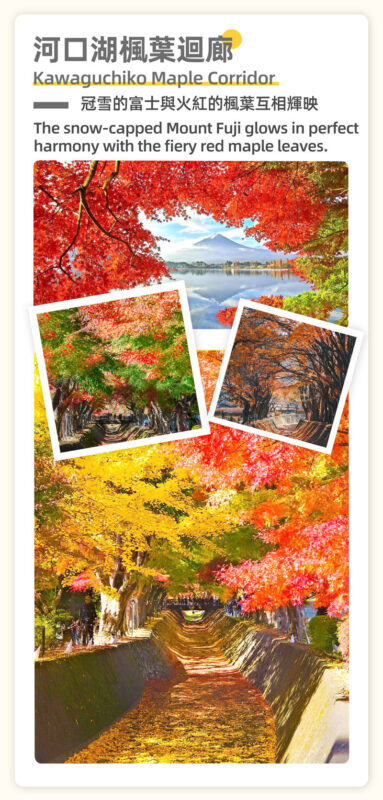
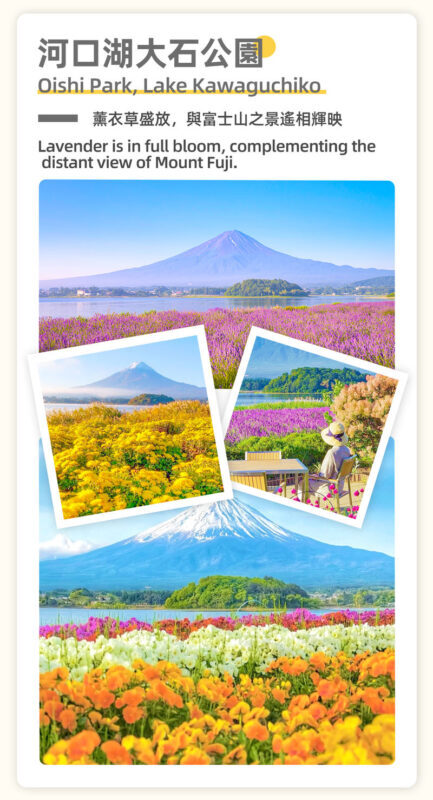
The first stop is usually the Lake Kawaguchiko Maple Corridor during autumn’s maple season. The idea is simple and lovely: red and gold leaves frame Mount Fuji across the lake. The corridor is seasonal, so outside the autumn period the tour substitutes Oishi Park, known for its lakeside views and seasonal flowers or foliage, including lavender or kochia.
The timing matters here. A clear day gives you the mountain and the leaves together, but Fuji can disappear behind cloud. Treat the corridor as a scenic walk with a chance of a grand view, not a view you can order on demand. If the mountain is hidden, the trees and lake still make the stop worthwhile.
Next comes the matcha experience by Lake Kawaguchiko. You make matcha by hand with a local instructor and taste it in a setting tied to Japanese tea culture. The activity is included, and the allotted hour gives you more than a quick cup, though it is not a long formal tea ceremony.
I like this stop because it changes the pace. The rest of the day asks you to look outward at big scenery; here, you focus on the small motions of preparing tea. The lake is also one of the Fuji Five Lakes and has the longest shoreline in the group, so you can use any spare moments to look around rather than rush straight back to the vehicle.
The Kachi-Kachi Ropeway lifts you to a lookout above the lake. From the observation deck, you can see Kawaguchiko and Mount Fuji, with the Southern Alps visible on clear days. At the summit, the Bell of Heaven is said to grant wishes when rung. The ropeway ride and summit visit are allotted about 90 minutes, enough to take in the view and explore without turning the stop into a half-day excursion.
Crowds can affect how long you wait and how much quiet time you get at the top. The view is also weather-dependent, so keep expectations flexible. On a clear day, this is one of the trip’s strongest wide-angle perspectives. In cloud, the ride may still be pleasant, but the main reason to go is less compelling.
The detailed schedule places Oshino Hakkai later on day one, before check-in. These eight spring ponds are fed by snowmelt from Mount Fuji, filtered through layers of ground. The clear water is the attraction, along with the traditional village setting and the mountain as a backdrop.
You have about an hour here. That is enough for a look at the springs and a few photos, but not a slow, extended visit. The ponds are popular, and a busy stop can feel more like a sightseeing circuit than a quiet encounter with nature. Still, the water itself is strikingly clear, and this stop adds something different to the day’s mountain panoramas.
You can also read our reviews of more tours and experiences in Fujiyoshida.


The hotel: the biggest question mark
The tour includes a night at Dadu Fuji Hot Spring Hotel or a comparable nearby property, with dinner and breakfast. The description promises natural hot springs and views of Mount Fuji. In practice, do not assume your room will face the mountain or that the hotel will feel like a refined Japanese ryokan.
Accommodation feedback has been unusually divided. Some guests describe a disappointing stay, citing poor room cleanliness, a musty air-conditioning smell, greasy tableware, noisy public areas and food that felt more like a basic buffet than a special Japanese dinner. Others simply report an acceptable trip overall. A specific complaint was that Mount Fuji could be seen from the dining room but not from the room, so the advertised view may not mean a private room view.
That does not prove every stay will be poor, but it is enough to change how I would value the package. Think of the hotel as practical overnight accommodation with dinner, breakfast and a possible hot spring, not as the reason to book. If a high-quality onsen stay is central to your plans, arrange your own lodging and transport instead, or choose a tour with a clearly named hotel and room details.
The exact hotel may change if the first choice is full. That flexibility helps the operator keep the route running, but it also means the accommodation experience is harder to predict.
Day two: cycling beside Lake Yamanaka
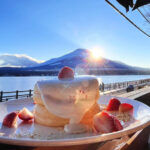
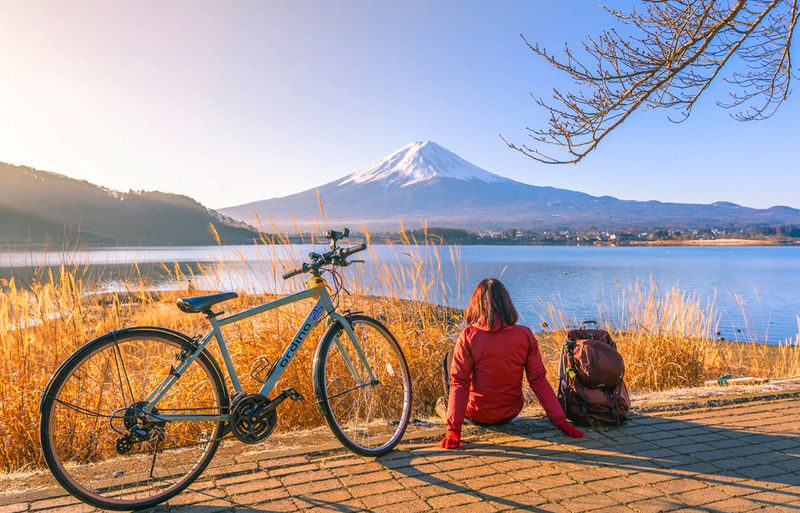
The second morning starts at Hirano Beach on Lake Yamanaka, a popular place to look across the water toward Mount Fuji. Winter mornings can bring especially clear air, and on a still day the mountain may reflect in the lake. Wind and cloud decide whether that reflection appears, so the beach is best treated as a scenic pause rather than a guaranteed postcard.
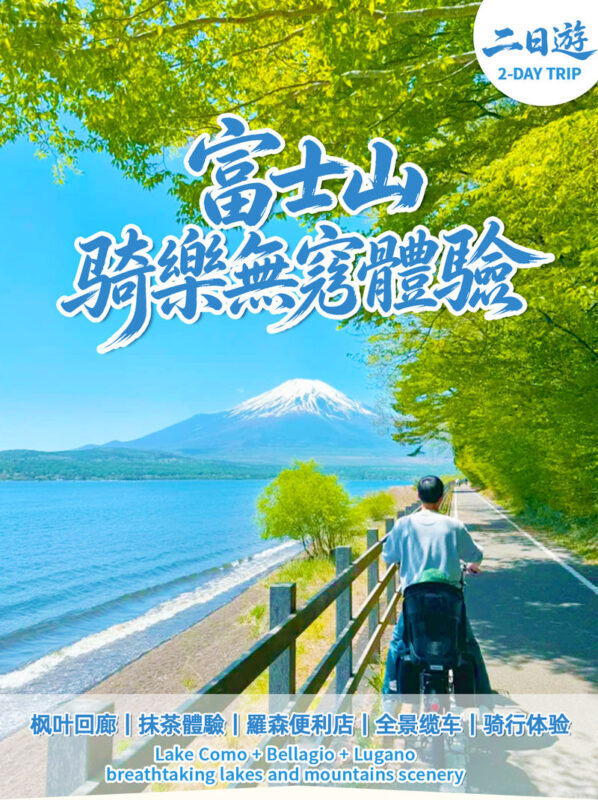
Then comes the one-hour cycling experience. The suggested route runs from the bicycle rental area past Shiratorihama, the cafe THE PARK and Nagaike Waterside Park, before returning to the rental point. The route follows an Olympic cycling course, and the lakeside setting gives you a chance to see the water and mountain at a lower, more active pace.
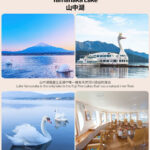
Swans are one of the memorable possibilities here. The tour highlights the chance to photograph them with Mount Fuji in the same frame, especially around the shore. Bring a camera or phone, but leave a little time to watch rather than turning the whole ride into a photo hunt.
If heavy rain makes cycling unsuitable, the substitute is a swan-shaped excursion boat around Lake Yamanaka. That is a useful backup, though it changes the feel of the stop: you trade the freedom of a bicycle ride for a seated lake outing. The cycling is included, and you should wear comfortable shoes and clothes that work for light activity.
Fuji’s famous frames and the climb at Arakurayama
After the lakeside stops, the itinerary includes two Fujiyoshida photo locations: McDonald’s on National Route 139 and Lawson Fujiyoshida Arakura. Both have become familiar backdrops for photographs that pair Mount Fuji with everyday Japanese street scenes. The stops are brief, about 30 minutes each, so think of them as quick photo breaks rather than places to spend time.
At Lawson, one complimentary hot or iced coffee or tea per person is included, purchased by the driver-guide. Be considerate when taking pictures: these are working businesses and public streets, not private photo sets. The route’s small dose of ordinary town life is part of the appeal, but the stops are mainly about the view.
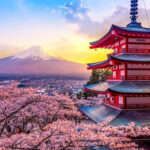
Arakurayama Sengen Park is the more substantial viewpoint. You climb roughly 397 or 398 steps near the main hall to reach a panoramic view over Fujiyoshida, with Mount Fuji behind the town. The climb is short but steep enough to matter if stairs are difficult for you. Plan to take it at your own pace, and wear shoes with a good grip.
This is the classic layered Fuji view: town below, mountain beyond. It is also one of the busiest places on the route, and the steps can make the stop tiring after two days of sightseeing. The schedule allows about an hour, including the climb and time at the viewpoint.
The final listed stop is Kawaguchiko Tenjoyama Park, where the Golden Torii gives you another direct frame of Mount Fuji and the town. It offers a different composition from Arakurayama, though both stops depend on clear skies. The schedule then calls for departure around 3:30 p.m. and an expected Tokyo arrival near 5:30 p.m.; traffic can make that later.
Guides, timing and what to pack
The tour includes English-speaking and Chinese-speaking professional driver-guides. Names associated with recent departures include Ace, Xiao Zhao, Xiao Hu, Ko, Xiao Sun and Sun, but you should not expect a particular guide on your date. Accounts describe guides helping with special requests and practical needs, including locating a shop at Oishi Park. That kind of assistance can be useful on a fixed-route trip, though it does not make the schedule flexible.
The pre-trip email with guide and vehicle information is sent between 6 p.m. and 9 p.m. the evening before departure. Check your inbox and spam folder. The departure information gives both 8 a.m. and 8:30 a.m. as possible times, so rely on the final message for your actual meeting time. Arrive ten minutes early: late arrivals and no-shows are not refunded.
One piece of luggage per person is allowed, but you must report the number of bags when booking. The vehicle operator can refuse a reservation if the party or luggage exceeds vehicle capacity. Keep valuables and your passport with you, and bring layers and comfortable walking shoes. The route includes outdoor stops, cycling and a staircase.
The tour is not recommended for people with high blood pressure, epilepsy, heart disease, asthma, other serious medical conditions, pregnant people or people with disabilities. People aged 70 and over must present a medical certificate. Children must be accompanied by a paying adult, and children aged six or older pay the adult rate. The tour does not accept unaccompanied minors under 18.
You can also read our reviews of more tours and experiences in Fujiyoshida


Is this two-day Fuji tour a good fit?
I would book this if you want a broad look at the Mount Fuji area without handling transport yourself. The mix of lakes, matcha, springs, cycling and viewpoints is more satisfying than a string of roadside photo stops, and the included ropeway, activities, meals and overnight stay make the starting price reasonable for a tightly scheduled two-day trip.
I would think twice if your main goal is a restful hot spring hotel, a room with a Fuji view or a flexible pace. The accommodation is the package’s weakest and least predictable part, and the itinerary covers many stops in limited time. Book for the scenery and convenience, keep your hotel expectations modest, and remember that even a well-planned Fuji tour cannot guarantee clear skies.
Mount Fuji Cycling Matcha Experience Hot Spring Two-Day Deep Dive Tour: Kawaguchiko & Matcha Experience & Ropeway & Hot Spring & Yamanakako Cycling & Oshino Hakkai & Arakurayama Sengen Park Two-Day Deep Dive Tour
“Thank you to our tour guide, Xiao Zhao, for his enthusiastic help in finding the location of the shop I wanted to buy from online. It turned out to…”
FAQ
Where does the tour depart from?
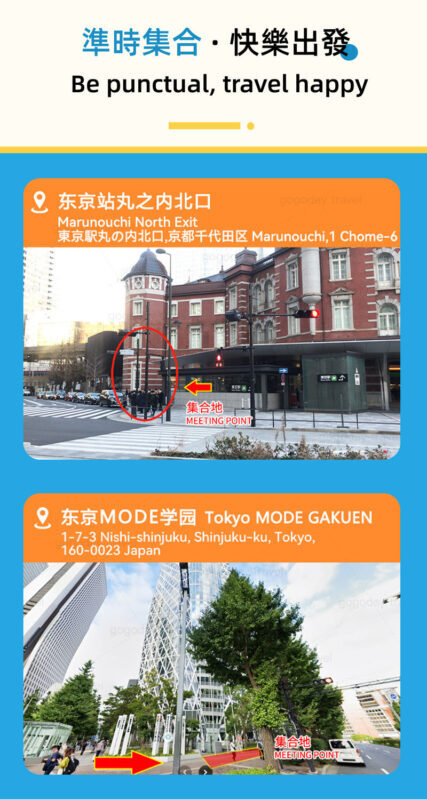
The listed meeting point is Tokyo Station Marunouchi North Exit. Tokyo Mode Gakuen is also mentioned as a return location. Check the final email for your confirmed departure time and vehicle details.
How long is the tour?
The tour runs for two days and includes one night of accommodation. The return journey to Tokyo is expected to take about two and a half to three hours, with arrival listed around 5:30 p.m.
What is included in the price?
The package includes the matcha experience, Kachi-Kachi Ropeway, one-hour Lake Yamanaka cycling experience, an English-speaking or Chinese-speaking driver-guide, tolls, parking, fuel, instructor fees, one night’s accommodation, breakfast and dinner. Lunch, drinks and personal expenses are not included.
Is cycling guaranteed on the second day?
No. If heavy rain makes cycling unsuitable, the activity changes to a swan-shaped excursion boat tour around Lake Yamanaka.
What happens outside maple season?
The Lake Kawaguchiko Maple Corridor is a seasonal stop. Outside the maple period, the itinerary goes to Oishi Park instead.
Is a Mount Fuji view from the hotel room guaranteed?
No. The accommodation is Dadu Fuji Hot Spring Hotel or a similar nearby hotel, and a room with a Mount Fuji view is not guaranteed.
Can children join the tour?
Children aged 0 to 17 must be accompanied by a paying adult. Children aged six and older are charged the adult rate, and infants and children must be included in the passenger headcount.