Sushi is more than a neat roll of rice and fish. At this small, English-led class in Higashiyama, you’ll learn to season rice, shape nigiri, and roll maki, then eat the results. Instructor Kana and her husband and assistant Cairen lead the session in a restored Kyoto townhouse.
I like two things in particular: the group is capped at eight, so you can ask questions and get hands-on guidance, and the lesson includes several styles of sushi, including gunkan and rolled sushi. The setting, with commissioned art and traditional townhouse character, gives the class a sense of place without turning it into a lecture.
One point to plan around: the stated duration is one hour, but the available start and end times span 90 minutes. Set aside about an hour and a half, and check the session details when you book. Vegetarian and vegan diets cannot be accommodated.
- What to know before you book
- A sushi lesson in Higashiyama
- From sushi rice to nigiri, maki, and gunkan
- A room for questions, not just recipes
- Eating what you make
- Where it fits in a Kyoto day
- Is .45 good value?
- Who will enjoy the class most
- Should you book this Kyoto sushi workshop?
- FAQ
- How long does the sushi workshop last?
- Is the class taught in English?
- What kinds of sushi will I make?
- Is the workshop suitable for beginners?
- Can children join the class?
- Can the class accommodate dietary requirements?
- How do I get to Atelier SUSHI?
- The Best Of Kyoto!
- More Workshops & Classes in Kyoto
- More Tours in Kyoto
- More Tour Reviews in Kyoto
- Not for you? Here's more nearby things to do in Kyoto we have reviewed
What to know before you book
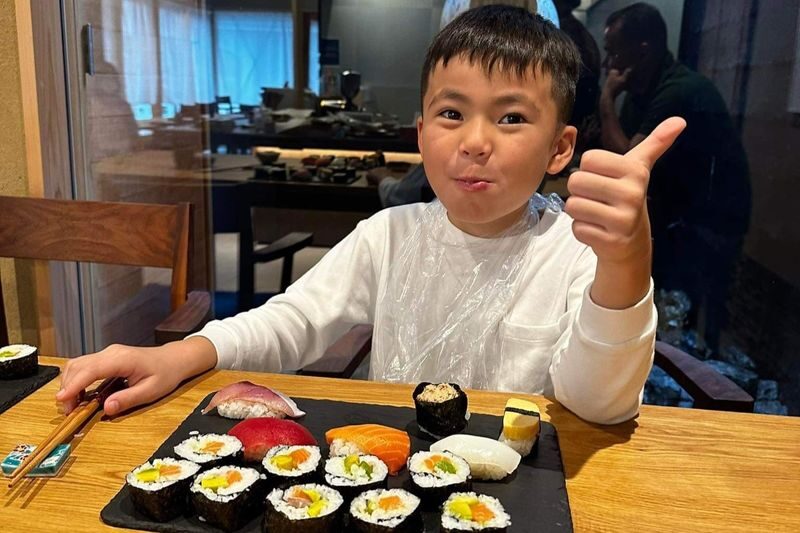
- You make a full meal: Come hungry. You prepare and eat the sushi you make during the session.
- The group stays small: A maximum of eight people means more room for step-by-step instruction and questions.
- You’ll learn more than nigiri: Expect rice seasoning, nigiri shaping, and maki rolling. Gunkan is also included in the class.
- Kana and Cairen lead in English: No translation app is needed to follow the instructions or ask about Japanese food and culture.
- The setting is a restored Kyoto townhouse: Commissioned artwork and traditional details make the room part of the experience.
- Dietary limits matter: Halal-certified and gluten-intolerance needs can be accommodated, but vegetarian and vegan diets cannot.

👉 See our pick of the 25 Best Workshops And Classes In Kyoto
A sushi lesson in Higashiyama
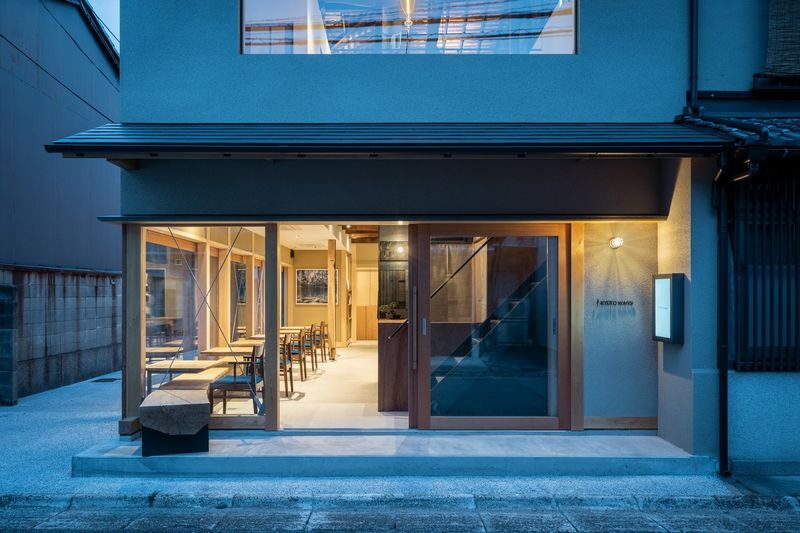
This is a cooking class, not a sightseeing tour. You meet at Atelier SUSHI, at 311-1 Kitatoryocho in Higashiyama, and return to the same address when the session ends. That makes it easy to pair with a day around Gion or Kiyomizu-dera, though the workshop itself stays focused on food and conversation.
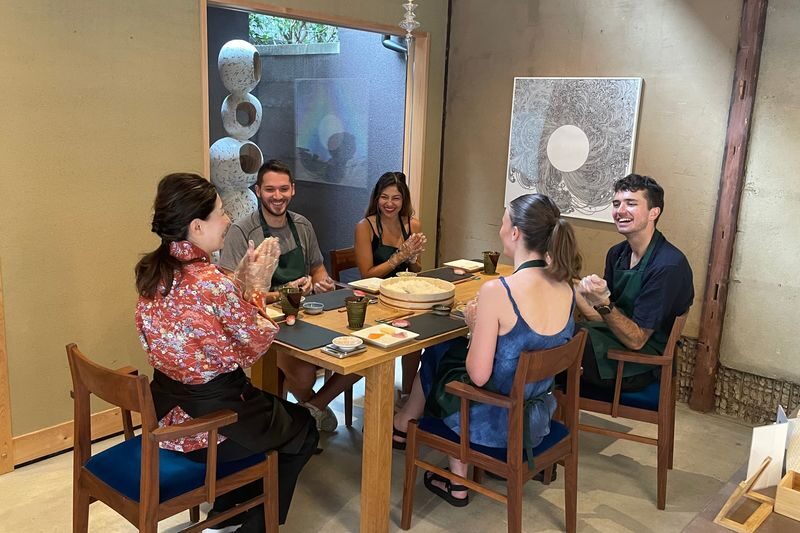
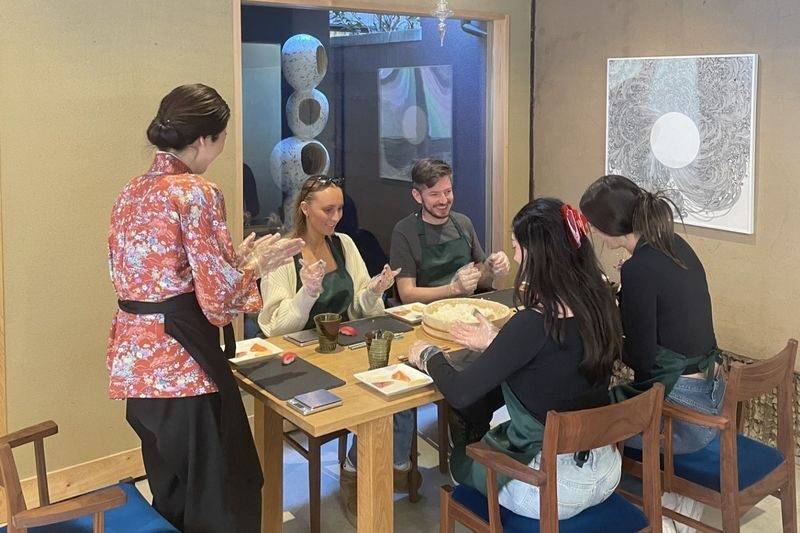
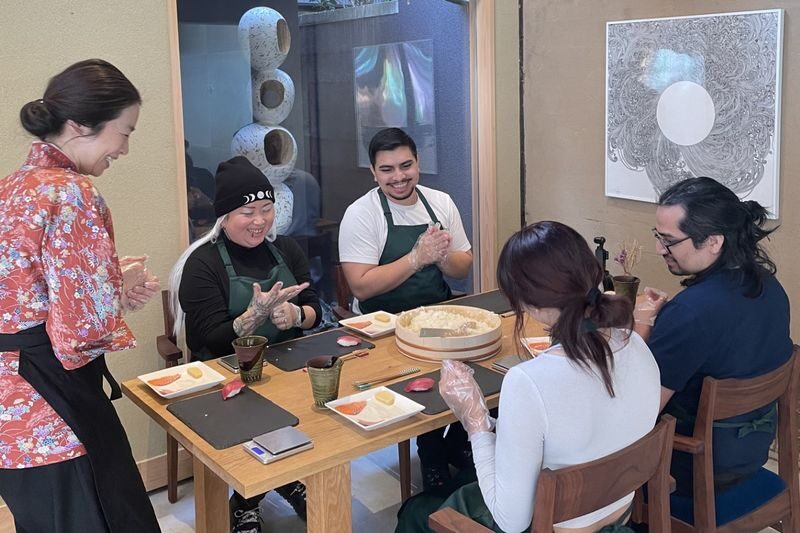
The class takes place in a renovated traditional Kyoto townhouse, decorated with commissioned artwork. It offers a quieter, more personal setting than a large demonstration room. The atmosphere is meant for concentrating on the techniques, chatting with the instructors, and getting to know the small group around you.
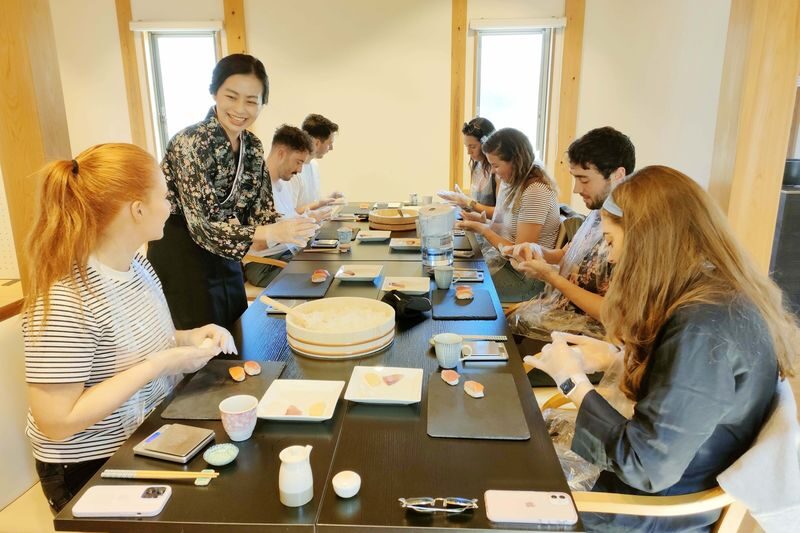
Kana teaches the class in English, with Cairen helping as assistant. That matters here: sushi-making involves small adjustments to pressure, shape, and rice, and clear instructions help you understand what your hands are doing. You can ask questions as you go, including questions about Japanese customs and everyday local life.
You can also read our reviews of more tours and experiences in Kyoto
From sushi rice to nigiri, maki, and gunkan
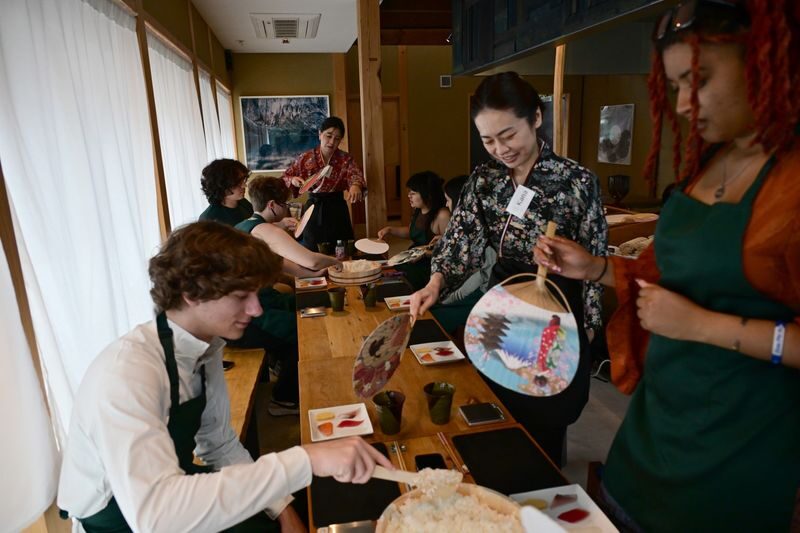
The lesson covers the basics that make sushi work, starting with properly seasoning the rice. Rice is not just a bed for the fish. Its texture and flavor shape the finished bite, so learning how to prepare it gives you a useful starting point for trying sushi at home.
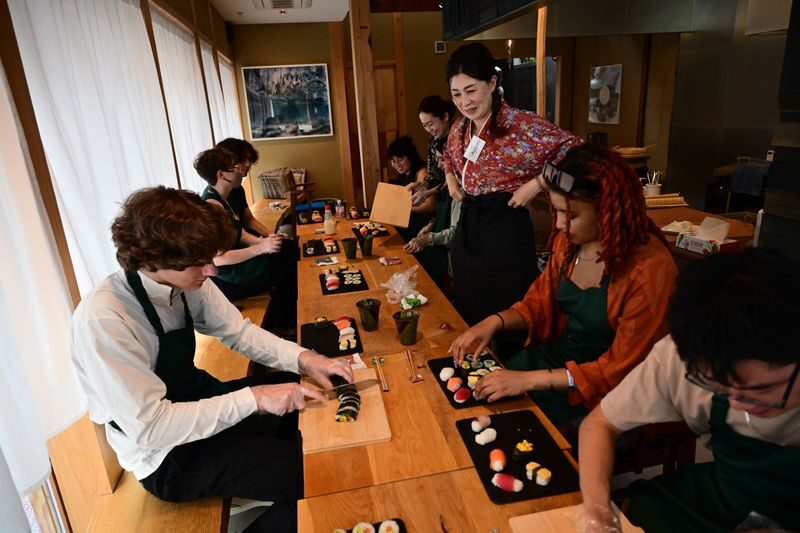
From there, you’ll practise shaping nigiri and rolling maki. Nigiri can look simple, but shaping it takes a light touch. The point is not to make every piece identical on the first try. It’s to learn the method with the instructor beside you, then taste how your own handiwork turns out.
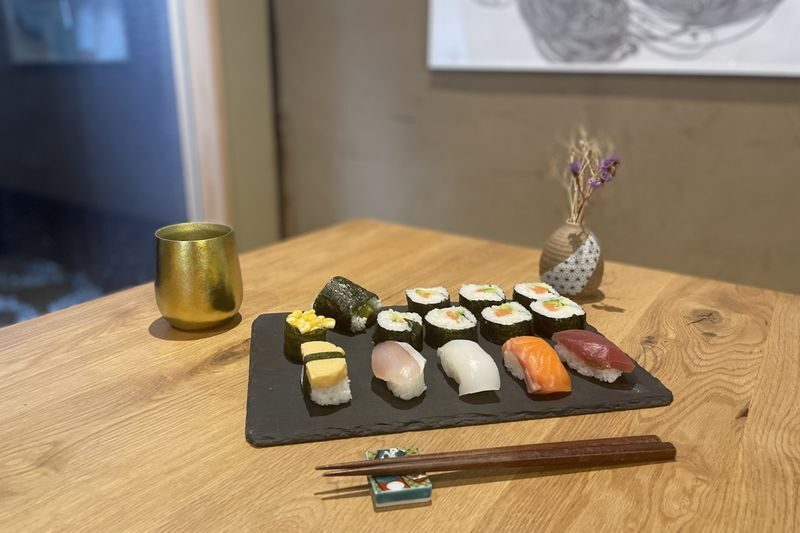
Gunkan is also part of the class. This adds another style to the lesson beyond hand-shaped nigiri and rolled sushi. The exact menu can change with the season and ingredient availability, so don’t expect the same set of fish or toppings at every session.
The fish is selected from the market that morning and sliced in advance. That lets you focus on assembling the sushi rather than handling a knife or preparing raw fish. The fish selection is one reason this class is more than a novelty activity: you’re working with ingredients chosen for the day, then eating a full meal of what you make.
The process is designed for beginners. You don’t need sushi-making experience, and the instructor guides you step by step. If you’re travelling with children, the class can work for families too: children aged 0 to 16 must be with a paying adult, and children aged 13 or older pay the adult rate. Infants and children must be included in the passenger count.
A room for questions, not just recipes
A good food class teaches technique, but it can also give you a little context for what you’re eating. Kana and Cairen share information about Japanese culture and local life, and the relaxed format leaves room for conversation. You can ask about sushi traditions, ingredients, and the practical details that make a dish easier to recreate.
That personal side is a major part of the appeal. The group is limited to eight, and the instructors are directly involved in the session. You’re less likely to feel like a face in a crowd and more likely to get a chance to check your technique as you work.
The restored townhouse adds atmosphere without needing a long detour or a separate cultural program. Its artwork and character give you a glimpse of a different kind of Kyoto space, while the class remains hands-on. This is a useful choice if you want a cultural activity that involves doing something, not just listening and looking.
Eating what you make
At the end, you eat the sushi you’ve prepared. That makes the class a practical meal as well as an activity, so there’s no need to plan a large lunch or dinner immediately afterward. Arrive with an appetite, especially if you’re fitting the session between temple visits or other sightseeing.
There’s a simple pleasure in tasting the difference between a piece you shaped yourself and one prepared by a sushi chef. The lesson gives you a better sense of the work behind the polished sushi you might order elsewhere. It also makes the meal memorable for a straightforward reason: you had a hand in making it.
A recipe and tools were provided to one family after the class, which is a thoughtful extra but should not be treated as a guaranteed inclusion unless confirmed for your session. Some participants also received local shopping recommendations. Those suggestions can be useful if you want to keep exploring the neighborhood, but the central takeaway is the sushi lesson itself.
Where it fits in a Kyoto day
Atelier SUSHI is about a five-minute walk from Kiyomizu-Gojo Station on the Keihan Line, using Exit 4. If you’re staying near Gion, Kawaramachi, or the Kamogawa River, the venue may be within a 10- to 15-minute walk, depending on your starting point. A taxi is another option; showing the driver the Japanese address can help: 〒605-0918 京都府京都市東山区北棟梁町311-1.
The available starts are 11:00, 14:30, and 18:00. The corresponding end times are listed as 12:30, 16:00, and 19:30. Since those windows are 90 minutes, allow for that full span even though the headline duration is given as one hour. Arriving 10 to 15 minutes early gives you time to settle in.
The class is well placed for a Higashiyama day, but it does not include transport or a guided visit to nearby attractions. You’ll need to arrange your own way there and plan any temple or Gion sightseeing separately. That’s not a serious drawback if you’re already exploring the area, but it matters if you’re expecting a bundled tour.




Is $91.45 good value?
At a starting price of $91.45, this costs more than a quick cooking demonstration or casual meal. You’re paying for a small group, English instruction, hands-on practice with several sushi styles, selected fish, and a full meal in a distinctive setting. For someone who wants to learn by doing, those pieces add up to a more substantial outing than simply ordering sushi at a restaurant.
The value depends on what you want from the hour or so at the worktable. If you’re curious about Japanese food and want techniques you can try at home, this class offers a clear purpose. The recipe and tools reported by one family add to that appeal, though you should confirm what is included for your booking rather than assume every participant receives the same extra.
If sushi is already a familiar part of your routine and you mainly want a long, technical cooking course, this may feel brief. It is a compact workshop, not professional chef training. The small group and individual guidance are its strengths, while the short format limits how far the lesson can go.
Who will enjoy the class most
This is a strong fit for first-timers, couples, solo visitors, families with children, and food lovers who want a low-pressure activity. The English-only instruction makes it especially practical if you’d rather focus on the food than translate each step. The one-hour headline can also make it look easy to slot into a busy day, but the scheduled session times call for 90 minutes.
Families may appreciate that children can take part in the process. One family’s children, ages six and nine, were able to follow the instructions and make sushi themselves. That’s a helpful sign for parents, though each child’s interest and patience will vary. Children under 17 need a paying adult with them.
The class is not suitable for every diet. Halal-certified and gluten-intolerance needs can be accommodated, but vegetarian and vegan diets cannot. The activity is also not recommended for pregnant women. If either point applies to you, clarify the arrangements before booking.
Should you book this Kyoto sushi workshop?
Book it if you want a personal, English-language introduction to sushi that ends with a meal you made yourself. Kana and Cairen’s small-group approach, the variety of sushi styles, and the townhouse setting give the session more character than a simple cooking demo. It’s particularly appealing on a rainy day or as a break from temple visits.
Skip it if you need vegetarian or vegan food, want a longer advanced course, or have only a strict one-hour window. Otherwise, it’s a practical way to add a hands-on food lesson to a Kyoto stay, with skills and a recipe to take beyond the table.
Kyoto Sushi Workshop ( English Speaking Class)
“this was a last minute event planned and it couldn't have worked out better. We had a great time making sushi for our first time. we had a lot of f…”
FAQ
How long does the sushi workshop last?
The stated duration is one hour, but the available session times span 90 minutes. Allow about an hour and a half.
Is the class taught in English?
Yes. The workshop is conducted entirely in English by Japanese instructor Kana, with her husband and assistant Cairen helping.
What kinds of sushi will I make?
You’ll learn to season sushi rice, shape nigiri, and roll maki. Gunkan is also part of the class, and the menu may change with the season and ingredient availability.
Is the workshop suitable for beginners?
Yes. The instructor guides you through the steps, and no prior sushi-making experience is required.
Can children join the class?
Yes. Children aged 0 to 16 must be accompanied by a paying adult. Children aged 13 and older are charged the adult rate, and infants and children must be included in the passenger count.
Can the class accommodate dietary requirements?
Halal-certified and gluten-intolerance requirements can be accommodated. Vegetarian and vegan diets cannot be accommodated.
How do I get to Atelier SUSHI?
The address is 311-1 Kitatoryocho, Higashiyama Ward, Kyoto. It is about a five-minute walk from Kiyomizu-Gojo Station on the Keihan Line, using Exit 4. From areas near Gion, Kawaramachi, or the Kamogawa River, it may be a 10- to 15-minute walk.