The draw is a full day in Hokkaido’s flower country without juggling trains, buses, and rural connections. You’ll see Biei’s rolling fields, the Blue Pond, and flower gardens, all from a Sapporo departure.
I like two things in particular: Shikisai-no-Oka admission is included, and you can choose between a flower-heavy route and a more compact route that adds Ningle Terrace. Guide names on recent departures include Rita and Sophia, both praised for clear multilingual explanations and careful timekeeping.
The trade-off is the distance. You’ll spend a good part of the day in a vehicle, and each stop has a fixed time. Flower displays also depend on season and weather, so this is not a sure bet for peak blooms.
Key points to know
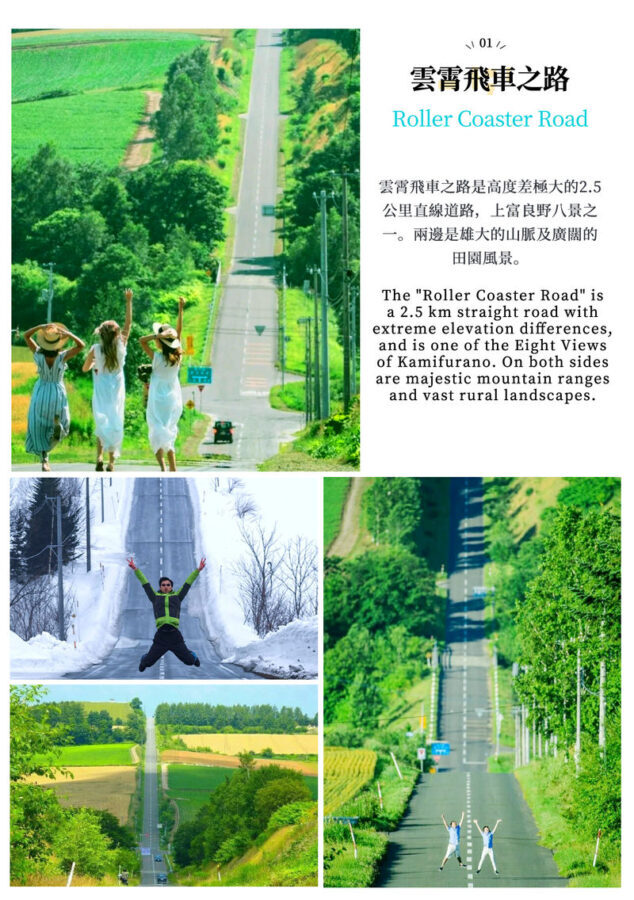
- Choose your route before booking: Route A focuses on Patchwork Road, Shikisai-no-Oka, the Blue Pond, Shirahige Falls, and Farm Tomita. Route B adds Roller Coaster Road and Ningle Terrace.
- Shikisai-no-Oka entry is included: The park covers about 15 hectares, with flower displays that change by season.
- The Blue Pond is a short stop: Plan for about 30 minutes on Route A, enough for a walk and photos, not a long visit.
- Lunch and melon depend on the package: Some options include a buffet and all-you-can-eat melon; others do not.
- Expect a long day out of Sapporo: The listed return window is around 18:10 to 18:30, but traffic can shift it.
- Your guide and vehicle may vary: Rita and Sophia have led recent trips, but names are not guaranteed, and a small vehicle with a driver-guide may be used.
- Key points to know
- Two routes, two different days in the countryside
- The Sapporo departure makes a rural day simpler
- Patchwork Road is a view from the vehicle
- Shikisai-no-Oka puts the flowers within reach
- The Blue Pond rewards a quick look
- Shirahige Falls adds a different kind of scenery
- Herb Garden Furano is the lunch decision
- Farm Tomita brings the lavender name to life
- Guides and driving shape the day
- What the fare buys, and what it does not
- Who should book this day trip
- Should you book it?
- FAQ
- Is Shikisai-no-Oka admission included?
- What is the difference between Route A and Route B?
- Is lunch included?
- When does the tour return to Sapporo?
- When will I receive guide and vehicle information?
- Can I bring luggage on the tour?
- More Tours in Kamikawa (Ishikari) District
- More Tour Reviews in Kamikawa (Ishikari) District
- Not for you? Here's more nearby things to do in Kamikawa (Ishikari) District we have reviewed
Two routes, two different days in the countryside
 1 / 10
 2 / 10
 3 / 10
 4 / 10
 5 / 10
 6 / 10
 7 / 10
 8 / 10
 9 / 10
 10 / 10
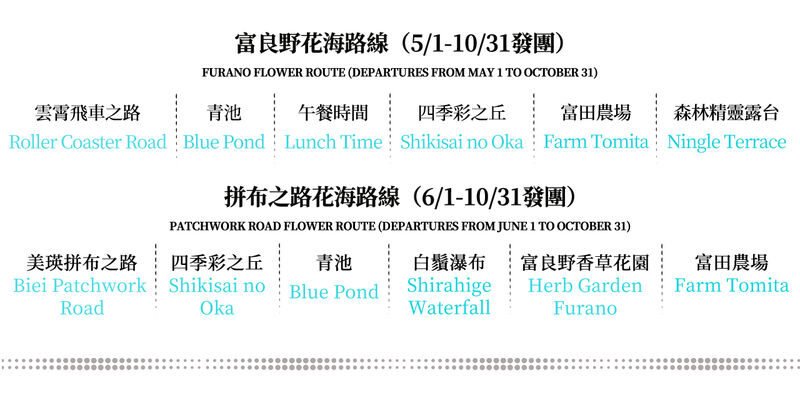
This is not one fixed tour with a minor variation. You select Route A or Route B when booking, and the choice changes both the stops and the rhythm of the day.
Route A, Patchwork Road Flower Sea Route, runs from June 1 to October 31. It suits you if flower fields and time for photographs are the main reasons you are going. The route includes a drive past Patchwork Road, Shikisai-no-Oka, the Blue Pond, Shirahige Falls, Herb Garden Furano, and Farm Tomita.
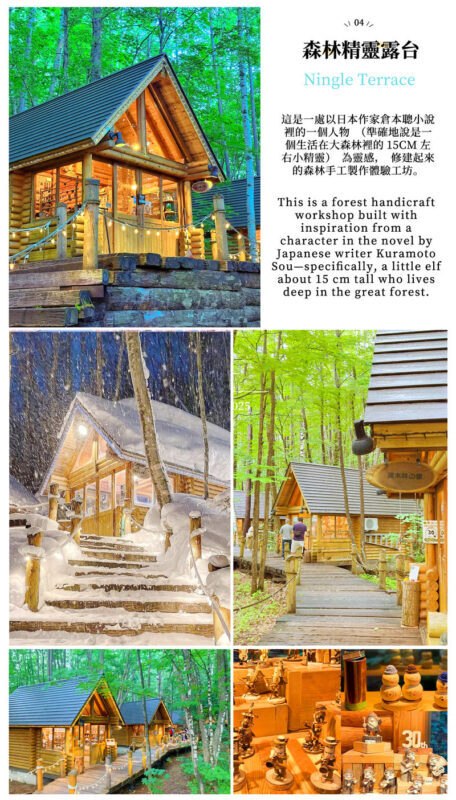
Route B, Furano Flower Field Route, runs from May 1 to October 31. It is pitched as a compact way to reach several familiar sights, including Roller Coaster Road, the Blue Pond, Shikisai-no-Oka, Farm Tomita, and Ningle Terrace. A buffet lunch and melon may be available with selected packages.
The exact timings supplied apply to Route A, so do not assume Route B follows the same schedule or gives you the same amount of time at each place. Read the inclusions for your chosen option closely, especially for food. The overall tour summary gives a starting price of $47.35, while the listed route packages start at $67.59 for Route A and $90.09 for Route B. Those figures make the selected route and package more useful for budgeting than the general starting price.
You can also read our reviews of more tours and experiences in Kamikawa (Ishikari) District.
The Sapporo departure makes a rural day simpler
The coach leaves Sapporo at 08:00 or 08:10, depending on the departure you book. Arrive at the designated meeting point 15 minutes early. Late arrivals and no-shows are treated as forfeiting the tour, with no refund.
The main advantage is practical: you avoid piecing together a long day of regional transport and transfers. You can settle in for the drive and let the operator handle tolls, parking, fuel, and the return journey. That convenience matters in an area where the sights are spread across the countryside.
It is a shared international group tour, so you will travel with other passengers and follow a set schedule. The guide communicates in Chinese and English or in several languages at a basic level. If a small group is booked, the operator may use a small car with the driver also acting as guide; in that case, expect less commentary while the driver focuses on the road.
The trip back to Sapporo is listed for approximately 18:10 to 18:30, but road conditions and the day’s schedule can change the arrival time. Keep the evening open. This is not the outing to pair with a tight dinner reservation, train connection, or flight.
Patchwork Road is a view from the vehicle
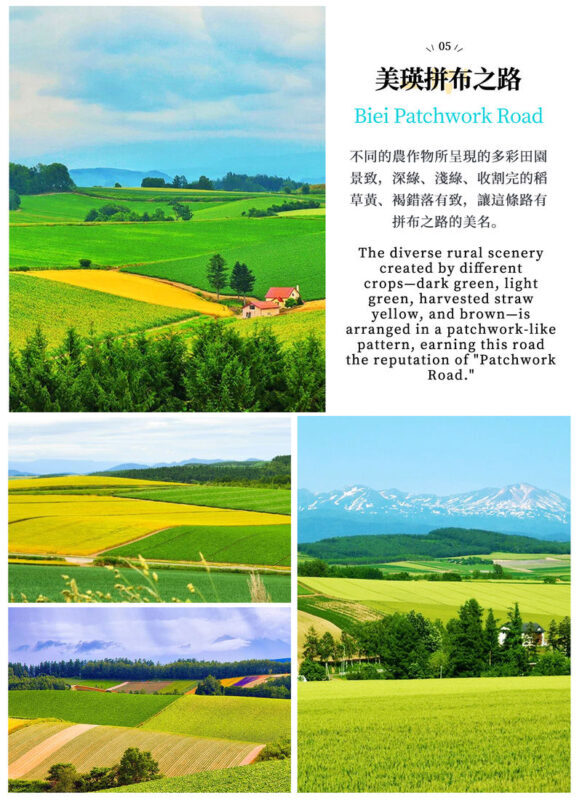
On Route A, the first countryside stop is Patchwork Biei, reached at about 10:30. The fields form a patchwork of colors and shapes across gentle hills, with the appearance shifting through the seasons.
There is no planned walk here. You see the area from the vehicle, so treat this as a scenic drive rather than a photo stop where you can roam. That may feel brief if you hoped to wander among the fields, but it also helps the tour cover more ground in one day.
Route B instead lists Roller Coaster Road, another countryside drive. The supplied details do not give its stop time, so think of it as a view along the way, not a separate visit with time to explore.
Shikisai-no-Oka puts the flowers within reach
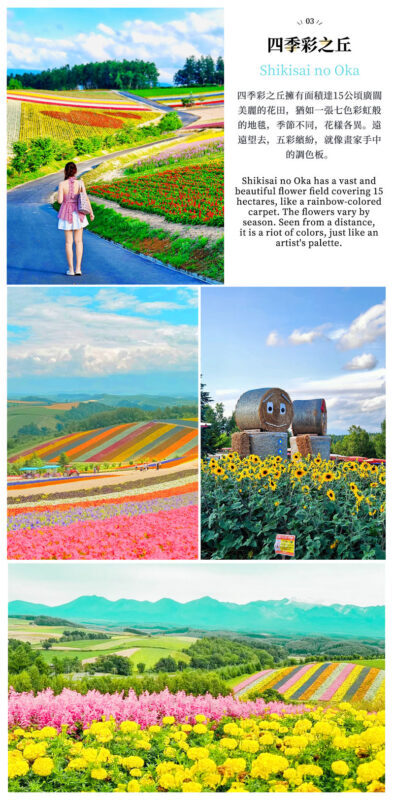
At about 10:40 on Route A, you get 40 minutes at Shikisai-no-Oka. The hilltop garden covers roughly 15 hectares, with flower beds arranged in broad bands across the slopes. Depending on the season, you may see tulips, lavender, sunflowers, and other blooms.
The entry ticket is included, which removes one small cost and makes this a particularly useful stop. There is also an alpaca farm, but admission is at your own expense. Forty minutes is enough to walk through a section of the garden and take pictures, but you will need to watch the clock if you want to see more than the main paths.
Bloom timing is the big uncertainty. Weather and the calendar affect what is in flower, and promotional pictures should not be treated as a guarantee of the exact display you will see. Go for the broad sweep of the garden and the seasonal setting, not a promise that every field will be at its peak.
The Blue Pond rewards a quick look
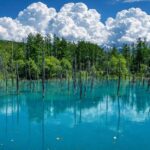
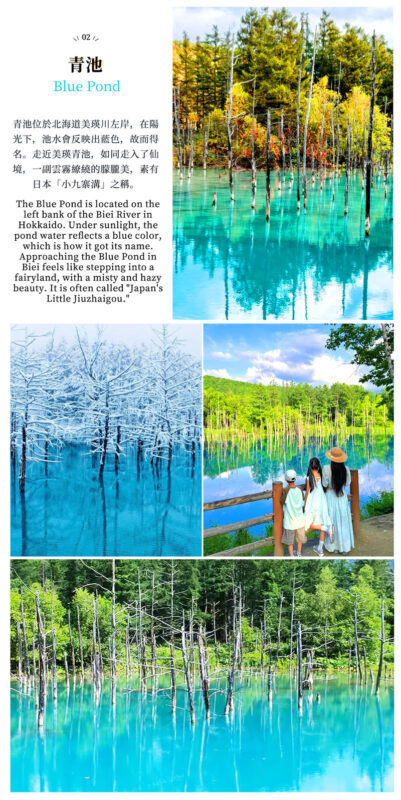
The Shirogane Blue Pond stop is scheduled for about 30 minutes, starting around 11:50 on Route A. Minerals in the water create its blue appearance, and the shade can change with the light. That changing color is part of the appeal: the pond is not a painted backdrop, and its look depends on conditions.
Thirty minutes is a brisk visit. You can walk to the pond, pause for photographs, and take in the surrounding trees, but you will not have time for a leisurely wander. The nickname Little Jiuzhaigou is a useful comparison for its striking color, though the best reason to visit is simply to see the water in person.
If clouds or rain arrive, the color and visibility may differ from the images you have seen. Bring a light rain layer if the forecast calls for it. One recent September departure had rain and several rainbows, a reminder that unsettled weather can create its own memorable moments, though it is no substitute for dry clothes.
Shirahige Falls adds a different kind of scenery
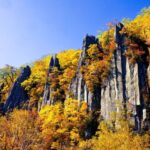
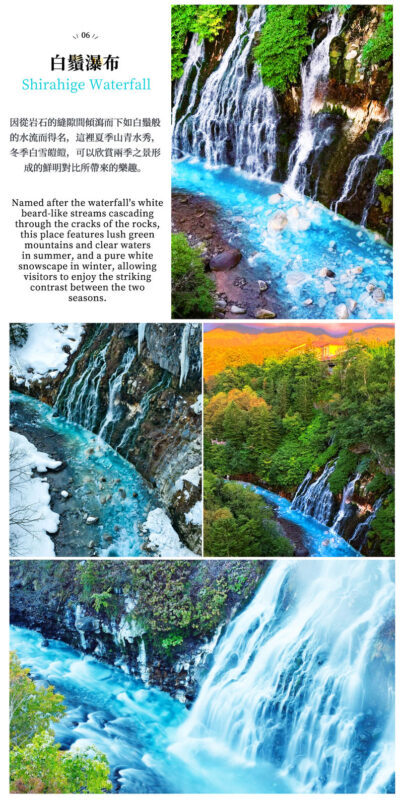
At around 12:30, Route A stops for 20 minutes at Shirahige Falls. Water pours through openings in the rock, creating pale streams against the darker stone and blue water below. The contrast makes this a worthwhile counterpoint to the flower gardens and open fields.
The stop is short, so you will want to move promptly from the vehicle to the viewing area and back. If you prefer places where you can linger, this is one of several moments when the fixed group schedule may feel tight. Still, a brief waterfall visit helps break up the day’s sequence of garden and pond stops.
Herb Garden Furano is the lunch decision
Around 13:10, Route A allows an hour at Herb Garden Furano. You can look around, take in views toward the Tokachi mountain range, or choose a buffet lunch if your package includes it. Herb-related activities may also be offered, though the supplied details do not promise a particular activity on every departure.
This is the point to check your booking carefully. Meals and drinks are generally listed as not included, while certain packages offer a Hokkaido buffet and may include all-you-can-eat melon. Do not assume the meal is part of the fare just because a lunch option is described. If it is not included, budget for your own food and use the stop to eat without rushing.
An hour gives you a useful pause after the morning’s sightseeing. It is also a practical place to reset before the final flower stop. The trade-off is that a meal takes time away from browsing, so decide what matters most once you know which food option you purchased.
Farm Tomita brings the lavender name to life
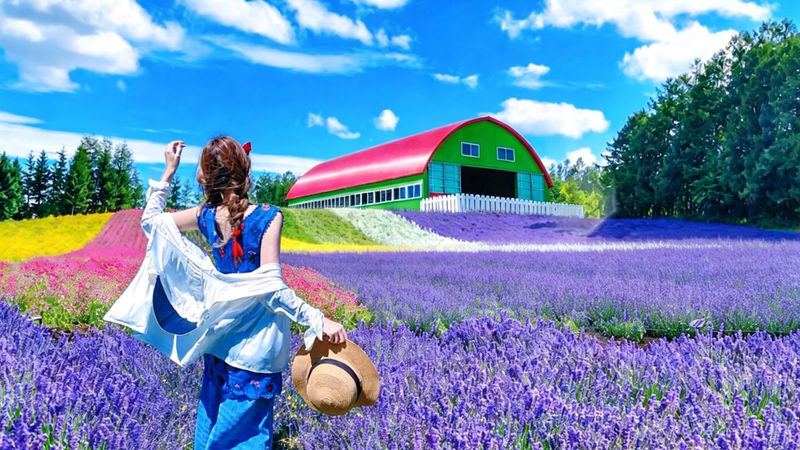
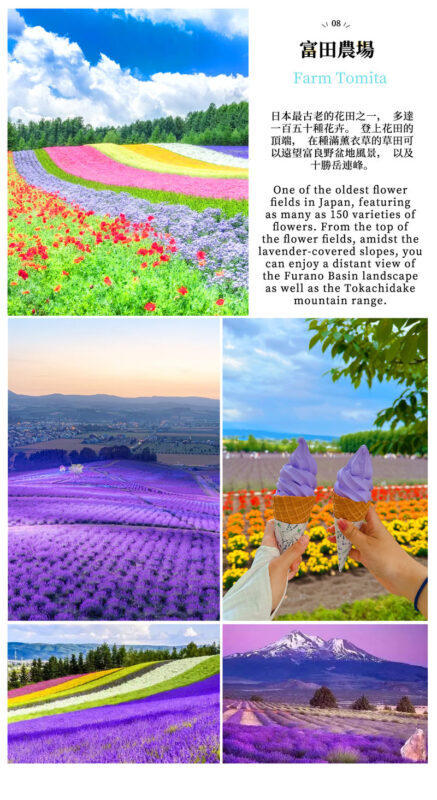
The Route A schedule gives Farm Tomita about 30 minutes from around 14:50. It is one of Furano’s best-known flower farms, with seasonal displays and lavender as its signature summer sight. The views extend toward the Furano Basin, adding open country beyond the planted fields.
Half an hour is enough for a focused visit, not a slow tour of every corner. If lavender is your priority, check the season before you book and keep expectations flexible: flowering depends on weather and timing, and the tour can adjust its schedule. The garden remains a worthwhile stop beyond peak lavender, but it may not match the purple fields shown in summer images.
Route B also includes Farm Tomita, alongside Ningle Terrace. That combination may be appealing if you want several familiar Furano sights in one day, but the shorter, compact format makes it especially important to accept that each stop will be limited.
Guides and driving shape the day
The most consistently praised part of recent trips has been the guide service. Rita and Sophia are names associated with recent departures. They have been described as friendly, organized, and able to explain the route in Chinese, English, and Japanese. Those qualities matter on a day with several stops and strict meeting times: a clear reminder about when to return can save a lot of stress.
Guide assignments change, so do not book on the assumption that a particular person will lead your tour. The operator sends the vehicle and guide details by email between 16:00 and 22:00 Japan time on the day before departure. Check for the latest message, especially if more than one arrives.
Driving feedback has been mixed. One passenger praised the careful drive out, while another reported worrying swerving on the return and suspected driver fatigue. That is a serious concern, even though one account cannot establish a pattern. If you feel unsafe, speak up to the guide promptly. The vehicle is also a shared space, and eating or drinking inside is prohibited.
What the fare buys, and what it does not
The price pays for round-trip transport from the meeting point, tolls, parking, fuel, guide service, and Shikisai-no-Oka admission. That is a useful bundle for a day covering several distant stops. You are paying not just for a seat, but for a route that would be awkward to recreate by public transport in a single day.
The value depends on the package you choose. Route A is listed from $67.59 and Route B from $90.09, while the general tour page gives a lower starting figure of $47.35. Treat these as starting prices rather than a guaranteed total for every date or option. Add food and personal spending if they are not included.
A full-day group tour is less flexible than driving yourself. You cannot add an unplanned stop, linger at the pond, or leave the group and rejoin later. In exchange, you avoid the work of route planning and can visit several places in one outing from Sapporo. For a short stay or a first visit to the area, that can be a fair trade.
Who should book this day trip
I would consider Route A if you care most about flower gardens, photo stops, and a steadier sequence of outdoor sights. Choose Route B if the appeal is seeing several named highlights, including Ningle Terrace, and you are comfortable with a compact schedule. Route B costs more at its listed starting price, so compare its inclusions against the extra stops before paying the difference.
This tour works best for people who can manage a long day and are comfortable following a group timetable. It is not recommended for people with limited mobility or certain medical conditions, including high blood pressure or epilepsy. Children must be counted when booking; children aged 0 to 2 ride free only if they do not need a separate seat, and children aged 3 or older pay the adult rate. Child seats are not available. Seniors aged 70 or older need a medical certificate and must return a waiver form by the day before departure; pregnant participants must also return a waiver.
Pack for changeable weather and wear closed shoes. The operator advises long trousers and long sleeves or a scarf to cover the shoulders. One piece of luggage per passenger is free; extra pieces cost 2,000 yen each, subject to vehicle capacity. Mention luggage when booking so the operator can plan the vehicle.
Should you book it?
Book this tour if you want a simple way to reach Biei and Furano from Sapporo, and you value seeing several classic sights more than setting your own pace. For flower-focused photos, I would lean toward Route A. For a wider checklist that includes Ningle Terrace, compare Route B’s added cost and tighter rhythm.
Skip it if you want long, unhurried walks at each stop, need a flexible return time, or are booking solely for peak lavender. The countryside is the reason to go, but weather, bloom timing, traffic, and a fixed group schedule all shape what you get.
Hokkaido Flower Sea Double Route Day Tour: Biei Blue Pond x Furano x Shikisai no Oka (Free Ticket) | Patchwork Road Scenic View | Depart from Sapporo
“Tour guide Rita enthusiastically introduced all the attractions. Although it rained at times, our good luck brought us so many rainbows 🌈.”
FAQ
Is Shikisai-no-Oka admission included?
Yes. Admission to Shikisai-no-Oka is included in the tour.
What is the difference between Route A and Route B?
Route A visits Patchwork Road, Shikisai-no-Oka, the Blue Pond, Shirahige Falls, Herb Garden Furano, and Farm Tomita. Route B includes Roller Coaster Road, the Blue Pond, Shikisai-no-Oka, Farm Tomita, and Ningle Terrace.
Is lunch included?
Not in every package. Some options include a buffet lunch, and some also include all-you-can-eat melon. Check the inclusions for the exact package you select.
When does the tour return to Sapporo?
The listed return window is approximately 18:10 to 18:30 at Sapporo Station North Exit Group Bus Stop. Traffic and schedule changes can affect the actual arrival time.
When will I receive guide and vehicle information?
The operator sends the details by email between 16:00 and 22:00 Japan time on the day before departure. If you receive more than one email, use the latest one.
Can I bring luggage on the tour?
Each passenger may bring one piece of luggage free of charge. Extra pieces cost 2,000 yen each, and the operator may refuse luggage that exceeds the vehicle’s capacity.