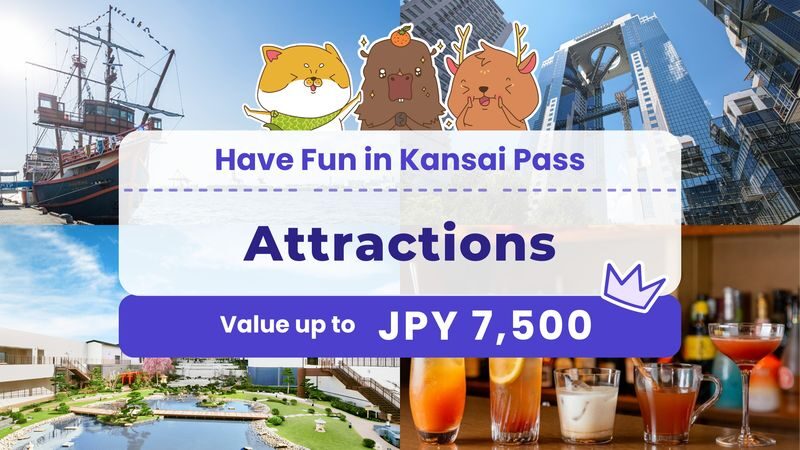
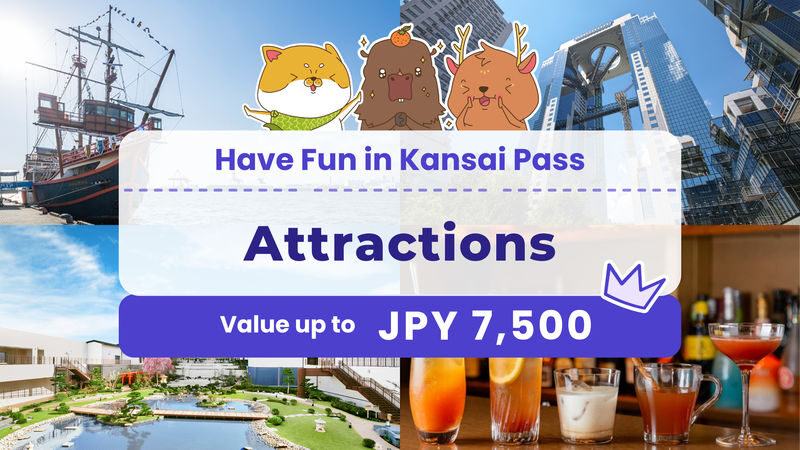
The Have Fun in Kansai Pass is less a sightseeing tour than a menu of more than 200 attractions, shops, and restaurants. Choose three or six facilities, then build your own route around places such as the Umeda Sky Building, Solaniwa Onsen, or the Osaka Castle Gozabune cruise. Premium versions add selectable extras, including Universal Studios Japan options and an airport transfer.
I like the freedom to mix major sights with very different outings, from a city-view observatory to a boat ride or hot-spring visit. I also like that QR-code redemption can be quick, and that a discounted or buy-one-get-one-free offer can make three attractions cost less than three separate tickets.
The catch is that a pass only saves money if you use it well. Attractions, booking rules, and extra charges vary, and some QR-code offers can be confusing at the counter. Plan your choices before you buy, and check each facility’s current terms rather than treating this as unlimited public transport.
- Choose three or six facilities: The standard pass lets you select a set number of participating places, not visit everything on the list.
- Mix Osaka with other Kansai stops: Options can include Kobe and Kyoto attractions as well as Osaka sights.
- Look closely at the Premium tiers: Depending on the current choices, Premium can include Universal Studios Japan benefits and one airport transfer.
- Scan a QR code at redemption: Many facilities accept a pass QR code, though some coupons require a specific counter or extra payment.
- Check time limits before setting out: Umeda Sky Building’s Kuchu Teien Observatory requires entry before 17:00.
- Plan around reservations and availability: Some selections need advance booking, and redeemed items cannot be changed.
- A pass for choosing your own Kansai highlights
- Osaka views, a castle cruise, and a hot-spring stop
- How to choose three or six facilities wisely
- What the Premium Pass adds
- QR-code redemption, with a few snags to avoid
- Timing is part of the price
- Who gets the best value from the pass
- FAQ
- How many attractions can I choose with the standard pass?
- Does the pass include unlimited rides on Kansai transport?
- How do I redeem the pass?
- How long is the voucher valid?
- Do I need to reserve before visiting?
- Can I change an attraction after I redeem it?
- Can Japanese passport holders buy this offer?
- The Best Of Osaka!
- More Tours in Osaka
- More Tour Reviews in Osaka
- Not for you? Here's more nearby things to do in Osaka we have reviewed
A pass for choosing your own Kansai highlights
 1 / 7
 2 / 7
 3 / 7
 4 / 7
 5 / 7
 6 / 7
 7 / 7
The standard Have Fun in Kansai Pass comes in three-facility and six-facility versions. Rather than following a fixed route with a guide, you decide which participating attractions suit your trip, then redeem each selection under its own rules.
That flexibility is useful in a region where Osaka, Kyoto, and Kobe each have enough to fill several days. You might pick a city observatory, a garden or aquarium farther afield, and a cruise for a change of pace. But distance matters: three choices spread across different cities can eat up time and transport costs. The pass covers selected facilities, not all your travel between them.
The product information describes access to more than 200 attractions, but the available choices can change. Think of that number as a broad pool to choose from, not a promise that every activity is available for your dates or included in every package. Check the current facility list and any reservation notes before making your shortlist.

👉 See our pick of the 24 Best Workshops And Classes In Osaka
Osaka views, a castle cruise, and a hot-spring stop
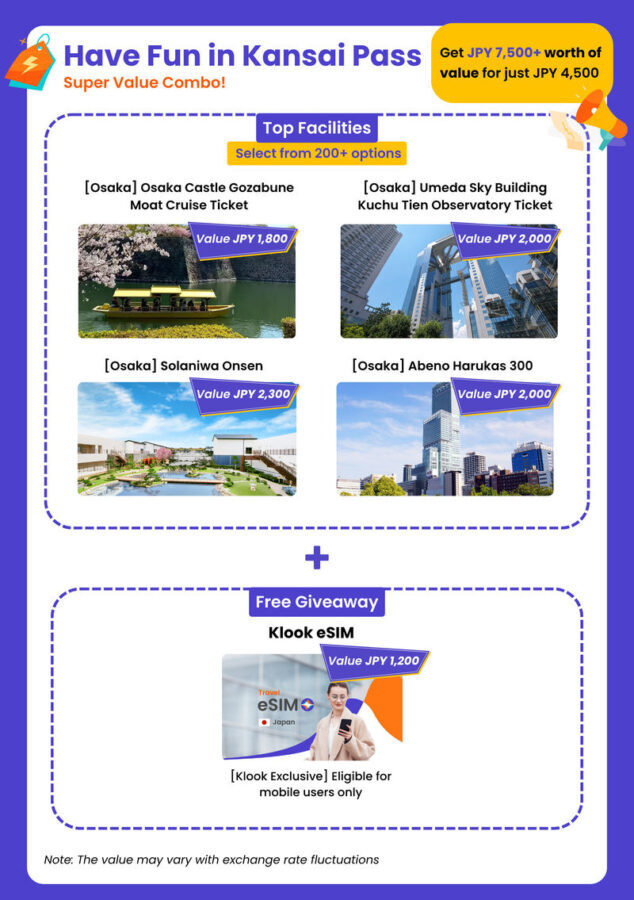
Some of the most useful options are right in Osaka. The Kuchu Teien Observatory at Umeda Sky Building offers a high-up view of the city. Its key restriction is easy to miss: entry must be before 17:00. If the view is central to your plan, build in enough time to arrive and redeem your ticket before that cutoff.
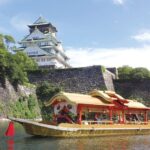
The Osaka Castle Gozabune Moat Cruise gives you a different angle on the castle grounds, from the water rather than a viewing deck. It can be a good pairing with other nearby sightseeing, but check its current operating details and availability before setting your day around it. A facility selection does not guarantee a particular departure time or an empty boat.
Solaniwa Onsen offers a slower counterpoint to city sightseeing. One important budgeting note: a pass selection may not cover every charge. A visitor reported paying an additional 1,840 yen for the hot springs, and the pass terms also say that price differences, including taxes, may be payable on site. Confirm the current amount and what your selection includes before you go.
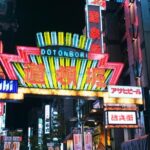
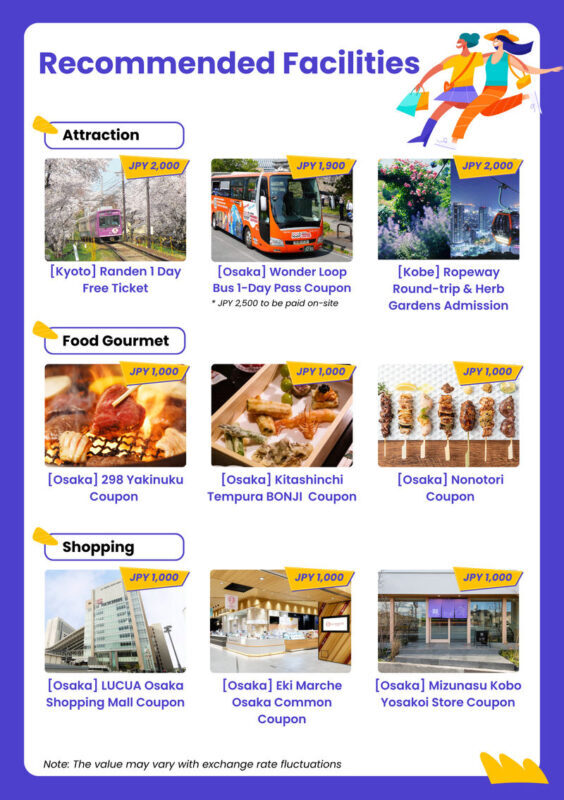
Other choices mentioned in the pass options and user experiences include Abeno Harukas 300 Observatory, Tsutenkaku Tower Slider, Dotonbori Wonder Cruise, Kobe Nunobiki Herb Gardens, AQUARIUM x ART átoa, and Kobe Suma Sea World. This variety is the pass’s real strength: you can combine classic views, entertainment, gardens, and water-based attractions instead of spending every selection on similar sights.
You can also read our reviews of more tours and experiences in Osaka.



How to choose three or six facilities wisely
The three-facility pass suits a shorter visit or a traveler who already has a full itinerary. The six-facility version gives you more room to use the pass, but only makes sense if you have enough time and interest to visit that many participating places. Do not buy the larger option simply because the per-facility cost looks tempting. An unused selection has no value.
Before buying, write down the attractions you genuinely want and compare their individual admission prices with the pass price. Then check opening hours, reservation requirements, and location. A pass can look like a bargain on paper but lose its edge if you have to cross the region for one selection or pay a substantial extra fee at the door.
Promotions can change the calculation. Some packages have been offered at half price, and buyers have described buy-one-get-one-free deals. Those offers can make the pass especially attractive, but they are not a permanent feature. Check the price shown when you book, and compare it with the cost of direct admission for your own choices. A good deal for one itinerary may be a poor fit for another.
Some users have found that using only two of three selections still represented good value. That depends on what you chose and what you paid, so do the arithmetic rather than relying on the headline discount. If your plans are uncertain, the pass’s 270-day validity gives you time to use it after purchase, but its value still depends on choosing attractions you can actually visit.
What the Premium Pass adds
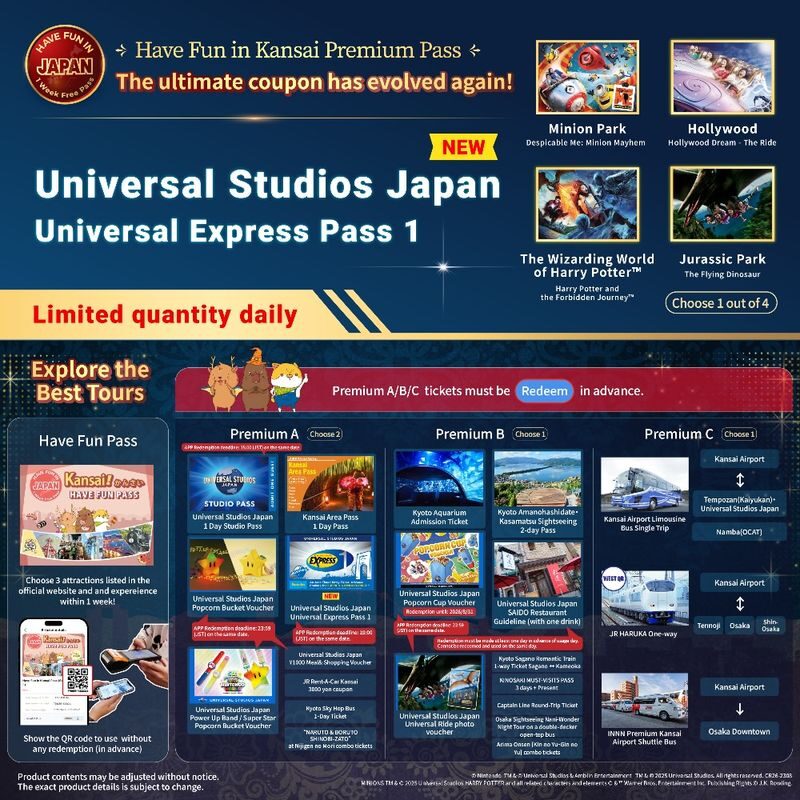
The Have Fun in Kansai Premium Pass is a separate option with selectable benefits. Its current Premium A, B, and C choices must be checked on the official site, since the available combinations can change. The listed options include Universal Studios Japan benefits, Kyoto Aquarium admission, and one-way transport from Kansai Airport.
Premium A includes a choice of two options from a changing list. The listed possibilities include a Universal Studios Japan one-day pass, a popcorn bucket, a Power-Up Band or Super Star Popcorn Bucket, and an Express Pass for one selected attraction. Some choices have tight booking conditions. For example, the popcorn bucket and Express Pass are described as same-day redemptions, while Express Pass time slots must be at least one hour after redemption. The popcorn booking window closes at 19:00 Japan time.
Premium B includes a choice of one listed option, which can include a Universal Studios Japan SAIDO reservation coupon with free drinks or a Kyoto Aquarium ticket. The SAIDO coupon must be redeemed at least one day before your visit. Premium C includes a choice of one airport transfer option, either a one-way Kansai Airport Limousine Bus or a JR Haruka Kansai Airport Express ticket.
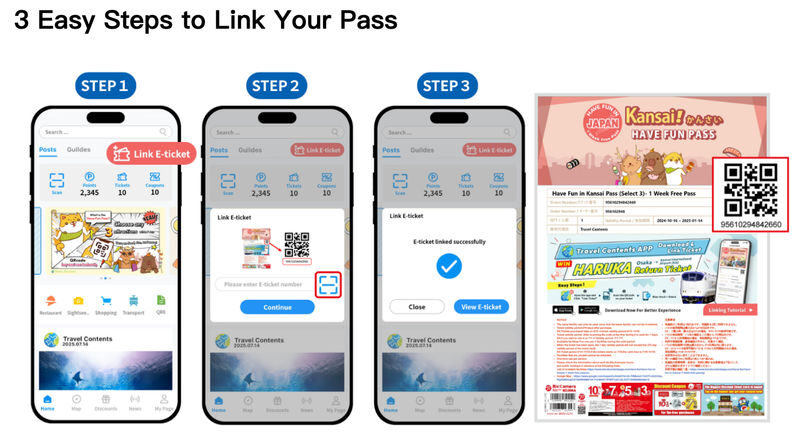
These benefits can be valuable if they match plans you already have. They are less useful if you are adding a theme park day or transport choice solely to justify buying a more expensive package. Link the pass in the Travel Contents app and select the relevant attractions and transport categories before visiting. Read each item’s conditions carefully: some booking windows may not yet be open, and redeemed selections cannot be changed.
QR-code redemption, with a few snags to avoid
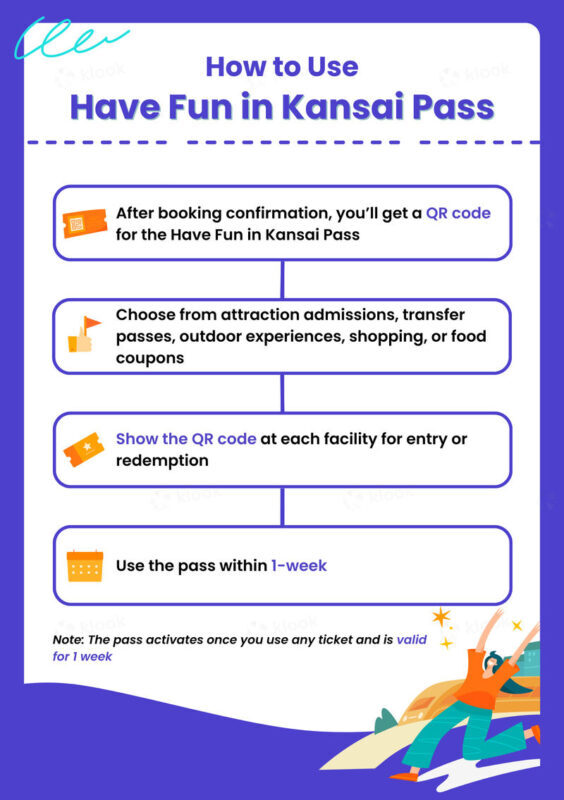
For many attractions, you show a QR code on your phone for staff to scan. A screenshot has worked for some users, but the official instructions say to download the Travel Contents app to link the pass. I would set up the app before leaving your hotel, rather than trying to sort it out at a busy ticket counter.
Do not assume every participating shop or restaurant handles the pass the same way. Some coupons need to be collected at an information desk, while others may require you to show the code at a particular location. A shopping coupon may also have a minimum practical spend: one report describes gift certificates that did not return unused balances, so you needed to spend more than the certificate’s face value to use it all.
There can also be limits on who can redeem a coupon. At Tennoji Mio, for example, a reported gift-certificate offer was issued one per person, with each person required to be present. At Lucua, the collection point was described as the Lucua 1000 second-floor information desk, not simply any counter in the connected shopping complex. These details can change, but the lesson is steady: check the redemption instructions for each coupon before you make a detour.
A facility listed online may still be unable to accept a code or may have limited availability. If a selection is important to your day, verify the current redemption process with the attraction before setting off. For restaurants, the pass terms warn that a ticket may not be usable when the shop is full. Keep a backup plan.
Timing is part of the price
This is a pass to attractions, not a general Kansai rail or bus pass. The Premium option may include one selected one-way airport transfer, but ordinary transportation between attractions is not listed as included. Add those fares to your budget, especially if your choices are spread between Osaka, Kobe, and Kyoto.
Attractions also have their own time rules. Umeda Sky Building’s observatory has a before-17:00 entry requirement. The Tsutenkaku Tower Slider can involve a timed reservation, and the pass may not let you choose a time in advance. If the next available slot is later, you could be waiting for an hour or more. Allow a generous window, or choose another attraction if your schedule is tight.
Some activities depart based on demand rather than a timetable you control. On the Dotonbori Wonder Cruise, a boat may leave once it fills, which can limit your choice of departure. That can be part of the fun, but it makes the cruise less predictable as a tightly scheduled stop.
The voucher is valid for 270 days from booking confirmation and expires at 23:59 on the final day. You must reserve at least one day before participation where a reservation is required. The voucher can be cancelled for a full refund before redemption, but once you redeem an item, it cannot be changed. Japanese passport holders are not eligible for this offer.

Who gets the best value from the pass
I would consider this pass if you are an independent planner who already has a short list of participating attractions. It works especially well when you can group nearby choices, use the selections you pay for, and take advantage of a discount that beats buying tickets separately. A mix such as an observatory, a cruise, and a garden or aquarium can give you three distinct days out.
It is a weaker choice if your plans are vague, you are short on time, or you expect it to pay for local transport. It can also frustrate anyone who prefers to decide everything at the last minute, since some selections need reservations and some activities have time slots or extra charges. The occasional trouble with coupon redemption is another reason to keep a little flexibility in your schedule.
Book it if your chosen attractions and the current price make clear financial sense. Before paying, confirm that each place is on the current list, check its hours and booking rules, and note any extra fees. If you cannot name the three or six places you want to use, wait until your itinerary is firmer.
Have Fun in Kansai Pass
“It's convenient; just show the QR code to the staff for scanning when redeeming!”
FAQ
How many attractions can I choose with the standard pass?
You can choose either three facilities or six facilities, depending on the package you buy. Each attraction can be selected only once, and choices are subject to availability when you redeem them.
Does the pass include unlimited rides on Kansai transport?
The standard pass is described as access to a set number of facilities, not unlimited rides on public transport. A Premium option may include a choice of one-way Kansai Airport Limousine Bus or JR Haruka Kansai Airport Express ticket.
How do I redeem the pass?
Download the Travel Contents app and link your pass as instructed. At many facilities, you show the QR code for scanning. Check each attraction’s current redemption instructions, since coupons may have different collection rules.
How long is the voucher valid?
It is valid for 270 days from the booking confirmation date and expires at 23:59 on the last day.
Do I need to reserve before visiting?
A reservation is required for some uses, and the stated general instruction is to reserve at least one day before participation. Check the rules for each selected attraction and Premium item.
Can I change an attraction after I redeem it?
No. The pass information says redeemed items cannot be changed. Some selections may also be unavailable until their booking window opens.
Can Japanese passport holders buy this offer?
No. The offer is not available to Japanese passport holders.