
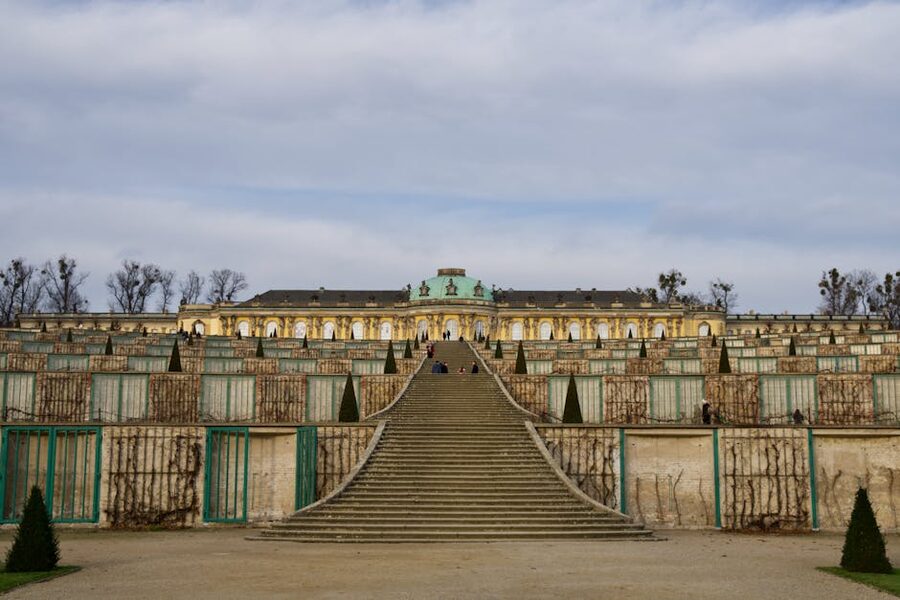
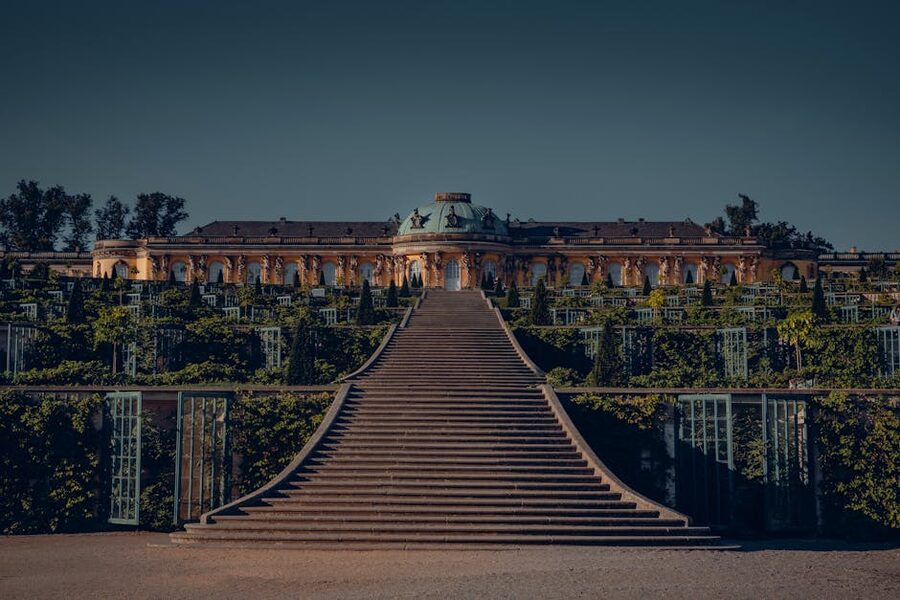
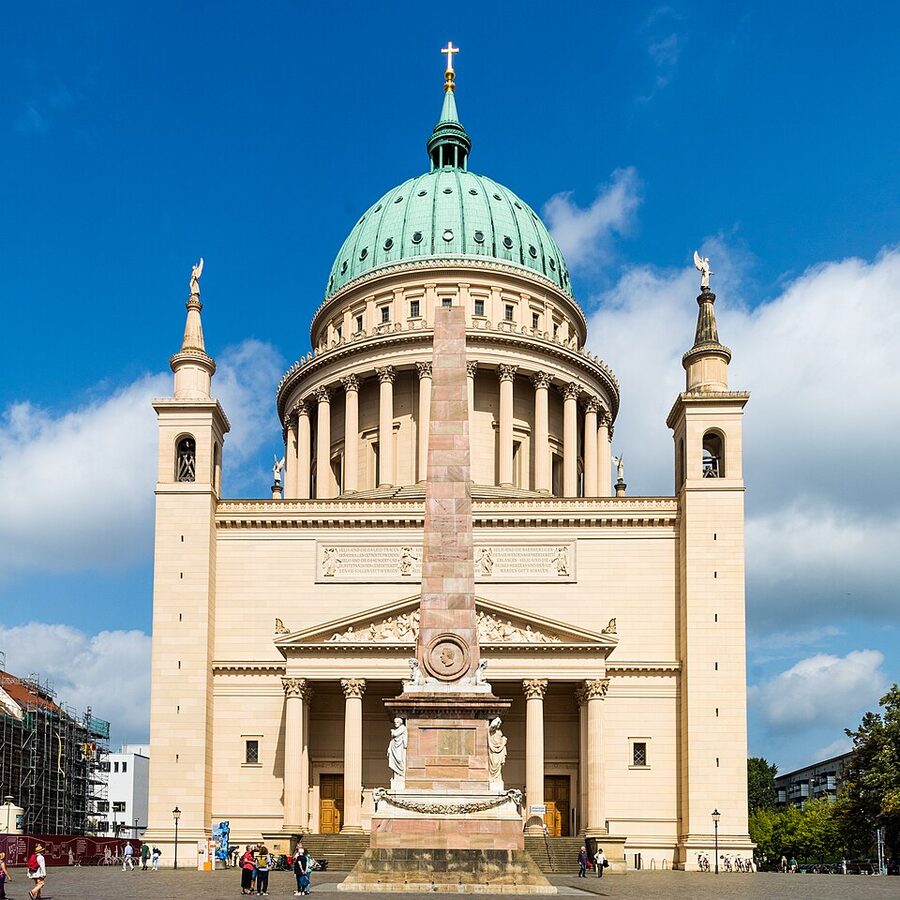
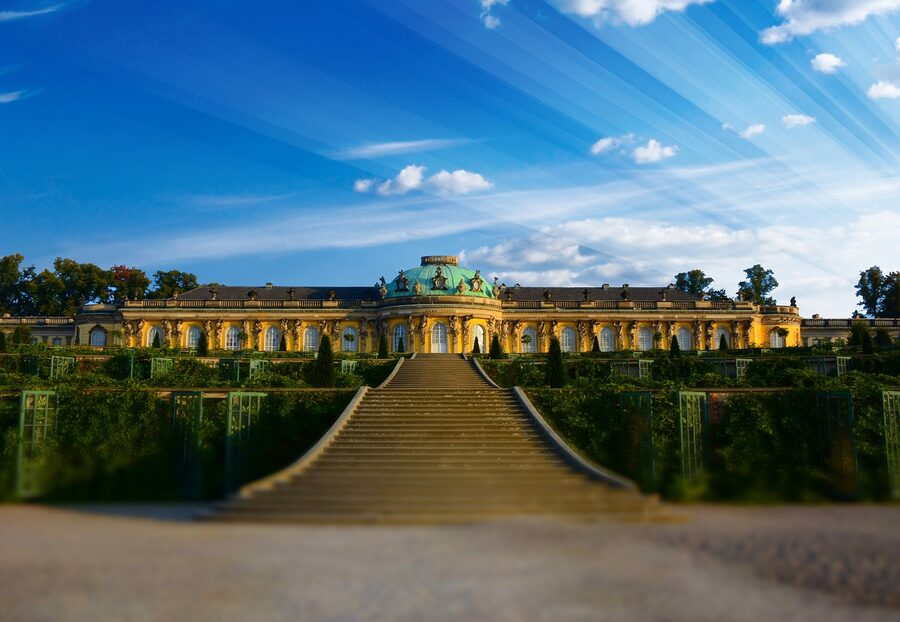
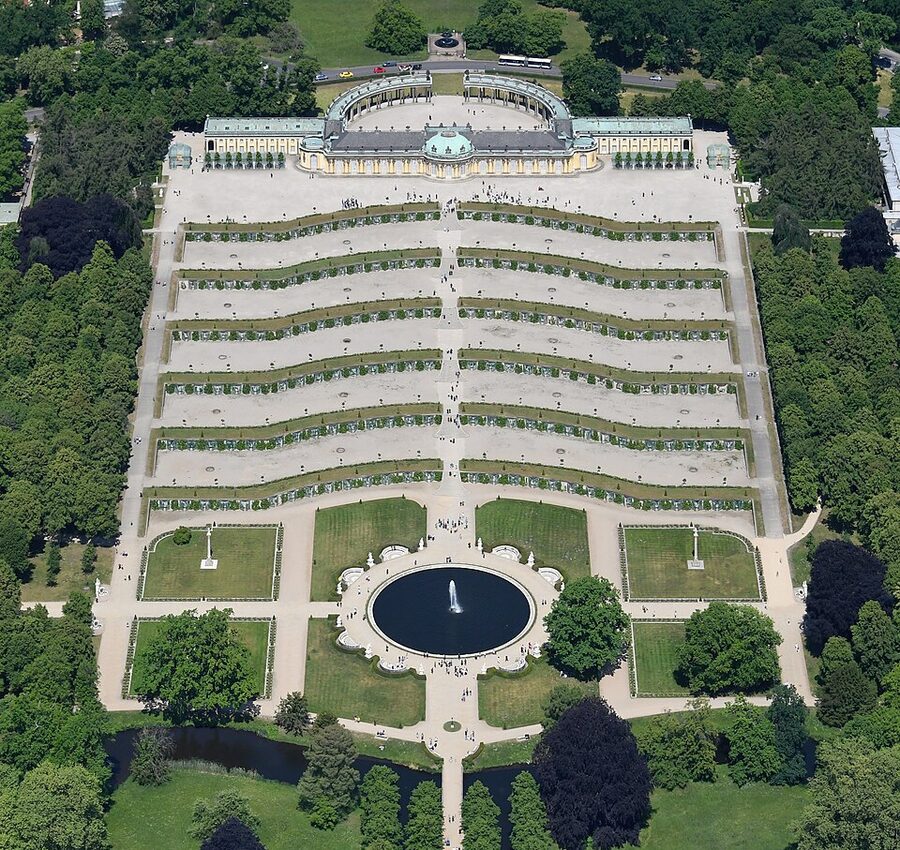
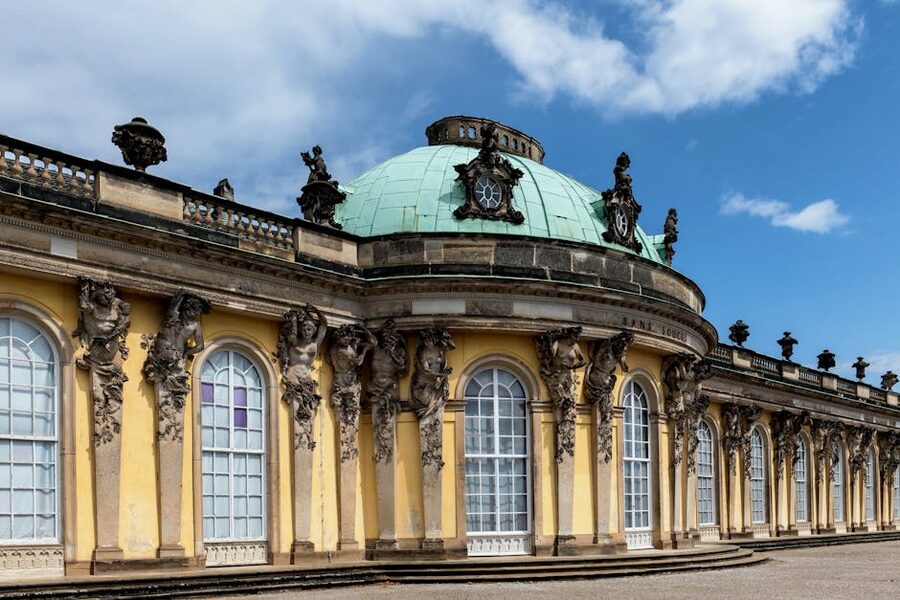
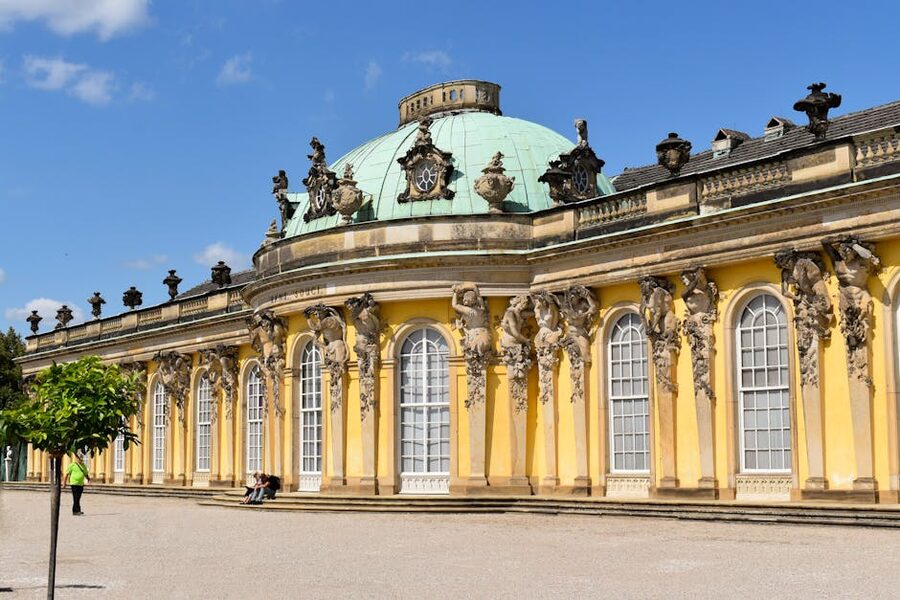
You climb the six terraced vineyards from the fountain, lungs burning a little, and at the top step under a low arch into a yellow rococo single-story palace that fits in your eye in one glance. Behind you the whole park drops away, the dome of St. Nicholas’ twinkling somewhere in the city beyond the trees. That is the Sanssouci payoff. Frederick the Great called it his place “without worry,” and from this terrace you understand why.
This guide covers how to actually book Sanssouci Palace and the wider Sanssouci Park when Potsdam itself is your base, not a four-hour bolt-on from Berlin. Different shape, different ticket choices.
In a Hurry? Three booking shapes if you are already in Potsdam, all on GetYourGuide.
- Sanssouci Palace and Prussian Palaces entry ticket: $25, one-day pass to Sanssouci Palace itself plus the other SPSG palaces in the park. The default if you want to actually go inside.
- Potsdam City and Castles guided tour: $29, three hours, walks you through Sanssouci Park plus the Dutch Quarter and the Russian colony. Best if you want context for the whole town, not just the palace.
- Potsdam Palace Tour by boat: $27, 1.5 hours on the Havel with audio guide, sees Glienicke Bridge and the lakeside palaces from the water. Best as a second-day add-on after you have already done Sanssouci on foot.
- How the Sanssouci Ticket System Actually Works
- The Three Tours Worth Booking
- 1. Sanssouci Palace and Prussian Palaces Entry Ticket:
- 2. Potsdam City and Castles Tour:
- 3. Potsdam Palace Tour by Boat:
- What You Are Actually Buying With the Entry Ticket
- Getting Around Sanssouci Park Without Walking Yourself Into the Ground
- How a Real Potsdam Day Should Be Paced
- The Sanssouci Story, in Three Paragraphs
- The Park Buildings Most Visitors Skip
- When to Go and What to Expect
- Practical Logistics for a Potsdam Stay
- What to Pair Sanssouci With
- Common Mistakes to Avoid
- If You Have Only One Afternoon
How the Sanssouci Ticket System Actually Works
Sanssouci is not one ticket. It is a SPSG estate (Stiftung Preußische Schlösser und Gärten) of roughly a dozen separately ticketed buildings spread across a 700-acre park, and the ticketing logic catches a lot of first-time visitors out. Three things to know before you book anything.
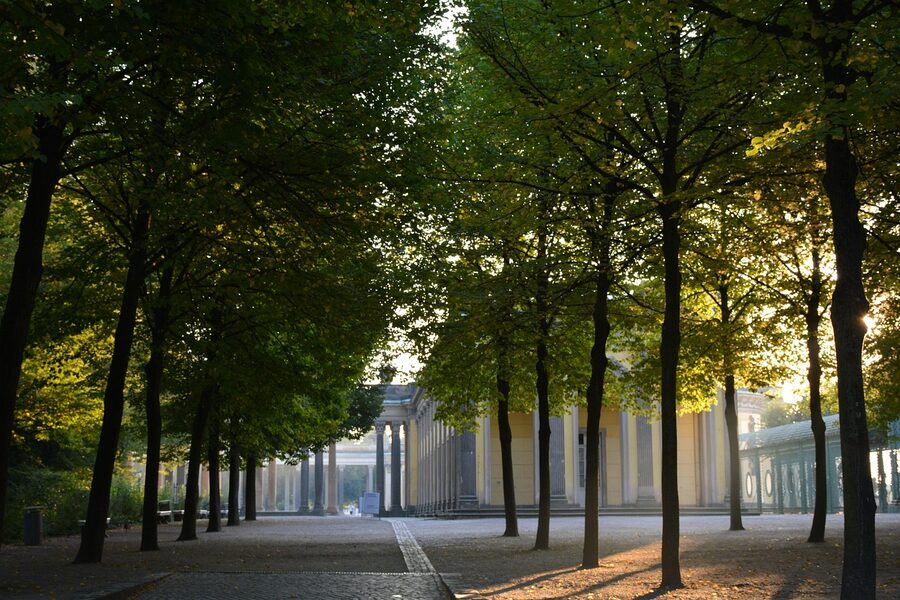
Sanssouci Park itself is free. The terraces, the fountain, the paths between buildings, the Chinese House from the outside, the Orangery grounds, all free. You can walk in any time during opening hours and pay nothing. If your plan is “stroll the gardens for an afternoon,” do not buy a ticket at all. Just turn up.
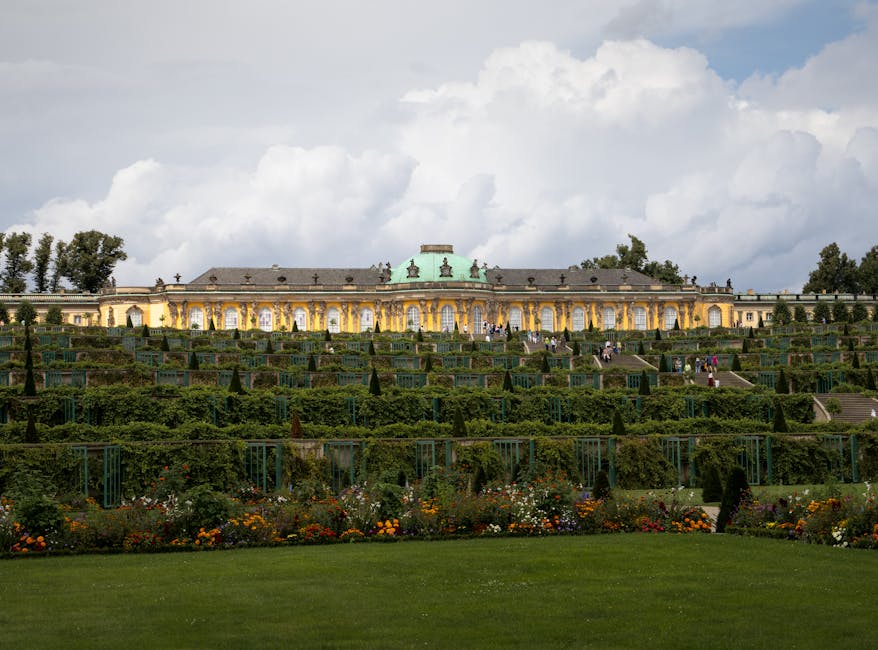
The main Sanssouci Palace requires a fixed admission slot. €14 standard, €10 reduced. The palace is small, the corridors are narrow, and SPSG keeps numbers down by selling timed entries. Once your slot passes, your ticket is dead. Show up at least fifteen minutes before, ideally at the Historic Mill Visitor Center which sits two minutes from the palace entrance.
The combined ticket is called sanssouci+. Same day, all SPSG palaces in Potsdam open to the public. The third-party version we link above (Sanssouci Palace and Prussian Palaces entry ticket) wraps the same logic in a GetYourGuide booking flow with English support and no German phone tree. It is the same product. Use whichever is more convenient.
The Three Tours Worth Booking
I cover three different shapes of trip. Pick by what you want out of Potsdam, not by which one is cheapest, because they are doing very different things.
1. Sanssouci Palace and Prussian Palaces Entry Ticket: $25
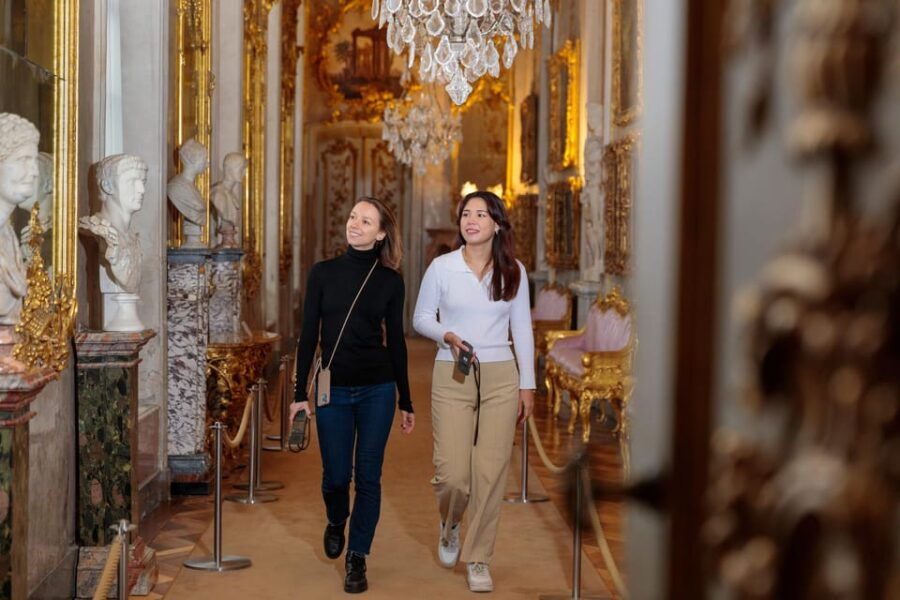
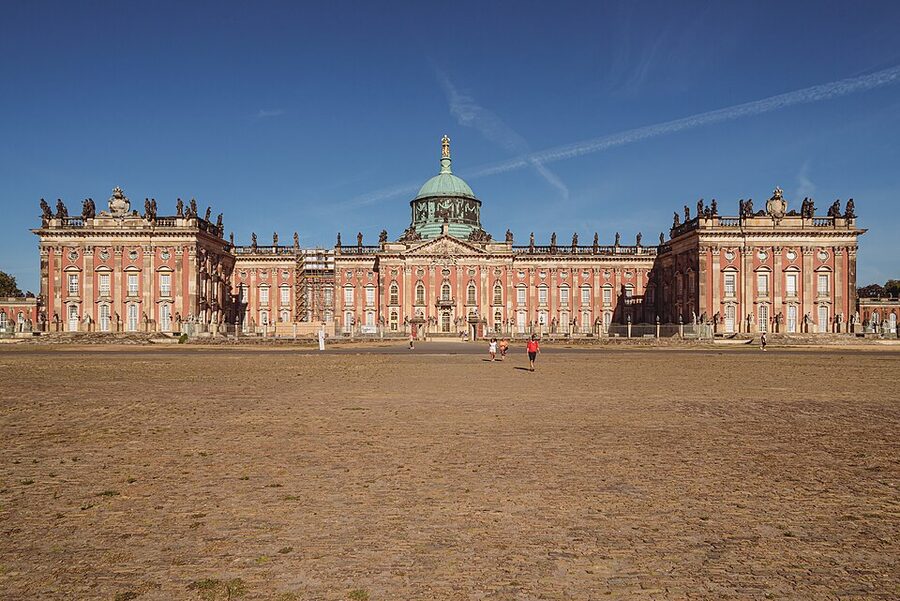
This is the booking I recommend for most readers staying in Potsdam. Our full review of the Prussian Palaces ticket goes into which palaces are actually included and which sit outside the wrapper. Heads up that the New Palace, Sanssouci’s biggest building, often needs a separate ticket and you will want to check that before banking on a “see them all” plan.
2. Potsdam City and Castles Tour: $29
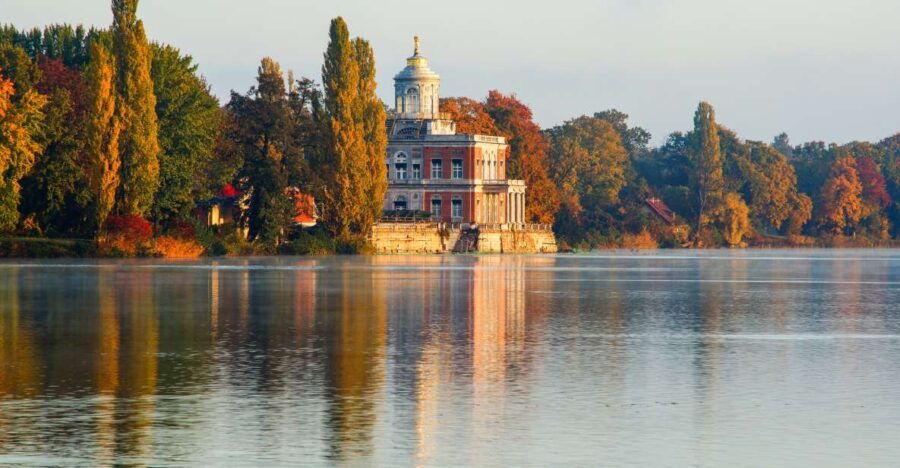
This is the one I would book if it were my second day in Potsdam and I had already wandered Sanssouci Park on my own. Our review of the City and Castles tour covers the meeting points and what is and is not included in the three hours, which matters because the tour does not actually go inside Sanssouci Palace, just along the terraces and through the grounds. Pair it with the entry ticket on a different day, not the same morning.
3. Potsdam Palace Tour by Boat: $27
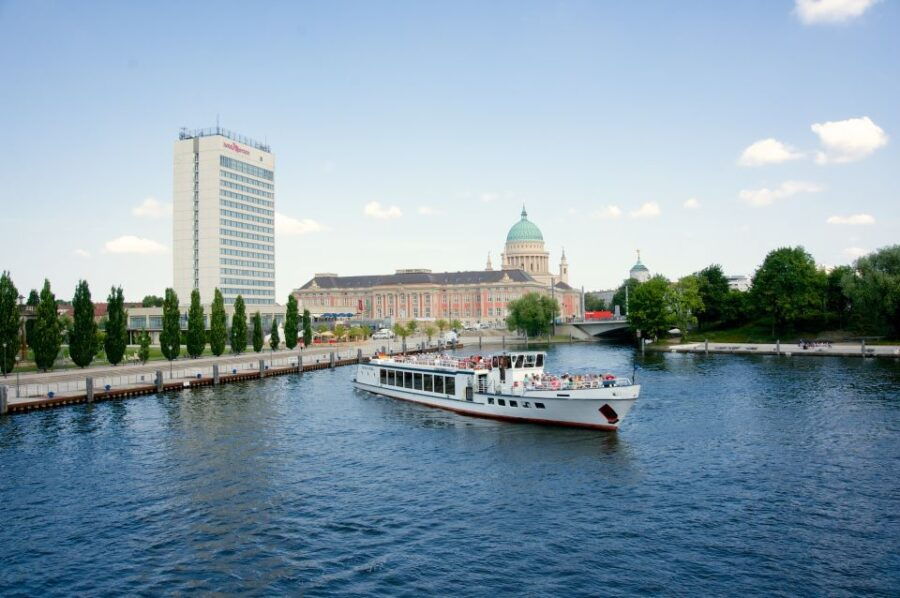
Different product entirely. The boat goes around the lakes, not into Sanssouci Park. Our review of the Palace Tour by boat notes the staff are good with kids and the audio guide actually delivers Cold War context for Glienicke Bridge, which is the bit most readers ask about. Book this as an afternoon after a Sanssouci morning, not as a substitute.
What You Are Actually Buying With the Entry Ticket
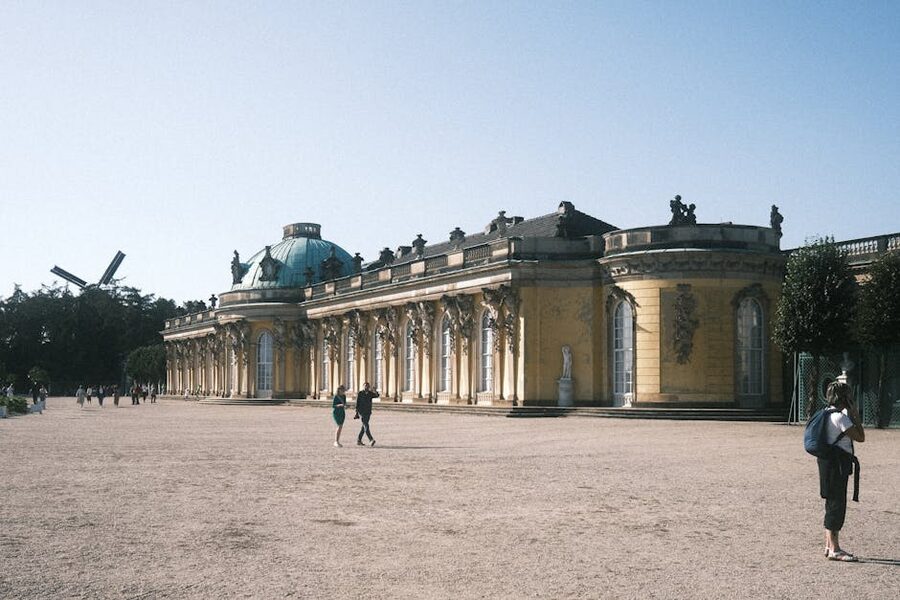
The Sanssouci Palace itself is twelve rooms. That is it. From the entry to the exit you are looking at maybe forty-five minutes inside even if you take your time with the audio guide, which is included and worth using. Some people are surprised by how little there is. Others love that the palace fits in their eye and feels like a private home rather than a state monument. Both reactions are fair.
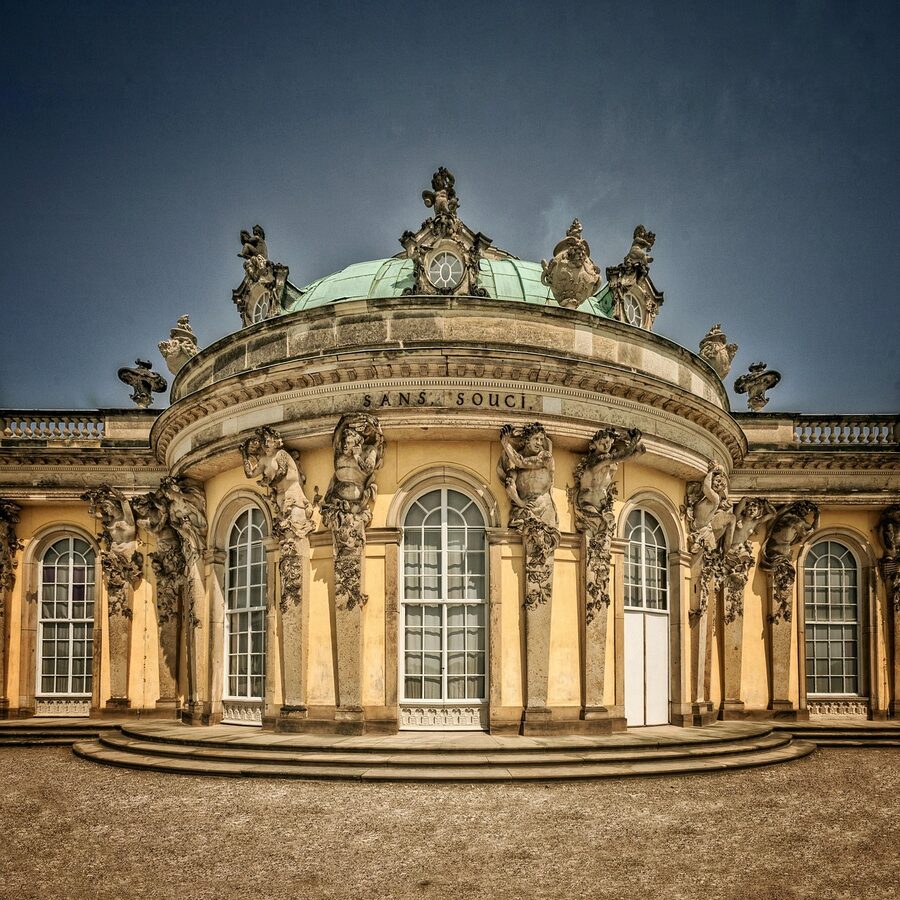
What you actually see: the Marble Hall under the green dome, the small bedroom Frederick died in, a music room with 3D animal reliefs in the plasterwork, a study with portraits of his greyhounds (he is buried with them, on the top terrace, behind a small black slab usually covered in potatoes left by visitors), and a guest room set aside for Voltaire when the philosopher lived here in the 1750s.
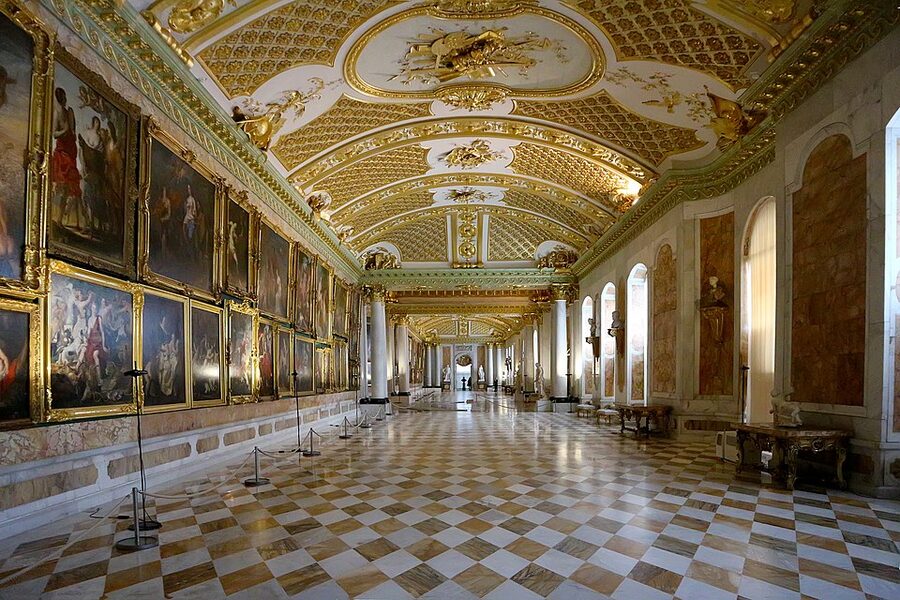
The Bildergalerie (Picture Gallery) sits a few minutes east of the main palace and is included in the combined ticket. Built between 1755 and 1764, it is the oldest surviving purpose-built museum building in Germany. The walls are hung salon-style, paintings stacked floor to ceiling on red silk, with an Italian baroque collection that includes Caravaggio’s “Doubting Thomas” and Rubens canvases. If you only have time for one extra building beyond the main palace, make it this one. It does not feel like the rest of Sanssouci, and that contrast is the point.
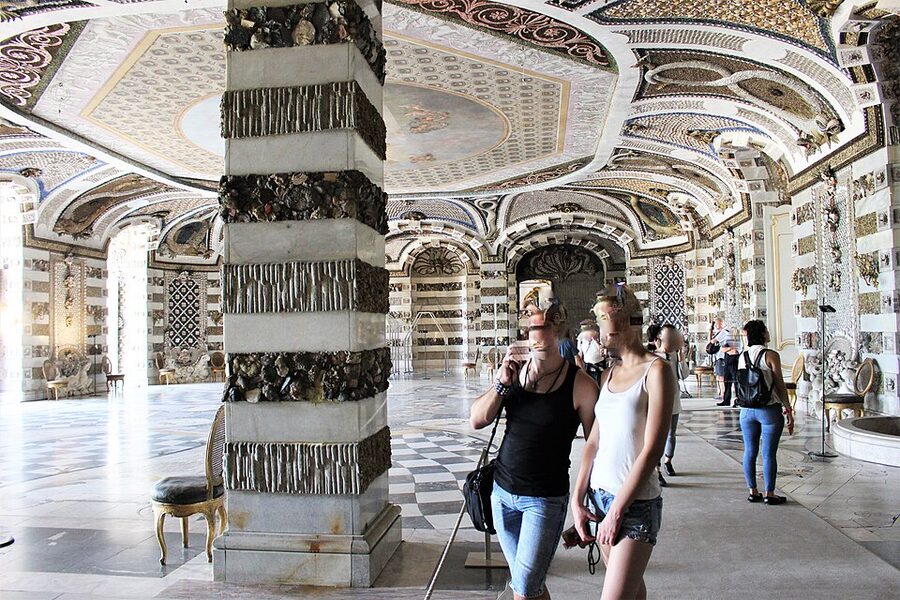
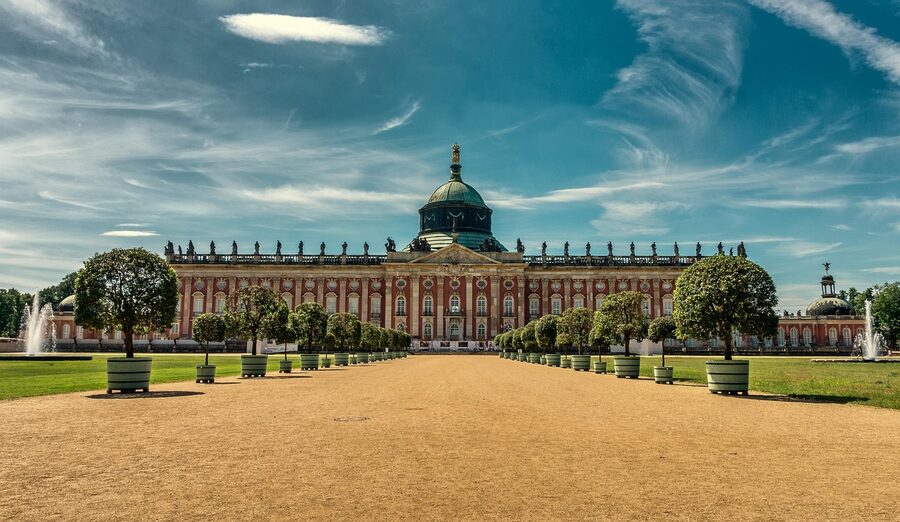
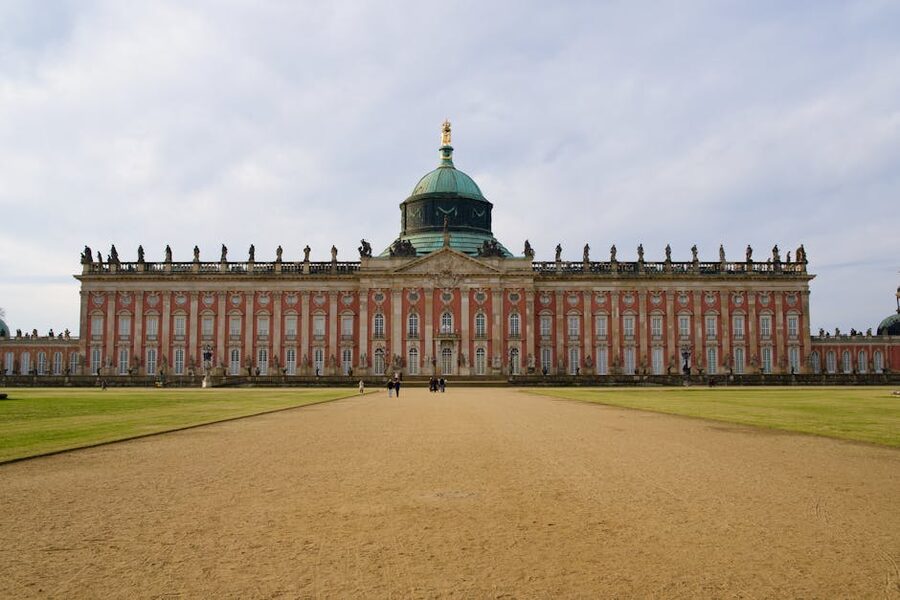
The New Palace at the western end of the park is the big one. Two hundred rooms across the main building, two service wings across the parade ground, the lot built between 1763 and 1769 to show off Prussian power after the Seven Years’ War. The Grotto Hall on the ground floor is encrusted with 24,000 shells and semi-precious stones. Frederick mostly used the New Palace for state occasions and rarely actually slept here.
Important booking note about the New Palace. Depending on which combined ticket you buy and which season you visit, the New Palace sometimes needs a separately timed entry on top of your day pass, and the south wing theatre and certain galleries are not included at all. Read the SPSG fine print or check the GYG booking page for the day you are going. Do not assume “Prussian Palaces ticket” means literally everything.
Getting Around Sanssouci Park Without Walking Yourself Into the Ground
The park is 700 acres. From the main Sanssouci Palace at the east end to the New Palace at the west end is about a 25-minute walk through the gardens. From the Orangery on the north flank to the Chinese House on the south is another 15 minutes. If you try to do everything on foot in one day, you will end up footsore and rushing the buildings you actually paid to enter. I have done it. Do not do it.
There is a shuttle bus that runs from the Historic Mill out to the New Palace and back. It is small and easy to miss. Ask at the visitor center when the next one leaves. The shuttle is the difference between a relaxed afternoon and a forced march.
The other option: rent a city bike from one of the stands at Potsdam Hauptbahnhof and ride into the park. Bikes are allowed on the main paths but not inside the formal flower gardens immediately around Sanssouci itself. A bike makes the New Palace and the Orangery realistic in a single morning rather than spread across a day.
How a Real Potsdam Day Should Be Paced
Here is how I would actually structure two days if I were staying in Potsdam, which is what the brief assumes.
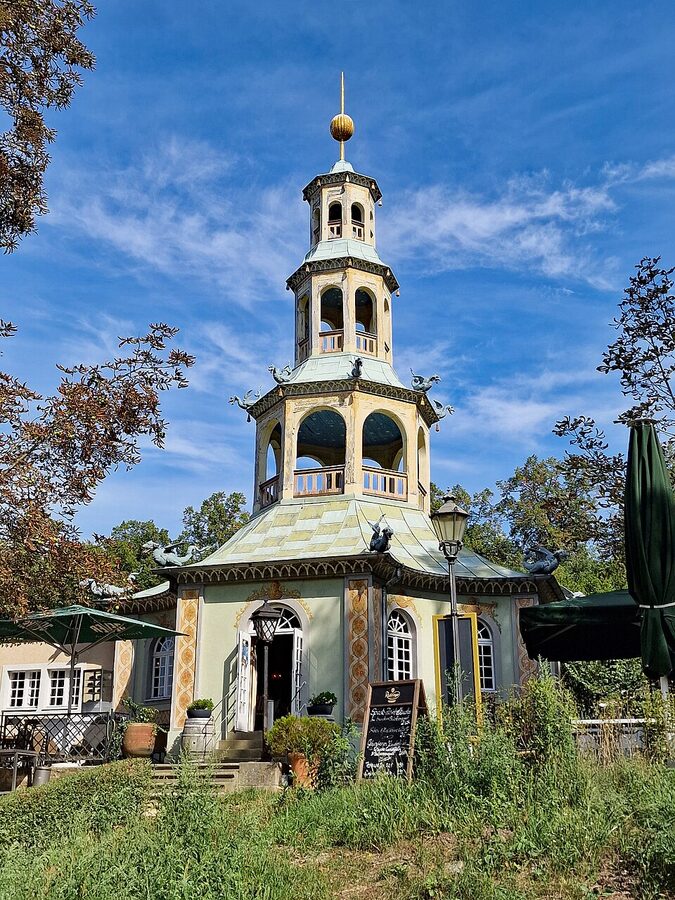
Day 1, late morning. Start at the Historic Mill, pick up your sanssouci+ ticket, walk down through the vineyards to the fountain, then back up the terraces and into the main palace at your booked slot. After the palace, walk east to the Bildergalerie. Have lunch at the café near the Mill or at Drachenhaus, the dragon-roofed teahouse on the hill north of the Orangery. Take the shuttle to the New Palace in the afternoon. Walk back through the gardens for the late-afternoon light on the terraces. That is your full Sanssouci day.
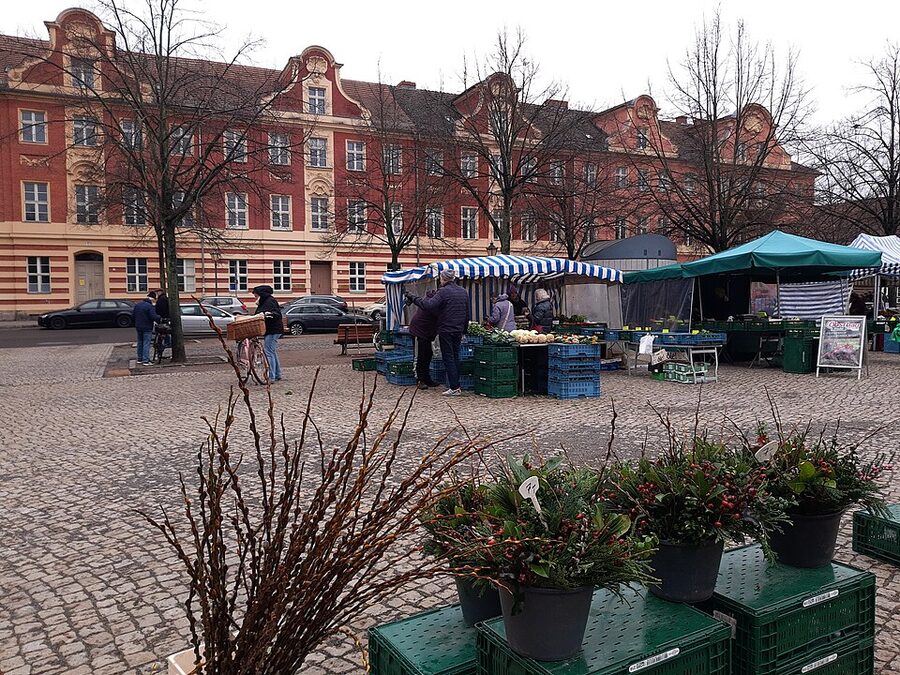
Day 2, morning. Walk into central Potsdam itself. The Dutch Quarter (Holländisches Viertel) is four blocks of red-brick gabled houses built in the 1730s by Frederick William I to attract Dutch craftsmen. Coffee at one of the cafes on Mittelstraße. Then over to the Russian colony of Alexandrowka, twelve carved-wood log houses built in 1826 for a Russian military choir who stayed on after the Napoleonic Wars. None of this is in Sanssouci Park. None of it is on the standard day-trip itinerary from Berlin. This is why staying in Potsdam pays back.
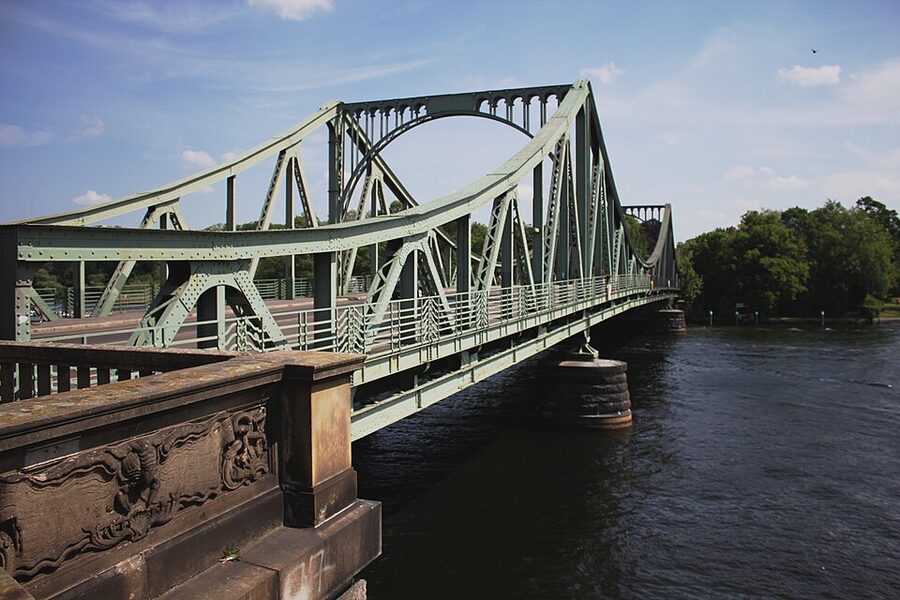
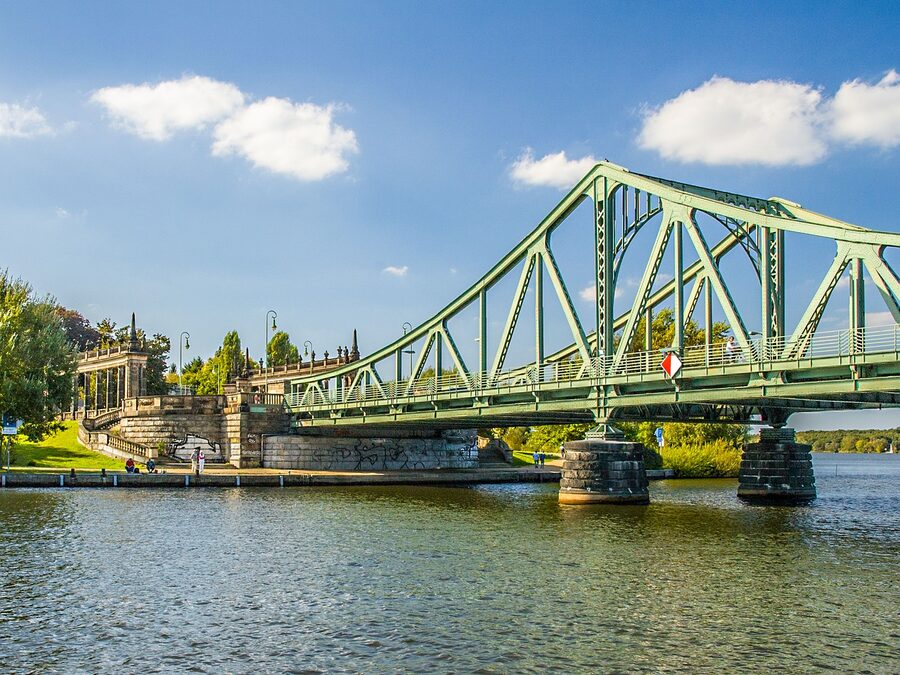
Day 2, afternoon. Book the Palace Tour by boat. Ninety minutes on the Havel, around the Glienicke Bridge (the Cold War spy-swap bridge between Potsdam and West Berlin) and back past the Marble Palace and the Babelsberg shoreline. The audio guide is good. Bring a layer because the wind on the lake is colder than the city.
The Sanssouci Story, in Three Paragraphs
Frederick II of Prussia (1712 to 1786, called Frederick the Great) sketched the rough plan for Sanssouci himself in 1744. He was 33, recently king, and wanted a place to grow grapes, listen to flute music and read Voltaire away from court. The architect Georg Wenzeslaus von Knobelsdorff worked from his sketches. The palace went up between 1745 and 1747. The name is French, “sans souci,” without a care, and Frederick had it engraved on the entrance frieze under his coat of arms.
The estate kept growing under Frederick’s successors. Frederick William II added the Marble Palace in the New Garden across town. Frederick William IV added the Orangery, the Friedenskirche church and a long axis of statuary. By the late 19th century the Hohenzollerns had built or expanded a dozen palaces across Potsdam, and the whole thing became a single landscape composition. Wilhelm II, the last Kaiser, used the New Palace as his main residence until he abdicated in 1918.
The Soviet Army took some of the New Palace’s furnishings as reparations after 1945, but most of it was packed and sent to the exiled royal family in the Netherlands and rediscovered in the 1970s, still in original crates. The palace escaped wartime bombing almost entirely. What you see inside is closer to 1918 than it has any right to be. SPSG, the foundation that runs the estate, was founded in 1995 to merge the East and West German palace authorities after reunification. UNESCO World Heritage status came in 1990.
The Park Buildings Most Visitors Skip
If you have a full day in the park, three smaller buildings are worth the detour beyond the main palace, the Bildergalerie and the New Palace.
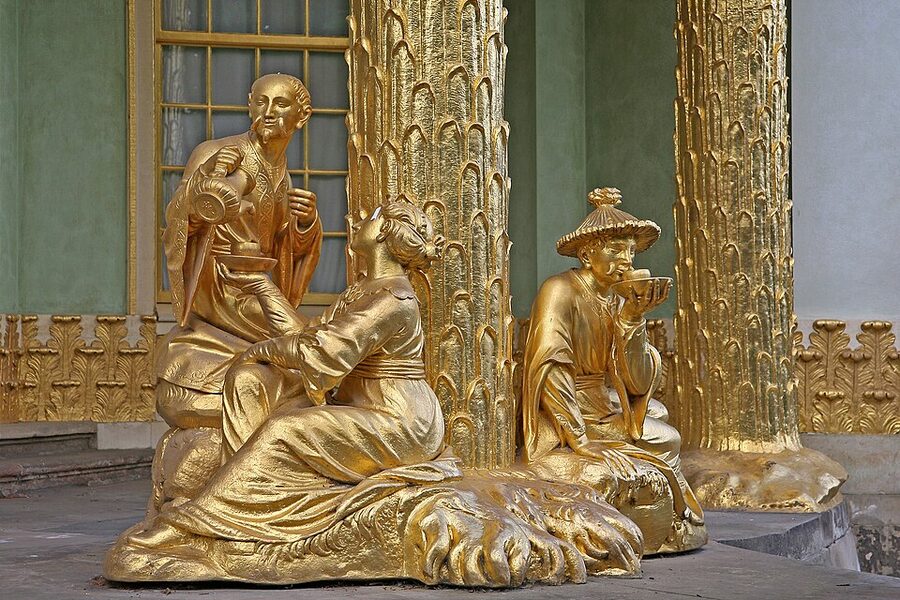
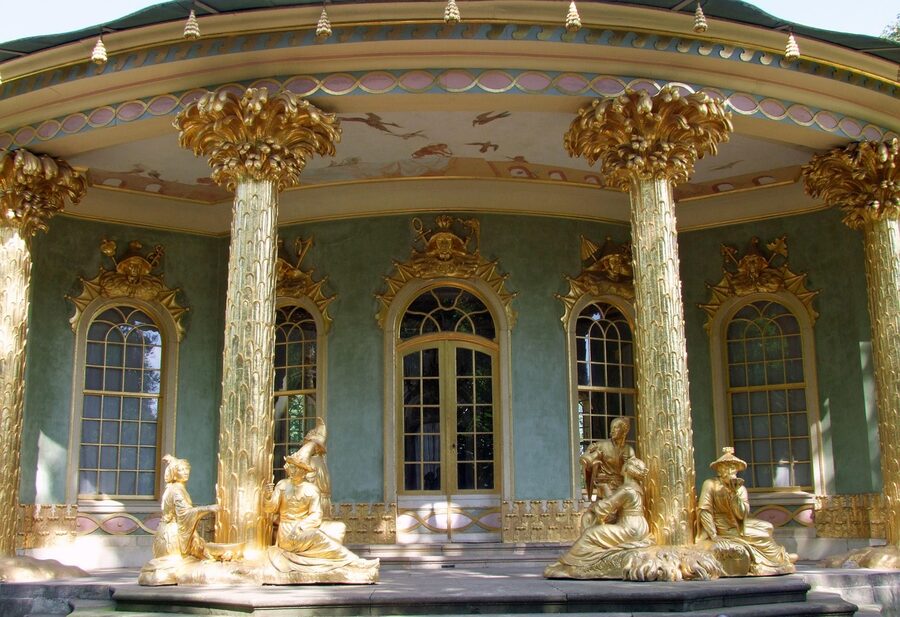
The Chinese House (Chinesisches Teehaus) sits south of the main palace, gilded life-size figures of musicians sitting on the porch under a curling pagoda roof. Built 1755 to 1764. The Prussian royals had a fashion for chinoiserie that lasted decades. Frederick took tea here in summer with a small circle of intimates. Inside is a small porcelain collection. From outside, the gold figures against the green parkland is one of the most photographed shots in Potsdam.
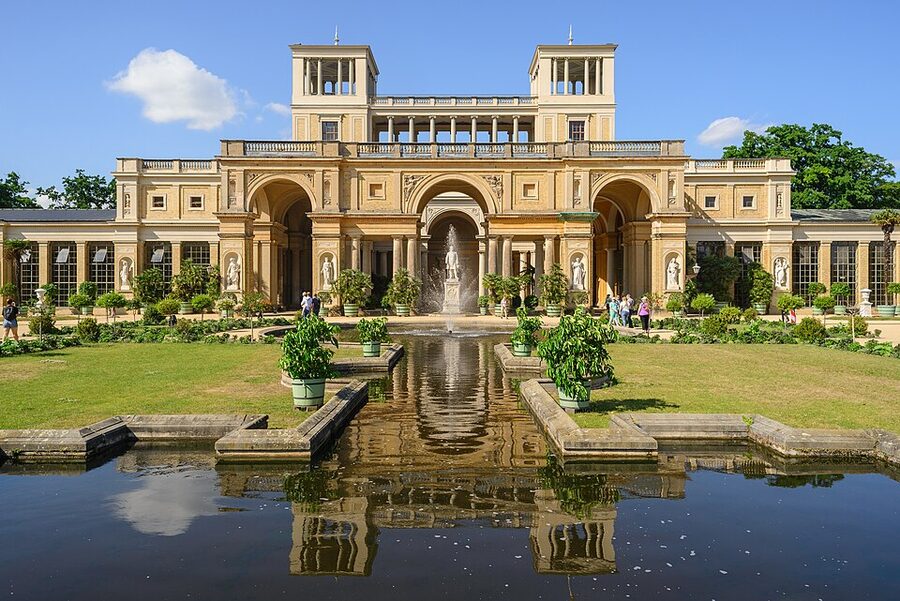
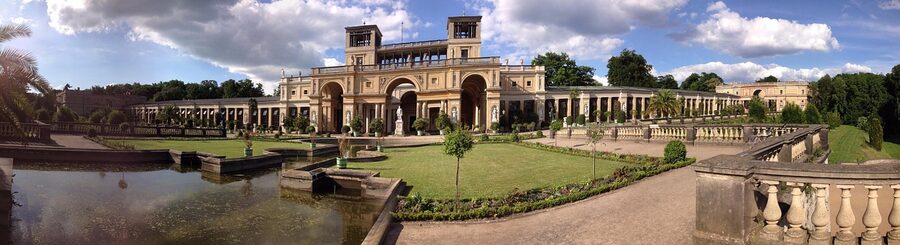
The Orangery (Orangerieschloss) on the north ridge is the last big building Frederick William IV added, completed in 1864. Italian Renaissance pastiche, 300 metres long, with a Raphael Hall in the middle holding 50 copies of Raphael paintings hung on red silk. The Bildergalerie has the originals. The Orangery has the curated copy set Frederick William IV commissioned because he could not afford the originals. There is something charming about that.
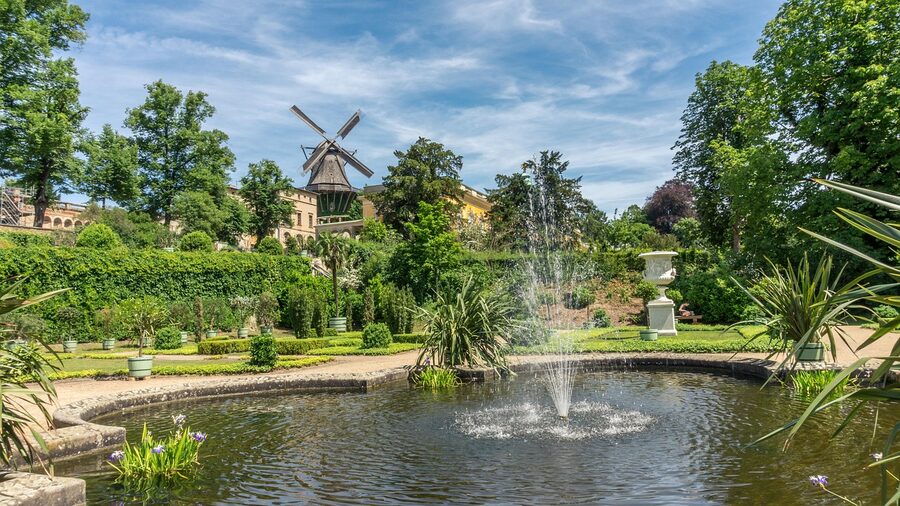
The Historic Windmill right next to Sanssouci Palace was actually older than the palace. Built 1737, eight years before Frederick started building. The famous story (probably embroidered) is that the miller refused to sell his land to the king for the palace gardens, the king threatened to expropriate it, and the miller said he would see the king in court. Frederick let him keep his mill. The mill burned down in 1945 and the rebuilt version dates from the 1990s, but the principle survived. It now houses a small museum about the king-and-the-miller story and a working flour mill on the upper floor.
When to Go and What to Expect
Sanssouci is open year-round but the experience varies wildly by season. Summer is busiest. The palace can sell out of timed slots a week ahead in July and August, and the queues for the New Palace shuttle bus are long enough that you should plan to walk in at least one direction. Spring (April to early June) and early autumn (September) are the sweet spots. Quieter, the gardens are at their best, the light on the yellow stone is warm.
Winter is underrated. Most of the gardens are bare, but the palace interiors are at their most atmospheric and the queues evaporate. Note that several of the smaller park buildings (the Chinese House, the Orangery picture rooms, the Historic Mill upper floors) are seasonal and close from November through March. The main palace, the New Palace and the Bildergalerie stay open with reduced hours.
Mondays the main Sanssouci Palace is closed. The New Palace is closed Tuesdays. Plan around that or your booked timed slot will be useless. Check the SPSG opening calendar before you book any specific day. The schedule changes seasonally and the GYG booking page reflects current availability, but it is still worth confirming.
Practical Logistics for a Potsdam Stay
If you are basing in Potsdam itself, the good hotels cluster either around Hauptbahnhof (convenient for trains, slightly soulless) or in the old town near Brandenburger Straße and Alter Markt (more walkable, period buildings). From the old town, Sanssouci Park is a 15-minute walk west. From Hauptbahnhof, take bus 695 from the front of the station, which runs every ten minutes during the day to Schloss Sanssouci.
Eat in Potsdam itself, not in the park. The cafes inside Sanssouci are fine for coffee and a snack but the proper Brandenburg cooking is in town. The Dutch Quarter has a row of small restaurants that lean into the local food scene. Mittelstraße and Benkertstraße are where to look. Drachenhaus inside the park does proper meals but books out and is half the price for the same quality at any of the Dutch Quarter places.
The S-Bahn from Berlin (S7 from Friedrichstraße or Hauptbahnhof) runs to Potsdam Hauptbahnhof in about 35 to 40 minutes and uses the same Berlin ABC ticket as the U-Bahn. Trains run every ten minutes. Even if you base in Potsdam, you will probably make at least one trip into Berlin during a multi-day stay, and the connection is genuinely seamless.
What to Pair Sanssouci With
If you have come to Potsdam for Sanssouci and you have a third day, the obvious pairing is a half-day in central Berlin for whatever you missed before. The S-Bahn makes it easy. We have full booking guides for the Reichstag dome and government district, the Berlin TV Tower, and the Spree boat tour if you want a Berlin equivalent of the Havel cruise. The Charlottenburg Palace in Berlin pairs well with Sanssouci if you have already become interested in Hohenzollern architecture, because Charlottenburg is the early baroque counterpoint to Sanssouci’s later rococo. Same family, same century, very different style.
If your interest is German history rather than palaces specifically, the Sachsenhausen concentration camp memorial sits 35 km north of Berlin and is the harder, necessary counterweight to a day spent admiring Prussian opulence. Most readers do one of each on the same multi-day trip.
Within Potsdam itself, the other side of the picture is the boat. Once you have done Sanssouci on foot, the Palace Tour by boat shows you the half of the UNESCO estate that the foot tours miss: Glienicke Bridge, the Marble Palace in the New Garden, the Babelsberg shoreline. Different palaces, different angles, same World Heritage listing.
If you’re not staying overnight in Potsdam and just want to do Sanssouci as a Berlin day trip, our Potsdam from Berlin day-trip guide walks through the boat-vs-coach-vs-train options for a single-day round trip without overnight logistics. And for travellers building a broader Saxon-and-Brandenburg trip, Leipzig is the other Saxon city worth a stop — our Leipzig Night Watchman tour guide and Leipzig hop-on hop-off bus guide cover the Leipzig side, which is more music-and-university than royal-and-palace. Different feel, but easy to reach by ICE.
Common Mistakes to Avoid
The biggest one: assuming “Sanssouci” means the small yellow palace and only that. The site is a 700-acre estate with a dozen ticketed buildings, and people regularly arrive expecting a thirty-minute visit and end up missing the New Palace, the Bildergalerie or the Orangery entirely. Read the SPSG site or the GetYourGuide booking page first, work out what you actually want to enter, and budget your day from there.
Second: arriving without a timed slot for the main palace. In summer same-day walk-up tickets routinely sell out. The Visitor Center will tell you, politely, that today is full and you can come back tomorrow. Book online at least the day before. The combined Prussian Palaces ticket on GYG handles this for you.
Third: trying to do Sanssouci as a quick add-on after a full day in Berlin. The site rewards a slow morning and afternoon. If your only window is 3pm to 6pm after the train down from Berlin, walk the gardens and the terraces and skip the interiors. Save the timed-entry tickets for when you actually have the morning.
If You Have Only One Afternoon
Sometimes the brief is “I have four hours, what do I do?” Here is the version of Sanssouci that fits in half a day. Take the bus 695 from Potsdam Hauptbahnhof to Schloss Sanssouci. Walk down through the terraced vineyards to the fountain. Walk back up the terraces. Skip the palace interior (you do not have time for a meaningful timed slot). Walk west along the main path past the Bildergalerie, glance in if you are quick, then continue toward the New Palace. Take a shuttle bus back. Spend the last hour wandering the formal gardens.
Total: about three and a half hours, mostly on your feet, no tickets bought, all the iconic views. This is also the fallback I recommend if you are doing Potsdam as a day trip from Berlin and reading this article anyway. The fuller version that comes from staying in Potsdam is genuinely better, but the four-hour version is still worth doing.
If your appetite for German palaces survives this trip, our guided City and Castles tour with a local guide adds the Dutch Quarter and Russian colony context that nobody walks into on their own. And the Berlin walking tour back in the city is the natural counterpart, the imperial centre versus the imperial summer retreat. Different scales of the same Prussian story.