
What’s the actual fastest way to see Marienplatz, Nymphenburg, and the Olympic Park in one Munich morning without losing an hour to S-Bahn maps? For me the honest answer is the open-top hop-on hop-off bus, and the booking is simpler than most blogs make it look.
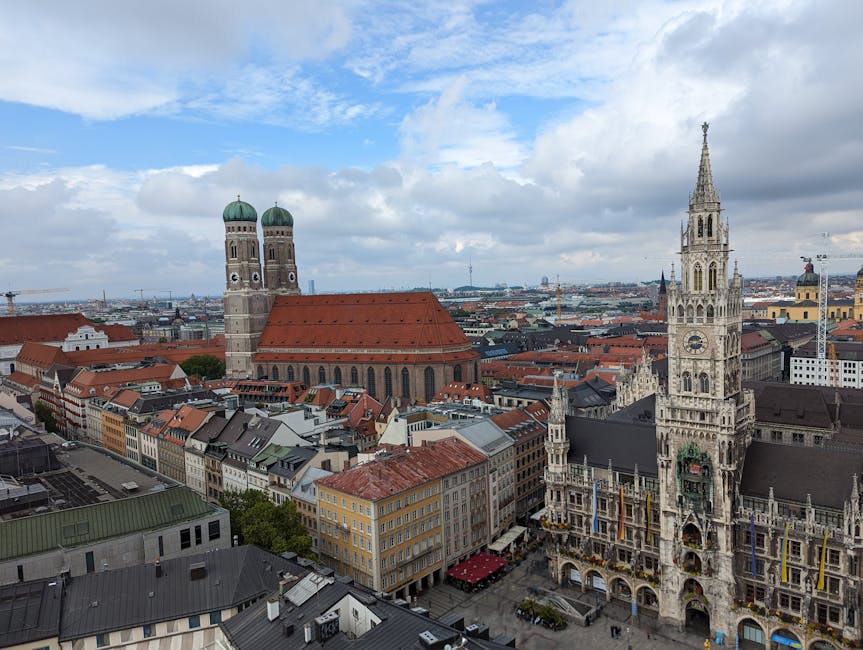
Munich is compact in the centre and weirdly stretched at the edges. The big-ticket sights, Nymphenburg Palace, the Olympic Park, the BMW Museum, and Schwabing’s cafe streets, sit on three different transit corridors. A 24 or 48-hour bus pass stitches them together for the price of a single museum ticket. Below is what I actually book, and which line to start on.
- In a Hurry?
- Which Operator Runs Munich’s Hop-On Hop-Off?
- Where Do the Buses Actually Start?
- How the Routes Actually Work
- City Sightseeing: Red, Purple, Blue
- Big Bus: Green and Orange
- Munich Hop-On Hop-Off Tours to Book
- 1. Munich Hop-On Hop-Off Tour: 1-Day or 2-Day Ticket ()
- 2. Munich Big Bus Open-Top Tour ()
- 3. Munich City Hop-on Hop-off Tour (Express or Grand) (.24)
- What’s Worth Hopping Off For?
- Nymphenburg Palace
- Olympic Park and BMW Welt
- Marienplatz and the Old Town
- English Garden
- Tickets and Prices
- Best Time of Day to Start
- Open-Top in Bavaria’s Weather
- What to Pair It With
- Booking Logistics
- How Munich’s Loop Compares
- Munich Beyond the Bus
In a Hurry?
If you only read one section, here are the three I’d book without overthinking it.
- City Sightseeing Munich 1 or 2-Day Pass, from $27. Three colour-coded routes, 16 stops, multilingual audio. The default pick.
- Munich City Hop-on Hop-off (24h Express or Grand), from $31. Same operator, sold via Viator with a separate Express short-loop option for half-day visitors.
- Big Bus Munich Open-Top Tour, from $27. The other major operator. Different routes, fewer stops, but the open-top deck is nicer in summer.
Which Operator Runs Munich’s Hop-On Hop-Off?
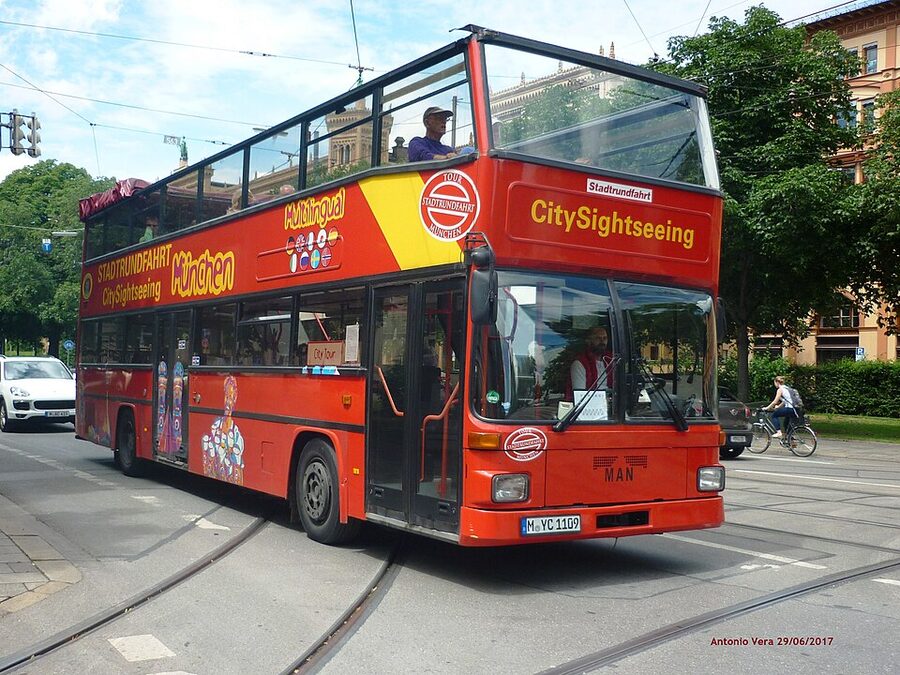
Two companies run sightseeing buses in Munich and a lot of confusion comes from people not realising they’re separate networks with separate stops.
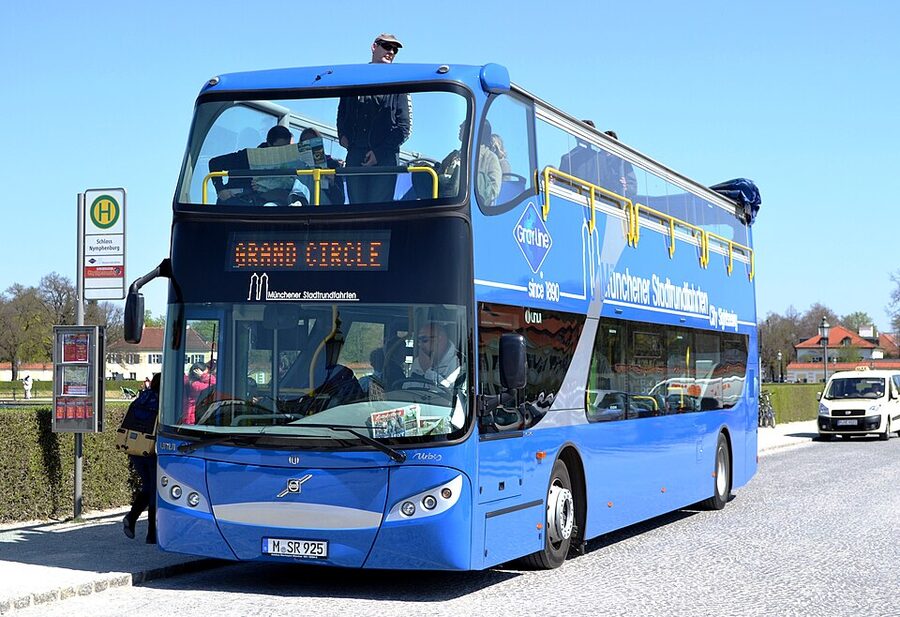
City Sightseeing Munich (operated locally by Stadtrundfahrten/Gray Line) runs three lines. A red City Tour line covering the historic centre, a purple Nymphenburg-Olympia line going west to the palace and the Olympic Park, and a blue Schwabing line through the bohemian university district. You can switch between the three lines on a single ticket.
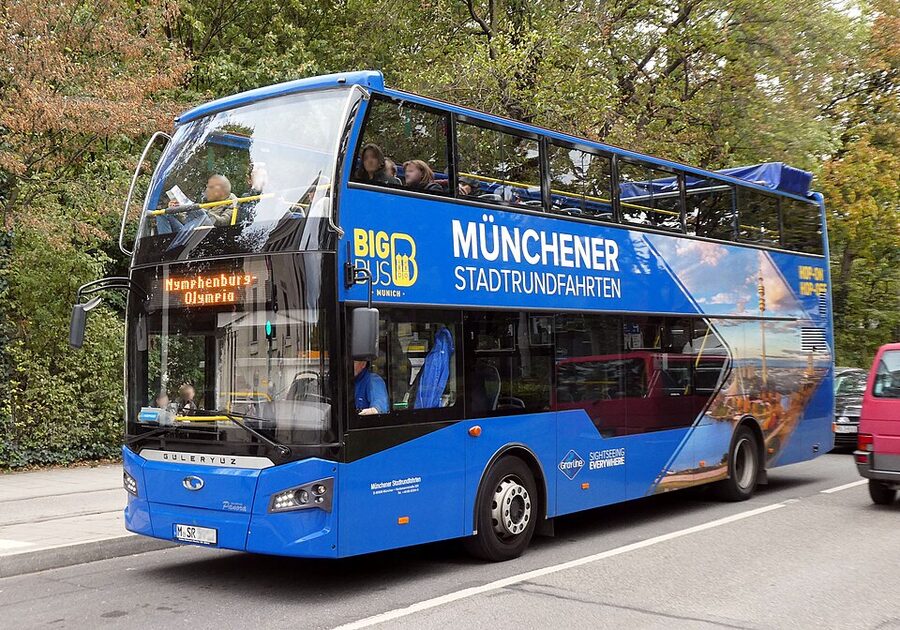
Big Bus Munich runs two lines on a different network. A green line covering Odeonsplatz, the English Garden, and the Deutsches Museum, and an orange line out to Nymphenburg Palace, Schwabing, and Olympiapark.
The two companies don’t share stops, so if you buy a Big Bus ticket you can’t board a City Sightseeing bus at Marienplatz, even though they may be parked next to each other. Pick one network at booking and stick with it for the day.
Where Do the Buses Actually Start?
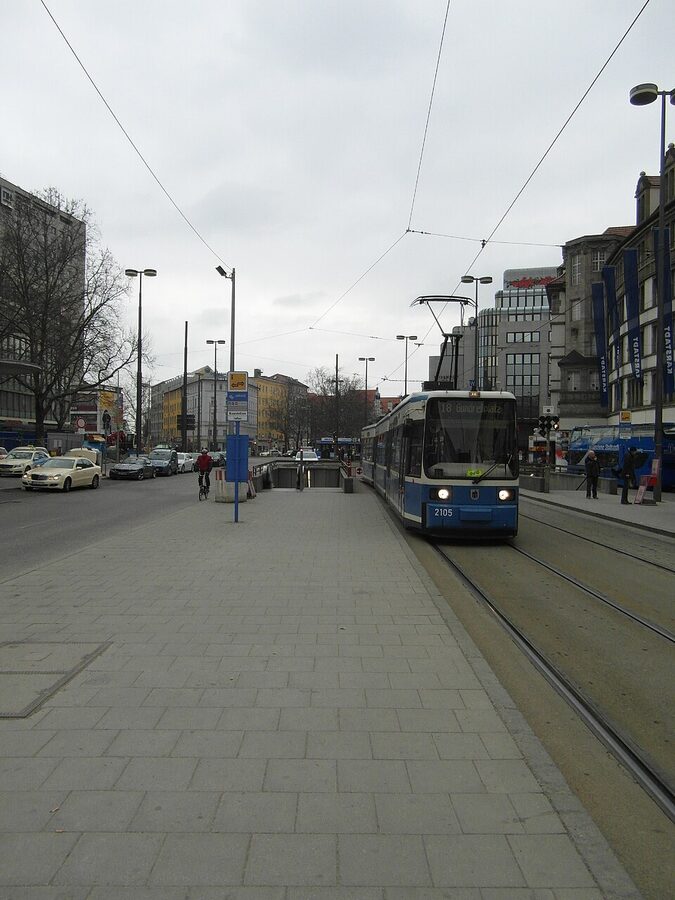
For City Sightseeing, the main boarding point is Bahnhofplatz at the Hauptbahnhof (Stop 1), right outside Munich’s main train station. If you’re arriving by ICE from Berlin or by S-Bahn from the airport, you can drop your bag at left luggage and be on a bus in five minutes.
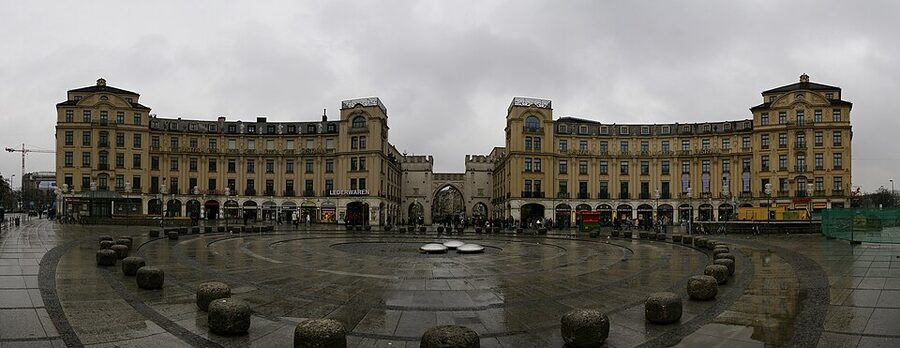
Big Bus starts at Karlsplatz/Stachus, two blocks east of the Hauptbahnhof and right next to the pedestrian zone. Both starting points have ticket booths if you want to buy on the spot, but I’d book online before you fly out. The QR code in your inbox is faster than queuing.
You don’t have to start from Stop 1. Both operators let you board anywhere along the loop, so if your hotel is closer to Marienplatz or Odeonsplatz, just walk to the nearest stop and flag the bus down. The drivers are used to it.
How the Routes Actually Work
Here’s where most reviews go wrong. They list “16 stops” or “10 stops” as if it’s one big loop. It isn’t. Each operator splits its route into separate colour-coded lines, and you transfer between lines at a hub.
City Sightseeing: Red, Purple, Blue
The Red Line is the central city loop. Ten stops, every 15-30 minutes, full circuit in about an hour. This covers Marienplatz, Karlsplatz, Odeonsplatz, and the rest of the Altstadt. It’s the line you ride if you have one day in Munich and just want to see the headline sights.
The Purple Line is the Nymphenburg + Olympia run. Five stops, every 30-60 minutes, 1-hour loop out to Nymphenburg Palace and back via the BMW Museum and Olympic Park. Less frequent than the Red, so check the timetable when you board.
The Blue Line covers Schwabing, the university district. Six stops, but the kicker is the frequency: every two hours. If Schwabing isn’t a priority, skip it. I’ve twice waited 90 minutes for a Blue Line bus in light rain. Not worth it for a quick neighbourhood loop.
Big Bus: Green and Orange
Big Bus’s Green Line is its main central loop. Seven stops, every 30 minutes, 10am to 4:30pm. Hits Odeonsplatz, the English Garden, and the Deutsches Museum on Museum Island.
The Orange Line is the western extension. Four stops only, every 30 minutes, 1 hour 15 minute loop covering Nymphenburg, Schwabing, and Olympiapark. You’ll change from Green to Orange at Karlsplatz/Stachus.
Munich Hop-On Hop-Off Tours to Book
Three picks I’d actually book for a Munich day. Reviews and price-points come from our own tour database, but the take is mine.
1. Munich Hop-On Hop-Off Tour: 1-Day or 2-Day Ticket ($27)
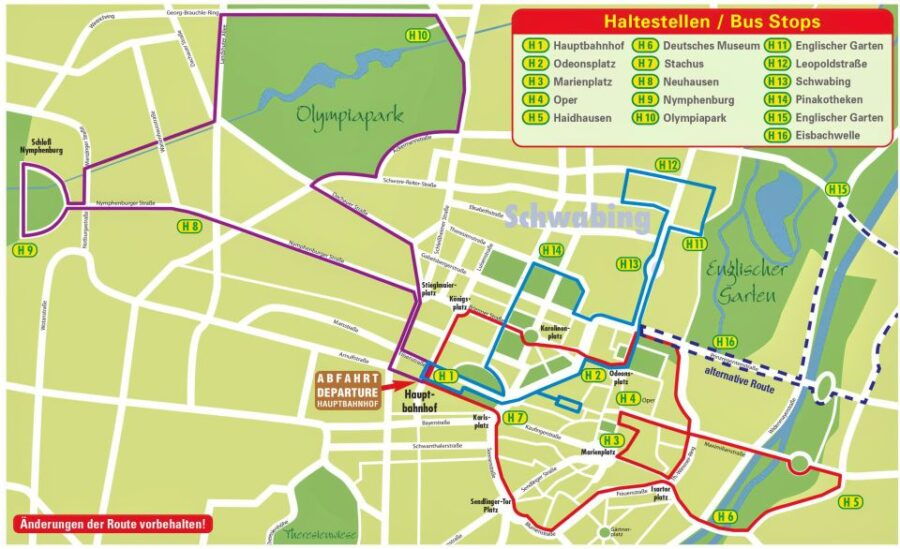
This is the City Sightseeing pass and the one I’d buy first. It covers all three colour-coded lines, hits 16 stops, and includes multilingual audio in nine languages. Our full review walks through which line to ride first if you only have a morning. The 48-hour version is barely more expensive than 24 hours, so unless you’re in town for a single afternoon, take the longer pass.
2. Munich Big Bus Open-Top Tour ($27)
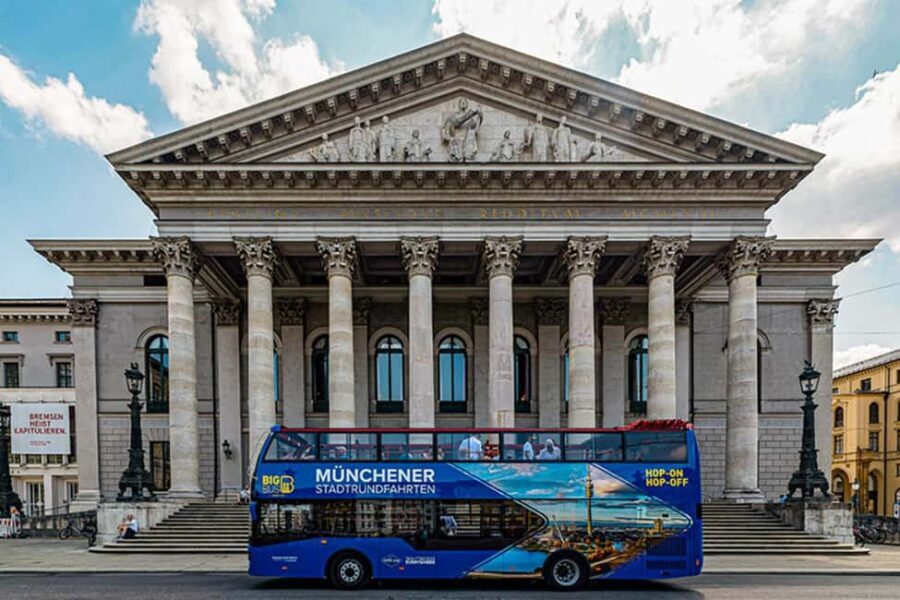
If the weather is good, Big Bus is the more pleasant ride. The open-top double-deckers feel a little newer and the upper deck has better sightlines, especially down Briennerstrasse. The trade-off is fewer stops, so if you want to actually hop off at Marienplatz it’s not the one. Our review covers the route map in detail.
3. Munich City Hop-on Hop-off Tour (Express or Grand) ($31.24)

This is the same operator as pick #1 sold through a different platform, but with one useful twist: you can pick a 24-hour Express ticket that just covers the central loop. Good if you have one afternoon and don’t care about Nymphenburg. Our review notes the pickup point, which trips some travellers up: it’s at Bahnhofplatz, not inside the Hauptbahnhof.
What’s Worth Hopping Off For?
This is the part most articles fudge. A 16-stop pass is only useful if you actually get off. Here’s what I’d prioritise based on how the loop is laid out and what’s worth the time.
Nymphenburg Palace
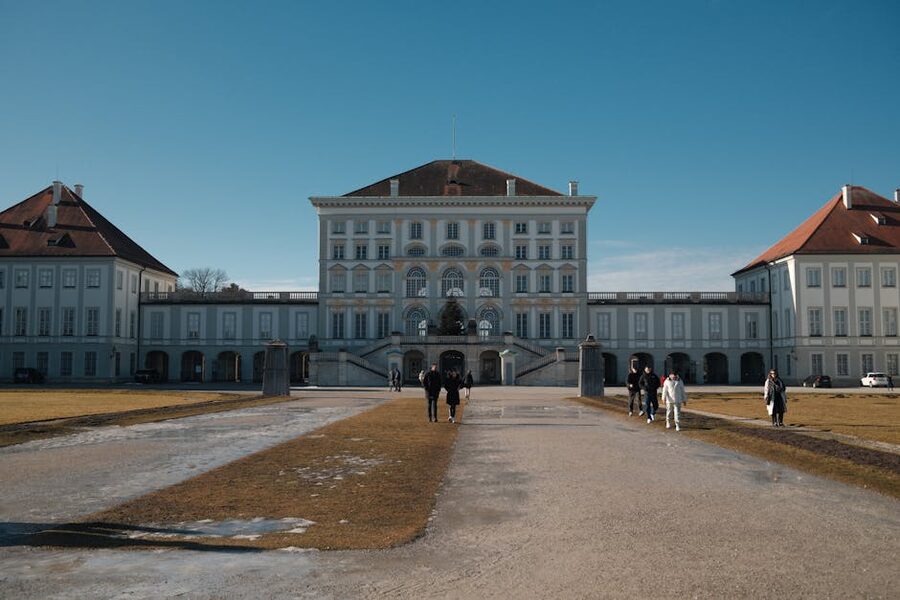
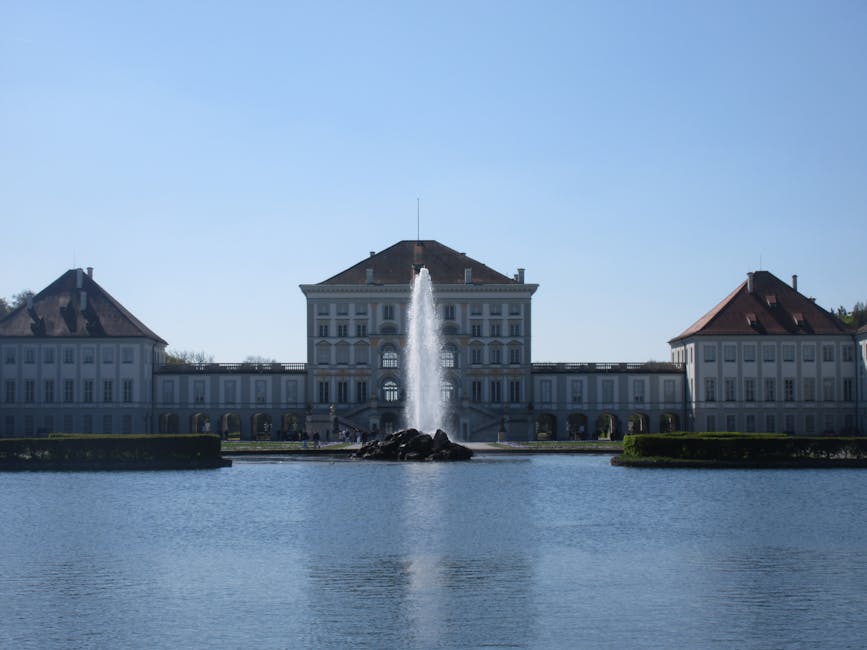
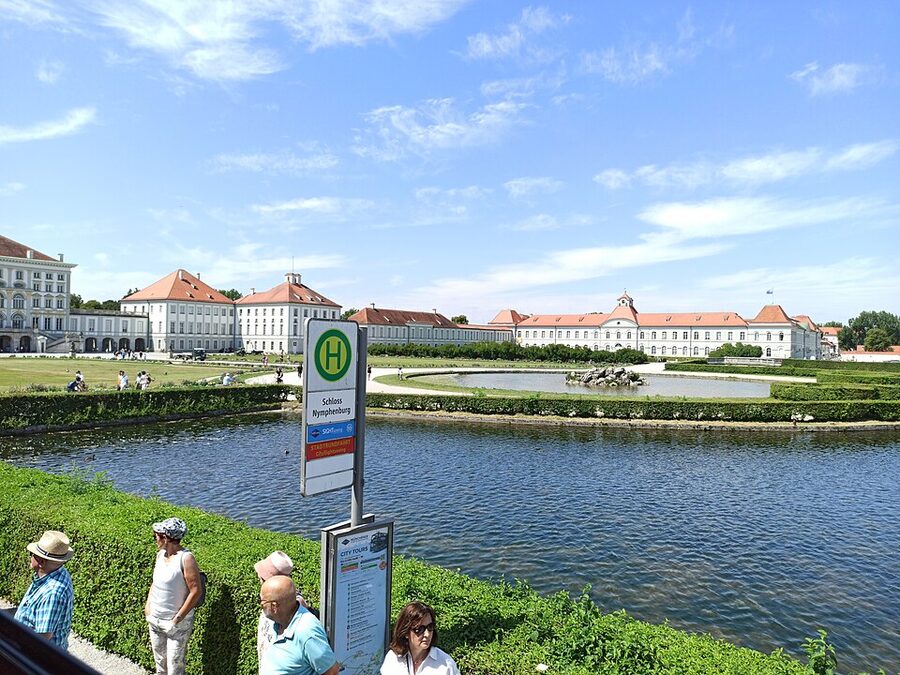
The summer residence of the Bavarian kings, and the obvious “off the loop” stop on the Purple/Orange lines. The palace itself is a baroque pile with a famous Gallery of Beauties, but the gardens are the real draw. They’re free to enter and they’re enormous. Bring water in summer, the sun is exposed.
The bus drops you at the front courtyard. Walk to the rear and you’re in the gardens within five minutes. Skip the palace interior if you’re tight on time, the gardens and the canal view are the photogenic part.
Olympic Park and BMW Welt
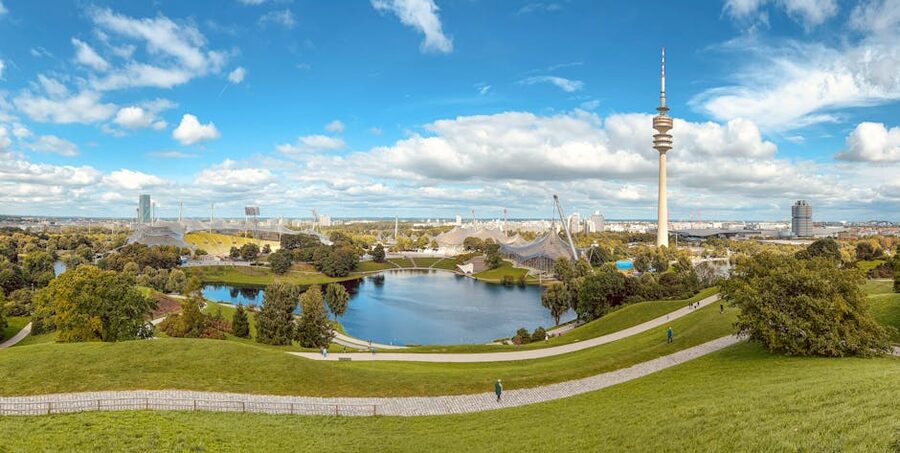
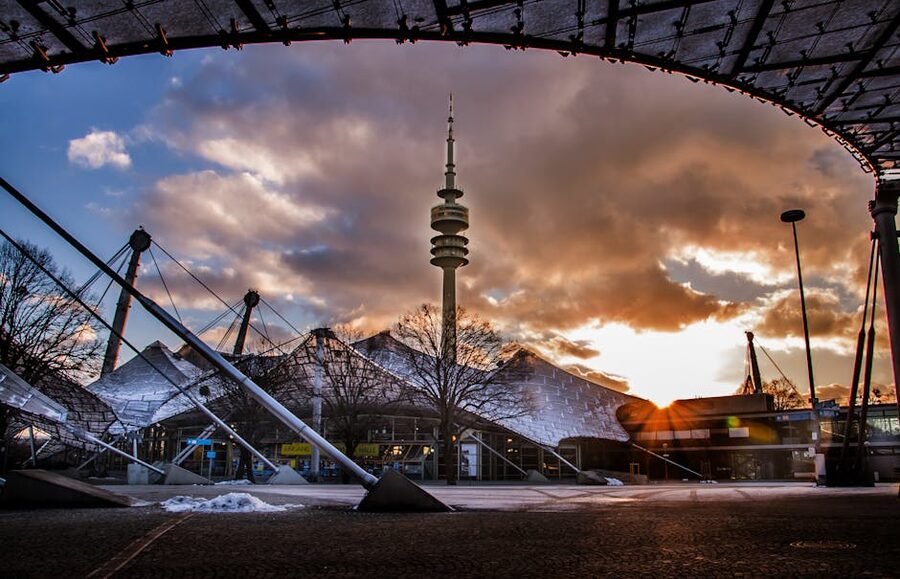
The 1972 Olympic Park is one of those mid-century complexes that aged better than anyone expected. The tent-roof stadium is genuinely beautiful from the right angle, and the Olympic Tower has the best skyline view in the city. Both lines stop here.
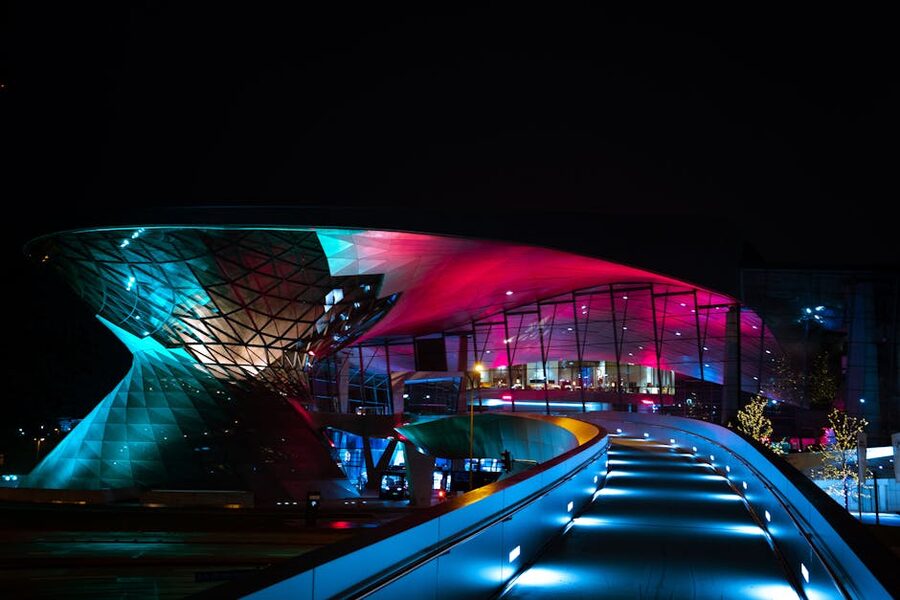
BMW Welt is across the road from the Olympic Park stop, with the BMW Museum next door. Welt is free to enter and houses the current model lineup. The museum is paid and properly good if you’re a car person. Allow an hour for Welt, two if you do the museum too.
Marienplatz and the Old Town
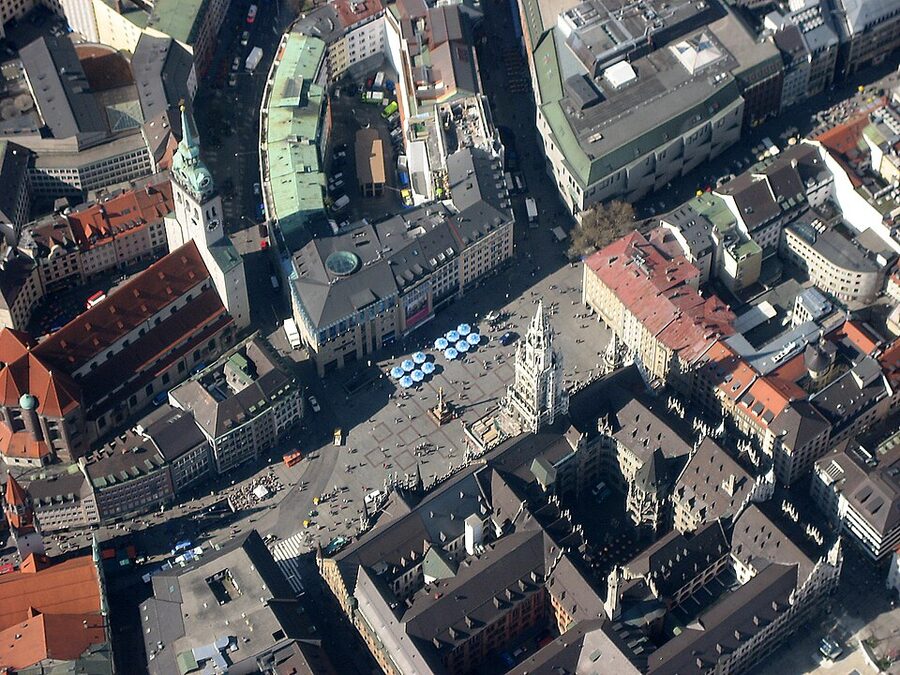
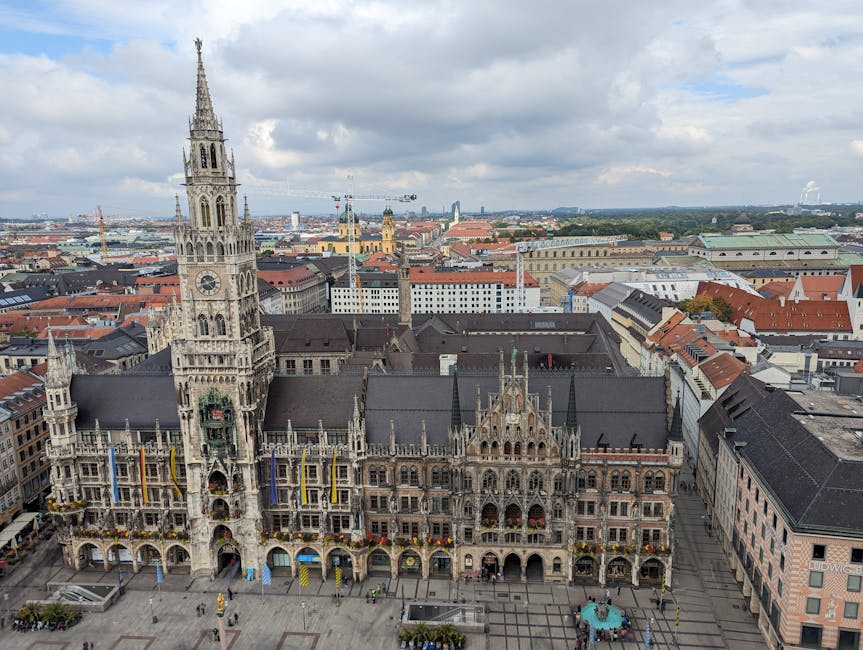
Both Red Line and Green Line stop within walking distance of the central square. If you’re new to Munich this is your first hop-off. The New Town Hall’s Glockenspiel chimes at 11am, noon, and 5pm in summer. Plan around those times.
Old Peter (Alter Peter) is the church tower next door. Climb it for ten euros and you get a postcard view straight down onto Marienplatz. Easier on the legs than it looks, the staircase is steep but not long.
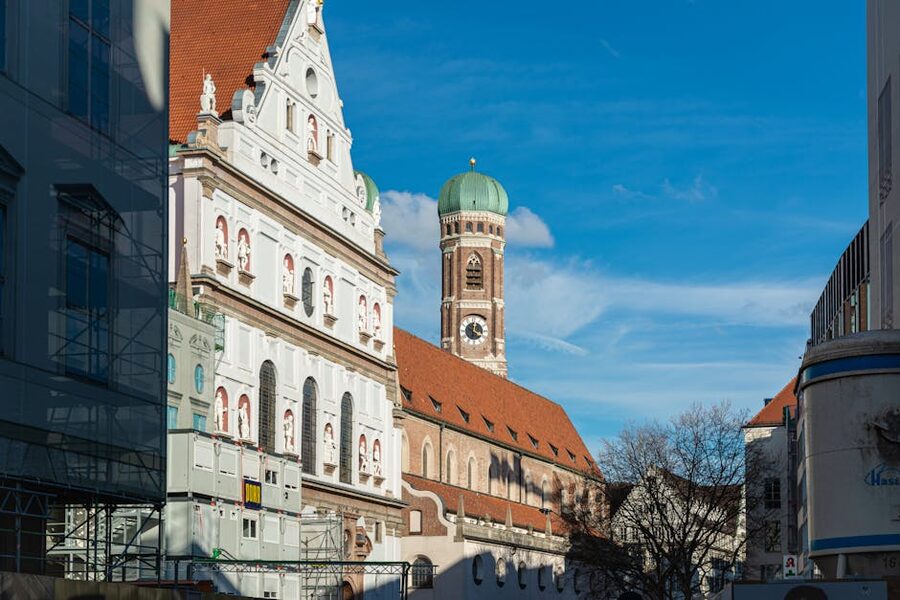
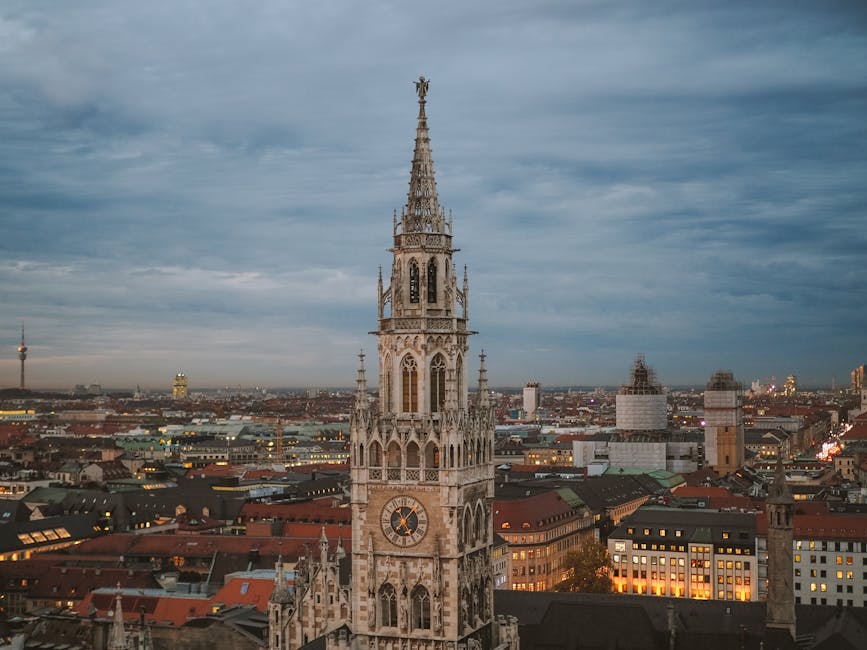
If you want a guided take on the same area instead of self-touring with the bus audio, the Old Town small-group walking tour is a solid 2-3 hour add-on. It pairs well with a hop-on hop-off pass: ride the loop in the morning, take the walk after lunch.
English Garden
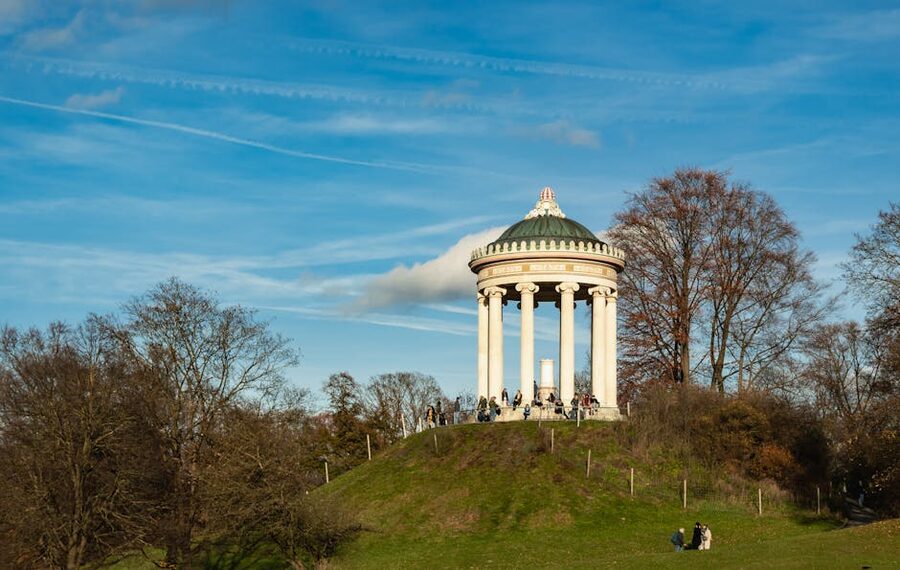
The English Garden is bigger than Central Park, which always surprises first-time visitors. The Big Bus Green Line drops you near the southern entrance, closest to the Monopteros temple and the famous Eisbach surfing wave. The wave is just inside the entrance off Prinzregentenstrasse, you’ll hear it before you see it.
Allow at least an hour. Walk to the Chinese Tower (Chinesischer Turm) beer garden if you want a Bavarian beer-and-pretzel pause halfway through. There’s a bus stop nearby to pick up the loop again.
Tickets and Prices
Both operators price 24-hour passes around $27 per adult. Two-day passes run roughly $32-37 depending on operator and season. Children typically ride for half. Online prices are usually identical to ticket-booth prices, so book online for the queue savings rather than for the discount.
Tickets are dated but not timed. A “24-hour” pass means 24 hours from first scan, not until midnight. If you board at 2pm on Tuesday it expires at 2pm Wednesday, which is more useful than people realise. Ride out to Nymphenburg in the afternoon, sleep on it, ride back through the centre next morning.
If you also want public transport included, the Munich CityTourCard (sold separately) bundles unlimited U-Bahn and S-Bahn with discounts on attractions. It’s not a hop-on hop-off ticket though, so don’t confuse the two. We cover it in the Munich CityTourCard guide.
Best Time of Day to Start
First buses on both networks roll at 10am sharp. That’s late by city-tour standards, so don’t drag yourself out at 8am expecting an open ticket booth. Use the morning for breakfast in a cafe near Marienplatz and aim for a 10:30 boarding.
The last full loops finish around 4-5pm depending on line and season. If you want to do Nymphenburg and the Olympic Park in one day, board the western line first thing and do the central loop after lunch. Doing it in the other order is the classic mistake, you’ll get stranded at Olympiapark with no return bus and end up paying for a U-Bahn ride home.
Open-Top in Bavaria’s Weather
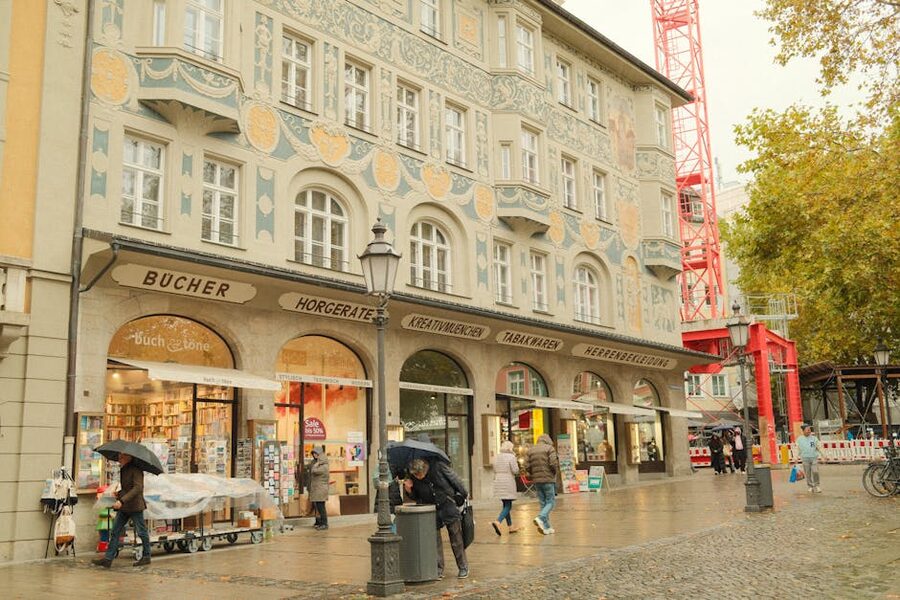
Open-top buses are great in May to September. The rest of the year, plan for the weather. Munich gets serious rain in autumn and the upper deck has a partial canopy on most buses, not full coverage. Bring a rain shell and check the forecast before you commit to the upper deck. The lower deck is heated.
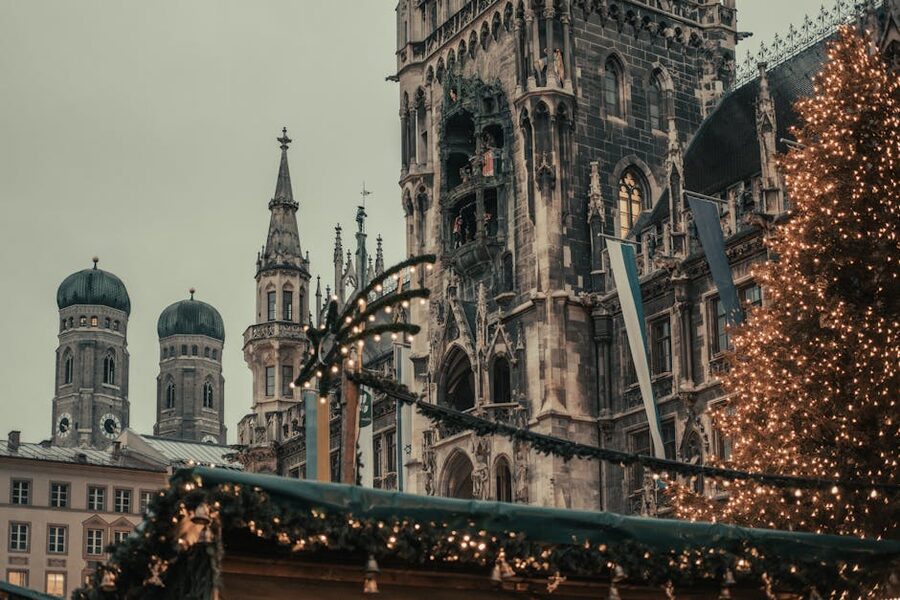
Winter is the underrated season here. Crowds are gone, the Christmas markets are running from late November through Christmas Eve, and an open-top loop with a thermos of Glühwein is one of the better things you can do in Munich in December. Just dress for it.
What to Pair It With
The hop-on hop-off pass is a base layer, not a full Munich itinerary. The day trips are where Bavaria really shines, and they all leave from a city-centre meeting point you can roll up to from any HOHO stop. Three I’d recommend pairing:
If you have two full days, ride the loop on day one and take a Neuschwanstein Castle day trip on day two. Neuschwanstein is two hours each way and not a hop-off-and-keep-going kind of attraction. Our Neuschwanstein from Munich booking guide covers ticket types and which tour to pick.
For a sober, important counterweight to the sightseeing bus, the Dachau Memorial day tour from Munich is the one I’d plan for. Half a day, train-based, with a knowledgeable guide. Our Dachau booking guide walks through the options. Don’t combine it with a HOHO loop on the same day, the emotional gear shift is too much.
If WWII history is a priority, also build in a Third Reich walking tour in the city centre, covered in our Munich Third Reich guide. Two hours, on foot, covers the spots the bus rolls past without context.
Booking Logistics
Book at least 24 hours ahead in summer and during Oktoberfest. The bus rarely sells out completely but the booth queues at Hauptbahnhof in late September are brutal. Online tickets are scanned by QR code, you don’t need to print.
Cancellation policies on both GetYourGuide and Viator listings are typically 24-hour free-cancel for these passes. Worth knowing if your flight slips. The vouchers are also valid until first scan rather than for a specific date, so you can shift days without rebooking.
If you’re buying for a family, the children’s ticket cutoff is usually under 14 or 15 depending on operator. Check at booking. There’s no infant fare, kids on laps go free.
How Munich’s Loop Compares
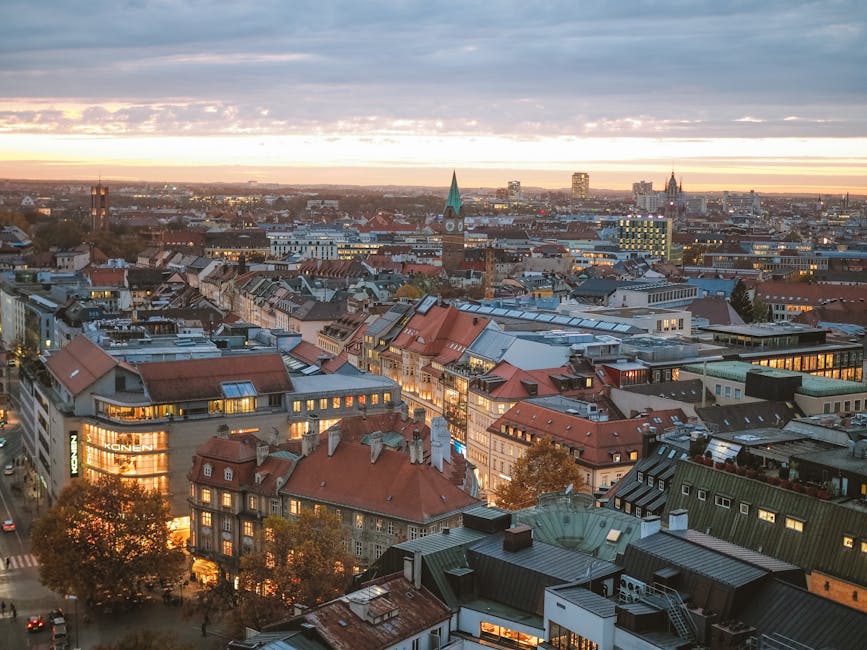
I’ve ridden hop-on hop-off in most major German cities and Munich’s network is solid but not flashy. Berlin’s hop-on hop-off bus tour covers a bigger and flatter city and feels more substantial as a result, see our Berlin HOHO booking guide for that side-by-side. Munich’s strength is that the centre is small enough to walk, so the bus is best as a Nymphenburg-and-Olympic shuttle rather than a centre-of-town loop.
If you’re moving on to other German cities, the format is consistent enough that the same logic applies. Buy a 1-day if you only need the outer attractions, 2-day if you want both peripheral sights and a leisurely Altstadt circuit.
Munich Beyond the Bus
Once you’ve ridden the loop and ticked Marienplatz, Nymphenburg, and the Olympic Park, the rest of Munich opens up. A Bavarian beer and food evening tour is the obvious dinner pairing after a sightseeing day. The Viktualienmarkt food walk is the daytime version, and a guided bike tour covers the centre at a different pace if you want a second perspective. For something darker, the Night Watchman tour takes the Altstadt at dusk with a costumed guide and it’s surprisingly good. Layer two or three of these on top of your hop-on hop-off day and you’ve got a properly rounded long weekend in Munich without overpaying for any single experience.