
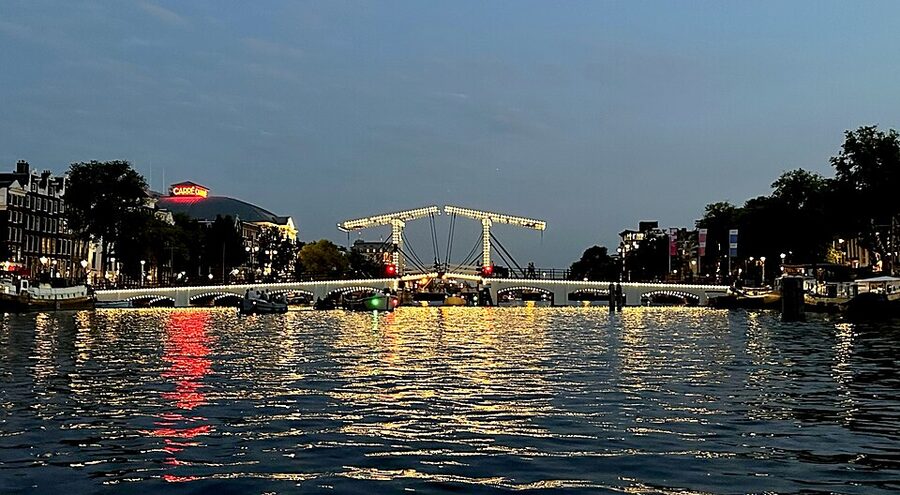
You’re cycling under the Magere Brug at sunset, following the local guide as the rest of your group strings out behind. A scooter buzzes past your right shoulder. You ring the bell on instinct. A woman wheeling a child seat past you nods hello. Two minutes ago you were tense. Now you’ve fallen into the rhythm and your shoulders have dropped half an inch.
Booking a bike tour in Amsterdam sounds like the simplest thing on a tourist’s checklist. It isn’t. There are at least eight distinct product types, the price ranges from $10 (rental, you DIY) to $144 (private, just you and a guide), and the difference between the cheapest and the right-fit choice can be huge depending on how much city cycling you’ve done before. This guide sorts it out so you book the one you actually want.
Amsterdam has more bikes than residents. 881,000 bikes for 873,000 people, plus around 500km of dedicated bike paths separated from cars and pedestrians by kerbs. The city was built for cycling decades ago. The cycling tour industry knows it. So do the locals you’ll be riding alongside, and they’ll tolerate you only if you behave on the lanes.
- In a Hurry? Three Picks
- The eight bike-tour product types you’ll see
- Bike etiquette: don’t be the tourist on the news
- What a standard guided tour looks like
- Why Amsterdam works for a guided tour and the obvious counter
- Picking between a guided tour and a rental
- The countryside option
- The seasonal flower-fields ride
- What to wear and what to bring
- Safety, accidents, and what insurance covers
- Top picks for booking right now
- 1. Amsterdam Bike Tour in a Small Group with Optional Canal Cruise:
- 2. Countryside Electric Bike Tour to Zaanse Schans and Zaandam: 8
- 3. Keukenhof Flower Fields Small-Group Cultural Bike Tour:
- Other variants worth flagging
- Where to meet, and how to find the meeting point
- Pricing reality check
- How a bike tour stacks against a canal cruise
- Booking timing, cancellation, weather
- Cycling Amsterdam beyond the centre
- Begijnhof and the in-tour quiet stops
- What to do after the bike
- Comparing Amsterdam to other European bike-tour cities
- One more thing on the bell
- If you’re booking only one tour in Amsterdam
In a Hurry? Three Picks
Best for first-timers in the city centre: Amsterdam Bike Tour in a Small Group with Optional Canal Cruise from $22. 2.5-3.5 hours, max 12 riders, the highest-reviewed small-group option in the pool.
Best for cyclists who want to leave the city: Countryside Electric Bike Tour to Zaanse Schans and Zaandam from $108. 5.5 hours, e-bikes do the work for you, takes you out to the working windmills.
Best seasonal pick (March-May only): Keukenhof Flower Fields Small-Group Cultural Bike Tour from $68. 3 hours through the bulb fields with a guide.
The eight bike-tour product types you’ll see
Every Amsterdam bike tour sold online falls into one of eight categories. The marketing copy disguises this. Once the categories are clear the price sheet stops being confusing.
1. Standard small-group city tour. 2.5-3 hours, 10-15km loop, maximum 10-12 riders, one guide. Around $22-30. Covers the canal ring, Vondelpark, the Jordaan, and a slice of the Amstel. The default option for first-time visitors. The flagship sits in this tier.
2. Private bike tour with a local. Just you (or your couple, or your family) plus a guide. Same route options, customised pace and stops. $130-150 for two people, scaling up by the head. Worth it if someone in the group is a nervous cyclist, or you want to ask a lot of specific questions.
3. Language-specific group tour. French-speaking, German-speaking, Spanish-speaking, sometimes Italian. Same content as the English standard, smaller groups because the language pool is smaller. Around $35-45. The French-speaking option is the most consistently available.
4. Countryside bike tour. 4-6 hours, exits the city through the IJ ferry, runs along the Zaan or out to Waterland. Around $60-80. You see actual Dutch countryside: dykes, sheep, wooden houses, working windmills.
5. Countryside e-bike tour. Same routes as countryside tours but on electric bikes. The motor smooths out headwinds and longer distances. Around $90-120. Worth the upgrade if it’s your first long ride or you want to actually look at the scenery instead of pushing pedals.
6. Keukenhof flower-fields bike tour. Seasonal, mid-March to mid-May only. 3-4 hours through the bulb fields, often combined with Keukenhof entry. Around $65-90. The classic spring picture-postcard ride.
7. Bike rental plus self-guided. $10-15 a day for the bike, you’re on your own. Cheapest option, hardest if you’ve never cycled in a city this dense. Most rental shops give you a paper map of three or four loops.
8. Themed combos. Bike tour plus canal cruise, bike tour plus food stops, bike tour plus a museum entry. Prices vary. The bike-and-cruise combo is the most popular: 2 hours on the bike, 1 hour on a boat, both perspectives in one afternoon.
Bike etiquette: don’t be the tourist on the news
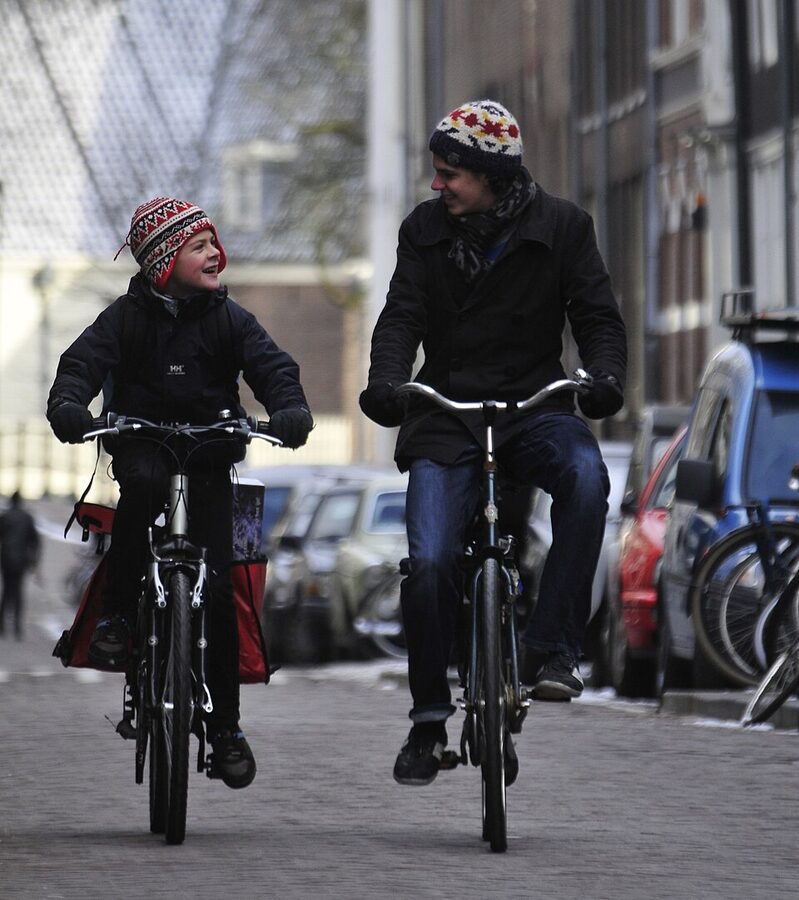
The cycling rules in Amsterdam are not written on signs. They are local custom, and locals enforce them with eye contact, bell rings, and short Dutch sentences you do not want translated.
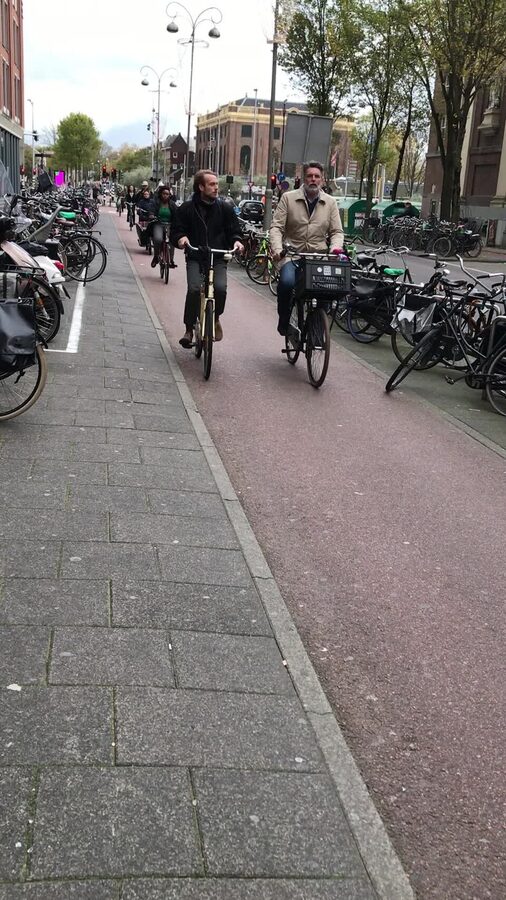
Stay right. The bike lane has a slow lane and a fast lane, same as a motorway. Tourists belong on the right. If a local rings their bell behind you, drift right immediately, do not turn your head to look.
Signal turns. Hand out, in the direction you’re turning. Two seconds before the turn. This is the single biggest source of tourist-on-tourist collisions on a guided tour.
Don’t stop on bridges. Bridges are narrow choke points. Park your bike before or after the bridge, walk back if you want the photo. Local cyclists curse the bridge-stoppers more than any other tourist behaviour.
Lock your wheel and your frame. Two locks. Frame lock built into the bike for the rear wheel, plus a chain or D-lock through the frame and a fixed object. One-lock bikes get stolen. The rental company charges you €100-300 if it goes.
Trams have right of way. Always. Tram tracks also catch narrow tyres. Cross them at a 90-degree angle, never run parallel.
What a standard guided tour looks like
I’ll walk through what the small-group flagship covers, because most other products are variations on this template.
You meet at a central point near Centraal or the Anne Frank House. The guide checks your bikes, runs through the rules above in two minutes flat, and sets off in single file. The first ten minutes are the highest-stress part of the ride. You’re learning the rhythm of the city while moving. By minute twelve you’ll feel it click.
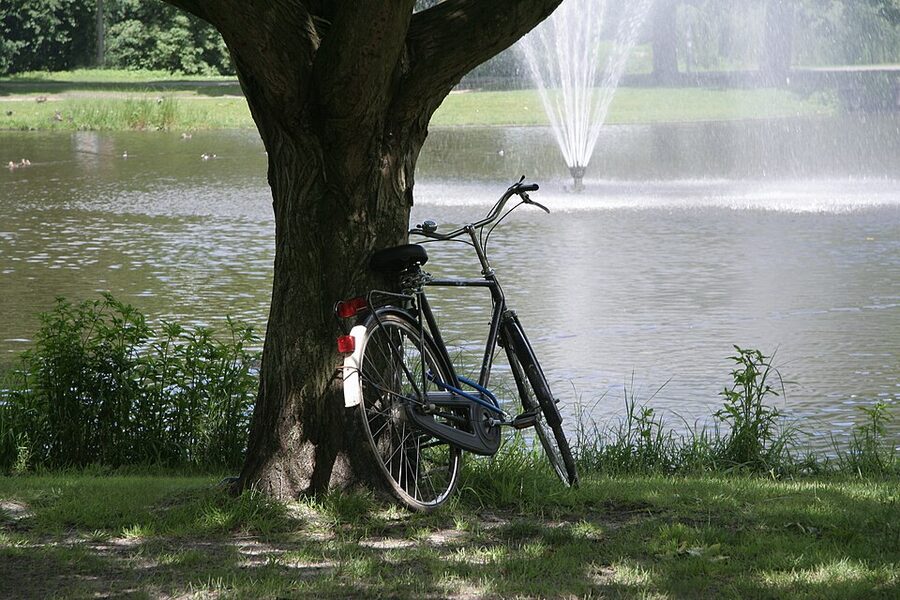
From the meet point most loops head south-west into the Jordaan. Brouwersgracht is usually the first photo stop, often called the prettiest canal in the city. Then the route swings into Vondelpark for a regroup and a stretch. Vondelpark is also where the guide tells the worst joke of the day, which is part of the script.
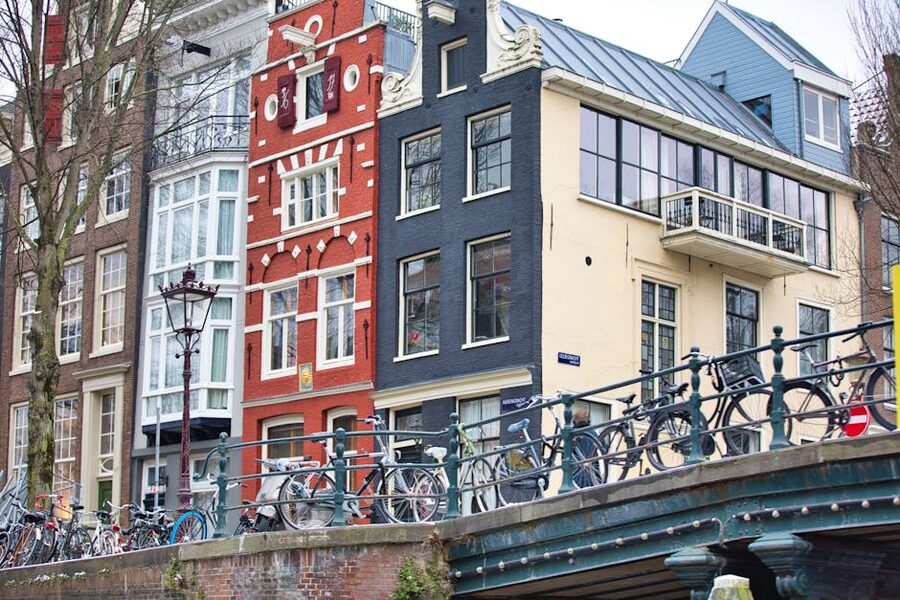
From Vondelpark the loop crosses to the Museumplein (Rijksmuseum, Van Gogh, Stedelijk in a row), continues east into the canal ring proper. Herengracht, Keizersgracht, Prinsengracht. The guide will pick a quiet bench corner to talk about the 17th-century planning, the merchants, the gable hooks. Ten minutes off the bike. Drink your water.
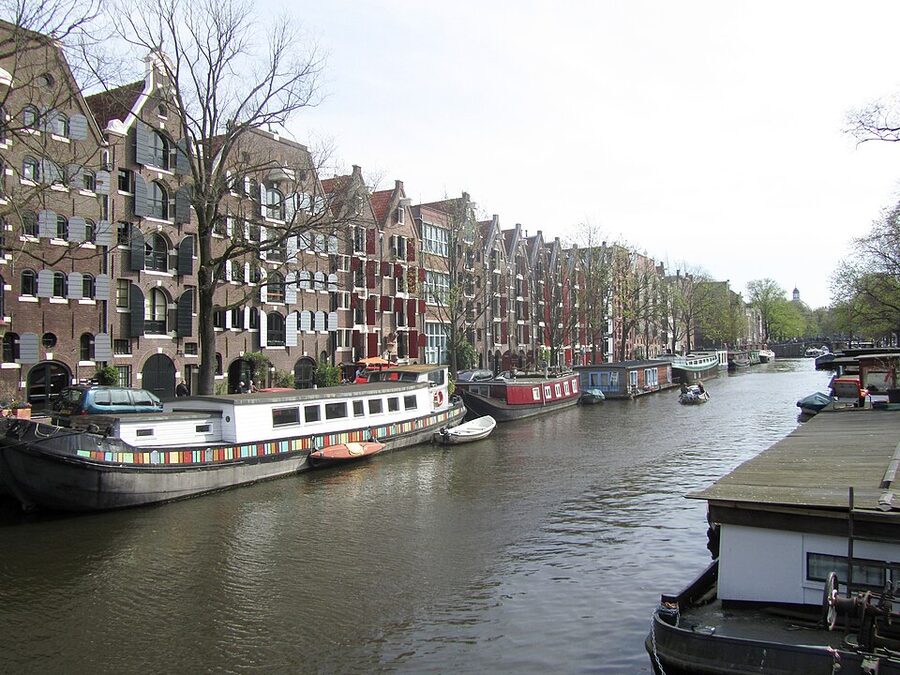
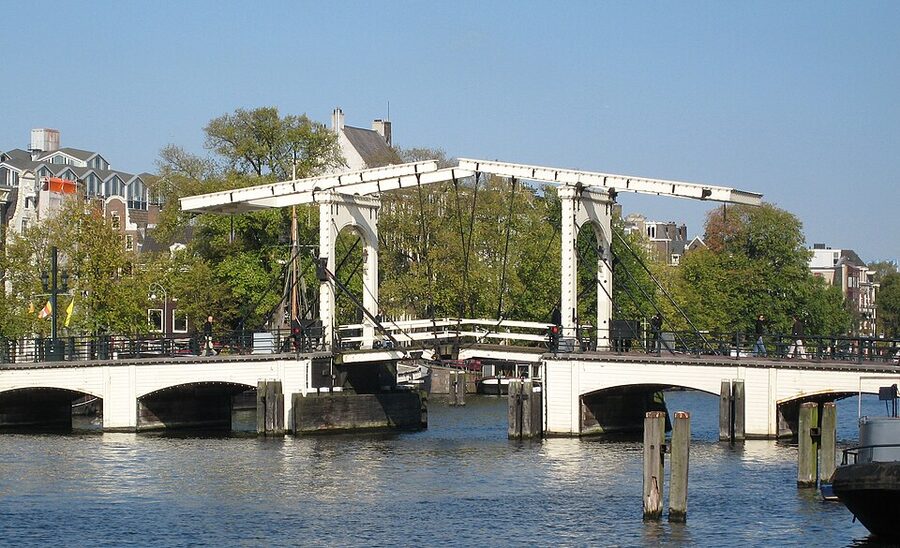
The home stretch crosses the Amstel, hits the Magere Brug, and loops back to the meet point. On a 3-hour tour you’ll cover roughly 14km. On a 2.5-hour tour, about 11km. Either way you’ll be tired in the way that’s good. Eat a stamppot or a kibbeling afterwards. You earned it.
Why Amsterdam works for a guided tour and the obvious counter
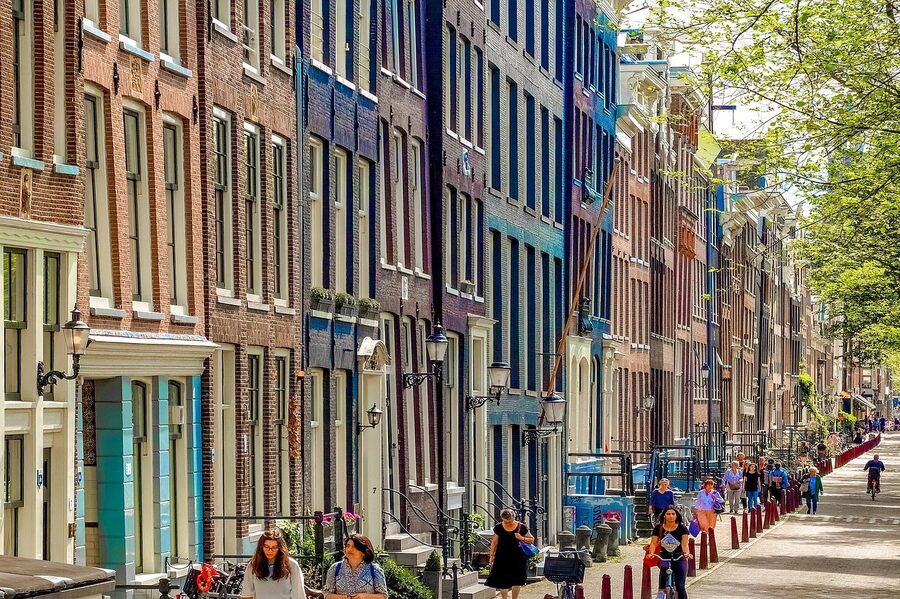
The flat terrain is the obvious thing. There is no hill in central Amsterdam that registers as a hill. The bridges arc up briefly and that’s the only resistance you’ll feel. People who haven’t cycled in twenty years can do a 3-hour loop here.
The dedicated infrastructure is the less-obvious thing. You’re not sharing tarmac with cars. The bike paths are kerbed off, the pedestrian paths are kerbed off too, and the rules of who goes where are clear. The mental load is much lower than cycling in London or New York or Rome.
The counter, and you should know this before you book: Amsterdam in late July and August is busy in a way that strips some of the romance. Bike paths are crowded with other tourists wobbling. The locals are short-tempered. If you can pick April, May, September or October, do. The weather is roughly the same and the lanes are passable.
Picking between a guided tour and a rental
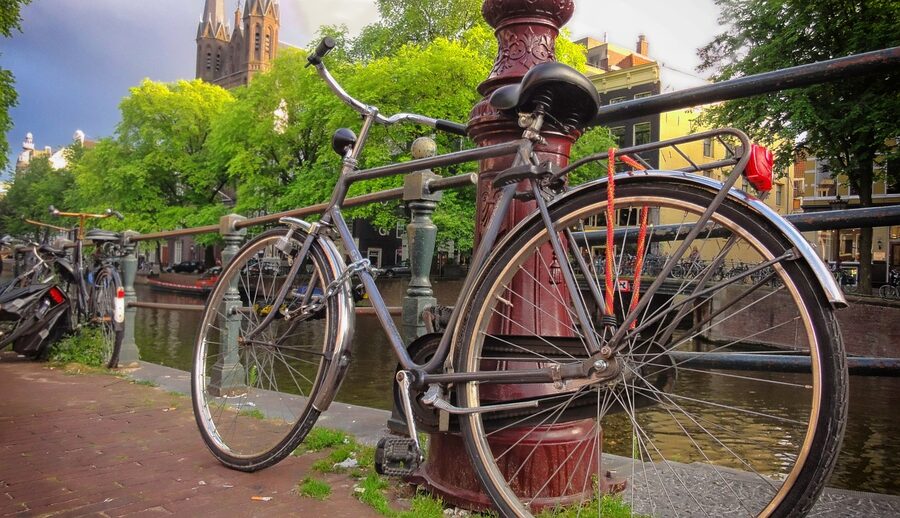
If you’ve never cycled in a dense city, take the guided tour. The first hour of riding alone in Amsterdam, with no idea which lane is yours, where to turn, when to yield, is genuinely stressful. A guide turns that hour into a 2-hour ride where you’re learning by following.
If you have cycled in a city before, the rental option is faster, cheaper, and more flexible. You pick your own loop, stop where you want, eat where you want. Standard rental with two locks runs about $10-15 a day. The shops near Centraal know exactly what tourists need.
If you’re somewhere in between (say, you’ve done a London Boris-bike loop a couple of times), do the guided tour first, then rent the next day. Best of both. You’ll cycle the second day with the rules in your head from the first.
The countryside option
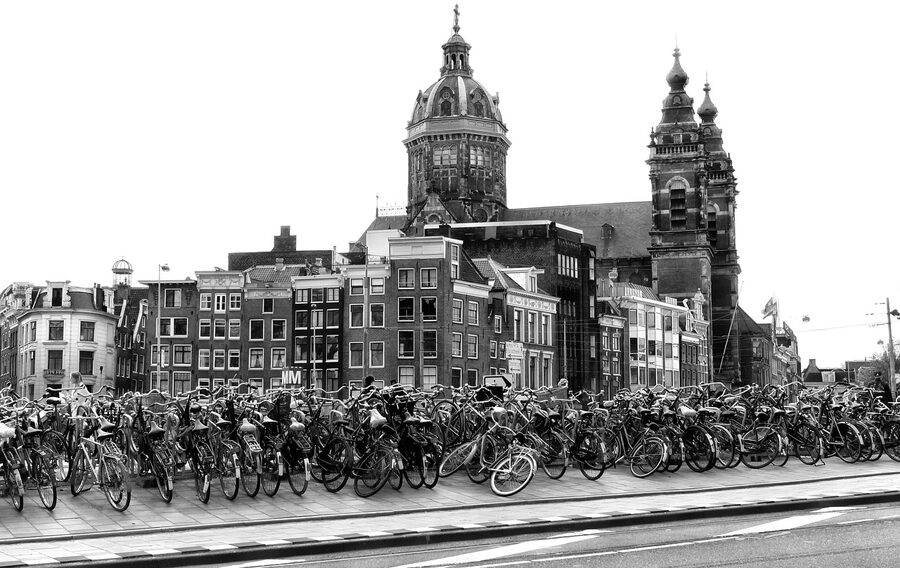
If you’ve already done the city centre and you want a different ride, the countryside tour is the upgrade. You exit Amsterdam by the IJ ferry behind Centraal, cross to Amsterdam-Noord, and then the path opens up. Within fifteen minutes you’re cycling past sheep, single-storey wooden houses, and the kind of polder landscape that defines Dutch postcards.
Most countryside loops include Zaanse Schans, the working windmill village preserved from 1850. It’s about 20km north and the round-trip on a regular bike is ambitious. On an e-bike it’s comfortable. There’s a flagship electric bike tour that combines Zaanse Schans with Zaandam (the wider town) and lunch.
The trade-off: countryside tours are 5-6 hours, not 2-3. You’re committed to the day. Don’t book one if you’ve got a packed evening planned, or jet lag, or only half a day.
The seasonal flower-fields ride
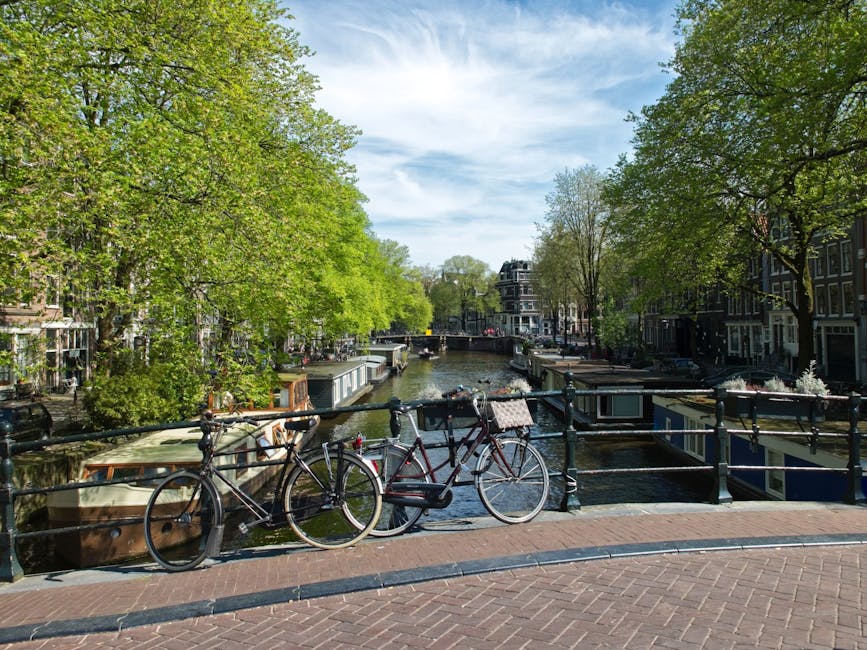
From mid-March to mid-May the bulb fields south of Amsterdam are flowering. This is a roughly 8-week window each year. Keukenhof itself is the showpiece garden. The bike tours go through the working bulb fields around it, which is where the postcard view actually comes from.
A Keukenhof bike tour usually runs 3-4 hours and starts from a meeting point near the gardens, not from Amsterdam city centre. You’ll either need to take the shuttle bus there yourself or book a tour that includes the transfer. The full-day combos that bundle Amsterdam transport, Keukenhof entry, and the bike ride run $90-120. Tight, but it’s a one-week-of-the-year experience.
If you can’t time the trip in spring, skip this category. The bulb fields outside the bloom window are flat brown rectangles. Pretty in a Dutch-landscape way, but not why you’re booking the tour.
What to wear and what to bring
Trousers or leggings, not skirts or dresses. The Dutch upright bikes ride high and the wind catches loose fabric.
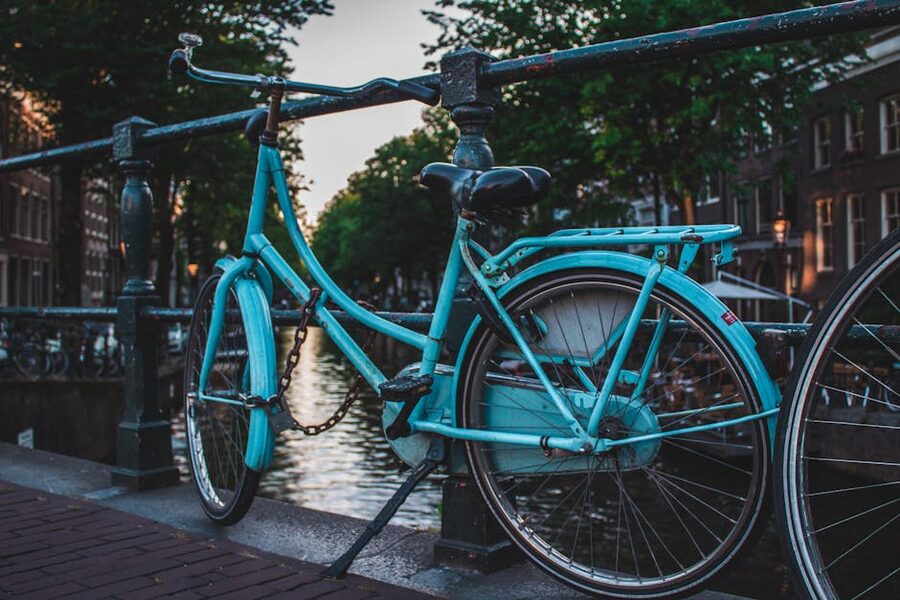
Closed shoes. Sandals slip off the pedals on the upright bikes, which use the foot-brake (back-pedal to stop) on most rentals.
A jacket regardless of weather. The wind off the canals and the IJ is colder than the city temperature suggests. A light shell saves the ride.
No helmet. Locals don’t wear them and most rental shops don’t supply them. If you want one, bring your own from home or ask the tour operator before you book. A few of the higher-end small-group tours stock helmets for kids.
Cash for the cafe stops. Most Amsterdam cafes still take cards, but the smaller bakeries and snack windows you’ll pass through on a bike tour are often cash-only.
Safety, accidents, and what insurance covers
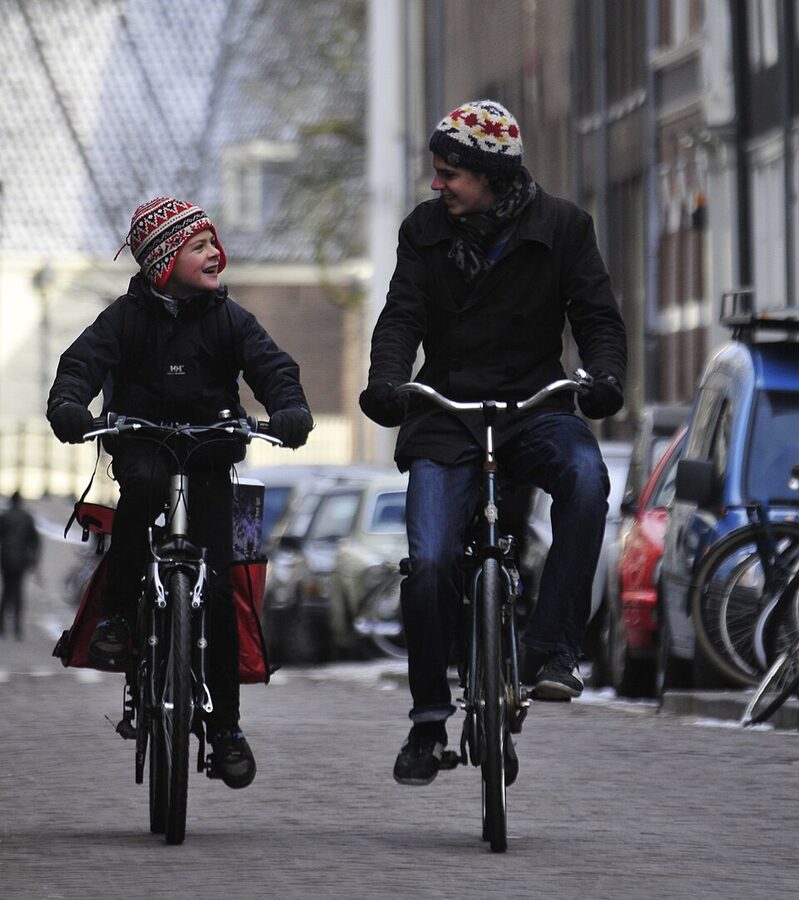
Tourists do crash in Amsterdam. The most common scenario: tram tracks, taken at the wrong angle, narrow tyre slips in. Second most common: another tourist stepping off the kerb without looking. Third: trying to brake with hand brakes on a foot-brake bike (you don’t have any).
If you do come off, the bike rental’s deposit covers minor damage. The serious medical stuff isn’t covered by the rental shop. Your travel insurance should cover cycling as a normal activity, but check the small print before you go. Some policies exclude rented bikes; most don’t, but it’s worth a thirty-second check.
The guide on a small-group tour carries a basic first aid kit and a phone with the operator’s emergency number. They’ll handle the call to the rental shop if a bike’s damaged. This is part of why you pay the small-group premium over a self-guided rental.
Top picks for booking right now
I’ve narrowed this down to three. The first is the standard small-group city tour, the workhorse for first-timers. The second is the countryside electric bike upgrade for people who want to leave the centre. The third is the seasonal flower-fields ride, which is the spring pick if you’re here at the right week.
1. Amsterdam Bike Tour in a Small Group with Optional Canal Cruise: $22
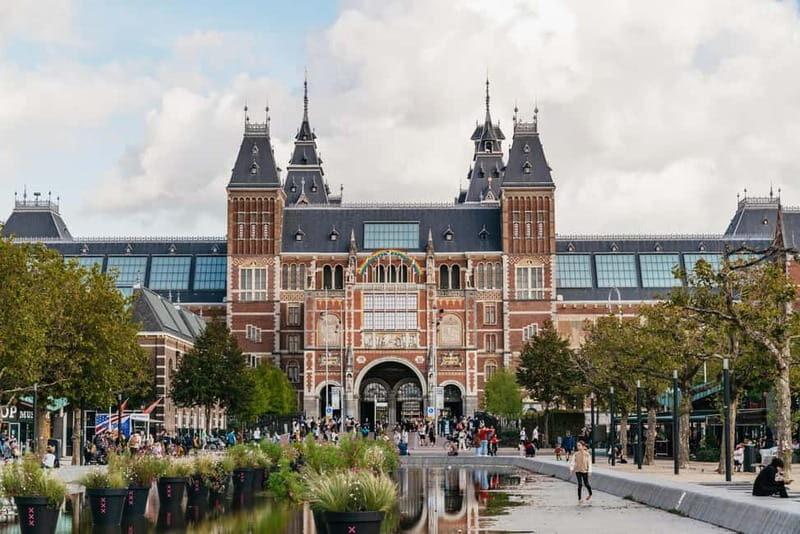
This is the workhorse and it’s earned the spot for most first-time riders. You get the standard 2.5-3.5 hour loop through the canal ring and Vondelpark, with a guide who actually rides at the back so the slowest rider sets the pace. Our full review walks through which guide rotations get the better Jordaan tips and how the canal-cruise add-on slots into the same afternoon.
2. Countryside Electric Bike Tour to Zaanse Schans and Zaandam: $108
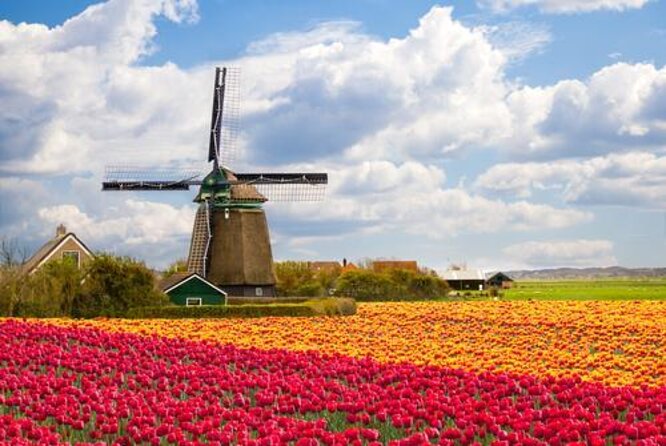
If you’ve got a full day and you want to see something other than the canal ring, this is the one. The e-bikes flatten the headwind, the route covers polder, dykes, working mills, and a lunch stop. Our review of this tour has notes on which season suits the ride best (autumn light is the sleeper pick) and how it compares to the bus alternative.
3. Keukenhof Flower Fields Small-Group Cultural Bike Tour: $68
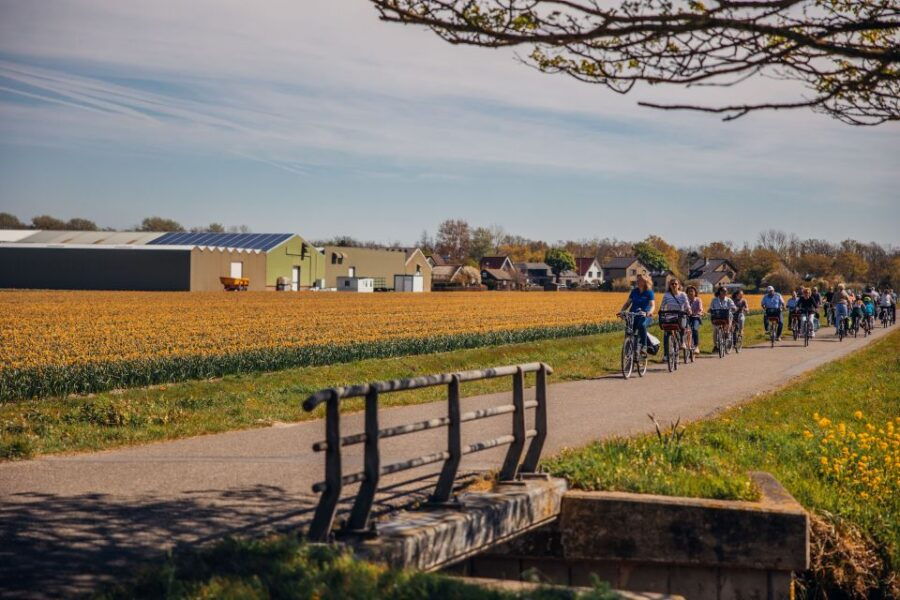
The seasonal pick. You ride through working bulb fields, not just the manicured Keukenhof gardens, with a guide who explains the bulb economy and the family farms behind it. Our walkthrough covers the best week to book based on the historical bloom forecast and how to stack it with a Keukenhof entry ticket.
Other variants worth flagging
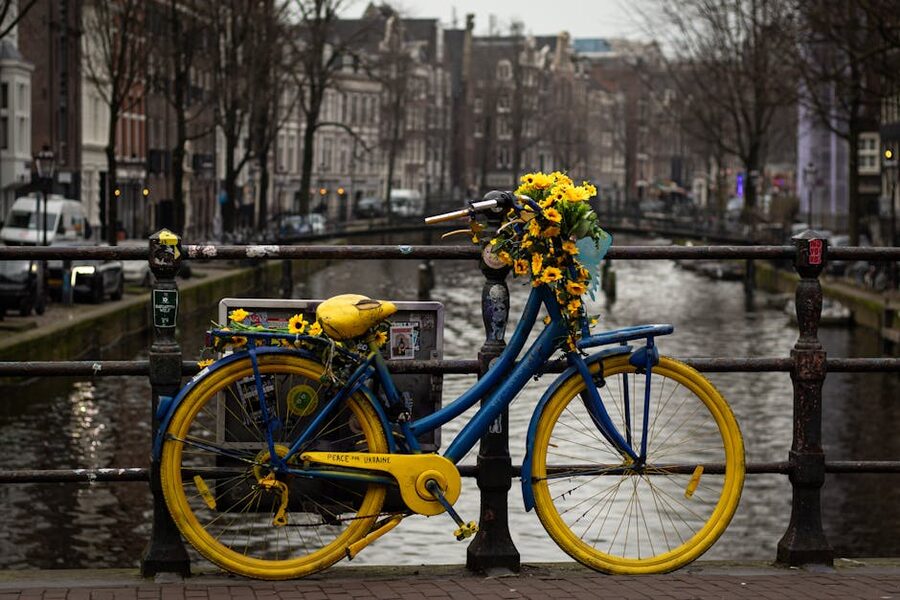
If you’re a Francophone family travelling together, the French-speaking-guide tour is worth the small premium over the English version. The guide pool is smaller, the groups tend to be smaller, and there’s no translation lag. Around $40-45 a head.
If you want a fully customised experience, the private bike tour with a local lets you set the route. Around $144 for two people. Useful if there’s a specific neighbourhood you want to see (Oost, Noord, the docklands at NDSM) that no group tour covers.
If you’d rather combine the bike with a windmill day trip, the countryside bike tour to Zaanse Schans on regular bikes is a slightly cheaper alternative to the e-bike countryside option. The trade-off is a more tiring ride, especially if there’s wind off the IJ.
Where to meet, and how to find the meeting point
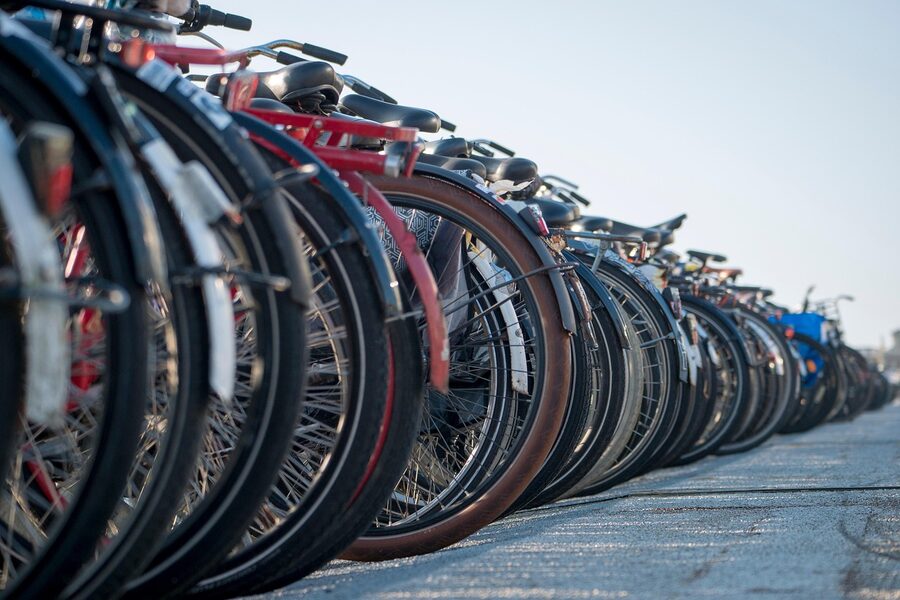
Meeting points cluster around three locations.
Behind Centraal Station. Most operators meet here, on the IJ side (north exit) or near the bike parking station. Easy to find from the train, harder if you’re walking from the south. Allow 15 minutes to find the exact rendezvous on your booking page.
Near Anne Frank House (Prinsengracht). A handful of small-group operators run from here. Convenient if you’re staying in the Jordaan or already planning to do Anne Frank that morning.
Vondelpark gates. A couple of operators meet here, particularly the language-specific tours. Convenient if you’re staying around Leidseplein.
Always check the operator’s exact pin on Google Maps the night before. The meeting points are not always signposted on the street, and missing the start by 5 minutes means missing the whole tour. Most operators have a 5-minute grace window. Then they leave.
Pricing reality check
The standard small-group is $22-30. The private with a local is $130-150 for two. The countryside e-bike is $90-120. The Keukenhof seasonal is $65-90. Bike rental alone is $10-15 a day.
Operators run discounts on weekday mornings and shoulder-season weeks. The afternoon slots and weekend slots cost the listed rate. If you’re flexible, a 10am Tuesday in October is often $5-10 cheaper than a 2pm Saturday in July.
Tipping: not expected, not refused. €3-5 per person at the end if the guide was good. Most local guides are running this as a side gig and the tip is welcome. Cash is easier than card.
How a bike tour stacks against a canal cruise
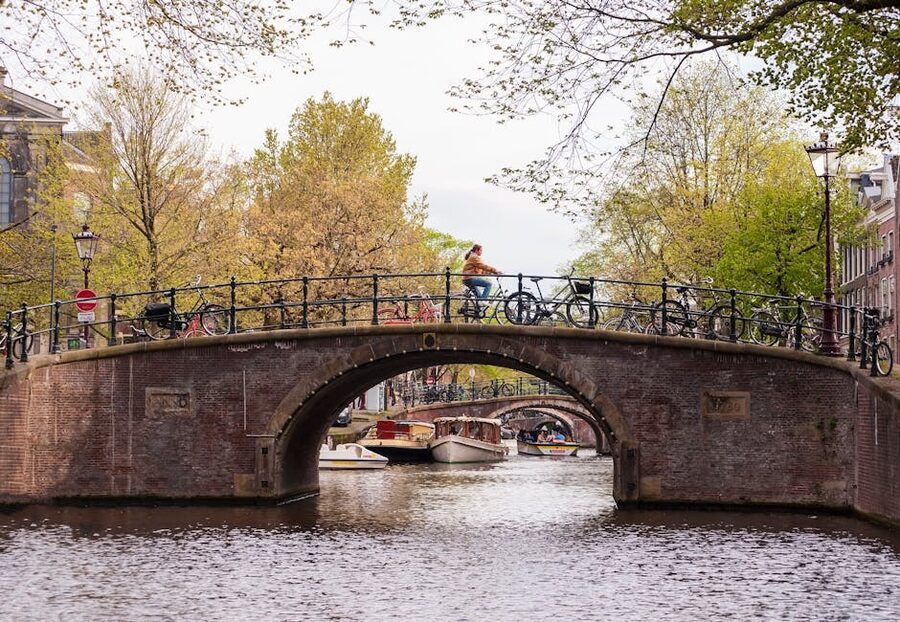
Both are 2-3 hour activities, both cover roughly the same canal ring, both cost in the same range. The difference is what you actually do.
A canal cruise is passive. You sit, the boat moves, the guide talks (or the audio plays), the photos take themselves. It’s the right pick for older travellers, mixed-mobility groups, families with very small children, or anyone who wants their guide to do all the work.
A bike tour is active. You learn a skill, you cover more ground, you stop where the group stops, and you finish with a story about that one moment when you had to ring the bell at a scooter on a bridge. It’s the better pick if you’re under 70, comfortable on a bike, and want the city in your legs by the end of it.
If you can fit both, the bike-plus-cruise combo on a single afternoon is genuinely the best of both. Two hours on the bike for the kinetic version, one hour on a boat for the postcard version, then dinner.
Booking timing, cancellation, weather
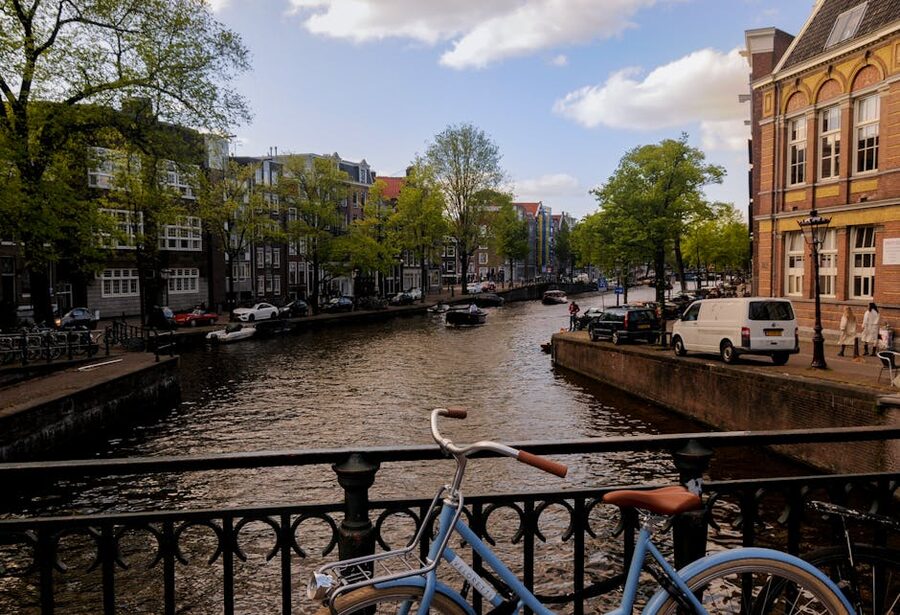
Standard cancellation on GetYourGuide and Viator is free up to 24 hours before. After that you usually pay the full rate, even if it rains. A few operators (the smaller, owner-run ones) refund up to 2 hours before for weather. Check the specific listing before you book.
The cycling rule of thumb in Amsterdam: light rain doesn’t cancel, heavy rain often does. Most tours have a small-rain go/big-rain stop policy decided by the guide on the morning. Bring a shell jacket regardless of the forecast.
If you’re booking weeks ahead for a summer trip, the Saturday and Sunday afternoon slots fill up first. Weekday mornings have availability the longest.
Cycling Amsterdam beyond the centre
If you’ve already done a guided tour and rented a second day, the rides outside the canal ring are the underrated half of Amsterdam.
The Amsterdam-Noord crossing on the IJ ferry (free, leaves every five minutes from behind Centraal) drops you into a former shipyard area. NDSM Wharf has weekend markets and a flea market on the first Saturday of each month. The ride from the ferry to NDSM is 15 minutes along the waterfront.
The ride east through Oost into the Eastern Docklands hits the modernist housing on Java-eiland and KNSM-eiland. Quiet on weekday mornings, busy on weekend brunches. Most tourists never get this far.
The ride south along the Amstel takes you out of the urban grid into the river-lined suburbs. The Magere Brug is the photogenic landmark; keep going past it and within 20 minutes you’re in genuine countryside, with farms on the right bank and the river on the left.
Begijnhof and the in-tour quiet stops
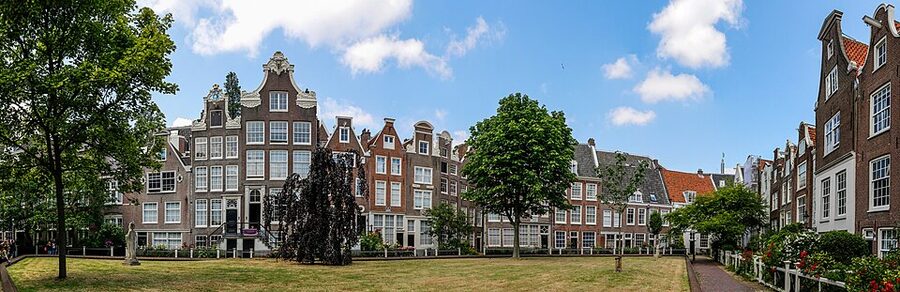
Most guided tours include one or two off-bike walking stops. The Begijnhof is the classic one. You park the bikes, walk through the small unmarked door from Spui, and the courtyard opens up. The 14th-century wooden house at number 34 is one of only two surviving wooden houses in the city centre.
The other common quiet stop is somewhere on the Herengracht (the gentlemen’s canal) where the guide will talk about the merchant economy of the Golden Age and point out the gable hooks on the facades. It’s a five-minute story but it’s the one that stitches the rest of the architecture together.
If your guide skips both of these, they’re cutting corners. Mention it in the review.
What to do after the bike
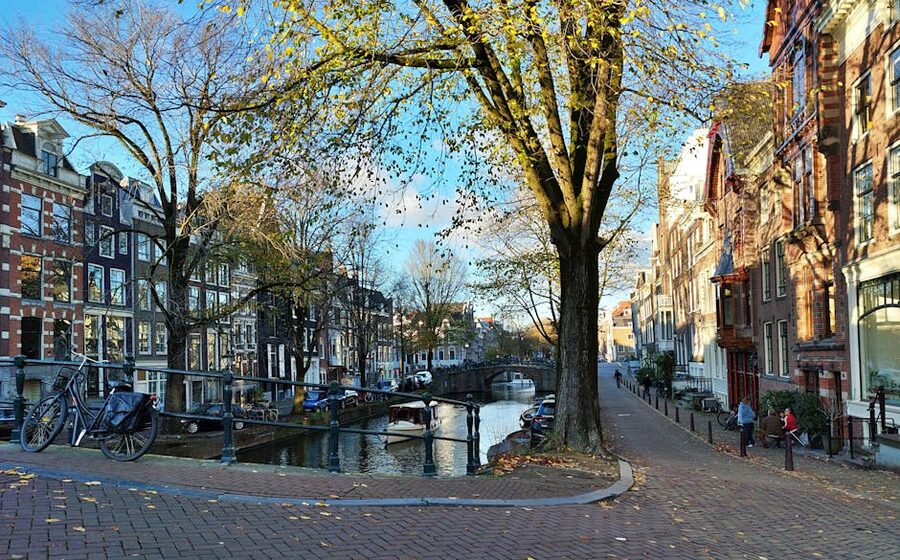
You’ll be hungry. Most groups end near the meeting point and people peel off to find food. The tour guide will usually drop a couple of recommendations as the ride ends. Take the local one over the obvious one. The cafe across from Centraal isn’t where the guide eats.
You’ll also be ready to sit. A cafe terrace is the classic next stop. Spui, Leidseplein, and the smaller squares in the Jordaan all have terraces with bike-rack rows for parking. A pancake or a stamppot or a single beer counts as a full reward.
If your tour ended on a high and you want a longer day, this is when you book the canal cruise for the same evening. Same operator combos work. The bike-then-boat sequence is more memorable than boat-then-bike for most people I know who’ve done both.
Comparing Amsterdam to other European bike-tour cities
Copenhagen is the obvious comparison. Same flat terrain, same dedicated infrastructure, similar cultural attitude. Slightly less crowded with tourists, slightly more exposed to wind off the harbour. The cycling experience is similar. Tour prices are roughly the same.
Berlin is the next-tier comparison. Larger city, more spread out, longer routes. The German tour scene leans toward longer half-day rides rather than 2-3 hour loops. Worth the trip if you’ve already done Amsterdam and want a more substantial route.
Paris is the wrong comparison. Hills, traffic, infrastructure that’s catching up but not there yet. Don’t compare your Amsterdam ride to your Paris ride; the difficulty levels are not the same.
London via the river path is a closer comparison than London the urban grid. The Thames cruise hits the boat-version of the same instinct that the canal cruise does in Amsterdam. The cycling, though, is harder in London. Most tour groups stick to the parks.
One more thing on the bell
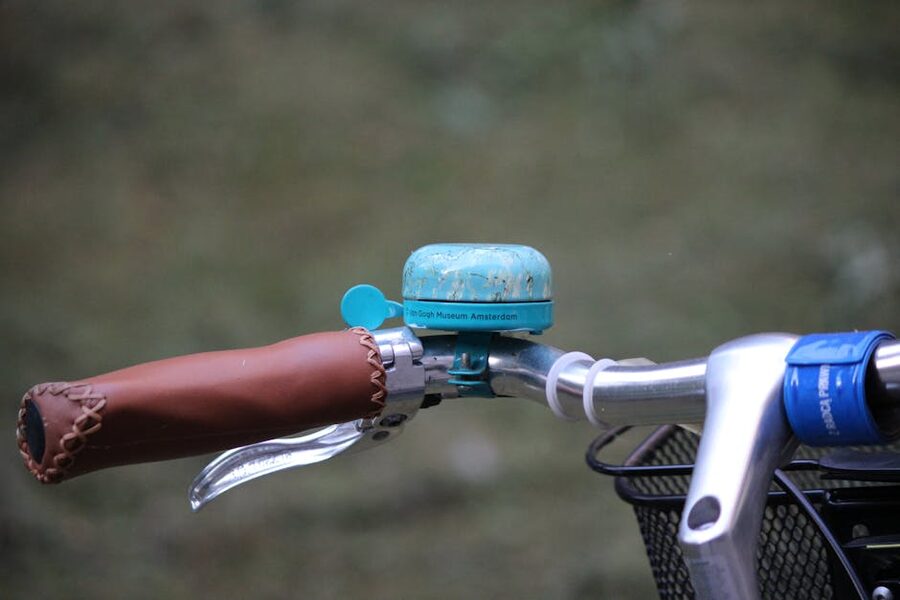
The cliche is that Amsterdam locals are rude on bikes. They’re not. They’re efficient. The bell is how they communicate. If a local rings their bell behind you and you don’t respond, that reads as not paying attention. If you ring your bell at a scooter or pedestrian and they react, you’ve used the local language correctly.
By the end of a 3-hour tour you’ll be ringing yours without thinking about it. That’s the moment when Amsterdam clicks. You’re not a tourist on a bike anymore, you’re a person on a bike in Amsterdam, which is a different category of experience. That moment is what you’re paying $22 for.
If you’re booking only one tour in Amsterdam
If you’re in the city for two or three nights, the bike tour is the one I’d book first, before the canal cruise, before the Anne Frank ticket, before the Rijksmuseum slot. It gives you a working map of the city in two hours, which makes everything else you do over the rest of the trip easier. The standard small-group at $22 is the entry point. Take the seasonal ride out to Keukenhof if you’re here in April, the e-bike out to Zaanse Schans if you’ve got the full day, and the boat option as a counterpoint via the canal cruise guide. That’s the full Amsterdam-on-water-and-wheels picture in one trip.