
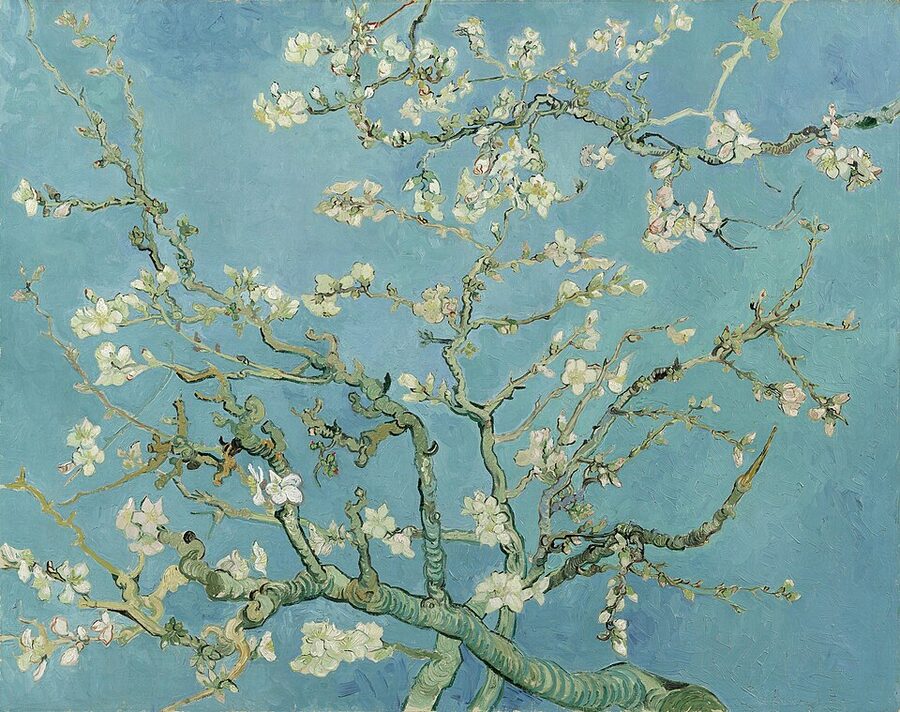
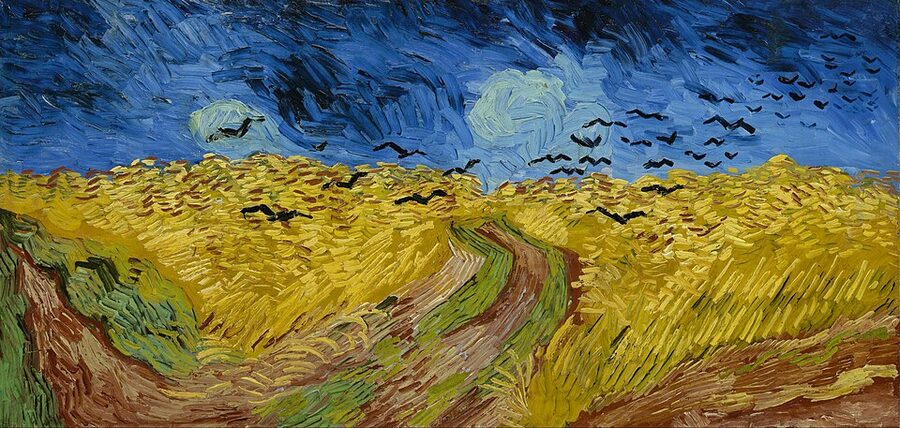
Standing about a metre from Almond Blossom, you can see the exact pressure of Vincent’s brush. The blue is loaded so thick in places it casts its own tiny shadows on the canvas. Walk one room over and you’re in front of Wheatfield with Crows, painted only weeks later, and the mood has gone from a gift for a newborn nephew to a sky that wants to swallow the field whole.
That’s why people fly to Amsterdam for this museum. Not for the gift shop, not for the Insta-shot of the modern entrance hall. For the few square feet of pigment where you can see a person thinking.
- In a Hurry? My Top 3 Picks
- Van Gogh Museum Ticket , from
- Van Gogh Museum + 1-Hour Canal Cruise , from
- Small-Group Tour, Max 6 , from 8
- How Tickets Actually Work
- Where to Book
- Free Entry
- What You’re Actually Walking Through
- The Paintings That Matter Most
- The Almond Blossom / Wheatfield Pairing
- The Best Tours to Book
- 1. Van Gogh Museum Timed-Entry Ticket:
- 2. Van Gogh Museum + City Canal Cruise:
- 3. Semi-Private Tour, Max 6: 8
- Combo Tickets and Combos Worth Booking
- Best Time to Visit
- How Long to Plan
- Practical Bits
- Getting There
- Bag Policy
- Photos
- Food
- A Bit of Museum History
- The Letters
- How It Compares to Europe’s Other Big Art Museums
- Common Mistakes
- Where to Go After
- Quick FAQ
- One More Thing
In a Hurry? My Top 3 Picks
Van Gogh Museum Ticket , from $32
The plain timed-entry ticket. Walk straight in, follow the chronological route, audio guide optional. Check availability
Van Gogh Museum + 1-Hour Canal Cruise , from $47
Pair the museum with a covered-boat loop through the canal ring. Same morning, very efficient. Check availability
Small-Group Tour, Max 6 , from $168
A Dutch art historian, a 90-minute guided walk, reserved entry. The thinking-person’s option. Check availability
How Tickets Actually Work
You cannot walk up. The museum stopped door sales in 2017 and never went back. Every ticket is timed-entry, every ticket is online, and on a busy Saturday the next free slot can be three days out.
That’s the single most useful fact in this whole article. Book before you fly. Not the night before. A week ahead, ideally two if you’re coming in summer or over a holiday.
Standard adult admission is around €25. Under-18s go free, which is genuinely free, not “free with a paid adult.” You still have to reserve a slot for them, though, so don’t show up with a 14-year-old without a ticket in hand.
Slots run in 30-minute windows. You can arrive any time within your window, but if you miss it by an hour the staff at the door are sympathetic and inflexible in roughly equal measure. Once you’re in, you can stay as long as the museum is open. Most people do two hours. Real Van Gogh people do four and skip lunch.
The audio guide is a separate add-on, around €4. I think it’s worth it on a first visit. Vincent’s letters are quoted throughout and they’re the difference between looking at paint and reading a man’s mind.
Where to Book
Three real options:
- The official site, tickets.vangoghmuseum.com. Cheapest. No markup. The catch is that during peak season slots vanish first.
- GetYourGuide or Viator. Same museum, same timed-entry slot, a couple of euros more for the convenience of bundling with other things or having one cancellation policy across your trip.
- A combo with a canal cruise. The museum-plus-boat package is one of the most-booked tours in the whole Netherlands tour pool, which tells you something about how visitors actually plan an Amsterdam day.
I’ve had readers email me panicked because the .nl site appeared “sold out” for their dates. Nine times out of ten, the third-party allocation still has slots. Our full review of the standalone Van Gogh ticket covers the back-and-forth between the two channels.
Free Entry
The Museumkaart, the Dutch national museum pass, gets you in for nothing on the day of your slot, but you still need to reserve a (free) timed entry online. Same goes for I amsterdam City Card holders, ICOM members, and ICOM-CC restorers. The card alone is not a ticket. The slot is what gets you through the door.
What You’re Actually Walking Through
The collection is laid out in life order across four floors. You start in Holland with the dark muddy peasants and The Potato Eaters, you move up to Paris where the palette explodes, you arrive in Arles for the yellow house and the sunflowers, and you finish in Saint-Rémy and Auvers-sur-Oise for the last 14 months of his life. He died at 37, having painted seriously for less than a decade.
The chronological flow is the hidden trick of the building. By the time you reach Auvers you have walked through the whole life. Wheatfield with Crows hits differently when you’ve just seen Almond Blossom, painted weeks earlier, and the contrast does the work without a single explanatory plaque.
The Paintings That Matter Most
Everyone has their list. Mine, after several visits:
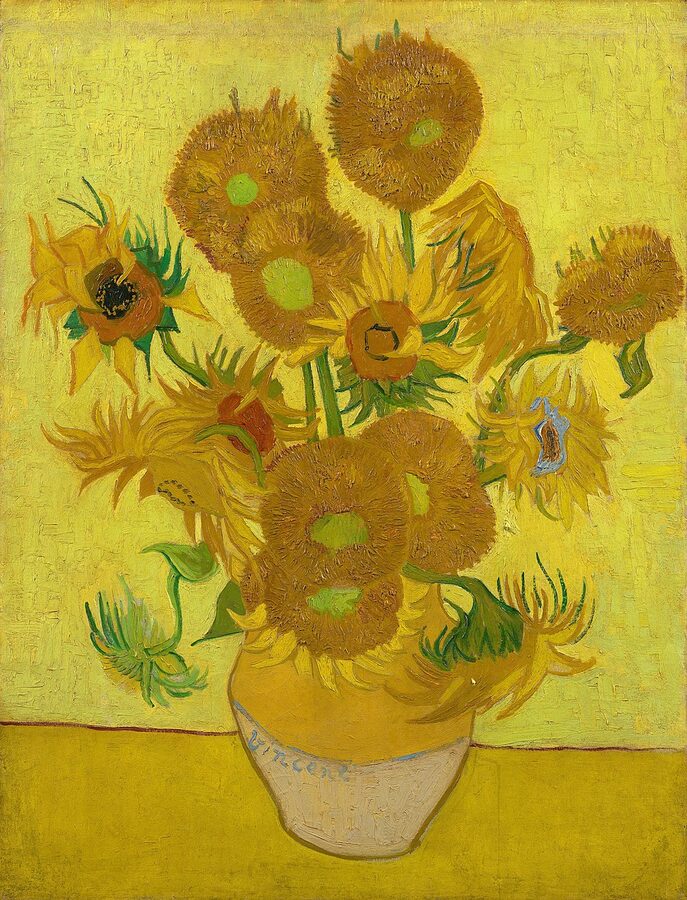
- Sunflowers (1889). The Amsterdam version, not the London or Tokyo ones. He painted seven sunflower canvases for the yellow house, hoping to fill it before Gauguin arrived.
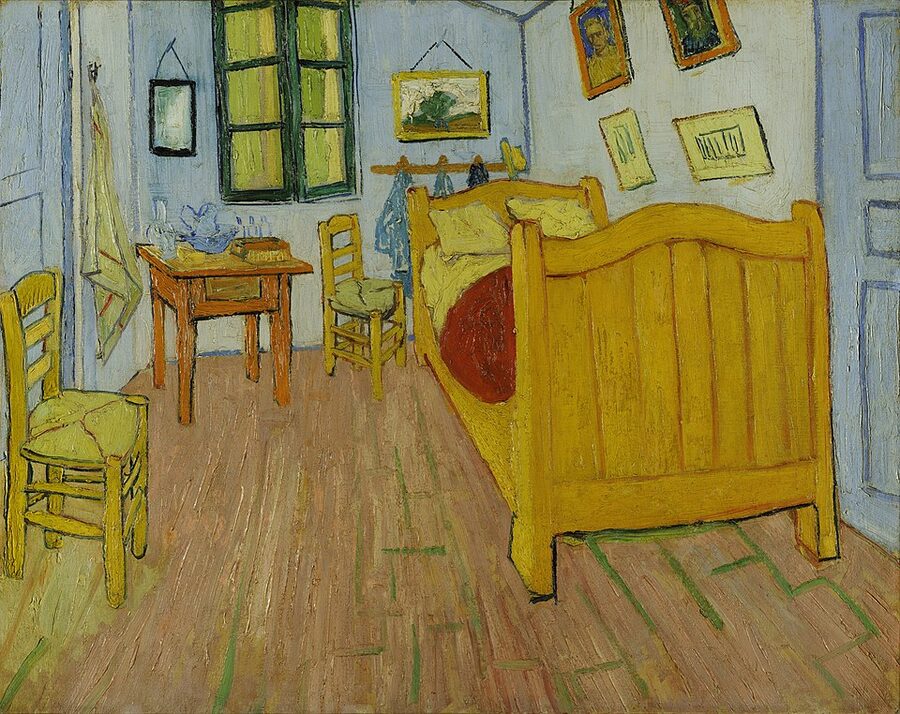
- The Bedroom (1888). The first version. Vincent loved this room so much he painted it three times.
- Almond Blossom (1890). A gift for his newborn nephew. Tender in a way the rest of his late work isn’t.
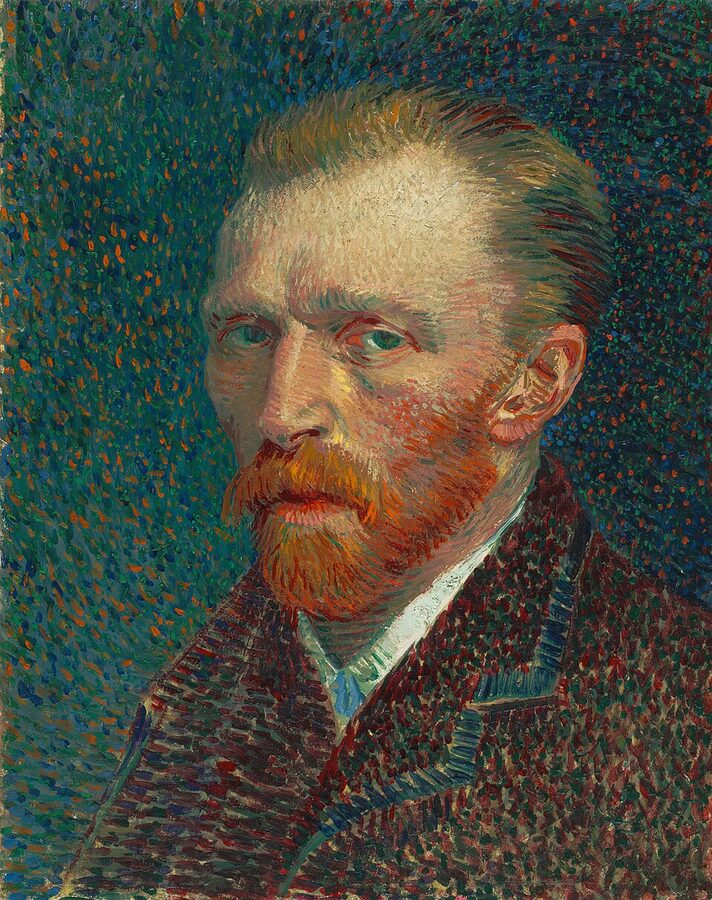
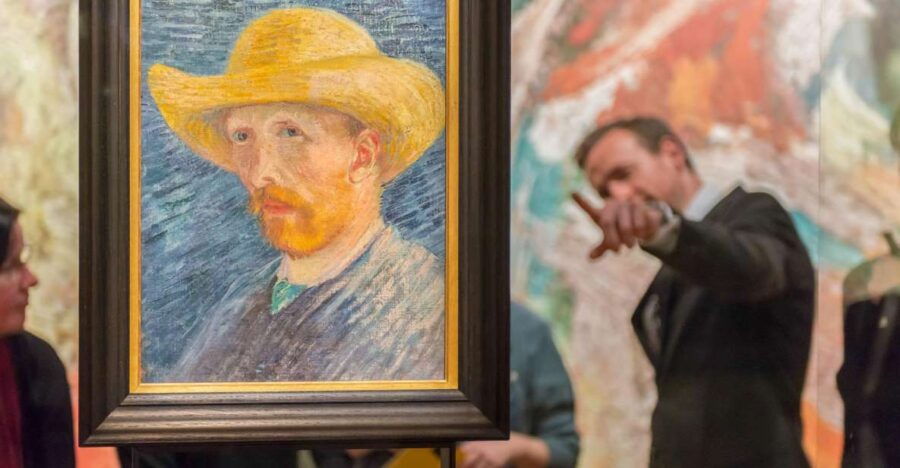
- Self-Portrait with Bandaged Ear (1889). Painted weeks after the December 1888 incident in Arles. He looks straight at you.
- Wheatfield with Crows (July 1890). Painted weeks before his death. The canvas wider than it is tall, the road forking, the sky pressing down.
The Almond Blossom / Wheatfield Pairing
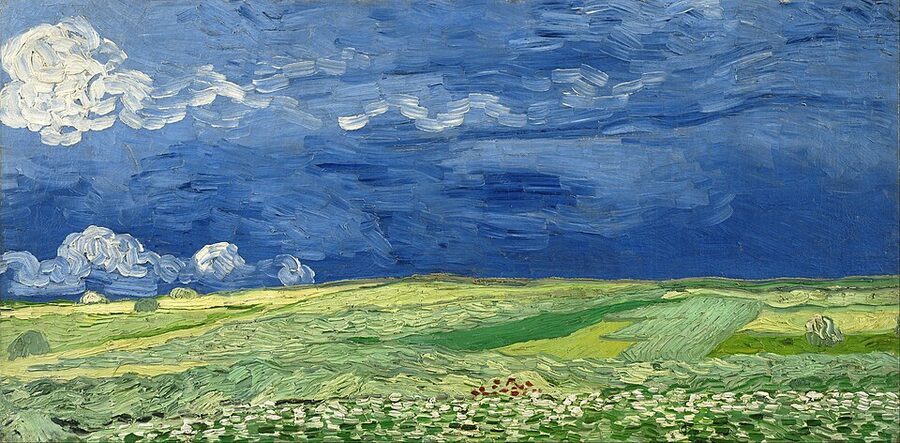
If you do nothing else, do this. Find Almond Blossom on its own wall, then walk slowly into the next gallery and find Wheatfield with Crows. The first was painted in February 1890, after Vincent heard his nephew had been born. The second was painted in early July 1890, days or weeks before he shot himself in a wheatfield outside Auvers.
Both were made by the same man. The paint is laid down with the same hand. And the mood between them is the entire story of why he matters.
The Best Tours to Book
The museum is impressive on a self-guided ticket, and most visitors do it that way. But a guided tour with an actual Dutch art historian is a different animal. They tell you which letter Vincent wrote in the week the painting in front of you was made, which is the kind of context the audio guide gestures at but doesn’t quite land.
1. Van Gogh Museum Timed-Entry Ticket: $32
This is the workhorse and it’s how I’d start anyone off. Add the audio guide if it’s your first visit. Our full review covers the difference between the GetYourGuide allocation and the .nl site, plus what to do if your preferred slot has gone.
2. Van Gogh Museum + City Canal Cruise: $47
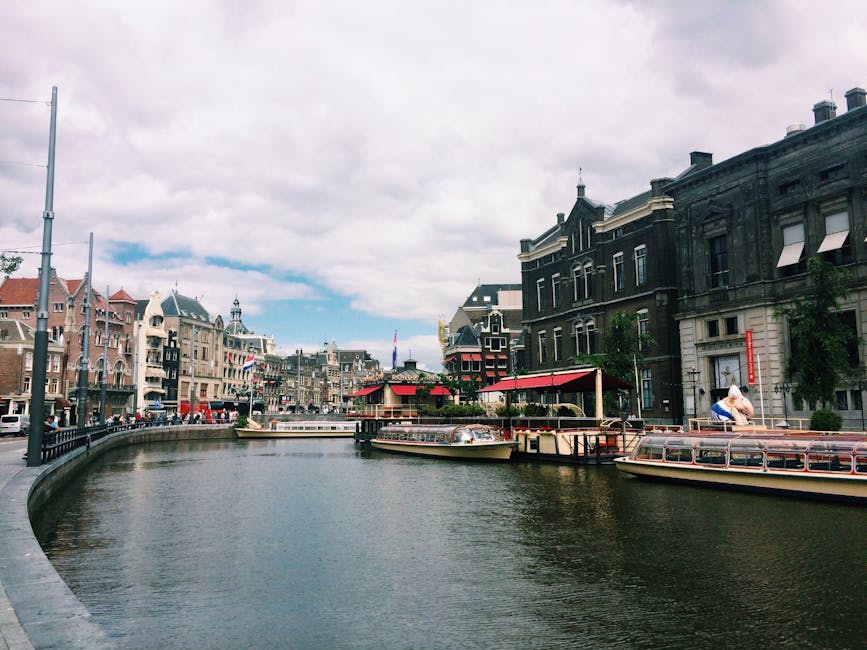
If you only have one full day in Amsterdam, this is the one I’d book. Vincent in the morning, the 17th-century canal ring in the afternoon, both ticked off. Our full review walks through the timing, including which canal dock the bundled cruise actually departs from.
3. Semi-Private Tour, Max 6: $168
The price is real and so is the difference. A guide who can read the chronology of letters and paintings as one continuous text changes what you see. Pricier than the plain ticket, yes, but if you’re flying in just for this museum the maths works out. Our review goes into who the guides actually are and which session times tend to get the better ones.
Combo Tickets and Combos Worth Booking
Amsterdam runs on combos. The museums know it, the boat companies know it, and the tour operators bundle accordingly. Three combinations come up over and over:
Van Gogh + Canal Cruise. The classic. Already covered above. The cruise is around 60 to 75 minutes, covered boat, audio guide in your language. If you want the full city-cruise breakdown across operators, our Amsterdam canal cruise guide walks through Blue Boat, Stromma, the small open boats, and the booze cruise variants.
Van Gogh + Rijksmuseum. They’re literally next door. Five minutes’ walk from the Van Gogh entrance to the Rijks tunnel. The two museums together is a lot for one day, but if you’re an art-first visitor this is the day. A semi-private tour covering both exists and runs at about $200, with reserved entry to each.
Van Gogh + I amsterdam City Card. If you’re doing four or more attractions in 48 hours, this often costs less than buying tickets separately. The card includes the timed-entry slot, but you still have to book it.
One I’d skip: the “Van Gogh and Rembrandt Captivating Experience” entry. It’s a digital projection room separate from the actual museum, and a lot of visitors expect Van Gogh paintings and find a light show. The real Vincents are in the real museum. Book those.
Best Time to Visit
The museum is open every day of the year except Christmas, with extended hours on Friday and Saturday evenings (until 21:00 or 22:00 in summer). Those late slots are quieter and the light through the modern hall is much better.
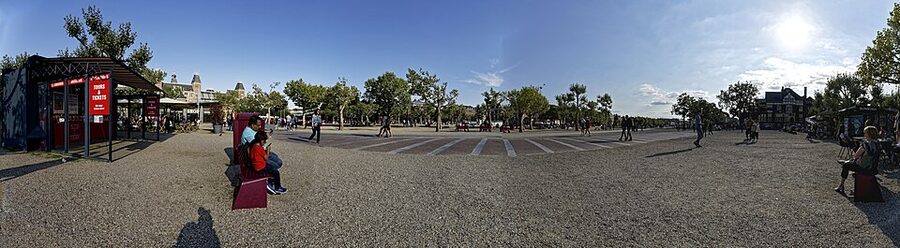
The single worst time is a rainy Saturday afternoon in July. Tourists who got rained off the canals all converge on Museumplein at the same time. The museum is fine inside, but the queue to get into the entrance hall (even with a timed ticket) can run twenty minutes.
The single best time is a Friday evening at 18:00 in October. Cool weather, off-season, post-work locals, and the museum gets dim and quiet by 20:00. I have stood alone in front of The Yellow House for ten minutes on a Friday in autumn and that doesn’t happen at 11am.
How Long to Plan
Two hours is enough to walk through every floor and stand in front of the major works. Three hours lets you actually stop in front of paintings instead of glancing. Four hours is for art people who want to read every wall text.
I’ve never managed to do it in less than two and a half. The chronological flow is sneakily long. By the time you’ve made it through Holland and Paris you’ve been there an hour and you haven’t even reached Arles.
Practical Bits
Getting There
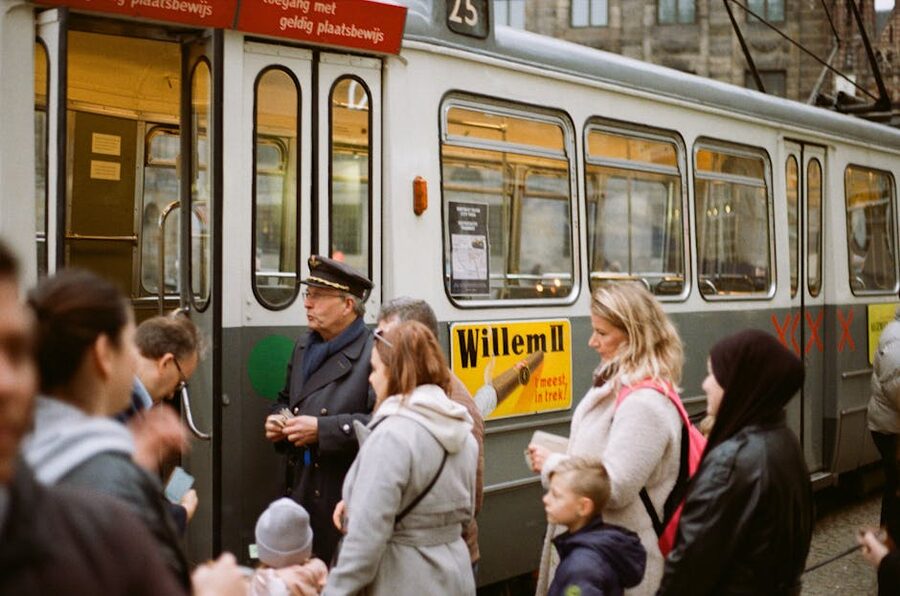
Tram 2 or 12 from Amsterdam Centraal drops you at Van Baerlestraat, two minutes from the entrance. From the city centre by bike it’s about fifteen minutes, and there’s bike parking around the Concertgebouw side that’s almost always free.
If you’re staying south of the river or near Vondelpark, walk. It’s the quickest and you go past the Concertgebouw on the way, which is a nice sequence.
Bag Policy
Backpacks have to go into the cloakroom. Small bags are fine. The cloakroom is free and well-staffed, but on a Saturday in summer the queue for it can be longer than the queue for the entrance, so consider leaving the day-pack at the hotel.
Photos
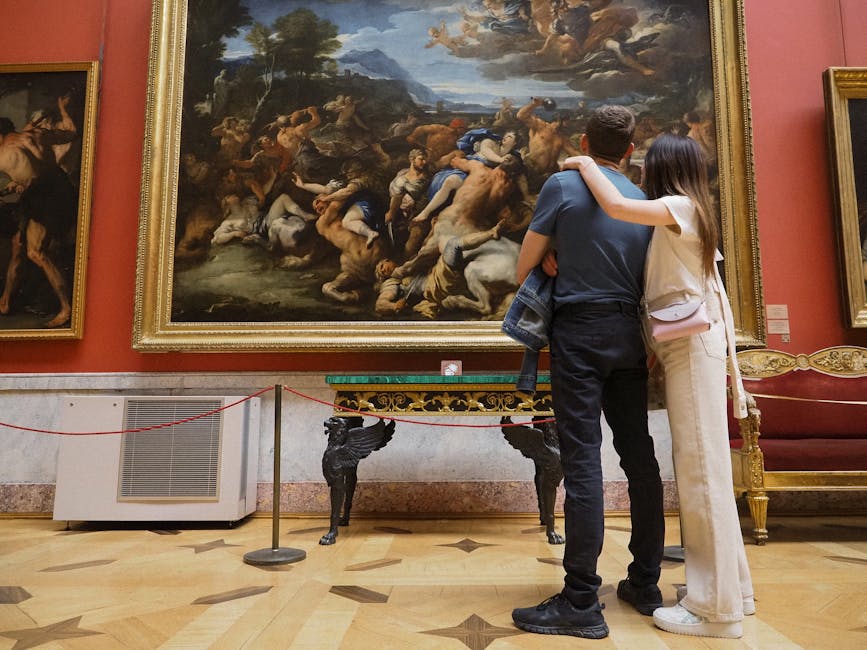
No photography of the paintings. Not “no flash,” no photography full stop. The guards are kind about it and very persistent. The temporary exhibition spaces sometimes have specific photo rules, signed at the entrance to that gallery.
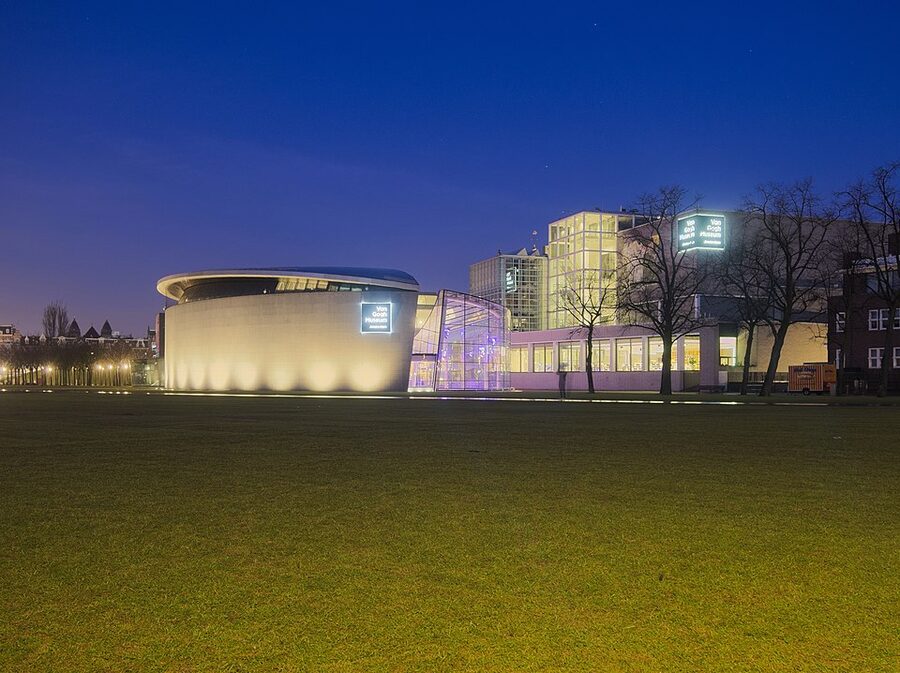
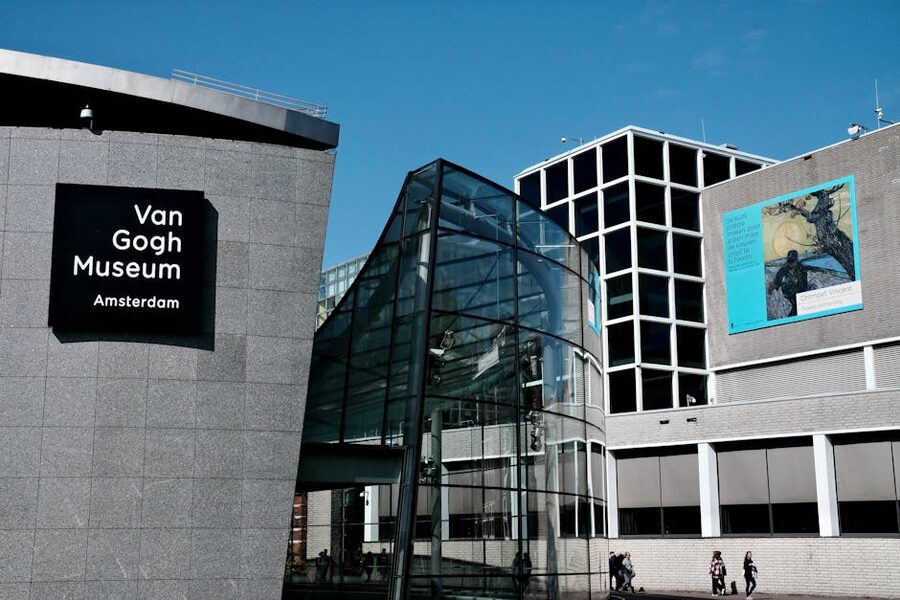
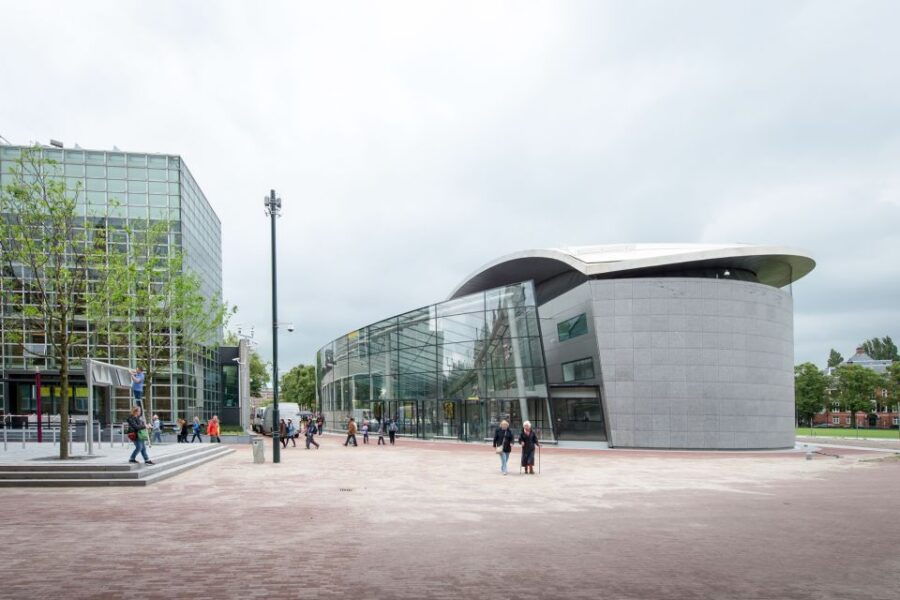
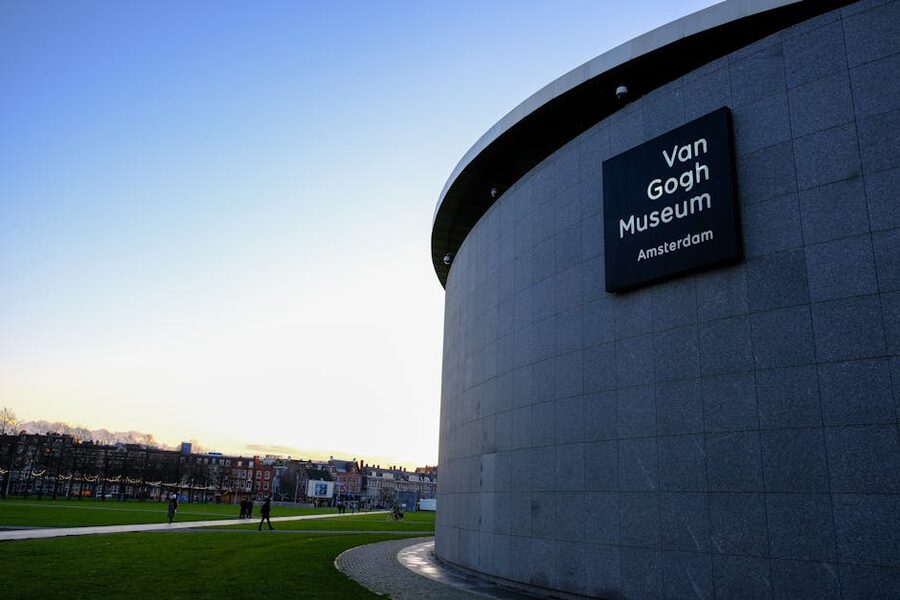
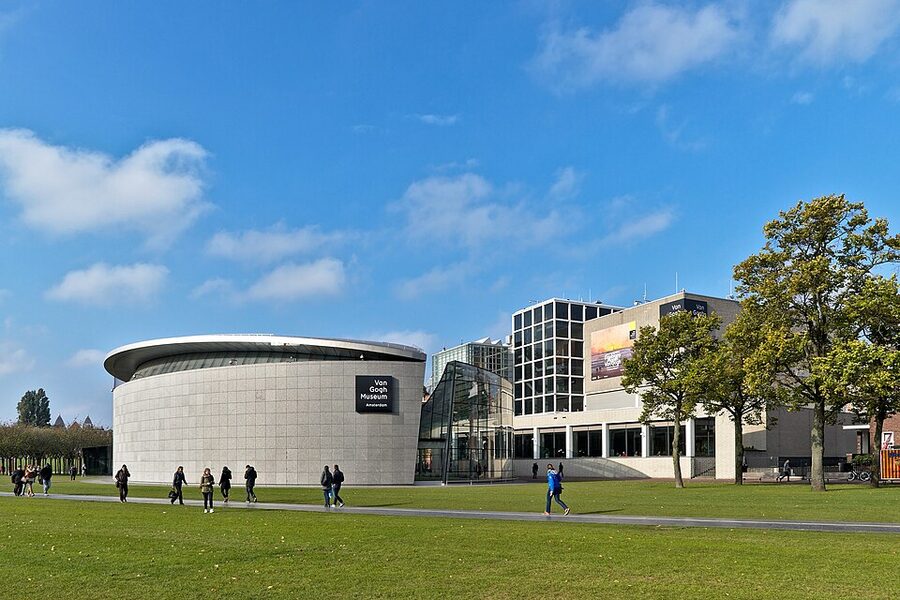
You can photograph the building, the entrance hall, the Kurokawa wing, and the views out across Museumplein. Most of the better Van Gogh photos online are of the building, not the art.
Food
The museum café is fine. Not great. Coffee, sandwiches, an open atrium that gets noisy at lunch. If you have any choice, eat before or after on Van Baerlestraat or in De Pijp, ten minutes away by bike. The Concertgebouw café across the square is older, calmer, and has better cake.
A Bit of Museum History
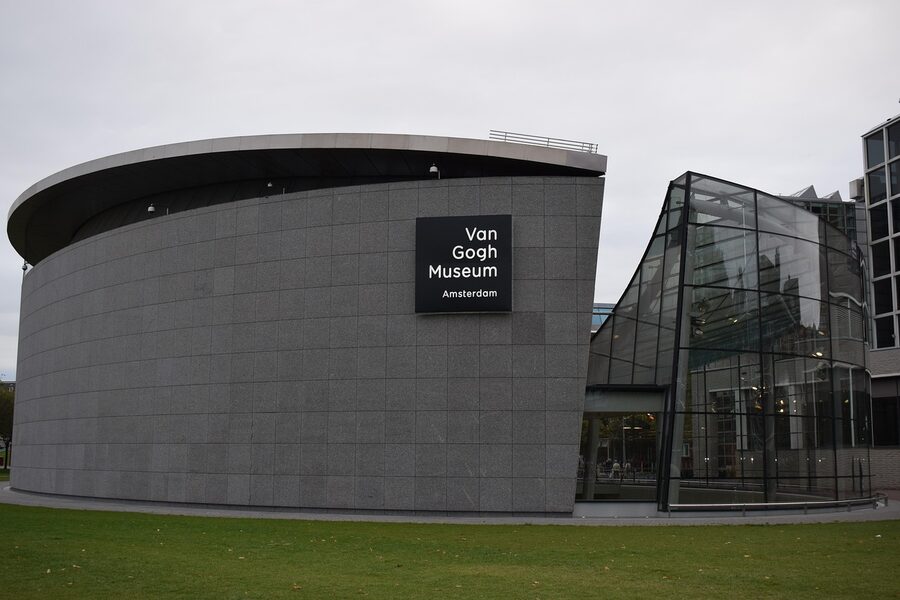
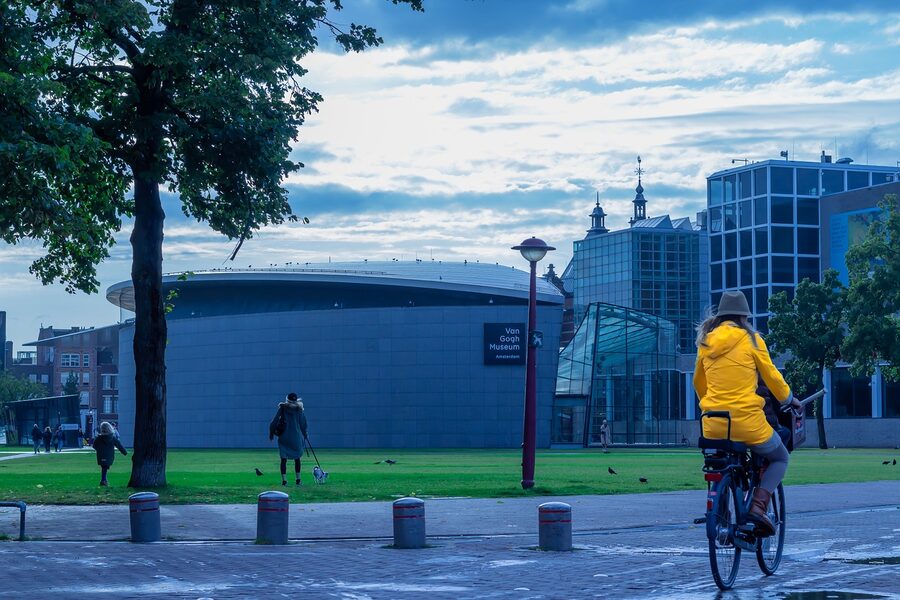
The Van Gogh Museum opened in 1973, twenty-three years after the Dutch state acquired the family collection from Vincent’s nephew. The original Rietveld building (Gerrit Rietveld, the De Stijl architect) is the squarish concrete one. The glass curved hall on Museumplein is the Kurokawa extension, designed by Kisho Kurokawa, opened 1999, re-skinned in glass in 2015 to make the entrance more visible from the square.
The collection itself came from Theo’s son, Vincent Willem van Gogh, who was the Vincent that Almond Blossom was painted for. He inherited from his mother Jo van Gogh-Bonger, who is the real reason any of us know Vincent’s name. Jo spent the years after both brothers’ deaths writing letters, organising exhibitions, and translating Vincent’s correspondence into English. The museum exists because she refused to let his work disappear.
The Letters
The 750 letters in the collection are the other reason this museum is different. Most are between Vincent and Theo, and they’re in display cases throughout the galleries. Selections are reproduced on wall labels in English. Read a few. They are funny, anxious, full of price-of-paint complaints, and wildly articulate about what he was trying to do. Once you’ve read three letters, the paintings stop looking like puzzles.
How It Compares to Europe’s Other Big Art Museums
If you’re an art-first traveller, the Van Gogh sits in a particular tier with a few European peers, and it’s worth knowing how they differ.
The Prado in Madrid is the deeper collection by a long way (Velázquez, Goya, Bosch, El Greco), but it’s also four times the size and harder to do in one visit. Our Prado guide covers the highlights route if you only have two hours. The Reina Sofía, also in Madrid, is the modern-art counterpart and home to Guernica; our Reina Sofía guide walks through how the timed-entry there works (which is similar to Van Gogh).
The Van Gogh Museum’s strength is focus. One artist, the world’s biggest single-artist holding, the chronological flow, the letters. You leave knowing something specific. The Prado you leave overwhelmed.
Common Mistakes
Three I see often:
- Booking the wrong day. Dutch dates are written DD-MM, not MM-DD. I have read enough panicked emails to know this catches Americans every summer.
- Showing up at the .nl site assuming “sold out” means sold out. Try GetYourGuide, Viator, or the I amsterdam Card next. Different allocations.
- Stacking it with the Anne Frank House on the same day. The Anne Frank ticket is a separate timed-entry beast and the queues from missing your slot are brutal. Do them on different days.
Where to Go After
If the museum has put you in the right mood, walk straight across Museumplein to the Rijksmuseum and stand in front of The Night Watch. Different period, different country (kind of), but the same feeling of being two metres from a thing that matters. Our Rijksmuseum booking guide covers the timed-entry there too.
If you want to come down from the intensity, the canal cruise is the right next thing. Our Amsterdam canal cruise guide walks through which dock is closest and which boat operators are actually worth the price. And if you want to swap art for beer, the Heineken Experience is a 25-minute walk south through De Pijp.
Quick FAQ
Can I really not buy at the door? No. Online only since 2017. They are firm about this.
Do under-18s really pay nothing? Yes. Reserve a free slot for them online.
How early do I need to book? A week ahead in low season, two to three weeks in summer or over school holidays.
Is the audio guide worth it? First visit, yes. Repeat visit, optional. The letters are the unique-to-here content.
Is the museum kid-friendly? Surprisingly yes. There’s a family route with stamps for under-12s. The audio guide has a kids’ track too.
Wheelchair access? Yes, fully. Lift access to all four floors, accessible toilets, and wheelchairs available to borrow at the entrance.
One More Thing
Don’t rush Almond Blossom. Most people walk past it on the way to the headline names. Take the wall to yourself for two minutes. Look at the single sprig at the top right of the canvas where you can see the brush going forward, then stopping, then a tiny correction. That’s a man in his last year of life, painting a tree for a baby. Sit with it.