
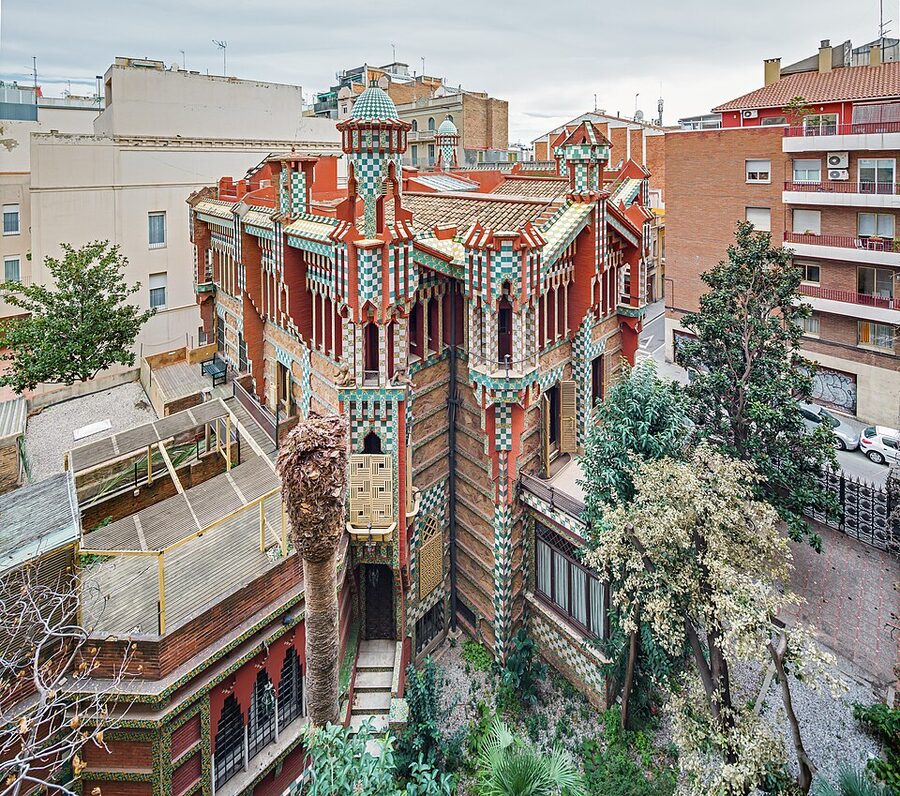
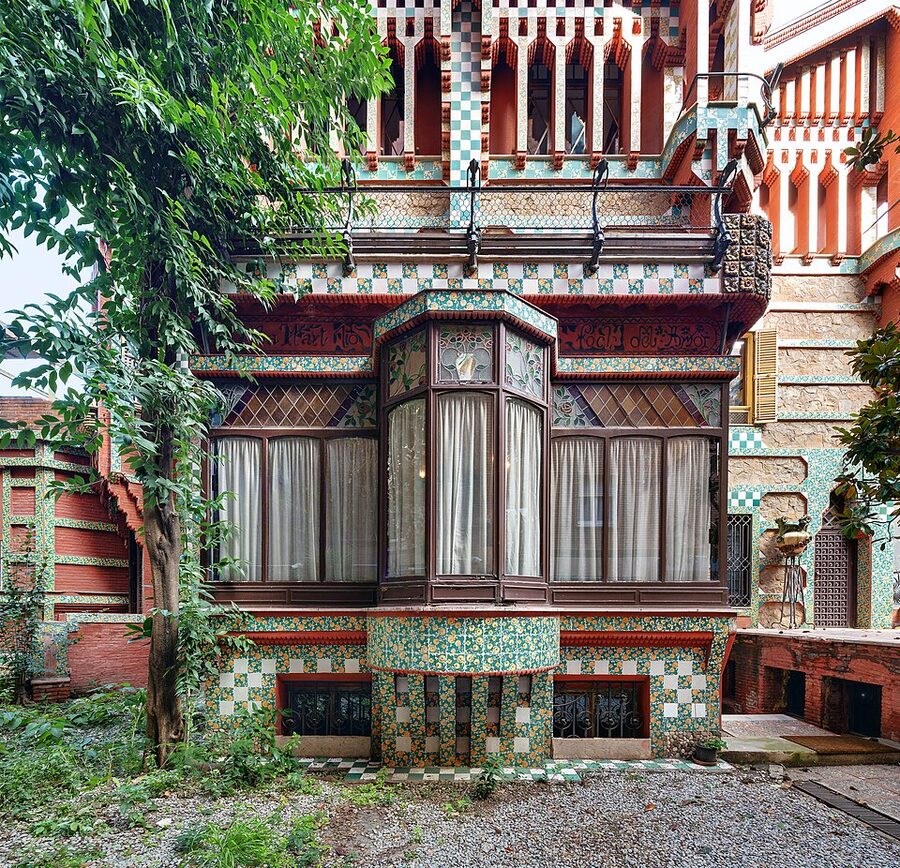
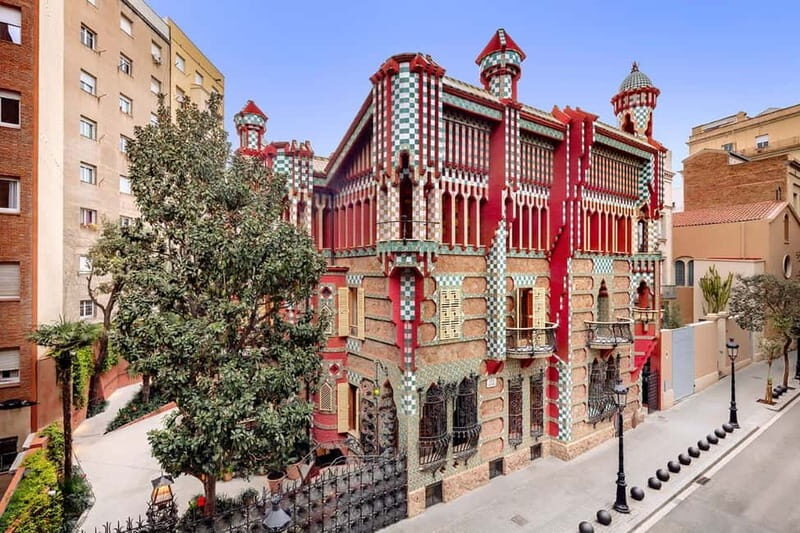
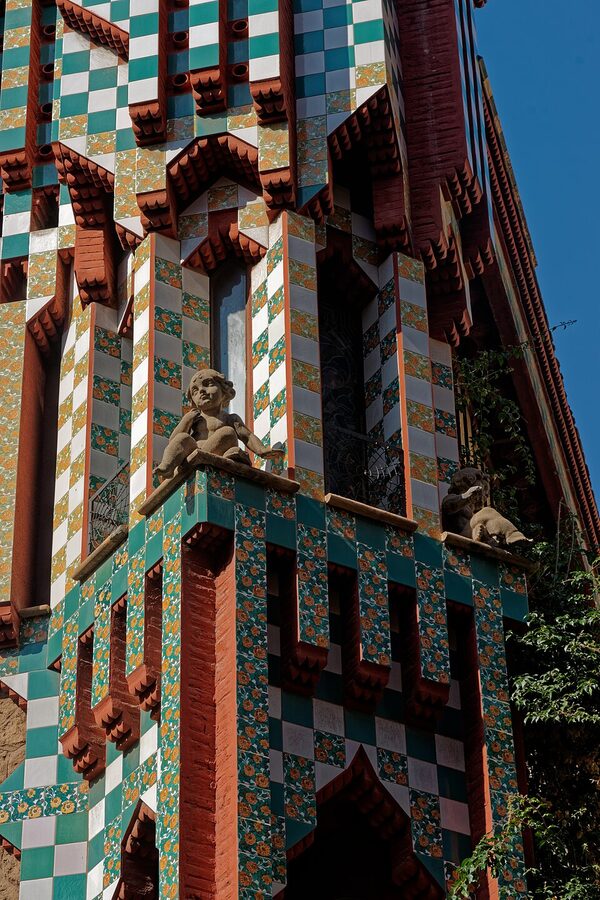
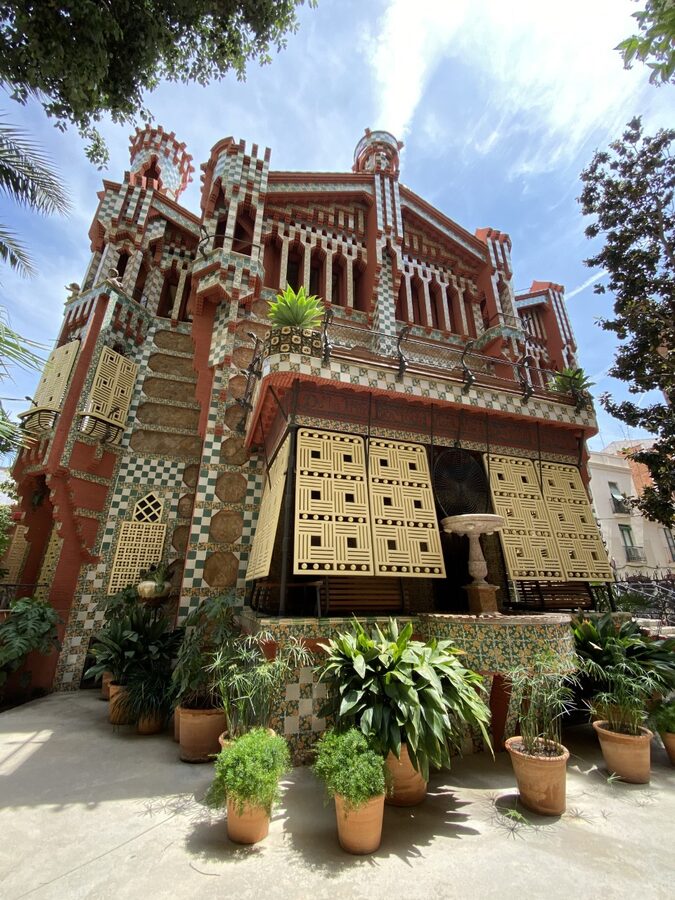
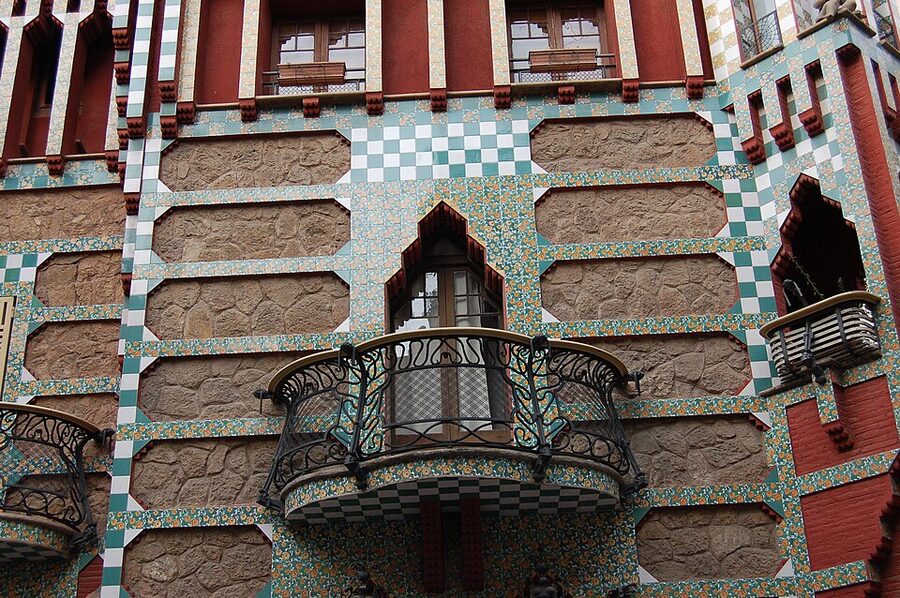
Push the iron gate open and the first thing that hits you is the smell of stone warmed by Mediterranean sun. Then the colour. Green and white tiles climbing the brickwork in stripes, marigold blooms hand-painted onto ceramic squares, palm fronds wrought into the ironwork like the gardener forgot to prune them. Casa Vicens is loud before you even step inside.
This was Antoni Gaudí’s first house, built between 1883 and 1885 for a stockbroker who wanted a summer villa where his family could escape the Barcelona heat. Most visitors blow past it on the way to Sagrada Família and Park Güell. That’s exactly why it’s worth your morning.
Short on time? Here’s how to book Casa Vicens fast:
The cheapest way in: Skip-the-line entrance ticket from $26. Includes the audio guide in 16 languages. The one most people book.
If you want a guide who tells stories, not facts: Guided tour with a licensed expert for $27. Worth the extra dollar.
If GetYourGuide is sold out: Viator skip-the-line with audio guide at $26.60. Same access, different platform.
- Why Casa Vicens, when there are four other Gaudí houses?
- The three tickets worth booking
- 1. Skip-the-Line Entrance Ticket with Audio Guide:
- 2. Skip-the-Line Audio Guide via Viator: .60
- 3. Guided Tour with Licensed Architecture Guide:
- What you’ll see, room by room
- Tickets, timings and the prices that catch people out
- Opening hours, the short version
- Getting there: the metro stop nobody knows
- Driving and parking, briefly
- The history nobody mentions in the audio guide
- The marigold tile that connects two Gaudí buildings
- What to do before and after
- Food in the area
- The annoying things nobody mentions
- Casa Vicens compared to the other Gaudí houses
- One last detail before you book
- Where Casa Vicens fits in your Barcelona week
Why Casa Vicens, when there are four other Gaudí houses?
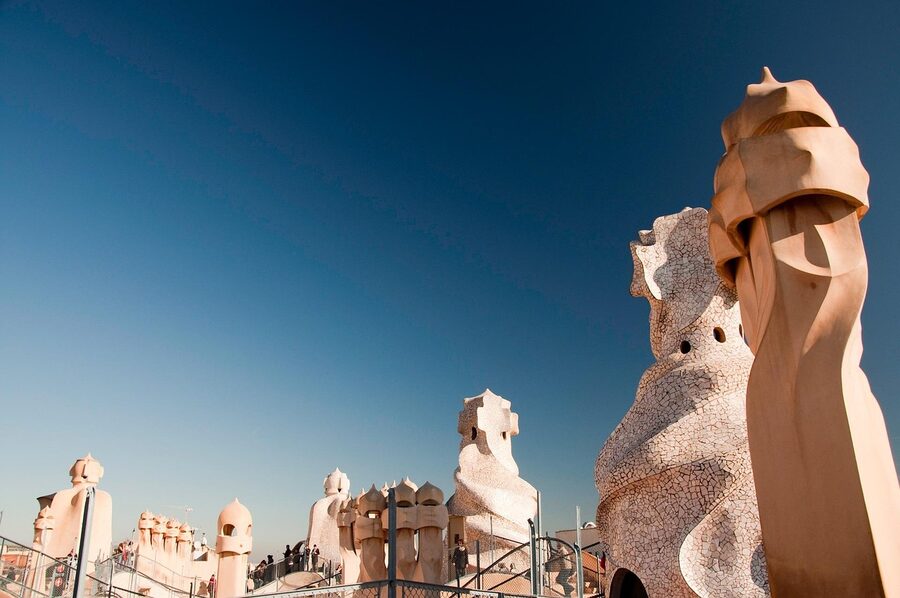
It’s a fair question. Sagrada Família is the icon. Casa Batlló has the bone balconies. La Pedrera has the chimney warriors. Park Güell has the mosaic lizard everyone photographs.
So why bother with the small one in Gràcia?
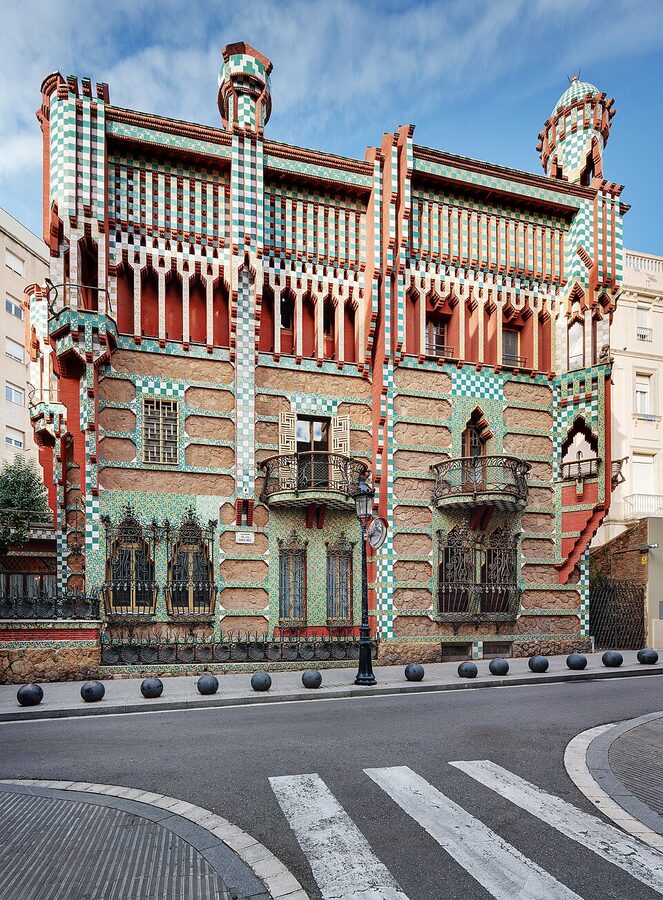
Because this is the one where you can see Gaudí still figuring himself out. He was 31 when the Vicens family hired him. Sagrada Família was already on his desk but he hadn’t broken ground yet. Casa Vicens is the lab. You can see him pulling Mudéjar arches, Persian tile patterns, Japanese painted ceilings, and Catalan brick into the same building and somehow making it cohere.
And you can see all of that without queuing for two hours. Casa Vicens runs at maybe a tenth of the foot traffic of Casa Batlló. On a Tuesday morning I had whole rooms to myself. That doesn’t happen at the famous ones.
If you’re doing the full Gaudí circuit, the order I’d recommend is Casa Vicens first, then Park Güell, then Casa Batlló and La Pedrera together, then Sagrada Família last as the climax. Going chronologically lets you watch his style develop. Skipping Casa Vicens is like reading a novel from chapter three.
The three tickets worth booking
Casa Vicens is small enough that the ticket choice matters more than at the bigger sites. You’re not picking between four different access tiers. You’re picking between an audio guide, a human guide, or showing up at 9am for the place to yourself. Here’s what each one actually gives you.
1. Skip-the-Line Entrance Ticket with Audio Guide: $26
This is the version most people book and the one I’d start with. The skip-the-line slot lets you walk past the on-site queue, which on a Saturday afternoon can stretch around the corner of Carrer de les Carolines. Our full review covers what’s on each floor and which rooms you can spend the most time in. The audio guide is genuinely good. Slow, narrative, less of a list of facts and more of a story about why Gaudí made the choices he made.
2. Skip-the-Line Audio Guide via Viator: $26.60
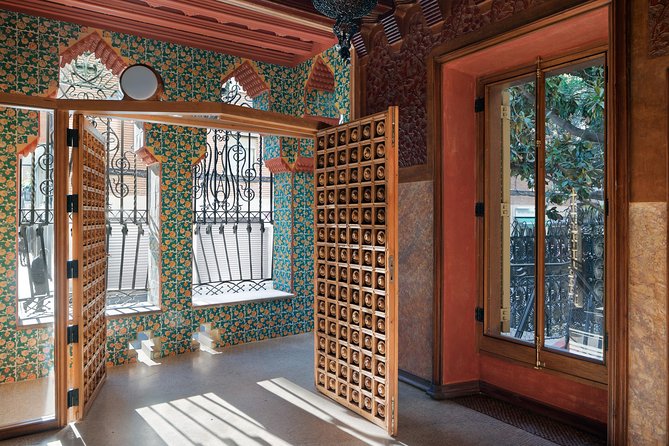
Functionally identical to the first option. Same skip-the-line slot, same audio guide. The price is fifty cents higher because of how Viator runs its dynamic pricing, but it’s not enough to matter. My review of the audio-guide version covers the platform differences in detail. If you’ve already got the Viator app open and your other Barcelona bookings sit there, just keep going. There’s no reason to switch.
3. Guided Tour with Licensed Architecture Guide: $27
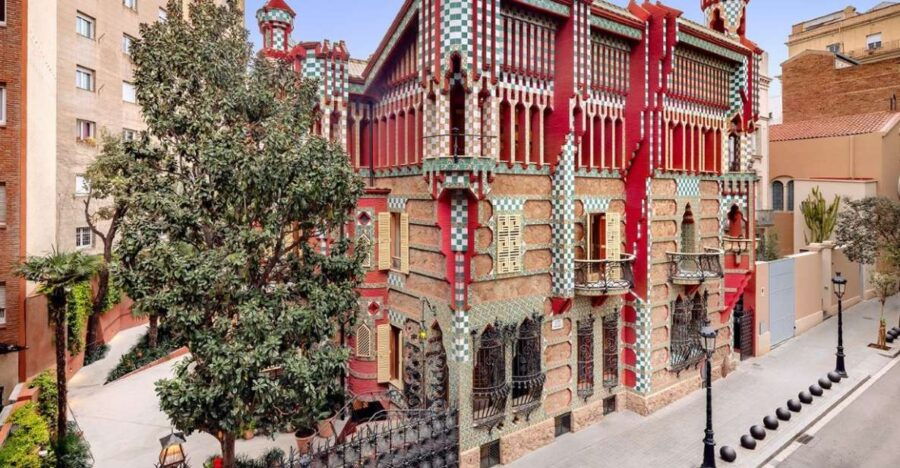
For the price difference, this is the upgrade I’d take if I had to pick. Group sizes stay small, around 15 to 20, and the licensed guides know the building inch by inch. The benefit over the audio guide is that you can ask things like why a specific tile pattern repeats in the smoking room, or where the original kitchen was, and you’ll get an answer that goes beyond the recorded script. Our guided-tour review has the full breakdown of what to expect from a 90-minute walk-through. Languages run English, Spanish, Catalan, French, Italian, Chinese and Japanese on a rotating schedule, so check before you book.
What you’ll see, room by room
Casa Vicens is four storeys of restored interiors plus a terrace and small garden. The standard self-guided route takes about 75 to 90 minutes if you read the panels and listen to the audio guide. Architecture obsessives can stretch it to two hours. People in a hurry can do it in 45 minutes and still feel they got their money’s worth.
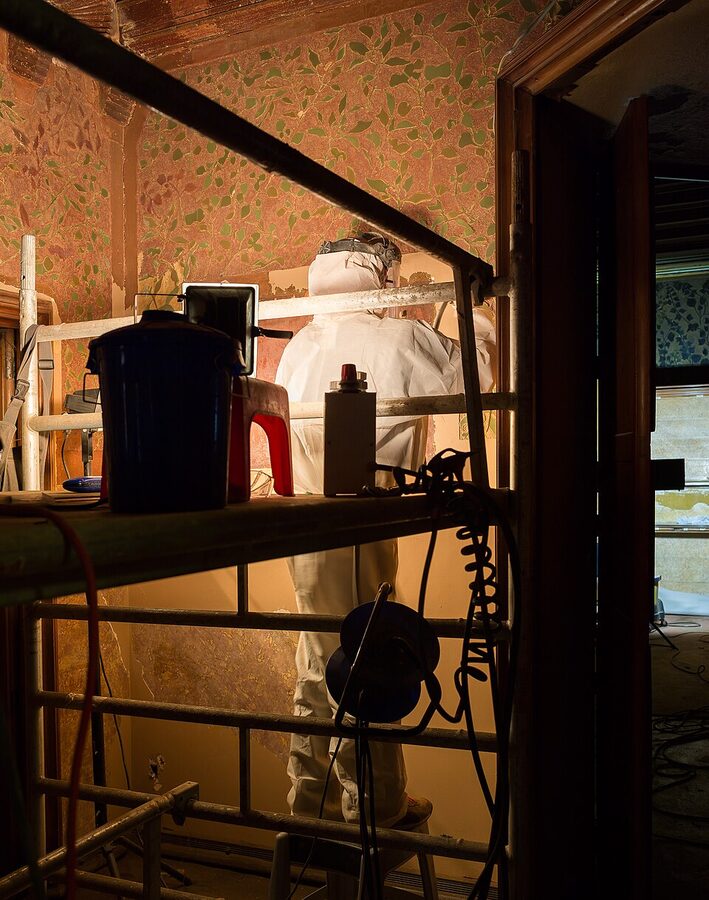
Ground floor: the family living rooms. The dining room has a frieze of cherries and leaves running around the wall, and the ceiling looks like a forest from below. Look up at the ceiling boards. They’re papier-mâché, painted to imitate carved wood, because Gaudí was already doing budget tricks even on a rich client’s villa.
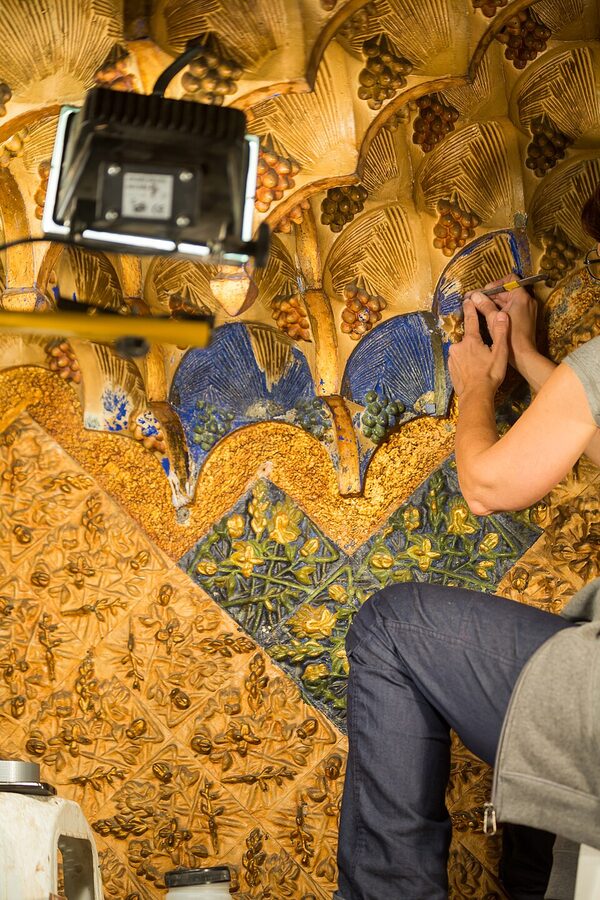
The smoking room: this is the room everyone takes photos of. Walls covered in painted papier-mâché shaped to look like Mudéjar plasterwork. A blue-and-gold ceiling that looks like the inside of a Moroccan tent. Manuel Vicens was a stockbroker who’d travelled, and Gaudí gave him the kind of room you’d find in a Granada palace. It’s small, maybe four by five metres, but it’s the most photographed corner of the house.
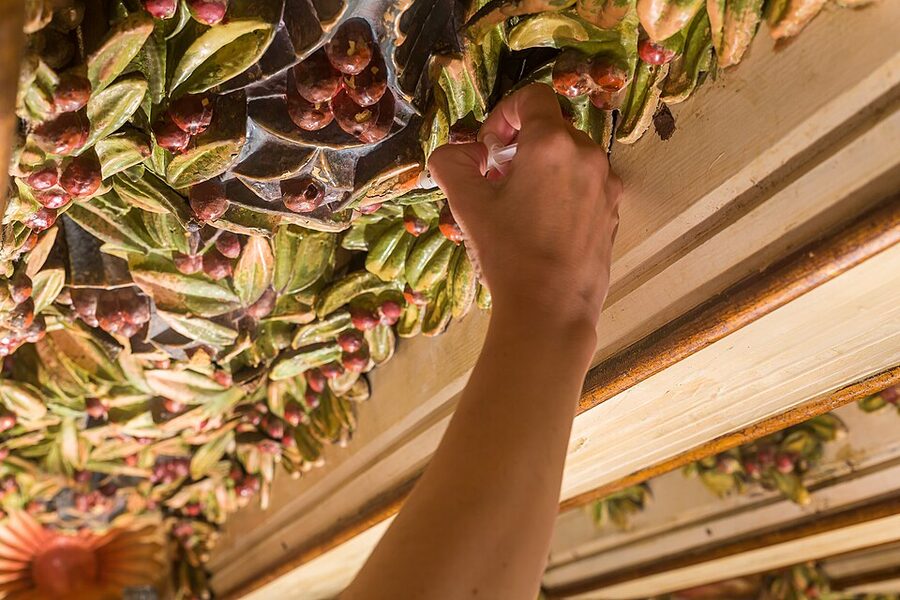
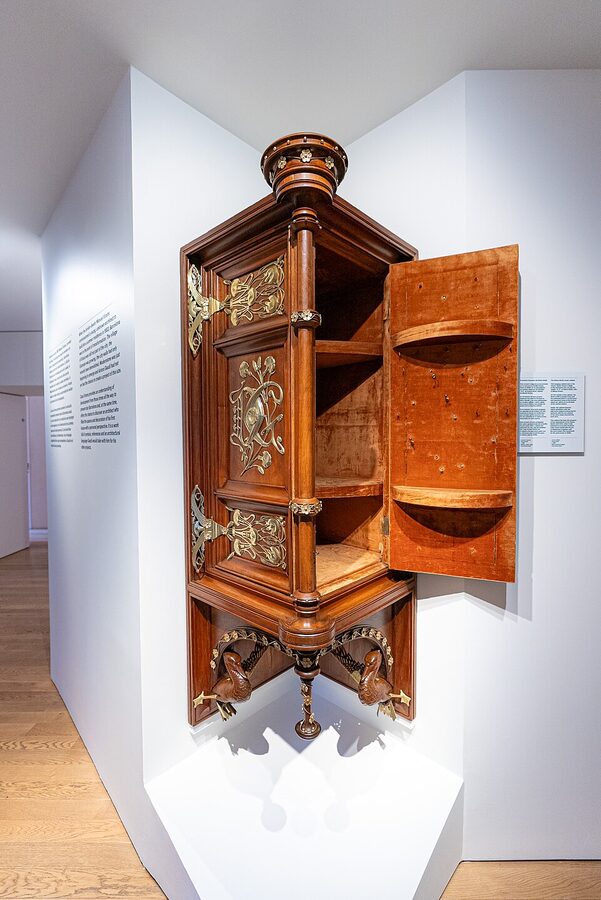
First floor: the family bedrooms, restored to look as they did in the 1880s. The Vicens children’s room has a small painted frieze of birds and butterflies along the upper walls. There’s a corner cabinet in walnut with the initials D.G. inlaid in brass for Dolors Giralt, the lady of the house. Gaudí designed every piece of furniture in the original commission. Most of it is replica now. The cabinet is one of the few originals.
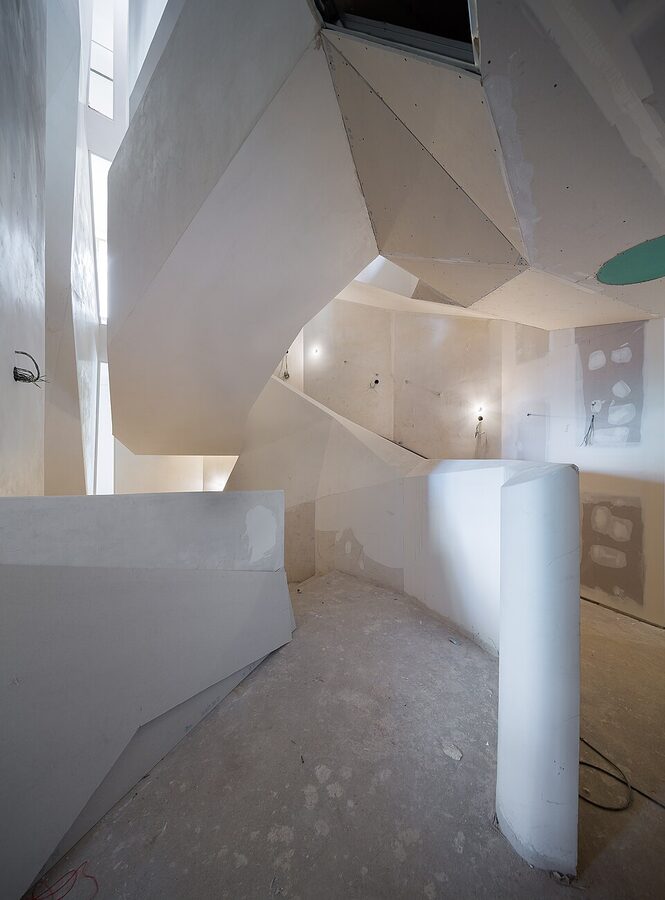
Second floor: the permanent exhibition. This is where most visitors slow down. There are scale models of the house showing the original Gaudí extension and the later modifications. Photographs from before the restoration show how close it came to being demolished in the 1990s. The exhibition is in Catalan and Spanish on the wall panels, but the audio guide carries you through it in your language.
Third floor and attic: rotating exhibitions, usually contemporary art tied to Gaudí themes. The attic is also the most cramped space in the house. Worth seeing for the original timber roof structure, even if you skip the temporary show.
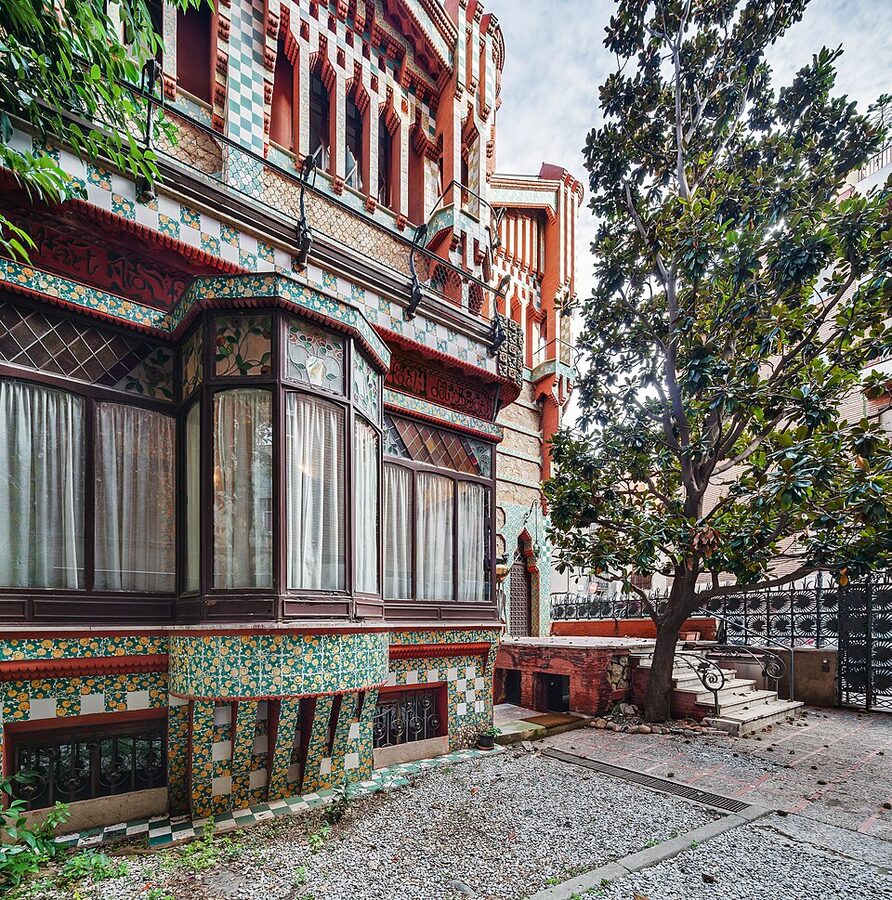
Garden and terrace: the part most people skim past on the way out. Don’t. The terrace gives you the only spot in Barcelona where you can see Casa Vicens from above and from inside at the same time. The garden is small, maybe a quarter of what Gaudí originally designed before later sales chipped pieces off, but the wrought-iron palm-leaf fence is original and worth ten minutes alone.
Tickets, timings and the prices that catch people out
Standard adult admission is from €21 at the door, or $26 (€24) when you book online with skip-the-line. Booking online is almost always cheaper than buying on the day, partly because the third-party sellers undercut the official site, partly because GetYourGuide bundles the audio guide into the base price.
Reduced tickets at €19 apply for visitors aged 11 to 17, students, and over-65s. Children under 10 are free. Pay attention to the cut-off ages because the staff at the door check student IDs. They don’t accept expired ones.
If you’re doing the full Gaudí circuit, look at the Three Houses of Gaudí combo ticket, which bundles Casa Vicens with Casa Batlló and La Pedrera for a discount. It’s only worth it if you actually plan to do all three within a few days, because the dates are usually fixed when you book. My Casa Batlló booking guide covers how that one works as a standalone, and my La Pedrera guide handles the rooftop access tier upgrade for La Pedrera.
Opening hours, the short version
Hours change with the season, which is a thing nobody tells you and then you turn up at 6pm in February and the door is shut.
1 November to 31 March: Monday 10am to 3pm (last entry 1.40pm). Tuesday to Sunday 10am to 7pm (last entry 5.40pm). Mondays in winter are short.
1 April to 31 October: Daily 10am to 8pm (last entry 6.40pm).
Closed: 25 December and 6 January. They close early on 31 December as well.
The “last entry” times matter because the staff push you out at closing. If you arrive at 5.30pm in February you have ten minutes to buy a ticket and you’ll be rushed. Go in the morning if you can. The light through the smoking room ceiling at 11am is the photo you came for.
Getting there: the metro stop nobody knows
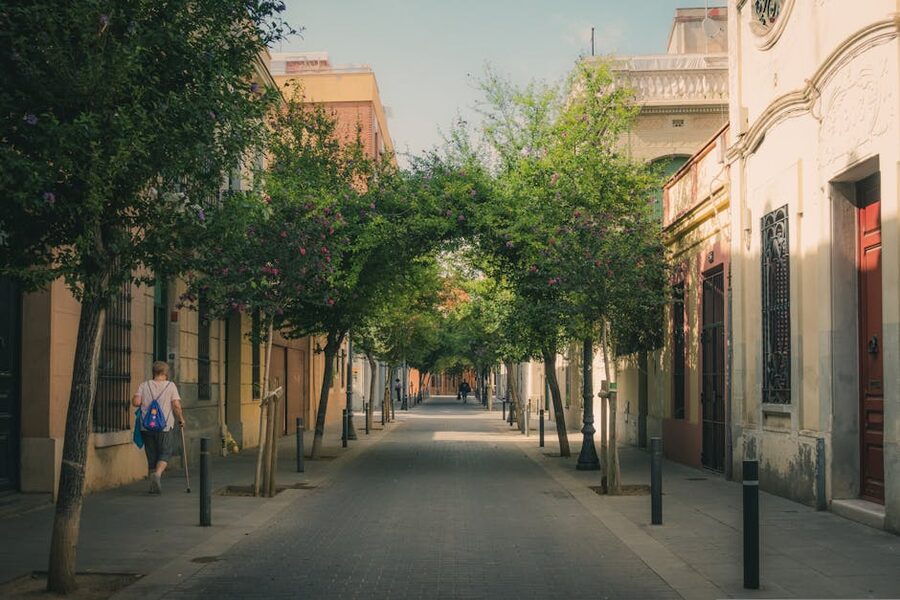
Casa Vicens sits at Carrer de les Carolines, 24, in the Gràcia district. Gràcia is north of the Eixample, north of Passeig de Gràcia, and feels like a different city. Smaller streets, lower buildings, more locals than tourists.
The closest metro stops are Fontana (L3, green line) and Lesseps (L3, green line), both about 250 metres away. From Plaça de Catalunya in the city centre it’s four stops on L3 to Fontana, then a five-minute walk uphill. From Sagrada Família it’s a longer haul. Take L5 (blue) to Diagonal, change to L3 (green) for Fontana, total about 20 minutes plus the walk.
If you’re already at Park Güell, walk down. It’s a 25-minute mostly-downhill stroll through Gràcia that beats the metro. You pass Plaça del Diamant and a string of small bakeries and bars on the way. Worth doing.
Bus options exist but the metro is faster. The H6 horizontal bus drops you near Fontana if you’re coming from the west of the city.
Driving and parking, briefly
Don’t drive to Casa Vicens. Gràcia’s streets are narrow, mostly one-way, and parking is meter-only with strict resident zones. If you’re arriving from Sitges or Montserrat by car, park at one of the BSM lots near Diagonal and walk up. The savings on a parking fine are worth the 15-minute walk.
The history nobody mentions in the audio guide
Manuel Vicens i Montaner was a stockbroker and currency trader, not a textile baron, although a lot of guides get this wrong. He bought a small plot in Gràcia in the 1870s, when the area was still a separate town from Barcelona, and hired the recently-graduated Antoni Gaudí through a family connection.
The original commission ran from 1883 to 1885. Gaudí was 31 and had nothing built to his name. Vicens took a punt. The result was a four-storey villa with a ground-floor smoking room, a first-floor family suite, and a wraparound garden that originally extended to a small ornamental waterfall and a Moorish-style fountain. Most of that garden is gone, eaten by later urban development that subdivided the lot in the 1920s.
UNESCO added Casa Vicens to the Antoni Gaudí ensemble in 2005. Until then, the building had been a private home. The Jover-Herrera family who lived there from 1899 to 2014 kept it intact, didn’t touch the original interiors much, and only opened it to the public on rare festival days.
In 2014 the property was sold to MoraBanc, an Andorran financial group. They funded the three-year restoration that opened it to the public in 2017. The opening pulled in 80,000 visitors in the first three months, which sounds like a lot until you compare it to Park Güell’s nine million a year. Casa Vicens is the quiet one in the family.
The marigold tile that connects two Gaudí buildings
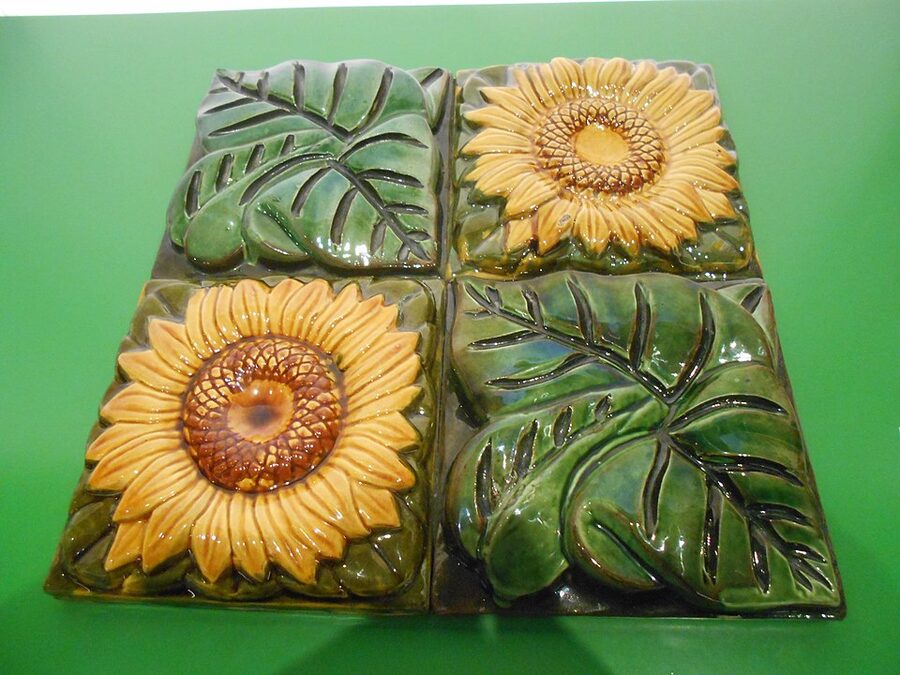
One detail the audio guide does mention but worth flagging: the tile pattern on the upper bands is a hand-painted marigold flower with two leaves. Gaudí designed it specifically for Casa Vicens. He liked the result so much that he reused the exact same pattern on his next big commission, El Capricho, a holiday villa in Comillas in northern Spain. If you’ve been to El Capricho or seen photos, you’ll spot the connection immediately.
This kind of cross-referencing happens across all of Gaudí’s work. The trencadís technique used at Park Güell, the curved ironwork on Casa Batlló, the parabolic arches inside Sagrada Família. They all build on ideas Gaudí first tested somewhere smaller. Casa Vicens is the original lab.
What to do before and after
Casa Vicens takes 75 to 90 minutes if you do it properly. That leaves the rest of your morning or afternoon free, and Gràcia has more to offer than most guidebooks let on.
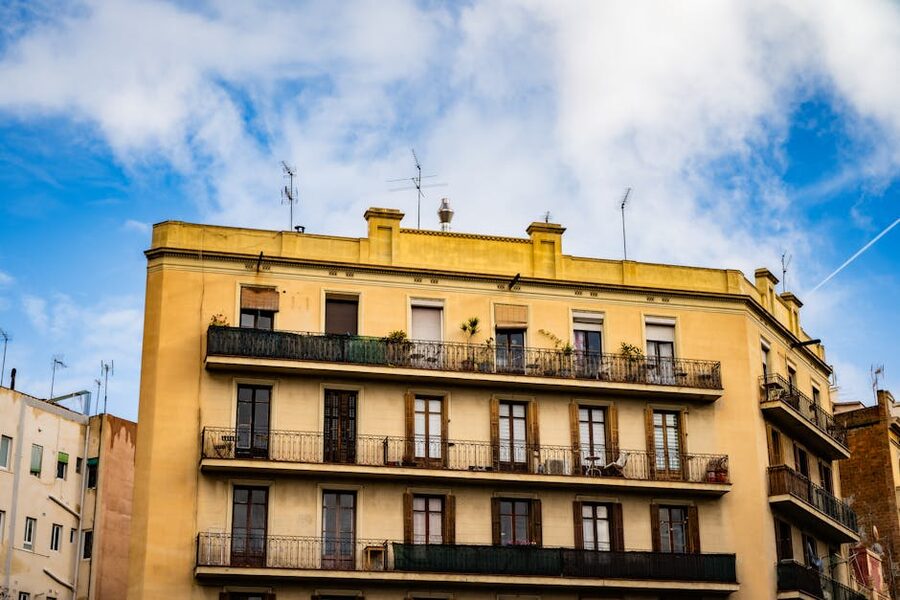
Before your visit: grab coffee at one of the cafés on Carrer Verdi, two streets east. Verdi is the unofficial main drag of Gràcia and has more independent coffee shops per metre than any other Barcelona neighbourhood. If you book a 10am Casa Vicens slot, get there for 9.20am, drink a cortado, and walk the last five minutes.
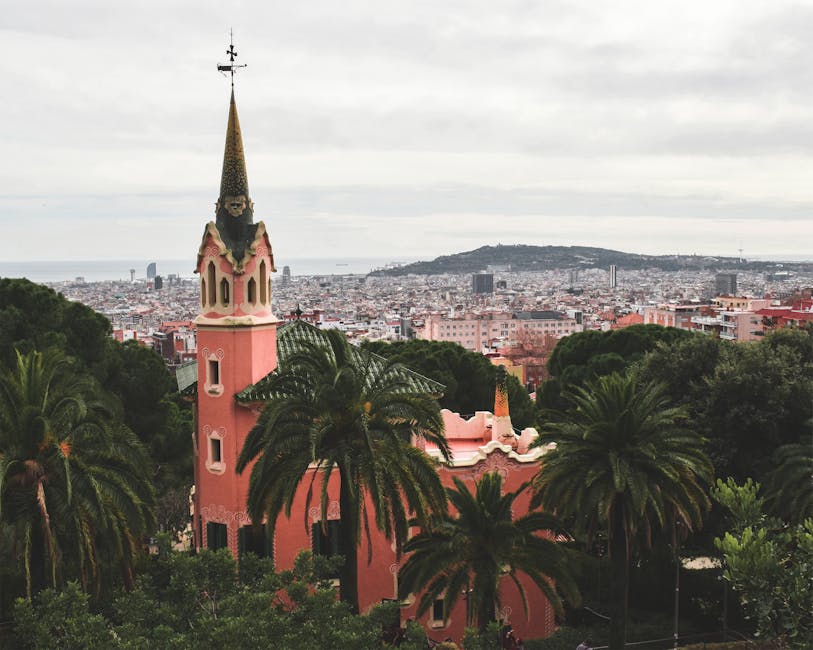
After your visit: walk uphill to Park Güell. It’s 25 minutes, mostly through Gràcia’s quiet residential streets, and you arrive at the cheap entrance (the one tour groups don’t use). If you’ve timed your Casa Vicens slot for 10am, you can be at Park Güell by 12.30pm with time to spare. Both sites in one half-day.
Or take the metro back into town and head for Casa Batlló on Passeig de Gràcia. Two Gaudí houses on the same day works, but you’ll be tired by the time you get to the second one. I’d recommend splitting them across two mornings if you have the time.
Food in the area
Casa Vicens has a small café on the ground floor that does decent coffee and overpriced cakes. Skip it. Walk three minutes to Plaça de la Vila de Gràcia, the heart of the neighbourhood, and pick a table at one of the bars on the square. Bar Salambó or Cafè del Sol are both good for a tapa and a beer. If you want a proper lunch, Bodega Marín on Carrer Milà i Fontanals does the kind of Catalan home cooking that survives only because tourists haven’t found it yet.
For a paella that won’t ruin your day, head down the hill into the Eixample. Most paella in Gràcia is made for people who don’t know better. A market-visit paella class is a better bet if you want to learn how it’s actually cooked.
The annoying things nobody mentions
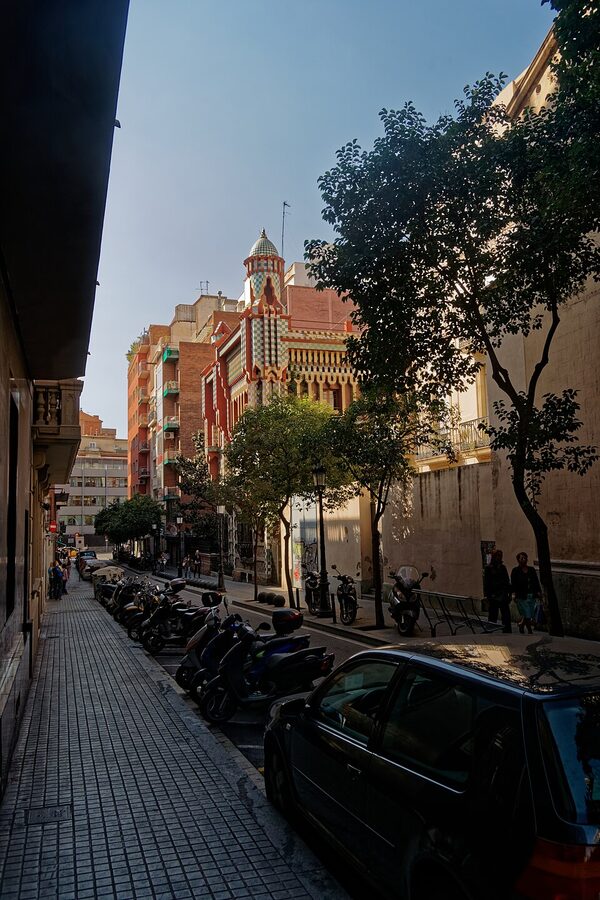
The street is narrow. Casa Vicens sits on a residential road maybe seven metres wide. You can’t step back far enough to photograph the whole front of the building from one spot. Move down the street, shoot from the corner, or zoom out using a wide-angle phone lens. The cleanest exterior photos are from the corner of Carrer Sant Gervasi de Cassoles.
The lift is small. If you’re with anyone who can’t do stairs, plan ahead. The original 1880s building was designed without lifts and the modern accessibility lift only takes two people at a time. Tour groups make it slower.
The smoking room is dim. Photographs need a steady hand or a phone with good low-light. No tripods allowed. No flash. The dim lighting is intentional to protect the original surfaces, but it makes phone photography tricky. If your phone has a Night Mode, switch it on.
It’s hot in summer. Casa Vicens has minimal modern climate control because too much air-flow damages the original tile work. In July and August, the upper floors get genuinely warm. Visit in the morning, before 11am, or pick October to April if you can.
The garden is smaller than the photos suggest. When the audio guide tells you about the original “ornamental garden with fountain and waterfall”, you imagine something like the Generalife at the Alhambra. What you actually see is a courtyard about ten metres square. Most of the garden was sold off in the 1920s and 1960s. Manage expectations.
Casa Vicens compared to the other Gaudí houses
If this is your first time choosing between the Gaudí houses and you can only do one or two, here’s how I’d rank them.
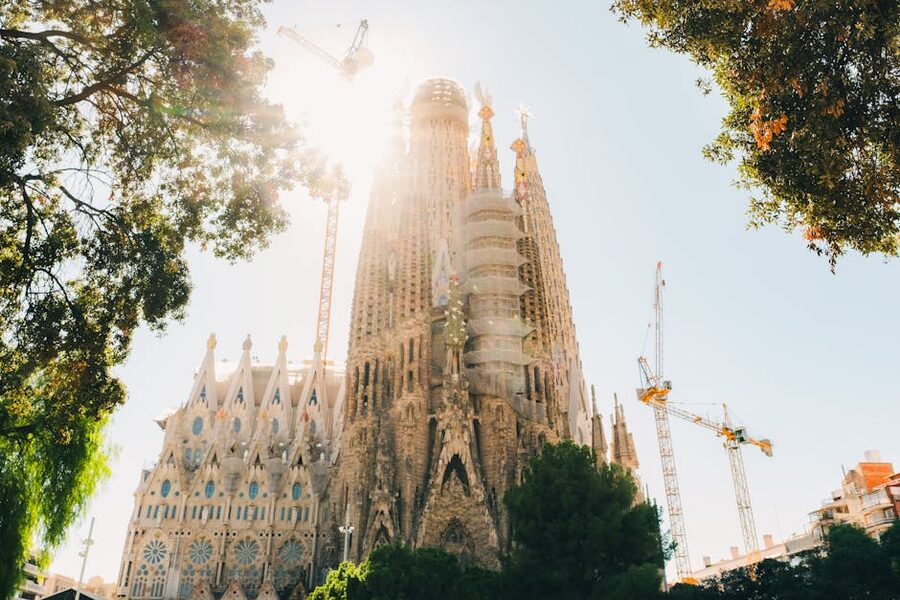
Sagrada Família is the must-do. Skip it only if you’ve seen it on a previous trip. The basilica is unlike any other building on earth and the new towers reaching completion in 2026 mean it’s the rare landmark that’s getting better, not worse, the longer you wait.
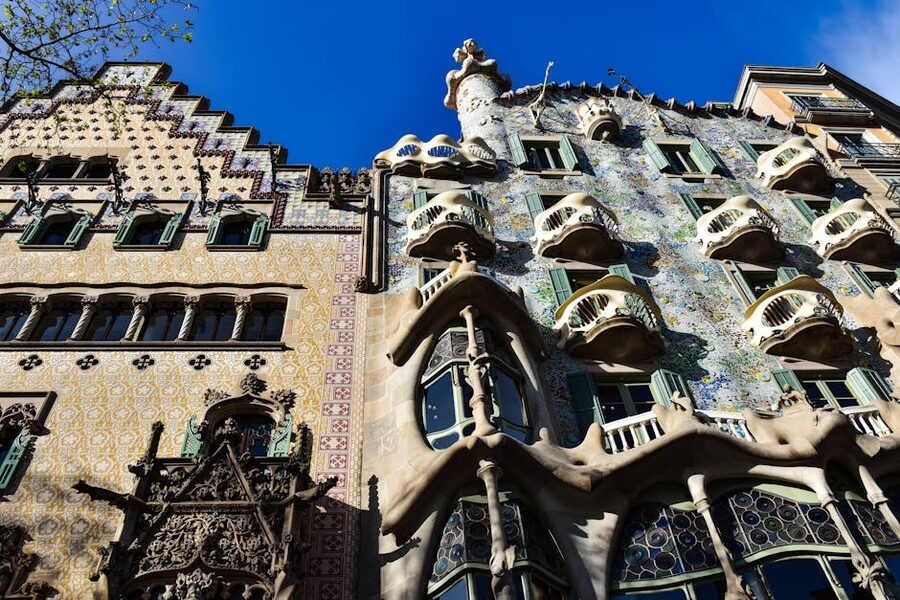
Casa Batlló is the most photogenic Gaudí house and the one that does the best job of feeling like Gaudí himself walked you through it, thanks to the upgraded augmented-reality audio guide. Pricey though. Tickets start around €35 and the prime time slots cost more.
La Pedrera (Casa Milà) is the best for the rooftop. Those chimneys are imprinted on every Barcelona postcard for a reason. The night-time experience with the rooftop light show is worth the upgrade if you can stretch to it.
Park Güell is outdoor, big, and the most family-friendly. Combine it with Casa Vicens for a single half-day if you’re tight on time.
Casa Vicens is the under-the-radar one. Pick it if you’ve already done one or two of the bigger sites and want to see Gaudí before he was Gaudí. Pick it if you hate crowds. Pick it if you have a soft spot for the early-career work of any artist. Skip it if you only have 24 hours in Barcelona and you’ve never seen Sagrada Família. Priorities.
One last detail before you book
Casa Vicens runs occasional early-access tickets in summer that get you inside before the regular 10am opening. The early-access slot is at 9am, the price runs around €40, and the appeal is that you get the smoking room and the family rooms with maybe a dozen other people in the whole house. If you’re a photographer, this is the version to book. The light at 9am, before the sun gets directly above the courtyard, is the best the building gets.
The early-access slot isn’t always available. Check the official site or GetYourGuide a few weeks ahead of your trip. If it’s listed, jump on it. If it’s not, the standard 10am audio-guide ticket is still a great morning.
Where Casa Vicens fits in your Barcelona week
If you’re piecing a trip together, Casa Vicens slots in best as a half-day on day three or four, after you’ve done Sagrada Família and one of the other Gaudí houses. By that point your eye is trained for the Gaudí details and you’ll get more out of the small interiors than you would on day one. Pair it with Park Güell in the same half-day, eat in Gràcia, and you’ve used a morning well. If you’ve still got afternoon energy a flamenco show in the evening rounds out the day. For longer trips, the Girona and Costa Brava day trip or a Montserrat half-day with wine tasting are the two day-trips that use a free morning best when you’re already Gaudí-ed out.