
Zanzibar’s spices are not just something to buy in a shop. On this private tour, you see them growing, smell and taste cinnamon, cloves, vanilla, and more, then carry that sensory lesson into Stone Town’s tangled lanes and difficult past. It is a useful pairing: farm and town, food and history, all in one outing.
I like two things especially: the hands-on farm visit, with fresh tropical fruit and a Swahili lunch, and the private Stone Town walk, which can be tailored to your interests. Guides named Abdul, Omar, and Kassim have led recent tours, and visitors particularly value their clear explanations and language skills.
One consideration: this is a long, walking-heavy day if you are staying far from Stone Town. The listed duration ranges from three to six hours, and the route includes van journeys as well as two-hour visits at the farm and in town. Wear comfortable shoes, and check the timing for your pickup area.
- Smell and taste spices at their source: See cloves, nutmeg, cinnamon, ginger, black pepper, and other crops growing on a working farm.
- Try fruit picked for the visit: The tasting can include watermelon, red and yellow bananas, pineapple, mangoes, and oranges.
- Eat lunch at the farm: A local Swahili meal uses the farm’s spices and fruit.
- Visit Stone Town’s key historic sites: The route includes the Old Fort, Forodhani Gardens, the former slave market site, and more.
- Ride in a private van: Hotel pickup and drop-off are included, with pickup options across Unguja.
- Get a guide in your language: English, French, German, Polish, Arabic, Spanish, Italian, Swahili, Portuguese, and Afrikaans are offered.
- From spice plants to Stone Town streets
- A private van makes the two-part day easier
- The spice farm: smell first, then taste
- A Swahili lunch in the middle of the outing
- Stone Town: layered buildings and a hard history
- The guide can shape the town walk
- Is a good value?
- What to bring and who will enjoy it
- FAQ
- How long does the tour take?
- Is hotel pickup included?
- What is included in the price?
- What can I taste at the spice farm?
- What food is served for lunch?
- Which Stone Town sites are visited?
- Can I go inside the House of Wonders?
- Which guide languages are available?
- Is the tour suitable for someone with food allergies?
- What should I bring?
- More Tours in Zanzibar Archipelago
- More Tour Reviews in Zanzibar Archipelago
- Not for you? Here's more nearby things to do in Zanzibar Archipelago we have reviewed
From spice plants to Stone Town streets
 1 / 8
 2 / 8
 3 / 8
 4 / 8
 5 / 8
 6 / 8
 7 / 8
 8 / 8
This tour gives you two very different views of Zanzibar. The farm explains how spices and tropical crops grow; Stone Town shows the layers of culture, trade, and painful history built into the island’s old centre. You get a guided introduction to both, rather than spending the day trying to piece everything together on your own.
The experience is private, so the guide can adjust the pace and discussion to your interests. That matters in Stone Town, where a short walk can move from a market to a historic building to a memorial site, each with a different story. Recent tours have had guides called Abdul, Omar, and Kassim. Their names are useful to know, but they are examples, not a promise of who will lead your trip.
The overall rating is 4.2 out of 5 from 94 ratings. That suggests a solid outing, though not a flawless one for everyone. One practical point is clear: the tour combines a full set of stops with driving between them, so confirm the expected length and pickup time rather than assuming every version will fit into a quick half-day.
You can check availability for your dates here:A private van makes the two-part day easier
The route includes hotel pickup and drop-off by private van. Pickup is offered from a wide set of locations, including Nungwi, Kendwa, Matemwe, Paje, Jambiani, Kiwengwa, and Stone Town, as well as several villages along the east and south coasts. The return drop-off choices cover many of the same areas.
The drive to the spice farm is listed as about an hour, followed by a two-hour farm visit. Stone Town gets another two hours, and the return drive is also listed at about an hour. Those segments add up to six hours, though the advertised overall duration is three to six hours. Your actual schedule may depend on where you are picked up and the available start time, so ask for a clear estimate before setting other plans.
A private vehicle is especially helpful if your hotel is well outside Stone Town. Instead of arranging separate transport to the farm and town, you have one driver for the day. The driver’s car number and booking name are provided for pickup, and you are asked to wait in your hotel lobby at least five minutes before the scheduled time.
You can also read our reviews of more tours and experiences in Zanzibar Archipelago.



The spice farm: smell first, then taste
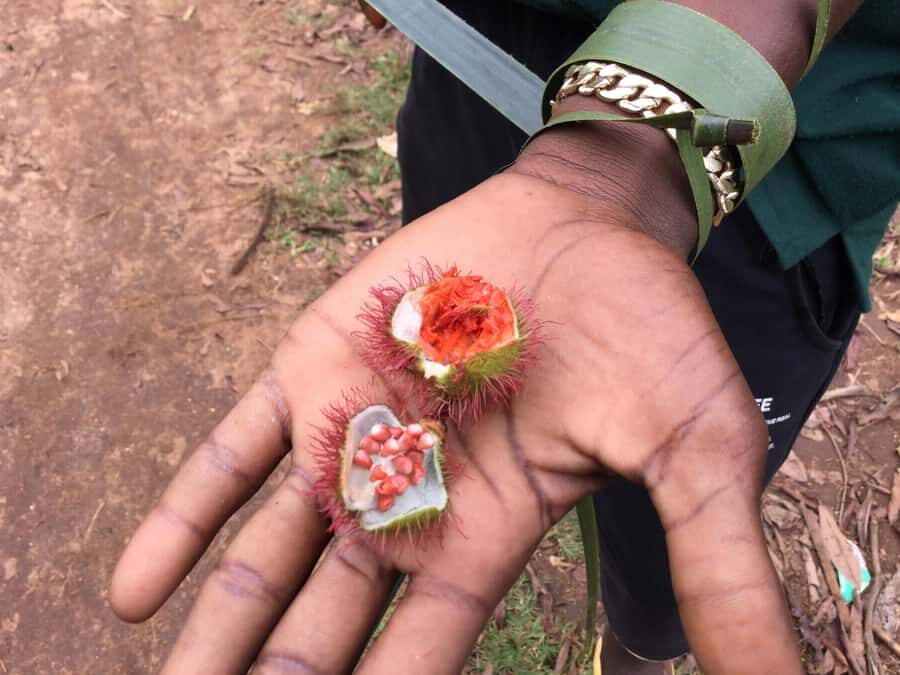
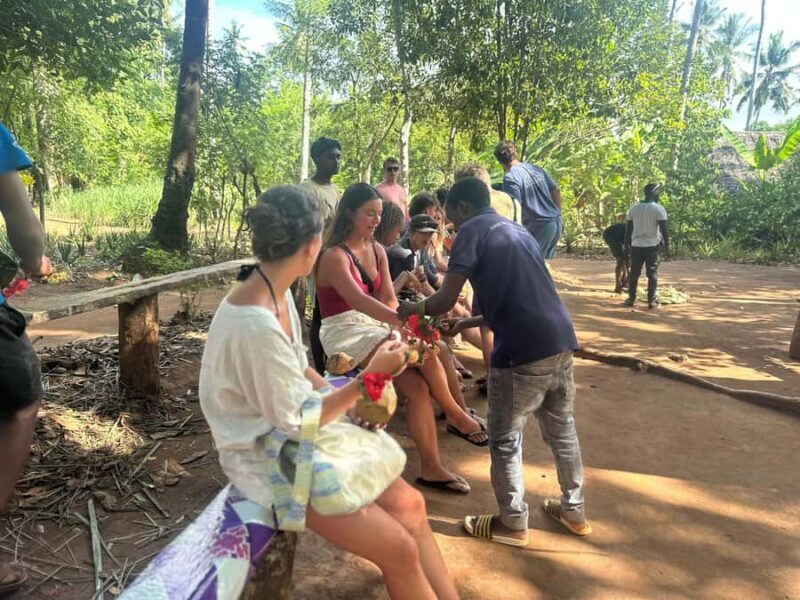
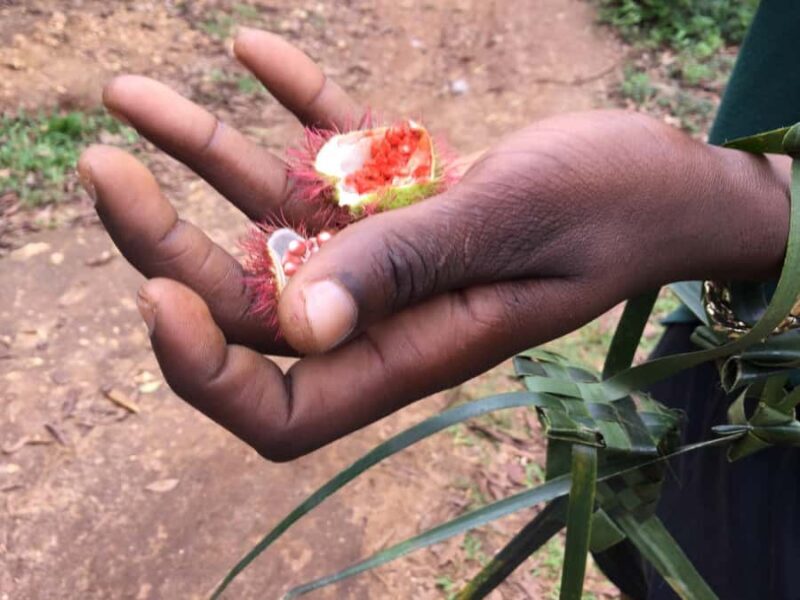
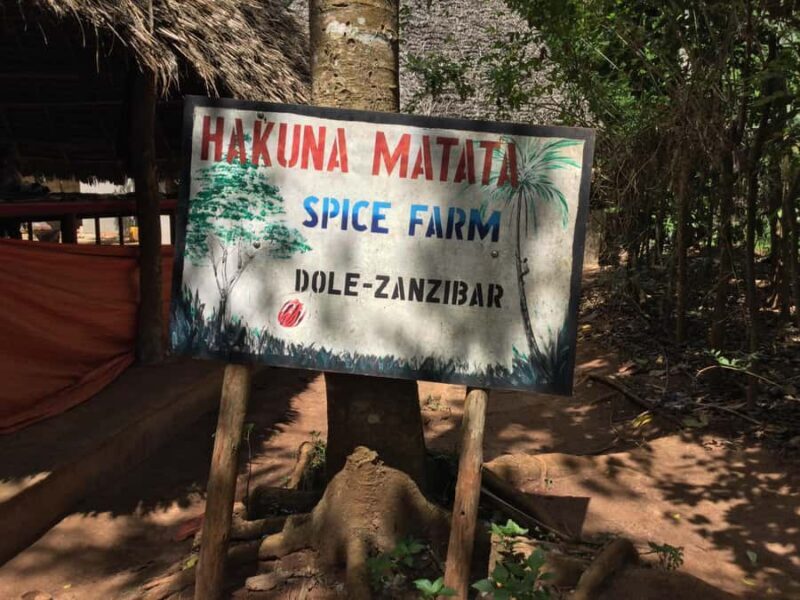
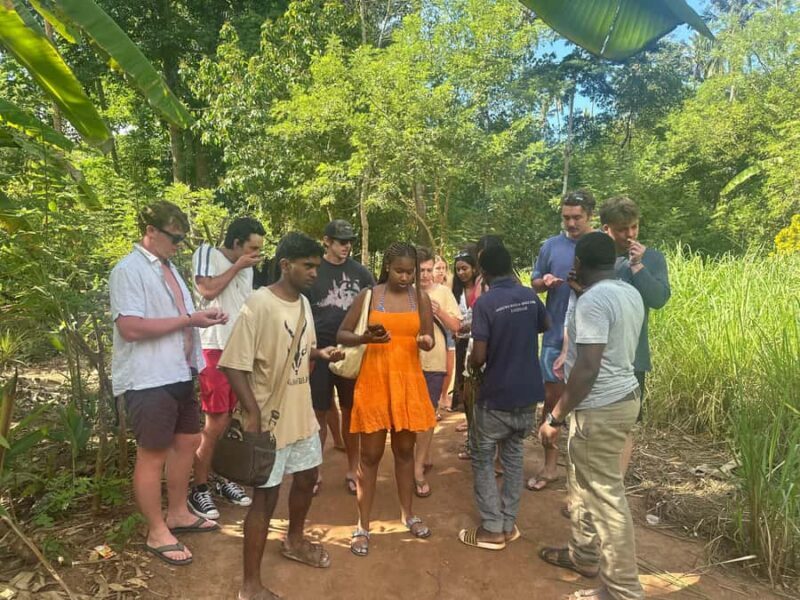
The farm walk is the most sensory part of the outing. You encounter crops such as cloves, nutmeg, cinnamon, ginger, black pepper, bananas, and pineapples, with the guide explaining how the farm was established and how Zanzibar grows its spices. The point is not just to identify a spice by name, but to connect the familiar kitchen jar with the plant it came from.
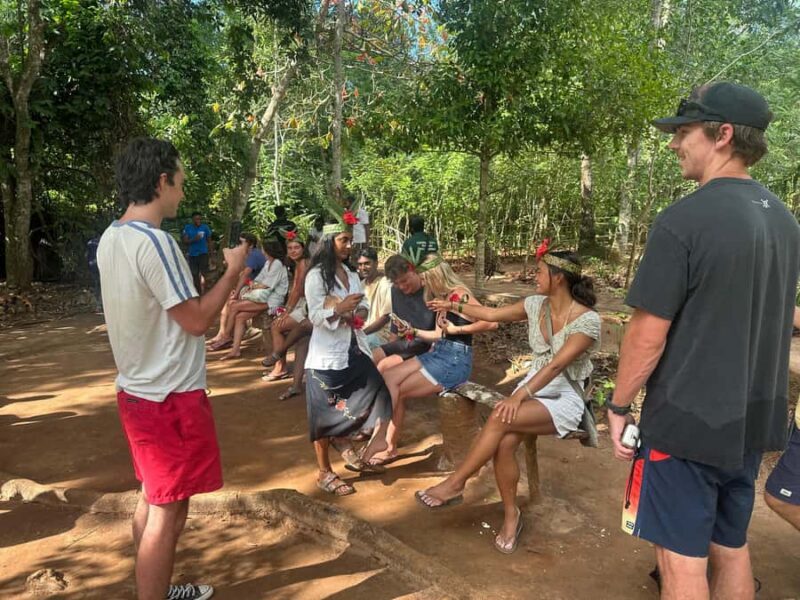
You can smell and taste spices including cinnamon, vanilla, nutmeg, lemongrass, and cloves. The farm visit is described as interactive, but follow the guide’s instructions about touching plants. The tour information specifically asks you not to touch plants without permission. A guide can show you what is appropriate, so don’t pluck or handle anything on your own.
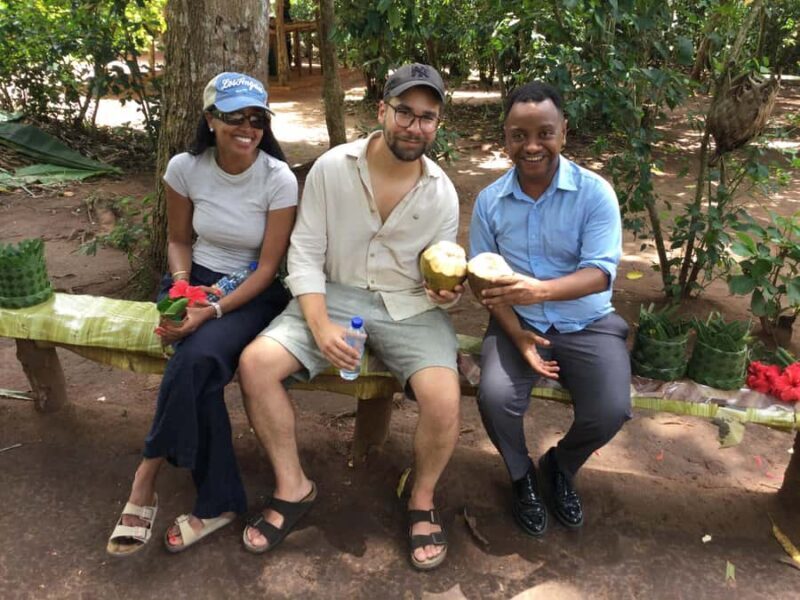
Fruit tasting adds a welcome break from the spice lesson. Depending on what is available, you may try watermelon, red and yellow bananas, pineapple, mangoes, and oranges. The range is part of the fun: it is a chance to compare familiar fruit with varieties you may not often see at home.
There is also a spice shop where you can look at handcrafted products made from the farm’s crops and buy what you like. Shopping is optional, and the stop gives you a way to take some of the day’s scents home. If you are buying food products, check the packaging and any travel rules that apply to your destination.
A Swahili lunch in the middle of the outing
Lunch is included at the farm and is described as a local Swahili meal prepared with fresh spices and fruit. That makes the meal part of the farm experience rather than a separate restaurant stop. It also gives you time to sit down before the walking tour in town.
The strongest practical praise for the meal is that it is tasty and generous. One recent account described it as both good and filling, while another singled out the quality of the lunch and appreciated that the guide joined the meal. The exact menu is not specified, so don’t plan around a particular dish.
Food allergies are a significant concern here: the tour is listed as unsuitable for people with food allergies. If you have an allergy or dietary restriction, contact the operator before booking and ask directly whether they can accommodate it. Do not assume that an included meal can be altered.
Stone Town: layered buildings and a hard history
After lunch, the van takes you to Stone Town, a UNESCO World Heritage Site since 2000. Its nineteenth-century buildings reflect Swahili, Arab, Indian, and European influences. A guide helps you read those layers as you walk, rather than treating the town as a string of photo stops.
The route includes Forodhani Gardens, the House of Wonders, the Arab Sultan’s Palace, and the Old Fort. The House of Wonders is undergoing renovation, so expect to see it from the outside rather than count on entering. The Old Fort was built by the Portuguese and is one of the town’s major historic landmarks.
You also visit the house where Freddie Mercury was born. It is a familiar name on the route, but it sits within a much broader account of the town. If celebrity history is not your main interest, the guide can give more attention to the buildings, local life, and trade that shaped Stone Town.
At the City Market, you pass stalls selling fresh produce and household goods, and the tour includes a look at the lively fish auction. This is one of the stops where the present-day town comes into view. Keep your attention on the guide and your surroundings, especially in crowded sections, and ask questions if you want more context about what is being sold.
The most sobering part is the former Old Slave Market site and Anglican Church. The visit includes the slave monuments and small, stark chambers associated with the site. This is not a light sightseeing stop, and it should not be treated as one. Give it time, listen to the guide, and be prepared for a difficult account of Zanzibar’s past.
There is an entrance ticket to the Old Slave Market Historical Site included. The tour description does not specify entry to every other building, so think of the Stone Town portion mainly as a guided walk through the streets and around its landmarks.
More Great Tours NearbyThe guide can shape the town walk
Stone Town is compact, but its narrow streets can make it hard to know what you are looking at without a local guide. A strong guide can explain the connection between architecture, local history, and the sites you pass. Recent guides have included Kassim, whose French was praised, and Omar, who adjusted the walk to the group’s preferences. Abdul has led the farm portion and was valued for giving clear information without turning the visit into a lecture.
Those examples point to what matters most: language and pace. The tour offers guides in ten languages, including English, French, German, Polish, Arabic, Spanish, Italian, Swahili, Portuguese, and Afrikaans. Check that your preferred language is available at your chosen time.
You can also say what interests you. If you want more time at the former slave market, or prefer to focus on architecture and the market, tell the guide early. One recent visitor wished there had been more time to see a site such as the slave museum, which is a useful reminder that a guided route cannot cover every interior or historical stop in two hours.
Is $46 a good value?
At $46 per person, the price covers a private van with hotel pickup and drop-off, private guided walks at the farm and in Stone Town, lunch, fruit tasting, and the Old Slave Market Historical Site entrance ticket. Paying for those pieces separately would take planning, and transport between a coastal hotel, the farm, and town can be a particular hassle.
The best value is for someone who wants a structured introduction to both Zanzibar’s spice production and Stone Town’s history in one day. The private format also has real practical value if you want to ask questions, move at your own pace, or request a different emphasis from the guide.
It is less ideal if you want an unhurried, specialist visit to every historic building. The town portion is about two hours, and the House of Wonders is currently under renovation. You are getting a broad overview, not an exhaustive museum tour. The tour is also marked unsuitable for people with mobility impairments, despite being described as wheelchair accessible elsewhere in the activity details. Because those statements conflict, contact the operator before booking if access is important.
What to bring and who will enjoy it
Wear light clothing and comfortable walking shoes, and bring a hat, sunscreen, water, and insect repellent. The farm and town involve walking, and Zanzibar’s sun can make a seemingly short outing feel longer. Keep your camera handy, but give the guide your attention at the market and historic sites.
I’d recommend this tour to first-time visitors who want a practical overview of the island’s food culture and Stone Town in one outing. It is also a good fit for couples or families who prefer a private guide and don’t want to organize multiple transfers. If your main interest is one specific topic, such as the history of slavery or the details of spice cultivation, you may prefer to spend more time on that subject alone.
Book it if you value a well-organized day, want lunch and transport taken care of, and are comfortable with a brisk mix of driving and walking. Before you commit, confirm the total duration from your hotel, your guide language, and whether the meal can meet your dietary needs. That small check can make the difference between a useful introduction and a rushed day.
Zanzibar:Stone Town & Spice Farm Private Tour Lunch Included
FAQ
How long does the tour take?
The stated duration is three to six hours. The itinerary includes two hours at the spice farm, two hours in Stone Town, and van journeys listed at about an hour each, so ask the operator what timing applies to your pickup location.
Is hotel pickup included?
Yes. Pickup and drop-off by private van are included, with options in locations such as Nungwi, Kendwa, Paje, Jambiani, and Stone Town.
What is included in the price?
The tour includes private van transport, guided walks at the spice farm and in Stone Town, lunch at the farm, fresh fruit tasting, and an entrance ticket to the Old Slave Market Historical Site.
What can I taste at the spice farm?
You can taste spices such as cinnamon, vanilla, nutmeg, lemongrass, and cloves, as well as tropical fruit. Fruit may include watermelon, red and yellow bananas, pineapple, mangoes, and oranges.
What food is served for lunch?
A local Swahili lunch is served at the farm and is prepared with fresh spices and fruit. The specific menu is not provided.
Which Stone Town sites are visited?
The walk includes Forodhani Gardens, the House of Wonders, the Arab Sultan’s Palace, the Old Fort, Freddie Mercury’s birthplace, the City Market, and the Old Slave Market site with the Anglican Church.
Can I go inside the House of Wonders?
The House of Wonders is currently undergoing renovation. The tour information does not promise an interior visit.
Which guide languages are available?
Languages offered are English, French, German, Polish, Arabic, Spanish, Italian, Swahili, Portuguese, and Afrikaans. Confirm your preferred language when checking availability.
Is the tour suitable for someone with food allergies?
The tour is listed as unsuitable for people with food allergies. Contact the operator before booking if you have an allergy or need to ask about the included lunch.
What should I bring?
Bring comfortable walking shoes, a hat, sunscreen, water, insect repellent, and a camera. Wear light clothing and do not touch plants without the guide’s permission.
You can check availability for your dates here: