
Yen Tu’s cable cars carry you above a broad sweep of forest to a mountain revered as the ancestral home of Vietnam’s Truc Lam Zen Buddhism. The ride saves a long climb, but it does not carry you to every temple door: expect footpaths and steps as part of the visit.
I like two things especially: the views over Yen Tu’s near-pristine forest and the chance to visit places such as Hoa Yen Pagoda and Giai Oan Temple without walking the entire ascent. The ticket also covers admission to the monument complex, the round-trip cable car routes, and a buggy ride between the parking area and reception.
The main catch is practical, not spiritual: you may still need to exchange your online voucher for a physical ticket at a counter, and some paths remain steep. This is a useful shortcut up the mountain, not a fully step-free visit.
- What to know before you go
- Yen Tu is a mountain visit, not just a cable car ride
- From the parking area to the first ride
- Hoang Long to Hue Quang Golden Stupa
- Bach Long toward Hoa Yen Pagoda
- How much walking should you expect?
- Timing, crowds, and the best pace
- Is the ticket good value?
- What to wear and how to behave
- Who should book Yen Tu Mountain’s cable car?
- FAQ
- What does the Yen Tu Mountain Cable Car Ticket include?
- How long does the visit take?
- What are the cable car opening hours?
- Do I need to exchange my online voucher?
- Is the cable car enough to avoid walking?
- What should I wear at Yen Tu’s sacred sites?
What to know before you go
 1 / 3
 2 / 3
 3 / 3
- Two round-trip cable car routes are included: Hoang Long runs from the mountain base to Hue Quang Golden Stupa, while Bach Long heads east to Hoa Yen Pagoda and the Golden Buddha Statue.
- The ride is only part of the visit: You will still walk between sights, and the summit approach can involve a demanding climb.
- A buggy helps with the first transfer: The ticket includes a ride from the parking lot to reception, not transport all the way around the mountain.
- The ticket covers the monument complex: Admission and both cable car routes are included in the Cable Car Ticket + Buggy package.
- Allow two to three hours, at least: That is the stated duration, but crowds, weather, and time spent on the paths can change your pace.
- Dress for a sacred site: Wear long trousers and cover your shoulders, and be prepared to follow site rules about behavior, smoking, and drinking.
Yen Tu is a mountain visit, not just a cable car ride
The cable car is the easy-to-understand part of Yen Tu, but the place itself is more than a scenic lift. Spread across about 2,700 hectares, the Yen Tu Complex of Monuments and Landscapes combines forest, temples, pagodas, and towers associated with several Vietnamese dynasties, including the Ly, Tran, Le, and Nguyen.
Yen Tu is closely linked with Truc Lam Zen Buddhism, and the religious setting gives the visit a different feel from a ride built only for the view. You are coming to a spiritual center as well as a mountain attraction. That means a little more care with dress and behavior, and a slower pace around the sacred buildings.
The cable car system has four lines in total, though this ticket description specifies two round-trip routes. The ride spans 2,104 meters and reaches an altitude of about 700 meters above sea level. The high point described for the mountain is 1,068 meters, so do not assume the cable car takes you directly to the summit. It brings you closer, then walking does the rest.
From the parking area to the first ride
The visit begins at Yen Tu Mountain in Thuong Yen Cong, Uong Bi, Quang Ninh. Your package includes a buggy ride from the parking area to reception, a useful small comfort before the more physical part of the day begins.
If you book online, keep your voucher available and follow the directions to the Yen Tu Cable Car Ticket Counter. The voucher must be exchanged for a physical ticket. The process is often quick, but it is not always a skip-the-line pass: some visitors have faced queues or confusion about which counter to use, and there have been reports of app or website problems affecting exchanges.
I would arrive with enough time to sort out the ticket before you get to the cable car, especially on a busy day. Have the voucher ready and check that you are at the correct counter rather than assuming the QR code itself will open the gates. The exact exchange process can vary, so a little patience is sensible.
The buggy is worth noting if your group includes children or older relatives. It handles the link from the parking area to reception, but it does not remove the walking and climbing later on. Think of it as a helpful start, not a promise of door-to-door access.
Hoang Long to Hue Quang Golden Stupa
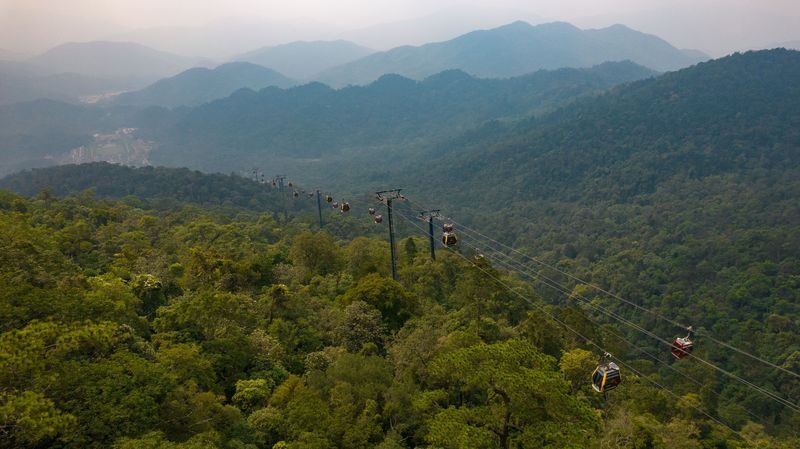
Route 1, the Hoang Long cable car, runs from the base of Yen Tu to Hue Quang Golden Stupa and back. From the cabin, you rise above the forest canopy and get a broad sense of how much woodland surrounds the temple complex. On clear days, the views are a central part of the ride; mist can soften the scenery and give the wooded slopes a quieter, more atmospheric character.
The stupa is one of the important religious stops on the mountain. The ride lets you reach it without walking the entire route from the base, a real advantage if you have limited time or want to save your legs for exploring near the upper stations.
Still, you should plan to walk once you leave the cabin. The mountain paths connect sites that are not all right beside the cable car, and the route can feel steep or tiring. If you are hoping for a visit where every major sight is accessible directly from a lift, Yen Tu may not fit that expectation.
Bach Long toward Hoa Yen Pagoda
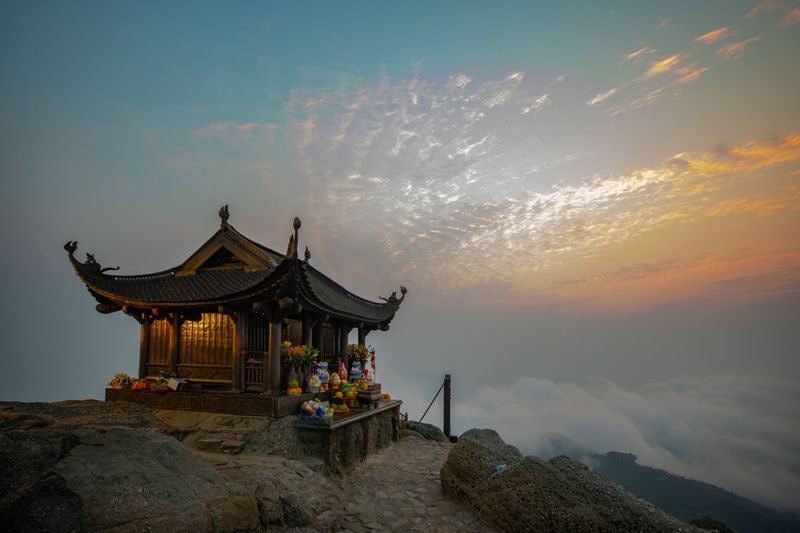
Route 2, the Bach Long cable car, heads eastward to Hoa Yen Pagoda, with access onward toward the Golden Buddha Statue. This route brings you into the heart of the mountain’s spiritual side: the pagoda is a place to pause, look at the architecture, and take in the setting rather than rush from one photo stop to the next.
The cable car helps make this part of Yen Tu practical for more people. Families with children, people short on time, and anyone who would rather avoid a full uphill trek can still reach higher parts of the site. But the remaining paths matter. You will need enough stamina to walk between places, and a climb toward the higher sights can be strenuous.
The mountain’s best quality is the contrast between the quiet religious buildings and the large spread of forest around them. Yen Tu’s primary forest is described as almost pristine, and the wooded slopes are a major part of the experience, not just a backdrop behind the temples. Give yourself a moment to look beyond the next building.
How much walking should you expect?
The cable car reduces the amount of climbing, but it does not make this a low-effort outing. You may still need to climb steps and walk on uneven or steep paths to reach pagodas and viewpoints. In wet weather, the ground can be marshy, which makes sensible shoes a better choice than slick soles.
The practical question is not simply whether you can ride the cable car. It is whether you can comfortably walk after getting off. The activity is not recommended for people with impaired mobility or wheelchair users, and it is also not recommended for pregnant women, seniors, or people with certain medical conditions, including high blood pressure or epilepsy.
If you are travelling with an older relative or a child, the lift can make Yen Tu more manageable, but it cannot guarantee that everyone will manage every path. Talk through the walking demands before you go, and be ready to skip a section if the climb feels too much. The cable car gives you options; it does not flatten the mountain.
Timing, crowds, and the best pace
The stated visit takes two to three hours. That can work if you keep moving and focus on the cable car routes and a few key sites. If you want time for temples, forest views, and unhurried pauses, build in extra time rather than treating the stated duration as a firm finish time.
The cable car operates daily from 7:00 a.m. to 5:00 p.m., with last admission one hour before closing. Starting earlier gives you more room to handle the ticket exchange and explore before the end-of-day cutoff. During busy periods, crowds can slow movement on the paths, particularly where people are climbing or stopping to take in the view.
Weather changes the character of the visit. Clear skies offer more distant views; mist can make the forest feel hushed, though visibility may be limited. Hot weather adds strain to the walking, so bring water and consider insect repellent, particularly if you plan to spend time on the wooded routes.
Is the ticket good value?
At a starting price of $13.55, the Cable Car Ticket + Buggy package includes admission to the Yen Tu complex, a round trip on both listed cable car routes, and the buggy transfer from the parking lot to reception. That is useful value if you intend to ride both routes and explore the mountain rather than simply visit the base.
The main advantage of booking ahead is the chance to secure a discounted fare. Prices and promotions can change, so compare the current online total with the ticket counter before deciding. Do not assume an online purchase means you can go straight through: you still need to collect or exchange the ticket, and that step has sometimes taken longer than expected.
Other package options add a meal or round-trip transport from Hanoi. The transfer package may suit you if you need transport to Yen Tu, while the meal option is served near the entrance area at Com Que restaurant in Lang Nuong village. If you choose a meal package, plan to eat after returning from the mountain, rather than expecting food at the upper cable car stops.
What to wear and how to behave
Yen Tu is a sacred site, so dress with that in mind. Long trousers and a long-sleeved shirt are suitable; a scarf can cover your shoulders if needed. Respectful clothing is a small effort that helps you feel prepared when entering temples and pagodas.
Smoking and drinking are not allowed on the premises, and anyone who appears intoxicated may be refused entry or service without a refund. These are straightforward rules, but worth knowing before you set off. Keep your visit calm and considerate, especially around places of worship.
Who should book Yen Tu Mountain’s cable car?
I would consider this ticket if you want to see Yen Tu’s temples and forest without walking the full climb from the base. It is particularly useful for families, people with limited time, and anyone who wants to conserve energy for the upper paths. The views are a strong reason to ride, but the cultural setting is what makes the outing feel like more than a mountain lift.
I would think twice if you need a fully accessible visit or cannot manage steps and uneven paths. The cable car helps, but the remaining climb can be demanding, and the operator advises against the activity for several health and mobility groups.
Book it if you are comfortable with some walking and want both cable car routes included. Keep your voucher handy, allow time for the paper-ticket exchange, and plan around the 5:00 p.m. closing time. If you mainly want an effortless ride with no climb, Yen Tu is likely to ask more of you than you expect.
Yen Tu Mountain Cable Car Ticket
“A fantastic experience, and exchanging tickets was very convenient.”
FAQ
What does the Yen Tu Mountain Cable Car Ticket include?
The Cable Car Ticket + Buggy package includes admission to the Yen Tu Complex of Monuments and Landscapes, round-trip rides on the Hoang Long and Bach Long cable car routes, and a buggy ride from the parking lot to reception.
How long does the visit take?
The stated duration is two to three hours. Your actual time may vary with walking pace, crowds, weather, and how long you spend at the temples and other sights.
What are the cable car opening hours?
The cable car operates Monday through Sunday from 7:00 a.m. to 5:00 p.m. Last admission is one hour before closing.
Do I need to exchange my online voucher?
Yes. Present your voucher at the Yen Tu Cable Car Ticket Counter and exchange it for a physical ticket. Allow time for this step, as queues or processing delays can occur.
Is the cable car enough to avoid walking?
No. The cable car reduces the climb, but you still need to walk between sights, and some paths include steep sections. The activity is not recommended for wheelchair users or people with impaired physical mobility.
What should I wear at Yen Tu’s sacred sites?
Wear long trousers and a long-sleeved shirt, or bring a scarf to cover your shoulders. Smoking and drinking are not allowed, and visitors are expected to behave respectfully inside the sacred complex.