The Terracotta Army is an astonishing sight: ranks of life-size soldiers, each with a distinct face, stand ready beneath the roof of Pit 1. This half-day tour brings you to three excavation pits and the Bronze Chariots and Horses Museum, with a guide to explain what you’re seeing.
I like two things in particular: the focused route makes good use of a short visit, and the tour is described as shopping-free, so the emphasis stays on the site. Guides such as Teacher Nikun and David have been praised for clear, detailed explanations and fluent English.
One practical snag: the timing details don’t quite match. The schedule gives a 9:00 departure, while the meeting instructions say to meet at 9:30, and the return time is 12:00 to 12:30. Confirm the exact time on your voucher before setting out.
- What to know before you book
- The scale of Pit 1 hits first
- Pits 2 and 3 add detail and purpose
- The bronze chariots bring a different scale
- A guide can make a short visit count
- Meeting point or pickup: choose what suits your day
- Timing, tickets, and a few useful checks
- Who will get the most from this half-day visit
- Should you book it?
- FAQ
- How long is the tour?
- Where do I meet the group?
- Which Terracotta Army areas are included?
- What languages are listed for the tour?
- Does the tour include transport?
- Is lunch included?
- What should I bring?
- Can I cancel or change my booking?
- More Half-Day in Xi'an
- More Tours in Xi'an
- More Tour Reviews in Xi'an
- Not for you? Here's more nearby things to do in Xi'an we have reviewed
What to know before you book
 1 / 5
 2 / 5
 3 / 5
 4 / 5
 5 / 5
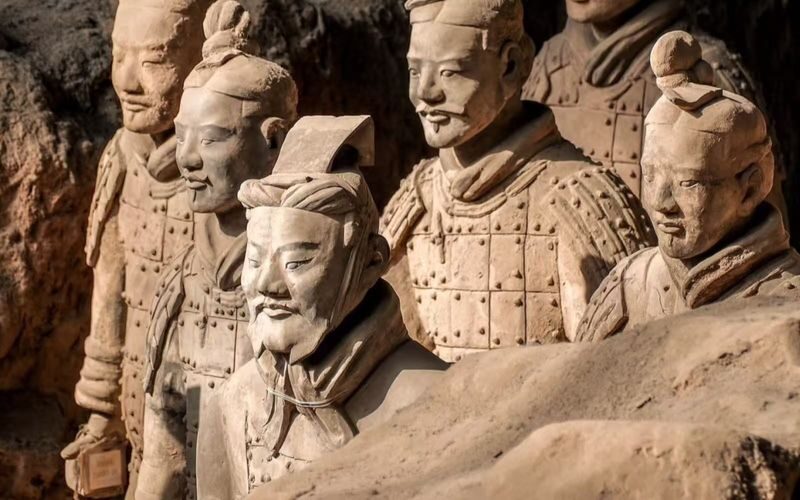
- Pit 1 is the headline sight: Its broad view of thousands of warriors in battle formation gives you the scale that photographs can’t quite convey.
- Three pits tell different parts of the story: Pit 2 includes a detailed kneeling archer, while Pit 3 is described as the army’s command center.
- The bronze chariots add another chapter: The tour also includes the Bronze Chariots and Horses Museum, a welcome change of pace from the rows of clay soldiers.
- Guide quality matters here: The site is vast and its details are easy to miss. English- and Chinese-language options are listed, with guide explanations at the core of the experience.
- Choose your transport carefully: Meeting-point packages require you to get to the museum yourself; pickup packages include round-trip transfer.
- Check the clock and package details: The published timings differ, and the listed prices vary by language and transport option.
The scale of Pit 1 hits first
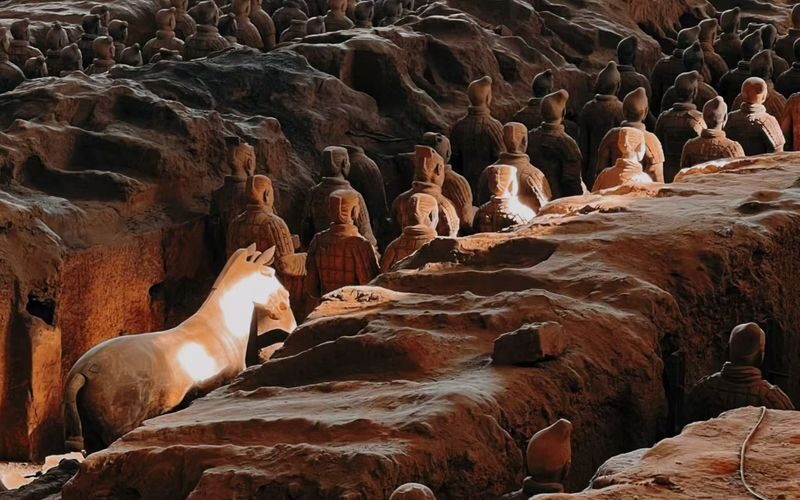
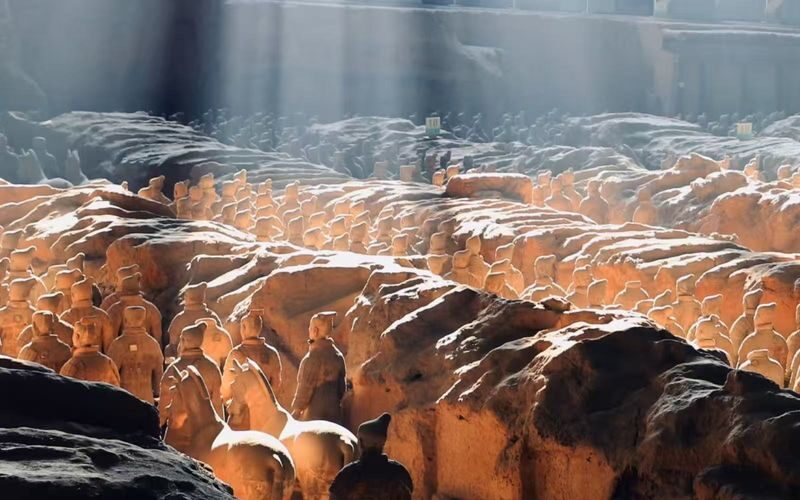
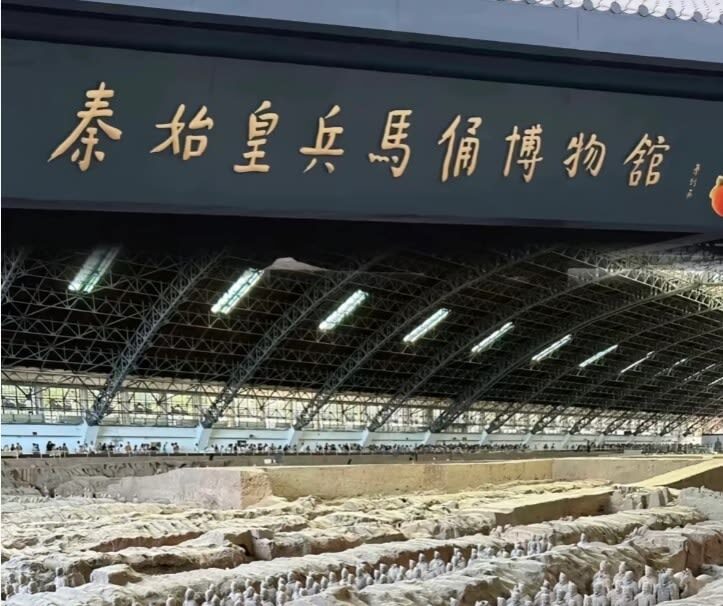
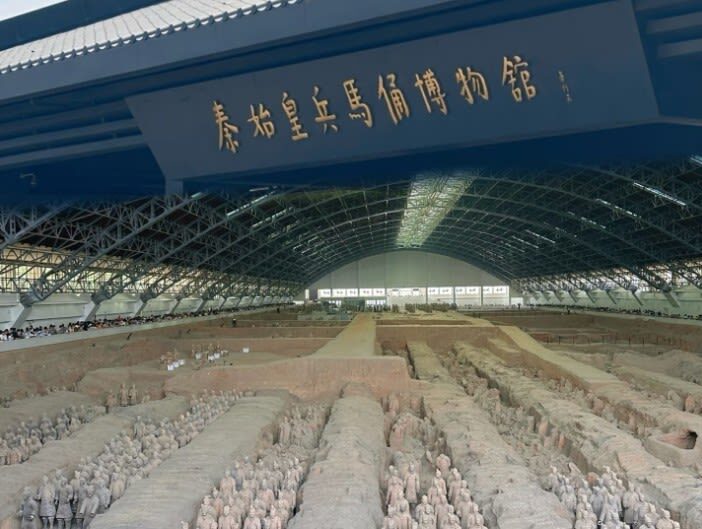
At the Emperor Qinshihuang’s Mausoleum Site Museum, the famous army is not a single statue or a tidy display in a gallery. It is an enormous excavation, and Pit 1 gives you a panoramic view across ranks of life-size warriors and horses arranged for battle. More than 8,000 figures have been found across the site, according to the tour information.
The first impression is sheer scale. From the viewing platform, the rows seem to continue beyond the point where it is easy to take them all in. That sense of an army assembled underground is what makes the site so memorable, and why a guide can be useful: a good explanation gives shape and meaning to what might otherwise look like a sea of similar figures.
But the figures are not all alike. Their faces are described as unique, and the small differences reward a closer look. I like that the tour sets aside time for the details, not just the wide view. If you are tempted to spend the entire visit photographing Pit 1, remember that the other pits and the chariots are part of the point.
The tour is advertised as a two-hour guided visit. Its schedule, however, lists a 9:00 departure and a return between noon and 12:30, while the meeting instructions say 9:30. Treat the two hours as the time focused on the museum rather than assuming the whole outing lasts exactly two hours. Check your confirmation for the correct gathering time.
You can also read our reviews of more tours and experiences in Xi'an
Pits 2 and 3 add detail and purpose
After the grand view in Pit 1, Pits 2 and 3 bring the visit closer to individual figures and the structure of the army. Pit 2 is noted for a kneeling archer with fine details. That kind of focused example can help you notice how much variation exists among the soldiers, rather than seeing them as a single repeated design.
Pit 3 has a different role. It is presented as the command center, offering a clue to the army’s organization. The contrast matters: Pit 1 gives you scale, Pit 2 draws attention to craft and individual figures, and Pit 3 connects the display to military planning. A guide’s explanation can help you understand why each space is worth visiting, especially if you have limited time or find the site’s history hard to follow on your own.
The tour includes all three pits, but no exact visit time for each one is specified. Expect the guide to lead you through the route rather than plan on lingering as long as you like at every display. If one figure or detail particularly catches your eye, you may have to balance your curiosity with the group’s pace.
The broader lesson is that this is not simply a room full of statues. The figures are part of the mausoleum complex of China’s First Qin Emperor, and the tour presents them as an underground army built to recreate the power of the Qin empire. You do not need to arrive with a history degree, but a little context makes the rows feel less like a spectacle and more like a carefully planned world.
The bronze chariots bring a different scale
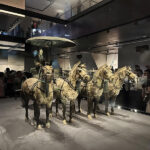
The Bronze Chariots and Horses Museum is included alongside the three pits. It offers a change from the large formations of clay figures, with bronze vehicles and horses as the focus. The tour details do not specify how long you spend there, so think of it as an additional stop within the guided visit, not a separate extended museum session.
I value this part of the route because it broadens the picture of what the mausoleum site contains. The warriors command attention, but the chariots add another kind of object to consider and keep the visit from becoming a single-view experience. If you are short on time, having the guide connect the museum to the wider site can make this stop more meaningful than simply walking through it on your own.
The experience is still centered on the Terracotta Army. If bronze objects are your main interest, note that the tour description gives much more detail about the pits than about the chariot exhibits. The chariots are included, but the main draw remains the army and its three excavation areas.
A guide can make a short visit count
The site’s scale and historical context make the guide one of the most important parts of this tour. You are not just paying for someone to point out the entrance. The stated plan is to explain the warriors, the pits, and newly unearthed cultural relics, giving you a thread to follow through a large archaeological site.
Teacher Nikun is praised for detailed explanations, an enthusiastic manner, and humor. David is described as professional and fluent in English. Those details are useful because they speak to what matters on a guided visit: clear communication, enough knowledge to answer questions, and an approachable style that keeps the history from turning into a lecture.
The listed package choices are in English and Chinese. Although the experience title refers to other language possibilities, the specific options provided are English and Chinese, so confirm your preferred language before booking rather than assuming Japanese or Spanish is available for your date.
The tour is described as entirely shopping-free. That is a practical plus if you want your limited time devoted to the site rather than commercial stops. It also makes the tour easier to compare with an independent visit: the value here rests on the guide, tickets, and, in some packages, transport and lunch.
Meeting point or pickup: choose what suits your day
The meeting-point package is the simpler, lower-cost option. It includes a guide and attraction admission, but you make your own way to the museum and return on your own after the tour. This suits you if you already have transport arranged, are comfortable finding the site, and want to keep the price down.
The pickup package costs more because it includes round-trip transfer as well as the guided visit and admission. The package description also associates the premium option with lunch. If you would rather not arrange transport to and from the museum, the extra cost may be worthwhile, particularly on a tight schedule. Check the precise inclusions for your selected package when booking, since the options are presented by language and transport type.
The published prices vary: meeting-point options are listed from US$31.45 for Chinese and US$36.55 for English, while pickup options are listed from US$54.85 for Chinese and US$63.99 for English. A headline price is also shown as starting at US$36.15. These figures are not identical, so use the price displayed for your chosen date and package as the useful one.
For value, compare what you would spend on admission and transport against the convenience of having a guide and a planned route. The meeting-point tour is the best fit for a budget-conscious visitor who can handle the journey independently. Pickup makes more sense if you want transport arranged, and the described lunch is a further convenience if it is included in the package you select.


Timing, tickets, and a few useful checks
The museum is the only location named for the meeting and return. Meet at the sculpture in front of the Emperor Qinshihuang’s Mausoleum Site Museum, according to the meeting instructions. The schedule says 9:00 for departure, but the meeting details give 9:30. Since those instructions conflict, do not rely on either time without checking the voucher or contacting customer support.
The return is listed between 12:00 and 12:30, with the group disbanding at the entrance and meeting-point participants making their own way back. Traffic and weather can affect the schedule. Allow some flexibility after the tour rather than arranging a tight onward connection.
Bring each participant’s passport. The stated requirement is a passport with six months of validity, so check that before travel. There is no age limit listed for this activity, though the long visit and large museum space may shape how much walking or standing feels comfortable for your group.
Admission and an English-speaking guide are listed as included for the featured package. Meals and beverages, other than lunch in the package described as including it, are not included. Personal expenses are also outside the standard inclusions.
The voucher is valid only on the date and time selected. Changes are generally allowed until 24 hours before the activity, subject to exceptions, and a full refund is available for cancellations at least 24 hours ahead. Late arrivals of 15 minutes or more are not eligible for a refund, so the timing discrepancy deserves attention before tour day.
Who will get the most from this half-day visit
This is a strong fit if the Terracotta Army is at the top of your Xi’an list and you want a guide to explain the site without spending a full day on the outing. The route covers the major pits and the bronze chariots, while the short format leaves room in your day for other plans.
It is also a good choice if you value clear explanations and dislike shopping stops. The tour is presented as shopping-free, and the praise for guides Teacher Nikun and David points to the value of an engaging, fluent guide. History fans will appreciate the attention to individual figures and the command structure, while first-time visitors can focus on understanding the basics.
Consider another arrangement if you want a very long, unhurried visit or prefer to explore every area at your own pace. The listed format is a guided group tour with a defined route and schedule, and there is no group-size information or promise of extended free time. If you are comparing options, note that separate Xi’an offerings include longer tours, skip-the-line products, standalone admission, and other day trips. The right choice depends on whether you value a concise guided visit or more time and flexibility.
Should you book it?
Book this tour if you want the main Terracotta Army experience, an explanatory guide, and a half-day plan that includes three pits and the bronze chariots. The strongest reasons are the well-focused route, the shopping-free format, and the chance to make sense of a vast site in a limited visit.
Choose the meeting-point option if you can arrange your own transport and want to keep costs lower. Pay more for pickup if round-trip transport and the package’s lunch matter to you. Before paying, confirm the language, exact inclusions, and start time. With those details settled, this is a practical way to see one of Xi’an’s essential sights without turning the visit into a full-day commitment.
Xi’an Terracotta Army Group Tour Half-Day Trip (Chinese/English/Japanese/Spanish Optional)
“Our guide, Teacher Nikun, provided a very professional and detailed explanation, demonstrating an extensive knowledge of the Terracotta Army's hist…”
FAQ
How long is the tour?
The guided visit is listed as two hours. The schedule gives a 9:00 departure and a return between 12:00 and 12:30, so allow roughly three hours or more for the overall outing and confirm the exact start time.
Where do I meet the group?
The meeting point is the sculpture in front of the Emperor Qinshihuang’s Mausoleum Site Museum in Xi’an. The meeting instructions say 9:30, while the schedule lists a 9:00 departure, so check your voucher for the correct time.
Which Terracotta Army areas are included?
The guided route includes Pits 1, 2, and 3, as well as the Bronze Chariots and Horses Museum.
What languages are listed for the tour?
The package options provided are English and Chinese. Confirm your preferred language when selecting a package.
Does the tour include transport?
Meeting-point packages do not include transport. Pickup packages include round-trip transfer.
Is lunch included?
The premium package is described as including lunch, along with round-trip transfer, a guide, and attraction tickets. Check the selected package details to confirm its inclusions.
What should I bring?
Bring each participant’s passport. The stated passport requirement is six months of validity.
Can I cancel or change my booking?
A full refund is available if you cancel at least 24 hours before the activity date. Changes are generally allowed until 24 hours before the activity, with exceptions for certain bookings.