Wrocław’s little bronze dwarfs make an appealing trail through a city shaped by shifting borders, war, communism and a devastating flood. This electric minibus tour links the dwarf hunt with major sights, from the Old Town to Centennial Hall, while a guide supplies the historical thread you would be unlikely to piece together in an hour on your own.
I like two things in particular: the mix of landmark stops and city history, and the warm, comfortable minibus, a welcome detail in winter. Guides such as Timothy, Michal, Nicholas and Simon have been praised for adapting their commentary to people’s interests and giving time for photos or brief visits at selected stops.
The main trade-off is the pace. In one hour to 90 minutes, you can cover a lot of ground, but you cannot give every stop a long visit. Think of this as a city introduction, not a substitute for exploring the museums and historic sites at your own speed.
- Dwarfs meet big history: Follow Wrocław’s dwarf trail while learning how the city changed hands and identities.
- A broad route: The tour includes the Old Town, University of Wrocław, Cathedral Island, Centennial Hall, the Pergola Fountain Show, the National Museum and Racławice Panorama.
- A guide who can tune the commentary: Past guides including Timothy and Simon have been noted for answering questions and adjusting the focus to suit different interests.
- Photo and exploration pauses: Some tours allow time to step out at key places, though the route is short and the number of stops may depend on the outing.
- Comfort in cold weather: The electric minibus has been described as warm and comfortable, a practical advantage in winter.
- Easy to fit into a visit: At about $18 per person for 60 to 90 minutes, it is a relatively inexpensive way to get an overview before choosing where to return.
- A city tour with a trail of dwarfs
- Old Town: a useful first orientation
- The University and Cathedral Island
- Centennial Hall and the Pergola Fountain Show
- The National Museum and Racławice Panorama
- From wartime Wrocław to the Orange Alternative
- What the minibus changes
- Is good value?
- Who should book this tour?
- Should you book it?
- FAQ
- How long is the tour?
- What is the price?
- Which sights are included?
- Which languages are available?
- Is the tour wheelchair accessible?
- Can I book a private group?
- Where does the tour start?
- Does the tour include a guide?
- Can I cancel for a refund?
- The Best Of Wroclaw!
- More Tours in Wroclaw
- More Tour Reviews in Wroclaw
- Not for you? Here's more nearby things to do in Wroclaw we have reviewed
A city tour with a trail of dwarfs
The dwarfs give this tour a playful way into Wrocław. They are a memorable thread to follow, but the main payoff is the wider view: the route connects well-known sights with the city’s complicated past. Your guide covers Wrocław’s founding, its movement between countries, its strongest period of economic growth, the war years, communism and the Great Flood.
That variety matters. A first-time visitor can see the city not simply as a collection of handsome landmarks, but as a place whose identity changed repeatedly. The tour also covers Festung Breslau, the name associated with the city’s wartime period, and the Orange Alternative, a group founded during the communist era. Those subjects give the commentary a distinctly local angle.
You travel by electric minibus rather than walking the full route. That makes it easier to connect sights spread across the city in a short time, and it saves your legs for the places you want to explore later. You still get a guided view of the streets and landmarks, but this is not a long walking tour with time to linger at every corner.
👉 See our pick of the 17 Best Guided Tours In Wroclaw
Old Town: a useful first orientation
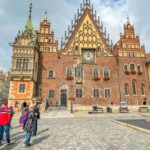
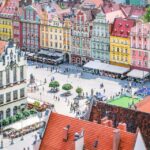
The Old Town is a natural opening point for a Wrocław introduction. You get a sense of the historic center and its place in the city’s story, while the guide sets out the changes in national identity that shaped Wrocław over time. For a visitor with limited time, hearing that context early helps the rest of the route make more sense.
The trade-off is familiar: a quick pass through a historic district is not the same as walking it slowly. If the Old Town is where you want to spend most of your day, treat this tour as a preview. Note the places that catch your eye, then return on foot after the minibus has finished.
The dwarf trail adds a lighter layer to the historical commentary. It gives you something specific to watch for, even as the guide moves between broad themes such as economic growth and the war period. If you enjoy spotting small details in a city, keep your eyes open between the major landmarks.
You can also read our reviews of more tours and experiences in Wroclaw.


The University and Cathedral Island
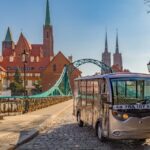
The University of Wrocław and Cathedral Island add two different strands to the route. The university brings an academic landmark into the city overview, while Cathedral Island offers a change of setting and helps show how the tour moves beyond the Old Town. The guide’s historical framing is useful here, especially if you are trying to connect the city’s institutions and districts rather than simply collect photographs.
Some outings include opportunities to step out and look around at selected places. One guide allowed time for visitors to explore three key sites, and other tours have included short pauses for photographs. Do not assume that every landmark gets the same amount of time, though. The overall duration is limited, and the exact meeting point can vary with the option booked.
For that reason, keep your plans flexible after the ride. If one of these stops becomes a highlight, ask your guide for a suggestion about where to spend more time later. The tour’s greatest strength is orientation, and a good question can turn that overview into a useful plan for the rest of your visit.
Centennial Hall and the Pergola Fountain Show
Centennial Hall is one of the route’s major sights, paired with the Pergola Fountain Show. Together they broaden the tour beyond the historic center and give you a look at a different side of Wrocław. The guide connects these stops to the city’s wider story, rather than leaving you to guess why they belong on the route.
The fountain is a particularly appealing stop when its show is running, but the supplied details do not specify show times or guarantee that you will see a performance. Check the timing if the fountain is a priority, and think of it as a possible bonus rather than the sole reason to book. The tour still visits the Pergola area as part of its stated route.
A short visit also means you may not have time to explore every site in depth. That is not a flaw so much as a limit of the format. You get a sampler of the city’s landmarks, with the option to return to the ones that deserve a longer look.
The National Museum and Racławice Panorama
The National Museum and Racławice Panorama add cultural stops to a tour that might otherwise focus only on streets and buildings. Their inclusion is useful for anyone deciding how to spend a short stay: you can see where these major attractions fit into the wider city, then choose whether to plan a separate visit.
The tour does not promise a full museum visit, and the one-hour-to-90-minute duration makes that distinction important. The included experience is a visit to the sites on the route, not an extended museum program. If you want to study collections or spend time with the panorama, allow for a separate visit outside the minibus tour.
That distinction helps set expectations. You are buying a guided city overview, not admission to a series of attractions or a deep visit inside each one. The value is in seeing how the cultural landmarks relate to the rest of Wrocław and hearing the historical context along the way.
From wartime Wrocław to the Orange Alternative
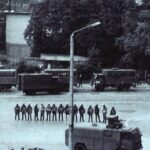
The tour’s historical range is one of its strongest features. It moves from the city’s founding and changing national affiliations through economic growth, war, Festung Breslau, communism and the Great Flood. Those subjects are not just a string of dates: together they explain why Wrocław’s story is one of repeated change.
The Orange Alternative is a particularly distinctive subject. Learning about its founding adds an account of local life under communism that is different from a simple sequence of political events. The Great Flood, meanwhile, gives the city’s recent history a concrete turning point. A guide can connect these chapters to places along the route, making the history easier to hold onto than a list in a guidebook.
The balance of detail can vary with the guide and with your questions. Timothy has been praised for adjusting his approach to suit people interested in different things, including more wartime detail for one person and cultural stories for another. If you have a particular interest, say so early. A short tour works best when you help steer the conversation.



What the minibus changes
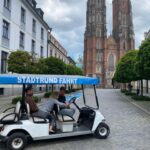
An electric minibus is a practical choice for a route covering several separate districts and landmarks. It lets you see more than you could comfortably cover on foot in the same time, while keeping the group together and the commentary moving. In cold weather, a heated interior is more than a minor perk: several visitors have particularly appreciated arriving at stops warm and comfortable.
There is a limit to what you gain from a vehicle. You will not have the same freedom to pause whenever a street or dwarf catches your attention as you would on a self-guided walk. Nor is every part of the tour necessarily a stop where you get out. The best approach is to enjoy the broad sweep from the minibus and use available pauses for the places that interest you most.
The tour is wheelchair accessible, and a private group is available. Live guiding is offered in English, German and Polish. An audio guide is included in Czech, English, German, Italian, Polish, Russian, Spanish and Ukrainian, giving you more language options for the commentary.
Is $18 good value?
At about $18 per person, this is a strong-value introduction if you want to see several important parts of Wrocław without organizing the route yourself. The fee covers the electric minibus and a live guide, with the audio guide included as well. You are paying for transport between sights and, just as importantly, the connections a guide makes between them.
The price makes most sense for a first visit, a short stay or a day when the weather makes a long walk less appealing. It is also useful at the start of a trip, when you can use the overview to decide which places deserve a second visit. If you already know the city well or prefer to spend an hour inside one museum, a guided circuit may be less appealing.
The format is compact, so value depends on your expectations. You get breadth and context rather than prolonged visits. If you want a private tour, that option is available, but the price given here is the per-person starting price and does not specify the private-group cost.
Who should book this tour?
I would consider this a good first-day activity for someone who wants to get oriented quickly, especially if Wrocław’s layered history is part of the reason for visiting. It also suits couples, families and small groups who like a guide but do not want a long walking tour. The dwarfs offer a light, easy-to-follow theme, while the historical material gives the hour more substance.
It is less suited to anyone who wants a slow, detailed visit inside each museum or landmark. The route covers many places in 60 to 90 minutes, so you will need to make your own return visits if you want depth. Visitors who prefer to explore entirely on foot may also find the minibus format less personal than a walking tour.
The guide can make a real difference. Guides named Timothy, Michal, Nicholas, Simon and Niko have been praised for friendliness, clear explanations, patience and local stories. One useful tip: bring questions. A guide who responds to your interests can make a brief tour feel much more tailored.
Should you book it?
Book this tour if you want a comfortable, low-cost way to connect Wrocław’s main sights and get a clear introduction to its history. The combination of dwarfs, major landmarks and stories about war, communism and the Great Flood gives the ride more character than a simple sightseeing loop.
Skip it if your priority is spending long stretches at individual sites or exploring every street at your own pace. For most first-time visitors with an hour to spare, though, the electric minibus is a sensible start: see the city’s broad outline, note what you want to revisit, then set off on foot with a better sense of where you are.
Wrocław Dwarfs & Sightseeing Tour by Electric Mini Bus
FAQ
How long is the tour?
The tour lasts between one hour and 90 minutes. Check the available starting times when choosing a date.
What is the price?
The listed price is $18 per person.
Which sights are included?
The route includes the Old Town, University of Wrocław, Cathedral Island, Centennial Hall, the Pergola Fountain Show, the National Museum and Racławice Panorama.
Which languages are available?
Live guides are available in English, German and Polish. An audio guide is included in Czech, English, German, Italian, Polish, Russian, Spanish and Ukrainian.
Is the tour wheelchair accessible?
Yes, the activity is listed as wheelchair accessible.
Can I book a private group?
Yes, a private group is available.
Where does the tour start?
The meeting point may vary depending on the option booked. Check the details for your selected option.
Does the tour include a guide?
Yes. A multilingual live guide is included, and an audio guide is also available in the listed languages.
Can I cancel for a refund?
Yes. You can cancel up to 24 hours in advance for a full refund.
You can check availability for your dates here: