The special appeal here is the sheer reach: in ten days, you cross from the snowbound forests of Altay to frozen Sayram Lake and the open winter grasslands of Ili. Kanas and Hemu are the headline stops, but the long roads between them are part of the trip, too.
I like two things in particular: the small group size of two to six makes a long drive more personal, and the plan includes two nights inside scenic areas, at Kanas and Hemu. The advertised no-shopping, no compulsory extra-activity approach also makes the price easier to assess.
The trade-off is distance. Several days involve roughly five to seven hours on the road, and winter weather can change the route. Confirm the exact winter itinerary before paying, especially the plan for the Duku Highway, which is usually closed in winter.
- The trip’s main strengths at a glance
- From Ürümqi to the snowy Altay
- Kanas in winter: frozen water, snow and quiet woods
- Hemu’s dawn, then a long run west
- Ili’s forests and grasslands
- Dushanzi, then back to Ürümqi
- What the price covers, and what it does not
- The vehicle, group size and communication
- Who should choose this winter circuit
- Should you book it?
- FAQ
- Where does the tour start?
- How long is the tour?
- How many people are in the group?
- Is a tour guide included?
- Which meals are included?
- What accommodation is included?
- Is there a single supplement for solo visitors?
- What attraction fees are included?
- Does the itinerary change if the Duku Highway is closed?
- What should I bring for the trip?
- The Best Of Urumqi!
- More Tours in Urumqi
- More Tour Reviews in Urumqi
- Not for you? Here's more nearby things to do in Urumqi we have reviewed
The trip’s main strengths at a glance
 1 / 9
 2 / 9
 3 / 9
 4 / 9
 5 / 9
 6 / 9
 7 / 9
 8 / 9
 9 / 9
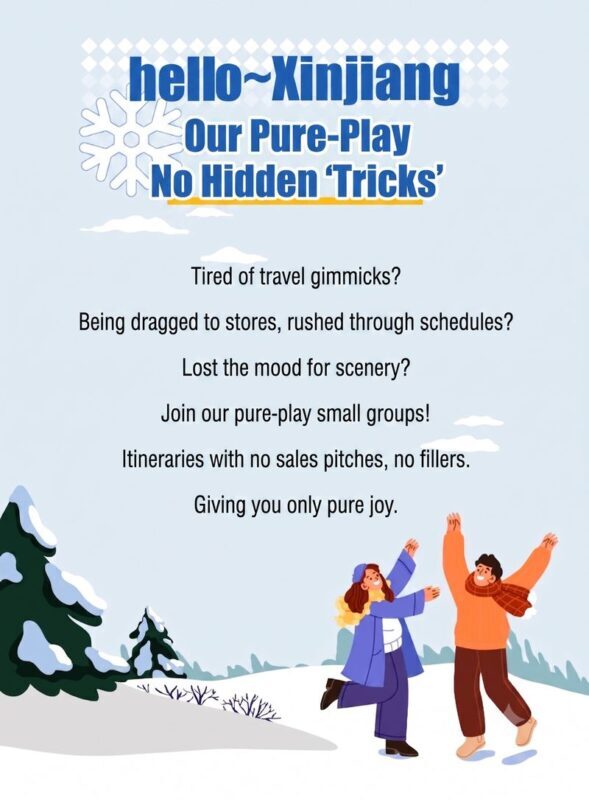
- Ten days, two regions: The route links Altay’s Kanas and Hemu with Sayram Lake, Kuerdening and Nalati in Ili.
- Two nights in scenic areas: Sleep in a Kanas log cabin and a Hemu snow-view wooden house, not just hotels in larger towns.
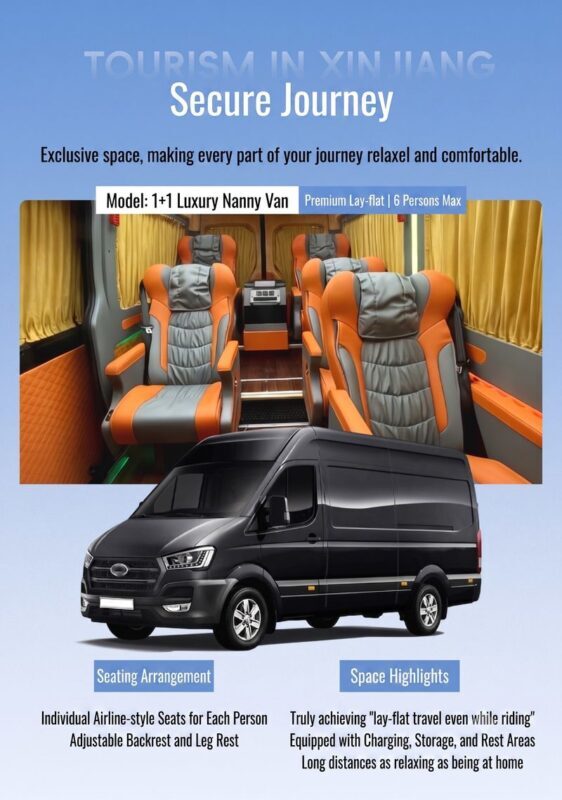
- A small group in a 7-seat vehicle: Groups are capped at six, and the more expensive package specifies a 1+1 first-class vehicle.
- No forced shopping or paid add-ons: The tour is described as having no shopping stops, compulsory self-funded activities or hidden charges.
- A useful photo extra: Hemu includes a complimentary light travel shoot with nine selected photos, though it is weather-dependent and not refundable if missed.
- Plan for long, cold days: The distances are substantial, meals beyond breakfast are on your own, and weather can alter the schedule.

👉 See our pick of the 18 Best Tours In Urumqi
From Ürümqi to the snowy Altay
Day one is a soft landing in Ürümqi, with free time to explore the city. Your pickup time is confirmed in advance, and the operator asks for your arrival and departure details so it can arrange transport. If you arrive before the usual 2 p.m. hotel check-in, you can leave your bags at reception and head out.
Day two is the first major drive: about 530 kilometers, or seven hours, from Ürümqi via the S21 Desert Highway to Burqin. The road crosses the Gurbantünggüt Desert, where winter snow gives the open, dry terrain a stark look. Ulungur Lake is a stop along the way, then the route continues to Burqin.
This is a day to keep your expectations realistic. The scenery unfolds through the windows and at planned stops, but much of the day is spent seated. Bring water and snacks, and expect the schedule to be shaped by road and weather conditions. The GPS-monitored driving rules require a rest after no more than four hours behind the wheel.
You can also read our reviews of more tours and experiences in Urumqi.


Kanas in winter: frozen water, snow and quiet woods
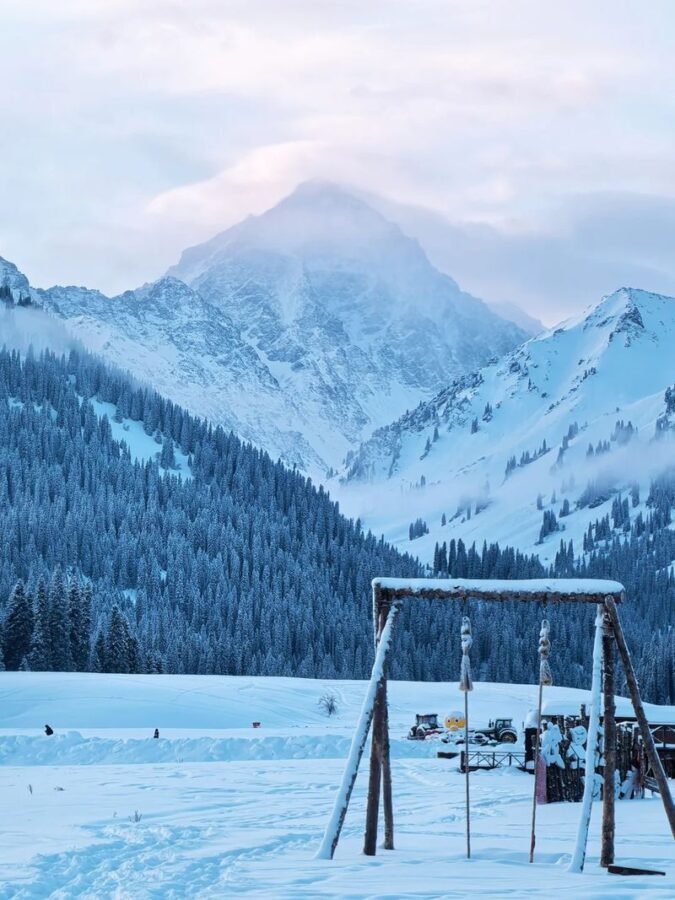
Day three covers about 150 kilometers from Burqin to Kanas, with an estimated three hours of driving. Once inside the scenic area, you’ll see the lake frozen over, snowy forest and riverbanks, and snow-covered formations among the trees. Kanas is one of the trip’s strongest reasons to come in winter: its usual color gives way to a broad, quiet world of white.
The overnight stay is in a log cabin inside the scenic area. That location saves you from treating Kanas as a quick roadside stop, but it comes with a clear compromise: the accommodation is described as basic, scarce and sometimes spread across separate courtyards for members of the same group. The tour notes also say Kanas lodgings do not provide breakfast or dinner, so ask how the included hotel-breakfast provision applies to this night and plan for meals accordingly.
Day four links Kanas’s Three Bays with Hemu. At Shenxian Bay, morning mist may hang over the icy river, with frost on the branches. Moon Bay and Wolong Bay add more river bends and forest views before the drive continues to Hemu, about 80 kilometers away.
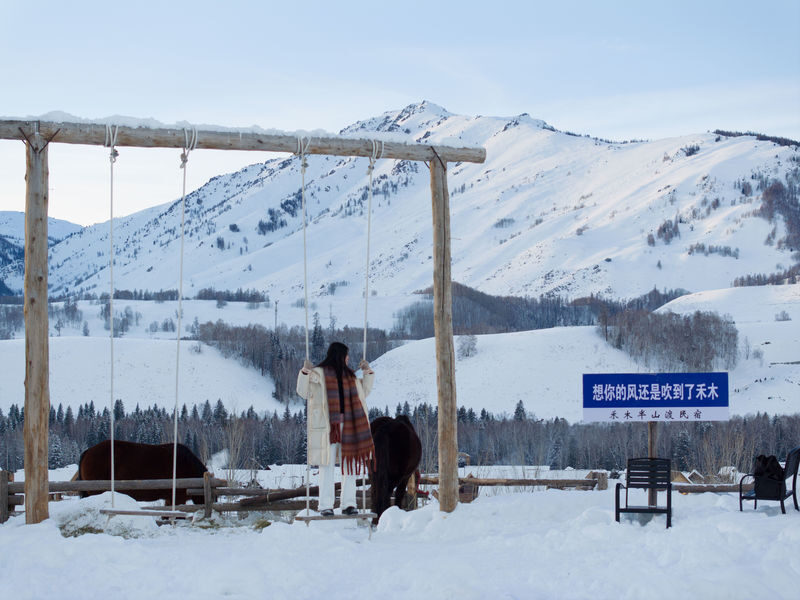
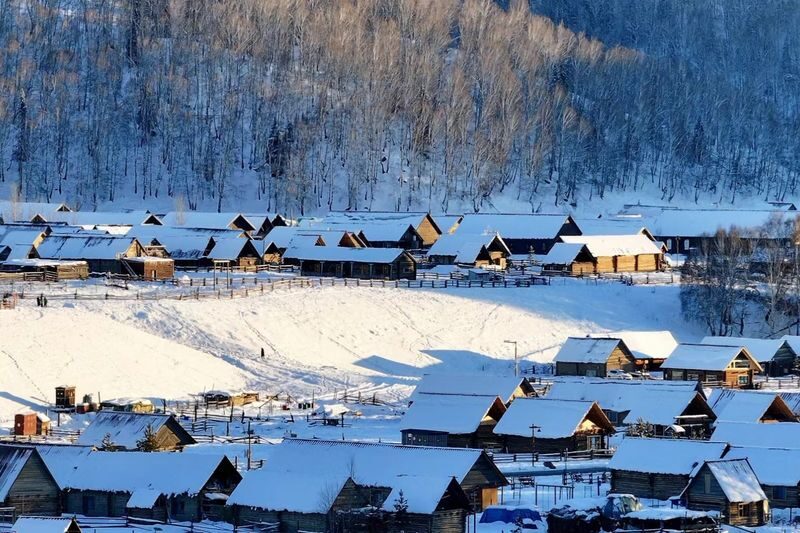
In Hemu, the plan includes a light travel-photo session, a visit to Hemu Bridge and a climb to the Haden observation deck around blue hour. A snow-covered village, wooden houses and chimney smoke make this a good place to slow down and look around. The photo session comes with nine selected images, but it is a complimentary extra: if weather or personal plans prevent it, there is no refund.
A bonfire gathering is also described as complimentary, subject to weather and whether it is held. Do not build your evening around it as a guaranteed event. Hemu’s winter charm is the village itself, especially when you have time to see it after dark and again in the morning.
Hemu’s dawn, then a long run west
Day five gives you a choice: sleep in, or get up early and walk to an observation point for the morning light. The cabins and surrounding snow are the draw; the early start is optional, but the cold is not. Bring warm layers, and pack only what you need for the night, since carrying large suitcases around scenic areas is inconvenient.
Then comes a long transfer of about 500 kilometers, estimated at seven hours, toward Huyang River. The landscape shifts from mountain village to snowy Gobi, with a thin cover of snow across the dry ground. You’ll spend much of the day in the vehicle, so this is a good time for a book, downloaded entertainment or a nap.
Day six heads from Huyang River to Sayram Lake, with a stated journey of about 480 kilometers and seven hours. The lake’s winter surface can freeze into a broad reflective sheet, set against snow-dusted forest and hills. The route includes a drive around the lake, with stops such as Kele Yongzhu, the S-bend and Winter Lighthouse, then passes Guozigou Bridge on the way to Yining.
Sayram Lake is a highlight for anyone who enjoys open, uncluttered views. It is also exposed, so bring a warm coat, gloves and sunglasses. The tour suggests wearing bright colors for photographs, a practical tip against the pale winter background.
Ili’s forests and grasslands
Day seven takes you from Yining to Kuerdening, then onward to Nalati Town. The stated distance is about 400 kilometers, with roughly five hours of driving. Kuerdening offers snow-covered grassland and spruce forest, with a broad afternoon planned for exploring. It’s a welcome change of pace after the long transfer days, though the amount of time you get outdoors still depends on conditions and the group schedule.
Day eight is another substantial drive: about 480 kilometers and six hours from Nalati Town through the Nalati Sky Grassland toward Jinghe. In winter, the grassland’s open slopes and distant blue-gray mountains offer a quieter, more spare kind of scenery than the forested Altay. The listed plan includes a self-drive through the scenic area, but the precise access and timing can depend on road and weather conditions.
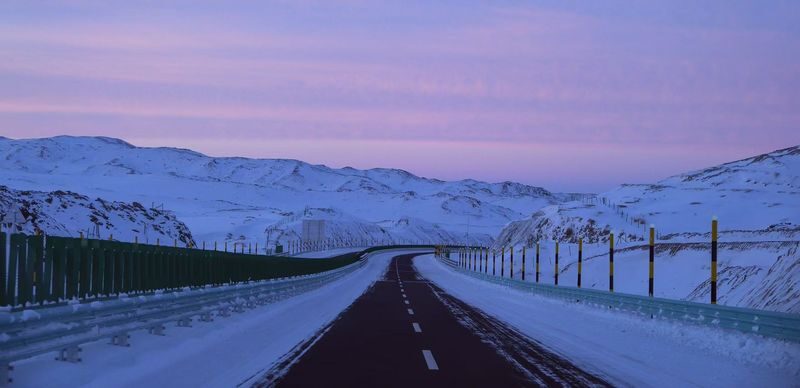
There is an important route wrinkle to settle before booking. The tour information says that if the Duku Highway is not open, the schedule changes, with alternate routing through Sayram Lake and Nalati and a possible return via Hejing or Jinghe. It also notes that the Duku Highway is usually open only from June to mid-September. Since this is a winter product, ask the operator to confirm which version of days seven through nine applies to your departure. Do not assume every place in the headline itinerary will be reached exactly as written.
Dushanzi, then back to Ürümqi
Day nine is planned around Dushanzi Grand Canyon, followed by the drive to Ürümqi, about 400 kilometers and five hours according to the schedule. The canyon’s carved walls and viewing platform provide a final stop before the city return. If road closures force a different route, the operator may substitute or rearrange stops.
Day ten is the airport drop-off. The stated return window is 9 a.m. to 11 p.m., but the actual pickup time depends on your flight and traffic. Ürümqi airport security can be strict, and the tour recommends arriving three hours early. Winter flight delays are also flagged, so allow breathing room rather than arranging a tight onward connection.


What the price covers, and what it does not
The advertised starting price is about US$775, while package options are also shown at lower starting prices, from about US$674 for a standard first-class 7-seat vehicle and US$719 for the 1+1 first-class version. Prices vary by package and booking details, so check the selected option rather than assuming every vehicle or room arrangement costs the same.
The listed inclusions are substantial: nine nights of accommodation, breakfast where provided, a vehicle with fuel, tolls, parking and the driver’s lodging and meals covered, plus admission and shuttle fees for specified attractions. The included ticket set names Kanas and Hemu, Sayram Lake, Kuerdening, Nalati Sky Grassland and Dushanzi Grand Canyon. If you qualify for ticket discounts, tell the operator in advance and bring the original proof; the scenic area’s rules on the day apply.
Meals beyond breakfast are not included. You choose and pay for lunch and dinner, with the driver or butler expected to share the next day’s lunch stop in advance. This gives you flexibility, but it means you should budget separately and be ready for limited choices in remote areas. The Kanas meal situation deserves special attention because the tour notes say that guesthouses there do not provide breakfast or dinner.
Accommodation is described as seven nights in four-star hotels and two nights in scenic-area cabins. The tour itself cautions that hotel standards in Xinjiang may differ from similarly rated hotels in China’s largest cities. If you are traveling alone, shared accommodation with a same-sex participant is available without a single-room supplement, subject to the group’s arrangements. If you decline sharing at the destination, a single room may cost extra if one is available.
The vehicle, group size and communication
This is a carpool tour for two to six people, not a large coach tour. The smaller vehicle can make stops and day-to-day coordination feel more manageable, and the package review feedback gives particular credit to careful, helpful drivers. Names praised on past departures include Zhang Hucheng, Tian Xing, Bai Xiaolong and Ma Jianlong, but the driver for your own date is not specified, so treat those names as examples rather than a promise.
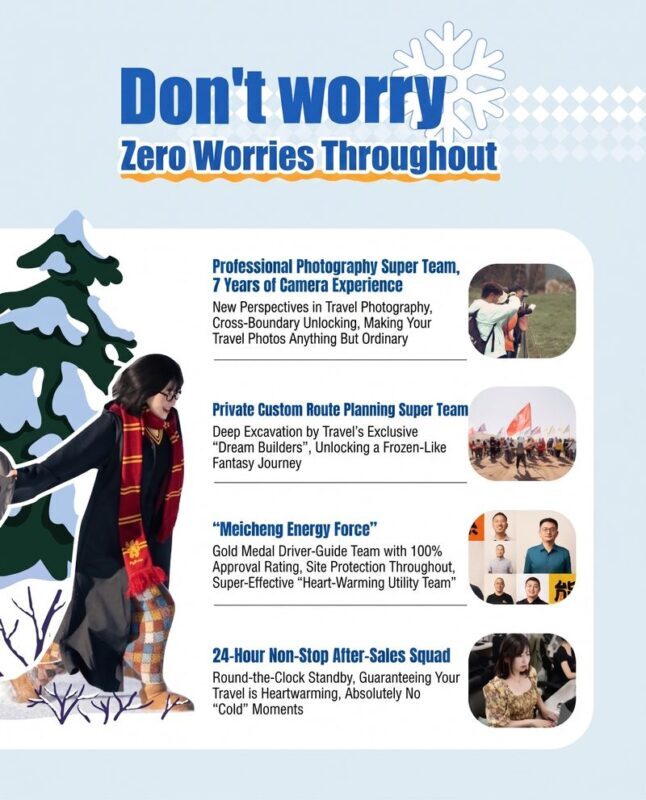
There is no separate tour guide. The driver handles the journey, while an online concierge provides itinerary reminders and coordination. Foreign visitors can register, with communication handled through WeChat, WhatsApp or email and the Chinese tour leader using translation software. Keep your questions clear and confirm pickup details and route changes in writing; one practical concern is that final arrangements may not arrive as early as you would like.
Seats are not assigned, and the group is expected to rotate seats daily. Each person may bring one 28-inch suitcase; two people sharing are limited to one 30-inch suitcase and one backpack. With frequent changes of hotel and two nights in scenic-area lodging, packing light is more than a convenience.
Who should choose this winter circuit
I’d consider this tour if you want to see several of Northern Xinjiang’s best-known winter sights in one trip and are comfortable with long drives, cold weather and modest lodging in remote places. The small group, included vehicle expenses and scenic-area overnights help make the scale of the route easier to manage.
It is less suitable if you want leisurely mornings every day, meals included, predictable access to every stop or high-end accommodation throughout. The schedule covers a lot of ground, and winter conditions can change it. Children do not automatically receive a bed or attraction tickets; the tour also says it does not accept children sharing a room with adults, so families should check arrangements before booking. Pregnant participants, breastfeeding infants and people over 75 are not accepted; people over 65 must be accompanied by family and sign a waiver.
Should you book it?
Book this tour if your priority is a broad winter sampler of Altay and Ili, and you can treat the itinerary as weather-dependent rather than fixed. The most convincing value lies in the included long-distance transport, scenic-area tickets and two nights close to Kanas and Hemu, not in luxury or all-inclusive service.
Before you commit, get written confirmation of the exact winter route, the Kanas meal and breakfast arrangements, your package’s vehicle type, and how same-sex room sharing will work. If those details suit you, this is a practical way to cover a remarkable amount of Northern Xinjiang without organizing every transfer yourself.
Winter Pre-sale | Enjoy Northern Xinjiang | 10-Day Winter Tour of Xinjiang Ili + Altay
“The itinerary was packed with activities, and the tour bus was excellent. Special thanks to our driver, Mr. Zhang Hucheng, who was very experienced…”
FAQ
Where does the tour start?
The tour departs from Ürümqi. The pickup time is confirmed after booking, and you should provide your flight or train details so transport can be arranged.
How long is the tour?
The itinerary runs for 10 days and includes nine nights of accommodation.
How many people are in the group?
It is a small-group carpool tour for two to six people in a 7-seat vehicle. The 1+1 first-class vehicle is a separate package option.
Is a tour guide included?
There is no separate tour guide. A driver leads the trip, and an online concierge helps with arrangements. For foreign visitors, the Chinese tour leader uses mobile translation software to communicate.
Which meals are included?
Hotel breakfasts are included where provided, but other meals are at your own expense. The tour notes that Kanas guesthouses do not provide breakfast or dinner.
What accommodation is included?
The package includes nine nights: seven nights in four-star hotels and two nights in scenic-area cabins, one in Kanas and one in Hemu. Hotel standards may differ from those in major mainland Chinese cities.
Is there a single supplement for solo visitors?
Solo participants willing to share with a same-sex participant are not charged a single-room supplement. If you decide against sharing at the destination, a single room may be arranged for an extra fee if one is available.
What attraction fees are included?
The included ticket list names the Kanas and Hemu package, Sayram Lake self-drive ticket, Kuerdening self-drive ticket, Nalati Sky Grassland self-drive ticket and Dushanzi Grand Canyon ticket. Ticket policies and discounts depend on the scenic area.
Does the itinerary change if the Duku Highway is closed?
Yes. The route may be adjusted for road and weather conditions, and the tour describes alternate routing when the Duku Highway is not open. The highway is usually open only from June to mid-September, so confirm the winter route for your departure.
What should I bring for the trip?
Bring warm clothing, sunscreen, a hat and sunglasses, plus snacks and water for long drives. Pack light for the Kanas and Hemu overnights, and bring motion-sickness medicine if you need it.