Wanaka’s big thrill begins with a plane ride above the Southern Alps, then a leap into open air with lakes, peaks and the Clutha River spread below. Choose 9,000, 12,000 or 15,000 feet, and you’ll get a tandem instructor to manage the equipment and guide you through the jump.
I like two things in particular: the choice of jump height lets you set the level of adventure, and the views are the real prize, with up to six lakes and Mt Cook in sight on a clear day. The main catch is that weather can delay or cancel the jump, and busy days can bring long waits, so keep your plans flexible.
- What Makes the Wanaka Jump Different
- Start at Wanaka Airport, Then Climb Above the Alps
- Choosing 9,000, 12,000 or 15,000 Feet
- What the Price Covers, and What It Does Not
- Waiting Time and Changeable Mountain Weather
- Safety, Nerves and the Landing
- Who Should Book This Wanaka Adventure?
- FAQ
- Where does the activity start?
- How early should I arrive?
- What jump heights can I choose?
- How long does the experience take?
- What is included in the price?
- Are there age, height or weight requirements?
- Are there extra charges for higher weights?
- What happens if weather cancels the jump?
- The Best Of Wanaka!
- More Tours in Wanaka
- More Tour Reviews in Wanaka
- Not for you? Here's more nearby things to do in Wanaka we have reviewed
What Makes the Wanaka Jump Different
 1 / 2
 2 / 2
- Three jump heights: Choose 9,000, 12,000 or 15,000 feet, with the highest option giving you the longest freefall.
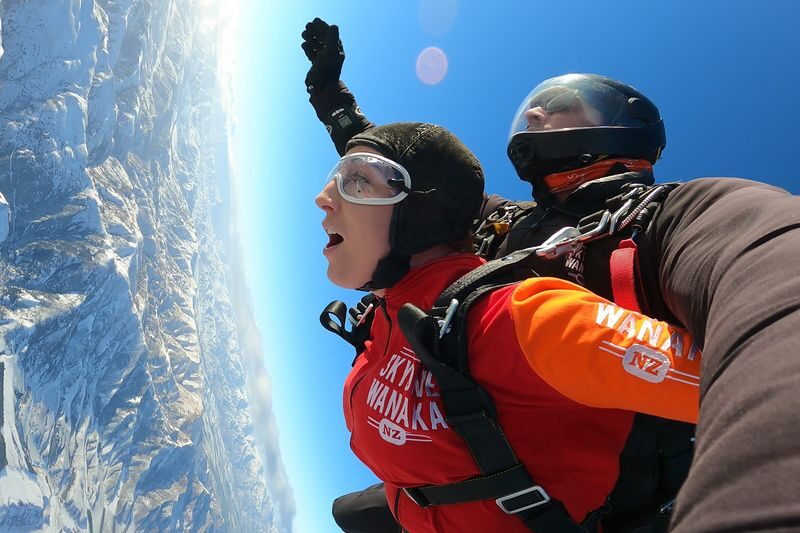
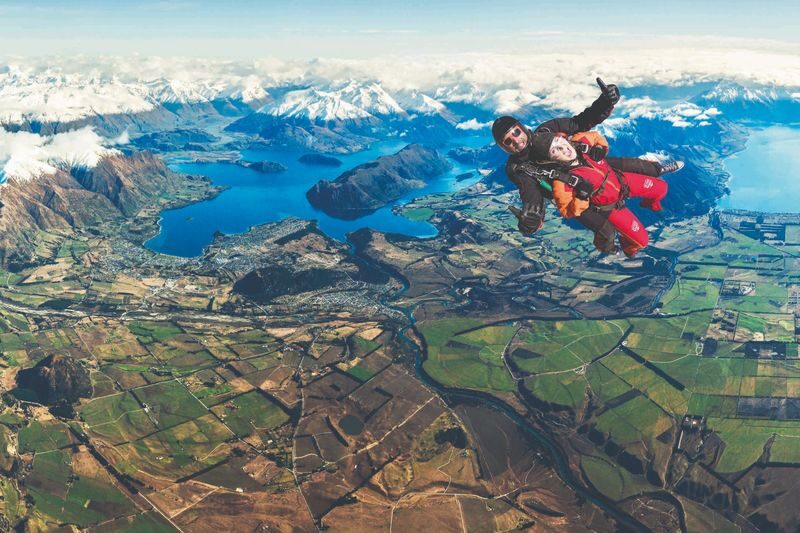
- A remarkable view from above: Look for Mt Cook, Mt Aspiring, the Southern Alps, up to six lakes and the Clutha River.
- An instructor by your side: A professional tandem instructor handles the jump with you, from equipment checks to landing.
- Weather shapes the schedule: Conditions can bring delays, a lower jump height or cancellation, even after you arrive.
- Photos and video cost extra: You can arrange packages at check-in, but the final footage depends in part on camera work.
- Practical limits apply: Participants must be 120 cm or taller and weigh between 30 kg and 115 kg. Extra charges apply above 95 kg.

👉 See our pick of the 11 Best Tours In Wanaka
Start at Wanaka Airport, Then Climb Above the Alps
The meeting point is Skydive Wanaka at Wanaka Airport, on Mustang Lane. Arrive 20 minutes before your scheduled time. The airport is a five-minute walk away, and a free shuttle from the i-SITE visitor centre has been available, according to one account. Check with the operator about current transport arrangements before relying on that option.
At check-in, you’ll meet the team and get ready for the flight. Your instructor gives a safety briefing and helps fit the harness and required equipment. People who have never made a tandem jump may find the waiting and preparation more nerve-racking than the actual freefall. One young participant described the wait as the hardest part; once the plane door opens, there’s less time to think.
The plane takes you toward the drop area. The flight is part of the show, not just a ride to the starting point: as you gain height, you can take in the mountains and lakes before the jump. On a clear day, the view can include Mt Cook, Mt Aspiring, Lake Wanaka, Lake Hawea and the Clutha River. The description promises views of up to six lakes, though visibility depends on the day’s conditions.
Then comes the leap. At the highest option, you’ll leave the plane from 15,000 feet, or 4,572 metres. The stated freefall speed can reach 200 kilometres per hour, and the freefall lasts about a minute before the parachute opens. A participant who had jumped elsewhere said the freefall felt less weightless than expected. That may be a useful bit of reassurance, but it is still a fast, intense ride.
Once the parachute opens, the pace changes. You’ll glide back toward the landing area with time to look around and enjoy the view. That slower stretch is when it may be easier to spot the lakes and trace the river than during the rush of freefall. The whole process can feel quick once you’re in the air, but your time at the airport can be much longer.
You can also read our reviews of more tours and experiences in Wanaka.


Choosing 9,000, 12,000 or 15,000 Feet
The three heights give you a real choice, not just a different number on a booking screen. At 9,000 feet, you get the core tandem jump and a shorter freefall. It’s the lowest-cost option and the one available to children aged 6 to 12. If you’re keen to try a parachute jump but want to keep the commitment and price down, this is a sensible starting point.
At 12,000 feet, you get more time in freefall than at 9,000 feet. It can suit someone who wants a bigger rush without choosing the highest package. Keep in mind that height preferences may not always be possible on the day. Weather restrictions have led to participants being offered a lower jump height than they originally booked.
The 15,000-foot option is the top choice for the longest freefall and the most time in the air before the parachute opens. Many people choose it as a once-in-a-lifetime treat. The extra height costs more, so think about what matters most to you: the full adrenaline rush, or simply getting the mountain views from above.
If you’re unsure, decide based on the experience you want, not just on nerves. Some people find the highest option gives them less time to build anxiety in the plane, while others prefer the lower price and shorter freefall. There is no single right choice. Your instructor will be there to guide you through the jump, but the height still needs to fit your comfort level and the day’s operating conditions.
What the Price Covers, and What It Does Not
The experience is advertised from $236.95. The package options shown include 9,000 feet from US$215.40, 12,000 feet from US$266.55 and 15,000 feet from US$326.79. Queenstown transfer options are also listed, starting at US$226.89 for 9,000 feet. Because the headline price and package prices use different currency formats, check the final checkout total and what your chosen option includes before booking.
The core price covers an English-speaking guide and the safety equipment needed for the activity. Photos and video are not included. You can choose a photo or video package when you check in, and the Ultimate Combo is subject to availability. Prices may change, so ask about the current cost and exactly what each package includes before you commit.
Buying footage is a personal call. It can be a good way to keep a record of a rare experience, especially if you want to share it with family or friends. But the quality can vary with the camera operator and shooting angle, and one participant felt their video included very little external footage. If photos matter to you, ask what you’ll receive, how it will be delivered and what the package covers.
Participants weighing 95 to 104.9 kg pay a NZD50 surcharge onsite. For weights from 105 to 115 kg, the surcharge is NZD75. The permitted weight range is 30 to 115 kg, and the minimum height is 120 cm. Children aged 6 to 12 can jump only from 9,000 feet. Anyone aged 6 to 17 needs written consent from a parent or guardian, and participants aged 16 or older are charged the adult rate.
Waiting Time and Changeable Mountain Weather
Weather is the main factor you cannot plan around. The operator monitors conditions and may delay the flight, cancel it or change the jump height if conditions do not allow the planned activity to go ahead. That can be frustrating, particularly if you are ready to go, but the decision is an important part of operating a parachute jump responsibly.
Build a buffer into your day. Reports of the total airport visit range from about an hour to roughly two and a half hours, and delays can stretch the wait much longer. Some people have waited around three hours or more, especially when the day is busy or weather changes the flight schedule. A scheduled check-in time is not a promise that you’ll be in the air at that exact moment.
During peak season, from October to May, slots are limited. If you’re booking for a group, make one reservation for everyone rather than splitting the party across separate bookings. Keep the rest of your day light, and avoid scheduling a tight connection or an important activity immediately afterward.
If you’re visiting Wanaka for only a short time, consider leaving more than one possible day open for the jump. A cancellation can mean requesting a full refund or trying to reschedule, depending on your plans and the operator’s availability. The voucher is valid only on the date and time specified, so contact the operator promptly if your schedule changes.
Safety, Nerves and the Landing
Tandem jumping means you are attached to a professional instructor, who guides you through the briefing, equipment checks, jump and landing. Participants consistently describe the instructors as reassuring and clear. Instructors named Ben, Jorge, Rob and Aaron have been praised for calm guidance and friendly conversation, though you cannot request a particular instructor based on those names.
The operation uses safety equipment and checks before departure, but no parachute jump is risk-free. The activity warning notes that risks can arise from weather, health conditions, equipment or incidents during the flight, descent or landing. A parachute may open abruptly or fail to open correctly, and injury is possible. You take part at your own risk, so read the operator’s terms carefully and consider your health and comfort before booking.
The rapid descent can also affect your ears. One participant reported ear pain from pressure changes, so if you know you are sensitive to pressure, take that into account and ask the operator about any concerns before you go. Follow the instructor’s directions throughout the jump and landing.
For nerves, remember that the instructor is responsible for guiding the tandem jump. Some people find it useful to focus on the view once they leave the plane rather than trying to control every moment. You may want to close your eyes, but keeping them open gives you the best chance to see the mountains and lakes you came for.


Who Should Book This Wanaka Adventure?
This is a strong pick if you want a high-adrenaline activity with a remarkable view, and you can give the day room to change. It suits first-timers as well as people who have made a tandem jump before. The choice of height also makes it easier to match the activity to your budget and appetite for freefall.
It may be a poor fit if you have a tightly planned itinerary, dislike uncertainty or are uncomfortable with the risks of parachuting. The jump itself is brief compared with the preparation and possible waiting, so go for the experience and the scenery, not for a long guided tour. If you want a record of the moment, set aside extra money for photos or video and ask what the package includes before purchasing.
I’d book it if the views and the thrill are worth leaving a flexible half-day in your schedule. Choose your height with care, confirm the current price, and keep a backup plan in case weather has the final say.
Wanaka Tandem Skydive Over Southern Alps and Lakes
“I recommend going straight to the highest level. You won't feel much fear. After calming down, you can just start enjoying the scenery.”
FAQ
Where does the activity start?
Meet at Skydive Wanaka, Wanaka Airport, Mustang Lane, New Zealand. The airport is a five-minute walk away.
How early should I arrive?
Arrive 20 minutes before your scheduled activity time. Late arrivals and no-shows are not refundable.
What jump heights can I choose?
You can choose 9,000 feet, 12,000 feet or 15,000 feet. Children aged 6 to 12 may jump only from 9,000 feet.
How long does the experience take?
There is no fixed total duration provided. Accounts describe the activity taking about an hour to two and a half hours, with waits sometimes lasting several hours. Leave plenty of room in your schedule.
What is included in the price?
An English-speaking guide and the required safety equipment are included. Photos and video are not included and can be booked at check-in.
Are there age, height or weight requirements?
Participants must be at least 120 cm tall and weigh between 30 kg and 115 kg. Children aged 6 to 17 need written consent from a parent or guardian. Participants aged 6 to 12 are limited to 9,000 feet, and those aged 16 or older pay the adult rate.
Are there extra charges for higher weights?
Yes. Participants weighing 95 to 104.9 kg pay NZD50 onsite. Those weighing 105 to 115 kg pay NZD75 onsite.
What happens if weather cancels the jump?
The operator may cancel the activity if weather or other unforeseen conditions make it unsuitable. If the operator cancels, you can request a full refund.