Wagashi are sweets you can admire before you eat. At Tomodachi-ya, you’ll shape nerikiri by pinching, pressing, and cutting the dough, turning a few simple movements into flowers and other seasonal forms. It’s a quiet, hands-on way to meet an important part of Japanese food culture.
I like two things in particular: you make the sweets yourself, with a professional instructor guiding each step, and the seasonal designs give the class a local, changing character. English-speaking staff are available, and the small, family-run feel makes this a personal experience rather than a factory demonstration.
One consideration: the advertised course is 90 minutes, even though the short summary describes it as one hour. The workshop is the main event. A historic-street walk is mentioned, but no route or separate walking time is specified, so don’t count on a substantial guided tour of the city.
- Shape nerikiri by hand: Pinching, pressing, and cutting create different expressions in the finished sweets.
- See seasonal designs: The sweets change with the season and ingredient availability.
- Get step-by-step help: A certified instructor leads the activity, with Japanese- and English-speaking staff.
- Take your sweets with you: A case is provided, but you should eat the wagashi on the day you make them.
- Plan for 90 minutes: The available course is listed as a 90-minute experience, with several start times.
- Bring a small towel: You need one face towel per person to use as a hand towel during the class.
- Making nerikiri at Tomodachi-ya
- Seasonal sweets, shaped by hand
- What the 90-minute class feels like
- A Kumamoto address, not a city tour
- Choosing a time and planning your day
- Hygiene, towels, and taking sweets home
- Is .49 good value?
- Who should book this class?
- FAQ
- How long is the wagashi-making experience?
- Where does the class take place?
- What start times can I choose?
- Is English instruction available?
- What should I bring?
- Can I take the wagashi home?
- What is the cancellation policy?
- The Best Of Kumamoto!
- More Tours in Kumamoto
- More Tour Reviews in Kumamoto
- Not for you? Here's more nearby things to do in Kumamoto we have reviewed
Making nerikiri at Tomodachi-ya
 1 / 5
 2 / 5
 3 / 5
 4 / 5
 5 / 5
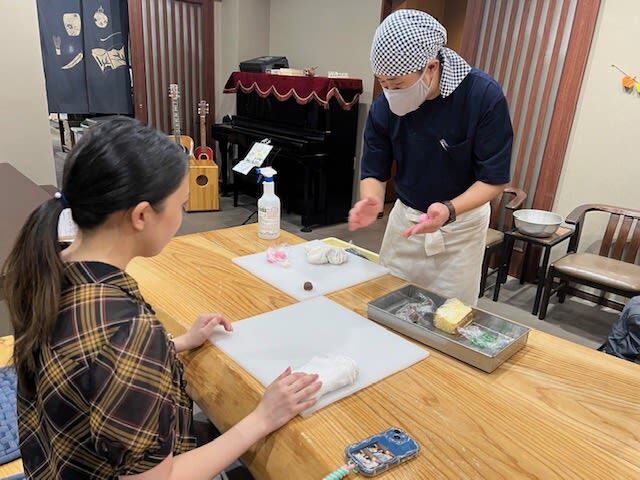
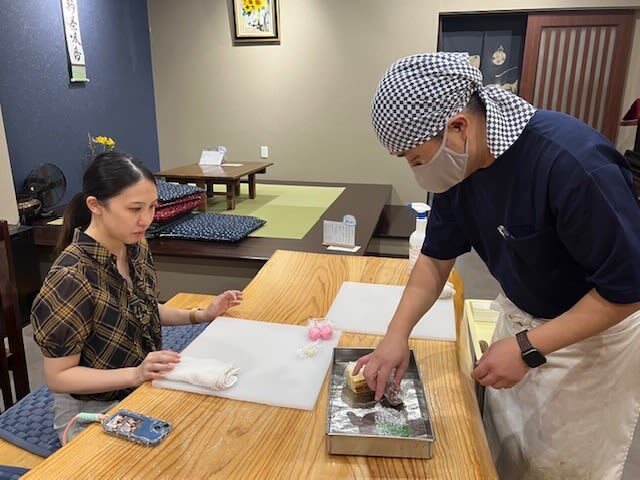
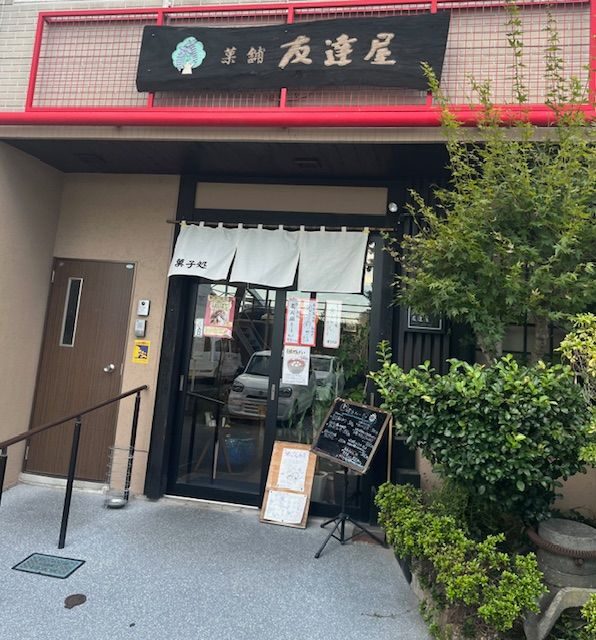
Tomodachi-ya is a traditional Japanese sweets shop at 40 Konya Amidajicho in central Kumamoto. Here, you don’t just watch a confectioner work. You get your own turn at the craft, shaping nerikiri with guidance from an instructor.
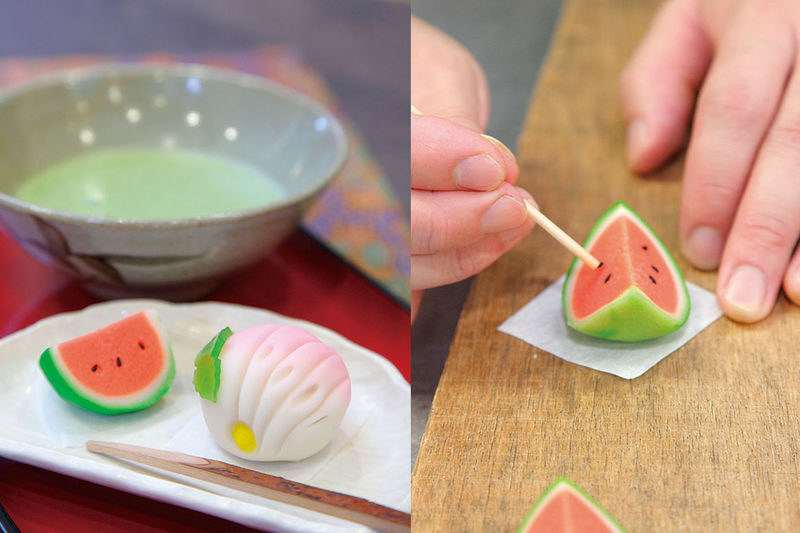
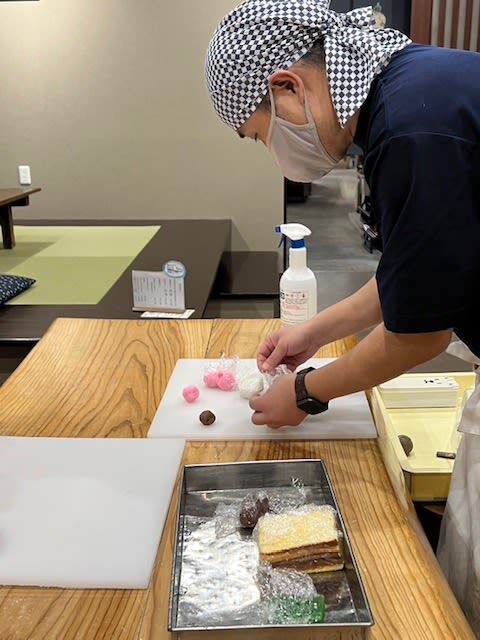
Nerikiri is a type of wagashi made to look like flowers, plants, and other seasonal subjects. The appeal is in the details: a small change in how you pinch, press, or slit the dough can change the whole expression. The class makes that artistry approachable. You don’t need to arrive with experience or a steady pastry-chef’s hand. The process is presented as a casual try, with the instructor showing you what to do.
That beginner-friendly approach matters. Japanese sweets can look precise enough to belong behind glass, but this is a chance to learn by doing, not a test of your artistic skill. Your pieces will be your own, and that’s part of the pleasure.
The activity is run at the shop, which is described as a traditional wagashi business popular with local people. That setting gives the class a connection to everyday Kumamoto, rather than making it feel like a generic craft lesson. The instructor’s name is not provided, but the experience includes a certified professional instructor and staff who can explain the process in English as well as Japanese.

👉 See our pick of the 9 Best Tours In Kumamoto
Seasonal sweets, shaped by hand
The designs vary according to the season and ingredient availability. That means the exact sweets you make can change over the year, and you shouldn’t book expecting one fixed pattern. Past class designs have included Kantsubaki and Seccyuuku, but the current menu may be different.
Seasonal wagashi are a small edible art form. Their colors and shapes often refer to what is happening in nature, so the class offers a glimpse of how Japanese confectionery connects food with the calendar. You’ll get to see that idea in a direct way: choose a shape, follow the instructor’s demonstrations, then use your fingers and tools to give the dough its form.
The tactile part is central. The itinerary describes pinching, applying pressure, and making slits, with each technique producing a different look. I’d think of it less as a baking class and more as a short lesson in shaping and detail. The aim is not to produce identical sweets, but to make your own pieces with a little help.
The menu may change with the season and available ingredients, so treat that variation as part of the experience. It also means you’ll have a reason to look closely at the finished sweets instead of rushing through them. If you’re interested in Japanese food culture, this is a useful way to see how presentation can carry meaning as well as flavor.
You can also read our reviews of more tours and experiences in Kumamoto.



What the 90-minute class feels like
The booked course is listed as 90 minutes, and the itinerary gives the workshop itself a one-hour-and-thirty-minute slot. Arrive ready to spend most of that time at the shop, listening to instructions and working through the stages of making your sweets.
The class is hands-on, but it is not described as difficult. The instructor demonstrates the techniques, then gives you time to try them. A kind, patient teaching style is especially helpful here: the tiny movements that shape a flower or other motif can take a few attempts to get right. You can ask for help rather than guessing your way through.
The activity includes snacks, and one account of the class describes making four wagashi and choosing a drink. That gives you a useful sense of the possible format, though the exact menu and number of sweets are not stated as fixed for every session. The finished pieces are placed in a takeout case provided by the shop.
A matcha tea ceremony has also been part of a session, but it is not listed as a guaranteed inclusion. Think of it as a possible extra, not a promise to build your plans around. The dependable core is the sweet-making class, instruction, and snacks.
A Kumamoto address, not a city tour
The experience takes place at 40 Konya Amidajicho, Chuo-ku, Kumamoto City, postal code 860-0033. The description mentions a stroll through Kumamoto’s historic streets, but the stated itinerary focuses on the workshop at this address and does not give a walking route, stops, or dedicated time for sightseeing.
That distinction is worth keeping in mind. If you want a craft activity with a sense of place, the central Kumamoto setting works well. If you’re hoping for a guided city walk that covers historic landmarks, arrange that separately or confirm the walking portion before booking. Don’t assume the 90 minutes includes a substantial tour on foot.
There is no hotel pickup or drop-off. You need to make your own way to the shop, and the meeting point is the same address as the activity. The booking instructions say to arrive 10 minutes before your selected start time. This is a small class with a set schedule, so arriving late can mean joining midway, having the session shortened, or not being allowed to take part.
Choosing a time and planning your day
The listed start times are 10:00, 11:30, and 13:30. Return times are shown as 11:30, 13:00, and 15:30, but the available return time depends on your chosen start and the actual itinerary duration. Check the time shown for your booking rather than assuming every start has every return option.
The schedule may change because of traffic or weather. The class itself takes place at the shop, but it’s sensible to keep a little flexibility around it, especially if you’re connecting it to another timed activity.
Booking confirmation is expected within 48 hours. Your mobile voucher is accepted, and it is valid only for the date and time specified. Infants and children must be included in the passenger count. Anyone accompanying you as a chaperone, interpreter, or photographer must also pay the experience fee, even if that person is not a regular participant.
Hygiene, towels, and taking sweets home
Because you’ll handle food, you’ll be asked to wash your hands and fingers before and during the class. Masks and gloves are provided, and you’ll need to follow the instructor’s hygiene directions to keep ingredients, tools, and equipment clean.
Bring one face towel per person. It will get wet and serve as your hand towel. A towel has reportedly been available at the shop for people who arrive without one, but the instructions still ask you to bring your own, so it’s best to pack one rather than depend on a spare.
Outside food and drinks are not allowed. You can take your sweets away in the provided case, but plan to eat them on the same day. Wagashi are delicate, and the class information specifically advises against saving them for later.




Is $35.49 good value?
The 90-minute course starts at $35.49. For that price, you’re paying for more than a snack: you get guided instruction, the chance to make the sweets yourself, and a takeout case for your finished wagashi. English-language help is available, which makes the activity easier to follow if you don’t speak Japanese.
The class also offers a different pace from a standard sightseeing stop. You’ll spend time learning a small craft rather than moving from one landmark to another, and you leave with something you made. If the session includes several sweets and a drink, as it has in some cases, that adds to the value. Since menus can vary, I wouldn’t count on a particular number of pieces or a specific drink unless confirmed for your date.
For a solo visitor, couple, or family seeking a short cultural activity, the price looks reasonable. It is less compelling if you only want to sample wagashi or have very little free time: you can buy sweets without setting aside an hour and a half. The value is in the making, the instruction, and the chance to understand how seasonal designs are formed.
Who should book this class?
I’d recommend Tomodachi-ya to anyone curious about Japanese food traditions who likes learning by doing. It suits beginners, since the process is described as fun and not difficult, and the English-speaking staff help make the steps clear. It can also work well for families, provided every child is counted in the booking and can follow the food-handling instructions.
This may not be the best fit if you want a broad tour of Kumamoto, a cooking class with a full meal, or a guaranteed tea ceremony. The central focus is making wagashi at the shop. The historic-street walk is not detailed enough to treat as a major part of the schedule, and the menu changes with the season.
If you’re weighing it against other short activities in Kumamoto, ask yourself whether you’d enjoy working with your hands and taking home a small edible creation. If yes, the class offers a warm, compact way to spend part of a day. Book it for the craft, not for a city tour.
TOMODACHIYA-Wagashi confectionery making experience in Kumamoto
“Great value for great experience. if you have spera 60 minutes, you should give it a try this beautiful and delicious experience. a very warm famil…”
FAQ
How long is the wagashi-making experience?
The available package is a 90-minute course. The workshop is listed as lasting one hour and 30 minutes.
Where does the class take place?
It takes place at Tomodachi-ya, 40 Konya Amidajicho, Chuo-ku, Kumamoto City, Kumamoto Prefecture, postal code 860-0033.
What start times can I choose?
The listed start times are 10:00, 11:30, and 13:30. You must attend at the time selected when you book.
Is English instruction available?
Yes. The experience includes English-speaking staff as well as Japanese-speaking staff, and a certified professional instructor leads the activity.
What should I bring?
Bring one face towel per person. It will be wetted and used as a hand towel during the class. Masks and gloves are provided.
Can I take the wagashi home?
Yes. A case is provided for taking the sweets away. You should eat them on the day you make them.
What is the cancellation policy?
You can receive a full refund if you cancel at least 72 hours before the activity date, based on local time at the destination.