
Thai cooking here is practical, not a demonstration you watch from the sidelines. You visit a local market, learn about ingredients, then prepare five familiar dishes at your own station, with instructors such as Lollipop and Goby guiding the work.
I like two things in particular: you cook the full meal yourself, and the market stop gives the ingredients context before they reach the pan. The farm setting also adds a welcome contrast to a city-based class. The main consideration is the location: Mueang Kaeo is outside central Chiang Mai, so confirm that your hotel is within the pickup area or choose a no-transfer package.
- Five dishes, one choice: Make hot and sour prawn soup, chicken with cashews, Pad Thai, mango with sticky rice, and either green or Panang curry.
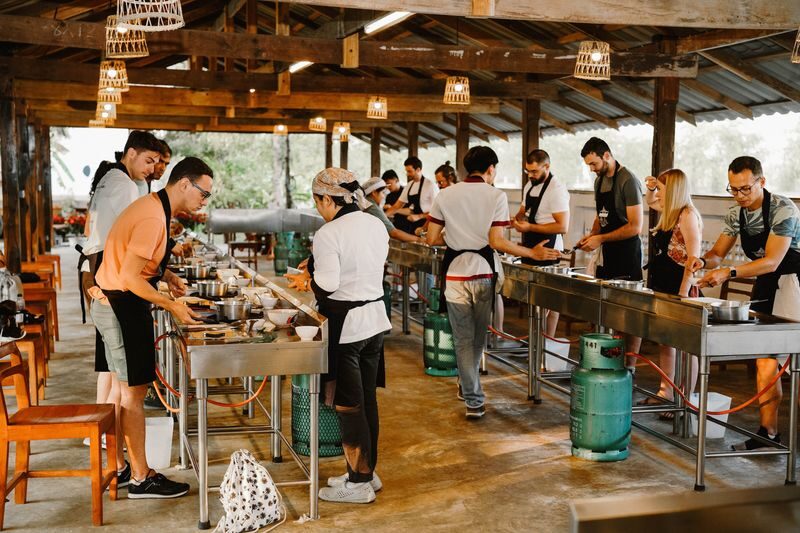
- Your own cooking station: The class is hands-on, with individual stations rather than a shared cooking task.
- A market stop first: See local ingredients before using them in class.
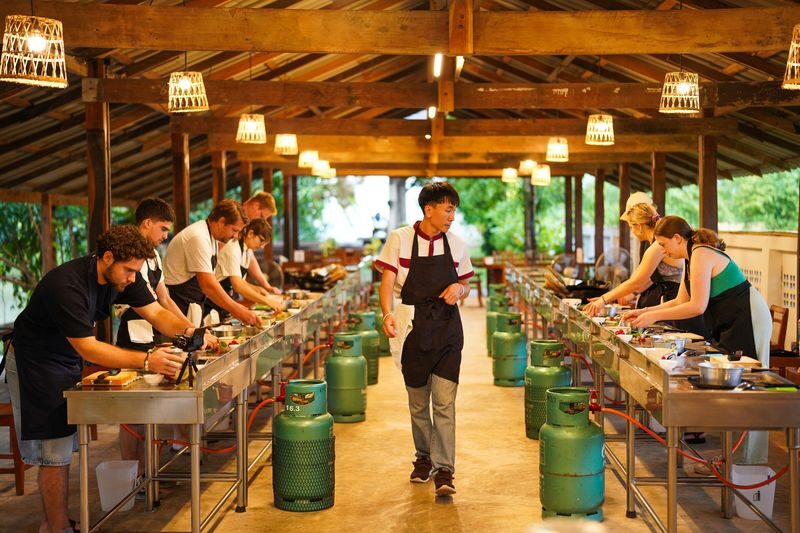
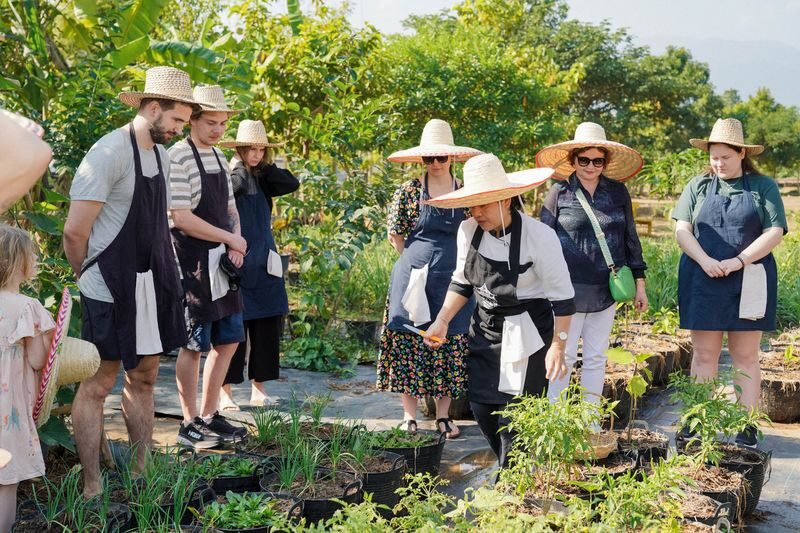
- Farm surroundings: The cooking area is outdoors, with fruit and vegetable growing areas nearby.
- Several class formats: Morning, afternoon, evening, and full-day options are available, in English or Chinese.
- Transfer is optional: Selected packages include hotel pickup and return; others are for people making their own way there.
- From Chiang Mai streets to a cooking farm
- The market visit puts ingredients in context
- Five dishes, with curry your choice
- Individual stations make the class genuinely hands-on
- How the schedule works
- What the price includes, and what it does not
- Who will enjoy the class most
- A few practical points before booking
- Should you book The Rice Barn?
- FAQ
- Where is The Rice Barn Thai Cooking Farm?
- How long does the cooking class take?
- What dishes are included?
- Can I choose which curry to make?
- Do I cook the dishes myself?
- Is a market visit included?
- What languages are available?
- Are hotel transfers included?
- What is the minimum age to participate?
- Can I cancel and receive a refund?
From Chiang Mai streets to a cooking farm
 1 / 9
 2 / 9
 3 / 9
 4 / 9
 5 / 9
 6 / 9
 7 / 9
 8 / 9
 9 / 9
The Rice Barn Thai Cooking Farm is in Mueang Kaeo, a short way beyond central Chiang Mai. That setting shapes the day: you leave the city’s usual lanes and shops for an outdoor cooking environment, with a market stop along the way. The address provided is the farm itself, so check the map and your package details before setting out.
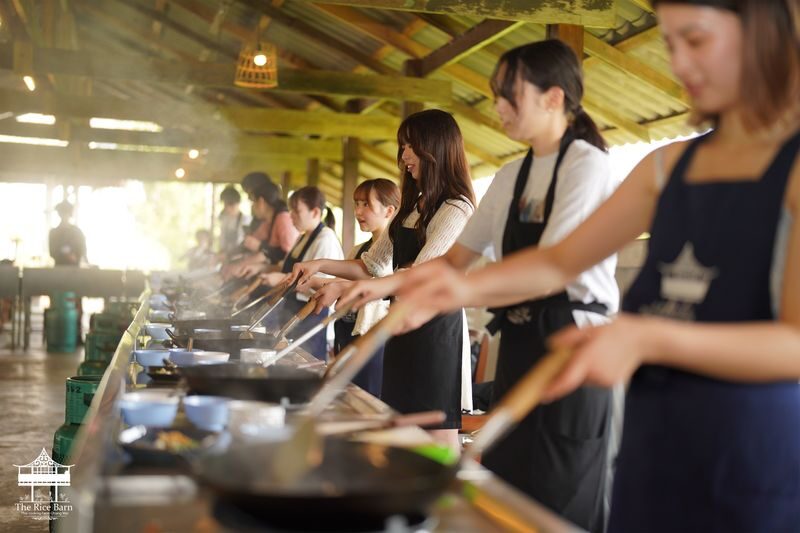
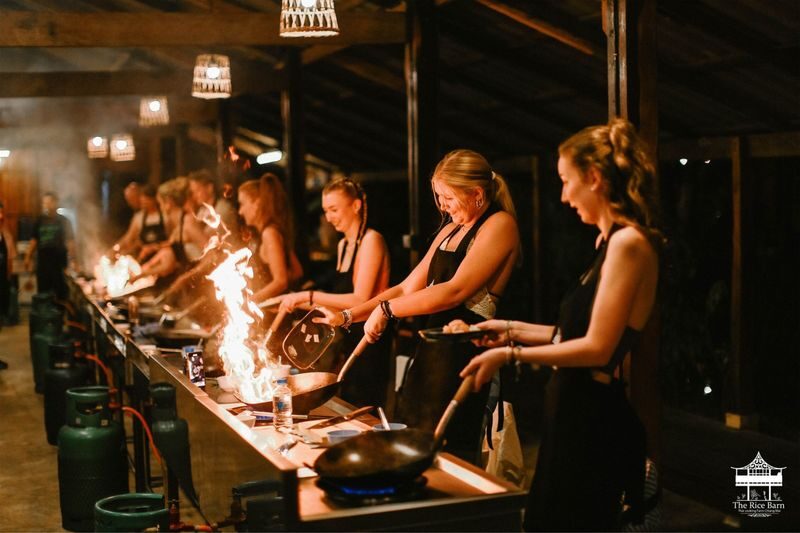
The class is built around doing, not just watching. Each student has an individual cooking station, which means you can follow the instructor’s demonstration and then handle the ingredients yourself. That is a useful distinction if you want more than a food tasting or a quick lesson in one dish.
The farm setting may also make the ingredients easier to understand. One part of the grounds has fruit and vegetables growing nearby, and the class offers a chance to learn about culinary plants and local spices. It is a small but worthwhile link between what grows in the region and what ends up in a Thai meal.
The market visit puts ingredients in context
The class begins with a visit to a local market. It is a practical opening: before you cook, you can see the ingredients in the place where people buy them. The market stop is not described as a long guided tour, so think of it as an introduction to the food rather than a full market visit.
That context matters most when you return to the farm and start preparing the dishes. Thai recipes can look like a long list of unfamiliar ingredients when you first meet them on a page. Seeing those ingredients in a market and then using them at your station helps make the cooking less mysterious.
The farm class has also been described as a place where instructors explain culinary plants and local spices. If you are interested in why a dish tastes the way it does, pay attention during the ingredient explanations. The value is not only in reproducing a recipe, but in learning what goes into it and how the parts fit together.
Five dishes, with curry your choice
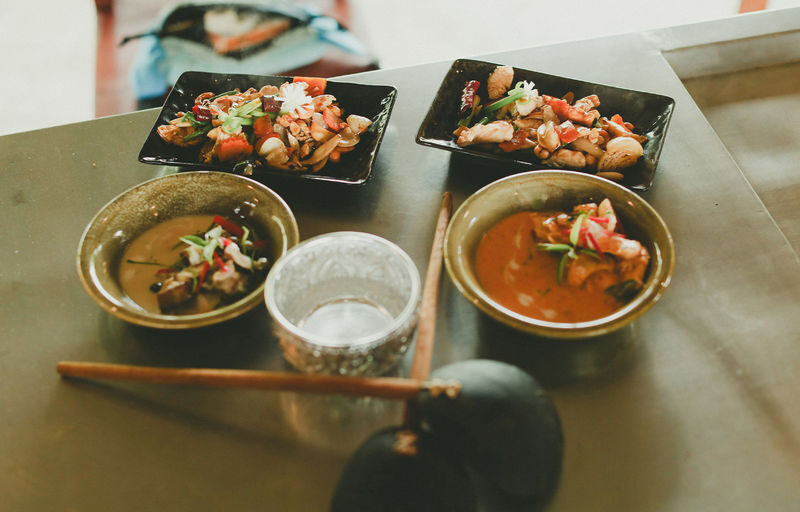
The included menu covers several familiar Thai favorites: hot and sour prawn soup, fried chicken with cashew nuts, Pad Thai, and mango with sticky rice. For the curry, you choose either green curry or Panang curry. That choice is useful if you already know what you like, or if you want to focus on one style rather than rush through two.
Five dishes make this more than a brief sampler. You get a range of cooking tasks and flavors, followed by the chance to eat what you have prepared. The meal is also a good reason to arrive hungry, though the exact pace and serving order can vary with the group.
The recipes are supplied, so you can take the instructions home and try them again. A recipe book is a modest inclusion with real value: the class is over in a few hours, but the recipes give you a way to repeat the dishes later. One instructor, Kathi, has been praised for showing how Thai food can be made quickly and easily at home. That is the kind of lesson that can make a cooking class useful beyond the day itself.
Individual stations make the class genuinely hands-on
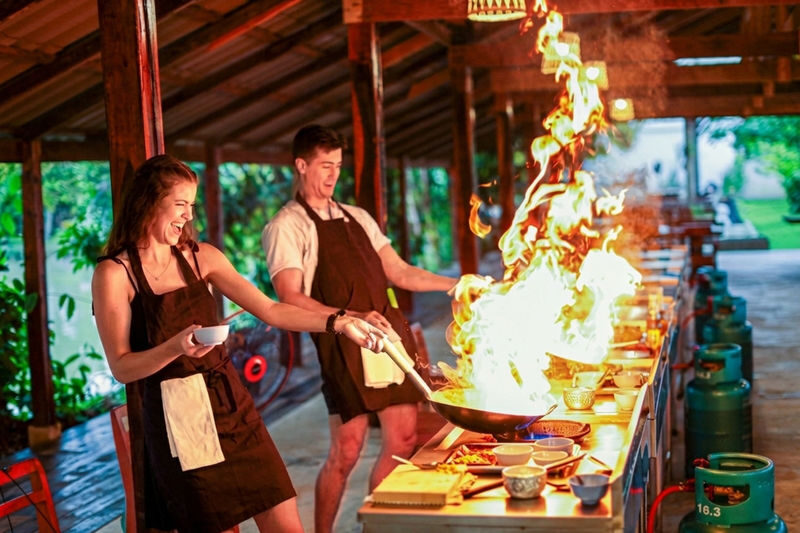
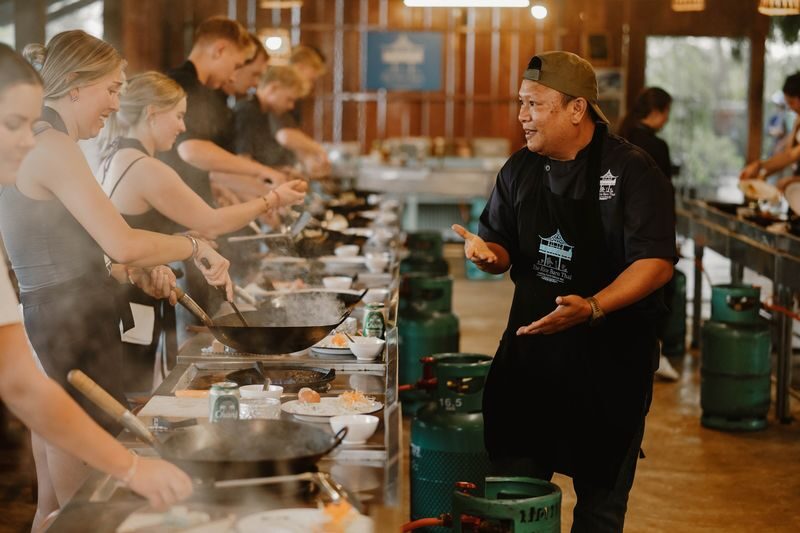
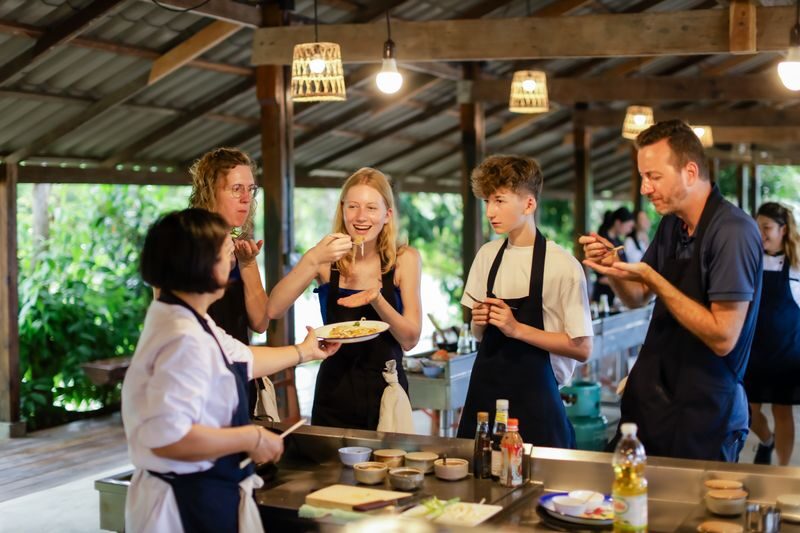
Having your own station means you do the cooking rather than simply observing the instructor or taking turns at a communal wok. The instructor demonstrates the process, then you prepare your own dishes with the supplied ingredients. Help is available as you work, which is especially useful if you are new to Thai cooking.
The class has been described as well paced, with enough explanation to follow the steps without turning the morning into a lecture. The instructors named by participants include Lollipop, Goby or Gobby, Timi, Oily, Bell, and Kabby. Names and staff may vary by class, but the recurring detail is close instruction and a friendly teaching style.
A cooking session also has its entertaining moments. One participant described a dramatic flame display while cooking. Treat that as a possible flourish rather than a guaranteed feature, but it hints at the lively feel of cooking over heat. The important point is that you are there to cook, not just watch a show.
How the schedule works
The morning package lists departure between 08:00 and 08:30 and an expected return at 14:30. The guided portion is listed as five hours and thirty minutes, while the overall activity is described as five hours. With pickup, the market stop, and the return journey included, it is sensible to set aside most of the morning and early afternoon rather than plan a tight appointment afterward.
Traffic, weather, group size, and the shared transfer can affect the schedule. Pickup may be earlier or later than expected, and the return time is an estimate. If you choose a transfer package, enter your hotel name and address when booking and wait for the operator to confirm the pickup time. Arrive at the pickup location 15 minutes before departure.
Afternoon and evening classes are also offered, along with full-day options. The exact timetable for those packages is not specified here, so check the details for the session you select. The advertised experience is a good fit for a relaxed day, not for someone trying to squeeze a class between two fixed commitments.
What the price includes, and what it does not
Prices vary by language, time, and transfer choice. Options begin around $23.59, with a listed English afternoon class without transfer from $23.80. English and Chinese classes are available, and most half-day packages are listed from roughly $26.75 to $26.79. Full-day classes start at $50.29.
For the price, the half-day class bundles instruction, ingredients, a welcome drink, a recipe book, the market visit, and five dishes. Selected packages also include round-trip hotel transfers. That is good value if you want both a cooking lesson and a substantial meal, particularly when you factor in the individual station and the guidance during preparation.
Do compare the package carefully. Not every option includes transfers, and the advertised starting price is not the price of every session. Personal expenses and tips are not included. The no-transfer option may be a sensible way to save if you are already staying nearby, but the farm’s location makes transport worth checking before you book.
Who will enjoy the class most
This is a strong choice if you want to learn by doing and are curious about Thai ingredients as well as finished dishes. It suits couples, friends, and families with children aged eight or older. Children must be counted in the passenger headcount, and the minimum participation age is eight.
The class appears especially workable for families because instructors can assist both adults and children at the stations. If you are booking for a child, consider whether they will enjoy following cooking instructions and preparing several dishes over the session. The activity is not simply a meal with a short demonstration.
You do not need to be an experienced cook. The format is designed to guide you through the process, and the instructors’ explanations are part of the experience. On the other hand, if you are looking for a quiet, self-directed farm visit or a specialist culinary course, this is a group cooking class with a set menu, not an advanced training program.
A few practical points before booking
Check your hotel’s location against the pickup area. The service area is within one kilometer from the city; if you are staying farther out, confirm with the operator before booking a transfer package. Shared pickup means timing can shift, so leave room in your schedule on both ends.
Choose your language and class time with care. English and Chinese options are listed across morning, afternoon, evening, and full-day formats. The menu includes a choice of green or Panang curry, but the other dishes are specified as part of the package.
The voucher is valid only for the date and time shown. Changes are allowed until 24 hours before the activity, subject to stated booking restrictions, and a full refund is available if you cancel at least 24 hours before the activity date in local time. If you have a dietary concern, the supplied details do not specify substitutions, so ask the operator before paying.
Should you book The Rice Barn?
I would put The Rice Barn on the shortlist if you want a hands-on introduction to Thai cooking, a market visit, and a meal you make yourself. Its best features are specific: individual stations, a five-dish menu, a choice of curry, and instructors whose names include Lollipop, Goby, and Timi.
Book it if the farm location and half-day commitment suit your plans. Check transfer coverage and the exact package price before you confirm. If you want a city-center activity or have less than a few hours to spare, the travel time and flexible return may make another option more convenient.
The Rice Barn Thai Cooking Farm Chiangmai
“A big thank you to Kathi! She showed us that Thai dishes can be prepared quickly and easily at home.”
FAQ
Where is The Rice Barn Thai Cooking Farm?
It is in Mueang Kaeo, Thailand. The listed address is The Rice Barn Thai Cooking Farm Chiangmai.
How long does the cooking class take?
The activity is listed as five hours, and the guided tour is listed as five hours and thirty minutes. The morning schedule runs from pickup between 08:00 and 08:30 to an expected return at 14:30.
What dishes are included?
The menu includes Thai hot and sour prawn soup, fried chicken with cashew nuts, Pad Thai, mango with sticky rice, and one curry.
Can I choose which curry to make?
Yes. You can choose either green curry or Panang curry.
Do I cook the dishes myself?
Yes. The class is hands-on, and each student has an individual cooking station.
Is a market visit included?
Yes. The class includes a visit to a local market.
What languages are available?
English and Chinese classes are offered.
Are hotel transfers included?
Some packages include round-trip hotel transfers, while others do not. Check the package name and details when booking.
What is the minimum age to participate?
Participants must be at least eight years old. Infants and children must be included in the passenger headcount.
Can I cancel and receive a refund?
A full refund is available if you cancel at least 24 hours before the activity date, using destination local time.