
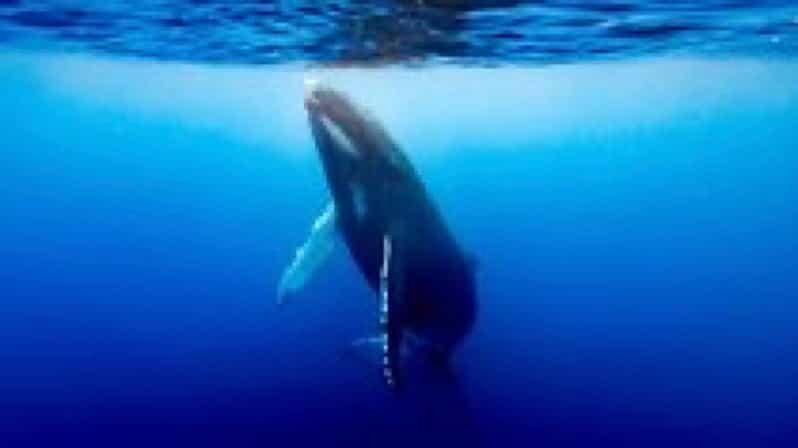
A humpback whale can appear beside the boat, then vanish beneath the surface. This five-hour trip searches Tahiti’s coastal waters for those encounters, with the chance to watch whales from the boat or enter the water when conditions allow. The whales set the terms, so swimming is never guaranteed.
I like two things here: the small-group format, which gives the guide room to manage water entries carefully, and the emphasis on respectful wildlife viewing, rather than chasing whales for a photo. Guides including Naea, Manu, Corto and Teva are praised for clear instructions and calm, attentive supervision.
The main caveat is that five hours on the water may bring sightings but no swim. There is also a practical group-size question: the activity is described as limited to six, but some departures have carried more people in separate groups. Confirm exactly what option you are booking and how many people will be aboard.
- Humpback season runs from July through November, when whales migrate through French Polynesia.
- The five-hour trip is a search, not a guaranteed swim. You may see whales from the boat without entering the water.
- Small groups matter. Water entry is limited, and a larger boat group can mean less time in the water for some people.
- Guides explain whale behavior and migration, as well as the importance of protecting marine life.
- Snorkeling gear, towels and light refreshments are included. Bring swimwear and reef-safe sunscreen.
- No cameras or GoPros in the water. The guide films instead, allowing you to focus on the encounter.
- A five-hour search along Tahiti’s coast
- When a whale appears, patience comes first
- Small groups, with one important booking detail
- What the guides contribute
- What to bring, and what stays on board
- Is 3 good value?
- Who will enjoy this tour most?
- Should you book?
- FAQ
- When does the whale tour operate?
- How long is the trip?
- Is swimming with whales guaranteed?
- What is the group size?
- What should I bring?
- Can I take a camera or GoPro into the water?
- Can I cancel if my plans change?
A five-hour search along Tahiti’s coast
 1 / 6
 2 / 6
 3 / 6
 4 / 6
 5 / 6
 6 / 6
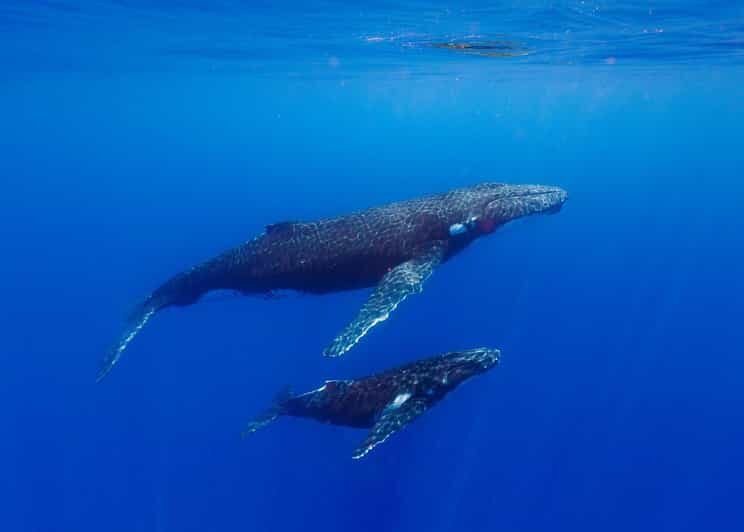
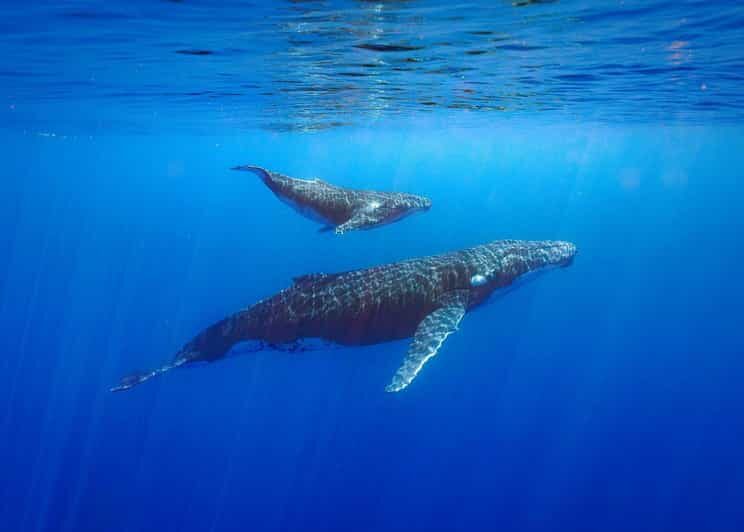
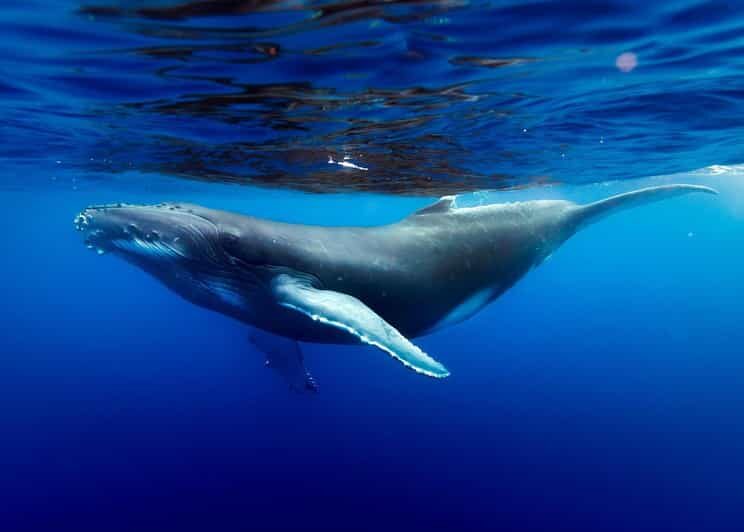
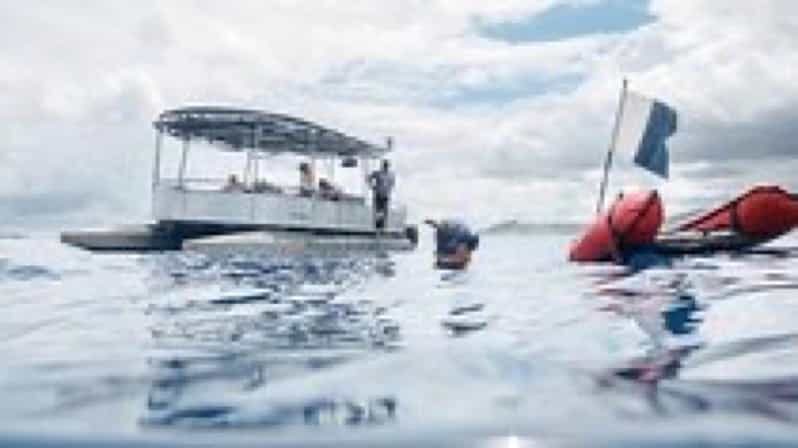
The tour begins with a safety briefing and an outline of the day. Then you head out along Tahiti’s coast, scanning for blows, fins and other signs of whales. The guide talks about humpback behavior, migration and conservation as the boat moves through the search area.
That search is part of the experience, not dead time before the main event. You are looking for wild animals, not arriving at a fixed viewing spot where whales are certain to appear. Some trips find whales early; others take longer. One account describes a swim opportunity arriving only about half an hour before the return, while others report seeing whales soon after departure. Go in ready for an outing that can unfold at its own pace.
The coastline is part of the appeal. Even when the boat is searching, you have a chance to take in the views of Tahiti’s coastal waters. The crew may also spot other marine life: accounts describe turtles, dolphins and, on one trip, a shark. These are possible extras, not a promised checklist.
The tour lasts five hours, so plan for a substantial stretch on the water. That gives the crew time to look for whales and assess their behavior, but it also means seasickness is a real consideration. The activity specifically advises against booking if you are prone to seasickness. If that applies to you, think carefully before committing.
You can check availability for your dates here:When a whale appears, patience comes first
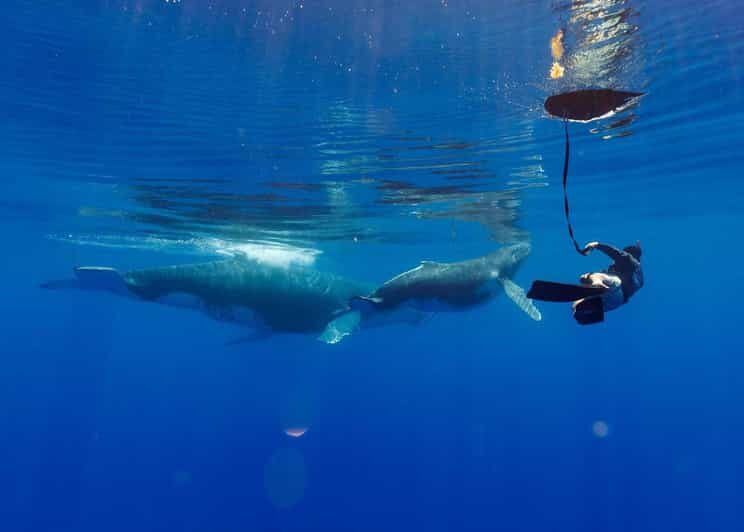
When the crew spots a whale, the boat approaches according to local rules and keeps a respectful distance. The guide watches how the animal behaves before deciding whether an in-water approach is appropriate. That restraint is central to the tour’s appeal: a close encounter is exciting, but it should not come at the whale’s expense.
You might see a whale surface, blow or breach from the boat. If the animal’s behavior and conditions permit, the guide may invite the group to enter the water for observation. There is no guarantee this will happen, or that the whales will stay nearby once you are in the water. Some outings allow several entries; on others, the crew may decide that swimming is not suitable.
This distinction is worth keeping clear when you book. The activity offers the chance to get in the water, not a guaranteed swim with a whale. One person’s idea of a successful trip may be a close view from the boat; another may be hoping for a long in-water encounter. The first is the dependable plan. Treat the second as a fortunate possibility.
If you do enter, follow the guide’s instructions at all times. The crew can bring you back aboard, or stop the in-water activity for the whole group, if people do not follow the rules. That may sound strict, but it is sensible when you are sharing the water with a large wild animal. The stated priority is safety, local regulations and the whale’s well-being, not getting a dramatic picture.
Small groups, with one important booking detail
The tour is marketed as a small-group outing, limited to six participants. A small group can make instructions easier to hear and help the guide manage each entry. It also suits people who want a more attentive outing than a crowded boat can offer.
There is, however, a detail to clarify before paying. The activity information refers to up to six people for underwater observation, and some descriptions distinguish between six in the water and two observing from the boat. But accounts from actual trips describe boats carrying eight, split into two groups. In at least one case, the first group had much more time to swim than the second because the boat needed to return.
That does not mean every departure is arranged this way, but it is a meaningful concern if swimming is your main reason for booking. Ask the operator how many people will be on your specific departure, whether everyone may enter the water, and how time is divided if the group is split. Also check that your selected ticket is the swimming option if that is what you want. One booking account describes confusion between boat-based viewing and swimming, so do not rely on a broad ticket title alone.
What the guides contribute
The guides and captains are a major part of the outing. Naea, Manu, Corto and Teva are among the names associated with trips, though the crew can vary. The strongest praise centers on clear safety instructions, patience with less confident swimmers, and a genuine concern for the animals.
That guidance matters especially if you feel nervous about entering open water. One person who was apprehensive about needing to swim quickly felt reassured by the guide, while another credited a guide with encouraging them to try after hesitation. Encouragement is useful; pressure is not. You should be able to stay on board if you do not feel comfortable, and the guide’s instructions should help you make a safe decision.
The trip is offered in English and French. A few accounts describe guides speaking more French than English, even when they still explained the activity to English-speaking participants. If you need detailed instructions in English, ask about language coverage when you book. Safety information should be clear to you before you enter the water.
What to bring, and what stays on board
Pack swimwear and sunscreen. The activity specifically recommends biodegradable sunscreen, a practical choice when you are entering the sea. Snorkeling gear and towels are included, along with light refreshments. Some trips have also offered drinks and fruit, but the listed inclusion is light refreshments, so do not count on a particular snack or beverage.
Keep your camera or GoPro for use on the boat. Cameras are not allowed in the water, and the guide will take videos. Accounts describe footage being shared after the trip, sometimes the next morning, but check with the crew rather than treating a particular delivery time as guaranteed. The rule is designed to keep attention on safety and the whales, not on filming.
Do not feed or touch marine life. Alcohol is also a reason for exclusion from the boat, and disrespectful behavior toward the crew, other participants or animals is not accepted. These are firm conditions, not optional suggestions.
If you cannot swim or are not comfortable in the water, the activity information says you will remain aboard and observe from there. At the same time, non-swimmers are listed among those for whom the tour is not suitable. If you are considering a boat-only visit, clarify with the operator whether that option is available and appropriate for you before booking. The tour is not suitable for children under four, and people in poor physical condition may also need to stay on board.
More Great Tours NearbyIs $113 good value?
At $113 per person for five hours, the price buys more than a short boat ride. You get a guided search, a small-group setting, snorkeling gear, towels and refreshments, plus the possibility of an unusual wildlife encounter. The guide’s knowledge of whale behavior and the crew’s judgment about when to approach are part of the value, too.
The price makes most sense if you value a careful, guided outing even when the whales remain at a distance. It is harder to justify if you are paying solely for a guaranteed swim or a particular photo. The animals decide whether an in-water encounter is possible, and the tour’s rules rightly put their welfare first.
There is also a difference between a six-person group and a larger party split for water entries. If you are paying for the swim opportunity, confirm the group arrangement before booking. A lower price is not much of a bargain if your group gets only a short turn in the water, or no turn at all.
The activity allows free cancellation up to 24 hours in advance, and you can reserve now and pay later. Check available departure times when choosing a date, particularly if you have a tight schedule. The season runs July through November, but sightings and swimming conditions are never assured on any one trip.
Who will enjoy this tour most?
This outing suits you if you are comfortable spending several hours at sea, can follow instructions, and care about seeing whales without demanding that they perform. Strong swimmers who are at ease in open water may be better placed to take part if an in-water opportunity arises. But even confident swimmers need to accept that the crew may decide against an entry.
It is also a good fit if you value ethical wildlife watching. The crew’s approach is described as cautious, with attention to local rules and the whales’ reactions. That can mean keeping a distance or ending the search without a swim. It is the right trade-off for responsible viewing, even if it is less thrilling than getting close.
Choose another outing if your main goal is social-media footage, if you are prone to seasickness, or if you cannot follow the guide’s directions. Cameras are not permitted in the water, and the operator explicitly asks people focused on making content to book elsewhere. This is a nature outing, not a staged photo session.
Should you book?
Book if you want a careful, five-hour search for humpbacks and can be happy with boat-based viewing if the whales do not allow a swim. At $113, the guided search, gear and small-group approach offer fair value for someone who sees the encounter as a privilege, not a guarantee.
Before booking, confirm the swimming option and the number of people on your departure. If you are uneasy in the water, seasick easily or need a guaranteed close encounter, this is not the right choice. If you can accept uncertainty and follow the crew’s lead, it could be a memorable way to see Tahiti’s marine life on the animals’ terms.
Tahiti: Whale Tour with Humpbacks
FAQ
When does the whale tour operate?
The tour is available from July through November, during the humpback migration season in French Polynesia.
How long is the trip?
The outing lasts five hours. Check the available starting times when selecting a date.
Is swimming with whales guaranteed?
No. You may see whales from the boat, but entering the water depends on whale behavior, conditions and the guide’s decision.
What is the group size?
The activity is described as limited to six participants, particularly for underwater observation. Since some departures have involved larger groups split into turns, confirm the headcount and water-entry arrangements for your departure.
What should I bring?
Bring swimwear and sunscreen. Biodegradable sunscreen is recommended. Snorkeling gear and towels are included.
Can I take a camera or GoPro into the water?
No. Cameras and GoPros are not allowed in the water, though you may use them on board. The guide takes videos.
Can I cancel if my plans change?
You can cancel up to 24 hours in advance for a full refund. The activity also offers a reserve-now, pay-later option.
You can check availability for your dates here: