Sarnath marks the place where Buddha gave his first sermon after enlightenment, and the site’s two main stops make that story tangible: the broad Dhamek Stupa outdoors and the Sarnath Museum’s celebrated sculpture collection. I like that this visit pairs a sacred place with the objects that help explain its long history.
I also like the freedom to visit at your own pace, with an optional private guide if you want more context. The main catch is timing: the museum is closed on Fridays, and the ticket is valid only for your selected date, so check your plans before booking.
Key points
- Dhamek Stupa marks a defining Buddhist moment: Buddha is said to have delivered his first sermon here.
- The museum holds India’s National Emblem: The Lion Capital of Ashoka is the best-known object in its collection.
- Admission covers both main sites: The ticket is for the Dhamek Stupa and Sarnath Archaeological Museum.
- A guide is optional: Choose one if you want help with Buddhist teachings, symbolism, and art.
- Plan around Friday: The museum is closed that day, even though the outdoor site is listed as open daily.
- The only posted rating needs context: It is 5 out of 5, but the accompanying comment is unsure whether the visit is worth it, so it is not clear praise.

👉 See our pick of the 25 Best Guided Tours In Varanasi
- Key points
- Why Sarnath matters beyond the stupa
- At the Dhamek Stupa, history in open air
- Inside the Sarnath Archaeological Museum
- Choosing the optional guide
- How much time to set aside
- What the price gets you
- Booking details worth checking
- Who should book this visit
- Should you book the Sarnath ticket?
- FAQ
- How long does the Sarnath visit take?
- What is included in the entry ticket?
- Is a guide included?
- When is the museum open?
- Do children need a ticket?
- Can I cancel the ticket or re-enter after leaving?
- The Best Of Varanasi!
- More Tickets in Varanasi
- More Tours in Varanasi
- More Tour Reviews in Varanasi
- Not for you? Here's more nearby things to do in Varanasi we have reviewed
Why Sarnath matters beyond the stupa
Sarnath lies just outside Varanasi and is one of the four holiest Buddhist sites in the world. Its importance comes from a particular event: after attaining enlightenment, Buddha delivered his first sermon here, beginning the teaching of the Dharma. That makes Sarnath more than an archaeological stop. For many people, it is a place of religious meaning and quiet reflection.
The visit brings together two different ways of understanding that history. At the Dhamek Stupa, you see a monumental structure set among the remains of monasteries. In the museum, you encounter carved works and relics from the Mauryan and Gupta periods, including the Lion Capital of Ashoka, which became India’s National Emblem.
That pairing is the real strength of the ticket. The stupa gives you a sense of place, while the museum offers objects that carry the artistic and political history of ancient India. Neither stop needs to be rushed, but together they make a compact visit of about one to two hours.
You can also read our reviews of more tours and experiences in Varanasi
At the Dhamek Stupa, history in open air
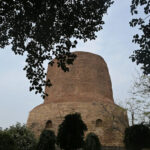
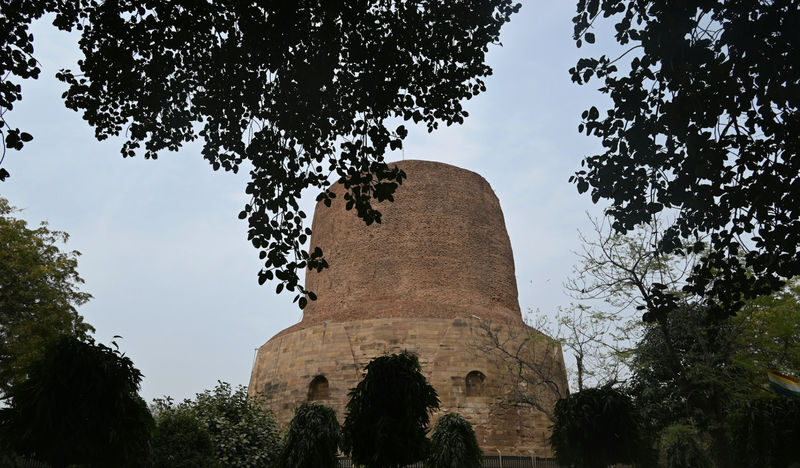
The Dhamek Stupa is the central outdoor sight included with admission. It is described as a massive cylindrical structure built around 500 CE to commemorate Buddha’s first sermon. Its scale is the point: rather than a small shrine or marker, it is a substantial monument in a setting that also includes gardens and the remains of ancient monasteries.
You can take in the stupa at your own pace. The grounds offer room to pause and reflect on the site’s religious importance, or to look more closely at the architecture and surrounding ruins. If you are visiting for Buddhist history, it is worth taking a moment to connect the physical monument with the event it commemorates. The site is not just an attractive stop near Varanasi; it marks the beginning of Buddha’s public teaching.
The information provided does not specify a guided route, a set order for the stops, or a detailed explanation at the stupa itself. If you want historical and symbolic detail, the optional private guide is the clearest way to add interpretation. Without one, you can still visit the site, but you may want to read a little about Buddha’s first sermon beforehand so the place has more context.
The gardens and ruins add to the sense that this is a larger archaeological area, not only one monument. Still, the ticket description names the Dhamek Stupa and museum as the included attractions. Do not assume it covers other sites around Sarnath unless your ticket specifically says so.
Inside the Sarnath Archaeological Museum
The museum gives the outdoor visit a second layer. Its collection includes sculptures and relics from the Mauryan and Gupta periods, with the Lion Capital of Ashoka as the main draw. The capital is especially significant because it is India’s National Emblem. Seeing it in the museum where it is housed gives the national symbol a clear historical setting.
For visitors interested in Indian art, the museum is more than a quick add-on. The objects help show how Buddhist ideas and artistic traditions developed across different periods. A guide can help explain the symbolism and styles, which is useful if you are not used to reading ancient sculpture. The activity description specifically frames the guide as a way to learn about Buddhist history, symbolism, and architecture.
The museum is closed on Fridays. That detail matters because the ticket combines admission to the museum and the stupa, but a Friday visit cannot include both in the usual way. The site’s general hours are listed as 8:00 AM to 5:00 PM daily, with the Friday museum closure as the exception. If the museum is a key reason for your visit, avoid Friday and confirm the current opening details before setting out.
The museum’s quiet, object-focused experience also contrasts with the open-air monument. It can be a welcome change if you are visiting in warm weather or want a closer look at the art. The exact facilities and time needed inside are not specified, so allow room in your schedule rather than treating the one-to-two-hour duration as a strict timetable.
Choosing the optional guide
A guide makes the most sense if you want more than a walk around the main sights. Sarnath brings together religious history, ancient architecture, and sculpture, and a guide can connect those subjects. The listed option is a private guide, but no guide name, language, or precise length of guided service is provided.
Be sure to distinguish the guide option from the entry ticket itself. The package details supplied describe an entry ticket for foreign access to the Dhamek Stupa and museum. The overview also refers to an optional private guide, but it does not spell out the guide’s price or availability in the entry-only package. Check the package you select before paying if guided interpretation is important to you.
If you are comfortable reading about the site on your own, the entry-only visit may be enough. The main events and places are clear: Buddha’s first sermon, the stupa built to commemorate it, and the museum’s Buddhist and ancient Indian art. A guide is likely to add the most value for visitors who want help understanding what they are seeing rather than simply seeing it.
How much time to set aside
The stated duration is one to two hours. That is a sensible window for visiting the two main attractions without turning Sarnath into an all-day commitment. If you like to pause at the stupa and take your time in the museum, plan toward the longer end. If you are making a brief stop, the visit can be more compact, though a hurried museum visit may leave little time to appreciate the collection.
The ticket does not include transport details. The meeting point is at Dhamekh Stupa on Dharmapala Road in Singhpur, Sarnath, outside Varanasi. You will need to arrange your own way there unless you have booked separate transport. Since the activity information gives an address rather than a pickup service, do not count on a vehicle being included.
The grounds and museum are best treated as one visit. Re-entry is not allowed after you leave the venue, so plan your time before exiting. If you are travelling with children, admission is free for ages 0 to 14, according to the ticket information.
You can also read our reviews of more guided tours in Varanasi





What the price gets you
The listed starting price is $5.50. For that entry-level amount, the main value is access to two significant places: the Dhamek Stupa and Sarnath Archaeological Museum. You are paying for a focused cultural visit, not a full-day tour with transport or a broad Varanasi itinerary.
That can be good value if you are already in or near Sarnath and want to see both the central monument and the museum. It is less of a complete solution if you need a ride from Varanasi, a guide, or a longer tour. The starting price may not cover every package option, so compare the selected ticket details carefully, especially if you expect a private guide.
The only available rating is 5 out of 5, but it comes with an uncertain comment rather than a clear endorsement. I would treat that as too little evidence to judge the experience by popularity. The stronger reason to book is the site’s importance and the practical convenience of admission to its two main attractions in one visit.
Booking details worth checking
The ticket is date-specific, and the voucher is valid only on the selected date, and time if one applies. It cannot be cancelled or refunded. That makes it sensible to book once your plans are firm, particularly if your Varanasi schedule is tight.
After booking, you receive an official QR code ticket to scan at the monument entry gate. There is no need to collect a physical ticket. Keep the code accessible on your phone, and check that you have selected the right date and package before confirming.
The activity is offered for booking as soon as tomorrow, with instant confirmation. Those features can help if you are planning a short-notice visit, but they do not change the date restriction or no-refund rule. The museum’s Friday closure is the most important scheduling detail to check before selecting a day.
Who should book this visit
I would put Sarnath high on the list for anyone interested in Buddhism, Indian history, archaeology, or religious art. Its importance is direct and specific: Buddha’s first sermon is associated with this site, and the museum houses the Lion Capital of Ashoka. You do not need to be a Buddhist to find those connections meaningful.
It also suits someone who wants a focused excursion from Varanasi rather than a full-day guided program. The one-to-two-hour duration leaves room for other plans, while the option of a private guide gives you a way to add context if that is your preference.
You might find the visit less rewarding if you expect a tightly planned tour with included transportation, a named guide, or a lot of entertainment. Those details are not provided. And if you are only mildly interested in the site’s history, the single, ambiguous rating offers little reassurance either way. In that case, decide based on the importance of the stupa and museum to your own interests.
Should you book the Sarnath ticket?
Book it if you want to see the place where Buddha’s first sermon is remembered and the museum that houses India’s National Emblem. The combination of an open-air stupa and a major sculpture collection makes this a worthwhile, compact cultural visit, especially if you are already staying in Varanasi.
Choose a date other than Friday if you want the museum, and check whether your chosen package includes a guide before expecting one. At a starting price of $5.50, the entry ticket can offer good value for the two named sites, but it is not a transport package or a full guided tour. If those limits suit your plans, Sarnath is an easy addition with real historical weight.
Sarnath Entry Ticket (Dhamek Stupa + Museum) with Optional Guide
“I feel like it's okay to go or not go 😂 I might be a weirdo! I haven't figured it out yet 😳”
FAQ
How long does the Sarnath visit take?
The stated duration is 1 to 2 hours.
What is included in the entry ticket?
Admission to the Dhamek Stupa and the Sarnath Archaeological Museum is included.
Is a guide included?
A private guide is optional. The entry-ticket package details describe admission, so check the package selected to confirm whether a guide is included.
When is the museum open?
The general opening hours are listed as 8:00 AM to 5:00 PM daily, but the museum is closed on Fridays.
Do children need a ticket?
Admission is free for children aged 0 to 14.
Can I cancel the ticket or re-enter after leaving?
No cancellations or refunds are available, and re-entry is not allowed after you leave the venue.