
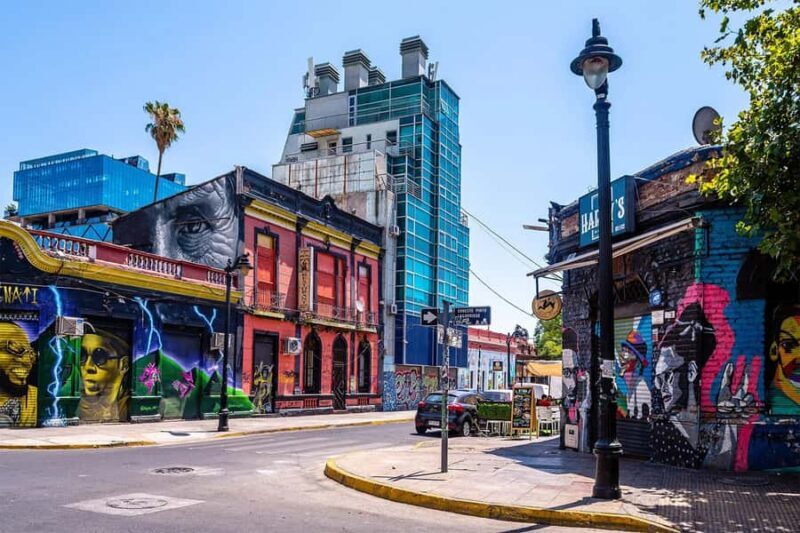
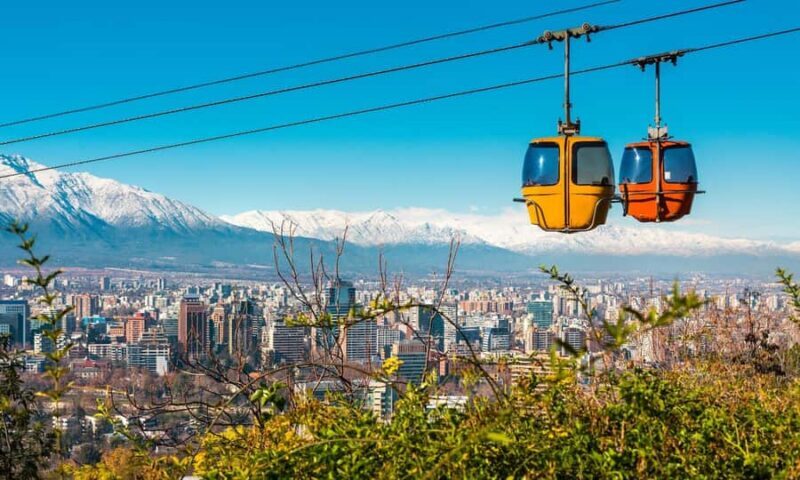
The best part of this Santiago outing is the two-part ride up San Cristóbal Hill: the historic funicular climbs to the summit, then the cable car glides back down with broad views over the city. Between the rides, you walk through Bellavista, a neighborhood of eateries, artisan shops, and colorful street art.
I like the route’s useful mix of city and hilltop, and the small-group limit of 10 makes it easier to ask your guide about local life and get practical food tips. Guides such as Esteban, Nacha, Felipe, and Sebastian have been singled out for clear explanations, warmth, and help with recommendations.
The main trade-off is the walking: expect uneven ground and stairs on the way to the Virgin statue, and the tour is not suitable for wheelchair users or people with mobility impairments. It is also an outdoor outing in any weather, so bring water, sun protection, and shoes you can walk in.
- Key points to know
- From Baquedano into Bellavista
- Patio Bellavista and the approach to La Chascona
- The funicular climb to San Cristóbal Hill
- The cable car descent and Sculpture Park
- What buys, and who gets the most from it
- What to bring and how to prepare
- Should you book this Santiago tour?
- FAQ
- How long is the tour?
- What is included in the price?
- Where does the tour start?
- Where does the tour finish?
- Does the tour go inside La Chascona?
- Is the tour suitable for people with mobility impairments?
- What should I bring?
- Can I bring luggage or a stroller?
- More Walking Tours in Santiago Chile
- More Tours in Santiago Chile
- More Tour Reviews in Santiago Chile
- Not for you? Here's more nearby things to do in Santiago Chile we have reviewed
Key points to know
 1 / 8
 2 / 8
 3 / 8
 4 / 8
 5 / 8
 6 / 8
 7 / 8
 8 / 8
- Ride up, then down: The funicular takes you toward San Cristóbal’s summit; the cable car returns you through Metropolitan Park.
- Bellavista is part of the experience: Walk its streets, stop at Patio Bellavista, and pass Pablo Neruda’s former home, La Chascona.
- The summit has more than a view: You get time to explore, visit the Virgin of the Immaculate Conception sanctuary, and try mote con huesillos.
- Expect a small group: The tour is limited to 10 people, with a local guide leading the walk and rides.
- Plan for 150 minutes outdoors: Uneven paths, stairs, sun, and changing weather make comfortable shoes and water worthwhile.
- The $59 price includes the main rides: The funicular, cable car, guide, and local treat are part of the tour.
From Baquedano into Bellavista
The tour begins outside Teatro Universidad de Chile, near Baquedano Metro Station. If you arrive by subway, use Line 1 and exit through B or C. The meeting address is Av. Providencia 43, and your guide carries a blue flag.
From there, the route crosses Plaza Italia and the Alameda before reaching the Mapocho River and Bellavista. This opening walk gives you a quick sense of how the city shifts from central transport hubs into a neighborhood known for restaurants, small shops, and art. It is not a long history walk through downtown Santiago, so if major civic buildings are your priority, you will want another outing for those.
Bellavista gives the tour its street-level character. Your guide points out local details as you walk, rather than keeping the experience focused only on the hill. That can be especially useful early in a visit: you can ask about places to eat, areas to explore, and how to make the most of your remaining time.
The guide is an important part of the value here. Recent tours have been led by guides including Esteban, Nacha, Felipe, Sebastian, Emanuel, and Ignacia. People have especially valued their clear English, local stories, and practical recommendations. The best guides also adjust the pace and find shade on very hot days, an appreciated touch on a mostly outdoor route.
You can also read our reviews of more walking tours in Santiago Chile

Patio Bellavista and the approach to La Chascona
Patio Bellavista is a brief stop in the neighborhood, with time to look around and take photos. It is a convenient place to get a sense of Bellavista’s food and shopping scene, though the tour does not promise a meal or a long browsing break. If a restaurant catches your eye, ask your guide for a recommendation and consider returning after the tour.
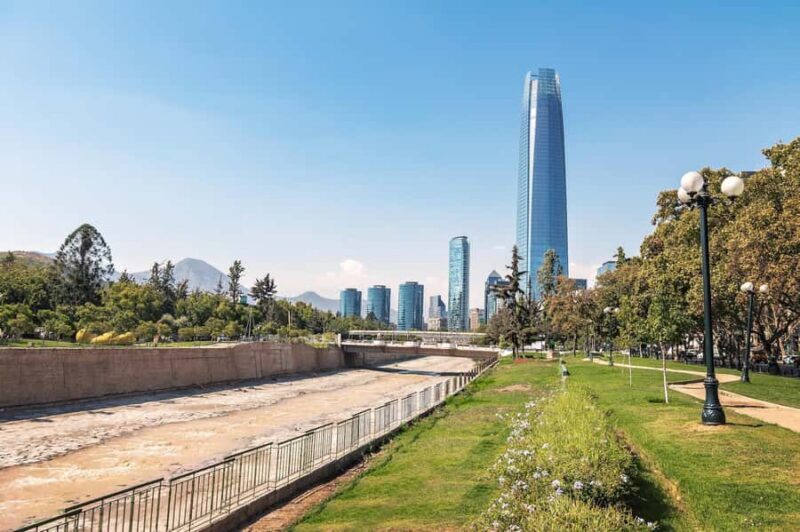
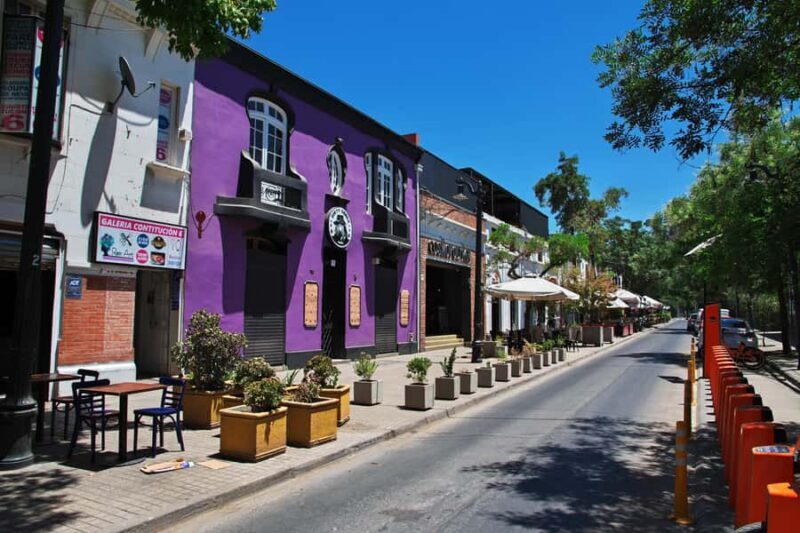
The route continues along Constitución Street, where eateries offer traditional Chilean seafood, then through Camilo Mori Square. Boutique hotels and public art add a quieter note between the more active streets. This stretch is part of the appeal: you get more than a quick transfer from the metro to the funicular.
La Chascona, the former home of poet Pablo Neruda, is included as a guided pass-by. That distinction matters if you are hoping to tour the house museum’s interior. The tour introduces the site and its connection to Neruda, but does not include an inside visit. You can plan a separate museum visit if seeing the rooms is a priority.
The funicular climb to San Cristóbal Hill
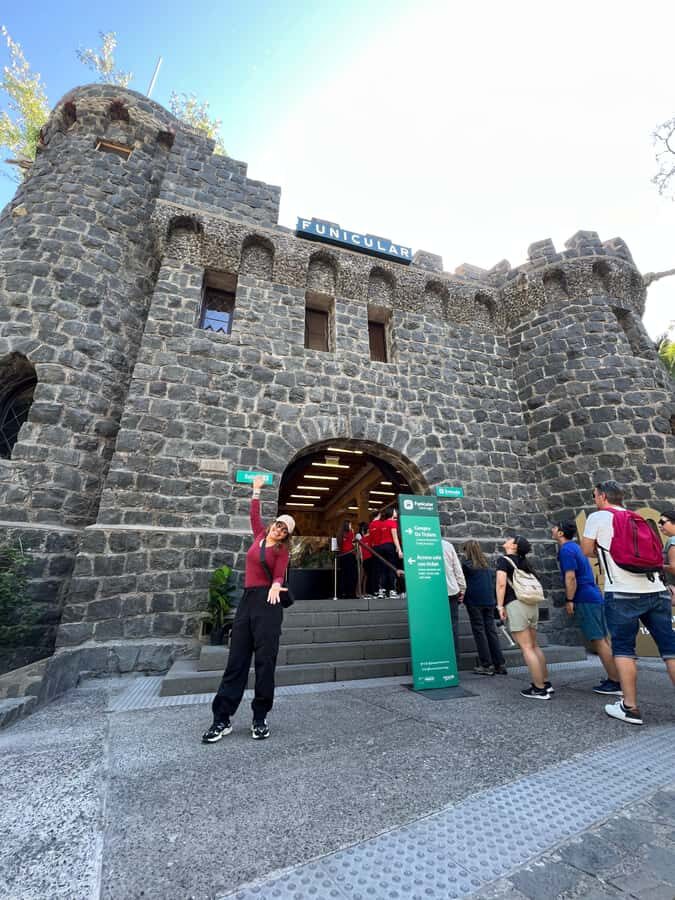
At Metropolitan Park, the tour boards the historic funicular for the ascent. The ride changes the pace from neighborhood walking to a climb through the park, and the views begin to open up as the city drops away below. Skip-the-line access is included through a separate entrance, which saves time at this popular stop.
The ride is a highlight in its own right, but it is also practical. San Cristóbal is a large hill, and the funicular gets you up without making the entire climb on foot. You still need to walk at the top, including stairs to reach the statue, so it does not remove the physical demands altogether.
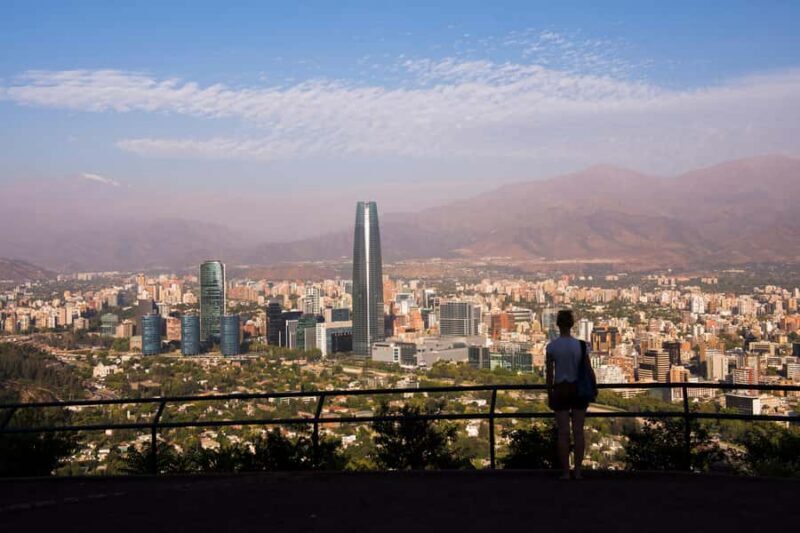
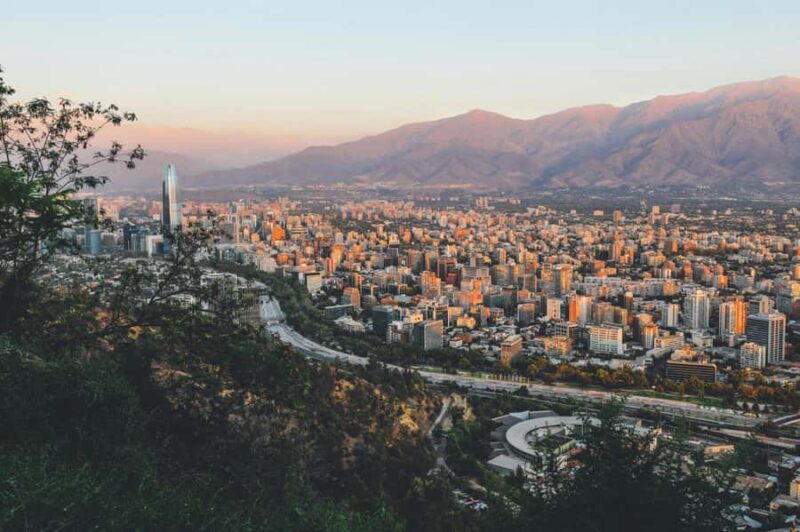
The tour allows a break at Cerro San Cristóbal for photos and time to take in the view. On clear days, the wide outlook over Santiago and the surrounding mountains is the main payoff. Visibility can depend on weather, so keep expectations sensible: the route offers several viewpoints, but no guide can control haze or cloud.
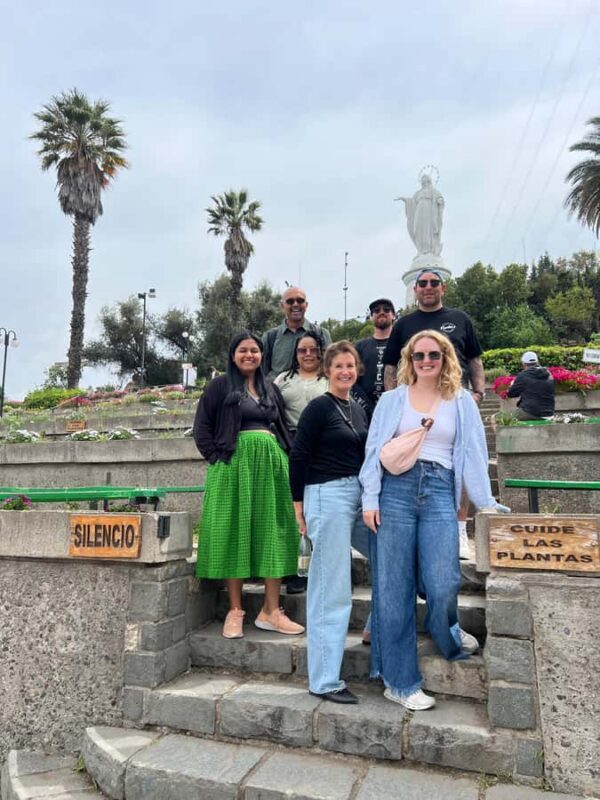
At the summit, you can visit the Virgin of the Immaculate Conception sanctuary. The statue is both a landmark and a religious site, and your guide provides context before giving you time to explore. The walk up to the statue involves stairs and uneven terrain, so take it at your own pace. If you are uneasy with heights, note that the hilltop setting and cable car may not be a comfortable fit.
A serving of mote con huesillos is included as a local Chilean treat. It is a small but welcome cultural detail, especially if you want to try something beyond the usual café stop. The summit break also gives you room to rest before the next ride.
The cable car descent and Sculpture Park
From Oasis station, the group boards the cable car for the descent through the park. This is the tour’s other signature ride, and its elevated route gives you a different view from the funicular: a broad sweep over Santiago, with the hills and city spread below. It is a calmer way to finish the uphill portion, though anyone afraid of heights should weigh that against the appeal of the views.
The cable car ride is included in the $59 price, as is the funicular. That makes the cost easier to assess than a walking tour that leaves both transport fares to you. You are paying for the two rides, a guided neighborhood walk, the summit visit, and the local treat in one compact outing.
The tour ends near Pedro de Valdivia, at Teatro Oriente, after a walk through a quieter residential area with English-style gardens. The final stop is the Sculpture Park Museum, where the guide introduces contemporary Chilean art. It offers a change of scene after the hill and gives the route an art-focused finish, rather than ending as soon as you step off the cable car.
What $59 buys, and who gets the most from it
At $59 per person, this is a good-value choice if you want the hilltop rides and a guided introduction to central Santiago in one go. The included funicular and cable car are major parts of the experience, and the guide adds local context in Bellavista, at La Chascona, and on San Cristóbal. Food and shopping recommendations are useful extras if you have more time in the city.
The small-group cap of 10 is another plus. A compact group can make it easier to hear explanations, ask questions, and move through the stops without feeling like you are following a crowd. Groups may be smaller than the stated maximum, but the cap itself is not a promise of a private tour.
The advertised duration is 150 minutes, or two and a half hours. The route covers several neighborhoods, rides, and stops, so plan around that full block rather than trying to squeeze in another timed activity immediately afterward. Some outings can feel longer when there is time for photos or questions, so keep your schedule flexible.
This is a particularly useful first-day activity. You get an overview of Bellavista and San Cristóbal, then leave with suggestions for restaurants, shopping, and other things to do. If you have only one half-day in Santiago, the tour brings together several distinct parts of the city without requiring you to work out the route and transport on your own.
It is less suited to anyone seeking a slow, indoor-focused visit or a deep exploration of Neruda’s home. You pass La Chascona rather than touring inside, and the tour is mainly outdoors. It also involves stairs and uneven ground, and is not suitable for wheelchair users or people with mobility impairments.


What to bring and how to prepare
Wear comfortable walking shoes. The walk includes uneven terrain and stair climbing to the statue, and there is enough moving around that sandals or stiff shoes can make the outing less pleasant. Bring water, sunscreen, a sun hat, and a camera. The tour runs in any weather, so dress for the conditions rather than assuming the hill will be cool or sheltered.
Leave large bags and strollers behind. Oversize luggage and large bags are not allowed, and the route is not suitable for baby strollers. The activity is listed as an English-language tour, while the guide service is also described as operating in Portuguese and Spanish. If you need a language other than English, check availability before booking.
The meeting point is easy to locate if you use the metro: leave Baquedano station through exit B or C and look for Teatro Universidad de Chile outside the station. Your guide will be holding a blue flag. At the end, the group finishes near Teatro Oriente, so note that the start and finish are not the same place.
Should you book this Santiago tour?
Book it if you want a compact, guided introduction to Bellavista and San Cristóbal, especially if the funicular and cable car are high on your list. The combination of neighborhood walking, a summit visit, and sweeping city views gives you a useful overview, while the small group and local guide can make the route feel personal. The strongest value is in having both hill rides and the walk bundled together.
Skip it if you need step-free access, dislike heights, or want an interior tour of La Chascona. For most first-time visitors who are comfortable walking and want to see Santiago from above as well as at street level, it is a practical half-day choice. Book with enough room afterward to follow up on the restaurant and city tips you collect along the way.
Santiago: Cable Car, Funicular & San Cristóbal Walking Tour
FAQ
How long is the tour?
The tour is listed as 150 minutes, or two and a half hours. Keep some flexibility in your schedule for the walking stops and summit break.
What is included in the $59 price?
The price includes a certified local guide, skip-the-line funicular access, the cable car ride, a serving of mote con huesillos, the guided walk, and time to visit the sanctuary and summit area.
Where does the tour start?
It starts in front of Teatro Universidad de Chile, outside Baquedano Subway Station, at Av. Providencia 43. Look for a guide holding a blue flag.
Where does the tour finish?
The tour finishes at Teatro Oriente, after the cable car descent and a walk that includes the Sculpture Park.
Does the tour go inside La Chascona?
No interior visit is listed. The guide passes by Pablo Neruda’s former home and explains its connection to the poet.
Is the tour suitable for people with mobility impairments?
No. The route includes uneven terrain and stairs to the statue summit, and it is not suitable for wheelchair users or people with mobility impairments.
What should I bring?
Bring comfortable shoes, a sun hat, sunscreen, water, and a camera. Dress for the weather, since the tour runs in all conditions and is mainly outdoors.
Can I bring luggage or a stroller?
No. Oversize luggage, large bags, and baby strollers are not allowed.
You can check availability for your dates here: