The best part of this San Diego cruise may be the dolphins: they can race alongside the boat, sometimes in great numbers, while whales surface farther out. Departing from Mission Bay gets you to the Pacific in about 10 minutes, leaving more of a three-hour trip for wildlife watching.
I like two things in particular: naturalist-led commentary gives the sightings context, and the family-run crew has been praised for practical care as well as friendly service. The boat also has indoor and outdoor seating, restrooms, and a galley and bar, so you can settle in rather than stand on deck for the whole trip.
The trade-off is simple: wildlife is wild, and a whale sighting is never assured. Some trips bring close encounters with dolphins and whales; on others, the open water itself is the main event. If no whales or dolphins appear, you receive a free return pass.
- Key points before you book
- From Mission Bay to the open Pacific
- Dolphins, whales, and the surprises between them
- Naturalist commentary that adds context
- A boat built for a few hours offshore
- What the fare gets you
- Packing, timing, and a few sensible rules
- Who will enjoy this cruise most
- Should you book the Mission Bay cruise?
- FAQ
- How long is the whale-watching cruise?
- Where do I check in?
- Is parking included?
- Are food and drinks included?
- What happens if no whales or dolphins are seen?
- Is the cruise suitable for people who get seasick or use a wheelchair?
- The Best Of San Diego!
- More Boat Tours & Cruises in San Diego
- More Tours in San Diego
- More Tour Reviews in San Diego
- Not for you? Here's more nearby things to do in San Diego we have reviewed
Key points before you book
 1 / 3
 2 / 3
 3 / 3
- Quick passage from Mission Bay: The boat reaches the open Pacific in about 10 minutes, giving you more time to search offshore.
- Different trip lengths by season: Expect about 2 to 2.5 hours from December through February, and 2.5 to 3 hours from March through November.
- Dolphins can be the headline: Sightings have included hundreds of common dolphins, as well as bottlenose and Risso’s dolphins.
- Wildlife variety is possible: Whales, sea lions, and seabirds have all been spotted, but no sighting is guaranteed.
- Comforts are onboard: Choose indoor or outdoor seating, use the restrooms, or buy food and drinks from the galley and bar.
- Plan to arrive early: Check in 45 minutes before departure and use the free parking on Quivira Road.
👉 See our pick of the 15 Best Guided Tours In San Diego
From Mission Bay to the open Pacific
Your trip starts at the Mission Bay ticket booth, a gray shed with a blue awning facing the water, between H2O Jet Ski Rentals and the Fish & Chips restaurant. Check in 45 minutes before departure to complete the process and get your boarding pass. That early arrival is useful, not fussy: Mission Bay can get busy on summer weekends and holidays, so leave room for traffic and parking.
The main geographic advantage is the short run to open water. In about 10 minutes, you leave the bay behind and begin scanning the Pacific. That means less time spent motoring through sheltered water and more of the outing devoted to looking for wildlife.
The cruise lasts about two to three hours, depending on the time of year and conditions. Winter trips, from December through February, generally run about two to two and a half hours. From March through November, allow about two and a half to three hours. Check the departure details when booking, since the exact start time depends on availability.
Once offshore, the captain and crew search for signs of activity. A spout on the horizon can lead to a whale sighting, while a pod of dolphins may appear close to the boat. There is no fixed wildlife route or guaranteed sequence of encounters. That uncertainty is part of the outing, but it also means you should not treat a whale as a scheduled attraction.
You can also read our reviews of more boat tours in San Diego
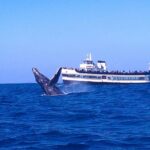
Dolphins, whales, and the surprises between them
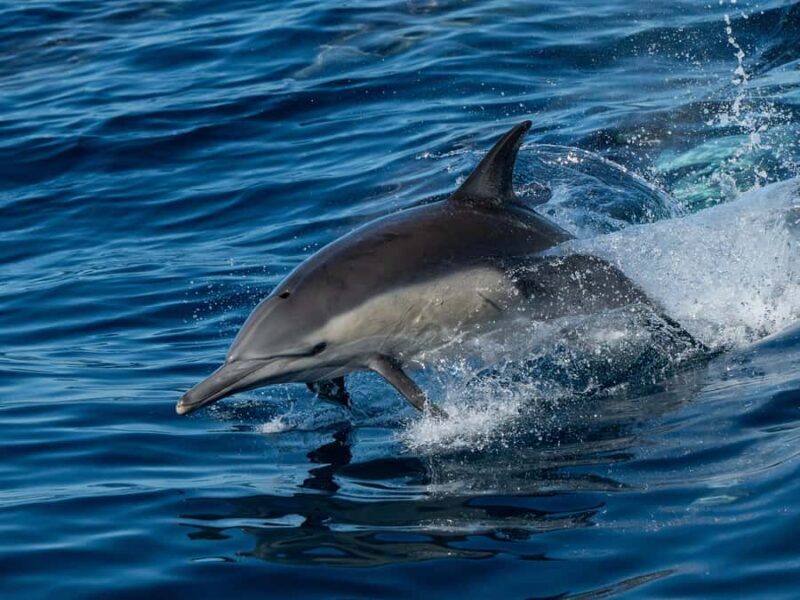
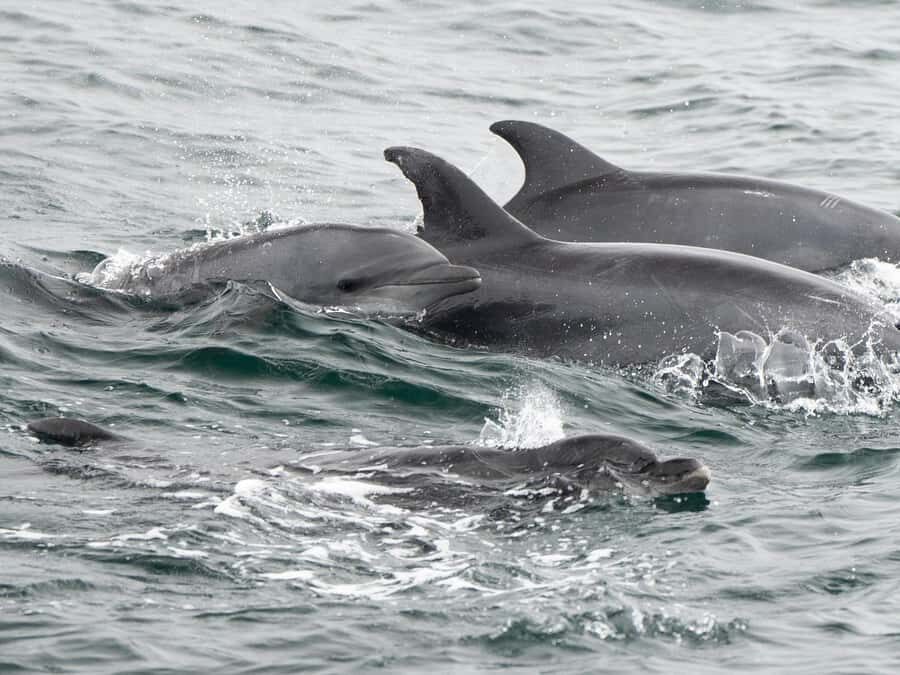
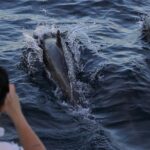
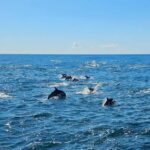
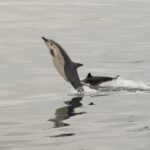
Dolphins are a strong possibility on this cruise, and sometimes the numbers are striking. Sightings have included hundreds of common dolphins, with bottlenose and Risso’s dolphins also seen. On one trip, a large group of common dolphins gathered around a bait ball of anchovies, alongside pelicans, sea lions, terns, skuas, and gulls. That kind of feeding activity is thrilling, but it depends on what the animals are doing that day.
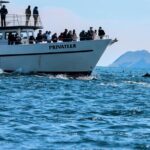
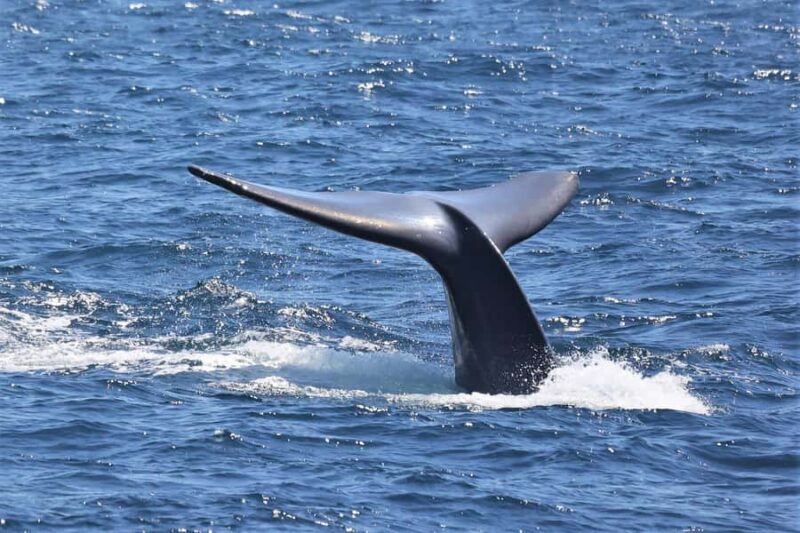
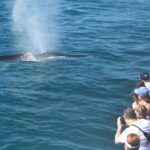
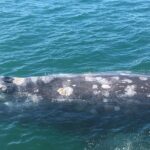
Whales are the bigger prize for many people, but species and sightings vary. Gray whales have been seen, along with fin, humpback, minke, and blue whales. Orcas have also appeared, though you should consider any particular species an exciting possibility, not an expectation. A few passengers may spend the whole trip watching dolphins, birds, and sea lions instead.
Keep an eye on the water even when the boat is not beside a whale. Seabirds can gather where fish are active, and sea lions may appear in the same areas. In one memorable encounter, dolphins and several kinds of birds fed around a bait ball. The wildlife may arrive in a rush, then disappear just as quickly, so it pays to keep looking rather than waiting for a cue from the guide.
If the crew does not find any whales or dolphins, you receive a free return pass. That offers some reassurance, but it does not make a sighting certain on a later trip. I would book for the chance to see marine life and for the time on the ocean, not as a guaranteed whale encounter.
Naturalist commentary that adds context
Live commentary is included, and the guide helps turn a distant spout or a passing pod into more than a quick photo opportunity. The crew has included guides such as Greg, who shared information during a trip, and marine biologists such as Rachel, whose explanations and care were appreciated by passengers. The specific guide on your departure may differ.
The commentary can cover the wildlife being spotted and the coastline the boat passes. That mix is useful when animals are scarce, since there may be stretches of open water between sightings. If you are keen to hear more about local marine life, ask questions when the crew is available. One passenger wished for more narration during the search, while others valued the guide’s explanations and answers. The amount of commentary may not feel constant throughout the trip.
The most rewarding moments often come when a guide or crew member points out something you might otherwise miss. A whale’s back or tail may appear only briefly. A dolphin pod can move quickly, and the animals are not there to pose. Listen for directions, watch the water, and have your camera ready without letting the screen take over the whole experience.
This is wildlife viewing, not animal interaction. You are there to observe, and touching or riding animals is not allowed. That boundary is both practical and respectful: the animals set the terms of the encounter.
A boat built for a few hours offshore
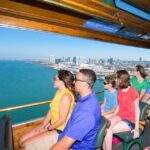
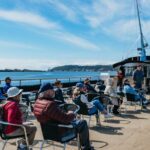
The boat offers indoor and outdoor seating, giving you a choice when the weather or sea spray makes one area more comfortable than another. There are restrooms onboard, plus a full galley and bar where you can buy refreshments. Snacks, soda, coffee, and tea are available for purchase, and alcoholic drinks can be bought after the boat is three miles offshore.
That setup matters on a trip that can last close to three hours. You can step inside for a break, sit down between sightings, or buy something to eat rather than packing a full meal. The cruise includes the boat trip and live commentary, but food and drinks are not included in the $70 price.
The crew’s hands-on care is another part of the experience. Passengers have described crew members answering questions and helping people feel more comfortable. One crew member, Melissa, helped a passenger who became seasick with peppermints and ginger ale; Rachel was also praised for looking after people prone to motion sickness. That is kind service, but it is not a substitute for preparation if you know you get seasick.
The boat is not suitable for wheelchair users, and the trip may be uncomfortable if you are prone to seasickness. If motion affects you, consider taking your usual precautions before boarding. One passenger who typically felt sick on boats reported doing well with Rachel’s help, but you should not count on the same result or rely on crew assistance as your only plan.
More Great Tours NearbyWhat the $70 fare gets you
At $70 per person, the fare buys a three-hour wildlife search at the longer end of the seasonal range, with shorter winter trips generally lasting two to two and a half hours. It includes the cruise and live commentary. Free parking is available on Quivira Road, which keeps the basic cost down if you can use that parking area.
The value rests on more than the number of minutes underway. You get a short transit from Mission Bay to the ocean, a naturalist to explain what you see, and the chance to watch several kinds of marine life in their own environment. When dolphins surround the boat or a whale surfaces nearby, the outing can be a standout part of a San Diego visit. On a quiet day, the value is less obvious, especially if you came expecting a close whale sighting.
Food and drinks cost extra, and any parking outside the free Quivira Road area is not covered. Bring those costs into your plans if you want refreshments or need a different parking option. The free return pass if no whales or dolphins are seen also softens the risk, though it may be of limited use if you are visiting San Diego only briefly.
I see this as a fair price for a guided ocean outing, provided you accept the uncertainty that comes with wildlife. It is better value for someone who enjoys being at sea and watching the whole scene, not just someone hoping to tick off a single species.
You can also read our reviews of more whale watching tours in San Diego
Packing, timing, and a few sensible rules
Wear comfortable shoes and bring sunscreen and a jacket. Even if conditions feel mild before boarding, you will be out on the water for hours, so having a layer to put on is a sensible choice. Bring a signed waiver, as it is listed among the items required for the trip.
Tours operate rain or shine, but poor sea conditions can lead to a cancellation or rescheduling for safety. That distinction matters: ordinary rain does not automatically stop the trip, but the crew may change plans if conditions at sea are unsafe.
Leave oversized luggage behind. Smoking, vaping, drones, glass objects, alcohol and drugs, and pets are not allowed; assistance dogs are permitted. The rule against touching animals applies throughout the trip.
You can cancel up to 24 hours in advance for a full refund, and the reserve-now, pay-later option lets you hold a place without paying immediately. If you are booking around a busy weekend or holiday, allow extra time to reach the dock and park. Check-in is 45 minutes before departure, and arriving close to sailing time risks turning a relaxed start into a hurried one.
Who will enjoy this cruise most
This trip suits families, couples, and wildlife fans who are happy to spend a few hours watching the sea. The boat has indoor and outdoor seating, and children can find the action engaging when dolphins are near. Even without whales, the open-water setting, birds, and sea lions can give the outing plenty to look at.
It is a good fit if you enjoy learning as you go. The English-speaking guide offers live commentary, and you can ask questions about the wildlife. It also suits visitors who want a locally run operation and value a crew that pays attention to passenger comfort.
It is less suitable if you need wheelchair access, have a strong tendency toward seasickness, or want a tightly scheduled attraction with a guaranteed payoff. A whale-watching trip involves searching, waiting, and keeping your eyes on the water. You may see a whale within moments, or spend much of the ride enjoying dolphins and seabirds instead.
Should you book the Mission Bay cruise?
Book it if you want a practical way to get offshore, enjoy naturalist commentary, and give yourself a chance to see whales, dolphins, and other marine life. The quick exit from Mission Bay, onboard restrooms, indoor and outdoor seating, and free Quivira Road parking all make the outing easier to manage.
Skip it if you would be disappointed without a whale sighting or if rough water would spoil your day. The free return pass helps if no whales or dolphins appear, but it cannot promise a particular species or close encounter. Go with open expectations, bring a jacket and sunscreen, and treat the dolphins, birds, and time on the Pacific as part of the reward.
San Diego: Whale Watching & Dolphin Cruise
FAQ
How long is the whale-watching cruise?
The trip lasts about two to three hours. Winter departures from December through February generally run about two to two and a half hours, while trips from March through November usually last about two and a half to three hours.
Where do I check in?
Check in at the ticket booth on Quivira Road, a gray shed with a blue awning facing the water between H2O Jet Ski Rentals and the Fish & Chips restaurant. Arrive 45 minutes before departure.
Is parking included?
Free parking is available on Quivira Road. Other parking fees are not included, so use the specified area if you want to park for free.
Are food and drinks included?
No. Snacks, soda, coffee, tea, and other refreshments are available to buy from the onboard galley and bar. Alcoholic drinks are available for purchase after the boat is three miles offshore.
What happens if no whales or dolphins are seen?
You receive a free return pass if the trip does not spot whales or dolphins. Wildlife sightings vary, so a particular species is never guaranteed.
Is the cruise suitable for people who get seasick or use a wheelchair?
The trip is not suitable for wheelchair users or people prone to seasickness. If you are susceptible to motion sickness, plan ahead; crew members may be able to offer help, but you should not rely on that alone.
You can check availability for your dates here: