At Purple Mountain Observatory, astronomy is not tucked away in a modern science center. It sits in a working research facility on Zijin Mountain, where Ming and Qing dynasty instruments share the visit with a German-made telescope from 1934. That mix makes this a distinctive stop in Nanjing: part observatory, part heritage site, and part hilltop lookout.
I like two things in particular. The old instruments give Chinese astronomy a tangible presence, while the solar chromosphere telescope offers a chance to see solar flares when conditions are right. I also like that the admission price starts at $3.65, making this a modest-cost cultural outing rather than a major-ticket commitment.
The main consideration is the weather. Clouds can spoil the solar viewing, and fog can hide the city view; rain also makes the roads slippery. This is a research facility, not a loud, hands-on amusement attraction, so you’ll get more from it if you enjoy looking closely and keeping a respectful quiet.
- What to know before you go
- A hilltop observatory with two sides
- Start with the instruments
- The 60-centimeter telescope from 1934
- A stop at the Astronomical History Exhibition Hall
- Solar viewing, with a clear-weather caveat
- Tianbao City and the view over Nanjing
- Planning your visit and choosing a date
- Is the .65 starting price good value?
- Who will get the most from this visit?
- Should you book Purple Mountain Observatory?
- FAQ
- What does the Purple Mountain Observatory ticket include?
- When is the observatory open?
- Can I see solar flares?
- What identification do I need to enter?
- Which children and seniors are exempt from admission fees?
- Can I cancel or reschedule my ticket?
- The Best Of Nanjing!
- More Tours in Nanjing
- More Tour Reviews in Nanjing
- Not for you? Here's more nearby things to do in Nanjing we have reviewed
What to know before you go
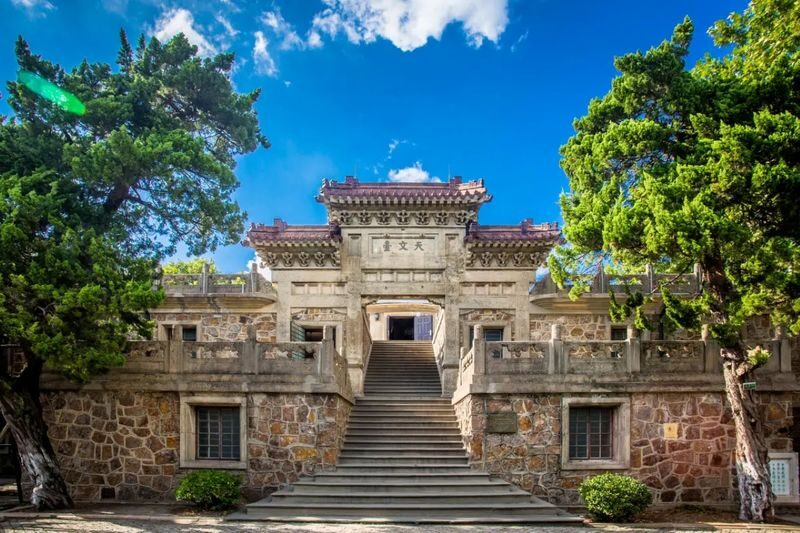
- Ming and Qing instruments: See historic armillary spheres, simplified armillary spheres, celestial globes, and other instruments.
- A 1934 German telescope: The 60-centimeter reflecting telescope offers a striking link between the observatory’s historic collection and modern astronomy.
- Solar viewing depends on weather: The solar chromosphere telescope may show solar flares when conditions are favorable.
- Tianbao City brings the city into view: Climb up for a panoramic look over Nanjing, though fog can limit visibility.
- This is a quiet research site: Keep your voice down and do not climb on the astronomical instruments.
- The ticket covers entry only: Transport, meals, personal insurance, and other personal or on-site expenses are not included.

👉 See our pick of the 9 Best Spa And Hot Springs Experiences In Nanjing
A hilltop observatory with two sides
Purple Mountain Observatory is on the Third Peak of Zijin Mountain, in Xuanwu District, Nanjing. It is described as the cradle of modern Chinese astronomy, and its status as a national key cultural relics protection unit gives the visit weight beyond the displays themselves. The site is also among China’s first group of 20th-century architectural heritage sites.
That combination matters when you arrive. You are not simply looking at old equipment behind glass; you are visiting a place where scientific work, public education, and architectural history meet. The observatory’s setting on the mountain adds another dimension, with Tianbao City providing a high point from which to look across Nanjing.
This is an admission-ticket experience, not a guided tour with a named guide or a fixed group itinerary. You can expect to enter the Purple Mountain Campus and see its listed attractions, but the ticket does not include transportation, dining, entertainment facilities, or other expenses. If you want a guide or a ride to the site, those arrangements are separate.
You can also read our reviews of more tours and experiences in Nanjing.


Start with the instruments
The collection of ancient astronomical instruments is the clearest reason to make the trip. Armillary spheres, simplified armillary spheres, and celestial globes give you a chance to see how astronomers mapped the heavens before today’s digital tools. Their size and physical detail can make the history easier to grasp than a wall of dates and diagrams.
I’d take time to look at how each object is built and what its shape suggests about observing the sky. The instruments are not there for climbing or handling, and the site specifically asks you not to climb on them. That rule is worth taking seriously: these are valuable cultural objects, and the observatory remains a research facility.
The setting makes the collection especially useful for families or anyone curious about how astronomy developed in China. You can connect the instruments with the idea of careful observation across generations, rather than treating them as decorative relics. Still, if you want a highly interactive science museum, this may feel more contemplative than hands-on.
The 60-centimeter telescope from 1934
A second highlight is the 60-centimeter reflecting telescope imported from Germany in 1934. Its scale and age offer a different kind of history from the ancient instruments. Here, the story shifts toward the development of modern observatory equipment and international links in scientific work.
The telescope gives the visit a useful bridge between eras. First you see instruments shaped by older systems of astronomy; then you encounter a large reflector built in the 20th century. Even if you are not an astronomy specialist, that contrast helps explain why the site is regarded as an important chapter in modern Chinese astronomy.
The information available does not promise that you will look through this telescope, so it is best to treat it as an exhibit to see rather than an observing session. If getting a view through a telescope is your main goal, the solar chromosphere telescope is the feature specifically described for viewing, and even that depends on good weather.
A stop at the Astronomical History Exhibition Hall
The Astronomical History Exhibition Hall adds context to the instruments and telescope. It is a good place to make sense of what you have seen, especially if you arrive with little background in astronomy. The exhibition hall is listed as part of the visit, though no specific displays, languages, or guided interpretation are confirmed.
I would use it to connect the objects across the site rather than treating each as a separate photo stop. The ancient instruments, the 1934 reflector, and the observatory’s wider role all point to different stages of scientific development. Seeing them together can make a short visit feel more coherent.
Keep expectations measured if you prefer a tightly scripted tour. There is no guide, group size, or fixed sequence specified for this ticket. You are buying access to the observatory campus, so the depth of the visit will depend in part on how much time you choose to spend with the displays.
Solar viewing, with a clear-weather caveat
The solar chromosphere telescope is one of the more unusual features here. In good weather, you may be able to observe solar flares. That possibility gives the visit a live astronomy element, but it is conditional, not guaranteed.
Plan around the forecast if solar viewing is high on your list. The site recommends visiting on a clear day because rain makes the roads slippery and fog reduces visibility. Clear conditions also improve your chances of seeing the Sun through the telescope and of enjoying the view from Tianbao City.
Even on a cloudy day, the historic instruments and exhibition hall remain reasons to go. But if the solar telescope is the central draw for you, be realistic about the weather and keep a backup plan for the rest of the visit. No ticket can promise a clear sky.



Tianbao City and the view over Nanjing
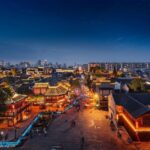
The climb to Tianbao City is the scenic part of the outing. From there, you can look over Nanjing, making the observatory visit more than an indoor look at scientific objects. It is a satisfying change of pace after the exhibition and instruments.
The view is weather dependent. Fog may cut visibility, so a day with clear skies is the better choice if you want the panorama. No walking time or route details are specified, so allow yourself flexibility rather than planning this as a timed, tightly packed stop.
The observatory’s location on the Third Peak of Zijin Mountain is also a practical reminder that you are going uphill. The attraction details do not specify transport or access arrangements, and round-trip transportation is not included in the ticket. Check how you will reach the meeting point before setting out, and factor that separately into the cost and schedule.
Planning your visit and choosing a date
Opening hours change with the season. From April through October, the observatory is open from 08:30 to 17:30, with last entry at 17:00. From November through March, it closes at 17:00, with last entry at 16:30. Special circumstances, including Chinese New Year or heavy snow, can bring temporary changes, so check for current notices before you go.
Your voucher is valid only on the selected date and, if applicable, time. Entry is by verifying your original valid booking document and voucher QR code, with no ticket exchange required. The accepted identification for the reservation includes an ID card, passport, or Hong Kong, Macao, and Taiwan travel permit.
The ticket is listed for adults aged 18 and above, children aged 7 to under 18, and seniors aged 60 to under 70. Children aged 6 and younger, and seniors aged 70 and older, are exempt from admission fees with valid identification. Confirm the applicable ticket option for your party when booking.
Booking is recommended 5 to 10 days ahead during peak season and 1 to 3 days ahead during off-peak periods, though the experience can be booked as soon as the next day. Confirmation is stated to be within 24 hours, and an order becomes effective after successful confirmation. If plans change, cancellation is conditional: more than 24 hours before the visit, an unused and unexchanged ticket can qualify for a full refund; inside 24 hours, or after exchange, entry, or expiry, refunds and rescheduling are not available.
Is the $3.65 starting price good value?
At a starting price of $3.65, the entry ticket is an inexpensive way to see a notable scientific and cultural site in Nanjing. Its value comes from the range of things included in one visit: historic astronomical instruments, the 1934 reflecting telescope, the exhibition hall, possible solar viewing, and the hilltop outlook. That is a good spread for a low-cost admission.
The price is not the whole trip budget. You pay separately for transport, food, personal insurance, self-funded entertainment, and other expenses not listed as included. Since the observatory is on Zijin Mountain, transportation is the item to think through first. The ticket itself is simple, but the full outing will cost more if you need to arrange a ride or buy food.
The ticket has a perfect 5.0 rating from two ratings. The available comments specifically point to convenient booking, good service, and the observatory being worth a visit in Nanjing. That is encouraging, but two ratings are a small sample; I would weigh the site’s specific attractions and your interest in astronomy more heavily than the score.
Who will get the most from this visit?
I’d recommend Purple Mountain Observatory if you have an interest in astronomy, science history, heritage sites, or views from above the city. It also suits a day in Nanjing when you want something quieter and more specialized than a large entertainment attraction. The low entry price makes it easier to add to a broader itinerary, provided you account for transport.
Families can use the visit to introduce children to historical instruments and astronomy, while keeping expectations clear: this is a protected research site, not a play area. The instruction to keep quiet and stay off the instruments is part of the experience. Children aged 6 and under are exempt from admission with valid identification.
I would think twice if your schedule is very tight, if you need an activity with guaranteed telescope viewing, or if poor weather is forecast and the panorama is your main reason to go. The observatory still has indoor and historical interest, but the solar view and city outlook are both better in clear conditions.
Should you book Purple Mountain Observatory?
Book it if you want a modestly priced visit that combines Chinese astronomy, historic equipment, and a mountain view. The most compelling reasons are the ancient instruments and the contrast with the 1934 reflecting telescope; solar viewing and Tianbao City add worthwhile possibilities when the weather cooperates.
Before you commit, check the forecast, confirm seasonal hours, and make a plan for getting to the Third Peak of Zijin Mountain. Treat the ticket as entry to a quiet research and heritage site, not a guided tour or an all-inclusive day out. If that fits what you want from Nanjing, this is a distinctive stop with more substance than its low starting price might suggest.
Purple Mountain Observatory
“The experience was fantastic. Service: Also very good.”
FAQ
What does the Purple Mountain Observatory ticket include?
It includes one first-gate admission ticket for the Purple Mountain Observatory Purple Mountain Campus. Transportation, dining, personal insurance, entertainment facilities, and other personal expenses are not included.
When is the observatory open?
From April through October, it is open 08:30 to 17:30, with last entry at 17:00. From November through March, it is open 08:30 to 17:00, with last entry at 16:30. Temporary changes may apply during special circumstances such as Chinese New Year or heavy snow.
Can I see solar flares?
Solar flares may be observed through the solar chromosphere telescope when the weather is good. The viewing is not guaranteed, so a clear day is the best choice.
What identification do I need to enter?
You need the original valid booking document used for the reservation, such as an ID card, passport, or Hong Kong, Macao, and Taiwan travel permit, along with the voucher QR code. No ticket exchange is required.
Which children and seniors are exempt from admission fees?
Children aged 6 and under, and seniors aged 70 and above, are exempt with valid identification. The listed child ticket applies to ages 7 to under 18, and the senior ticket applies to ages 60 to under 70.
Can I cancel or reschedule my ticket?
If it is more than 24 hours before the visit and the ticket has not been exchanged or used, you can request a full refund. Within 24 hours, or after ticket exchange, admission, or expiry, refunds and rescheduling are not available.