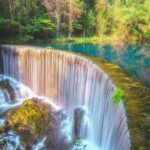
Huaxi Yelang Valley is not a conventional old town or park. It is an open-air art project built over more than twenty years by artist Song Peilun, with stone totems and castle-like clusters set among karst ravines, forest, and streams. Pair it with Qingyan, a Ming-era military town of steep lanes and old stone walls, and you get two very different sides of Guizhou in one day.
I like the contrast between Qingyan’s documented history and Yelang Valley’s handmade, almost dreamlike art. I also like the private car and city hotel pickup, which spare you the trouble of arranging transport between two separate stops. The main consideration is that each place gets about two hours, and the lowest advertised price does not necessarily apply to every language package or group.
- Qingyan was founded in the Ming dynasty: Walk its bluestone lanes, see old religious buildings, and climb sections of the city wall.
- Yelang Valley is an artist’s creation: Song Peilun spent more than twenty years shaping stone and pottery fragments into hundreds of sculptures.
- The schedule is a full day: Depart around 9 am and return around 5 pm, with roughly two hours at each attraction.
- Pickup is included in central Guiyang: The complimentary service covers hotels in Yunyan, Nanming, and Guanshanhu districts.
- The package language affects the price: Chinese, English, Japanese, and Korean options are listed at different starting prices.
- Two very different Guiyang stops in one day
- Qingyan’s walls, lanes, and layered past
- Yelang Valley’s stone figures and wild setting
- A private car makes the pairing practical
- What the price includes, and what it does not
- Who will get the most from this day
- Should you book the Qingyan and Yelang Valley tour?
- FAQ
- How long is the tour?
- Where does the tour pick me up?
- Is pickup outside central Guiyang free?
- What language is the tour in?
- Is the tour private?
- Are meals included?
- What should I bring?
- Do infants and children need to be included in the booking?
- When will I receive confirmation and contact details?
- Can the schedule change?
- The Best Of Guiyang!
- More Private Tours in Guiyang
- More Tours in Guiyang
- More Tour Reviews in Guiyang
- Not for you? Here's more nearby things to do in Guiyang we have reviewed
Two very different Guiyang stops in one day
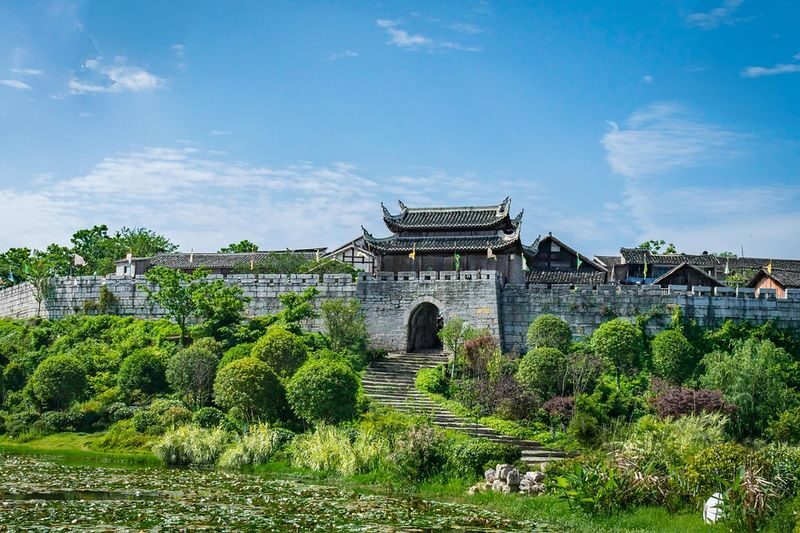
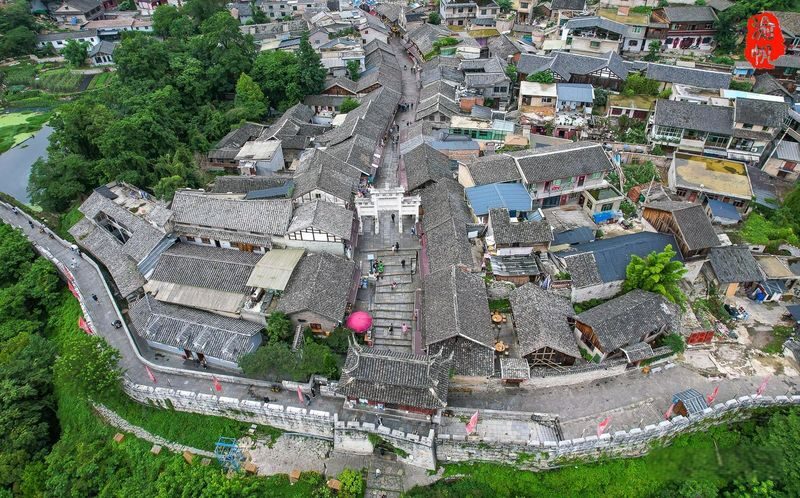
This private day tour links Qingyan Ancient Town with Huaxi Yelang Valley, two attractions that offer little reason to confuse one with the other. Qingyan is a historic settlement with military origins, old buildings, and stone lanes. Yelang Valley is a modern art creation that draws on local materials and stories associated with the ancient Yelang Kingdom and Guizhou Nuo culture.
That contrast is the tour’s strongest idea. You get a few hours to look at Guizhou’s past as it appears in architecture and town life, then a few hours among sculptures shaped by one artist’s imagination. If you have limited time in Guiyang, the pairing gives your day variety without requiring you to plan separate transport.
The day is private, with a car reserved for your party. A Chinese driver is included, and the itinerary describes guided visits at both stops. Language packages include Chinese, English, and Japanese or Korean options, but check the exact guide arrangement for your chosen package before paying. The listed driver is Chinese-speaking, and a single customer review describes an English-speaking guide, but no guide’s name is provided.

👉 See our pick of the 5 Best 3 Day Tours In Guiyang
Qingyan’s walls, lanes, and layered past
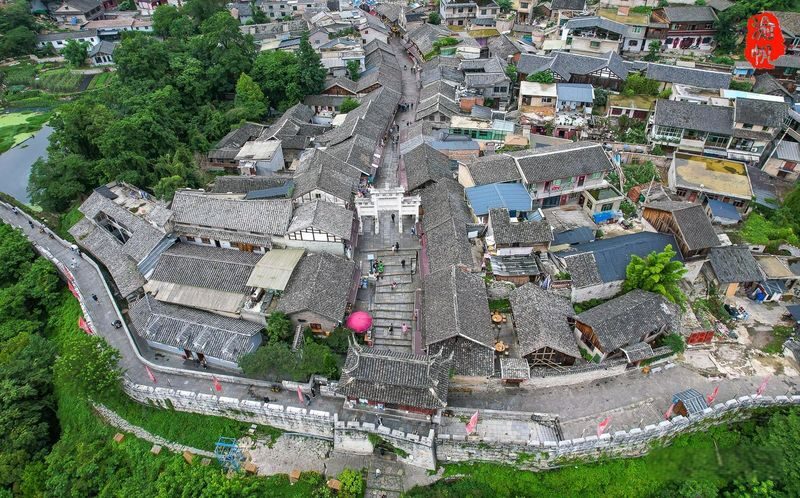
Qingyan is the more traditional of the two stops. Built during the Hongwu period of the Ming dynasty, it began as a military stronghold and is now known for its preserved Ming and Qing architecture. Its setting against the hills gives the old town a compact, uphill feel, with bluestone alleys and city walls winding along the ridge.
You have about two hours here with a guided tour. That is enough time to get a sense of the old town and see some of its main features, but it is not an unhurried visit to every lane, temple, and historic home. The guide can help you make the most of the short window, especially if you want context rather than just a quick walk and photographs.
Among the details to look for are the residence of Zhao Yijiong, a Zhuangyuan, or top scholar, and the stone carvings at Ciyun Temple. Qingyan is also notable for the presence of Buddhist temples, Taoist temples, and Christian churches within the town. Their coexistence gives the place a more varied religious character than a military-town label alone might suggest.
The city wall is a major draw, with views over blue-tiled roofs and nearby hills from higher points. Keep in mind that the lanes and route involve walking on stone surfaces, and the town is built against a slope. The supplied details do not specify how much wall access is included, so ask your guide what the planned route covers if climbing is important to you.
Qingyan’s local food is part of the town’s appeal. Zhuangyuan Ti, a local pork trotter dish, is associated with the scholar whose residence you can visit. Meals and drinks are not included, and the schedule allots about two hours to the stop, so you will need to decide whether to spend that time eating, browsing, or seeing more of the historic sites. If tasting local food matters to you, ask how much time the tour can leave for a meal.
You can also read our reviews of more private tours in Guiyang


Yelang Valley’s stone figures and wild setting
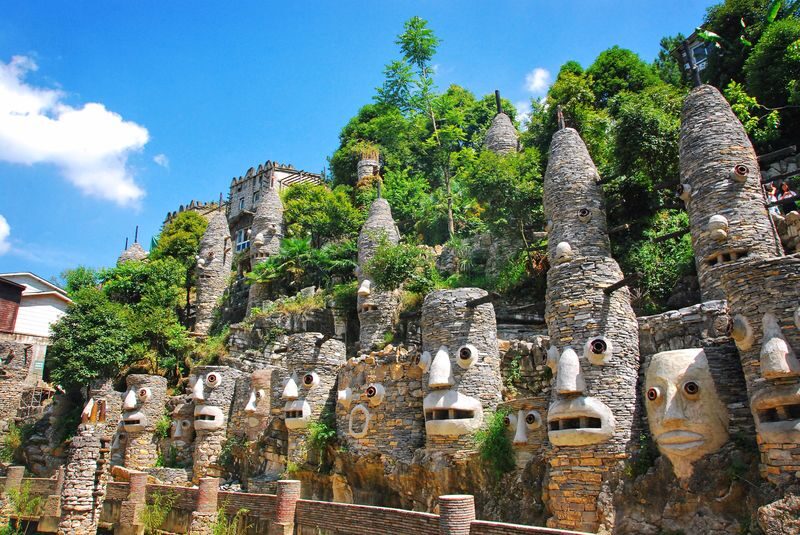
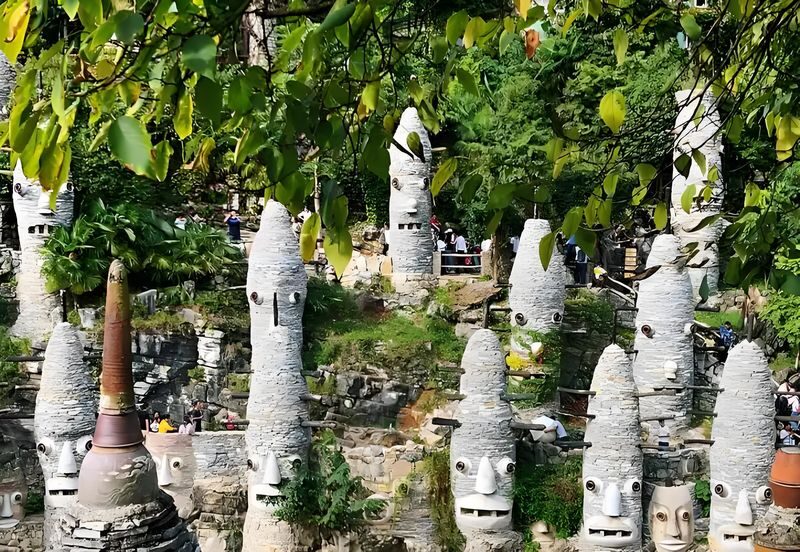
After Qingyan, the tour heads to Huaxi Yelang Valley, a stone art park made by artist Song Peilun over more than two decades. Hundreds of sculptural forms, totem poles, and castle-like clusters use local stone, pottery fragments, and other native materials. Rather than a reconstructed ancient settlement, it is a personal art project shaped by local legends and cultural references.
The setting is part of the work. The sculptures sit among karst ravines, native trees, vines, and the winding Siyajiang River. That mix of handmade forms and natural features gives the place a rough, unusual character. You are not simply looking at objects in a gallery; you are walking through an outdoor art environment where the stone creations appear alongside the terrain.
Allow about two hours, the same as at Qingyan. That gives you time to take in the site, but the park’s irregular forms and routes may tempt you to linger. If you are especially interested in sculpture, local myth, or unusual art spaces, you may wish you had longer. If you prefer traditional monuments with clear dates and familiar architectural styles, Yelang Valley may feel less straightforward. Its appeal lies in its artistic mood, not in presenting a conventional historical site.
The tour describes the valley as drawing on the ancient Yelang Kingdom and Guizhou Nuo culture. That is useful context, but do not expect every sculpture to function as a literal historical artifact. The park is an artist’s interpretation, and that distinction helps set the right expectations. It is a place to notice form, material, and setting as much as to learn a fixed timeline.
A private car makes the pairing practical
The tour begins at about 9 am and returns around 5 pm, with hotel pickup and drop-off in Guiyang’s Yunyan, Nanming, and Guanshanhu districts. Driving between the attractions in a private car is a practical advantage: you do not need to work out separate connections or coordinate public transport for two destinations in one day.
Vehicle size depends on party size. Groups of one to four are assigned a five-seat car; five to six, a seven-seat vehicle; seven to thirteen, a fourteen-seat vehicle; and fourteen to seventeen, an eighteen-seat vehicle. The product is described as private, so the vehicle is arranged for your group rather than shared with unrelated parties.
Pickup outside the stated city service area may cost extra. The operator says the amount will be confirmed after booking, so provide your hotel address early and verify the pickup point and any added fee. The operator is also expected to contact you the night before departure, around 10 pm, and share the contact details of the guide or Chinese driver through WeChat, WhatsApp, or another channel.
The schedule may change with traffic or weather. That is worth remembering when planning dinner or another evening activity. The listed return time is about 5 pm, not a guarantee that every day will run to the minute.
What the price includes, and what it does not
The advertised starting price is $24.65, but package options show different prices for Chinese, English, and Japanese or Korean tours. Several Chinese tour prices are also listed at different amounts. Treat the headline figure as a starting point, not a reliable total for every date, party size, or language. Confirm the exact package and final price before booking.
Round-trip transfers, private car service, and a Chinese driver are included. Meals, beverages, personal expenses, and tips are not. The supplied inclusion list does not say whether attraction admission fees are covered, so check that detail directly rather than assuming entry is part of the price.
For a couple or small group, the value depends on what you would otherwise spend on transport and on how much you value having the day organized around your schedule. The private car is especially useful for connecting two sites, while the guided visits can add context to both. The language package matters: the English option is listed at a higher price than the Chinese option, and Japanese or Korean is higher again.
One customer review gives a small but useful glimpse of the service. The person booked the English package and described the day as well planned, with excellent service. Their guide was kind enough to buy fruit and snacks. That is a thoughtful gesture, not a promised inclusion, and the guide’s name was not given. Still, it suggests that personal care can be part of the experience, alongside the formal itinerary.
Who will get the most from this day
This tour makes sense if you want to see both a historic town and an unusual art site without handling the transport yourself. It suits first-time visitors to Guiyang who have a full day available, as well as small groups who would rather ride together than organize separate trips.
It is also a good fit if you enjoy contrasts. Qingyan offers old walls, religious buildings, scholar history, and local food; Yelang Valley trades a conventional historic core for bold stone sculpture and natural surroundings. You can compare the two rather than spending your whole day on one kind of attraction.
The day may be less suitable if you want a slow visit, prefer to explore each place independently, or need a highly flexible schedule. Two hours at each site creates a clear framework, but it also limits wandering and dining time. Anyone with mobility concerns should ask the operator about the exact walking route and access, since the details provided do not describe accessibility.
Children aged one to two are listed as free, but infants and children must still be included in the passenger headcount. You should bring a valid passport with six months of validity, as specified in the tour information. Confirmation is expected within 24 hours; if it does not arrive, contact customer support.


Should you book the Qingyan and Yelang Valley tour?
Book it if you want a convenient, privately transported day that combines Qingyan’s Ming and Qing-era townscape with Yelang Valley’s handmade stone art. The two-hour visits keep the day moving, and the central Guiyang pickup removes a practical chore. The strongest reason to go is the contrast, not the idea that both stops tell the same kind of story.
Before booking, confirm the package language, final price, attraction admission arrangements, and whether your hotel is inside the free pickup area. If you want more time at either site, ask whether the schedule can be adjusted. For a compact introduction to two very different places around Guiyang, this is a sensible and appealing use of a day.
Private Day Tour of Qingyan Ancient Town & Yelang Valley in Guiyang
“Everything was well thought out and service was excellent. Tour guide was knowledgeable and was kind enough to buy me fruits and snacks. No complai…”
FAQ
How long is the tour?
The schedule runs from about 9 am to 5 pm. It includes around two hours at Qingyan Ancient Town and two hours at Huaxi Yelang Valley, with travel time between stops.
Where does the tour pick me up?
Complimentary pickup and drop-off are offered at major hotels in Guiyang’s Yunyan, Nanming, and Guanshanhu districts. You provide your hotel name and address when booking.
Is pickup outside central Guiyang free?
No. Pickup outside the stated service area may involve an additional fee. The operator says the amount will be confirmed after your order.
What language is the tour in?
Packages are listed in Chinese, English, and Japanese or Korean. The included driver is Chinese-speaking, so confirm the guide language for your selected package.
Is the tour private?
Yes. It includes private car service for your party. Vehicle size depends on the number of people in the group.
Are meals included?
No. Meals and beverages are not included. Personal expenses and tips are also excluded.
What should I bring?
Bring a valid passport with six months of validity.
Do infants and children need to be included in the booking?
Yes. Infants and children must be included in the passenger headcount. Children aged one to two are listed as free.
When will I receive confirmation and contact details?
Confirmation is expected within 24 hours. The day before the tour, the operator will contact you and share the guide or Chinese driver’s contact details through WeChat, WhatsApp, or another channel.
Can the schedule change?
Yes. The schedule may change depending on traffic and weather. The operator may cancel in cases of unforeseen events or extreme weather, with the option to reschedule or request a full refund.