
Madura’s limestone hills are the surprise here: quarry walls cut into pale stone, unusual shapes, and, at Arosbaya, reddish rock softened by plants. Cross the Suramadu Bridge from Surabaya and the city gives way to a quieter, rural side of East Java.
I like two things in particular: the striking quarry scenery and the chance to try batik with a canting tool, rather than only seeing finished cloth in a shop. Guides including Arya, Hirman, Melati, and Rina have helped make the day feel personal, sharing local context and taking photos along the way.
One caveat: this is a half-day outing with a loose relationship to the clock. Some groups finish around midday, while weather or extra stops can change the plan. The quarry sites are the main event; the market and batik stop may feel modest if you expect a long cultural program.
- Madura at a glance
- Crossing the Suramadu Bridge into Madura
- Jaddih’s carved limestone and changing fortunes
- Arosbaya Hill’s red stone and quieter paths
- A local market, with realistic expectations
- Making batik, not just buying it
- Bebek Sinjay and a simple Madurese lunch
- A guide can turn a short route into a personal day
- What the price buys, and what it does not
- Timing, weather, and practical details
- Who should book this Madura outing?
- FAQ
- Where does the tour start?
- How much does the tour cost?
- Is this a half-day or full-day tour?
- Which sights are included?
- Can I try making batik?
- Is lunch included?
- Is the tour suitable for children?
- Can I cancel for a full refund?
Madura at a glance
- Cross the Suramadu Bridge from Surabaya into a different, more rural setting.
- See two limestone areas, including the pale cut stone at Jaddih and the red-toned formations at Arosbaya.
- Try making batik at a local workshop, with a chance to design cloth using a canting.
- Eat Madurese duck rice, often served as Bebek Sinjay with rice and sambal.
- Travel privately with a guide and driver, with hotel transfers from Surabaya.
- Expect a flexible half-day, not a tightly timed parade of attractions.
Crossing the Suramadu Bridge into Madura
The bridge is more than a way to get there. It marks the shift from Surabaya’s urban pace to Madura’s quieter roads and village life. The drive is often described as taking around an hour, though the exact time depends on the route and conditions.
A private vehicle makes this trip practical. You do not need to work out local transport between scattered sites, and you can ask your guide to slow down, make a photo stop, or adjust the order when weather interferes. Drivers such as Yohannes, Hasan, Dwi, and Faisal have been praised for careful handling, including on narrow or bumpy rural roads.
The private format also suits families and small groups who want room to set their own pace. One family found the outing suitable for toddlers who could walk steadily, and the lunch stop offered a non-spicy option. Still, the limestone sites involve outdoor walking, so take care on uneven ground and be ready for heat.
Jaddih’s carved limestone and changing fortunes
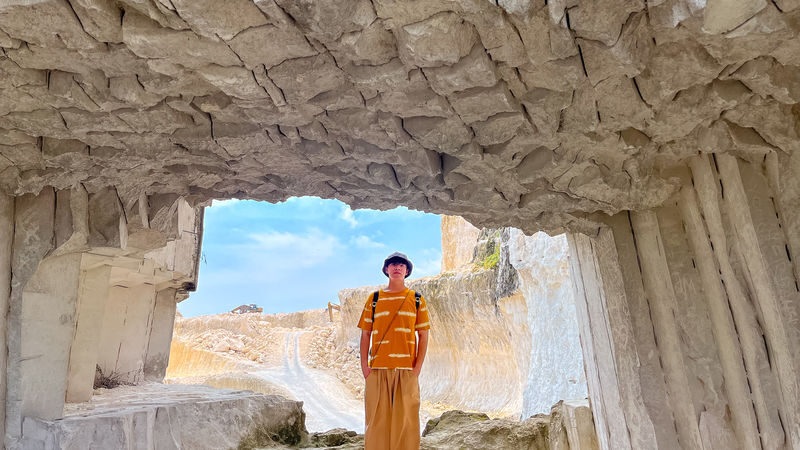
Bukit Jaddih, also written as Jaddih Hill, is the most visually dramatic stop for many people. This is a working limestone area where cutting has left broad pale walls, carved faces, and open spaces that can look almost theatrical in photographs. It is an unusual place to visit because the formations are tied to quarry work, not a polished visitor attraction.
That raw quality is part of its appeal, but it also explains why expectations matter. Some visitors have found parts of the site neglected or fenced off, and commercial trucks may be moving stone. The swimming complex mentioned in the tour’s description should not be treated as a guaranteed swim: conditions can change, and one visitor found the lake had no water.
Go for the stone forms, the scale, and the sense of seeing an active place rather than a purpose-built attraction. Wear shoes you can walk in and follow your guide’s direction around work areas. If you are hoping for a fully developed recreation site with facilities and a reliable swimming spot, this may not be the right stop.
Arosbaya Hill’s red stone and quieter paths
Arosbaya offers a different look. Its limestone has a reddish hue, and old cut surfaces mingle with overgrowth, giving the site a more weathered feel than Jaddih. Some local stone cutting still takes place with simple tools, a reminder that these hills remain part of everyday work as well as a scenic stop.
The two quarries work well together because they are not duplicates. Jaddih feels broad and exposed, while Arosbaya can seem more intimate and textured. Both are strong places for photos, and guides such as Arya and Hirman have been singled out for finding good angles and helping guests get pictures.
Weather can change the plan. One group could not reach Arosbaya after rain and was offered alternative stops back in Surabaya, including Cheng Ho Mosque. That flexibility is useful, but it also means you should not treat every stop as guaranteed. If both limestone sites are your priority, tell your guide early and ask how the day’s conditions look.
A local market, with realistic expectations
The market stop gives you a quick look at daily shopping in Madura. It is a working wet-and-dry market, not a curated attraction, and that is precisely why it can offer a small glimpse of local routines. You may see food and household goods more than the sort of souvenirs visitors expect.
Keep the visit in proportion. Some people have found it colorful and interesting; others have found a number of stalls closed or the goods less relevant to visitors. The stop is usually short, so think of it as a brief look at local commerce rather than a major sightseeing highlight.
If you would rather spend more time at the quarries or batik workshop, ask your guide about the day’s flexibility. The tour is private, and guides have accommodated requests, though specific alternatives depend on time and conditions.
Making batik, not just buying it
At the batik stop, you can learn about Madurese patterns and try drawing your own design on cloth using a canting, a small tool used to apply wax. It is a hands-on introduction, not a full course in textile production, but it helps you understand the care behind the finished fabric.
The workshop experience can vary. Some groups have enjoyed a practical demonstration and a chance to make a design; others have felt the stop was more like a batik shop than a detailed look at the process. You may also have time to browse and buy cloth, shirts, or scarves. One family toured the old wooden house on the grounds, which added a glimpse of local domestic architecture.
Prices for batik purchases are separate from the tour price unless your package says otherwise. The workshop has been described as a reasonable place to buy authentic Madurese batik, but there is no need to shop to get value from the visit. Try the activity, ask how the patterns are made, and decide afterward if you want to take something home.
Bebek Sinjay and a simple Madurese lunch
The meal is often a highlight: fried duck with rice, commonly known as Bebek Sinjay, served with sambal. The duck is crispy and the sambal brings a distinct local flavor. It is a simple meal, not a grand restaurant occasion, but it gives the outing a taste of Madura beyond its scenery.
Food opinions are personal. Some people find the lunch delicious and generous enough; others have considered it plain or underwhelming. If you like duck, it is a good chance to try a well-known local dish. If you do not eat duck or prefer mild food, ask your guide what alternatives are available. A non-spicy choice has been available at the restaurant for at least one family.
A guide can turn a short route into a personal day
The guide is central to the quality of this trip. Arya, Hirman, Melati, Rina, Hreesang, and Ikhsan are among the guides who have led outings, and the strongest experiences combine cultural explanation with practical help. Expect a guide to share stories about Madura, answer questions, and help you make sense of places that do not come with much signage.
Many guides also help take photos and videos. That is especially useful at the quarries, where a good angle can show the scale of the stone walls. Several guides have been praised for patience with children, accommodating requests, and making the ride feel relaxed rather than over-managed.
Guides may also adjust the route for weather or personal needs. One guide arranged time for Muslim prayers, and another offered a Surabaya alternative when rain blocked access to Arosbaya. This flexibility is a real benefit of a private tour, though it cannot guarantee a particular sight or special event. A bull race, for example, happens only a few times a year, so treat it as an unexpected bonus rather than a planned feature.
What the price buys, and what it does not
The tour starts at $76.49. For a private outing, the value comes from hotel transfers from Surabaya, a dedicated guide and driver, and a route that would be difficult to assemble efficiently on your own. You are paying for convenience and local context as much as for the stops themselves.
That price can feel high if you judge it only by the market visit, a brief workshop, and a modest lunch. The quarry sites are the strongest reason to go, while the guide’s attention and private transport help make the day easier. If you are traveling alone or watching your budget, compare the total cost with other Surabaya day trips and consider whether a private vehicle is worth it for you.
The tour has an average rating of 4.7 out of 5 from 105 ratings. That is a useful sign of consistent satisfaction, but it does not erase the practical caveats: the sites can be rough around the edges, weather affects access, and the itinerary may finish earlier than you expect.
Timing, weather, and practical details
Although the activity is sold as a half-day tour, the actual length can vary. One group had finished by about 12:30, while other outings included several stops and a leisurely pace. Confirm the expected pickup and return timing before arranging a later activity, and avoid putting a tight appointment immediately afterward.
Bring sun protection. The limestone sites are exposed, and one guide advised a group to use sunscreen and wear caps. Water and comfortable walking shoes are sensible, especially if you plan to explore the quarry areas for photos. Rain can disrupt access, while rural roads may be bumpy.
The activity offers instant confirmation and can be booked as soon as tomorrow, subject to availability. Free cancellation is available with at least 24 hours’ notice before the activity date, using destination local time.
Who should book this Madura outing?
I would choose this tour if you have time in Surabaya and want a change of scene beyond the city, especially if unusual geology, local food, and a brief hands-on craft activity appeal to you. It is also a good fit for families or small groups who value a private vehicle and a guide who can adapt the pace.
Skip it if you want a polished attraction with extensive facilities, a guaranteed swim, or a long, formal batik lesson. The most rewarding way to approach Madura is with curiosity and flexible expectations: give the limestone hills your attention, enjoy the meal, and let the guide fill in the local details. At $76.49, it makes sense when the private transport and personal guiding are part of the appeal, not just the destination list.
Madura Island Half-Day Private Tour with Batik Art
“I would like to thank Melati for her hospitality for this tour. She shared interesting stories about Indonesia and Madura culture. The limestones w…”
FAQ
Where does the tour start?
The tour includes round-trip transfers from your hotel in Surabaya and crosses the Suramadu Bridge to Madura.
How much does the tour cost?
The listed starting price is $76.49. The final price may depend on the option and booking details shown when you reserve.
Is this a half-day or full-day tour?
It is sold as a half-day private tour. The actual finish time can vary, and some outings have ended around 12:30.
Which sights are included?
The route includes limestone sites such as Bukit Jaddih and Arosbaya Hill, as well as a local market and a Madurese batik stop. Weather can affect access to individual stops.
Can I try making batik?
Yes. The batik visit can include trying a design on cloth using a canting tool. The depth of the demonstration may vary.
Is lunch included?
Lunch has been provided on the tour and commonly features fried duck with rice, known as Bebek Sinjay. A non-spicy option has been available at the restaurant.
Is the tour suitable for children?
A family has found it suitable for toddlers who can walk steadily. The quarry areas involve outdoor walking, so consider your child’s comfort on uneven ground.
Can I cancel for a full refund?
Yes. Free cancellation is available if you cancel at least 24 hours before the activity date, using destination local time.